
A virtual card paid in cashback, run by an exchange nobody names as issuer
 Available in US
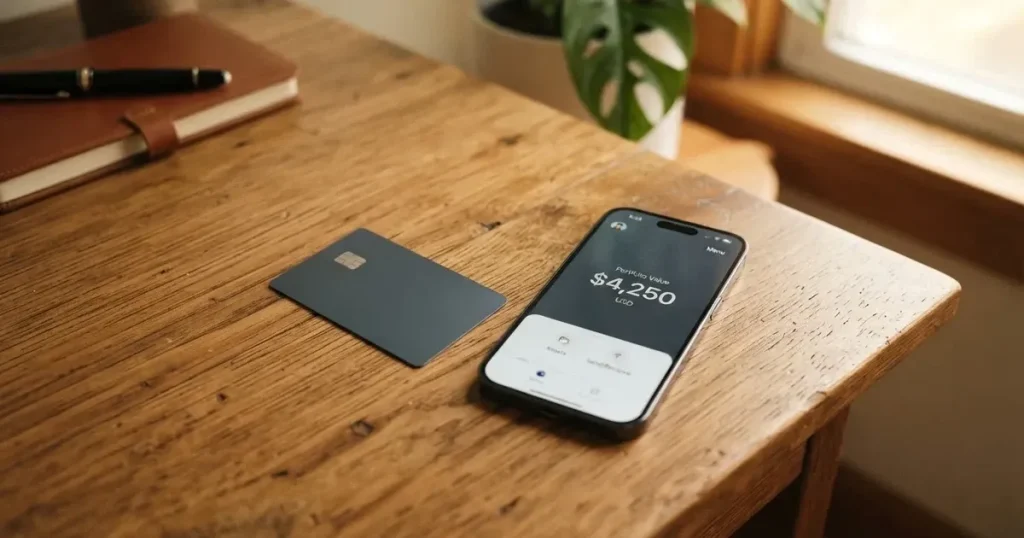
If you are looking for an ordinary bank card and the ordinary route has closed in front of you, the MEXC card deserves a serious look — and also a careful one. It is not a bank account. It is a virtual Visa Platinum that you load with USDT, held by a cryptocurrency exchange whose own reputation is the first thing you will have to think about. I scored it 5.6 out of 10. That is a middling mark from someone who read the card’s own pages carefully and then went looking for what those pages leave out.
The conditions described on this page are current as of October 28, 2026.
Verdict: 5.6 / 10
The single most striking fact about this card is what the card’s own pages do not say: no issuer is named. Not the licence, not the safeguarding arrangement, not the entity that actually holds your card programme. A payment card is a regulated instrument, and the issuer is the party a payment network licenses and can suspend. Here you are told the network is Visa Platinum and told nothing about who stands behind it. That silence sits underneath everything else.
Against that, the numbers are not bad where they are visible. No annual fee, no top-up fee, no inactivity fee, no markup on the currency exchange, no fee at all on converting your crypto — and cashback of 4% to 10% by tier. If the card works as described, a holder of USDT in Asia with a steady stream of spending has something genuinely attractive. The catch is that it is virtual-only, so there is no ATM and no plastic, and the reliability record of the exchange behind it is the weakest part of the whole package.
Who it suits: people who already hold USDT, who live in an eligible country, who spend in a way that suits a virtual card, and who can tolerate their balance being held by an exchange. Who it does not suit: anyone who needs cash, anyone in a blacklisted country, anyone who needs a named issuer behind a deposit guarantee, and anyone who would rather not hand their identity documents to a platform with the complaint record described further down.
| Criterion | Mark | Why |
|---|---|---|
| Who can get it | 8 / 10 | Global Card closed to residents of 69 countries and territories, others admitted by country of proof of address; unofficial: 110 countries in the DefiLlama catalogue |
| Cost | 7 / 10 | Global Card: issuance 20 USD (temporarily waived), annual fee and top-up 0, crypto conversion 0%, currency at the Visa rate with no markup, 1% payment fee from 1 October 2026 |
| Top-up options | 4 / 10 | USDT only: you send it to the Fiat account, then to the card; networks are not named |
| Reliability and complaints | 3 / 10 | Issuer not named, balance sits at the exchange; on the exchange’s Trustpilot no score available, 88% one-star, freezes and withdrawal delays; unofficial: listed among the Hong Kong SFC’s suspicious platforms |
| Everyday use | 4 / 10 | Virtual Visa Platinum only, Apple Pay and Google Pay available; no physical card, no ATM |
That middle column is where the arithmetic lives, and it explains the total. Cost is genuinely good. Access is good. Everything that depends on trusting a third party with your money is poor, and in this category that is not a side issue — it is the product.
Will they give you the card?
The card’s own page lists “The Philippines, Taiwan, Thailand…” with a Details link, and the full list is not shown there. Eligibility follows the country of your proof of address. As of August 2026 the application blacklist includes the United States, China, India, Indonesia, Turkey and Russia among others. The Philippines, Taiwan, Vietnam and Thailand were not blacklisted at that point. The list changes, so treat any country answer as dated.
Unofficial sources widen the picture. DefiLlama lists the card in 110 countries. SpendNode says the Global Card covers Southeast Asia, Latin America, Africa, the Caribbean, the Gulf and Central Asia, plus Japan, South Korea, New Zealand and Israel — per DefiLlama and SpendNode, in 2026, and not confirmed by the card. That unofficial list excludes Russia and Turkey, which is consistent with the official blacklist rather than contradicting it.
Two things about this test that are not stated on the card’s public pages: the age requirement, and any income proof. There is no income proof — that much is clear. Age is not stated, which in this sector usually means the platform’s general account rules rather than a card-specific rule. Advanced KYC is required before you can apply, which is the substance of the whole eligibility question anyway.
The practical advice is simple and not exciting: check the current blacklist before you invest any time in the application. Failing KYC wastes far more of your evening than reading one page would have.
How to get it
The stated sequence is three steps. Complete Advanced KYC. Apply on the My MEXC Card page. Transfer USDT to your Fiat account, then fund the card from it.
Advanced KYC means a government ID plus a face verification. The proof of address must come from a country that is eligible — which is the blacklist question again, arriving a second time in a different form. The order matters: the KYC gate comes first, then the card application, then the money. If your address is in a blacklisted country you will not discover it at the card step, you will discover it at the KYC step.
What the card’s public pages do not state: how long processing takes, and why applications get rejected. Those are the two things you would most want to know before applying, and both are absent. Delivery is not stated either, for the simple reason that there is nothing to deliver.
The card itself is virtual only — physical cards are “not yet available” on the card page. The network and card currency were not stated on the checked pages, though other details elsewhere give them as Visa and USD. So: one virtual Visa Platinum card, denominated in US dollars, living inside your phone.
Fees: what it really costs
Here is where this card looks best, and where the shape of the offer changes depending on which of the two products you are reading about. There are two. The MEXC Global Card is a Visa Platinum virtual card launched on 31 August 2026. The MEXC Card is the APAC product for selected Asia-Pacific markets. The Standard, Premier and Elite tiers change only the cashback rate and the monthly cap — there is no metal tier, no physical tier, nothing that changes what the card is made of, because there is no card to hold.

| Fee or limit | Global Card | APAC Card |
|---|---|---|
| Issuance | 20 USD standard, waived for a limited time (Aug 2026) | 0 |
| Annual fee | 0 | 0 |
| Top-up fee | 0 | 0 |
| Inactivity fee | 0 | 0 |
| Card termination fee | 0 | 0 |
| Crypto conversion | 0% | 1% |
| Currency conversion | Visa rate, no MEXC markup | Visa rate plus 1% on non-USD purchases |
| Payment fee | 1% from 1 October 2026 | 0% |
| ATM withdrawal | Not applicable to virtual cards | Not applicable to virtual cards |
| Per transaction | 80,000 USD | 50,000 USD |
| Per day | 1,000,000 USD | 50,000 USD |
| Per year | no monthly or annual spend cap listed | 1,000,000 USD |
| Transaction count | 100 per day, 2,500 monthly, 25,000 annually | 50 per day, 1,040 per year |
Note the asymmetry inside that table. The Global Card has the higher limits and the better currency terms; the APAC Card has no payment fee but charges 1% on crypto conversion and 1% on non-USD purchases. If you are outside Asia-Pacific you are looking at the Global Card column, which is the column with the 1% spending fee.
The Visa spread is said to be usually 0.1% to 0.3%. Multi-currency balances are not stated — you hold dollars.
A coffee. Suppose your coffee costs 4 USD. On the Global Card after 1 October 2026, the card deducts 4.04 USDT. Before that date, it deducts 4 USDT. On the APAC Card, the crypto conversion fee of 1% applies, so you would need roughly 4.04 USD-equivalent loaded — but only the conversion is charged, and the purchase fee is 0%.
A subscription in euros. Say 10 EUR. The Global Card converts at the Visa rate with no MEXC markup, so the cost is 10 EUR at the network rate plus the 1% payment fee. The APAC Card converts at the Visa rate and adds 1% on the non-USD purchase. Both cards are USD-denominated and funded in USDT; other currencies are converted by Visa.
A large purchase. The per-transaction ceiling on the Global Card is 80,000 USD, so a 79,000 USD purchase clears the limit and still carries the 1% fee — 790 USDT on top. Nobody paying at that level is likely to be caught out by the ceiling, but the fee is real money at that scale.
The card’s public pages do not state a monthly fee, and they do not state ATM fees beyond the note that withdrawals do not apply to virtual cards. Limits were directed to a separate fee-and-limits guide that was not reachable; the figures in the table are the ones the card states elsewhere.
How to top up the card
USDT only. You transfer USDT to your Fiat account, then add it to the card on the My MEXC Card page. The networks are not stated, and that omission matters more than it sounds — see the risks section, because sending stablecoin on the wrong network is the single most common irreversible mistake in this whole activity.
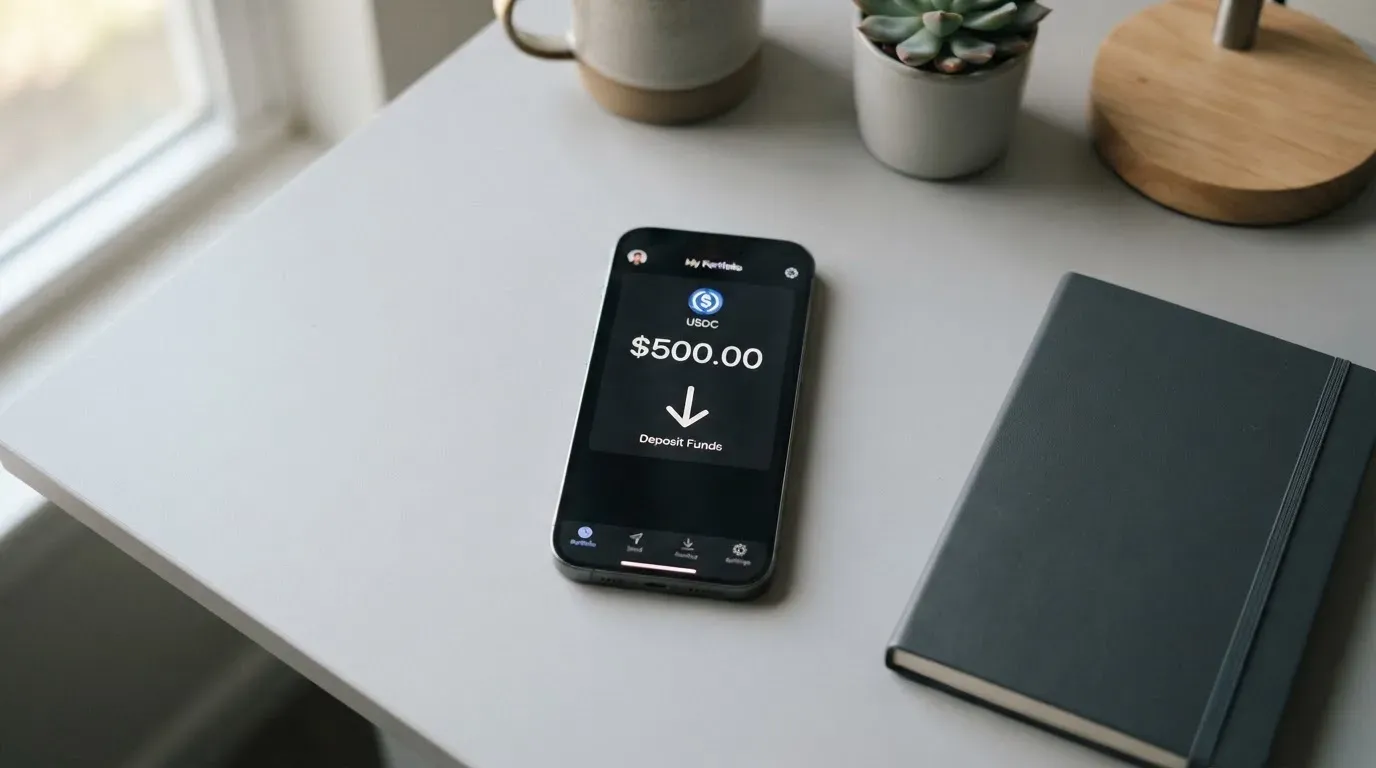
There is no top-up fee. Moving USDT into the Fiat account is free. Each top-up runs from 1 to 1,000,000 USDT according to the Global Card guide — though an older MEXC post cites a 100 USDT minimum, which conflicts, and the newer guide is the one I would believe. A fiat top-up route is not stated.
What happens on the way out is not stated either. The card termination fee is 0 and there is no inactivity fee, but the process for moving the remaining balance back to the exchange account, and what happens to it on closure, is not described on the pages I checked. If you are the kind of person who asks “how do I get my money out if this stops working”, that is a genuine gap and worth an email to support before you commit a large balance.
Paying with it every day
Apple Pay and Google Pay are supported on the Global Card. The APAC Card supports Google Pay only. That is the practical face of a virtual card: you add it to your phone and pay by tapping or by entering the number, and you never handle a piece of plastic. Blocked merchants are not stated — a merchant category code list, which is how casinos and betting sites are usually filtered on cards, is nowhere on the pages I read.
The rewards are the reason a lot of people would want this. Cashback runs by M-Score tier and is paid by the 15th of the following month: Standard 4% with a cap of 100 USDT per month, Premier at 600–799 gives 6% with a 300 cap, Elite at 800 and above gives 10% with an 800 cap. The referral arrangement is 20 USDT to the referrer and 10 USDT to the referee. Cashback on a refunded purchase is deducted, so it is not a permanent gain.
In-app experience is not stated on the pages I checked, so I cannot tell you how it feels to use. What I can tell you is the dispute procedure, which is more concrete than most cards of this size publish. Contact the merchant first, then MEXC Customer Service with your reason and your evidence. The windows are 90 days for duplicate charges and 120 days for suspected fraud, goods not received, or goods not as described. Filing is free, though a review fee may apply if the claim is rejected for incomplete evidence. Refunds usually arrive in 1–7 days, travel refunds up to 30 days. There is a USD 0.50 charge per refund, but only if the refund rate is excessively high — that is, if you start using the card as a refund farming tool, the fee appears. One review on Trustpilot describes exactly that pattern: a USD 0.50 fee on a declined Apple Pay transaction.
Declined authorisations can leave a hold on your funds for several days, typically up to seven. Budget for that if you are near your limit.
What can go wrong
Three risks stack on top of each other here, and the order I would worry about them in is not the order a brochure would use.
The money is held by the exchange. This is custodial. The exchange holds the spending balance; the card’s public pages make no statement about safeguarding or insurance, and SpendNode, reporting in 2026 and unofficial, says the reviewed documents identify no issuer and no safeguarding arrangement. Nobody has published the issuer’s name. That is a counterparty exposure of exactly the kind the industry has a long record of: Mt. Gox at about US$350 million reported stolen between 2011 and 2014, Coincheck at about US$400 million in 2018, Ronin Network at US$625 million in 2022. None of those were card programmes, and none of them means the same thing will happen here. But the structure is the structure.
The issuer country can make shops suspicious. A card number begins with a six- or eight-digit identifier naming the issuing institution, and the rest is an account number and a check digit. Merchants can look that up and see which institution and country issued the card, and some apply extra scrutiny when the issuer country differs from the billing address. This is why a card issued in one country can look foreign in another shop. Address verification, which compares the numeric parts of the billing address a buyer types with issuer records, is mainly offered in the US, Canada and the UK and is generally unavailable for foreign-issued cards, which causes declines. Some merchants decline prepaid or foreign card identifiers outright. With no issuer country published, you cannot even predict which side of that line you land on.
The exchange’s record. This is the part I would not skim. FinTelegram reported a Trustpilot score of 1.8 out of 5 for MEXC with one-star reviews about frozen and withheld funds, withdrawal friction and support, and said MEXC was on the Hong Kong SFC’s list of suspicious platforms — unofficial reporting, not confirmed by the card. A separate analysis says Trustpilot later removed fake reviews and displayed a breach-of-guidelines notice. Reading the Trustpilot page itself on 20 October 2026: no score is available, the notice reads “breach of our guidelines”, 1,368 reviews are posted and 88% of them are one-star. The themes in the user reports are accounts flagged “risk” without stated reasons and then restricted, withdrawals frozen or delayed for months, generic support replies with tickets unresolved, and difficulty deleting an account.
I should be careful about what these reviews are and are not. They describe the exchange as a whole, not this card, and people who lost money write reviews. That said, freeze-and-delay is precisely the failure mode a custodial card-holder cannot absorb, because there is no second copy of the balance somewhere else.
The mechanics of losing it. Transfers are irreversible. A deposit sent on a network the provider does not support, or to an address belonging to another network, can be lost or need manual recovery with no guarantee. Gas fees on the blockchain are charged by the network, not by the card provider — and Ethereum gas is paid only in ETH, so a wallet with USDT and no ETH cannot send at all. Tron works differently, charging through bandwidth and energy and often burning TRX. Stablecoins can also lose their peg: TerraUSD collapsed in May 2022, and USDC wobbled in March 2023 during the US banking crisis. Tether states it disables tokens on wallets on the OFAC sanctions list and has frozen funds tied to illicit activity, so a stablecoin is not censorship-proof either.
Freeze and security. You can freeze the card in Card Management if you lose it, then contact Customer Service for a replacement. 3-D Secure verification sends a one-time code by email, valid for four minutes, or through the MEXC app. Repeated failed payments can trigger a risk review and card termination — which is worth knowing if you are trying a new card in a shop that keeps declining it. Support is a ticket system on the platform, and MEXC help and learn pages exist in a Russian version. Live chat and hours for the card specifically are not stated on the checked pages.
The precedent. Visa does not issue crypto cards to consumers itself; it licenses issuers and can suspend a programme, and in November 2022 it terminated its global agreements with FTX, with the US debit card programme wound down by its issuer. WaveCrest, a Visa issuer that supplied crypto card brands, was suspended by Visa in Europe in 2018 and all its Visa programmes closed. Programme closures typically give notice, then stop spending and loading, then ask users to withdraw remaining balances. That is the shape of the risk you are accepting with any crypto card, and it is why the missing issuer name matters.
What to take instead
Three alternatives came up in the same review process, and the honest comparison is uncomfortable: I have fewer published details about them than about MEXC.
| Card | Score | What I could verify |
|---|---|---|
| Bybit Card | 6.0 / 10 | The most transparent of the three: regions, fees, limits and rewards all published |
| MSX | 6.4 / 10 | Eligibility, fees and top-up not stated on any official page |
| Young Card | 5.7 / 10 | Eligibility, card type and costs not stated officially; cashback paid in YNG tokens at 0.1% to 3.6% by club tier |
Bybit Card scores 6.0 and is the one to look at first if your country is on its list, which runs to Argentina, AIFC (Kazakhstan), Georgia, Kazakhstan, Australia, Mexico, Brazil, Peru and Asia Pacific. If your country is not supported it says it will register your interest. The cards page is blunt about the EU: “This product is not meant for European Economic Area customers. All European Economic Area customer participation is strictly prohibited.” Its fiat-service restricted list for deposits, withdrawals and One-Click Buy — not the card itself — includes Belarus, the Russian Federation, Serbia, China and the United States. No card-specific statement on Russian or Belarusian citizens, and no citizenship-versus-residence rule, was found.
The trade-offs against MEXC are real in both directions. Bybit offers virtual *and* physical cards, with issuance free in all regions “until further notice” for the virtual card, and physical issuance at 29.99 USD in Australia, 5 USD/USDT in Argentina, 29.99 USDT in Georgia, Kazakhstan and Asia-Pacific, and nothing in Brazil or Mexico. It says “Auto interest, no annual fees” — which is an odd phrase to read on a card page and one I would want clarified. Its crypto conversion fee is 0.9% over the One-Click Sell rate in most regions, 0.5% in Argentina; its FX fee is 2% on top of the network rate in Australia, Asia-Pacific, Georgia and Mexico, 7% in Argentina, 1.5% in Brazil, 1% in Peru. So more expensive per transaction than MEXC’s Global Card, and more substantial in what it offers.
Where Bybit is decisively better for some people is the rewards table. From 5 October 2026 at 10:00 UTC only crypto-funded transactions earn points or cashback — fiat-funded spending does not — and the tiers run Base 2.00% (5 USD cap) up to Infinite 10% (600 USD cap), with spend thresholds to unlock each tier. Welcome offer: 10% cashback up to 110 USDT in the first 30 days. And the card has no balance of its own: it draws on the Funding Account and the Flexible Easy Earn balance, fiat first, then crypto sold at the stated rate. Six supported cryptos, with a default priority order you can reorder in the Card Dashboard.
MSX scores 6.4, higher than MEXC and than Bybit. But I could not verify eligibility, card type, fees or funding from any official page. Scoring a card on what it has not published is a strange exercise, and I would rather say so than pretend the number means more than it does.
Young Card scores 5.7. Same problem, plus a different currency of rewards: cashback is paid in YNG tokens, at 0.1% for Essential, 1.8% for Gold and 3.6% for Platinum, with Bronze and Silver not stated. A token-denominated rebate on your everyday spending is a thing to be careful with.
Who I would recommend it to
If you hold USDT, live in a country that is not on the blacklist, spend most of your money through Apple Pay or Google Pay, and can accept that your balance is held by an exchange rather than a bank — then this is a reasonable card at a fair price, and the 4% to 10% cashback is real money back in your own currency.
If any of the following is true of you, look elsewhere. You need cash from an ATM. You need a physical card as a backup. You are in the United States, China, India, Indonesia, Turkey or Russia, or anywhere the blacklist has since extended to. You need to know who the issuer is and what protects your balance if the company fails. Or you have already read enough Trustpilot reviews to know how you feel about freezing.
My own position after reading all of it: I would test it with a small balance, top it up in USDT I can afford to lose, and see how the card behaves at a shop I actually use. The limits are generous enough that you will not outgrow the product quickly, and the fee structure is better than most cards in this category. But the absence of a named issuer is not a small gap in the documentation. It is the thing a payment card is, and until someone publishes it, this is a prepaid product from an exchange rather than a card from a bank.
Frequently asked questions
What is MEXC card?
It is a virtual Visa Platinum payment card issued through a cryptocurrency exchange’s card programme, funded with USDT rather than a bank account. You convert or load USDT into a Fiat balance on the exchange, and the card spends that balance. There are two products: the MEXC Global Card, a virtual Visa Platinum launched on 31 August 2026, and the APAC Card for selected Asia-Pacific markets. No physical card is available yet.
How does MEXC card work?
You hold dollars on the exchange, and the card draws down those dollars when you tap or pay. Crypto is not spent directly at the till — it is converted into a fiat balance first, which is why the card behaves much like a prepaid card. Payments go through the Visa network, so a shop sees a Visa card, not a crypto one. The exchange holds the balance while you spend from it, which is the arrangement that makes this custodial rather than self-custodial.
Is MEXC a bank?
No, and the card’s own pages do not name any issuer or licence. A card is normally issued by a bank or an electronic money institution licensed by the card network; here the crypto exchange appears to be the front end and the programme manager, while the entity that actually issues the card is not published. In the EU, an electronic money institution must safeguard customer funds in segregated accounts or by insurance — but I found no safeguarding statement on these pages, so I cannot tell you whether any such protection applies to this card.
Who owns MEXC?
The card’s public pages do not state ownership, and neither do the third-party sources I checked. What is published is the product: two cards, USDT funding, cashback by M-Score tier, and an Asian market focus. SpendNode reported in 2026 that the reviewed documents identify no issuer and no safeguarding arrangement, and that the exchange holds custody of spending balances. Nobody has published an issuer name, which is unusual for a payment card.
How do I get a MEXC card?
Three steps: complete Advanced KYC, apply on the My MEXC Card page, then transfer USDT to your Fiat account and fund the card from it. Advanced KYC means a government ID plus a face verification, and your proof of address must come from an eligible country. Before you start, check the current blacklist — as of August 2026 it included the United States, China, India, Indonesia, Turkey and Russia among others, and the list changes.
Does MEXC card require KYC, and how long does it take?
Yes, Advanced KYC is required before you can apply, and no income proof is needed. The card’s public pages do not state the processing time, do not state the age requirement, and do not state the reasons applications get rejected. Those three omissions are worth an email to support before you apply, because they are the things that decide whether your evening goes smoothly.
How do I top up a MEXC card?
You send USDT to the exchange’s Fiat account and then add it to the card. There is no top-up fee and moving USDT into the Fiat account is free. Each top-up runs from 1 to 1,000,000 USDT per the Global Card guide, though an older MEXC post cites a 100 USDT minimum and the two conflict. The networks are not stated, so confirm which one before you send anything.
Is MEXC card free?
Almost. Issuance is 20 USD on the Global Card, waived for a limited time as of August 2026, and 0 on the APAC Card. Annual, top-up, inactivity and termination fees are all 0. Crypto conversion is 0% on the Global Card and 1% on the APAC Card. The Global Card charges a 1% fee per payment from 1 October 2026 — a 100 USD purchase deducts 101 USDT — though that fee was waived from 31 August to 30 September 2026.
How do I add MEXC card to Apple Wallet, and where can I use it?
The Global Card supports both Apple Pay and Google Pay; the APAC Card supports Google Pay only. Where you can use it depends on the shop, not the card. A shop can look up your card’s issuer country from the card number and apply extra scrutiny if it differs from your billing address, and some merchants decline foreign or prepaid cards outright. Blocked merchants are not stated on the card’s pages.
Is MEXC card safe, and can I withdraw money from MEXC?
Safety depends on a counterparty you cannot name. The balance is held by the exchange, no safeguarding or insurance statement appears on the card’s pages, and Trustpilot showed 1,368 reviews with 88% one-star on 20 October 2026, no score available, themes of frozen funds and delayed withdrawals. Getting money out is the untested part: termination and inactivity fees are 0, but the process for moving the remaining balance back is not stated, so ask before you commit a large amount.
Exchange card reviews – cryptocardcheck
Content created by the «cryptocardcheck» team