
A Solana-only Visa with four tiers, no cash withdrawals and more silence than a card page should have
 Available in US
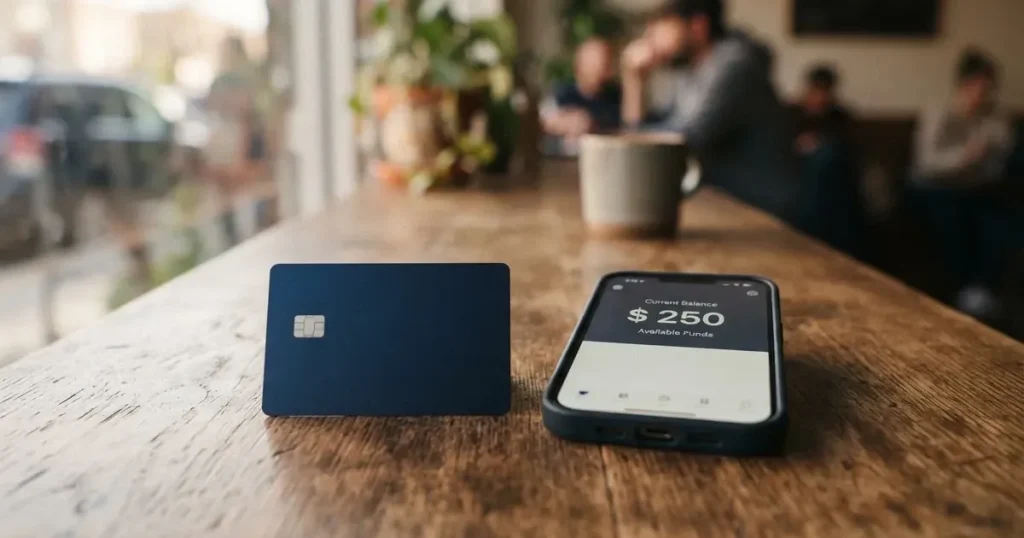
Xplace is a Visa card aimed at people who hold crypto on Solana and want to spend it, and — judging by the terms I read — at people who want a card that spends a balance they control rather than one held by a bank. That second half is the interesting part. The card’s terms say Xplace does not hold your funds and cannot freeze, seize or move them. That is a real architectural difference from a custodial card. It is also a phrase with no audit attached to it in anything I found, and the pages I read are unusually quiet on several things you would want to know before signing up. My score for the card is 7.7 out of 10. That is a good card with a specific, narrow fit — not a card I would hand to someone whose main requirement is that it works everywhere without surprises.
The conditions described here are current as of October 28, 2026.
The score, criterion by criterion
Here is where the 7.7 comes from, so you can see which parts are strong and which parts I marked down.
| Criterion | Mark | Why |
|---|---|---|
| Who can get it | 9 / 10 | The card itself publishes no country list, only that “services are not available in all jurisdictions”, while Visa acceptance runs to 160+ countries. Unofficial trackers put 162 countries available and 34 explicitly closed. |
| Cost | 8 / 10 | Basic is free; Silver $99/year, Gold $249/year, Platinum $999/year. The card terms show 0% Foreign Exchange Fee, 0% Cross Border Fee and 0% Foreign Transaction Fee, and cash is unavailable entirely. An unofficial source claims 0.5% FX on Silver. |
| Top-up options | 8 / 10 | Deposits in BTC (cbBTC), ETH (wETH), SOL, JitoSOL, USDC, USDT and xStocks, all on the Solana network. |
| Reliability and complaints | 6 / 10 | Pontech Group L.L.C-FZ in Dubai, with the card issued by Third National under a Signify Holdings programme. Trustpilot 4.1 out of 5 across 56 reviews, Google Play 3.5, with recurring complaints about hidden fees and support. |
| Everyday use | 7 / 10 | Virtual card instantly, physical card on Silver now and Gold and Platinum “coming soon”, Apple Pay and Google Pay built in, but no cash withdrawals. |
The middle of that table is where the card earns most of its score: broad Visa reach, a free entry tier, and a low-fee stated position on currency conversion. The low point is reliability, and it is low for a specific reason rather than a vague one — the operator is a Dubai free-zone entity, the issuing bank is a third party, and the complaint record contains a repeated theme about money and charges being unclear.
Who this suits: you already live on Solana, you want to turn stablecoin balance into everyday spending without going through a bank, and you are comfortable with a card whose fine print has gaps. Who it does not suit: anyone who needs cash, anyone outside the on-boarded countries whose situation is unclear, and anyone who wants a card whose fees can be read off one page in full.
Will they give you the card?
Short answer: probably, if your country is on whatever list applies — and the card itself does not publish that list.
Here is the honest position. The card’s own pages say that “services are not available in all jurisdictions” and that Visa is accepted in 160+ countries. That second sentence tells you where the card works once you have it; the first tells you there are restrictions; the pages do not say which. So if your question is “can I have an Xplace card”, the card’s public pages do not answer it, and I am not going to guess on their behalf. That is the gap.
Third-party trackers fill it in, unofficial and not confirmed by the card. Per CryptoCardHub on 24 August 2026, 162 countries are listed as available and 34 as explicitly unavailable, with Russia among the 34 alongside India. The same source is careful about something worth repeating: the negative list does not prove that every country not named is on-boardable. Absent from a blacklist is not the same as accepted. It also helps to know *why* cards like this get lists at all — sanctions screening is applied to citizenship and country of birth, not just to your address, which is why a country list and a citizenship question are separate hurdles rather than one.
The reader most likely to care here is someone whose country is not obviously in or out. If that is you, the honest answer is that you will find out at the sign-up step, not from the marketing, and you should not move money to find out.
How to get it
The sign-up is described as “register and verify”, taking minutes. The virtual card activates instantly after sign-up. That is the whole of what the card says about joining.
What is not stated matters as much as what is. The documents required are not stated. Whether proof of address is needed is not stated. The minimum age is not stated. There are no described KYC tiers, no stated processing time beyond “minutes”, and no stated list of reasons an application might be refused. I would rather tell you that plainly than dress it up: you are signing up for a process whose steps the public pages do not describe.
On the card itself. It is a Visa. There are two forms, virtual and physical. The virtual card is instant. The physical card is live on Silver; Gold and Platinum are marked “coming soon”, with delivery quoted at 7–14 business days depending on the region. Which countries the physical card ships to, and what delivery costs, are not stated. The replacement fee is not stated either — the terms list “fees for Card issuance or replacement” without a single number attached, which is one of the specific silences I keep coming back to on this card.
There are two spending modes, and the difference between them is the single most important thing to understand before you use this. Cash mode spends your stablecoin balance. Credit mode borrows against your holdings. The card currency is not stated. That last one is odd for a card whose whole pitch is multi-currency spending, and it is why the fee section below needs reading carefully.
Fees: what it really costs
The headline costs are easy to state: Basic is free, Silver is $99 a year, Gold is $249 a year and Platinum is $999 a year. Borrowing carries no origination fee. What is harder, and what actually decides whether this card is cheap for you, is the fee table.
| Fee or limit | What the card says |
|---|---|
| Annual fee | Basic free; Silver $99/y; Gold $249/y; Platinum $999/y |
| Borrowing origination fee | None — “No origination fee” |
| Foreign Exchange Fee | 0% in the card terms table (non-USD); the page itself says “0% FX on Platinum” only |
| Cross Border Fee | 0% in the card terms table |
| Foreign Transaction Fee | 0% in the card terms table |
| Conversion fee | Not stated; spending is described as “no hidden spread” |
| Cash withdrawal / ATM fee | Not stated; cash advances and balance transfers are not available at all |
| Monthly spending limit | Basic $2,000; Silver $20,000; Gold $200,000; Platinum $750,000 |
| Daily and per-transaction limits | Not stated officially; unofficial figures are Silver $3,000, Gold $10,000, Platinum $25,000 per transaction |
| Card issuance or replacement fee | Not stated; the terms name the fee category without amounts |
Two rows deserve your attention because they contradict each other or because a zero is doing more work than it should.
The first is the FX row. The card terms table shows 0% across the board, while the marketing page says “0% FX on Platinum” — which implies the other tiers are not zero. An unofficial source (CryptoCardHub, August 2026, citing an in-app comparison) puts it the other way from the page: Basic not confirmed, Silver 0.5%, Gold 0.25%, Platinum 0%. So the card’s own two documents and one third party give you three readings. Treat 0% as a Platinum feature you have reason to believe, and treat Silver and Gold FX as unknown-but-possibly-charged until you see it in the app.
The second is how the conversion actually happens. The terms say the card association converts foreign-currency transactions into US dollars. That is the mechanism behind the zeros: the network does the conversion under the programme’s terms, rather than your card issuer pricing it line by line. It also means your statement will be in dollars, which matters if you think in euros or pounds.
Now, three everyday payments, to make this concrete.
- Coffee abroad, Silver, $4.50. Under the card terms, 0% Foreign Exchange Fee, 0% Cross Border Fee, 0% Foreign Transaction Fee — so the only thing that could cost you here is a conversion fee the card does not state, or an FX fee at Silver that the unofficial comparison puts at 0.5%. If the unofficial number is right, you should factor in an extra 0.5% fee plus whatever the conversion costs.
- A $30 online subscription, any tier. No currency question, so no FX row applies. What applies is whether the merchant’s category is one of the blocked ones, and the limit structure: on Basic your whole monthly ceiling is $2,000, on Silver $20,000.
- An ATM withdrawal. There is no fee row here because there is no feature. “Cash advances and balance transfers are not available under these Card Terms.” If you need cash, this is not your card, and no tier changes that.
One more limit fact that outranks the table: your spending limit is generally set by Pontech Group L.L.C-FZ, and the issuer may set additional limits that can change at any time. That sentence means the numbers above are ceilings you have today, not promises.
How to Top up
Topping up is where this card is most opinionated and, for the right user, most pleasant. You deposit BTC (as cbBTC), ETH (as wETH), SOL, JitoSOL, USDC, USDT or xStocks, and the network is Solana. One network. That is not a limitation to work around — it is the design, and if you are a Solana user it is the reason the card exists.
Unstated here in a way that could cost you money: the deposit or top-up fee is not stated, the minimum top-up is not stated, and whether you can top up with fiat is not stated. So you have a list of assets and a network, and no published price list for getting money in.
On withdrawals, the language swings hard between two registers. The marketing says “withdraw the moment you decide” and “no lock-ups”. The terms are more careful: withdrawals depend on protocol liquidity and may be temporarily limited during market stress. Withdrawal fees are not stated. Nor is what happens to a balance if you close the card — the terms only tell you to surrender or destroy it.
There is a general lesson here worth knowing even if you never touch this card. Blockchain transfers are irreversible. A deposit sent on a network the provider does not support, or to an address belonging to a different network, can simply be gone or require manual recovery with no guarantee of success. With a Solana-only card, that means the network choice on your side is not a formality. Getting it wrong is expensive in a way that a bank’s transfer fee never is.
Paying with it every day
Day to day, the card behaves like a normal Visa with a crypto balance behind it. Apple Pay and Google Pay are native, which is the practical point: most card testing in the wild happens on a phone in a contactless terminal, and having the wallet already built in removes a whole category of friction.
Rewards are structured around Credit mode. Cashback runs 0.5% on Basic, 1% on Silver, 1.5% on Gold and 2% on Platinum, paid in USDC to your wallet at settlement. Cash-mode cashback is not stated — which is a slightly awkward silence when Cash mode is the mode that spends your actual balance rather than borrowing.
The tier system, as published:
- Basic, free. $2,000 monthly limit, 0.5% Credit-mode cashback, no lounge access, no Fast Track.
- Silver, $99/year. $20,000 monthly, 1% cashback, standard concierge, one free lounge visit a year.
- Gold, $249/year. $200,000 monthly, 1.5% cashback, personal concierge, four lounge visits a year, two Fast Track uses a year.
- Platinum, $999/year. $750,000 monthly, 2% cashback, VIP priority concierge, unlimited lounges, five Fast Track uses a year.
Those monthly limits are the real ladder. If you are spending stablecoin rather than borrowing, the ceiling that matters is Basic’s $2,000 — which is a modest number for a month of ordinary life, and the reason the paid tiers exist at all.
Apple and Google app store links are on the site; ratings are not shown on the official page. On the blocked-merchant side, the footer links to a Blocked Merchants document, and it is not a short list. Merchant category codes automatically declined include explosives, small arms, wire transfers, pawn shops, gambling and lotteries, money transfer services, escort and massage services, and political, labour and religious organisations. Named merchants blocked include eToro, Skrill, Neteller, Wish, MoonPay and Wise. There is also a “dynamic list”, which by definition can change. That last set is worth sitting with: several of those names are places people use to move money in or out of crypto, so the card that spends your crypto balance will not let you push it back out through familiar rails. Blocking is policy, not law, and blocked lists vary by issuer — but you should not sign up expecting a frictionless loop between your exchange and your card.
If a charge goes wrong, you have 60 days from the posting date to report a disputed charge or an error, and chargebacks resolved in your favour are credited back to your Xplace account.
What can go wrong
I am going to be specific about the risk here, because the card’s marketing and the card’s terms do not use the same vocabulary.
The company behind it. Xplace is operated by Pontech Group L.L.C-FZ, Meydan Free Zone, Dubai, UAE, licence no. 2527237.01. The card is issued by Third National under a programme managed by Signify Holdings, Inc. The site states plainly that it is not a bank, not a licensed lender and not an investment firm. In a category where “who actually issues this” is often the least documented thing, that is unusually clear — and it still leaves you in a three-company structure where your money, your card and your brand are not the same legal entity.
The custody claim. The site says “XPlace does not hold your funds” and “XPlace cannot freeze, seize, or move your funds”. If that is accurate, it is a genuine non-custodial design and a meaningful protection against the failure mode that has gutted this industry — custodian bankruptcies and hacks. I found no audit, reserve attestation or legal opinion behind the claim in anything I read. Whether 2FA, in-app card freeze, spending controls and insurance exist is not stated. Treat the claim as a design statement, not a guarantee.
Credit mode is a loan, and a loan can go wrong. An unofficial guide (penchan.co, reviewed 2 October 2026, unverified) describes Credit Mode as a collateral-backed loan with interest and liquidation risk — the risk being that collateral value falls below the loan and positions are liquidated. The same source reports that the Drift lending protocol was hacked affecting users, and that Xplace moved to Kamino in May. If you use Credit mode at all, understand that your collateral is exposed to both market moves and to the security of the protocol on the other side of the trade. One thing worth knowing generally: stablecoins can depeg — TerraUSD collapsed in May 2022, and USDC briefly lost its peg in March 2023 during the US banking crisis. Collateral denominated in stablecoins is not risk-free simply because the name is.
The complaint record. This is where I marked the card down to 6. Reading Trustpilot x.place on 20 October 2026: 4.1 out of 5 from 56 reviews. (An earlier reading of the same page put it at roughly 4.4 from 10 reviews — small sample, and it moved.) The themes repeat: a September 2026 complaint about being offered a plastic card instead of the advertised metal card with an extra charge for the card, with the company saying metal launches in October; a September 2026 “hidden fees” complaint at two stars; slow support in August and September 2026; October 2026 SEPA transfers rejected without a reason; and a September 2026 report of being unable to add the card to Apple Wallet. Google Play sits at 3.5 out of 5 across 35 ratings. Aggregators mention withdrawal lock-ups and slow support; the card’s marketing says the opposite about lock-ups. No Reddit threads surfaced, and official incident information is not stated. I found no regulatory actions listed.
Spending your money. Three mundane ways this goes wrong. A declined authorisation can leave a hold on your balance for several days, typically up to seven. A merchant can decline the card because the BIN lookup reveals a foreign issuer and a prepaid or crypto card type — which is why a Dubai BIN sometimes gets more scrutiny at a shop in another country. And address verification, which compares the numeric parts of the billing address you type against issuer records, is mainly offered in the US, Canada and the UK and is generally unavailable for foreign-issued cards, which causes declines on their own.
Programme risk, in general. Card programmes close. Visa suspended a major crypto card issuer in Europe in 2018, closing all of its card programmes. Visa terminated its global agreements with FTX on 13 November 2022 and the FTX US debit card was wound down. The pattern is usually a notice period, then loading and spending stop, then a request to withdraw balances. I found one 2026 closure reported by a secondary, unconfirmed source where new loads ended 8 July 2026 and spending stopped 8 August 2026. I have no evidence of anything like this happening at Xplace and I am not suggesting it is imminent — but a card that only works while its operator and its issuer both exist is a card with a dependency you should price in.
Support and the third-party timing claim. The card promises “Real support, 24/7. Across every tier” and lists an email and a Dubai phone number in the terms. The reviews are the counterweight: slow support is a repeated theme. Separately, a third-party source in August 2026 said Silver members could order a physical card for $99 with delivery in 3–12 days, while the card’s own materials say delivery is 7–14 business days and Gold and Platinum physical cards are “coming soon”. In October 2025 the international card terms listed penalty fees including late payment up to $40 and a returned payment fee of $29.
One more thing nobody in this category tells you plainly, and it is not card-specific: depending on where you are, every payment funded from crypto may be a taxable disposal. Digital assets are generally treated as property, the gain is measured in your local currency at the value on the date of the transaction, and holding a year or less makes it short-term. Whether that applies to you, and how, is a question for a professional in your jurisdiction, not for a review.
What to take instead
None of these are better than Xplace for a Solana user. They are better on disclosure, on breadth, or on cash and credit access — which are the three things Xplace is weakest on.
| Xplace | Sponge | Nexo | ether.fi | |
|---|---|---|---|---|
| Score | 7.7 / 10 | 4.9 / 10 | 6.3 / 10 | 6.7 / 10 |
| Who can get it | No country list published; services not available in all jurisdictions | Not stated; platform terms set a minimum age of 13 | Residents and citizens of selected European countries, including the EEA and the UK; no list, excluded jurisdictions unnamed | Issued only in listed jurisdictions, residence-based; “if your jurisdiction is not listed, you will not be able to apply” |
| Card | Visa; virtual instant, physical on Silver with Gold and Platinum “coming soon” | Virtual card, described as a credit card issued by Rain, a Visa Principal Member | Virtual and physical; network not stated explicitly; issued by DiPocket UAB | Visa; virtual and physical |
| Annual or card cost | Basic free; Silver $99/y; Gold $249/y; Platinum $999/y | Not stated | No monthly, annual or inactivity fee; virtual card needs at least $50 to activate; physical card free shipping but needs a balance above $5,000 in digital assets and at least Gold tier | Core members normally get one free virtual card; first virtual card $10 in regional-pricing countries; physical card fee not stated |
| FX fee | 0% in card terms; unofficial 0.5% Silver, 0.25% Gold, 0% Platinum | Not stated | Weekdays 0.2% (EEA/UK/CH) and 2% rest of world; weekends 0.7% and 2.5% | On top of base rate by tier: Core 0.5%, Luxe 0.25%, Pinnacle and VIP none; EUR purchases 0% |
| Funding | BTC (cbBTC), ETH (wETH), SOL, JitoSOL, USDC, USDT, xStocks on Solana | USDC collateral moved from the wallet; base or solana as optional chains | Spends from the account; over 100 digital assets; Debit Mode uses stablecoins, crypto and FiatX | Any supported token to your Safe; coin and network list not stated |
| Cashback | Credit mode only: 0.5% to 2% by tier, paid in USDC | Not stated | Credit Mode purchases only, needs more than $5,000 in digital assets; NEXO/BTC from 0.5%/0.1% to 2%/0.5% by tier | ETHFI, locked 7 days: 3% on lower ladders up to tier-dependent monthly caps |
Where the alternatives win, plainly:
- If disclosure is your priority, ether.fi. It publishes a jurisdiction list and tells you the consequence of not being on it. It also publishes a tiered FX schedule and a cashback ladder with caps. Xplace publishes neither a country list nor an ATM fee.
- If you want physical plastic without a tier gate, Sponge, where a virtual card is the product and the cost is not stated at all — which is its own problem, but at least the shape is simple.
- If you need cash, a wider asset range or a card that spends without borrowing, Nexo. It is the only one of the four whose page states a network-agnostic asset count and a weekend/weekday FX split you can actually plan around. Its own problems are real: the physical card is gated behind a $5,000 balance and Gold tier, cashback requires more than $5,000 in digital assets, and it publishes no excluded-jurisdiction names. Unofficial reporting also describes a 2025-era Bulgarian police raid on its Sofia office over alleged Russia-sanctions and AML violations, with no official statement about Russians found — I pass that on as reported, not as finding.
- If you want to keep your hand on the crypto and spend from your own balance, Xplace’s non-custodial claim is the reason it exists, and none of the three replaces it cleanly.
Who I would recommend it to
Three people, concretely.
Someone already holding USDC or USDT on Solana who wants to spend it without selling to a bank. That is the bull case and it is real: no bank, no fiat rail, no waiting, and rewards that arrive as USDC in your wallet at settlement. If you are on Solana anyway, this is the card the category was built for.
Someone who plans to borrow against their holdings rather than liquidate them. Credit mode is the more interesting product, and the tier ladder — 0.5% to 2% cashback, concierge, lounge and Fast Track access — is unusually generous for a crypto card, at the cost of a $999 year on Platinum.
Someone who has already exhausted the ordinary options and knows exactly why they are looking. If your reason for reading a crypto card review is that a normal bank card was refused, this is a legitimate answer, with the caveat that you are reading this page to learn what the card does not tell you.
And three people I would not hand it to.
If you need cash. Not at any tier, not for any reason.
If you need the fee schedule to be complete. The terms list issuance and replacement fees without amounts, the ATM fee is unstated, the top-up fee is unstated, the minimum top-up is unstated, the card currency is unstated, and the two official documents disagree about who pays FX.
If you live somewhere the country list has not caught up with. Xplace not publishing its list is a documentation gap, not a permission slip. If your country sits in the ambiguous middle, find out before you move money — and the honest way to find out is the sign-up process, not a guess based on a blacklist’s absence.
The complaints record, at 4.1 out of 5 on Trustpilot across 56 reviews with a 3.5 on Google Play, is the reason I land at 7.7 instead of higher. A card that pays you 2% back and does not hold your money has real strengths. A card whose users report hidden fees, a plastic card where they expected metal, and transfers rejected without a reason has real costs that the fee table cannot show you.
Frequently asked questions
What is the Xplace card?
Xplace is a Visa card that spends a crypto balance, operated by Pontech Group L.L.C-FZ in the Dubai free zone and issued by Third National under a Signify Holdings programme. It runs in two modes: Cash mode spends your stablecoin balance directly, and Credit mode borrows against your holdings. You can hold a virtual card immediately or apply for a physical one.
How does the Xplace card work?
You deposit crypto — BTC as cbBTC, ETH as wETH, SOL, JitoSOL, USDC, USDT or xStocks — on the Solana network, and the card spends that balance at merchants that accept Visa anywhere in 160+ countries. The card terms say the card association converts foreign-currency transactions into US dollars. Rewards, in Credit mode, are cashback between 0.5% and 2% depending on tier, paid in USDC.
Is Xplace a bank?
No, and it says so itself: the site states it is not a bank, not a licensed lender and not an investment firm. The card is issued by a separate bank, Third National, under a programme managed by Signify Holdings. The company behind the brand is Pontech Group L.L.C-FZ, Meydan Free Zone, Dubai, UAE, licence no. 2527237.01. That structure is normal for this category, but it means three separate parties are involved.
Who owns Xplace?
Xplace is a brand operated by Pontech Group L.L.C-FZ in Dubai. It is not a listed company, and ownership beyond that operating entity is not stated on the public pages I read. The card itself is issued by Third National, and the programme is managed by Signify Holdings, Inc. So the brand you sign up to is not the entity that issues your card.
Is the Xplace card available in my country?
The card does not publish a country list. Its pages say only that “services are not available in all jurisdictions”. Unofficial trackers report 162 countries available and 34 explicitly unavailable, Russia and India among them, and note that absence from the closed list does not mean a country is accepted. The reliable test is the sign-up process itself.
Can I use the Xplace card in another country?
Yes, that is the point — it is a Visa, accepted in 160+ countries, and the card terms show 0% Foreign Exchange Fee, 0% Cross Border Fee and 0% Foreign Transaction Fee. Two caveats: the marketing page itself only claims 0% FX on Platinum, and an unofficial in-app comparison puts Silver at 0.5% and Gold at 0.25%. Cash withdrawals are not available anywhere.
Does the Xplace card require KYC?
The card says you “register and verify” in minutes and does not state which documents, whether proof of address is needed, or the minimum age. It publishes no KYC tiers, no processing time beyond “minutes”, and no reasons for rejection. Standard anti-money-laundering rules in most jurisdictions require identity verification regardless, so expect document checks even though the page is quiet about them.
How do I top up the Xplace card?
You transfer one of the supported assets to the card on the Solana network: BTC as cbBTC, ETH as wETH, SOL, JitoSOL, USDC, USDT or xStocks. The deposit fee, the minimum top-up and whether fiat top-up is possible are all not stated. The network point is not a formality — blockchain transfers are irreversible, so a deposit sent on the wrong network can be lost.
Can I withdraw money from the Xplace card?
Marketing says you can withdraw whenever you decide with no lock-ups. The terms are more careful: withdrawals depend on protocol liquidity and may be temporarily limited during market stress. Withdrawal fees are not stated, nor is what happens to a leftover balance if you close the card. Some user reports and aggregators mention lock-ups and slow support.
Is the Xplace card worth it?
For a Solana user spending stablecoin daily, the free Basic tier with a $2,000 monthly limit is a reasonable way to test whether the model works for you. The value narrows fast if you need cash, if you need a published country list, or if you want to know every fee in advance — several, including the ATM fee, the top-up fee and the replacement fee, are simply not stated. My score is 7.7 out of 10.
Credit and cashback card reviews – cryptocardcheck
Content created by the «cryptocardcheck» team