
A Visa card you fund with USDT or USDC, with a lot left unsaid in public
 Available in US
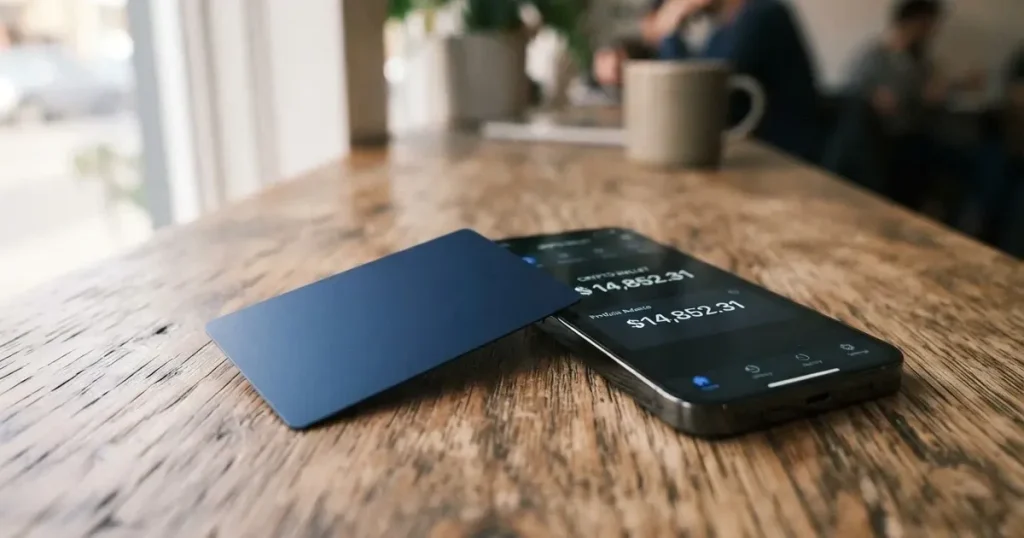
WebitPay is a Visa card programme that lets you spend a crypto-funded balance at ordinary shops and online merchants, rather than only inside the crypto economy. That single feature, a payment card that draws on stablecoins you transfer in, is the heart of what WebitPay offers, and it is the reason you might be reading this. The card comes in physical and virtual form, the virtual one slots into Apple Pay and Google Pay, and the company behind it, Webit Information Technology Limited, sits in Hong Kong, with the card itself issued by Reap Technologies Limited.
What I found, going through the published terms, the App Store listing, the FAQ, and what is and is not on the site, is a card that does the basics competently but is unusually quiet about the details most people ask first. The fee schedule is described as “will be made available on our website.” The list of countries where the card is not available is mentioned in the FAQ but not actually shown. Top-up networks, minimums, and any deposit fees are not stated. Even the card’s billing currency is not stated. So this review will read in part as a list of things you would normally expect to find and that WebitPay does not publish, because in 2026 that silence is itself a finding you should weigh.
Conditions are current as of October 28, 2026.
Verdict
WebitPay scores 6.0 out of 10 in my review. That is a middling score, neither a recommendation nor a warning, and the rest of this page explains how I got there. The card’s everyday mechanics, the Visa acceptance, the mobile wallet support, the stablecoin funding, are good. The unknowns around cost, eligibility, and top-up mechanics pull the score down, because you cannot really budget for a card whose fee schedule is “to be published” and whose prohibited countries are referenced but not listed.
The score table below shows how each criterion contributed. I have kept the marks as they came out of my research and explained each in plain language underneath.
| Criterion | Mark | Reason |
|---|---|---|
| Who can get it | 5 / 10 | The full country list is not published; sanctions rules apply; FAQ mentions a closed-country list without showing it |
| Cost | 5 / 10 | Fee schedule is not published; only the ATM currency-conversion fee (1%) and a separate ATM fee of undisclosed amount are confirmed |
| Top-up options | 5 / 10 | USDT or USDC from a self-custody wallet; networks, minimums, and top-up fee not disclosed |
| Reliability and complaints | 7 / 10 | Hong Kong company; card issued by Reap Technologies; no licence names published; 2FA via Google Authenticator; no incidents or complaints found; App Store rating 5.0 from 2 ratings |
| Everyday use | 9 / 10 | Physical and virtual Visa; virtual card works with Apple Pay and Google Pay; ATM on the physical card |
WebitPay is a reasonable fit if you specifically want a Visa card you can fund with USDT or USDC straight from your own wallet, and you are comfortable with a provider that has not published much of the fine print. It is not a fit if you need to know, in writing, what the card costs you each month, what country list applies, or what stablecoin network the deposit address will expect. For that second group, the alternatives later in this review are more transparent.
Who they will give the card to
The public information about WebitPay’s eligibility is thinner than you would expect. The terms say that you must not be a person subject to sanctions, which is standard, but the actual list of countries where the card is not available is mentioned in the FAQ as something that exists without being shown. I could not find a “supported countries” page or a “restricted countries” page on the WebitPay site. That is the first thing I would want to confirm before applying, because the only thing the terms do state is the sanctions exclusion.
Beyond the country question, the service rules out sanctioned persons in any country. That is the only published eligibility filter. There is no separate statement about age, but because the card requires KYC, you will need to be old enough to pass an identity check, which in most jurisdictions means at least 18. There is also no statement about US persons, UK residents, or any of the other categories that more transparent programmes usually address directly.
If you live in a country with a developed payments market and a Western bank account, you may already have a cheaper path to the same outcome, and WebitPay’s appeal will mostly be as a backup or as a way to spend stablecoins without first cashing out to a bank. If you are in a country with limited card access, or you are unbanked or underbanked, the same thinness of disclosure becomes more serious, because you have less margin for surprise refusals or fee shocks.
What this means for you: the single most important pre-application check is the country list, and the single most useful piece of advice is to ask WebitPay support directly, by email at [email protected], whether your country of residence is on the accepted list before you start KYC. If the answer is uncertain, the alternatives below are at least as accessible and disclose their country lists in full.
How to get it
Getting a WebitPay card follows the same general pattern as most regulated crypto cards. You download the app, create an account, and pass a KYC check. The KYC is described as automated with a third-party provider, Shufti Pro, using facial recognition and data matching, with the possibility of a manual review if the automated pass is inconclusive. Refusing KYC can lead to your account being suspended, which is the usual condition.
The documents you are asked for, the proof of address requirement, and the age requirement are not stated publicly. In practice, an automated KYC provider will usually ask for a government photo ID and a selfie, with proof of address only triggered in some cases. You should expect to have both ready rather than be surprised. There are no published tiers of KYC, and no published processing time for the review. There is also no public statement of the rejection reasons, which is normal but worth knowing.
Once KYC is cleared, you can order the card. WebitPay offers both a physical and a virtual Visa card, and the App Store description says the virtual card works with “millions of Visa-supported merchants.” The currency the card is denominated in is not stated, which is unusual; most cards either say they are USD or that they are multi-currency. The delivery time for the physical card is also not stated. I would not assume a specific delivery window; if you need the card by a date, treat the delivery time as unknown and ask support.
What this means for you: the application itself is straightforward and follows the usual KYC pattern. The unusual parts are what is not said. Before you start, make sure you have a government photo ID, a working camera for the selfie, and ideally a recent utility bill or bank statement for proof of address in case it is requested. Ask support for the card currency, the physical card delivery time, and the list of countries where the card is available, so you are not finding these things out at the KYC stage.
What it really costs: Fees
This is the section I found hardest to write, because the public information is sparse. WebitPay’s stated position is that the fee schedule “will be made available on our website.” A “WebitPay Card Service Fees” FAQ page exists, but the contents are not visible in the public sources I could check. So most of the line items you would normally compare across cards are not published for WebitPay.
What I can confirm from the public material:
| Fee or limit | Value |
|---|---|
| Issuance fee | Not stated |
| Monthly maintenance fee | Not stated |
| Crypto-to-fiat conversion fee | Not stated |
| General foreign-exchange (FX) fee | Not stated |
| ATM withdrawal fee | Separate fee (amount not stated) plus a 1% currency conversion fee |
| Daily spending limit | Not stated |
| Monthly spending limit | Not stated |
| Top-up fee | Not stated |
| Minimum top-up | Not stated |
The one fee that is explicit is the 1% currency conversion fee charged on ATM withdrawals, on top of a separate ATM fee whose amount is not disclosed. That means a 100 USD cash withdrawal in a foreign currency will cost you at least 1 USD in conversion plus whatever the unnamed ATM fee turns out to be, and the latter is a real number you cannot budget for in advance. The crypto-to-fiat conversion fee for normal in-store or online spending is not stated either, and that is the more common cost you would pay on this card, since most spending is not at an ATM.
The general FX fee, meaning the markup Visa or Mastercard applies when the merchant settles in a currency different from the card’s base currency, is also not stated. The App Store description refers to “multi-currency payments across international platforms,” but it does not say what that costs. If the card is denominated in a specific currency and you spend in another, you should expect to pay a margin on top of the network rate, though WebitPay does not publish what this margin is.
Let me walk through a few everyday payments so the cost shape is clear, even if the exact figures are not:
- Buying a coffee with the physical card at a local shop, in the card’s base currency: the merchant is paid by Visa, WebitPay converts your stablecoin balance at the time of payment, and the fee is the conversion fee, which is not published.
- Paying for an online subscription in EUR with a USD-denominated card: the FX fee plus the conversion fee both apply, and neither is published.
- Withdrawing 200 USD from a foreign ATM: the 1% conversion fee is 2 USD, plus the separate ATM fee of unknown amount.
What this means for you: in practical terms, treat the card’s all-in cost as unknown until WebitPay publishes its fee schedule. If you only spend small amounts and you are not sensitive to a few percent of cost, the card can still be useful. If you are sensitive, the alternatives below are far more transparent, and the International Visa Card in particular publishes a clean fee structure.
Top up
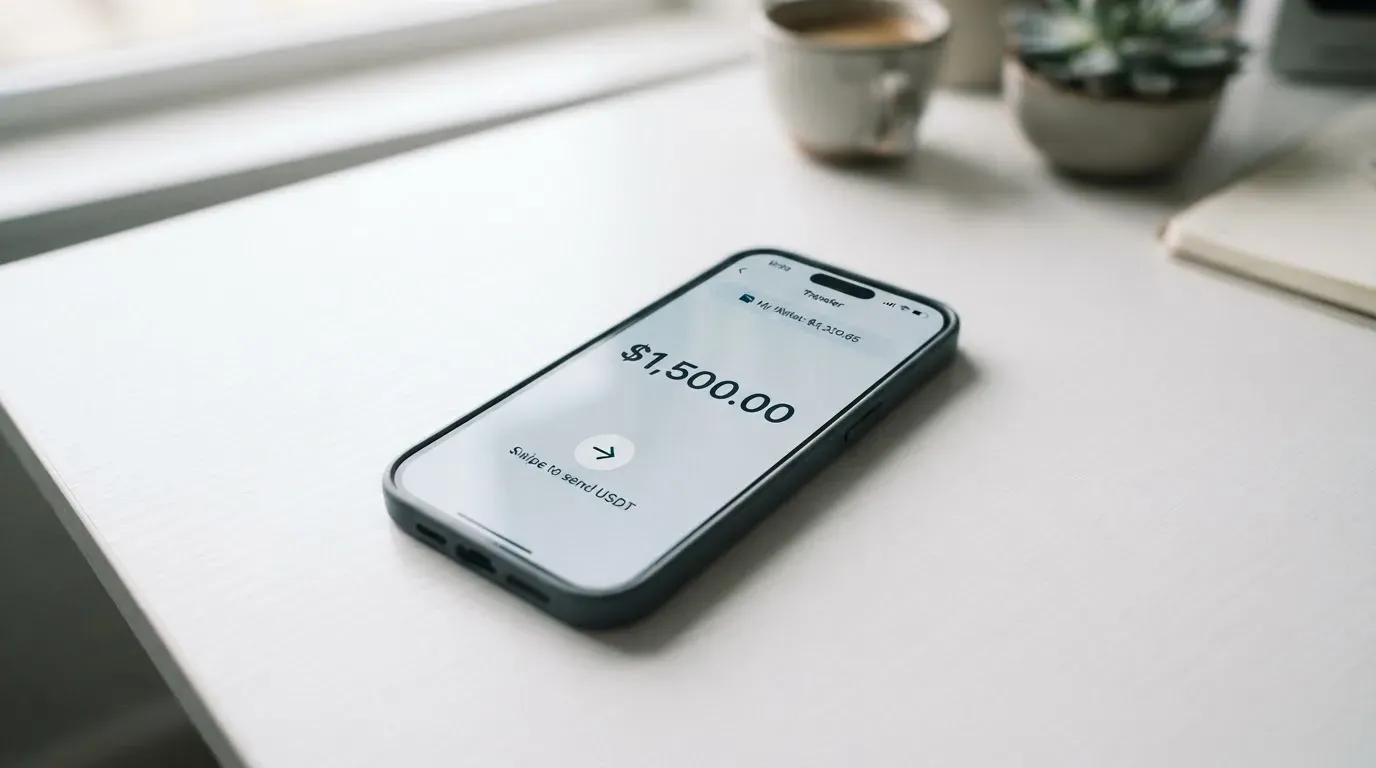
WebitPay’s funding model is simple to describe and short on detail. The card is topped up with stablecoins, specifically USDT or USDC, sent directly from a crypto wallet. That is the entire published funding model. There is no bank transfer, no card top-up, no SEPA, no SWIFT option. The network on which you should send the USDT or USDC is not stated, the minimum top-up is not stated, the top-up fee is not stated, and the processing time is not stated.
The terms do state that top-ups must originate from legitimate sources, which is a standard anti-money-laundering clause, but it is not the same as telling you which networks and minimums apply. Stablecoins exist on many blockchains, including Ethereum, Tron, Solana, Polygon, Avalanche, and others, and a deposit sent on the wrong network is generally not recoverable, so the absence of a published network list is a real practical risk rather than a documentation gap.
What this means for you: before you send anything, ask support which networks are accepted, what the minimum top-up is, whether there is a top-up fee, and what the deposit address belongs to. If you cannot get a clear answer, do not send funds from a wallet you cannot afford to lose, because crypto transfers are irreversible and a wrong network deposit is unlikely to come back. The network question is also where your own wallet’s gas balance matters: if you are sending ERC-20 USDT, you need ETH in the same wallet to pay gas, and if the network the card accepts is one your wallet does not support, the deposit will simply not arrive.
Paying with it every day
In normal use, the WebitPay card behaves like a fairly standard Visa. The virtual card can be added to Apple Pay and Google Pay, with no extra fee from WebitPay for Google Pay, though network, third-party, or Reap charges may still apply. The physical card supports ATM cash withdrawals, with the cost structure described in the section above. Both cards should work at any merchant that accepts Visa, which is the practical point of having a Visa-branded card in the first place.
The app itself, the WebitPay mobile app, is at version 1.4.5 on the App Store as of 16 September 2026, with a 5.0 rating from 2 ratings read on 21 October 2026. That is a thin data set, and you should not treat two ratings as a community consensus, but there are no negative reviews flagged in what is visible. Google Play was not checked, so I cannot speak to the Android rating. Recent app updates have added useful features: in January 2026, WhatsApp OTP and an Anti-Phishing Code were added for security; in March 2026, balance alerts; in May 2025, an earlier release had improved statement download and ATM features.
Mobile-wallet support, in particular, is a strong point. When you add a card to Apple Pay or Google Pay, the card number is replaced with a tokenised device number stored in the phone’s secure element, and each payment uses a one-time dynamic code. That is the same protection you would get on any modern tokenised card, and it means a virtual card in Apple Pay is generally safer to use online than typing the card number into a website. The card’s blocked merchant categories are not published, so I cannot tell you whether gambling, crypto purchases, or other categories that some issuers restrict are blocked here.
The dispute process is described in broad terms. The first step is to contact the merchant directly. If that fails, you raise a claim with WebitPay, which then liaises with Reap and the card networks, “subject to eligibility and timelines.” A reversal is not guaranteed. That is a fair description of how chargebacks work in practice on most card programmes, but the absence of a published dispute SLA means you should not assume a quick resolution.
What this means for you: the everyday use of the card is the strongest part of the WebitPay offering, because a Visa that works in Apple Pay and Google Pay and at any ATM is, mechanically, what most people want from a payment card. The weaker parts are what is not published: blocked merchant categories, the card’s billing currency, the dispute timeline, and how long authorisations can place a hold on your balance.
What can go wrong
This is the section where I would normally walk you through the things that have gone wrong with similar cards, because the pattern of crypto-card failures is well established. With WebitPay specifically, the public record is unusually clean. I did not find any official incident, hack, or user complaint tied to WebitPay, and there is no Trustpilot page for the brand in my search results. That is not a guarantee, but it is the starting point.
The company behind the programme is Webit Information Technology Limited, with an office at Room 2706, 27/F, Everbright Centre, 108 Gloucester Road, Wan Chai, Hong Kong. The terms are governed by Hong Kong law. The card itself is issued by Reap Technologies Limited, with Webit acting as the programme provider. The site says Webit holds “necessary financial licenses” but does not name any. That is the second thing I would want confirmed before relying on the card, because a programme provider without a named payments licence, combined with an issuer whose own licence is not described in the public material, is a structure you should understand.
On the security side, the published safeguards are: two-factor authentication through Google Authenticator, an Anti-Phishing Code and WhatsApp OTP added in app version 1.2.1, instant card freeze for a lost physical card, and an account that Webit describes as an electronic money account. What is not stated is whether customer funds are safeguarded in a segregated account, which is the standard protection offered by regulated electronic money institutions, and whether any of those protections apply to the crypto balance that funds the card.
Support is reachable by email at [email protected], by phone at +852-96958088 during Hong Kong hours, Monday to Saturday 8:00 to 18:00, and through a Help Center on Zendesk. The Zendesk-based help center is a good sign for self-service, and the published phone number is unusual for a small programme and is a positive signal. The fact that support is in Hong Kong time matters if you are elsewhere, because the Mon–Sat 8:00–18:00 window may not align with your day.
The wider pattern of crypto-card risk is worth keeping in mind even though it is not about WebitPay specifically. Visa terminated its global agreements with FTX in November 2022, and the FTX US debit card programme was wound down by its issuer. Earlier, in 2018, Visa suspended WaveCrest in Europe, which closed a number of crypto-card programmes overnight. Crypto transfers are generally irreversible, custodial platforms have a long history of major losses from hacks and fraud, and a stablecoin balance is only as recoverable as the issuer’s willingness and ability to return it. None of these risks are specific to WebitPay, but they are the kind of risk that a programme with a thin public disclosure makes harder to evaluate.
What this means for you: do not keep more on the card than you are willing to lose, and do not treat the balance as a long-term store of value. The lack of a named licence, the “necessary financial licenses” line without specifics, and the absence of a public safeguarding statement are the three things that would change my view of the card. If the company publishes licence details and a clear safeguarding statement, this section can be revised upward.
What to take instead
WebitPay is not the only Visa or Mastercard programme you can fund from a stablecoin balance. The three alternatives below are the most directly comparable in my view, in that they also serve people who want a payment card fed by crypto, and they publish more of the cost and country information that WebitPay does not. They are presented in the order of their own review scores, with the strongest first.
International Visa Card is the highest-scored alternative at 6.7 out of 10. It is a U.S.-issued Platinum Visa card, currently virtual with a physical card marked as “coming soon,” that pays in USD. The country restrictions are fully published: the card and account are not available to residents or legal registrants of Belarus, mainland China, North Korea, Cuba, India, Iraq, Iran, Israel, Myanmar, Nepal, Nicaragua, Russia, Syria, Turkey, Ukraine, or Venezuela, and purchases are blocked in North Korea, Cuba, Iran, Russia, Syria, Ukraine, and Venezuela. The rule is by residence or registration rather than by citizenship. The fee structure is clear: a $5 one-time virtual card issuance fee, no maintenance fee, free card use in USD, and a 2% FX fee on top of the Visa exchange rate for foreign currency, with deposits of any kind free. There are three plans: Classic is free, Pro is $9.00 per month, and Max is $19.00 per month, so you can scale your plan to your use. There is no cashback stated.
UNi Card comes in at 6.1 out of 10 and takes a different approach: a multicurrency Mastercard that spends from the UNi.Global account balance, with no annual fee, no foreign transaction fee, conversion at live OTC rates, and Spend-to-Earn rewards of up to 3% with the UNi Card. The country list, the funding mechanics, and the issuance fee are not stated, so transparency is not its strongest suit either, but the published fee structure for using the card is clean.
Whop Cards is at 5.2 out of 10. It is a Visa card that works anywhere Visa is accepted, with a published “no extra fees” promise, no cashback beyond a 5% cashback programme at select merchants (currently Uber, with more planned), and a published country list: 31 US states for consumers (Alabama, Alaska, Arkansas, California, Colorado, Connecticut, Florida, Hawaii, Illinois, Indiana, Iowa, Kansas, Kentucky, Maine, Massachusetts, Michigan, Minnesota, Montana, Nebraska, New Hampshire, New Jersey, New York, North Carolina, Oklahoma, Pennsylvania, South Carolina, Texas, Utah, Virginia, West Virginia, and Wyoming) and 41 for businesses, with a separate list of unsupported countries including Belarus, mainland China, Cuba, Hong Kong, India, Iran, Iraq, Israel, Myanmar, Nepal, Nicaragua, North Korea, Russia, Syria, Turkey, Ukraine, Venezuela, and Vietnam. The basis for the rule, citizenship or residence, is not stated. The card spends from a Whop balance backed by stablecoin collateral from a linked wallet, though the specific coins and networks are not stated. The 5% Uber cashback is a small but concrete perk.
| Alternative | Score | Network | Currency | Cost | Top-up | Rewards |
|---|---|---|---|---|---|---|
| International Visa Card | 6.7 | Visa | USD | $5 issuance, free in USD, 2% FX, plans $0/$9/$19 | USDC/USDT 1:1, plus USD/EUR/SEPA/SWIFT/FedNow | None stated |
| UNi Card | 6.1 | Mastercard | Multicurrency | No annual fee, no FX fee | Not stated | Up to 3% Spend-to-Earn |
| Whop Cards | 5.2 | Visa | Not stated | “No extra fees” | Stablecoin from linked wallet | 5% at select merchants |
| WebitPay | 6.0 | Visa | Not stated | Not published | USDT or USDC from wallet | Not stated |
If the deciding factor for you is the published cost structure, the International Visa Card is the strongest of the four. If the deciding factor is multicurrency support without an FX fee, UNi Card is the strongest. If you want cashback and you live in a covered US state, Whop Cards is worth a look. WebitPay’s edge is the direct wallet-to-card USDT/USDC flow combined with Apple Pay and Google Pay support, which is the part of the product that is clearly built and works.
Who I would recommend it to
Putting the whole review together, the WebitPay card is a reasonable choice for a specific kind of user. You want a Visa card you can fund directly with USDT or USDC from your own self-custody wallet, you want that card to work in Apple Pay and Google Pay without further configuration, and you are comfortable with a provider that has not published its full fee schedule, country list, or top-up network list. You are also comfortable treating the card’s balance as spendable rather than as a store of value, because the public disclosure around safeguarding is thin.
The card is not a good fit if you are sensitive to the all-in cost of a payment, because you cannot price it in advance. It is not a good fit if your country might be on the unpublished restricted list, because you would only find out at KYC. It is not a good fit if you need to know, in writing, which stablecoin networks the card accepts, because that information is not in the public material. It is also not a good fit if you plan to keep a large balance on the card, because the safeguarding position is not stated.
For everyone else, the card is a functional, low-friction way to convert a stablecoin balance into everyday spending. The mobile-wallet support, the Visa acceptance, and the simple funding model are real strengths. The score of 6.0 out of 10 reflects those strengths and the disclosure gaps in roughly equal measure, and the main thing I would ask the company to publish next is a full fee schedule and a country list, because both are reasonable to expect from a programme that handles customer money.
Frequently asked questions
What is the WebitPay card?
The WebitPay card is a Visa-branded payment card, available as both a physical and a virtual card, that draws on a balance funded by USDT or USDC stablecoins sent from a crypto wallet. The programme is run by Webit Information Technology Limited in Hong Kong, with the card issued by Reap Technologies Limited.
How does the WebitPay card work?
You create an account in the WebitPay app, pass a KYC check, and order a physical or virtual card. You then send USDT or USDC from your crypto wallet to the card’s funding address, and the resulting balance is what the card spends. The virtual card can be added to Apple Pay and Google Pay for in-store and online use.
Is WebitPay a bank?
No, WebitPay is not a bank. It is a programme provider whose company, Webit Information Technology Limited, is registered in Hong Kong, and the card itself is issued by Reap Technologies Limited. The site says Webit holds “necessary financial licenses” but does not name them, so the specific licence status is not publicly verifiable.
Who owns WebitPay?
The published owner is Webit Information Technology Limited, with an office at Room 2706, 27/F, Everbright Centre, 108 Gloucester Road, Wan Chai, Hong Kong. There is no public statement of beneficial ownership or of any parent company beyond that.
Is the WebitPay card available in my country?
The published answer is that the card is not available in a list of prohibited countries and regions, but that list is mentioned in the FAQ without being shown. I would email [email protected] and ask specifically whether your country of residence is on the accepted list before starting KYC.
Does the WebitPay card require KYC?
Yes. KYC is required through an automated third-party provider, Shufti Pro, using facial recognition and data matching, with a possible manual review. The exact documents asked for are not published, so you should have a government photo ID, a working camera for the selfie, and ideally a recent utility bill ready.
How do I top up the WebitPay card?
You top up the card by sending USDT or USDC from your own crypto wallet to the card’s deposit address. The accepted network, the minimum top-up, the top-up fee, and the processing time are not published, so you should confirm all four with support before sending funds, because crypto transfers sent on the wrong network are generally not recoverable.
How do I add the WebitPay card to Apple Wallet or Google Pay?
You open the WebitPay app, generate the virtual card if you have not already, and follow the standard Apple Pay or Google Pay add-card flow, which verifies the card with the issuer before tokenising it. There is no extra WebitPay fee for adding the card to Google Pay, though standard network or third-party charges can still apply.
Is the WebitPay card safe to use?
The published safeguards are Google Authenticator 2FA, an Anti-Phishing Code, WhatsApp OTP, instant card freeze, and an account described as an electronic money account. What is not published is whether customer funds are safeguarded in a segregated account, which is the standard protection offered by regulated electronic money institutions, so the safety picture is partially complete rather than fully answered.
Is the WebitPay card worth it?
Whether the card is worth it depends on what you are comparing it to. If you want a Visa card you can fund directly with USDT or USDC from your own wallet and you are comfortable with the unpublished cost and country details, it is a competent option. If published fees and a published country list matter to you, the International Visa Card alternative is more transparent for the same general use case.
App and neobank card reviews – cryptocardcheck
Content created by the «cryptocardcheck» team