
A low-cost virtual Mastercard that spends your USDC or USDG, and the fine print around it
 Available in US
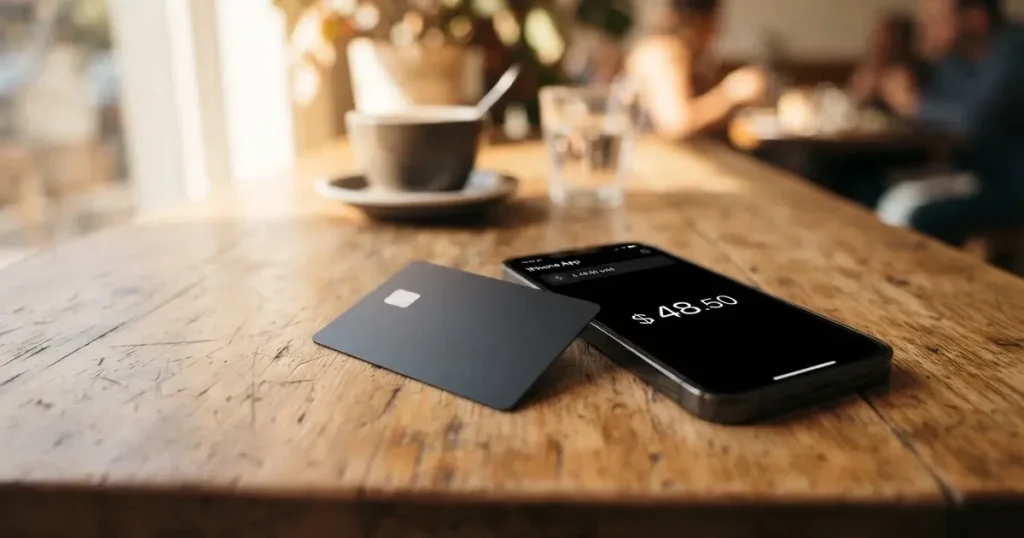
The OKX card is a euro-denominated virtual Mastercard that spends USDC or USDG held inside OKX Pay, an app-based balance rather than a bank account. It has no card fee, no per-transaction charge and no OKX currency-exchange fee, and the only conversion cost stated for it is a spread — 0.1% according to OKX’s own explainer, though the launch press release said 0.4%. If you live in the EU or Norway, you already hold USDC or USDG, and you would rather not pay a monthly fee to keep a card, that combination is what this card is built for. If you are anywhere else, or you would like a physical card or an ATM, the pages I could read do not promise either. My overall mark is 6.2 out of 10: an unusually cheap card inside a narrow and unusually incomplete set of published details.
The conditions described here are current as of October 28, 2026.
The verdict
I scored this card 6.2 out of 10. That is not a score for a bad card; it is a score for a card that does two things well — zero fees and euro spending from a stablecoin balance — while leaving several things a new customer would want to know unsaid. The card suits EU and Norwegian users who already hold USDC or USDG and are comfortable with a virtual-only, balance-limited product. It does not suit anyone who needs a physical card in the post, an ATM, a broad choice of spending currencies, or a long list of published limits and policies.
The audience this is really written for is narrow: EU users holding USDC or USDG. If that is not you, the rest of this page is mostly background about why the details are thin.
Here is the score broken down:
| Criterion | Mark | Why |
|---|---|---|
| Who can get it | 5 / 10 | EU plus Norway, launched 28 January 2026; Iceland and Liechtenstein excluded |
| Cost | 9 / 10 | Card without a fee, without a transaction commission and without an OKX FX commission; conversion spread 0.1% by the explainer, 0.4% by the press release |
| Top-up options | 5 / 10 | USDC or USDG on the OKX Pay balance via Convert or an external deposit; other coins must first be converted, networks not named |
| Reliability and complaints | 6 / 10 | OKX Europe Ltd. is the MiCAR-licensed entity; the issuer is not named in the official text; unofficial: Monavate; complaints about the exchange include asset holds, account restrictions, slow support |
| Everyday use | 5 / 10 | Virtual euro Mastercard, Apple Pay and Google Pay; physical card and ATM not named |
| Total | 6.2 / 10 |
Two of those rows deserve a word. The cost row is high because the card genuinely appears to be free to hold and free to use, apart from the conversion spread — that is not always true in this category. The top-up row is low because the card only knows two assets, USDC and USDG, and the pages do not say which networks to send them on, which is the part people most often get wrong.
Will they give you the card?
The short answer is: if you are in the EU or Norway and pass identity verification, yes; if you are in Iceland or Liechtenstein, no. The card launched in Europe on 28 January 2026 and covers the EU plus Norway. Two EEA countries are explicitly excluded. There is also an inconsistency worth flagging: OKX’s own explainer calls the coverage “entire EEA”, which contradicts the exclusion of Iceland and Liechtenstein. Where the card’s own text disagrees with itself, I go with the more specific statement, but you should check your own country before you plan around it.
Eligibility is not decided by nationality alone. The rule the card states is that it is for users of OKX Europe Ltd., the MiCAR-licensed entity, and the application asks for your country of residence. So the practical test is: do you live in an EU member state or Norway, and are you willing to verify your identity with OKX Europe? Citizenship is recorded and screened separately from residence in EU anti-money-laundering practice, so a citizen of a sanctioned country living in France is not the same case as someone who simply lives abroad. That is a screening matter, not something I can advise you on, and it is one more reason the rule as written is about residence and the entity, not about who you are on paper.
One thing the card does not state is the age requirement. The category norm is 18 for prepaid and debit cards, and I would assume nothing beyond that — no higher minimum is published for this one.
How to get it
The path is short. You need full identity verification with OKX: a valid ID document and proof of address. That is the whole verification level for the card — there are no tiers, no separate higher tier for higher balances, and the pages do not state how long approval takes or list the reasons a file might be rejected. After that, the card is activated inside the OKX app, and you fund it by holding USDC or USDG in OKX Pay.
What you end up with is a Mastercard, euro-denominated, virtual, linked to your OKX Pay balance. It comes through a European licensed payment provider whose name the official text does not give. A physical card is not mentioned. There is no delivery to wait for and no shipping step — the card exists in the app from the moment it is activated. That is worth saying plainly, because “apply for a card” and “get a card” are the same thing here, and anyone hoping for plastic in the post should stop reading.
What it really costs
This is the strongest part of the card, and the reason it scored 9 out of 10 on cost. There is no fee to hold the card, no fee per transaction, and no OKX charge for converting currency. The one cost that does exist is the conversion spread: OKX’s explainer says 0.1%, its launch press release said a 0.4% market spread. The explainer is the newer document, so I use 0.1% as the working figure and treat the difference as something to ask about if you ever move meaningful amounts. The conversion to euro happens at the moment of purchase, not when you load the card.
Here is what the card publishes about its fees and limits, and, just as importantly, what it does not:
| Fee or limit | What the card says |
|---|---|
| Card issuance / monthly fee | None |
| Transaction fee | None |
| OKX currency-exchange fee | None |
| Conversion spread | 0.1% (explainer) / 0.4% (launch release) |
| ATM fee | Not stated |
| Daily limit | Not stated |
| Monthly limit | Not stated |
Those four “not stated” lines are not gaps I am filling with guesses; they are simply absent from the pages I could read. For a card whose whole point is everyday spending, an unstated ATM fee and unstated monthly limit are the two details I would want before I committed real money to it.
To make the cost concrete, here is what happens on three ordinary payments, using only the numbers the card gives:
- Buying a coffee for a few euros, paid from a USDC balance, costs you the conversion spread on that amount. There is no per-transaction fee and no OKX FX fee on top. If your balance is in USDG instead, you are also within the cashback scheme; if it is in USDC, cashback does not apply (see below).
- A larger everyday purchase, say a weekly shop, again costs only the spread. There is no flat “per payment” charge to worry about and no monthly minimum.
- Anything you would pay a foreign currency price for is still paid in euro, because the card is euro-denominated; you are not choosing AUD or USD at the till. Any other crypto you hold has to be converted to USDC or USDG first, and that conversion is a separate step from the purchase.
There is one thing that looks like a fee but is not: cashback. It depends on your OKX VIP level and it only applies to USDG purchases, never to USDC ones. Regular level gets 2% up to a monthly cap of EUR 10; VIP1 4% up to EUR 300; VIP2 4.5% up to EUR 450; VIP3 5% up to EUR 1,000; VIP4 and above 10% up to EUR 1,000. Those rates are from 29 May 2026. The launch release also advertised a 30-day promotion of up to 20% for VIP and 15% for regular users, but I would not plan a budget around a promotional rate. Promotions vary. I also saw an unofficial claim, on a German deals forum, that a monthly limit was once raised to EUR 50 as part of a cashback promotion; that is unverified, may not be the card’s actual limit, and is not something I would rely on.
How to top up
You top the card up by holding USDC or USDG in your OKX Pay balance. There are two routes: use Convert inside OKX Pay to turn what you hold into USDC or USDG, or deposit USDC or USDG into OKX Pay from an external wallet. If you hold other coins, they must be converted to USDC or USDG before they can be spent — the card does not spend BTC, ETH or anything else directly.
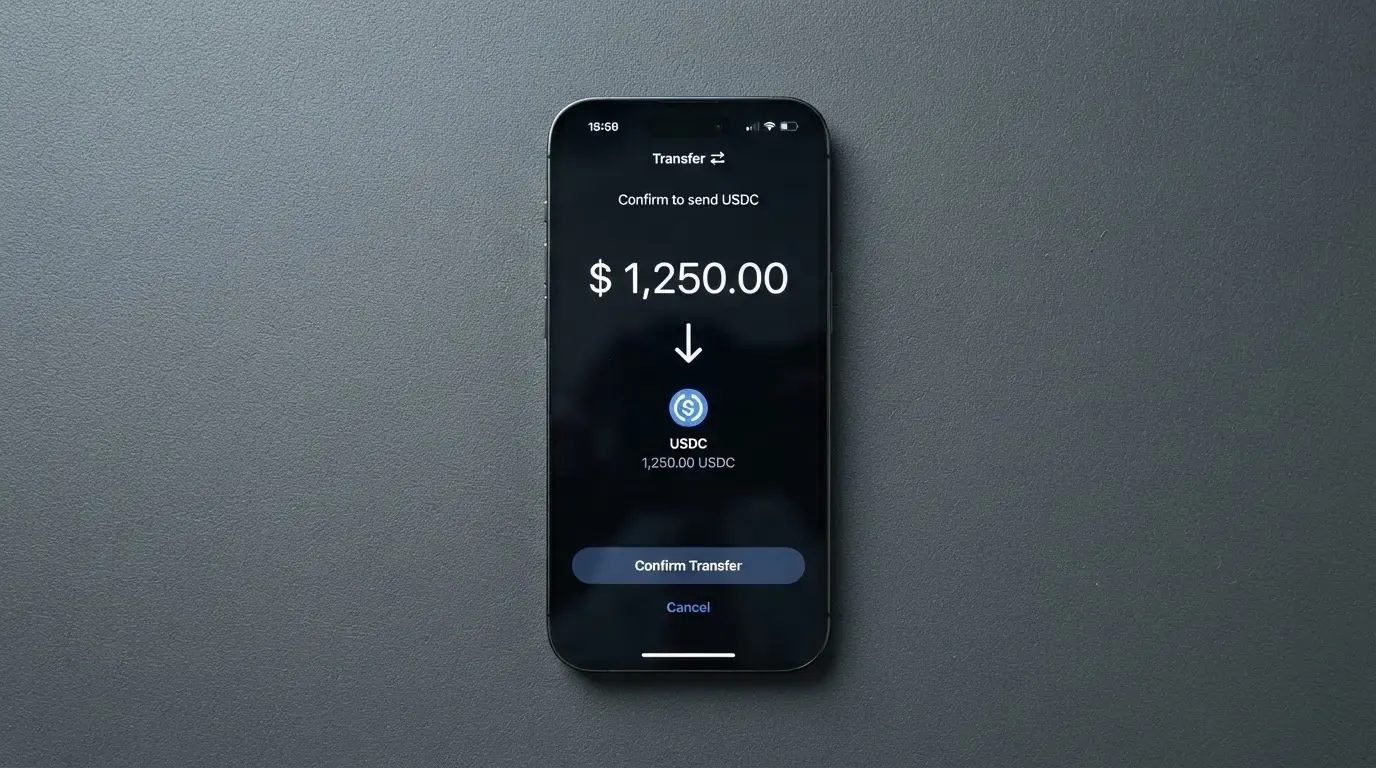
Several details are not stated, and for a card you fund this way they matter. The pages do not say which blockchain networks to use for an external deposit, and getting that wrong is the classic way to lose a transfer. They do not state a deposit fee, a minimum top-up, or what network fees apply; on-chain fees, if any, are charged by the blockchain, not by the card provider. There is no automatic top-up: if your balance is short when you pay, the payment is simply declined. That is a real design choice, not a bug — the card cannot overdraw, because it spends only a balance you already loaded — but it means you are your own top-up scheduler.
One clarification that is easy to get wrong: your stablecoins do not leave your wallet and sit “on the card”. They stay in your own self-custody wallet until the moment of purchase. The balance lives in OKX Pay. So the funds are yours until you spend, and the card is the thing that moves them.
Paying with it every day
Day to day this is a virtual card plus your phone. Apple Pay and Google Pay tap-to-pay are supported, from the launch press release, and because the card is virtual those two are really how you would use it day to day rather than typing the number anywhere. 3-D Secure, Mastercard’s version of which is called Identity Check, applies to online payments as it does to any Mastercard, so expect a one-time code or a biometric prompt on some web purchases.
On rewards, the rule that catches people out is that cashback only applies to USDG purchases. If you hold USDC, you spend it at the card’s normal cost and earn nothing back. If you hold USDG, you are in the cashback scheme and the rate depends on your VIP level, with the monthly caps listed earlier. From 5 October 2026, Bybit’s card moved to a points-only model for crypto-funded transactions, but that is a different card and I mention it only as a reminder that reward rules in this category change and are worth re-reading, not as a comparison here.
The app itself is the main way you interact with the card, and its rating is decent: the OKX app on the App Store sits at 4.6 out of 5 from about 23,000 ratings, though I should say that is the main OKX app listing and not a card-specific score, and I did not read the Google Play rating directly. An unofficial mirror of the Google Play listing puts that at 4.4 out of 5 from a much larger pool of 917,376 reviews. Some things you might look for are not stated: which merchant categories are blocked, how disputes work, and what the support response is.
What can go wrong
The card is issued by OKX Europe Ltd., the MiCAR-licensed entity, through a European licensed payment provider whose name the official text does not give. Unofficial reporting, in Cointelegraph, names the issuer as Monavate, a UK-headquartered e-money institution, and reports that OKX obtained a Maltese Payments Institution licence in February 2026. Those are third-party claims, not something the card’s own pages confirm, but they are consistent with the structure the card describes.
The category itself carries a known risk that has nothing to do with this card’s fees. Crypto platforms have a history of failure and hold-ups: Mt. Gox (about US$350 million reported stolen, 2011–2014), Coincheck (about US$400 million, 2018), Ronin Network (US$625 million, 2022). Holding funds with a custodian carries counterparty and hack risk, and card issuers are programmes that can close — Visa terminated FTX’s global agreements in November 2022 and the FTX US card was wound down, and WaveCrest’s Visa programmes were closed in Europe in 2018. A programme closure typically stops spending and loading, then asks you to withdraw what’s left.
As for OKX specifically, an aggregator of public reviews (rfp.wiki) says reviews often cite slow support and region-dependent verification and withdrawal experiences, with regional availability driving mixed card and fiat experiences. Trustpilot shows about 1,619–1,621 reviews for OKX, and OKX Europe about 4.3 out of 5 from 29 reviews, with negative themes including assets held with no clear reason, account restrictions blocking access to funds, withdrawal holds, and slow support — App Store reviews say the same. These are user reports, not official incidents; the official record of card-specific incidents is not stated. On security, the launch release says stablecoins remain in your self-custody wallet until checkout, and KYC is required under MiCAR and EU anti-money-laundering rules. Whether you can freeze the card instantly, whether two-factor authentication is available, and whether funds are insured are not stated.
What to take instead
If OKX card does not fit — because it is virtual-only, euro-only, or because its limits are too thin — there are three alternatives in this category, and I rate them against the same yardstick.
Young Card, 5.7 out of 10. Its cashback is paid in YNG tokens rather than cash, at a rate set by Club tier: Essential 0.1%, Gold 1.8%, Platinum 3.6% (Bronze and Silver not stated). Eligibility, card details, cost, fees and funding are not stated on the official pages I could read. The tokens-based reward is the thing to weigh — it exposes you to the price of a platform token, which a cashback in euro does not.
MSX, 6.4 out of 10 — the highest-scoring of the four. Almost nothing about it is stated officially: eligibility, card, cost, fees, funding and rewards are all absent from the pages I could read, and I do not want to fill that silence with inference. An option that publishes less than OKX does is a harder one to recommend, not an easier one.
Bybit Card, 6.0 out of 10. This is the most fully documented of the alternatives, and the most clearly bounded. Its official help centre lists regions including Argentina, Kazakhstan, Georgia, Australia, Mexico, Brazil, Peru and Asia Pacific, and states plainly that the product is not meant for EEA customers and that EEA participation is strictly prohibited. So for an EU reader — which is the OKX card’s audience — it is not a live option. It is worth knowing for its structure, though: virtual and physical cards, no issuance fee on the virtual card in all regions, a published cashback ladder from 2% to 10% by tier, and a clearly explained funding model where the card draws on the Funding Account and, if fiat is short, sells crypto at a stated conversion fee. That transparency is exactly what OKX’s top-up and limit details lack.
| Option | Score | Key trade-off |
|---|---|---|
| OKX Card | 6.2 / 10 | Free to hold and use, but virtual-only, euro-only, thin published details |
| MSX | 6.4 / 10 | Slightly higher score, but almost nothing published officially |
| Bybit Card | 6.0 / 10 | Best documented, but not available to EEA customers |
| Young Card | 5.7 / 10 | Cashback paid in platform tokens, not cash |
Who I would recommend it to
I would recommend this card to one specific person: someone living in the EU or Norway, already holding USDC or USDG on OKX, who wants a euro card with no monthly fee and no transaction charge, and who is content for it to be virtual and to spend only from a balance they top up themselves. For that person it is genuinely cheap and does one job well.
I would not recommend it to someone who needs a physical card, wants to use an ATM, plans to hold and spend many currencies, or simply wants the card’s limits, blocked merchant categories and dispute process written down in public before they commit. Those are reasonable things to want, and this card does not publish them.
If you want to understand the machinery underneath any of these cards — why a foreign-issued card can look “foreign” to a shop, how 3-D Secure and tokenised mobile wallets work, or how MiCA and e-money licensing divide responsibility between the exchange and the card issuer — that is category background rather than a verdict on this card, and I have set it aside here to keep this page about OKX specifically. The number to take away is 6.2 out of 10: a fair card for a narrow fit.
Frequently asked questions
What is the OKX card?
The OKX card is a euro-denominated virtual Mastercard that spends USDC or USDG you hold in your OKX Pay balance. It is issued through a European licensed payment provider whose name the official text does not give, under OKX Europe Ltd., the MiCAR-licensed entity. There is no physical card and no ATM. You activate it in the OKX app and top it up with USDC or USDG; everything else is converted first.
How does the OKX card work?
You hold USDC or USDG in OKX Pay, and the card spends that balance like a stored-value card. At the moment of purchase your stablecoin is converted to euro and paid to the merchant. Your stablecoins stay in your own self-custody wallet until that moment; the balance itself sits in OKX Pay, not on the card. The card cannot overdraw — if your balance is short, the payment is declined, because there is no automatic top-up.
Who can get the OKX card?
It is for users of OKX Europe Ltd. living in the EU plus Norway, and it launched on 28 January 2026. Iceland and Liechtenstein are explicitly excluded, even though OKX’s own explainer calls the coverage the “entire EEA” — the card’s text contradicts itself there. The rule is framed around residence and the licensed entity, not citizenship. You must pass full identity verification with a valid ID and proof of address.
Is the OKX card free?
There is no card fee, no monthly fee and no per-transaction fee, and OKX charges no currency-exchange fee. The one cost is the conversion spread when your stablecoin is turned into euro at purchase — 0.1% according to OKX’s explainer, though the launch press release said 0.4%. The explainer is newer, so 0.1% is the working figure. ATM fees and daily and monthly limits are not stated on the pages I could read.
How do I top up the OKX card?
You top up by holding USDC or USDG in OKX Pay, either by using Convert inside the app or by depositing USDC or USDG from an external wallet. Any other coin must be converted to USDC or USDG first. There is no automatic top-up, and the pages do not state which blockchain networks to use for an external deposit, a minimum top-up, or a deposit fee — so check the networks carefully before sending anything.
Does the OKX card give cashback?
Only on USDG purchases, never on USDC. The rate depends on your OKX VIP level with a monthly cap: Regular 2% up to EUR 10; VIP1 4% up to EUR 300; VIP2 4.5% up to EUR 450; VIP3 5% up to EUR 1,000; VIP4 and above 10% up to EUR 1,000. Those rates are from 29 May 2026. A 30-day launch promotion of up to 20% was advertised, but promotions vary and I would not rely on them.
Can I add the OKX card to Apple Wallet?
Apple Pay tap-to-pay is supported, from the launch press release, as is Google Pay. Because the card is virtual, a mobile wallet is really how you would use it day to day. When you add it, the card number is replaced by a device-specific number and each payment uses a one-time code, so your full card number is not stored on the phone or on Apple’s servers.
Is the OKX card safe?
The card requires full identity verification under MiCAR and EU anti-money-laundering rules, and your stablecoins stay in your own wallet until checkout. But several ordinary safeguards are not stated — whether you can freeze the card instantly, whether two-factor authentication is available, and whether funds are insured. Card programmes can also close, as happened with FTX and WaveCrest. Take the usual care with keys and networks.
Why is my crypto-to-fiat payment declined?
The two usual reasons are an insufficient balance and a transfer sent on the wrong network. The card has no automatic top-up, so if your OKX Pay balance is short at the moment of payment it is declined. And if you deposited USDC or USDG on a network the card does not support, or to an address belonging to a different network, the funds may be lost or need manual support recovery with no guarantee — blockchain transfers are irreversible.
Is the OKX card worth it?
For an EU or Norwegian user who already holds USDC or USDG and wants a fee-free euro card, yes — that is exactly the case it was built for, and I scored it 6.2 out of 10. It is less obviously worth it if you need a physical card, an ATM, many currencies, or published limits and dispute rules, because none of those are detailed on the card’s pages. Compare it against the alternatives before you settle, and check what your own country allows.
Exchange card reviews – cryptocardcheck
Content created by the «cryptocardcheck» team