
Airtm review: free USD virtual card, real caveats
 Available in US
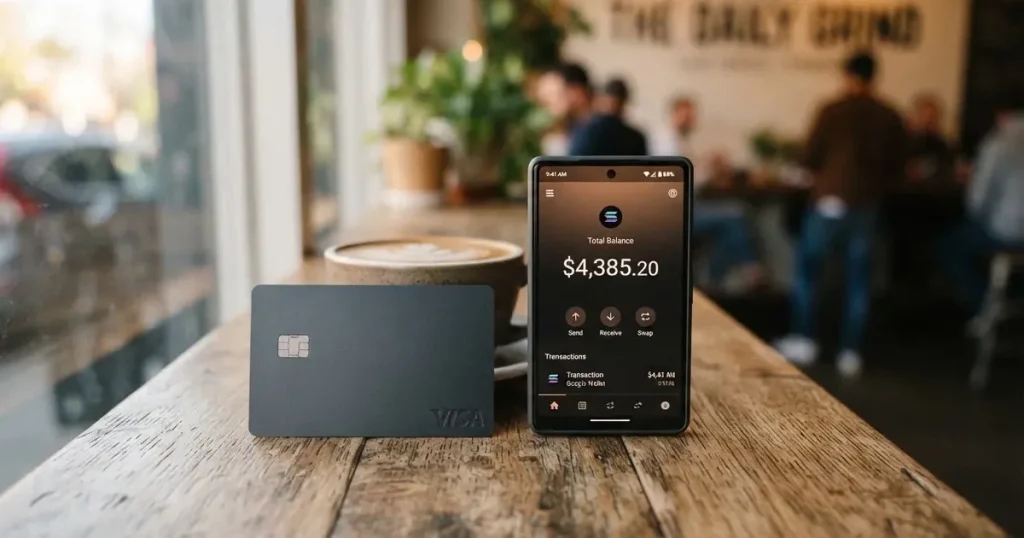
The Airtm card is a prepaid Visa card that spends US dollars out of your Airtm balance, converted from stablecoins at the moment of purchase. It is free to issue and free to keep, charges 0% on international transactions, and tops up at 1% on the first $200 you load each calendar month. What it does not have is a physical card, an ATM, cashback, or a reassuring story about what happens when an account gets frozen. My score is 6.3 out of 10.
That number is not a shrug. It reflects a card that is genuinely cheap on paper and genuinely awkward in practice: strong for someone who already lives inside Airtm and spends dollars daily, weak for someone who needs a card that behaves like a normal bank card in every shop.
Conditions are current as of October 28, 2026.
Verdict: 6.3 out of 10
Airtm suits a specific person: a resident of the US or Latin America who holds dollars or stablecoins, spends most of them locally, is comfortable with a virtual-only card, and has read the reviews about suspended accounts before depositing anything meaningful. If that is you, the card is hard to argue with on cost. If you need a physical card, cash withdrawals, or any real assurance that a support answer will arrive this week, this is not the card for you — and the complaints I read make that a risk statement, not a preference.
The score table below breaks the total into the six things that decide whether a card like this is worth your money. Numbers are copied exactly as scored.
| Criterion | Mark | Short reason |
|---|---|---|
| Who can get it | 5 / 10 | Residents of 15+ countries by residence; launched in the US and Argentina; closed to Belarus, Cuba, Iran, Myanmar, North Korea, Sudan, Syria, Russia, Crimea, Donetsk and Luhansk |
| Cost | 9 / 10 | $0 issuance, $0 monthly, 1% top-up on the first $200/month (max 2 USDC), 0% FX; $1 after 30 days without a top-up |
| Top-up options | 7 / 10 | Top up from Airtm balance in USDC; the wallet accepts 500+ payment methods; networks not disclosed |
| Reliability and complaints | 5 / 10 | Lead Bank is the issuer, Bridge Ventures the operator, Airtm Inc. a FinCEN MSB since 2015; Trustpilot 3/5 on ~7,000 reviews, with complaints about blocked accounts and held funds |
| Everyday use | 5 / 10 | Virtual Visa only; Apple Pay and Google Pay; no physical card, no ATM |
| Total | 6.3 / 10 | Cheap and reliable in the wallet, thin and unpredictable at the card |
The pattern to notice: the two marks that pull the average up are cost and, partly, top-up flexibility. The two that pull it down are everyday use and reliability. Both matter, but not equally for everyone. If your pain is specifically that you cannot get an ordinary bank card, the cost mark carries more weight than it would for someone casually comparing spending apps.
Who will they give you the card
Airtm issues the card to users with verified residence in 15+ countries — by residence, not citizenship. The card launched in the United States and Argentina. Bolivia, Venezuela, Colombia, Ecuador and the Dominican Republic are listed as coming soon, with Guatemala, Chile, Angola, Brazil and Peru planned.
There is a real list of places it is not available at all. The Airtm platform, and therefore the card, is not available in Belarus, Cuba, Iran, Myanmar, North Korea, Sudan, Syria and Russia, or in Ukraine’s Donetsk, Luhansk and Crimea regions. Certain US states are also excluded, including New York.
Two details here deserve more attention than they usually get. First, the test is residence, not citizenship: your nationality does not decide it, your verified address does. That is different from many services in this category, and it is friendlier if you have moved. Second, New York being excluded catches people out. If you live in New York, moving to New Jersey or Connecticut does not change the fact that a US state is on the exclusion list — read the list before you assume a nearby address solves it.
For everyone else reading this: the card is aimed at people who hold dollars and stablecoins and spend them, not at people who want a bridge into the dollar economy from a currency they are trying to move out of. The audience the card genuinely serves is US and Latin American residents spending USD from Airtm. If you are outside that circle, the country list is the first thing to check, not the fee table.
How to get it
Getting the card requires completing a verification called “Special Features KYC”. It is a separate level from the ordinary Airtm account check, and it is specific to premium features like this card. If you have already completed Special Features KYC for a US Virtual Account, you do not repeat it. Standard Airtm account verification — the basic check — is separate and does not cover the card.
The verification itself asks for an official ID carrying your name, address, date of birth and government ID number. The age requirement is 18+. Once approved, activation takes anywhere from a few minutes to two business days. The published steps are short:
- Complete Special Features KYC
- Go to the card page in the app
- Follow the instructions
- Card approved
The card you receive is a Visa prepaid debit card, and it is virtual only — there is no physical version and nothing is delivered to your address. The card currency is USD, and USD is the only currency it holds.
What the card’s public pages do not say is as informative as what they do. No rejection reasons are published, so you cannot read a list of disqualifiers in advance. They also do not break down how long the KYC takes on average, only that processing runs from a few minutes to two business days. If verification is your sticking point — because a previous attempt at a financial service stalled — that silence is worth weighing, and it is also why the reviews section below matters so much for this particular card.
Fees: what it really costs
The headline number on this card is genuinely good. Issuance is $0. The monthly fee is $0, and the annual fee is $0 — the card states no monthly charge applies as long as you regularly load or use it. There is a single tier, no premium version, no upgrade to buy. There is no fee per purchase.
Beyond that, the costs are small but not all zero, and one of them is easy to miss.
| Fee or limit | Value |
|---|---|
| Issuance | $0 |
| Monthly fee | $0 |
| Annual fee | $0 |
| Tiers | Single tier |
| Top-up fee | 1% on the first $200 loaded per calendar month (max 2 USDC/month), 0% beyond $200 |
| Top-up fee per the cardholder agreement | “up to 2%” for funding from the Airtm wallet |
| Foreign exchange fee | 0% on international transactions |
| ATM withdrawal | Not available |
| ATM balance inquiry | Not available |
| Cashback at point of sale | None |
| Card deletion fee | 1% of balance |
| Inactivity fee | $1 after 30 days with no loads |
| Daily spending limit | $2,000 USD |
| Per-transaction limit | $2,000 USD |
| Monthly spending limit | None stated separately; loading limits follow your Airtm account’s withdrawal limits |
The top-up fee deserves a second look because the card’s own documents disagree slightly. The card page says 1% on the first $200 per calendar month, capped at 2 USDC a month, and free above that. The Bridge cardholder agreement, the legal document behind the card, says “up to 2%” for funding from the Airtm wallet. I am not going to guess which governs your account. What I will say is that a fee quoted two different ways on one product deserves a question before you load large amounts, and that the 1%-on-first-$200 reading is the more favourable of the two.
Now three everyday payments, with the fees that actually apply:
- A $40 grocery shop in your own country, paid from a card you topped up $300 into this month. No top-up fee on that $300 — it is past the $200 threshold. No FX fee, because the transaction is domestic. No per-purchase fee. Total cost: zero.
- A $15 subscription in another currency. The 0% international transaction fee applies, so no FX markup. The cost is whatever the dollar conversion costs inside the Airtm rate at the moment of purchase — the card’s fee is not the only component of a cross-currency price.
- A $25 card top-up you have not used before this month. The 1% applies, up to the 2 USDC monthly cap, so roughly $0.25 on a small load. Do it a few times in the same month and the cap is what protects you, not the percentage.
The $1 inactivity fee is the one people trip over. Thirty days with no loads and it is charged. If your card is a travel card used in bursts, or a backup card, that fee will find you. The deletion fee of 1% of balance only matters when you close the card — and closing the card is the only way to get money off it, which is the subject of the next section.
Top up: how the money gets there
The card is not topped up directly. It is topped up from your Airtm balance, held in USDC. When you start a purchase, stablecoins are sold from the platform provider’s account and fiat USD is loaded onto the card in real time. The Airtm wallet itself accepts 500+ payment methods: bank transfers, crypto deposits, mobile wallets, the P2P network, and debit or credit cards via MoonPay.
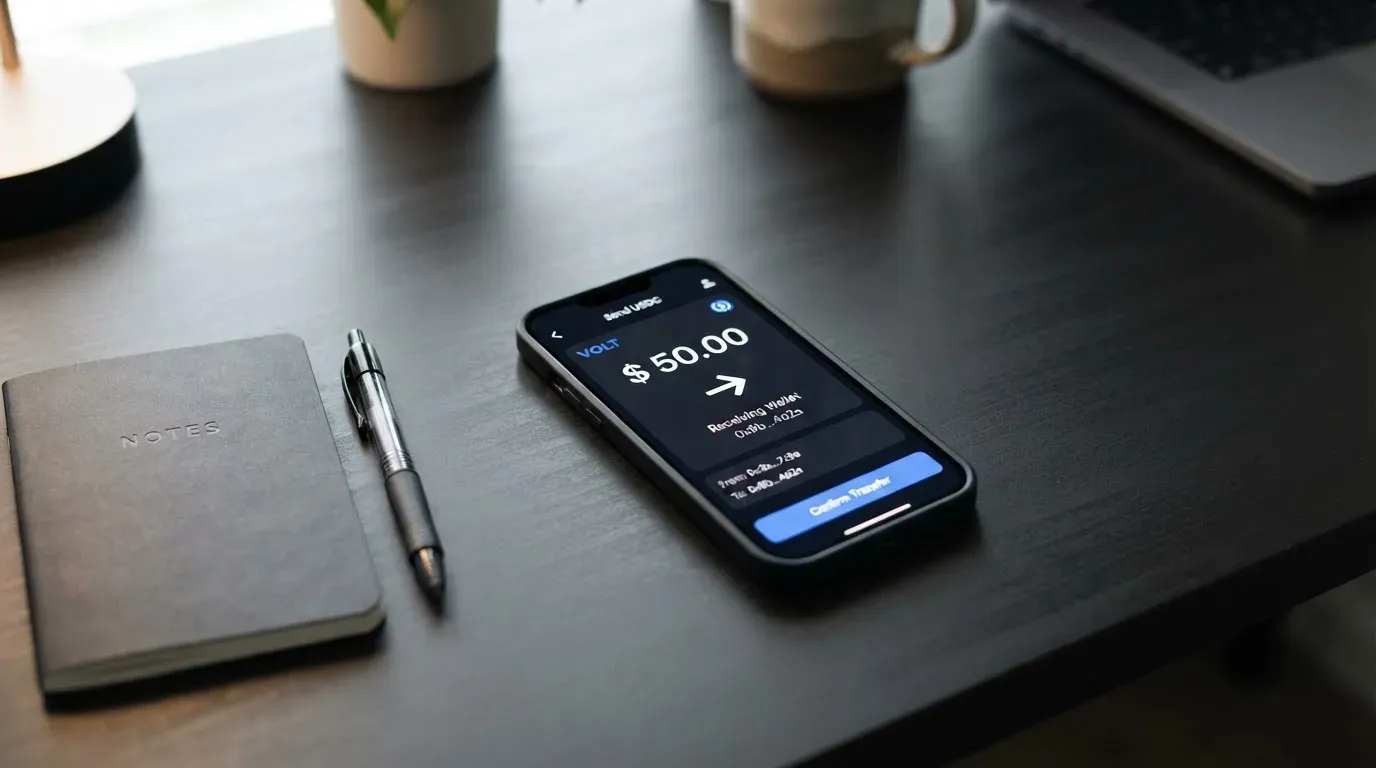
The top-up fee is the same one from the table: 1% on the first $200 per calendar month, capped at 2 USDC, free beyond that, with the cardholder agreement’s “up to 2%” wording sitting behind it. No minimum top-up amount is stated. Top-up comes only from your Airtm balance — not from a bank account directly into the card.
For US users there is a specific rule: the card can only be loaded via payouts, meaning you set the card as your default payout method on Airtm. That is a different flow from loading by depositing crypto, and it is worth knowing before you assume a normal top-up path exists for you.
Network fees for crypto conversion are not billed separately by the card — they are included in Airtm’s spread and P2P rates. Which is convenient until you want to know what a conversion actually cost you, because then the number is inside the rate rather than on a line item.
And then the part that catches people, which is how you get money off. There is no withdrawal from the card. To move funds back to your Airtm balance, you delete the card; the remaining balance minus the 1% deletion fee is transferred to your Airtm account. On card closure, the remaining balance goes back to the platform provider’s wallet as stablecoins. Lead Bank charges no closure fee under the Bridge agreement, Section 20. One more detail worth internalising now rather than later: refunds from merchants are credited to the platform provider’s wallet as stablecoins, not back to the card. A shop that returns your $25 does not put $25 back on the card; it puts stablecoins in the wallet.
Paying with it every day
Day to day, the Airtm card is a virtual Visa that works in Apple Pay and Google Pay, and in anything that accepts a virtual card number. That is the whole daily-use picture, and it is a narrow one.
What works:
- Apple Pay and Google Pay, with the usual protections of a tokenised number — the card number on your phone is a device-specific account number, never your real card number, and each payment carries a one-time code
- Online payments anywhere Visa is accepted
- In-person contactless payments, since a tokenised Visa number in a mobile wallet behaves like a contactless card
- Spending up to $2,000 a day and $2,000 per transaction
What does not:
- Cash. ATM withdrawals are marked not available, and there is no ATM balance inquiry either. If a shop is cash-only, this card does nothing for you.
- Physical card. There is none, so it cannot be handed over, inserted, or shown at a counter.
- Certain merchant categories. Gambling, firearms, drugs, adult content and services, and financial services businesses are blocked.
- Stopping a payment. There is no right to stop a card transaction on this card.
The blocked categories are a policy choice by the issuer, not a legal rule, and the list is set by them — so it can change. That matters if any of your spending falls near those lines.
On the app itself: the iOS App Store listing in the US shows 4.8 out of 5 across about 5K ratings, and Google Play shows 4.5 out of 5 across about 82.4K reviews, read on 2026-10-21. Airtm runs on iOS, Android and a web dashboard. Two ratings pools that size apart, incidentally — the iOS figure is a much smaller sample than the Play one, and it is the US-only store.
Now the part of daily use that is not really about daily use, but you will meet it on an ordinary Tuesday: a declined authorisation can leave a hold on your funds for up to seven business days. Restaurants, car hire and fuel pumps are the usual culprits. The pre-authorisation is not a charge, and the money comes back — eventually. On a card with a real balance behind it, seven days of locked funds is an irritation. On a card funded by a conversion, it is a week of your spend sitting somewhere you cannot reach.
If a payment goes wrong, the route is set out in the cardholder agreement and it is not a fast one. Disputes must first be handled directly with the merchant. Errors must be reported within 60 days; investigation runs within 10 business days, extending to a standard 45 days and 90 days for new cards or foreign-initiated ones. Your liability for unauthorised transactions is capped at $50 if you report within two business days, and up to $500 if you report later. The card’s public pages do not state how that compares to what a consumer might expect elsewhere, so treat the two-business-day line as the one to hold yourself to.
What can go wrong
The biggest thing that can go wrong is not a fee or a declined payment. It is an account being suspended or limited without a clear explanation, and the money inside it being held.
That is what people write about, repeatedly. Across Trustpilot, the App Store and Google Play through 2025 and 2026, the recurring themes are accounts suspended or limited with no explanation given; funds held or stuck for weeks or months; support that is slow, unresponsive, or generic in reply; P2P marketplace fraud where a cashier scams a user and Airtm does not reimburse; and verification delays. Trustpilot shows a TrustScore of 3 out of 5 across about 7,000 reviews as of October 2026.
I want to be careful how I put this, because the line between a documented fact and a user’s account of their own experience matters. These are user reports, and they run consistently enough across independent platforms that I treat them as a pattern worth planning around — not as proof that any particular account will be frozen, and not as a reason to say the card is unsafe in any general sense. What they tell me is that the downside case for this card is not a lost fee. It is a balance you cannot get out, for a period nobody can quote you, with a support team that the people who have been through it describe as not responsive.
On the corporate side, the structure is more reassuring. The platform provider is Airtm Inc., a Delaware corporation at 1111B S Governors Ave STE 37570, Dover, DE 19904, US, registered with FinCEN as a money services business (#31000329787639) and operating since 2015. The issuing bank is Lead Bank, a Missouri state-chartered bank and FDIC member. The programme manager is Bridge Ventures LLC, Delaware. The network is Visa. The licence named on the site is the FinCEN MSB registration.
Read that structure as what it is: a licensed bank holds the funds, and a crypto company runs the front end. That is the standard shape for this category, and it is why the custody point below is the real exposure.
Three concrete risks worth naming:
- Custody. Funds are held by Lead Bank. Card funds are not FDIC insured. Two-factor authentication is available on the Airtm account, and the card can be frozen or deleted from the dashboard — but the balance itself sits with an institution you do not control.
- Access, not loss. The most-reported problem is an account you cannot get into or funds you cannot get out. This is the risk to hold in mind alongside anything technical.
- Network and support reality. Airtm announced scheduled maintenance on 2026-06-04, 6:00–9:00 AM UTC. IsDown has tracked around 36 Airtm incidents since July 2021, the last tracked outage being 2025-10-02, “Transactions error”, 9 hours. No major publicised hacks or shutdowns came up in what I checked, and the card launched officially on 2025-05-27.
Support is email at [email protected], phone 833-237-8104, plus website chat, in English, Spanish and Portuguese. Hours are not explicitly stated anywhere I could find — which, given the support complaints, is a small thing that is not small.
What the card does offer in the way of recourse: a chargeback is a refund ordered by the issuer to settle a dispute, with reason codes for fraud, duplicate billing, or goods not received. US reversal rights for debit cards come from Regulation E and for credit cards from Regulation Z, but prepaid-card coverage varies and should not be assumed to apply here. There is no physical card, so the physical-card risk simply does not exist — which is, in fairness, one thing this card does have going for it.
What to take instead
If the Airtm card’s appeal is that it is free with 0% FX, these are the other names in the same category, with the same gaps. None of them is a clear upgrade; they are different trade-offs, and the honest read is that this category is thin on details.
Cardex — score 5.6 / 10. Advertises one crypto card for 200+ countries, with no country list or exclusions published. Its App Store listing is Naira-focused, paying in Naira. Cards run on VERVE, Visa, Mastercard and UnionPay, virtual and physical. Conversion happens at the moment of payment, and the site claims an “AI-Powered Conversion Rate” that scans global exchange rates and picks the best — a claim no percentage is attached to. Funded from USDT, USDC and BTC wallets; networks not stated. Fees: not stated.
CardFlow — score 4.9 / 10. Aimed at Nigeria, described as “Nigeria’s smartest fintech card platform” for “Nigerians and global users”, with no country list or exclusions stated. Virtual USD Mastercard, created in 3 minutes. Creating a virtual card is free; the monthly fee is not stated. Funded from Bitcoin, USDT, ETH or a Naira bank transfer; networks not stated. Fees: not stated.
HyperCard — score 4.7 / 10. Official pages state no country list; the App Store says the card works in “more than 176 countries”, which describes acceptance, not eligibility — a distinction that catches people out. A prepaid card, network not stated on the App Store page, balance in USD or EUR. You deposit crypto such as USDT, BTC or ETH in the app and it is converted to USD or EUR on the card. Fees: not stated on the pages I could read.
| Airtm | Cardex | CardFlow | HyperCard | |
|---|---|---|---|---|
| Score | 6.3 / 10 | 5.6 / 10 | 4.9 / 10 | 4.7 / 10 |
| Where it fits | US + Latin America, 15+ countries by residence | Nigeria-facing, “200+ countries” claimed | Nigeria-facing | Not stated |
| Physical card | No | Yes | Virtual | Not stated |
| Network | Visa | VERVE / Visa / Mastercard / UnionPay | Mastercard | Not stated |
| Card currency | USD | Naira per listing | USD | USD or EUR |
| Fees published | Yes, in detail | Not stated | Free to create; monthly not stated | Not stated |
Where they differ on substance, it is Airtm publishing its numbers. That is worth something. It is also true that “200+ countries” and “176 countries” without an eligibility list are marketing numbers, and that a virtual Mastercard created in three minutes for Naira is a different product aimed at a different user. If you are in Nigeria and moving naira, Cardex and CardFlow may simply be built for your case; if you want to know what you are paying, Airtm is the only one of the four that will tell you in writing.
There is also a broader option I should name without turning this into a how-to: a conventional bank or e-money account that accepts your country and situation, if you can get one, carries a card you can hold and a number you can call. The reason people end up reading about cards like this is that route is closed to them. But if it is not closed, it beats this on almost every axis except the initial barrier.
Who I would recommend it to
I would recommend the Airtm card to someone who has already decided they will use Airtm for their dollars, who lives in the US or a listed Latin American country, who does not need cash, and who can live without a physical card in their wallet. For that person it is a genuinely good instrument: $0 to open, $0 to keep, 0% on international transactions, a $2,000 daily ceiling that is generous, and Apple Pay and Google Pay on top. The 1% top-up on the first $200 a month is close to free, and free above that.
I would not recommend it as a first crypto product, as your only card, or as somewhere to park money you cannot afford to wait weeks for. If the reviews are representative — and I have given them the weight I think they deserve — the risk is not that Airtm steals your money, it is that Airtm holds it while nobody explains why. That risk is tolerable with an amount you have already decided you could lose access to for a month. It is not tolerable with rent money.
If you want cash, want a card a shop can hold, want cashback, or want published reasons for why your application failed, this card does not solve any of those, and the alternatives above do not obviously solve them either.
The card launched on 2025-05-27 in the US and Argentina, and it is still young enough that its long-term record is not written. That cuts both ways: it is a real option today, and it is not yet a settled one.
Frequently asked questions
What is the Airtm card?
The Airtm card is a prepaid Visa debit card that spends US dollars from your Airtm balance. Your balance is held in USDC, and when you make a purchase, stablecoins are sold and fiat USD is loaded onto the card in real time. It is virtual only, USD-denominated, free to issue, and free to keep. There is no physical version and no ATM access.
How does the Airtm card work?
You top up your Airtm wallet by one of 500+ payment methods — bank transfer, crypto deposit, mobile wallet, P2P, or a debit or credit card via MoonPay. From there the card draws on that balance. Each purchase converts stablecoins to dollars at the moment you pay, loads the dollars onto the card, and the merchant is paid in ordinary currency. The card itself holds only USD.
Is Airtm a bank?
No. Airtm Inc. is a Delaware company registered with FinCEN as a money services business since 2015, and it is the platform, not the bank. The card is issued by Lead Bank, a Missouri state-chartered FDIC member, with Bridge Ventures LLC as programme manager and Visa as the network. Because funds sit with a custodian, card funds are not FDIC insured.
Who owns Airtm?
Airtm is operated by Airtm Inc., a Delaware corporation registered as an MSB with FinCEN under number 31000329787639, operating since 2015. No parent or outside owner is named on the card’s own pages. What the pages do name is the issuing bank, the programme manager, and the licence the company holds.
Can I use the Airtm card in my country?
That depends on where you live, not what passport you hold. Residence verified in 15+ countries qualifies, launched in the US and Argentina, with Bolivia, Venezuela, Colombia, Ecuador and the Dominican Republic coming soon. It is not available in Belarus, Cuba, Iran, Myanmar, North Korea, Sudan, Syria, Russia, or Ukraine’s Donetsk, Luhansk and Crimea regions, and certain US states including New York are excluded.
How do I get the Airtm card?
Complete the Special Features KYC verification using an official ID showing your name, address, date of birth and government ID number. You must be 18 or over. Then open the card page in the app and follow the instructions. Approval and activation take from a few minutes to two business days. If you already did Special Features KYC for a US Virtual Account, you do not repeat it.
Does the Airtm card require KYC?
Yes, and the level it requires is named. The card needs “Special Features KYC”, a single verification tier specific to premium features, separate from the basic Airtm account check. If you have completed it already for a US Virtual Account it carries over. The card’s public pages do not publish rejection reasons, so there is no list of disqualifiers to read in advance.
What does it cost to use the Airtm card?
Issuance is $0, the monthly fee is $0, the annual fee is $0, and there is no per-purchase fee. Foreign exchange on international transactions is 0%. Top-up is 1% on the first $200 loaded per calendar month, capped at 2 USDC, and free above that — though the cardholder agreement separately says “up to 2%”. A $1 inactivity fee applies after 30 days with no loads, and deleting the card costs 1% of the balance.
How do I top up the Airtm card?
The card is topped up from your Airtm balance in USDC, and only from there — there is no direct bank-to-card path. Your wallet itself accepts 500+ methods including bank transfers, crypto deposits, mobile wallets and P2P. US users can load only via payouts, by setting the card as their default payout method. Network fees are folded into Airtm’s spread and P2P rates rather than charged separately.
Is the Airtm card safe?
It depends on what you mean by safe. The card uses Visa, supports Apple Pay and Google Pay with tokenised numbers, offers two-factor authentication, and lets you freeze the card from the dashboard. But funds are held by Lead Bank rather than FDIC insured, and the recurring complaint across Trustpilot, the App Store and Google Play is accounts being suspended or funds held for weeks, with slow support. Trustpilot shows 3 out of 5 across about 7,000 reviews.
Virtual card reviews – cryptocardcheck
Content created by the «cryptocardcheck» team