
A Gibraltar credit institution with a metal card, a $1,000 annual fee and a 5.8 out of 10 from me
 Available in US

The Xapo Bank card is not a crypto wallet with a plastic strip attached. It is a debit card issued by a Gibraltar-incorporated credit institution, and it spends a balance you have already loaded — dollars, pounds, euros, or Bitcoin held in a linked Xapo account. That single distinction explains almost everything about how the card feels in daily use, and it also explains where it disappoints.
The good parts are real: no foreign exchange fees and no hidden markups on spending abroad, Bitcoin spending without fees, a metal card that comes free with the membership, and cash machines in more than 100 countries. The bad parts are equally real: membership is USD 1,000 a year, the card draws on a pre-loaded balance rather than on bank balance screen at a till, and the terms leave several important numbers unstated — including whether you qualify at all.
So who is it for? In my reading, premium banking clients holding USD, EUR and Bitcoin — people who already keep a balance with Xapo and want a card that spends it without conversion markups on a trip. For everyone else, the annual fee buys something they can get more cheaply elsewhere, and the eligibility question is genuinely unanswered on the card’s own public pages.
The conditions described here are current as of October 28, 2026.
Verdict: 5.8 out of 10, and the reason is the price of entry
My score is 5.8 out of 10. That is not a rejection — the card does its job well once you are inside it. It is a warning that the barrier to entry is high and that a lot of the small print a shopper would want to read is not written down.
| Criterion | Mark | Why |
|---|---|---|
| Who can get it | 7 / 10 | The card’s own pages never list the eligible countries; unofficial sources say 50 listed countries and 28 restricted ones, including the United States |
| Cost | 2 / 10 | USD 1,000 per year with a 30-day refund window; the metal card is free, there are no FX fees or hidden markups, but cash machine withdrawals cost 2% of the amount above USD 100 a month |
| Top-up options | 6 / 10 | The card spends the account balance; USDC and USDT are converted to USD, with SWIFT, ACH, SEPA, Faster Payments and Bitcoin over Lightning available |
| Reliability and complaints | 7 / 10 | Xapo Bank in Gibraltar holds Gibraltar FSC permission 23171 as a credit institution; USD deposits are covered up to GBP 120,000; Trustpilot shows 3.9 from 5 across 1,141 reviews with 31% one-star, freezes and long reviews |
| Everyday use | 8 / 10 | Metal, standard and virtual debit cards; cash machines in 100+ countries; Apple Pay and Google Pay are not stated either way |
The 2 out of 10 on cost is where most readers should stop and think. A USD 1,000 annual membership is not a fee you can opt out of once you are inside the account. The 30-day full-refund window is generous, but it is a window, not a permanent exit — and one user review in July 2026 describes a $1,000 annual fee that was not refunded.
The 8 out of 10 on everyday use is the strongest mark here, and it comes from the plain mechanics: a card that draws on a pre-loaded balance cannot overdraw, and the conversion terms on foreign spending are about as clean as they get.
Will they give you the card?
Short answer: the card’s own documents do not say, and that is itself the answer you should plan around.
The terms document is titled “Cards Issued Outside Europe Region” and does not carry a country list. Neither does the Transact page. The terms also do not say whether eligibility runs on citizenship or on residence — a distinction that matters enormously, because one requires a passport and the other a local address. Xapo reserves the right to refuse a card at its discretion, and anyone previously suspended from the platform cannot order one.
Officially, not stated: the country list, the citizenship-versus-residence rule, and any tier structure or stated reason for rejection. Those three gaps are where applications quietly die.
What circulates online is not confirmed by the card. Third-party sites — one of them CryptoCardHub, with a page dated 11 August 2026, and another source that claims coverage of over 100 countries — say the card is available in 50 listed countries including the United Kingdom, Canada, Germany, Japan and Singapore, with 28 restricted countries and jurisdictions including the United States, Russia and Ukraine. Another version of the same claim says United States residents and holders of a US passport are excluded. Treat all of it as unofficial until you see it in writing from Xapo, and assume the eligibility test runs on residence rather than citizenship.
How to get it
The order is not complicated, but it is not instant, and two of the steps have conditions attached.
You must be at least 18. The card is linked to a Xapo account, so you open the account first and order the card against it. Verification requires a valid passport or national ID, personal details that confirm both identity and residence, and a real-time photo or short video taken in the app. That is the shape of it — the documents the card’s own terms demand for KYC are not stated, so what you will be asked for in practice may exceed the published list.
The physical card is posted only to the address you verified. You can have it sent elsewhere, but that is at your own risk and not guaranteed. Countries served, delivery time and delivery cost are not stated. Replacement pricing is partly stated: an additional replacement within a calendar year is USD 25, and other lost, stolen or damaged re-issues carry fees that “may apply” — the amounts live in a Fees Information Sheet that is not on the pages I read.
Third-party figures for physical delivery, not confirmed by the card: delivery time varies by region, an emergency replacement costs $100 plus address-dependent shipping, and the first replacement each year is free. If you are in a hurry, ask Xapo directly rather than relying on that.
Three forms come with the membership: metal, standard and virtual debit cards. Visa terms apply to non-European cards, and the network is not named on the Transact page. The card spends your USD balance.
One more thing to plan for: KYC here is not a formality. In the EU and the UK it follows anti-money-laundering rules that require identity and address verification, a sanctions check, ongoing transaction monitoring and reporting of suspicious activity. If due diligence cannot be completed, the institution is expected to stop or refuse the relationship. That is the ordinary reason accounts get frozen pending documents, and it is the mechanism behind most of the complaints I read.
Fees: what it really costs day to day
The headline numbers are good. The structure behind them is where you need to read carefully, because the card’s own pages leave several amounts unstated.
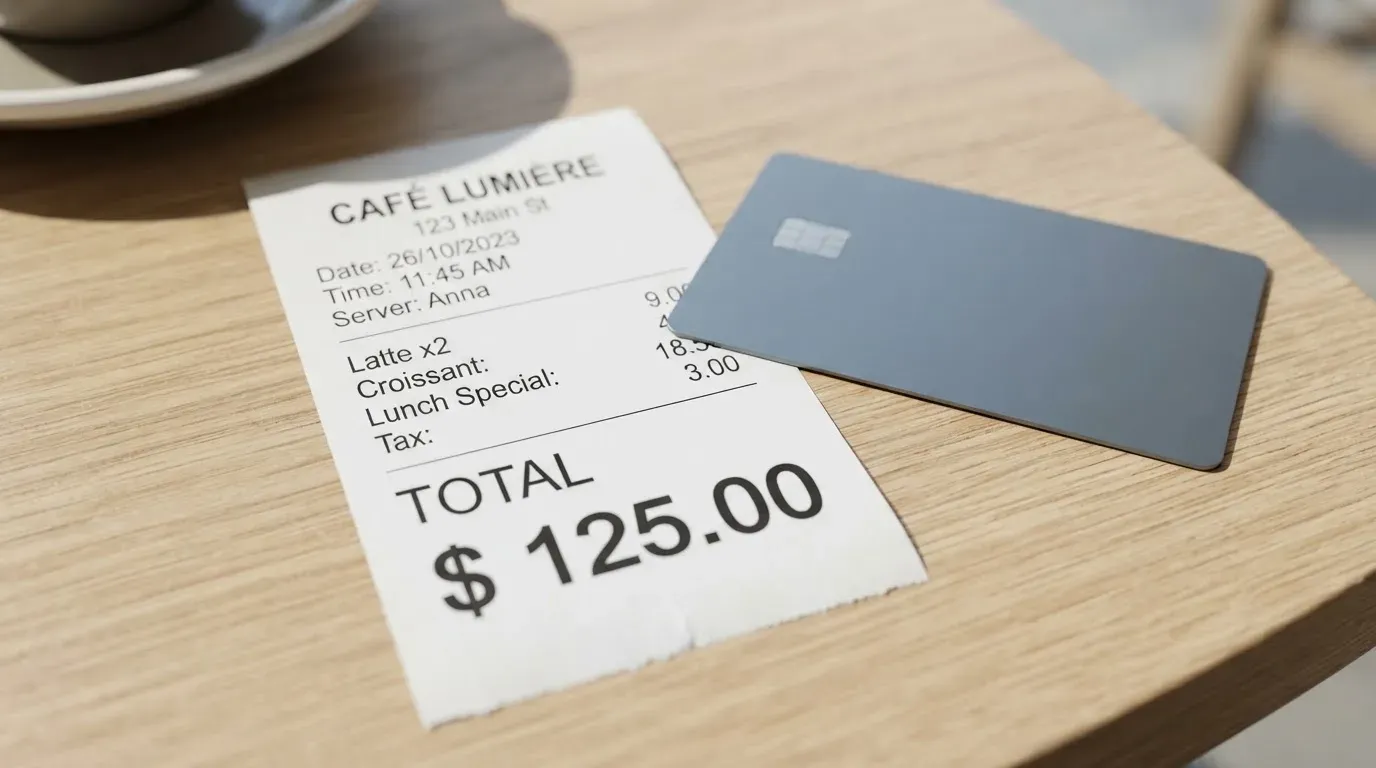
| Fee or limit | What the card says |
|---|---|
| Membership | USD 1,000 per year, with a 30-day full-refund window |
| Card issuance | Metal card currently free to order; standard and virtual included with membership |
| Additional replacement card | USD 25 per additional replacement within a calendar year |
| Foreign exchange on spending | “no FX fees and no hidden markups” |
| Bitcoin spending | “no fees and competitive spreads” |
| Cash machine | 2% of the withdrawal amount above USD 100 per month; operator fees may apply; available in 100+ countries |
| Default monthly spending and withdrawal limits | Exist and are adjustable in the app; amounts not stated |
| Withdrawals out | SWIFT, ACH, Faster Payments, SEPA, Lightning; fees not stated |
| Tiers | A single membership, no named tiers |
Now three ordinary payments, so this stops being a table and becomes your week.
A coffee in Lisbon. You pay in euros. If you hold a euro balance, the money comes out of it. If you don’t, the payment is converted and debited from your balance — with no FX fee and no hidden markup. What you do decline is the merchant’s dynamic currency conversion, where the shop’s terminal offers to charge you in dollars at its own rate; that is the expensive version, and the terms ask you to decline it. Also worth knowing: your billing address will not match a Portuguese address, and some merchants apply extra scrutiny or decline a card whose issuing country differs from the cardholder’s.
Fuel at a self-service pump. Self-service petrol pumps and other cash-like transactions may be declined, as may recurring pre-authorised payments and some merchant categories. Xapo blocks a list of merchant category codes, and the list is not published. If your money depends on a weekly subscription to something, that is a question to ask before you rely on the card.
A cancelled hotel booking. Here the card is thin. The terms give no dispute or chargeback timeframes at all. Refunds are described as usually taking up to 10 business days, and refunds paid in a currency you don’t hold are converted at the payment-system rate, with Xapo stating it is not liable for losses from that conversion. Your protection here comes from the general card scheme rather than from a stated promise in these terms.
Where the fee structure is genuinely good: spending abroad. Where it is genuinely unknown: anything to do with limits and withdrawals, because the amounts are not published.
Top up: how the balance gets there
The card has no separate pot. It spends the Xapo account balance, and the ways to fill that balance are bank rails plus stablecoins.
Deposit stablecoins — USDC and USDT — and they are converted to USD on arrival. For fiat, SWIFT and ACH for dollars, Faster Payments for pounds, SEPA for euros, with RTP and FedACH also listed for USD. Bitcoin arrives over Lightning. A deposit fee and a minimum top-up amount are not stated, so I cannot tell you what a small top-up costs you in practice.
Two things to get right the first time. First, transfers are one-way: blockchain transfers are irreversible, so a deposit sent on a network the provider does not support, or to an address belonging to a different network, can be lost or need manual recovery with no guarantee. Get the network and address from the app before you send. Second, stablecoin transfers cost an on-chain network fee charged by the blockchain itself, not by the card provider — and if you hold USDT on Ethereum and no ETH in the same wallet, you cannot send at all, because Ethereum gas is paid only in ETH.
Getting money back out works through the same rails: SWIFT, ACH, Faster Payments, SEPA and Lightning, with fees not stated. If you close the account the card goes with it; the card can also be cancelled on its own. What happens to a remaining balance on closure is not stated, which is a fair thing to ask about in writing before you ever fund the account.
And one structural detail worth holding on to: Xapo may end the agreement with two months’ written notice. A two-month runway is not a lot of time to move a balance you cannot see clearly.
Paying with it every day
This is where the card scores best, and the reason is that it behaves like a prepaid card with generous terms rather than like a crypto wallet pretending to be one.
The app is a single iOS and Android app running 24/7, with in-app card freeze and unfreeze, spending limit adjustment, and what the bank calls bank-grade security and fraud monitoring. Two certifications are listed — PCI DSS and SOC 2 Type II — alongside SOC 3. 2FA is not mentioned in the card terms.
A few day-to-day realities to expect:
- Bitcoin can pay for things directly. Each payment can draw from your USD balance or your Bitcoin balance, with no fees and competitive spreads on the Bitcoin side. If you hold Bitcoin and spend it, a purchase can be a taxable disposal in most places — see below.
- Apple Pay and Google Pay are not stated. The card terms are silent, so I can’t confirm either. If mobile wallet support is a requirement for you, that’s a question to ask before you pay the membership.
- Cash machines work in 100+ countries. You get the first USD 100 a month free, then 2% of the amount, and the machine’s own operator may add its own fee.
- Refunds come back through the payment system, usually within 10 business days, and in an unsupported currency they get converted at the payment-system rate.
Two mechanics explain most of the friction people report with any card in this category. A declined authorisation can leave a hold on your money for several days, typically up to seven. And a merchant category code — the four-digit code assigned to a business under ISO 18245 that classifies what it sells — can be blocked by the issuer as policy rather than by law, and 7995, gambling, is the classic example. Xapo publishes no list.
What can go wrong
I found no official incidents. What I found was a review profile that is respectable and not clean, and a handful of structural risks that come with custodial money.
The complaints. On Trustpilot, Xapo Bank sits at 3.9 out of 5 from 1,141 reviews, with 31% of them one-star. Support is praised more often than anything else. The recurring themes are account freezes and closures (reported November 2025, July and August 2026), inability to withdraw or close an account (August 2026), a $1,000 annual fee not refunded (July 2026), slow compliance reviews with one reported at seven weeks (June to August 2026), complaints about fees (June to September 2026) and templated support replies (June, September 2026). One one-star review calls the bank fraudulent over a year of failed transactions; on Reddit’s r/CryptoHelp in 2025 a user describes an unresolved identity verification problem running more than three years with unresponsive support. A 2014 backlash over the old Xapo debit card fee schedule, where Xapo blamed its issuer and promised reimbursement, belongs to a different product and tells you nothing about this one — but it does show the company’s pattern of reacting to fee complaints.
The company. Xapo Bank is incorporated in Gibraltar, Company No. 111928, at 2 Irish Town, Gibraltar GX11 1AA, and is regulated by the Gibraltar Financial Services Commission with permission as a credit institution under the Financial Services Act 2019. Xapo Bank Limited holds credit institution Permission No. 23171; Xapo VASP Limited is registered as a DLT provider under Permission No. 26061. That is a real licence in a real jurisdiction — and a credit institution in Gibraltar is not the same as a UK or EU bank.
Custody is the big one. This is a custodial arrangement: the provider holds the credentials, so you trust it completely. That matters more than any fee. Custodial platforms have a documented history of failure — Mt. Gox at roughly US$350 million reported stolen between 2011 and 2014, Coincheck at about US$400 million in 2018, Ronin Network at US$625 million in 2022. Crypto transfers are irreversible and a stolen key has no built-in recovery, because the network cannot freeze or return funds. Where a self-custody-linked card keeps your coins in your own wallet until the moment of payment, Xapo keeps them.
What is protected, and what is not. USD deposits are covered by the Gibraltar Deposit Guarantee Scheme up to the USD equivalent of GBP 120,000. Bitcoin and other crypto are not covered. Keep those two facts apart when you decide how much sits on the card.
Stablecoins are not what the name suggests. A stablecoin aims to hold a stable value against a fiat currency, and it can fail to. TerraUSD collapsed in May 2022; USDC temporarily lost its peg in March 2023 during the US banking crisis. Circle says USDC is redeemable 1:1 and fully backed by cash and cash equivalents, mostly in a SEC-registered government money market fund, with monthly reserve attestations; Tether says USDT is backed 1:1. Tether also says it disables tokens in wallets on the OFAC sanctions list and has frozen funds tied to illicit activity, which means stablecoins are not censorship-proof. The BIS put about 90% of stablecoin market capitalisation in these two coins as of July 2025.
Taxes nobody will warn you about. This is not advice, it is a fact you should know before funding. The IRS treats digital assets as property, so exchanging them for goods, services or dollars generally produces a taxable gain or loss, measured in local fiat currency at fair market value on the date of the transaction. Each card payment funded from crypto may therefore be a separate disposal — and holding a period of a year or less makes it short-term in the US. Your own jurisdiction will differ; treat this as a prompt to check, not an answer.
What to take instead
I compared three alternatives on the same criteria. None is a clear winner, and the one that most resembles Xapo on cost is not the same product.
| Xapo Bank | International Visa Card | UNi Card | Whop Cards | |
|---|---|---|---|---|
| My score | 5.8 / 10 | 6.7 / 10 | 6.1 / 10 | 5.2 / 10 |
| Annual cost | USD 1,000 membership, 30-day refund | Classic free; Pro $9.00/month; Max $19.00/month; $5 one-time virtual issuance | No annual fee stated | “No extra fees” listed; no amounts given |
| Card form | Metal, standard and virtual debit | U.S.-issued Platinum Visa, virtual; physical “coming soon” | Multicurrency Mastercard | Visa; virtual or physical not stated |
| FX | No FX fees, no hidden markups | Visa exchange rate + 2% FX fee | No foreign transaction fee; live OTC rates, “no hidden exchange fees” | Not stated |
| Top-up | USDC/USDT, SWIFT, ACH, SEPA, Faster Payments, Lightning | USDC/USDT free at 1:1; USD, EUR, SEPA, SWIFT, FedNow | Not stated | Whop balance, stablecoin collateral from a linked wallet |
| Rewards | 3% BTC on taxi/rideshare, 1 July–31 October 2026, Metal card required | No cashback stated | Up to 3% spend-to-earn | 5% cashback at select merchants, currently Uber |
International Visa Card is the strongest of the four at 6.7, and the reason is the price: free at the Classic tier against a USD 1,000 membership. Its costs are clear — $5 one-time for the virtual card, then $9.00 or $19.00 a month for the paid plans — and its FX is honest about the 2% fee. It is also strictly narrower in who can use it: residents and legal registrants of Belarus, mainland China, North Korea, Cuba, India, Iraq, Iran, Israel, Myanmar, Nepal, Nicaragua, Russia, Syria, Turkey, Ukraine, Venezuela and Vietnam are excluded, FATF grey-list countries are reviewed case by case with compliance approval, and purchases are blocked in North Korea, Cuba, Iran, Russia, Syria, Ukraine and Venezuela. Its eligibility rule runs on residence or registration, and citizenship is not mentioned. And the physical card is “coming soon”.
UNi Card at 6.1 is a multicurrency Mastercard spending from a UNi.Global account balance, with no annual fee, no foreign transaction fee, conversion at live over-the-counter rates and “no hidden exchange fees”. Up to 3% spend-to-earn rewards. Country eligibility is not stated, so you would be asking, as I could not answer.
Whop Cards at 5.2 is a Visa that works wherever Visa is accepted, spending from a Whop balance — a pending balance usable as soon as a payment arrives, standard withdrawals using settled funds, backed by stablecoin collateral from a linked wallet. Five percent cashback at select merchants, currently Uber, with payout currency and conditions not stated. It is built for a specific geography: 31 US states for consumers, 41 for businesses, and unsupported consumer countries including Belarus, mainland China, Cuba, Hong Kong, India, Iran, Iraq, Israel, Myanmar, Nepal, Nicaragua, North Korea, Russia, Syria, Turkey, Ukraine, Venezuela and Vietnam. Whether the test runs on citizenship or residence is not stated, which is the flaw I’d flag first.
For a reader with a USD 1,000 budget and a Bitcoin balance, the honest comparison is Xapo against the free tier of the International Visa Card and against UNi, on three numbers: what the membership costs, what FX costs, and whether you can hold Bitcoin on the account at all.
Who I would recommend it to
Three groups, in order of how confidently I would say it.
If you already keep money with Xapo and hold Bitcoin. You are already past the eligibility question, already past the KYC question, and the USD 1,000 is money already committed. The card then does something few competitors do: it spends a Bitcoin balance directly, without fees, at any Visa terminal, with no FX markup when you pay abroad. That is a genuine capability, not a gimmick.
If you travel regularly and spend in several currencies, and you can hold USD, EUR and GBP. Holding the currency you are spending avoids conversion entirely. Where conversion happens, “no FX fees and no hidden markups” is a better deal than the 2% FX fee the alternatives charge. The deposit guarantee up to GBP 120,000 for USD balances adds a layer most prepaid-style cards cannot offer.
If your money moves in stablecoins. USDC and USDT converting to USD on arrival, with SWIFT, ACH, Faster Payments, SEPA and Lightning for the fiat side, is a broad set of rails. Just check the network before sending, and remember the transfer is one-way.
And who I would not recommend it to, plainly:
- If you want to spend your salary. This is a pre-loaded balance, not a current account. Your money has to be there first.
- If you are outside the eligible territory. The card does not publish a list. You may find out at application, after the account is open.
- If you are in the United States, Russia or Ukraine. Restricted jurisdictions per the unofficial lists, and not confirmed by the card — but not somewhere to bet on.
- If fees decide it. One Cash machine withdrawal above USD 100 a month costs 2% of the amount, and operator fees on top. If you take money out regularly, that percentage is the number to watch.
- If you need to know what is protected. The deposit guarantee covers USD, not Bitcoin. Not covered means not covered.
- If you want to fight a bad transaction. No dispute or chargeback timeframes are given. US reversal rights under Regulation E and credit card rights under Regulation Z exist in the US, but prepaid-card coverage varies and should not be assumed. Elsewhere, your protection comes from the card scheme, not from anything written here.
Frequently asked questions
What is the Xapo Bank card?
It is a debit card issued by Xapo Bank, a credit institution incorporated in Gibraltar (Company No. 111928) and regulated by the Gibraltar Financial Services Commission under Permission No. 23171. It spends a balance you have already loaded into a linked Xapo account, drawing on USD, GBP, EUR or Bitcoin. Metal, standard and virtual cards are included with the membership, which costs USD 1,000 a year with a 30-day full refund.
Does the Xapo Bank card charge foreign exchange fees?
On foreign spending the card states “no FX fees and no hidden markups”, and Bitcoin spending carries “no fees and competitive spreads”. If you pay in a currency you do not hold, the payment is converted and debited from your balance at that arrangement. The trap to avoid is the merchant’s own dynamic currency conversion at the terminal, which the terms ask you to decline. Cash machine withdrawals are the exception: 2% of the amount above USD 100 a month, plus any operator fee.
How do I top up the Xapo Bank card?
The card has no separate balance — it spends the account balance. You can deposit USDC or USDT and they are converted to USD on arrival, or use bank rails: SWIFT, ACH, RTP and FedACH for USD, Faster Payments for GBP, SEPA for EUR, and Bitcoin over Lightning. Check the network and address in the app before sending a blockchain transfer, because those transfers are irreversible. Deposit fees and minimum top-up amounts are not stated.
Who can get an Xapo Bank card?
You must be 18 or older, open a Xapo account first, and pass verification with a passport or national ID, personal details confirming identity and residence, and a real-time photo or video in the app. The card’s own terms do not list eligible countries and do not say whether the test runs on citizenship or residence. Third-party sites, not confirmed by the card, claim 50 listed countries and 28 restricted ones including the United States.
Is Xapo Bank card safe, and what is my money covered by?
Your USD deposits are covered by the Gibraltar Deposit Guarantee Scheme up to the USD equivalent of GBP 120,000. Bitcoin and other crypto are not covered by that scheme. Xapo is a custodial bank, which means it holds the credentials and you rely on it — the category has a record of custodian failures including Mt. Gox, Coincheck and Ronin Network. Listed certifications are PCI DSS, SOC 2 Type II and SOC 3; 2FA is not mentioned in the card terms.
Can I use the Xapo Bank card with Apple Pay or Google Pay?
Neither is stated in the card’s terms or on the pages I read, so I cannot confirm mobile wallet support either way. What is stated is that a single iOS and Android app runs 24/7 and lets you freeze and unfreeze the card, adjust spending limits and check transactions. If tokenised mobile payments are important to how you pay, ask Xapo directly before you commit to the membership.
Why was my Xapo Bank payment declined?
Several possibilities the terms mention: some merchant categories are blocked, self-service petrol pumps and other cash-like transactions may be declined, and recurring pre-authorised payments can fail. Xapo blocks a list of merchant category codes but does not publish it. A declined authorisation can also leave a hold on your funds for several days, typically up to seven, which looks like a missing balance rather than a failed payment.
Is the Xapo Bank card free?
No. The membership is USD 1,000 per year, with a 30-day full-refund window. Inside that, the metal card is currently free to order, foreign exchange carries no fee or hidden markup, and your first USD 100 of cash machine withdrawals each month is free. An additional replacement card within a calendar year costs USD 25, and re-issue fees for lost, stolen or damaged cards may also apply, with amounts in a Fees Information Sheet.
Is Xapo Bank actually a bank?
Xapo Bank is an incorporated Gibraltar company regulated by the Gibraltar Financial Services Commission with permission as a credit institution under the Financial Services Act 2019, holding Permission No. 23171. Its crypto-facing sibling, Xapo VASP Limited, is registered as a DLT provider under Permission No. 26061. Card programmes in this category usually sit on two licences — one for the payment side and one for the crypto side — so a card from a crypto brand does not by itself mean the crypto brand is the bank.
What happens if I want to leave?
You can cancel the card separately, and closing the account cancels the card with it. What happens to a remaining balance on closure is not stated, which is the thing to ask about in writing before funding anything. Xapo may also end the agreement with two months’ written notice, so treat that as your runway. On Trustpilot the bank scores 3.9 from 5 across 1,141 reviews, with 31% one-star and recurring reports of freezes, slow compliance reviews and fee complaints.
App and neobank card reviews – cryptocardcheck
Content created by the «cryptocardcheck» team