
Tevau, the crypto card that pays like a prepaid Visa — six things to know first
 Available in US
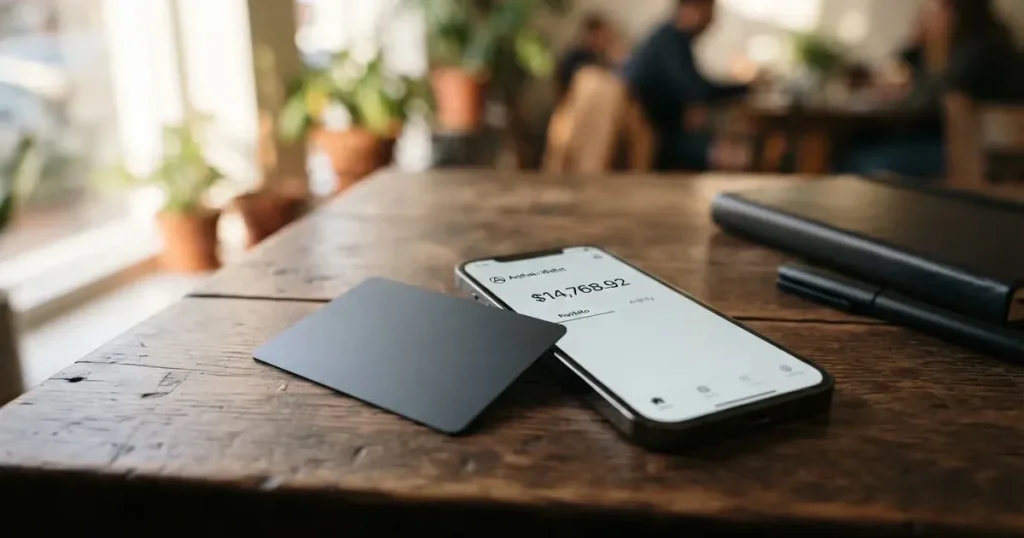
Tevau is a crypto-funded Visa card that behaves much more like a prepaid card than a bank card. You move stablecoins into the app, they land as a spendable balance, and the card pays merchants in the local currency the way any Visa card does. That simplicity is the appeal. It is also the whole product, and it is where most of the sharp edges sit.
I gave it 6.0 out of 10. The card suits one specific person well — someone already holding USDT who wants a virtual or metal card to spend that balance — and suits almost everyone else awkwardly. Its everyday mechanics score very high; its cost structure, top-up flexibility and track record score poorly, and those three are exactly what you depend on when the thing that drew you to it is not enough on its own.
The conditions described here are current as of October 28, 2026.
One caveat you will see repeated, and you should notice it now rather than later: most of the specific figures below come from an independent information site that states plainly it is not Tevau itself. The card’s own public pages do not confirm them. I have marked each one as I use it. Where the card’s own pages say nothing at all, I say so rather than filling the gap.
Verdict: 6.0 out of 10
The score is not a rounding of something more flattering. It is a card that does the card part of the job cleanly and everything around the card thin.
| Criterion | Mark | Why |
|---|---|---|
| Who can get it | 9 / 10 | Claims 200+ countries, availability varies by region; no country or exclusion list published |
| Cost | 4 / 10 | Virtual 20 USD, plastic 100 USD, top-up 1%, non-USD payment 1.2%, ATM 1.9%, monthly fee $0, $3 after 90 days idle |
| Top-up options | 4 / 10 | USDT only; the app shows the network, the page names none; no fiat route disclosed |
| Reliability and complaints | 4 / 10 | Hong Kong office, issuer not named, claimed Bank of Canada registration unverified; no complaints and no independent reviews found |
| Everyday use | 9 / 10 | Virtual, plastic, metal and 24K Gold; Apple Pay and Google Pay on all types; ATM on physical cards |
| Total | 6.0 / 10 | Strong card, thin wrapper |
That table is the whole argument in miniature. Look down the two columns on the right: the two 9s are the card’s mechanics, and the two 4s in the middle are the parts outside them. A 9 for who can get it is generous once you read the section below — it reflects breadth of reach, not clarity. A 4 for everyday use is equally generous; it reflects that once funded, spending works the way you expect.
The audience note from my notes is short and worth repeating: this is for USDT holders who want a virtual or metal card. If you are not holding stablecoins, or if you hold them but want to be able to load with a bank transfer on a Tuesday afternoon, this is not your card and you will feel the gaps.
Will they give you the card?
Yes, most likely — the claim is very wide, and that is the problem.
The information site says the card works in “200+ countries” with availability that “varies by region”. Read that twice, because both halves matter. The first half is a coverage claim: how many places your card will be *accepted* once you have it. The second half is an eligibility claim: where you can *sign up*. Those are different questions, and the site blurs them.
No country list is published, and no exclusions. So the honest position is this: nobody reading the public pages can tell you whether your specific country is on board. If that matters to you — and for many readers it is the only thing that matters — you find out by opening the app and seeing whether it lets you proceed, or by asking the in-app support before you send any documents.
The company behind it describes itself as a Hong Kong-based platform, launched 2024. The issuer of the card is not named. Keep both of those in mind; they come back in the risks section.
One thing that is stated plainly and worth taking at face value: the card says it is not a bank licensed in Japan, the US or the EU, and that home-country deposit protection may therefore not apply to your balance.
How to get it
The signup path is short, and it is a single path — there are no tiers to climb.
The information site describes one KYC flow: one government ID (passport, driving licence or national ID) plus a selfie taken in the app, age 18+. No levels, meaning there is no higher tier with higher limits you are working toward. The processing time is not stated as policy. Blurry photos are given as the usual reason a submission gets sent back, so the practical advice — which is not a trick, just the obvious thing — is to photograph the document in flat, even light and check all four corners are in frame before you submit.
KYC itself is mandatory. Documents required, proof of address and age rules are not stated beyond the 18+ line. Note the deliberate silence there: the site that describes KYC as mandatory does not enumerate the document set in full.
After approval you choose a card type. Four are listed: Virtual, Plastic, Metal and 24K Gold. The card is on Visa. The currency the card is denominated in is not stated.
Virtual cards are issued instantly in the app, which means you can be spending the same minute you are approved. For physical cards, “card shipping and replacement are free” — delivery countries are not specified, delivery time is not stated, and the card is said to work in 200+ countries. That gap between “ships free” and “here is when and where” is worth asking about. If a card has not arrived within 14 days, the site’s advice is to check the tracking code first, then contact in-app support.
Fees: what it really costs to use this card
This is where the 4/10 comes from, so it is the section I read most carefully. Every figure here is from the independent information site and is not confirmed by the card.
| Fee or limit | Value |
|---|---|
| Virtual card, one-time | 20 USD |
| Plastic card, one-time | 100 USD (unofficial) |
| Metal card, one-time | 199 USD (unofficial) |
| 24K Gold card, one-time | 499 USD (unofficial) |
| Monthly fee | $0 |
| Close-card fee | 2 USD (unofficial) |
| Inactivity | 3 USD after 90 days without a transaction, then 1 USD every 30 days (unofficial) |
| Top-up fee | 1% |
| USD payment fee | 0.20 USD + 0.5% (unofficial) |
| Non-USD payment fee | 1.2% |
| FX | “FX rate spread for overseas spending” mentioned, not quantified |
| ATM fee | 1.9% |
| Small authorisation (up to $3) | first 5 per month free, then 0.20 USD (unofficial) |
| Declined transaction | first 3 per month free, then 0.50 USD (unofficial) |
| Per-transaction limit | 3,000,000 USD (virtual, plastic); 80,000 USD (metal, gold) (unofficial) |
| Daily and monthly spend | 3,000,000 USD for all card types (unofficial) |
| ATM limits | plastic: 3,000 USD/day, 10,000 USD/month, 3 per day and 30 per month (unofficial) |
| Card validity | 3 years |
The monthly fee of $0 and the no-annual-fee position are the friendliest numbers here. Everything else compounds.
Three everyday payments, walked through:
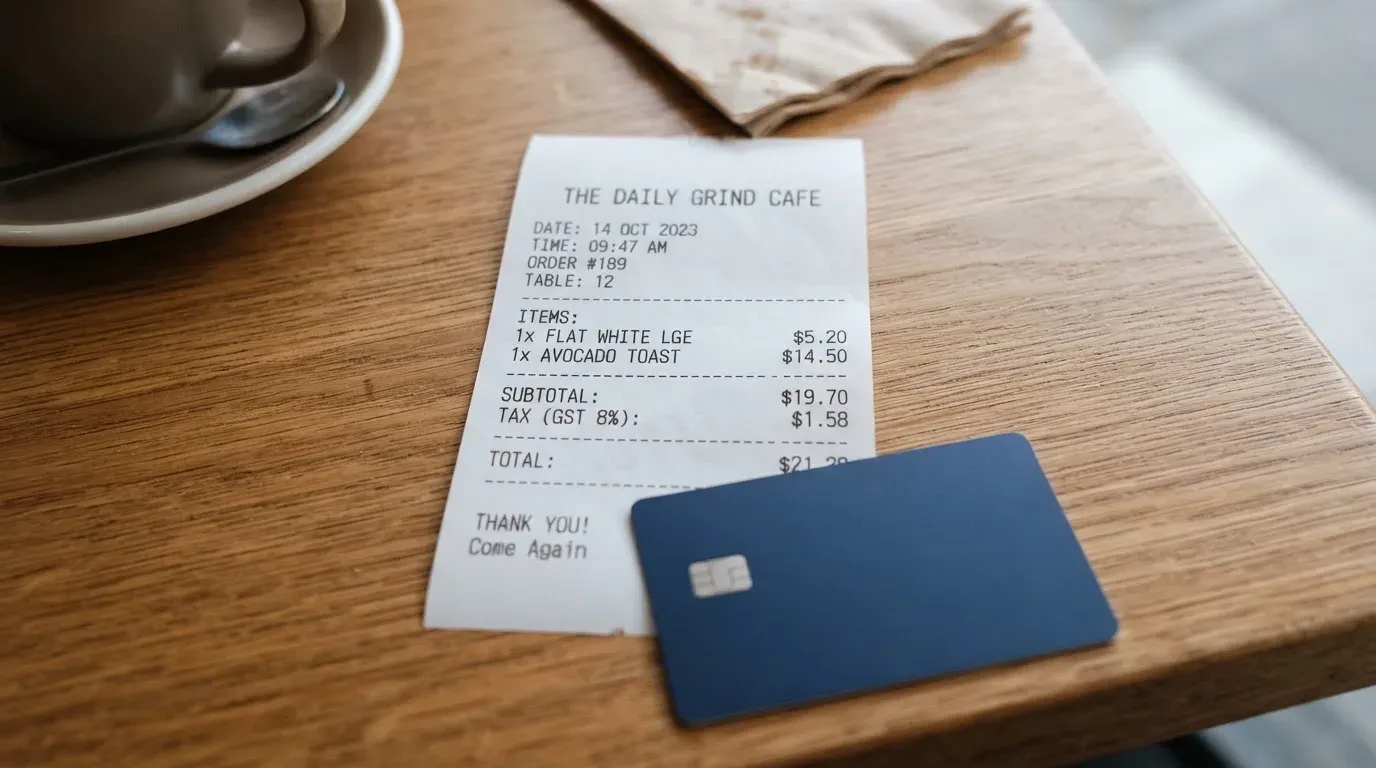
Coffee at a local café, paid in your home currency. If your card balance is in USD and the café charges in dollars, this is a USD payment: 0.20 USD plus 0.5% (unofficial). On a $5 coffee that is 0.225 USD. If the café charges in euros and you are topping up in USD, this is the non-USD payment at 1.2% — 0.06 USD on the same $5 — and the FX spread on top, which is the part nobody can quote you because it is not quantified anywhere.
A monthly subscription in dollars, say 10 USD (unofficial). The fee is 0.20 USD plus 0.5% (0.25 USD total, all figures unofficial). Subscriptions are where small fixed fees hurt most, because they recur and never feel worth disputing.
Withdrawing cash from an ATM. 1.9%, and only on physical cards — the virtual card is not supported for ATM. The site’s note that USD ATM withdrawals in local currency carry no FX fee but do attract the local bank’s own rate is worth keeping in mind: you are avoiding one spread and picking up another. ATM limits are the tightest numbers in the whole product: 3,000 USD a day and 10,000 USD a month on plastic, with 3 withdrawals a day and 30 a month (all figures unofficial).
One inconsistency I want to flag rather than smooth over. A Product Hunt listing by the maker from 2026 puts the virtual card at 10 USD (unofficial), against the 20 USD (unofficial) elsewhere. And the site itself warns that fees “can differ by card type, campaign, and region” — which is a candid sentence that should make you ask what applies to you before you fund anything.
Top up: how money gets onto the card
One route, and it is the narrow one. This is the single biggest gap in the product for anyone who is not already holding stablecoins.
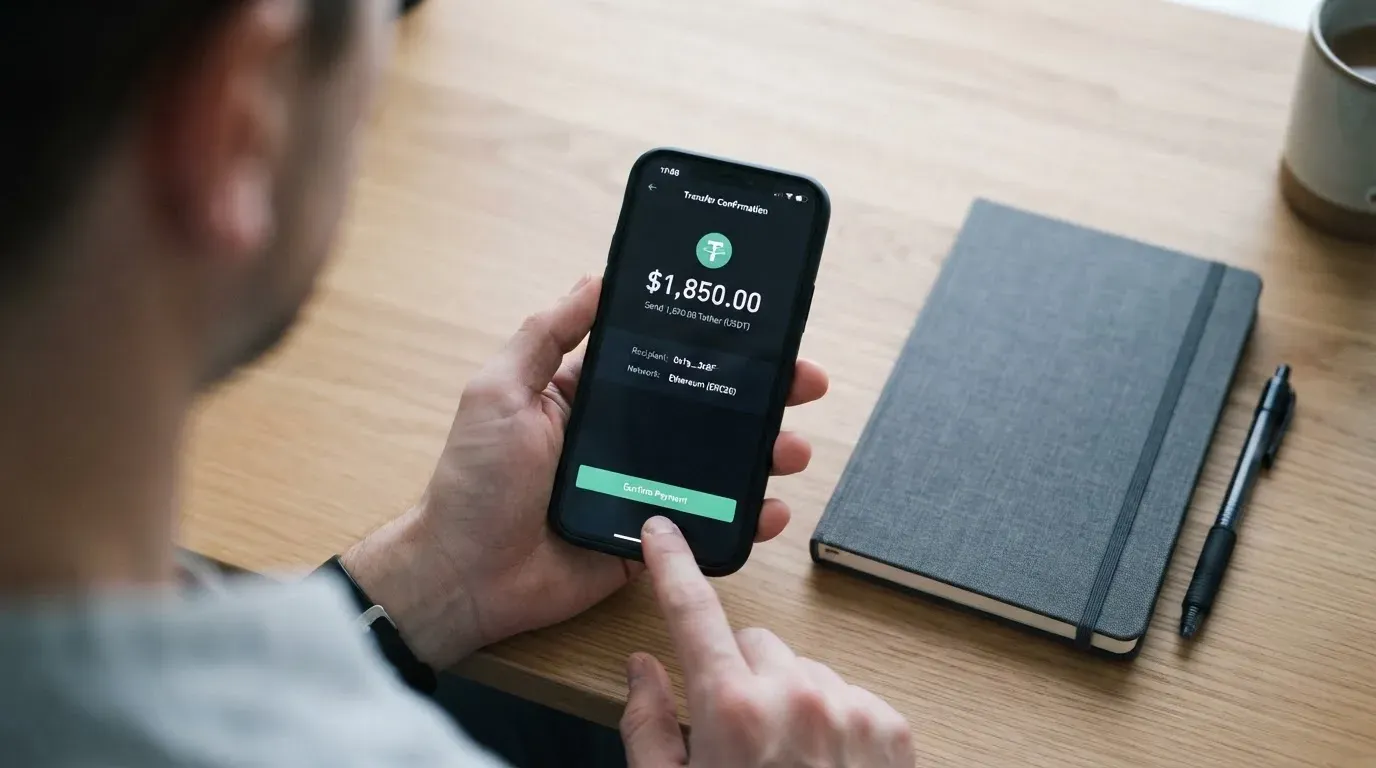
Funding is in USDT. The app shows you which network to use at the moment of transfer, and — this is important — the page does not name the networks. You are being asked to make an irreversible transfer based on information you read inside an app rather than on a published list. Getting it wrong means the funds are not recoverable.
The top-up fee is 1%. Deposits made from your own wallet balance inside the app are described as free. A minimum top-up is not stated. Fiat top-up is not stated either, although a “Withdraw to bank (IDR supported)” guide is linked with no detail behind it — the existence of an Indonesian-rupiah pathway is a hint, not a specification.
The 24K Gold tier is the exception to the fee: 0.5% on up to 5 top-ups per month (unofficial). The site’s documentation is conflicting on whether this is 5 fee waivers or a 50% discount.
Moving money back out is more constrained than moving it in. USDT can be withdrawn from the wallet to an address shown in the app. Once a card is topped up, that balance can only be spent or withdrawn at an ATM — not sent back to a wallet, not sent to a bank. Closing a card returns the remaining balance to the wallet, at a 2 USD close-card fee (unofficial), and a closed card cannot be restored. If you close on a misunderstanding, the application fee is not refunded. And a virtual card with no transactions for 4 consecutive months closes automatically.
Read that again, because it is the sentence most likely to matter to you in a bad moment: top up, and the money is now committed to being spent. It is not a bank balance you can move around freely.
Paying with it every day
Once funded, this is the part that works well, and the 9/10 reflects it honestly.
Apple Pay and Google Pay are supported for both physical and virtual cards — and the same source says all card types. You add the card to your phone and pay by tapping, which is how you will use it most of the time. Cashback is not mentioned anywhere.
Blocked merchants are not listed. There is one named exception: OpenAI billing is not supported. Gambling is the category most likely to cause a decline, since merchant category codes for betting are blocked by many issuers by policy rather than by law, and the blocked list varies by issuer — but that is category background, not a Tevau rule, and I found no Tevau-specific list to quote.
Two friction points the card does name. Declines and refunds can occasionally be delayed. And merchants that block prepaid or crypto-funded cards will decline this one — which, given that the BIN is visible to them and prepaid cards are easy to identify at checkout, is a real occurrence rather than a theoretical one. If your card is declined twice in a shop, that is the likely reason, not a fault in your card.
The app itself: on iOS, “Tevau” by Tevau Technology Limited, 4.4 out of 5 from 7 ratings as read on 2026-10-20, latest version 2.0.010 dated 11 September. An Android listing exists; its rating is not shown. Seven ratings is not a rating, it is an anecdote, and I would not treat that 4.4 as meaningful either way.
On online payments: expect 3-D Secure to step in on some purchases. That is the issuer deciding your online transaction looks risky and asking for a code or a biometric. It also means a frozen account has to be re-verified personally through support, which is not instant.
What can go wrong
Start with the one that has no answer yet.
There is no independent opinion about this company. No complaints were found, and no independent reviews. There is no Trustpilot page and no Reddit thread. Absence of complaints from a young service is not a clean record — it is an absence of data, and I want to be exact about that difference. You are not choosing between a good track record and a bad one; you are choosing without a track record.
Then the structural risks:
Who holds the money. The card is custodial. Assets are described as stored with “licensed custodians”, and cold and hot wallet separation is claimed. That word — custodial — is the important one. It means the provider holds the credentials, so you trust them completely with the balance. This category has a record: Mt. Gox (about US$350 million reported stolen 2011-2014), Coincheck (about US$400 million, 2018), Ronin Network (US$625 million, 2022). None of those are Tevau. They are the shape of the risk you are taking by holding funds with a custodian rather than in your own wallet.
Irreversibility. Blockchain transfers are typically irreversible, and a stolen key has no recovery path — the network cannot freeze or return the funds. Stablecoins are not censorship-proof either: Tether says it disables tokens in wallets on the OFAC sanctions list and has frozen funds tied to illicit activity. If you are reading this and you are in a sanctioned jurisdiction, the answer is that this does not work for you, and no part of this review changes that.
The issuer is not named. Visa and Mastercard do not issue crypto cards to consumers; they license issuers and can suspend a programme. The point is not distrust. It is that when you are asking “who do I complain to if this breaks,” the answer right now is not documented on the public pages.
The registration claim is unverified. The site says Tevau’s Payment Service Provider registration with the Bank of Canada was approved in August 2026. It also states the claim as made on the site, not independently verified, and I did not verify it. Treat it as a claim. The dates around it: 19 Aug 2026, 500,000 users claimed; 21 Aug 2026, a security update on suspicious transactions and risk-control upgrades; 27 Aug 2026, a USDT card guide.
A frozen account. If your account is locked, it must be re-verified personally through support. If your card is stolen or your details leak, the route is to lock the card in the app and then close it — which means the 2 USD fee (unofficial), no restore, and application fee not refunded. Two-factor authentication and insurance are not stated.
Small charges that accumulate. 0.20 USD for a small authorisation after five free a month, 0.50 USD for a declined transaction after three free a month (all figures unofficial). A declined transaction you did not intend to make still costs you.
Programme closure is a real category of risk. Visa terminated its global agreements with FTX on 13 November 2022 and the FTX card was wound down. WaveCrest, a card issuer that supplied crypto brands, was suspended by Visa in Europe in 2018, closing all its Visa programmes. The pattern is usually: notice period, then spending and loading stop, then you are asked to withdraw remaining balances. If that happened here with money already loaded on a card that can only be spent or withdrawn at an ATM, the sequence would be tight.
Disputes. Chargeback rules are not stated for this card, and prepaid-card coverage varies by country and should not be assumed. In the US, debit card reversal rights come from Regulation E and credit card rights from Regulation Z — neither automatically attaches to a prepaid crypto card.
What to take instead
Three alternatives came up in my notes, and it is fair to say all three score below Tevau — 5.6, 4.9 and 4.7. I include them because “below 6” and “right for you” are different questions, and because you should see the whole field before you settle.
| Card | Score | Card type | Cost stated | Funding | Notable |
|---|---|---|---|---|---|
| Tevau | 6.0 / 10 | Visa; virtual, plastic, metal, gold | Virtual 20 USD, plastic 100 USD, metal 199 USD, gold 499 USD (unofficial) | USDT | Top-up 1%, non-USD 1.2%, ATM 1.9% |
| Cardex | 5.6 / 10 | Debit crypto card on VERVE, VISA, Mastercard, UnionPay; virtual and physical | Not stated | USDT, USDC, BTC | Claims 200+ countries; App Store listing is Naira-focused; “AI-Powered Conversion Rate” picks a rate at spend time, no percentage stated |
| CardFlow | 4.9 / 10 | Virtual USD Mastercard, created in about 3 minutes | Virtual card “completely free” per site FAQ | Bitcoin, USDT, ETH or Naira bank transfer | Aimed at Nigeria and “Nigerians and global users”; no country list |
| HyperCard | 4.7 / 10 | Prepaid, network not stated on the App Store page; balance in USD or EUR | Not stated | USDT, BTC, ETH converted to USD or EUR | App Store says works in “more than 176 countries” — acceptance, not eligibility |
Reading across the rows, one pattern stands out. Every one of these cards is unfunded by fiat at the disclosed level, none publishes a full fee table I could read except Tevau’s, and none publishes a country eligibility list. That is the field. Tevau’s advantage is disclosure and card range; its disadvantage is that it accepts only USDT and charges 1% to do it.
Where Cardex wins: it takes three assets rather than one, and it runs on four networks including two you can actually name. Where CardFlow wins: creating a virtual card is free, and Naira bank transfer is a funding route nobody else in this table discloses. Where HyperCard wins: a two-currency balance, USD or EUR, which Tevau does not offer.
The honest framing is that switching to a lower-scoring card does not remove the category risks. It mostly changes which thin disclosures you are relying on.
Who I would recommend it to
Do this if you already hold USDT, you want spending rather than storage, you are comfortable with a custodial balance and a Hong Kong-based provider whose issuer is not named, and you mostly pay in the currency you fund in. Add it to Apple Pay and treat it as a second card you tap occasionally, not as your primary. Check the price of the card type against the fee table before you pay, because the site says fees differ by type, campaign and region.
Skip this if you need to load from a bank account, you are not already in stablecoins, you plan to move money back out regularly — you largely cannot, and the fee table punishes a $5 purchase. Do not use it if your balance is your savings. Do not use it if you need to be able to name the issuer today. And if you are in a jurisdiction you need to know about, ask support first; the country list does not exist publicly, and I cannot substitute a guess for it.
On taxes, one thing and one thing only, because I am not qualified to advise you here: digital assets are generally treated as property for tax purposes, and paying for goods or services with them can be a taxable disposal. Each card payment funded from crypto may therefore be a separate event. How that applies to you depends on your situation, and it is worth a conversation with someone who does this for a living rather than with a card review.
Frequently asked questions
What is Tevau card?
Tevau is a crypto-funded Visa card. You transfer USDT into the app, the amount becomes a spendable balance, and the card pays merchants in local currency the way an ordinary card does. Four versions exist: Virtual, Plastic, Metal and 24K Gold. It is a Hong Kong-based platform launched in 2024. Most of these details come from an independent information site, not from the card itself.
How does Tevau card work?
It works like a prepaid card rather than a debit card. You top up with USDT, the balance loads, and each payment converts to the merchant’s currency at checkout. A USD payment costs 0.20 USD plus 0.5% (unofficial); a non-USD payment costs 1.2%, plus an FX spread that the pages mention without quantifying. Because it draws on a stored balance, it cannot overdraw.
Is Tevau a bank?
No, and the card says so itself. The site states Tevau is not a bank licensed in Japan, the US or the EU, and warns that home-country deposit protection may therefore not apply to your balance. It does say its Payment Service Provider registration with the Bank of Canada was approved in August 2026 — a claim made on the site and not independently verified by me.
Who owns Tevau?
The company is described as a Hong Kong-based platform, launched 2024. Per an IPS News promotional article of 22 May 2026 it presents itself that way. Neither the company registration nor the card issuer is independently confirmed anywhere I could find, so treat the corporate picture as incomplete rather than settled.
Does Tevau card require KYC?
Yes, KYC is mandatory. The information site describes a single flow: one government ID — passport, driving licence or national ID — plus a selfie in the app, and an 18+ minimum. There are no tiers to progress through. The specific document list and any proof-of-address requirement are not stated on the pages I could read.
Is Tevau card free?
Not quite. The monthly fee is 0 USD and no annual fee is stated, but the card itself is a one-time payment: Virtual 20 USD, Plastic 100 USD, Metal 199 USD, 24K Gold 499 USD (unofficial). Closing a card costs 2 USD (unofficial). Top-ups are 1%, dropping to 0.5% on up to five a month for Gold card holders.
How do I top up Tevau card?
By sending USDT, and the app shows you which network to use at the time. The page does not name the networks, which is uncomfortable, because transfers are irreversible and funds sent on an unsupported network are not recoverable. The top-up fee is 1%. Fiat top-up is not stated; a bank-withdrawal guide mentioning Indonesian rupiah is linked without detail.
Can I get my money back out?
Less easily than you would like. USDT can be withdrawn from the app wallet to an address shown there, but once a card is topped up, that balance can only be spent or withdrawn at an ATM — not transferred elsewhere. Closing a card returns the balance to the wallet for a 2 USD fee (unofficial), and a closed card cannot be restored.
Is Tevau card safe?
It depends on what you mean. Card-level controls exist: freeze the card in the app, close it if details leak, and the funds are described as held with licensed custodians. But it is a custodial arrangement, so you are trusting the provider with the balance, and irreversible transfers have no recovery path. Two-factor authentication and insurance are not stated. Verify before you load anything.
Is Tevau card worth it?
For someone already holding USDT who wants a virtual or metal card to spend from, the mechanics are genuinely good — nine out of ten for everyday use, with Apple Pay and Google Pay on every card type. For anyone else it is thin: one funding asset, one 1% fee to load it, 1.2% to spend outside dollars, and a hard commitment once the money is on the card. I would not make it your only card.
Virtual card reviews – cryptocardcheck
Content created by the «cryptocardcheck» team