
What HexaCard actually offers, and where the card programme has run into trouble
 Available in US
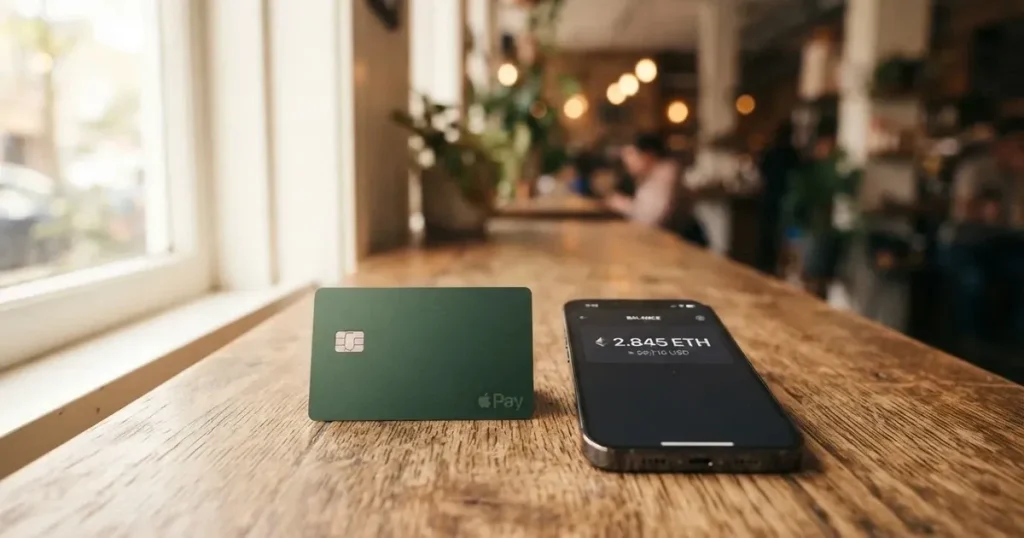
HexaCard is one of several crypto-to-card programmes that promise a quick prepaid card you can spend from a crypto balance. The promise is familiar: top up with USDT, BTC or a few other coins, pay at a shop, and the conversion happens in the background. What sets HexaCard apart in practice is not the promise but the reality behind it — a thin official footprint, a card programme tied to Turkey and a small UK mailing address, a 4.6/10 review score, and a long thread of one-star reviews on Trustpilot describing closed cards, drained balances and silent support. This review walks through what the card actually offers today, who can get one, what it costs, how you top it up and pay with it, where the obvious risks are, and which other cards are worth comparing before you sign up.
Conditions are current as of October 28, 2026.
Verdict
HexaCard scores 4.6 out of 10 in our review. That number reflects a card that is functional in places — six countries are listed, several cryptocurrencies are accepted, the app exists on both iOS and Android — but where the basics around who runs the programme, where your money sits and what happens if something goes wrong are poorly answered. The brand surfaces as “HexaCard Business Corporation” in its user agreement under New York law, the help-centre address points to a Manchester office, and the card agreement refers to a “Celtic Bank Privacy Policy” for the issuer’s data without naming the issuer. That gap between a working card and a programme you can confidently trust is what pulls the score down.
| Criterion | Mark | Why it scored where it did |
|---|---|---|
| Who can get it | 4 / 10 | Only six countries are named in the FAQ (Georgia, Canada, Germany, the UK, Turkey and the US); the rest of the world is told the company has “over 25 BINs in various GEOs” with no list. |
| Cost | 5 / 10 | Virtual card $14.99 plus a $10 first top-up ($24.99 in total), physical card $29.99 plus $10 ($39.99); conversion, FX and reload fees are described as “various and low” without numbers, and reviewers mention $15 or $25 replacement fees. |
| Top-up options | 7 / 10 | USDT, ETH, BTC, LTC, SOL and others are listed; Apple Pay, Google Pay, Visa and Mastercard are listed as fiat top-up methods; the networks for each crypto are not named. |
| Reliability and complaints | 2 / 10 | The issuer and the licence are not disclosed; Trustpilot shows 2.0/5 from 17 reviews with 82% one-star, dominated by closed cards, zero balances, silent support and a Papara/Turkey dispute. |
| Everyday use | 6 / 10 | Both virtual and physical cards exist; the physical card adds cashback on Spotify, Steam and Google Play and supports ATM withdrawals; Apple Pay and Google Pay appear as top-up methods but card provisioning to mobile wallets is not described. |
If you live in Georgia, Turkey or Canada and need a card quickly from crypto, HexaCard is one of the few options that names your country explicitly. For almost everyone else — anyone who wants clear fees, a named issuer, a clean support record or a card that adds to Apple Pay and Google Pay for tap-to-pay — the 4.6/10 reflects the experience you are likely to have.
Will they give you the card
The card’s own FAQ names six countries where HexaCard is available: Georgia (spelled “Gerogia” on the page), Canada, Germany, the United Kingdom, Turkey and the United States. Beyond that, the company states it has “over 25 BINs in various GEOs” — bank identification numbers tied to card programmes in different regions — without publishing the list. If your country is not one of the six, you can only find out by signing up and seeing whether a card is offered to you.
On age and identity, the card agreement asks for a name, street address, date of birth and “other identifying information” and may request a driver’s licence or other ID documents. The agreement does not publish a minimum age, processing time, list of accepted documents or reasons an application could be rejected, so there is no published standard to measure an application against. Standard crypto-card practice in this category is that you must be at least 18, and that regulated issuers apply sanctions and politically exposed person (PEP) screening on top of identity documents.
If your country is not on the six-country list and you do not see your country in any signup prompts, the practical answer is that HexaCard is not currently available to you, regardless of citizenship. If you live in one of the six but travel, the card is a prepaid card denominated in a currency the programme sets — the FAQ claims “28 currencies” and “32 different currency units” in different places, without explaining which currency your specific card is denominated in.
How to get it
HexaCard offers two products: a virtual card and a physical card. The virtual card is the cheaper entry point at $14.99 plus a $10 initial top-up, totalling $24.99 before you have spent anything. The physical card costs $29.99 plus the same $10 first top-up, $39.99 in total, and adds two things the virtual card does not give you: cashback and ATM withdrawals. There is no tier ladder — virtual and physical are the only two options, and the differences are spelt out below.
| Feature | Virtual | Physical |
|---|---|---|
| Price | $14.99 | $29.99 |
| First top-up required | $10 | $10 |
| Networks | Visa, Mastercard or American Express (per the site) | Same |
| Cashback | Not stated | Yes (rate not stated) |
| ATM withdrawals | No | Yes |
| Currencies | “28 currencies” or “32 different currency units” claimed on different pages | Same |
The site says the cards run on “Visa and MasterCard or American Express networks” — a slightly unusual phrasing that leaves the exact network for your card unspecified. The signup path itself is not described in the public material: there is no step-by-step on what you click, what documents you upload and how long it takes. What the card agreement does say is that the company will ask for name, address, date of birth and other identifying information and may request a driver’s licence or other ID. Delivery time, shipping cost, replacement cost and lost-card procedure are not stated — the public pages give you only the card price, not the rest of the order process.
There is no publicly stated fee for a replacement card, but reviewers on Trustpilot report being quoted $15 or $25 for a replacement on different occasions. If you lose the card, expect to pay around that range and not get a clear answer until you ask.
Fees: what it really costs
Two parts make up the cost of owning a HexaCard: the upfront price and the running costs. Upfront, the virtual card is $24.99 in total ($14.99 plus a $10 first top-up) and the physical card is $39.99 ($29.99 plus $10). There is no published monthly fee.
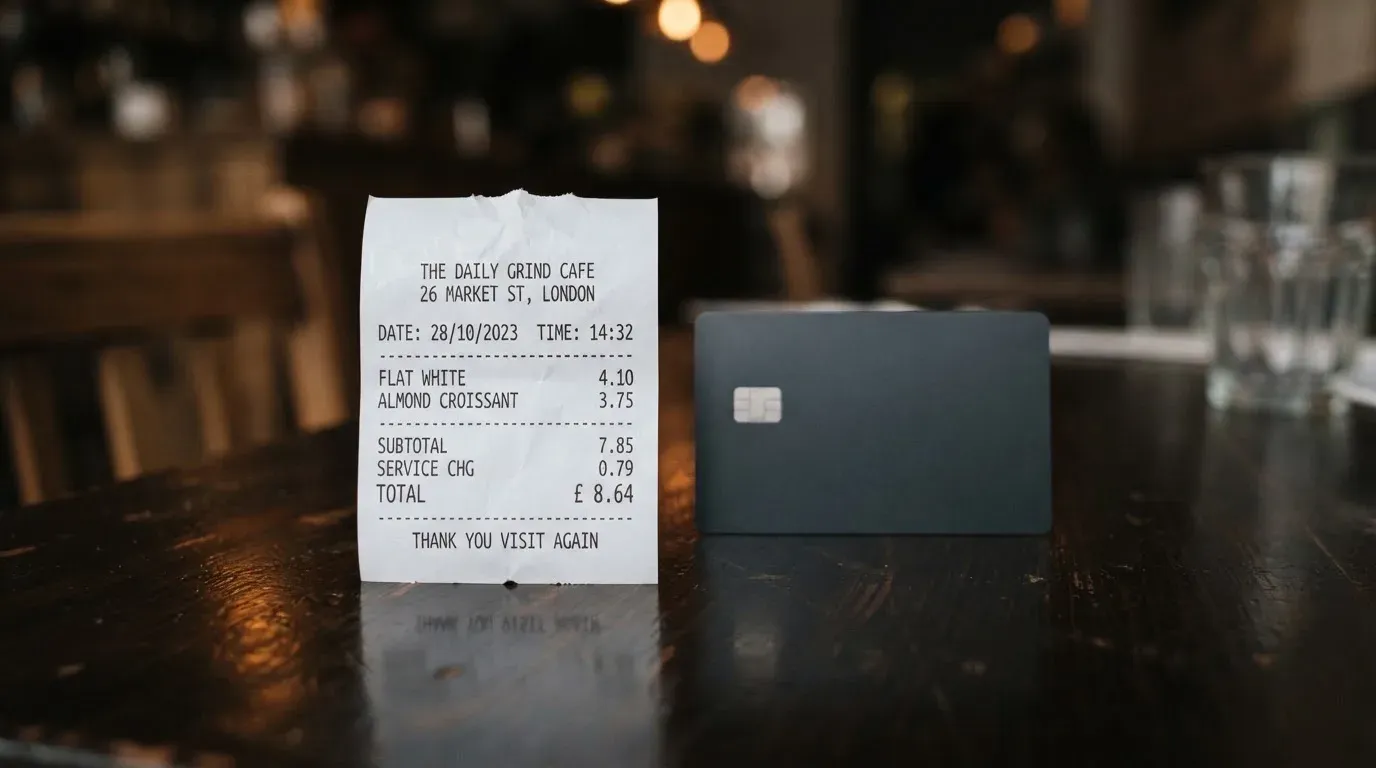
Running costs are where the picture gets thin. The FAQ describes “various and low fees for charging” without giving numbers; the conversion fee, the FX fee for spending in a currency other than the card’s base currency, the ATM withdrawal fee and the daily and monthly spending limits are all not stated on the pages you can read. The card agreement notes that limits are set by “the Accountholder’s Administrator or Hexacard” without publishing amounts, and that holds — temporary reservations a merchant places on your balance while a payment is being processed — reduce the card limit until they are released. There is no public schedule that lets you work out what a typical coffee or supermarket trip will actually cost you.
| Fee or limit | Amount |
|---|---|
| Virtual card (purchase) | $14.99 |
| Virtual card (first top-up) | $10 |
| Physical card (purchase) | $29.99 |
| Physical card (first top-up) | $10 |
| Monthly fee | not stated |
| Conversion fee | not stated (“various and low”) |
| FX fee (non-base currency spending) | not stated |
| ATM withdrawal fee | not stated |
| Daily spending limit | not stated |
| Monthly spending limit | not stated |
| Replacement card fee | not stated on the site; reviewers report $15 or $25 |
| Card-fee refund policy | Card Agreement: “The card fee cannot be refunded after purchase” |
To make that concrete, three everyday payments illustrate the kind of choice you are making without a fee schedule in front of you.
A $5 coffee in the card’s base currency. There is no FX conversion, so the only cost is the conversion fee from the crypto you topped up with into the card’s balance. The percentage is not published, so you cannot tell from the website how much of that $5 is fee and how much is value. If the conversion fee is 1%, you lose 5 cents; if it is 2%, you lose 10 cents. The number is not on the page.
A €30 restaurant bill paid with a US-dollar-denominated card. The FX fee is what matters here, and it is not stated. For context, mainstream crypto cards publish FX fees in a wide range; a card that does not publish a number at all is harder to budget with. Combined with an unstated conversion fee from crypto to dollars, the total drag on a single meal could be a few percent in either direction.
A $100 ATM withdrawal with the physical card. The ATM fee is not stated, and the ATM daily or monthly limit is not stated. Some issuers charge a flat fee per withdrawal plus a percentage; some charge only a percentage. Without a published number you have to either try a small amount first or assume the worst.
The honest summary is that the upfront price is clear, and almost everything you would want to know about the running cost is missing from the public material. That alone is a reason to pause if you are choosing between HexaCard and a card that publishes a fee schedule.
Top up: how to fund the card
The top-up picture has two halves: cryptocurrency and fiat. On the crypto side, HexaCard lists USDT, ETH, BTC, LTC and SOL, with “and more” for additional coins. The networks on which each coin should be sent are not specified — for USDT, that is a meaningful gap because USDT exists on Ethereum (ERC-20), Tron (TRC-20), Solana, Polygon and several other networks, and sending on the wrong network is a common way to lose a deposit. The card agreement reminds users that “the card fee cannot be refunded after purchase” and that the company may cancel or restrict a card at any time, with some cancellations “automatic and irreversible” — there is no promise that a mistaken deposit can be recovered.
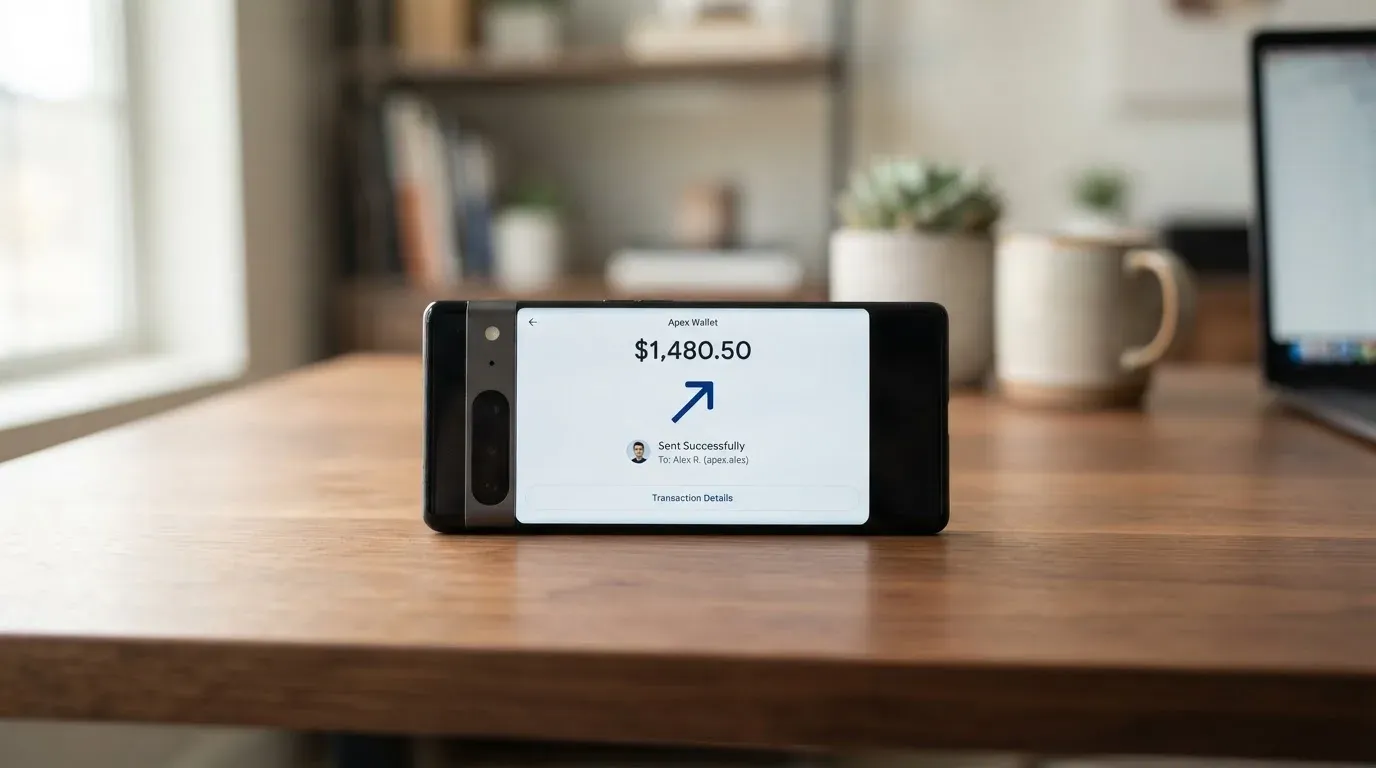
On the fiat side, the FAQ lists bank cards, direct transfer, wire transfer, cryptocurrency, “depending on region”, and the home page mentions Apple Pay, Google Pay, Visa and Mastercard as ways to top up. The exact providers behind those methods, the per-method fees and the speed of each route are not described. Network fees (gas paid to the blockchain to move your crypto) are paid to the blockchain itself, not to HexaCard, but who pays them when you top up — you, the company, or split — is also not stated.
Two numbers on the official pages conflict. The home page says a $10 initial top-up is required when you buy a card, while the FAQ says “the minimum amount to top up your balance is $20”. If you are planning a $10 top-up, expect to be told it is below the minimum. The cleanest interpretation is that the $10 is the minimum only at the moment of card purchase, and $20 is the minimum for any later top-up; the site does not spell this out.
Withdrawing the balance back to a bank account or a crypto wallet is not described in the public pages. The card agreement covers what happens if a card is cancelled: it auto-cancels after six consecutive failed transactions or three consecutive failed withdrawals, and HexaCard may close a card at any time. What happens to the balance on closure, how you get it back and how long that takes are not explained.
Paying with it every day
In day-to-day use, a HexaCard is supposed to behave like a prepaid card. You top up a balance, the card spends from that balance, and the card cannot overdraw because there is no linked bank account behind it. Conversion from crypto to the card’s base currency happens in the background, and at the till you see a normal card payment.
What is and is not described in the public material is a useful list. The physical card supports ATM withdrawals; the virtual card does not. Cashback exists on the physical card for three specific merchants — Spotify, Steam and Google Play Store — and the rate is not stated. Apple Pay and Google Pay appear in the top-up section, but card provisioning — the process of adding the card to a mobile wallet so you can tap to pay — is not described. If the card is meant to be added to Apple Wallet for tap-to-pay, the public pages do not say so explicitly, and reviewers do not describe doing so successfully. Blocked merchant categories (such as gambling, often MCC 7995) are not listed; some issuers block gambling on prepaid cards by policy, but HexaCard does not say whether it does.
The app exists for iOS and Android. The iOS listing on the App Store, based on third-party data, shows a 3.6/5 average from 17 ratings, version 1.2.7, with a first release on 13 December 2023 — a small, slow-moving app by any measure. A user testimonial on the HexaCard site says the card can be deactivated in the app, which is the standard “freeze my card” control most modern card apps offer. 3-D Secure — the extra code or biometric check that some online shops trigger for fraud protection — is mentioned in passing: the site says codes come via the app or by SMS.
The user agreement, last updated on 4 January 2024, sets out a dispute process that goes from an informal 30-day resolution window to binding individual arbitration administered by the American Arbitration Association in New York, with no class actions and a 30-day opt-out from the date you accept the agreement. Section 17 says that during third-party provider disruptions “refunds cannot be processed”. The card fee is non-refundable. Chargeback time frames and reasons are not stated.
What can go wrong
The clearest summary of the risk picture is the third-party reviews. The Trustpilot page for HexaCard, read on 2026-10-20, shows a TrustScore of 2.0 from 17 reviews, with 82% giving one star and the remaining 18% giving five stars. The themes that run through the negative reviews are consistent enough to be worth listing rather than paraphrasing.
First, cards and balances are blocked or closed, often with the in-app balance reading 0.00 even though the user had topped up. These reports run from November 2025 through July 2026. Second, support is described as silent for weeks, in the same period. Third, a number of reviewers tie their blocked balances to a Turkish issuer or to Papara, a Turkish payments brand, with reported losses around $60 to $100 per affected user. Fourth, several users say they were asked $15 or $25 for a replacement card on different occasions in November 2025 and June 2026. Fifth, at least one reviewer suspects that 10 five-star reviews were posted within a few hours in November 2025 and may not be genuine; the company has replied to 61% of the negative reviews.
The company has answered some of these on Trustpilot. The replies explain that services are “fully active” as of 2 November 2025 and describe the issues as compliance updates; on 26 February 2026, the company said the Turkey/Papara disruption is on the provider’s side and that restoration depends on the provider; on 3 July 2026, the company said some top-up methods may be limited depending on the user’s region. None of these replies name a regulator, an issuer licence or a specific reason for the balance blocks. There is no regulator warning or news article about HexaCard in the public record.
The structural risks sit underneath those reviews. The card agreement refers to the “Celtic Bank Privacy Policy” for the issuer’s data, which suggests a US-based bank is the issuer, but the issuer is not named directly on the public pages. The user agreement names “Hexacard Business Corporation” under New York law, and the help-centre address in the contact page is Bartle House, Oxford Court, Manchester M2 3WQ, in the UK. The App Store seller is shown by a third-party source as TransferEasy Limited. None of this is necessarily a problem in itself, but it is a programme whose legal and operational structure you have to assemble from several sources, and a few pieces are still missing.
On security, the site says transactions are monitored 24/7 and 3-D Secure codes are sent via the app or by SIM. The card agreement notes that holds reduce the available card limit until released, which is normal but worth knowing if you are budgeting against a balance. Custodial versus self-custody — whether your crypto is held by HexaCard or stays in your own wallet until the moment of payment — is not stated. Insurance and safeguarding of customer funds are not stated. The card agreement lets HexaCard cancel or restrict a card at any time, with some cancellations automatic and irreversible, and auto-cancels a card after six consecutive failed transactions or three consecutive failed withdrawals. None of this is unique to HexaCard, but combined with the review record it adds up to a programme where you do not have a clear answer to the question “what happens to my money if something goes wrong?”
What to take instead
If the gaps in HexaCard — unclear fees, an unclear issuer, a thin review record — are dealbreakers, three alternatives are worth a look. None of them is a perfect substitute; each is a slightly different trade-off.
| Card | Score | Where it works | Card and fees | Top-up |
|---|---|---|---|---|
| Cardex | 5.6 / 10 | “200+ countries” with no published exclusion list; the App Store listing is Naira-focused | Real-time crypto-to-fiat conversion at the moment of payment using an “AI-Powered Conversion Rate”; fee percentage not stated | USDT, USDC and BTC; networks not stated |
| CardFlow | 4.9 / 10 | Aimed at Nigeria, but described as serving “Nigerians and global users”; no country list | Free virtual USD Mastercard created in about 3 minutes; monthly fee not stated | Bitcoin, USDT, ETH or Naira bank transfer; networks not stated |
| HyperCard | 4.7 / 10 | No country list on the official pages; the App Store says the card is accepted in “more than 176 countries” (acceptance, not eligibility) | Prepaid “HyperCard” in USD or EUR; no fees listed on the App Store page | USDT, BTC, ETH in the app, converted to USD or EUR; networks not stated |
Cardex scores higher than HexaCard mainly because of broader country coverage and a more transparent conversion mechanism, but the fee percentage is still not published. CardFlow is the easiest entry point — a free virtual card in three minutes — but the support is Nigeria-focused and the fee schedule is also missing. HyperCard sits at almost the same score as HexaCard, with a clearer “176 countries” acceptance claim but no fees or country eligibility list either. If you want a card programme that publishes a fee schedule, a named issuer and a regulator, you are looking at mainstream cards such as those from large exchanges, which are outside the alternatives in this comparison but are a more conservative choice for a first crypto card.
Who I would recommend it to
HexaCard is a reasonable fit for a narrow group. If you live in Georgia, Turkey or Canada, you are explicitly on the published country list, and you want a card you can top up with USDT, BTC, ETH, LTC or SOL and spend at a shop without first swapping to fiat on an exchange, HexaCard is one of the few programmes that names your country and accepts the coins you hold. For that user, the entry price ($24.99 for a virtual card, $39.99 for a physical one) is comparable to other programmes in the same category, and the published list of accepted coins is reasonable.
For everyone else, the case is harder. The conversion, FX and ATM fees are not published, so you cannot tell what a typical payment will cost you. The issuer is not named directly on the public pages. The third-party review record is dominated by closed cards, drained balances and a long-running Turkish disruption that the company has acknowledged but not resolved. If you have a mainstream alternative available to you, you are likely to find a card with a published fee schedule, a named issuer and a regulator behind it.
If you do decide to try HexaCard despite the warnings, the practical steps that reduce your risk are the same as for any prepaid crypto card. Start with the virtual card at $24.99 rather than the physical one at $39.99, top up a small amount, make a small payment, and only then decide whether to put more money on the card. Do not keep a balance larger than you can afford to lose if the programme is interrupted. Keep screenshots of every top-up, every balance and every support message, because the dispute process goes through binding individual arbitration in New York, not through a local regulator you can complain to. And before you send any crypto to the card, check the deposit network twice — USDT on the wrong network is the most common way to lose money to a card programme.
Frequently asked questions
What is the HexaCard card?
HexaCard is a prepaid card programme that lets you top up a balance with cryptocurrencies such as USDT, ETH, BTC, LTC and SOL, and spend that balance at shops, online and (with the physical card) at ATMs. The card is offered as a virtual product for $14.99 plus a $10 first top-up, or as a physical product for $29.99 plus $10, and runs on Visa, Mastercard or American Express networks according to the site.
How does HexaCard work?
You create an account, complete an identity check with a name, address, date of birth and possibly a driver’s licence, buy a virtual or physical card and make a first top-up. Your crypto is converted to the card’s base currency in the background, the card draws on that stored balance, and the card cannot overdraw because it is prepaid. The card agreement lets HexaCard cancel or restrict the card at any time, with some cancellations automatic.
Is HexaCard a bank?
No. The user agreement names “Hexacard Business Corporation” under New York law, the help-centre address is in Manchester, and the card agreement refers to a “Celtic Bank Privacy Policy” for the issuer’s data, suggesting a bank is the issuer, but the issuer is not named on the public pages. HexaCard itself is a card programme, not a bank, and your balance is not a bank deposit.
Who owns HexaCard?
The public material does not give a clear ownership answer. The user agreement says the contracting party is “Hexacard Business Corporation” under New York law, the help-centre address is in Manchester, and the App Store seller is shown by a third-party source as TransferEasy Limited. There is no group structure or shareholder information on the site.
Is HexaCard available in my country?
The FAQ lists six countries: Georgia (spelled “Gerogia” on the page), Canada, Germany, the United Kingdom, Turkey and the United States. The company also says it has “over 25 BINs in various GEOs” without publishing the list. If your country is not one of the six, the only way to find out is to sign up and see whether a card is offered.
Does HexaCard require KYC?
Yes. The card agreement says the company asks for name, street address, date of birth and other identifying information and may request a driver’s licence or other ID documents. The exact documents, the processing time and the reasons an application could be rejected are not published.
How do I top up HexaCard?
You can top up with USDT, ETH, BTC, LTC, SOL and other coins, or with fiat through bank cards, direct transfer, wire transfer, Apple Pay, Google Pay, Visa or Mastercard, depending on the region. The first top-up must be at least $10 to buy a card, and the FAQ says the minimum later top-up is $20. The networks for each crypto are not named on the public pages, so check before you send.
Can I add HexaCard to Apple Pay or Google Wallet?
The public material lists Apple Pay and Google Pay as top-up methods, not as mobile-wallet destinations for the card itself. Card provisioning — adding the card to Apple Wallet or Google Wallet so you can tap to pay — is not described. If you need tap-to-pay on your phone, treat that as unconfirmed until you see it work in the app.
Is HexaCard safe?
The site says transactions are monitored 24/7 and 3-D Secure codes are sent through the app or by SMS, and the card can be deactivated in the app. The card agreement lets HexaCard cancel a card at any time and auto-cancels it after six failed transactions or three failed withdrawals. The issuer and the licence are not named on the public pages, and the third-party review record is dominated by closed cards and silent support, so the answer depends on how much risk you are willing to take on an unnamed issuer.
How do I withdraw money from HexaCard?
The public pages do not describe a withdrawal flow back to a bank account or a crypto wallet. The card agreement covers what happens if a card is cancelled and says the card fee cannot be refunded, but it does not say how or on what timeline a remaining balance is returned. If getting your money back out matters to you, that gap is a reason to keep your balance small.
Virtual card reviews – cryptocardcheck
Content created by the «cryptocardcheck» team