
A USDC card with real strengths on paper and a long list of unanswered questions
 Available in US
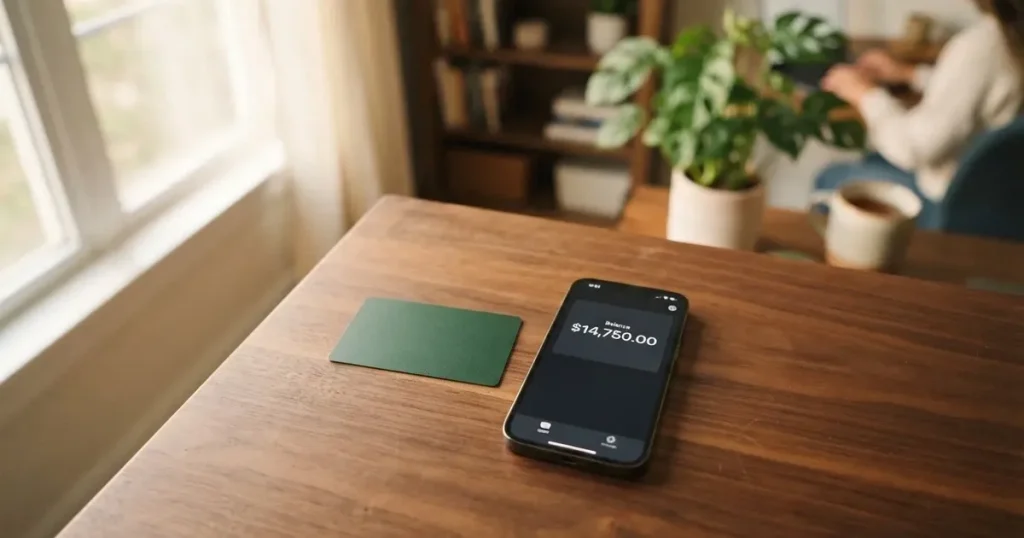
ZAZO sells a card that spends a stablecoin balance instead of a bank balance. That alone puts it in a narrow and interesting category: for people who cannot get an ordinary bank card, or who prefer not to route everyday spending through a bank account, a card that draws on crypto is a genuine alternative. ZAZO’s own pages add two attractive headline numbers — no off-ramp fee and a zero FX spread — and a promise of reach across “170+ countries”. They also leave a long list of practical questions unanswered: what the card costs to issue, what the daily and monthly limits are, whether you get plastic or only a virtual card, who issues it, and whether the balance is held by ZAZO or stays in your own wallet.
My score for the card is 6.8 out of 10. That is a middling mark, and it sits below where a card with genuinely good economics would land. The reason is not that what ZAZO does is bad — on the two costs it does publish, it compares well. The reason is that I cannot verify the things you would need in order to decide whether it works for you, and a card you cannot check is worth less than a card that is plainer but honest.
The conditions described here are current as of October 28, 2026.
Verdict: 6.8 out of 10, strong on two fees and silent on most of the rest
Let me walk you through the score criterion by criterion, because the total hides the shape of the card. Two criteria score well, one scores well on access, three sit in the middle, and nothing scores badly. That is a useful thing to know: this is not a card with a fatal flaw I found. It is a card with a lot of unlit rooms.

| Criterion | Mark | Why |
|---|---|---|
| Who can get it | 9 / 10 | “170+ countries” is an unusually wide reach, and the country list itself is not disclosed |
| Cost | 8 / 10 | “No Off-Ramp Fee” and “0 FX Spread” are strong claims; the issuance fee is not disclosed |
| Top-up options | 5 / 10 | USDC top-up and non-custodial wallet support; fees and minimum amounts not disclosed |
| Reliability and complaints | 5 / 10 | The company and the issuer are not disclosed, no complaints were found, and whether the card balance is custodial is not disclosed |
| Everyday use | 5 / 10 | A USDC card working at “50M+ merchants”; virtual or physical, wallets and ATM access not disclosed |
| Total | 6.8 / 10 |
Who does it suit? Someone who already holds USDC, wants to spend it directly rather than selling it for cash first, is comfortable with crypto-native plumbing, and lives somewhere where a normal bank card is difficult to obtain. The cashback is a real plus if you spend steadily: 1% in USDC plus up to 3% from what the card calls network earnings, a share of what your invitees spend.
Who does it suit badly? Someone who needs a card they can trust to behave exactly like a bank card and who will read the terms before the first payment. The missing items on this page are precisely the ones that decide that: card type, limits, ATM access, cost of issuance, dispute handling, support channels, and whether your money is held by a company you have never heard of. And for anyone whose plans depend on converting the balance back to cash, “No Off-Ramp Fee” is a promise about a fee whose method and terms I could not verify.
Will they give you the card?
They claim “170+ countries”. That is the single most attractive fact about ZAZO and the reason the access criterion scores highest. For a reader who has been declined by a conventional bank, or who lives in a country with thin card infrastructure, a card that says yes to nearly everywhere sounds like the answer.
There is a catch, and it is the kind that matters. The country list is not disclosed. “170+ countries” tells you the shape of the reach but not its edges, and the edges are where your case lives. It does not say whether eligibility turns on residence, on citizenship, or on where your documents are issued. It does not say whether sanctioned or restricted jurisdictions are carved out, and if they are, it does not name them. It does not say how many of those 170 are real sign-ups rather than expressed interest.
So the honest reading is this: reach is broad and probably genuine, but you cannot check your own country against a published list because there is no published list. If your situation is complicated — a residence in one country with an ID from another, for example — you are exactly the person this card would be for, and you are also the person who most needs the fine print that isn’t there.
Compare that with how a competitor handles the same question. KAST shows a residence-based list at the identity check and says plainly that if your country is not listed, the card is not available there. TokenPocket splits its coverage by card network: a Visa debit for a list of European countries and territories, a Mastercard debit for Australia, Canada, Hong Kong, Japan, Taiwan, New Zealand, Singapore, South Korea and the UK among others, with the Americas described as planned. MetaMask opens sign-up in 45 listed countries and territories and sends everyone else to a waitlist, and it is the only one of the three that addresses citizenship directly — it requires proof of residency, records that ineligible regions limit sign-ups rather than spending, and notes that US and UK sign-ups were temporarily closed at the time of writing.
That difference is the difference between a claim you can test and a claim you have to take on trust. ZAZO asks for the trust.
How to get it
The path is an email sign-up followed by an identity check. That is the ordinary shape of these products, and it is worth understanding why it is shaped that way. Anti-money-laundering law obliges regulated businesses to verify customers and assess risk, and to keep monitoring transactions and report suspicious activity afterwards, not just at sign-up. In the EU that due diligence normally covers name, address, date of birth, nationality and identity documentation, plus a sanctions check and a politically-exposed-person determination. In the US the customer identification programme requires name, date of birth, address and an identification number, with electronic systems also validating proof-of-address documents. If the check cannot be completed, the institution is expected to hold back or close the relationship — which is the normal reason an account sits frozen waiting for documents rather than being approved or rejected.
What you actually submit is not stated. The card’s pages say KYC is required but do not say which documents, whether a selfie is involved, how long review takes, or what happens on a failed check. Treat any timeline you have heard from someone else as hearsay.
The product itself is a USDC card working at “50M+ merchants”. The network it runs on is not stated, and neither is whether it is virtual or physical. Both of those are things you cannot decide without. A virtual card can be issued in minutes and works well in apps and online; a physical card takes a week or two and works at a shop’s terminal. If you need one of those and ZAZO gives you the other, the card is useless to you no matter how good the fees are. Delivery time is not stated either. Whether there are different verification tiers, with different limits attached, is also not stated.
One concrete thing does emerge from the card’s own material, and it matters enough to flag early: alongside the USDC card, a USD ACH account is offered and marked “No SSN required”. For readers in the United States, that phrase carries a specific weight — it means the account is not gated behind a Social Security number. Whether that account is the same thing as the card or a separate product alongside it is not clear from what the card publishes, and if you were hoping for a card that simply behaves like a US bank card, this is the closest thing to that on offer.
Fees: what it really costs
Here is the honest position on cost. ZAZO publishes two numbers and they are both good. “No Off-Ramp Fee” and “0 FX Spread” are exactly the two charges that hurt most on ordinary crypto cards, and if both are true as stated, holding and converting USDC on this card is cheap.
Everything else is missing. The issuance fee is not disclosed. ATM fees are not disclosed. Daily and monthly limits are not disclosed. Tier structure, if there is one, is not disclosed. So the card’s most important cost — what you pay to open it — is a number I cannot give you.
| Fee or limit | What the card states |
|---|---|
| Issuance fee | not stated |
| Monthly fee | not stated |
| Conversion | “No Off-Ramp Fee” |
| FX | “0 FX Spread” |
| ATM | not stated |
| Daily limit | not stated |
| Monthly limit | not stated |
| Tiers | not stated |
The card is a USDC card, and a USD ACH account is also offered. Two currencies of account and two very different cost structures — and no published table telling you which fees apply to which.
Let me put those two good numbers in context, because a zero spread is not automatically the whole story. A card that converts USDC to a local currency at zero spread still has to be funded. Blockchain network fees for your deposit are charged by the blockchain itself, not by the card provider, and those are real money that never appears on the card’s fee list. A network like Tron prices transfers through bandwidth and energy resources and often burns TRX; Ethereum charges gas, payable only in ETH, which means a wallet holding a stablecoin with no native token in it literally cannot send. So on the Ethereum side, if you are topping up USDC, you may need a small amount of ETH as well as the USDC. None of that is ZAZO’s fee, and all of it is your cost.
Three everyday payments, and which fees touch them:
- A coffee bought in your own country while you hold USDC. The conversion happens at “0 FX Spread” and “No Off-Ramp Fee”, so the card’s own charges on this purchase are zero. What you may still pay is the blockchain cost of having funded the card in the first place.
- A purchase in a country whose currency you are not holding. The stated “0 FX Spread” and no off-ramp fee still apply on paper. This is the case where the missing limits and missing fee table would matter most — some cards add a per-transaction or percentage fee on non-home-currency transactions, and ZAZO does not say whether it does.
- Withdrawing cash at an ATM. Not disclosed, on both the fee and the access side. There is no stated ATM network, so I cannot tell you whether cash is even on the menu.
How to Top up the card
Top-up happens in USDC. The card also supports non-custodial wallets, which is the more interesting half of that sentence and the part that cuts both ways.
On the good side: sending from a wallet you control means the crypto is yours until the moment it lands. On the cautious side, blockchain transfers are irreversible. If you send on a network the card provider does not support, or to an address belonging to a different network, the funds can be lost or need manual recovery with no guarantee. Matching the network exactly is the single most important thing to get right, and the card does not publish which networks it accepts.
There is also a USD ACH account offered, marked “No SSN required”, alongside the USDC route. Two ways in: a bank transfer or a crypto transfer. Neither is fully specified — fees and minimum amounts are not stated for the USDC top-up, and the method and closing balance for cashing out are not stated either, despite the “No Off-Ramp Fee” claim sitting right next to them.
The token and network question has a wrinkle worth knowing about before you start. USDC is the dollar-pegged stablecoin from Circle, which says it is redeemable 1:1 for dollars and fully backed by cash and cash equivalents held mostly in a government money market fund, with monthly reserve attestations by a Big Four firm, and lists it as natively supported on 38 networks as of 16 September 2026 — Ethereum, Solana, Base, Polygon PoS, Avalanche, Arbitrum and Stellar among them. Circle stopped supporting USDC on Tron in February 2024, so the widely used TRC20 route is not a native option and you would be transferring through something else. And a stablecoin is a stablecoin: USDT and USDC together accounted for about 90% of stablecoin market capitalisation as of the BIS’s July 2025 assessment, yet USDC briefly lost its peg in March 2023 during the US banking crisis, and TerraUSD collapsed outright in May 2022. The asset is not the problem. It is just not fixed.
Paying with it every day
The everyday case for ZAZO is spending USDC, with cashback and support for non-custodial wallets. The reward structure is the most generous-sounding part of the offer: 1% cashback in USDC, plus up to 3% in what the card calls network earnings, described as a share of your invitees’ spending. The second number is the sort of thing that deserves a slow read — “up to” is doing real work in that sentence, and the mechanism it rewards is recruiting people rather than spending your own money.
Reach is the other strong point: “50M+ merchants” is the Visa-or-Mastercard acceptance figure, which in practice means wherever those networks are accepted. That is genuinely most of the world.
But three of the things that decide whether a card works on a Tuesday afternoon are not stated:
- Wallets. Whether you can add the card to Apple Pay or Google Pay is not stated. This matters more than it sounds. Tokenised mobile wallets are among the standard safeguards now, and a card you cannot put in your phone is a card you have to physically present.
- The app. Not described, so I cannot tell you what the interface does, whether it shows pending transactions, or whether it is the place where you would freeze the card.
- Disputes. Not stated. If a charge goes wrong, there is no published statement about chargebacks or reason codes.
That last gap sits against a hard background. A chargeback is a refund ordered by the card issuer to settle a dispute, with reason codes for fraud, duplicate billing or goods not received. US debit card reversal rights come from Regulation E and credit card rights from Regulation Z, while prepaid-card coverage varies and should not be assumed. A card that behaves like a prepaid product drawing on a stored balance may not carry the same protection as a debit card tied to a current account, and I found nothing from ZAZO telling me which it is.
Two more everyday friction points that are not ZAZO’s fault but will still land on you. Address Verification Service compares the numeric parts of a billing address you type with the issuer’s records; it is offered mainly in the US, Canada and the UK and is generally unavailable for foreign-issued cards, which causes declines. And because a card’s first six or eight digits identify the issuing institution and country, merchants can see that a card is foreign or prepaid and decline it or apply extra scrutiny. Some shops refuse prepaid or foreign-issued numbers outright. A declined authorisation can also leave a hold on your funds for several days, typically up to seven.
What can go wrong
No complaints were found, and no Trustpilot page was found. I want to be careful here, because “no complaints found” is not the same as “no complaints exist”. It more likely means the card is small, new, or simply not the kind of brand people write angry reviews about. Absence of a complaint record is weak evidence, and I am not treating it as reassurance.
The substantive risks, in the order I would weigh them:
Who is behind it, and who issues the card. The company and the issuer are not disclosed. This is the first question I would ask, and I cannot answer it. It is a fair question because the crypto brand is often only a programme manager or a front end — the card network routes messages and sets rules, the licensed issuer holds the programme, and the brand markets it. Which of those roles ZAZO occupies is exactly what is not stated.
Programme closure. The precedent is well established. In November 2022 Visa said it had terminated its global agreements with FTX, and the FTX US debit card programme was wound down by its issuer. WaveCrest, a Visa issuer that supplied crypto card brands, was suspended by Visa in Europe in 2018, closing all WaveCrest-issued Visa programmes. Closures follow a pattern: notice, then spending and loading stop, then you are asked to withdraw whatever is left. When you weigh this, the phrase “No Off-Ramp Fee” acquires a second meaning — it tells you about the cost of exiting normally, which is not the same as telling you what happens to your balance in a wind-down.
Custody. Non-custodial wallet support is stated. Whether the card’s balance is custodial is not. That single missing word decides who bears the risk of a hack or an insolvency, and it is the same word that decides whether a card payment spends your wallet directly or spends a balance someone else holds for you.
The regulatory footprint. Not stated. In the EU, MiCA took legal effect in June 2023, with rules on asset-referenced tokens and e-money tokens applying from 30 June 2024 and the crypto-asset service provider rules from 30 December 2024. E-money tokens may be issued only by a credit institution or an electronic money institution. The transitional period runs until 1 July 2026 or until a provider gets or is refused authorisation, whichever comes first, and ESMA maintains a register you can check. In the US, FinCEN guidance treats administrators and exchangers of convertible virtual currency as money transmitters, while ordinary users buying goods are not. A card often depends on two licences — one for the crypto side under MiCA, one for the payment side under e-money and payment-services law — and you would need to see both to know what stands behind it. Note also that safeguarded customer funds are not bank deposits and may not sit under a deposit guarantee scheme.
Sanctions screening on you. Nationality is recorded and screened separately from residence, because screening is usually applied to citizenship and country of birth as well as to your address. Whatever this card’s position is on that, it is not published.
Support and news. Not stated, on both counts.
What to take instead
None of these is a recommendation for you specifically — this is a comparison, not advice. But if the things ZAZO has not answered are the things you need answered, a competitor that publishes them may serve you better even with worse headline fees.
| ZAZO | MetaMask | KAST | TokenPocket | |
|---|---|---|---|---|
| Score | 6.8 / 10 | 7.1 / 10 | 6.1 / 10 | 5.8 / 10 |
| Card | USDC card, network not stated | Mastercard, virtual first, metal pre-orderable | Visa: Standard, Premium metal, Private gold, plus other designs | Visa/Mastercard debit on Arbitrum |
| Cost | Issuance not stated; “No Off-Ramp Fee”; “0 FX Spread” | Virtual free; metal $199/year | Standard $0; Premium $1,000/year; Private $10,000/year | NFT fee partly covered, user pays a small portion; no other fees stated |
| Key fees | Not stated beyond the two above | “Minimal fee for each transaction”, amount not stated; no FX fee | FX on non-USD 0.5%–1.75%; declined payment $0.50; non-USD under $25 costs $0.10 | 1% on depositing crypto, refunded later via rewards |
| Rewards | 1% USDC cashback + up to 3% network earnings | 1% virtual; metal headline 3% but 3% capped at the first $10,000 then 1% | 1.5% / 2% / 3% USD cashback with monthly caps | No cashback stated |
Three observations. First, MetaMask is the closest to what ZAZO seems to be trying to be, and it publishes far more: who it is open to in 45 listed countries, which networks you can spend from (Linea, Base, Monad, Solana) and which tokens (mUSD, wETH, EURe, GBPe, USDC, USDT), a free virtual card and a $199 metal one, and even a footnote saying the 3% headline rate applies only to the first $10,000 spent. Its stated fee is a “minimal fee for each transaction” with the amount behind a link, which is its own small evasion — but at least you know a fee exists and where to find it.
Second, KAST is the one with a real structure, and also the one with the most commercial fine print. A published tier ladder from free to $10,000 a year, generous cashback with monthly caps, a long stablecoin list, and unusually explicit fee disclosures including a $0.50 charge on a declined payment. But it is hard-gated: residence lists gate the identity check, holding an ID from a restricted region can disqualify you even if you live in a supported country, and dual citizens get a specific rule. If your papers are complicated, this is the card that tells you so explicitly.
Third, TokenPocket shows what the same category looks like with weaker disclosure and weaker economics: a 1% fee on every crypto deposit, refundable later through rewards rather than refunded now, and no cashback stated. Its country coverage is also split by card network, which means which card you get depends on where you live.
Who I would recommend it to
I would point someone at ZAZO if all three of these are true. They already hold USDC and want to spend it without selling it first. They are comfortable enough with crypto plumbing to check a network name before pressing send, and to understand that a blockchain transfer cannot be recalled. And they are in a position where the alternative is not a bank card at all — where 170-odd countries is genuinely the difference between having a card and not having one, and where a 1% cashback plus a share of network earnings is real money.
I would not point someone at ZAZO if their card has to work everywhere without surprises, if they need to know the card is coming in the post on a particular day, if they plan to withdraw cash regularly, or if they are putting their savings behind it. Those readers should wait, or start with the competitor that publishes its answers.
What would move my score? Four things, all of them answers rather than features. Whether the balance is custodial. Whether the card is virtual or physical, and how it gets to you. What the issuance fee and the limits are. And who the issuer is. Any one of those, published plainly, would tell me more than another 3% cashback ever will.
One last thing, and it is not this card’s business but it will land in your account. The IRS treats digital assets as property, so exchanging them for goods, services or dollars generally produces a taxable gain or loss, measured in local currency at the value on the date of each transaction — which means each card payment funded from crypto can be its own disposal. How that lands for you depends on where you live and on your own situation; take it to a professional rather than to me.
Frequently asked questions
What is the ZAZO card?
ZAZO is a card that spends a stablecoin balance rather than a bank balance. The card is denominated in USDC, the dollar-pegged stablecoin, and is accepted at “50M+ merchants”, which is the acceptance figure for the card networks. Unlike a debit card tied to a current account, it behaves much like a prepaid card drawing on money you have already loaded.
How does the ZAZO card work?
You fund it in USDC, and the balance is converted and spent. On top of that the card supports non-custodial wallets, so a transfer can come straight from a wallet you control. Cashback of 1% in USDC is credited on spending, plus up to 3% described as network earnings from your invitees’ spending.
Is ZAZO a bank?
The card’s own pages do not say, and that is a real gap rather than a technicality. They state neither the company behind the service nor the institution that issues the card. Crypto brands in this category are often only a programme manager in front of a licensed issuer, so without those names you cannot tell which regulator stands behind it.
Does ZAZO require KYC, and what documents?
Identity verification is required — sign-up is by email and then KYC. Which documents are needed is not stated on the public pages, nor is how long review takes or what happens on a failed check. For US users there is one concrete detail: a USD ACH account is offered and marked “No SSN required”.
Is ZAZO free, and what are the fees?
Two fees are published and both are favourable: “No Off-Ramp Fee” and “0 FX Spread”. Everything else is not disclosed — the issuance fee, any monthly fee, ATM fees, and the daily and monthly limits. You also pay the blockchain’s own network fee to fund the card, which is separate and not set by ZAZO.
How do I top up the ZAZO card?
Top-up is in USDC, and non-custodial wallets are supported, so you can send from a wallet you hold yourself. A USD ACH account is also offered alongside it. Check the network matches exactly before sending: transfers are irreversible, and a wrong network can mean lost funds or a manual recovery request with no guarantee.
Can I use ZAZO in my country?
The card claims availability in “170+ countries”, which is very wide. However, the country list itself is not disclosed, and there is no published rule about whether eligibility follows residence or citizenship. If your documents are unusual, you would need to ask the company directly before counting on it.
Is the ZAZO card safe for my money?
The card states no more than that non-custodial wallets are supported. Whether the balance you spend is custodial — held by the provider — is not stated, and that single detail decides who carries the risk if the operator is hacked or fails. There is also no stated support channel, no dispute process, and no published information about the issuer.
What do I need to know before withdrawing money from ZAZO?
The card advertises “No Off-Ramp Fee”, but the method for cashing out and what happens to a remaining balance at closure are not stated. There is also no published ATM network or ATM fee. If withdrawing cash is part of your plan, treat that as an open question rather than a known quantity.
Is ZAZO worth it compared with other crypto cards?
On the two costs it publishes it compares well, and its country reach is the broadest of the cards I looked at. But it discloses less than MetaMask, KAST and TokenPocket about fees, limits, card type and eligibility. If disclosure is what matters to you, those alternatives may be the better-informed choice.
Wallet card reviews – cryptocardcheck
Content created by the «cryptocardcheck» team