
A virtual crypto card worth a try, if you live in New Zealand or Australia
 Available in US
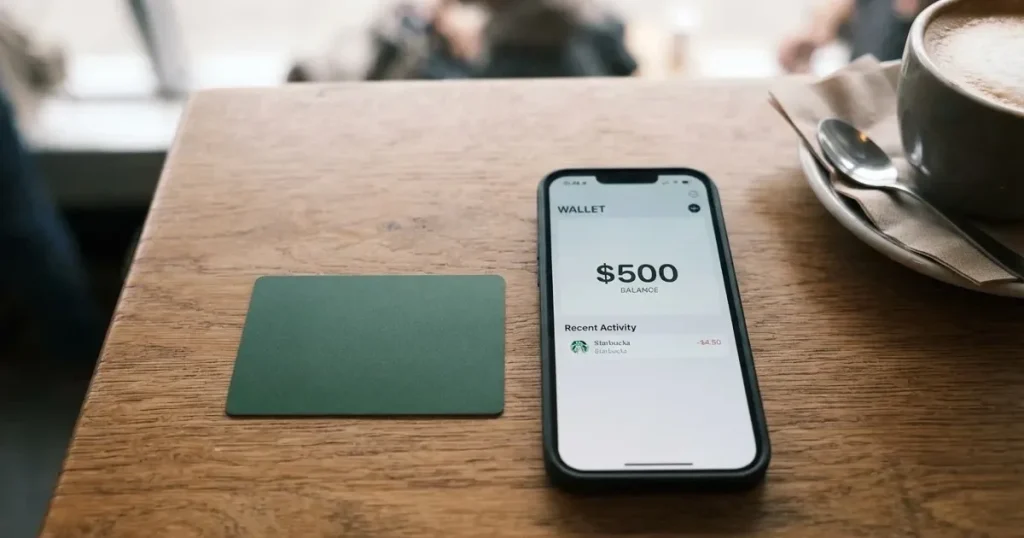
The Pay It Now card is a virtual, reloadable Mastercard that spends a stablecoin balance. You load crypto into the PIN Network wallet, it is converted to USDC, and the card draws on that balance like a prepaid card. In New Zealand and Australia — the only countries that can sign up at the time of writing — that combination is genuinely useful for people who cannot easily get an ordinary bank card. Everywhere else the simple answer is that you cannot open one yet.
My score for it is 5.6 out of 10. That is not a dismissive number, and it is not a recommendation either. It reflects a service that does one thing well and restricts who may do it.
The conditions described on this page are current as of October 28, 2026.
Verdict: 5.6 out of 10
The strongest part of this card is not the card itself but the funding rail behind it: more than fifty digital assets convert into USDC inside the app, which is a wider door than most crypto card apps offer. The weakest part is everything around it — two countries only, one virtual card and no physical option, no ATM access, Apple Pay additions frozen, and a public record of support complaints that goes back through several months of 2026.
If you live in New Zealand or Australia, hold stablecoins or a handful of coins you do not want sitting still, and want a card number that spends only what you have loaded, this is worth setting up. If you are anywhere else, or you need a physical card, or you need cash from a machine, there is no reason to look twice.
| Criterion | Mark | Why |
|---|---|---|
| Who can get it | 2 / 10 | Only New Zealand and Australia; the United States and Europe are described as plans |
| Cost | 7 / 10 | Issuing is 5.00 USDC, shown as “FREE for a limited time”; no annual fee; 1.5% on purchases not in USD; conversion by spread |
| Top-up options | 9 / 10 | More than 50 digital assets (the FAQ says 40+), among them BTC, ETH, SOL, USDT, TRX and BNB, all converted to USDC |
| Reliability and complaints | 6 / 10 | Pay It Now NZ LTD (FSP 1002374), Pay It Now AUS PTY LTD (AFSL 700050), issuer Immersve; Trustpilot 4.0 out of 5 from 13 reviews, with complaints about support and lost funds |
| Everyday use | 5 / 10 | Virtual Mastercard only; Google Pay works; adding new cards to Apple Pay has been paused since 11 May 2026; no ATM |
| Total | 5.6 / 10 | A good funding rail wrapped in a narrow product |
A word on how I weigh that column of complaints. Thirteen reviews is a very small sample, and a Trustpilot score of 4.0 from thirteen reviews can move several points on a single new review. I weight it because of what the reviews say rather than how many there are — and because the pattern matches what the card’s own pages already admit about Apple Pay. Two cautions go with it: the reviews are user reports, not confirmed findings, and the company has not replied to negative ones.
Will they give you the card?
Only PIN users in New Zealand and Australia can apply. The card’s own wording is that expansion “into other regions, including the U.S. and Europe” is being worked on — worked on, not promised, not dated.
That is the whole eligibility rule as published. There is no stated list of excluded states within the two countries, no minimum age beyond what the identity check implies, and no minimum balance you are told to hold first. If you are in Auckland or Sydney with a phone and documents, you are in the intended audience. If you are in Lagos, Berlin or São Paulo, you are not, and no amount of troubleshooting changes that.
For anyone reading this from outside those two countries: the honest answer is that you can read the rest of the page to understand how these cards work in general, but this particular card is not available to you yet.
How to get it
The application runs through the PIN Network app, on iOS and Android. The card provider asks for onboarding and ID verification of its own, on top of whatever the PIN Network check covers — the two are separate steps, and the app says the second one takes “just a few minutes” once you are inside it.
The sequence is: open the PIN Network app, go to the Cards section, apply, complete the card provider’s KYC, then top up. What you will be asked for in that provider check — which documents, whether proof of address, what age floor — is not stated on the card’s public pages. You should expect to have a passport or driving licence to hand, and expect a question about address, because that is how this category of check normally runs.
One thing to be clear about before you start: the card is virtual only. There is no physical card, delivery is described as “10 minutes” because there is nothing to ship, and physical cards are not available at this time. You will be managing a card number inside an app, and if you lose access to the app, you have lost the card.
You can create more than one virtual card from the same wallet, which is useful if you want one for subscriptions and one for day-to-day spending. The card is issued by Immersve and distributed by Takeoff Media Limited — worth knowing, because the issuer and the distributor are not the same company and neither is the app you apply through. There is a single tier: no higher-spend version to upgrade to.
Nothing here is a hint that the checks can be skipped. Identity verification is a legal requirement for the licensed firms involved, and I have no interest in explaining how to get around one.
Fees: what it really costs
Here is the published pricing, line by line. The honest headline is that the card is cheap to open and free to keep, and slightly expensive to use — the cost sits in the conversion spread and in the 1.5% on anything that is not dollars.
| Fee or limit | What it says |
|---|---|
| Issuing | 5.00 USDC, deducted from the app wallet balance; shown as “FREE for a limited time” |
| Annual fee | None |
| Cancellation | Free |
| Conversion to USDC | Spread only; the rate is shown in the app |
| Purchase fee | 1.5% on purchases in currencies other than USD |
| Separate FX fee | None |
| ATM | Not stated; the card is virtual only |
| Transaction limits | USD 20,000 daily; USD 100,000 yearly |
| Value load limits | USD 5,000 daily; USD 100,000 yearly |
| Limits per KYC level | Not stated |
| Currency | USD, with a balance held in USDC shown as USD |
Two payments will make this more concrete than the table.
A coffee in Auckland, paid in New Zealand dollars. Your balance sits in USDC, the shop charges in NZD, and the payment is not in USD — so the 1.5% applies. Underneath it, the card converts USDC into what the merchant needs, and the cost of that step is the spread shown in the app rather than a fixed line. It is not catastrophic, but it is not free, and on a small purchase the percentage is the same as on a large one.
A monthly subscription in dollars. Paid in USD, the 1.5% does not apply. What you still carry is the spread between the rate the app shows you and the rate your coins actually fetched, which can widen if the market moves between the moment you load and the moment the charge settles. This is the fee most people will not notice, and it is the reason “no annual fee” is not the same as “free”.
A card payment declined abroad. Beyond the stated fees, a decline on a foreign-issued prepaid card is common and can leave a hold on your funds for several days, typically up to seven. That is a property of card payments generally, not of this card’s pricing, but it is a real cost when it happens to you.
Top up: how money gets onto the card
This is the part the card does best, and the reason its top-up score is 9 out of 10.
You fund it from the PIN Network wallet using more than fifty digital assets — the FAQ says 40+, so treat fifty as the better-anchored figure. Named on the card’s own pages are BTC, ETH, SOL, USDT, TRX and BNB. Everything is converted to USDC, which is what the card balance is denominated in. Deposits that arrive through the Web3 smart contract can take up to ten minutes.
The practical points:
- Maximum top-up is USD 5,000 per day, matching the value load limit.
- There is no separate deposit fee. The spread still applies, because the conversion still happens.
- No minimum top-up is stated, and no way of topping up with fiat money is stated either — everything described runs through the crypto wallet.
- Withdrawing goes back to the app wallet or to a bank account. A withdrawal to PIN Wallet carries a fixed fee of 0.2 USDC.
- The balance is held by Takeoff Media, which is worth reading twice. Your money sits with a company, not in your own wallet, and it is their balance that your card spends.
That last point is not a complaint, it is a fact about how this class of card works, and it belongs in the section on risk below rather than here.
Paying with it every day
Everyday use is where the 5 out of 10 comes from. Google Pay compatibility is there. Apple Pay is a different story: since 11 May 2026, adding new cards to Apple Wallet is unavailable “until further notice”, while cards already added keep working. So if you are setting up today, your route on iPhone is the card number in a manual entry — if the merchant allows it — not Wallet.
There is no physical card, so no handing over at a counter when the terminal is being difficult, and no ATM access at all. There is no stated list of blocked merchant categories, which means gambling and other high-risk categories may work until they do not; a merchant category code is just a four-digit classification a business is assigned when it starts taking cards, and issuers block them by policy, and that policy here is not published.
Two things are not specified. Whether there is a rewards or cashback programme: not stated. Regarding the app interface: the store listings for iOS and Android did not load on 2026-10-21, so there are no app ratings to report.
If you do need to dispute something, the app has a “Report” button under the transaction, which opens a support ticket. What happens after that — the chargeback process, the reason codes, how long it takes — is not stated. Treat that as an open question, because on a prepaid card you should not assume the chargeback rights you have with a credit card.
What can go wrong
Apple Pay. Official and current: new card additions are paused from 11 May 2026. Not a fault, but a limitation you will feel if your phone is your main way of paying.
Support. There is a ticket system at support.payitnow.io and a status page at support.payitnow.io/status. No phone line. Languages and working hours are not stated. On Trustpilot, read on 2026-10-21, the card sits at 4.0 out of 5 from 13 reviews, 77% of them five-star, and the company has not replied to negative reviews. Within that small sample the user reports are: unresponsive support in February, April and July 2026; unexplained loss of funds in July 2026; an unclear spread and an unanswered enquiry in April 2026; delays and held transactions in February 2026. These are user reports, not confirmed findings, and the company has not answered them.
Custody. The balance is held by Takeoff Media. Your card is not a bank account and your balance is not a bank deposit. No safeguarding arrangement is stated on the public pages.
The web3 deposit. Deposits through the smart contract take up to ten minutes. Blockchain transfers are irreversible in general, so a transfer on a network the provider does not support, or to an address belonging to a different network, can be lost or need manual recovery with no guarantee.
Stablecoins are not what their name promises. USDC is dollar-pegged and described as fully backed by cash and cash equivalents with monthly reserve attestations — but stablecoins can and have depegged: TerraUSD collapsed in May 2022, and USDC lost its peg briefly in March 2023 during the US banking crisis. Your card balance rides on this.
The spread is the price of convenience. At least one user report says the spread was unclear, and the card’s own answer is that the rate is shown in the app. Check it before you load a large amount.
A pause can become a shutdown. Card programmes do close. WaveCrest, a Visa issuer that supplied crypto card brands, was suspended by Visa in Europe in 2018 and all its programmes were shut; in November 2022 Visa terminated its global agreements with FTX and the FTX US debit card was wound down. Closures usually mean a notice period, then loading and spending stop, then you are asked to withdraw. In this category, that is a low-probability, high-impact event — which is an argument for loading small amounts, not large ones.
What to take instead
Three other cards came up in the same search, and all three score below or level with this one — 5.6, 4.9 and 4.7. I list them because you will meet them, not because one of them solves your problem.
| Card | Score | Who it is for | Card | Fees | Funding |
|---|---|---|---|---|---|
| Cardex | 5.6 / 10 | “One crypto card, 200+ countries”, no country list or exclusions stated; the App Store listing is Naira-focused | Debit card on VERVE, VISA, Mastercard and UnionPay; virtual and physical | Real-time conversion at payment, an “AI-Powered Conversion Rate” choosing among global exchange rates; no percentage stated | USDT, USDC and BTC wallets; networks not stated |
| CardFlow | 4.9 / 10 | Aimed at Nigeria, “Nigerians and global users”; no exclusions stated | Virtual USD Mastercard, created in about 3 minutes | “Creating a virtual card is completely free”; monthly fee not stated | Bitcoin, USDT, ETH or Naira bank transfer |
| HyperCard | 4.7 / 10 | No country list on official pages; the App Store says it works in “more than 176 countries”, which is acceptance, not eligibility | Prepaid, balance in USD or EUR; network not stated on the store page | Not stated on the pages I could read | Crypto such as USDT, BTC and ETH, converted to USD or EUR |
Read that table carefully, because it is where these cards are weakest. Two of the three do not publish their fee percentages at all. Two do not publish the networks you must send on, which is exactly the detail that decides whether a deposit arrives. All three score lower than or level with Pay It Now, and Pay It Now is the one that states its numbers and its countries plainly.
That is the trade you are making: fewer eligible countries and a narrower product, in exchange for a card that tells you what it charges.
Who I would recommend it to
I would recommend this card to someone in New Zealand or Australia who cannot get a normal bank card — a new arrival without a local credit history, someone paid in crypto who wants to spend it without converting through an exchange, or anyone who simply prefers spending only what they have loaded. Fifty-plus assets convert into a stablecoin balance, there is no annual fee, and the card cannot overdraw because there is nothing to overdraw.
I would not recommend it to anyone who wants a physical card, who needs an ATM, who lives outside those two countries, or whose main phone is an iPhone and whose merchants accept only Wallet. I would also hold back if you plan to load five figures at once and then act on the spread, or if a slow or unreachable support team would leave you stuck.
If you do go ahead, load a small amount first, watch a single transaction through end to end, and only then decide how much this is worth to you.
Frequently asked questions
What is the Pay It Now card?
It is a virtual, reloadable Mastercard that spends a stablecoin balance. You load crypto into the PIN Network wallet, it is converted to USDC, and the card draws on that balance like a prepaid card rather than a bank account. There is no physical card, and you can create more than one virtual card from the same wallet. It is issued by Immersve and distributed by Takeoff Media Limited.
Is Pay It Now a bank?
No. It is a card programme with licensed companies behind it rather than a bank account. Pay It Now NZ LTD is registered as FSP 1002374 and Pay It Now AUS PTY LTD holds AFSL 700050 with AUSTRAC DCE100820697-002, and Takeoff Media Limited is an Authorised Representative 1313795. Your balance is held by Takeoff Media as USDC, so it is a company balance, not a bank deposit.
Which countries can I use it in?
New Zealand and Australia are the only ones where you can sign up at the time of writing. Expansion “into other regions, including the U.S. and Europe” is described as being worked on. The card itself may then be usable in many countries, but eligibility to open one is restricted, and acceptance abroad is not the same as eligibility.
How much does the Pay It Now card cost?
Issuing is 5.00 USDC, deducted from the app wallet balance and currently shown as “FREE for a limited time”. There is no annual fee and cancellation is free. Converting to USDC costs the spread only, shown in the app, and there is no separate FX fee — but purchases in currencies other than USD carry 1.5%.
How do I top up the card?
From the PIN Network wallet, using more than fifty digital assets (the FAQ says 40+), including BTC, ETH, SOL, USDT, TRX and BNB, which are converted to USDC. The maximum is USD 5,000 per day, there is no separate deposit fee, and no minimum or fiat route is stated. Deposits through the Web3 smart contract can take up to ten minutes to arrive.
Why can I not add the card to Apple Pay?
Because adding new cards has been paused since 11 May 2026, “until further notice”. Cards already in Apple Wallet keep working. Google Pay compatibility is available, and manual entry of the card number is the fallback if a merchant accepts it. This is an official limitation, not a fault on your account or a KYC problem.
Is Pay It Now card safe?
Treat it as a custodial product: the balance is held by Takeoff Media, no safeguarding arrangement is stated, and no card is ever completely risk-free. On Trustpilot, read 2026-10-21, it was 4.0 out of 5 from 13 reviews, with user reports of unresponsive support and unexplained fund loss in 2026. You can cancel the card in the app, set a PIN and monitor transactions, and there is a security guide at /securitycentre.
Can I withdraw money from Pay It Now?
You can withdraw to the app wallet or to a bank account. A withdrawal to PIN Wallet carries a fixed fee of 0.2 USDC. Because the balance sits with the company, a programme closure or a prolonged support outage would make this the route by which you get money back — which is a reason to keep balances modest.
Does the Pay It Now card work in my country?
You can spend the virtual card wherever Mastercard is accepted, subject to the merchant declining foreign or prepaid card numbers, which some do. Availability of the BIN to you as a customer is the real question. If you are outside New Zealand and Australia, you cannot open the card today.
What are the limits?
Transaction limits are USD 20,000 daily and USD 100,000 yearly, and value load limits are USD 5,000 daily and USD 100,000 yearly. Limits per KYC level are not stated. A declined authorisation can also leave a hold on funds for several days, typically up to seven, even though the payment never went through.
Virtual card reviews – cryptocardcheck
Content created by the «cryptocardcheck» team