
A non-custodial Visa Debit for TON and USDC, with fees the card never published
 Available in US

Tonhub is a crypto payment card that sits between your own wallet and an ordinary shop. You already hold the tokens; the card converts and spends them so you do not have to sell them first. On paper that is exactly the shape of thing people who cannot get a normal bank card have been asking for. In practice, the card’s own public pages answer the “what does it cost” and “who is behind this” questions with silence, and that silence is the main thing in this review. My score is 5.3 out of 10.
The conditions described below are current as of October 28, 2026.
The verdict: 5.3 out of 10
Tonhub is a real product with a real design idea, aimed at a real audience: EU residents who hold TON or USDC and want to spend it without first converting it at an exchange. If that is you, and you are comfortable with on-chain mechanics and with reading terms other companies publish properly, there is something here.
If you are choosing on the basis of published fees, limits and support responsiveness, this is not the card to choose. It loses marks on the two things you cannot check for yourself.
| Criterion | Mark | Why |
|---|---|---|
| Who can get it | 5 / 10 | Age 18+ and EU residence required; “25+” countries named as a usage statistic |
| Cost | 7 / 10 | Nothing official published; unofficial: 1.5% transaction fee |
| Top-up options | 5 / 10 | TON and USDC shown, a user review mentions USDT; SEPA and SWIFT bank transfers offered |
| Reliability and complaints | 4 / 10 | Operator and issuer unnamed, smart contracts audited by Trail of Bits; Trustpilot 3.2 from one review, disputes near two months, money not returned |
| Everyday use | 5 / 10 | Virtual Visa Debit only, after verification; unofficial: Apple Pay and Google Pay supported; ATM situation not disclosed |
| Total | 5.3 / 10 |
Read that table twice if you like, because the shape matters more than the number. The strongest single mark is Cost at 7 — not because the fees are cheap, but because almost nothing is stated, so there is little on the page to mislead you in either direction. The weakest is Reliability and complaints at 4, and that is where your attention should go if you read nothing else on this page.
Who they will give you the card to
Eligibility as the card states it: you must be 18 or older and resident in the EU. That is the whole published rule. Twenty-five or more countries are cited as a usage statistic, which is a different claim and should not be read as “available in 25 countries” — it tells you where people have used it, not where you may sign up.
There is no citizenship rule published, no list of accepted residence permits, no named excluded countries. The public pages simply do not say.
So the practical test is narrow and blunt: are you an adult living in the European Union? If yes, you are in the intended audience. If you are an adult living in the United Kingdom, in the United States, in Switzerland, or anywhere outside the EU, nothing on the public pages says you can apply, and I would not assume you can spend from a card obtained by someone else either. The card is a Visa Debit, so it inherits Visa’s geography — you can spend where Visa Debit is accepted, but the account behind it was opened on the EU terms above.
One thing worth knowing before you look further: some crypto card programs turn away perfectly eligible-looking applicants over document type rather than residence. Tonhub does not publish a restricted-location list, so I cannot tell you whether that applies here. The absence of a published list is not the same as the absence of a restriction.
How to get it
Signing up runs through the Tonhub app, and the flow is short. Identity verification is a required step — the app shows a “Verify Your identity” stage — and the virtual card is issued only after that verification passes. That is the whole sequence the public material describes: verify, then receive a virtual card.
What is not stated: which documents are accepted, whether proof of address is required, how long verification takes, why an application might be refused, how many verification levels exist, and what happens if you fail once. Those are the questions a regulated financial institution is normally expected to answer in public, and this one does not. If you are someone who has had a financial account rejected and wants to know the reason in advance, that is a real gap.
One practical detail from the setup description: you add your wallet in the app, then tap the Tonhub Card banner. The card lives inside the app rather than arriving in a separate enrollment flow, so treat the wallet setup as part of applying for the card, not as a separate step you do earlier.
What it really costs: Fees
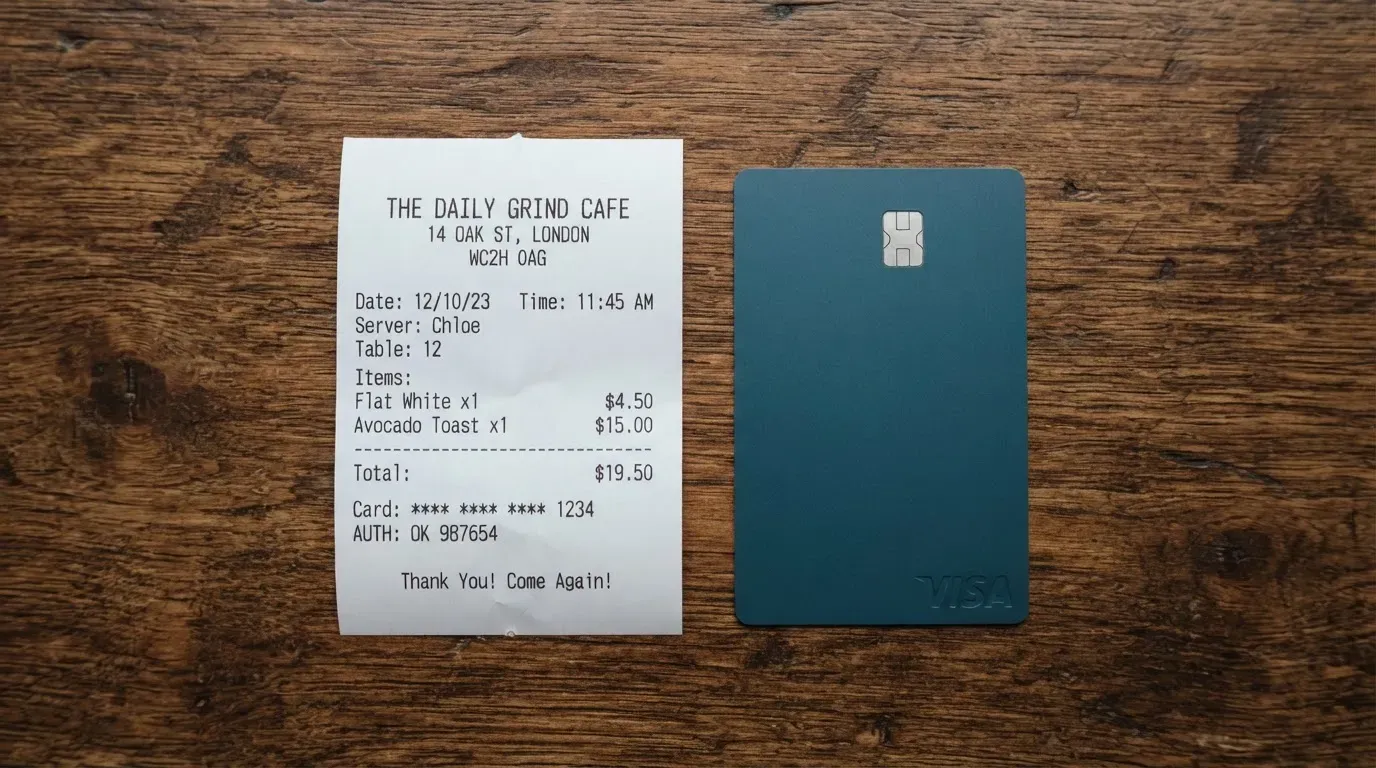
Here is the honest position: the card has a “Fees & Conditions” section on its site, and no amounts from it were captured for this review. Issuance fee, monthly fee, conversion fee, foreign-exchange fee, ATM fee, daily cap, monthly cap — none of it is stated. I am not going to fill that table with guesses from other cards in this category, because a number I invented would be worse than an empty cell. What you get instead is the table the card owes you, with each cell marked for what is missing, and one unofficial figure that has circulated since 2024.
| Fee or limit | What the card publishes |
|---|---|
| Issuance fee | not stated |
| Monthly or maintenance fee | not stated |
| Conversion fee | not stated |
| Foreign-exchange fee | not stated |
| Cash withdrawal at an ATM | not stated |
| Daily spending limit | not stated — you set your own limits on-chain |
| Monthly spending limit | not stated — you set your own limits on-chain |
| Transaction fee | unofficial: 1.5% (per Forklog, November 2024; same figure in a company profile on Dealroom) |
| Tiers | none listed; a single card is implied |
Two things in that table carry more weight than the rest.
First, the limits. There is no fixed daily or monthly cap published, but there is something better in one sense: the card lets you set custom spending limits directly on-chain, meaning the cap is enforced by your own wallet rather than by the issuer’s discretion. If that matters to you — and for anyone whose main worry is a card being drained, it should — this is a genuinely good feature, and it is the kind of thing that distinguishes a self-custody card from a custodial one.
Second, the unofficial 1.5% transaction fee. It has been repeated by two third parties since late 2024, which gives it some credibility as a real figure, but no official confirmation was found and it may have changed since. Treat it as the number to budget against and the number to ask about.
Now, what does that mean for three payments you would actually make?
Coffee, about 4 euros. The amount is small enough that a percentage fee hurts proportionally more than any fixed fee would. If 1.5% is still the transaction rate, roughly six cents rides along on the top. But the category of cost that will dominate is the on-chain network fee for whatever transfer funds the payment — gas on Ethereum, resources on Tron — and those are charged by the blockchain, not by the card provider, so they are outside anything Tonhub controls and outside anything you can negotiate. A small purchase can also carry a fixed network cost underneath it that makes the real cost noticeably higher than the percentage suggests.
A 100-euro online purchase. This is the case the 1.5% unofficial figure is calibrated for: about a euro and a half if it still holds. Add whatever conversion spread applies between your token and the currency the merchant charges in, which is a separate thing from the transaction fee and is not stated. Also relevant here: online payments can be challenged by the issuer’s fraud checks, and address verification systems are weaker for foreign-issued cards, so a decline at a shop that never troubles other cards is a known category of friction rather than a personal failing.
Withdrawing cash at an ATM. I cannot tell you what this costs, because the ATM situation is not disclosed at all — neither the fee, nor whether cash withdrawal is supported, nor any daily cash limit. That single blank is the reason the everyday-use score sits where it does. If cash is part of your ordinary life, this is the first thing to ask about, and I would ask it in writing and keep the answer.
How to Top up the card
Tonhub is non-custodial, which shapes everything here. Your crypto stays in your own wallet; the card does not take it into a company account. The payment mechanic is worth understanding because it explains both the smoothness and the risk: Tonhub pre-funds the payment and debits your balance after the network and the merchant confirm. The balance has to be there before you pay, or the payment is declined.
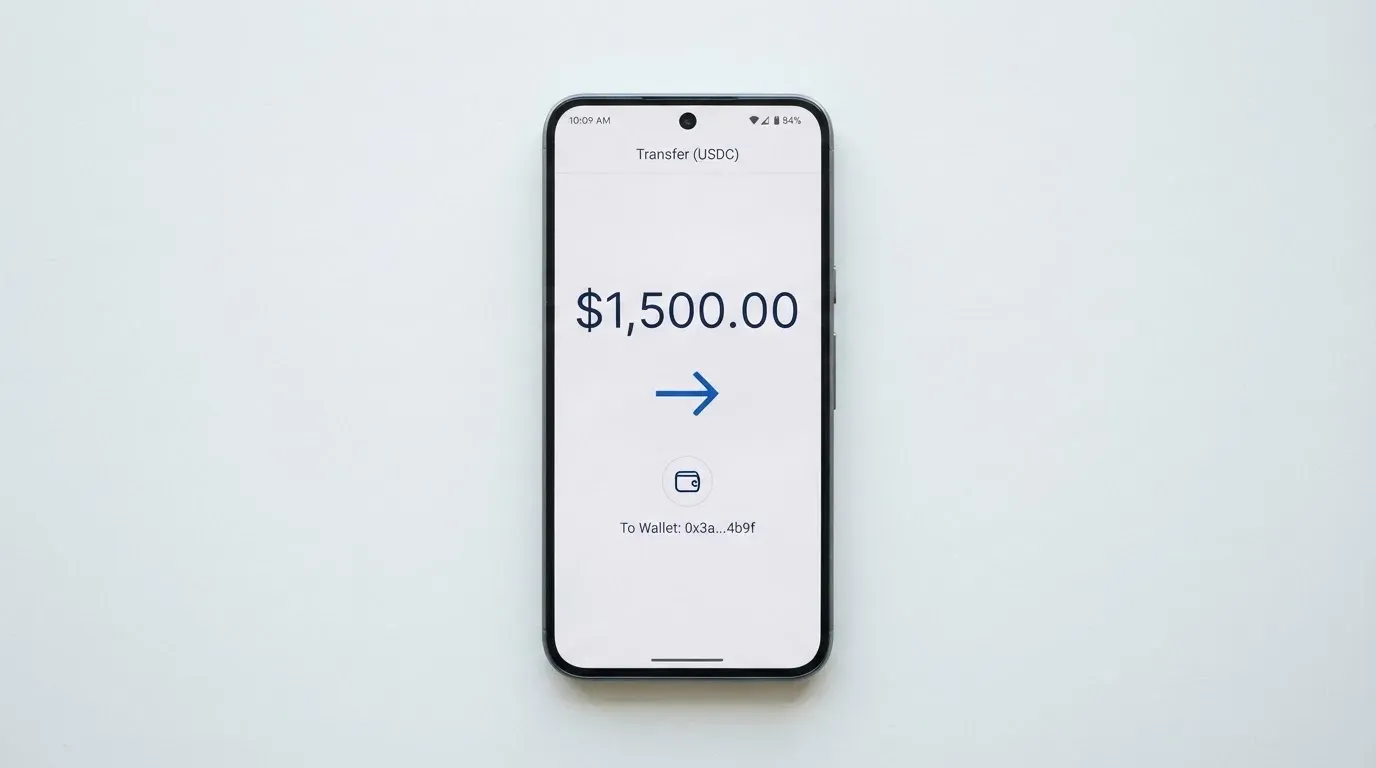
The coins shown on the card’s page are TON and USDC. A user review mentions paying with USDT, which is plausible but is not on the official page — treat USDT as user-reported rather than confirmed. Notably, the specific networks and coins are not listed as a whitelist anywhere I could find, which for a self-custody product is an unusual amount of silence.
For getting money in from the wider banking system, SEPA and SWIFT bank transfers are offered. What is not stated: the fee for a fiat top-up, the minimum amount, how long a bank transfer takes, and what happens if it arrives while a payment is mid-flight.
There is one more route out that is unusual and, for the right person, important: an “Emergency Withdrawal” lets designated heirs retrieve card-linked funds on-chain. If you are worried about being unable to access funds — a hospital, a legal dispute, a device lost — this is a mechanism most cards in this category do not offer at all. How it is set up, and whether it works across chains, is not stated.
The self-custody principle cuts both ways. In your favour: no custodian can lose your balance the way Mt. Gox, Coincheck and Ronin lost theirs. Against: you bear sole responsibility for a lost seed phrase, for phishing, and for clipboard malware that silently swaps an address after you copy it. Crypto transfers are typically irreversible — the network cannot freeze or return funds — so care here is not paranoia, it is the actual risk model. Before you deposit, check the network and the address twice, from a source you did not copy from.
Paying with it every day
The card is managed entirely through the Tonhub app: that is where you add the wallet, tap the card banner, and see what you spend.
The everyday surface is narrower than a normal bank card. Only a virtual card is described — a Visa Debit issued after verification — and no physical card is mentioned anywhere, so if you have been imagining something in the post, that is not this product. The card currency is not stated either, which means I cannot tell you what a foreign purchase will cost you in FX terms.
Mobile wallets: Apple Pay appears only in a user review quoted on the card’s page, and Google Pay and blocked merchant categories are not stated. Unofficially, Apple Pay and Google Pay are both said to be supported, per Forklog, November 2024. Take the unofficial line as a good guess and test it yourself.
No rewards are described — no cashback, no points, nothing. If you are comparing this against cards that pay you back on spend, that difference is worth putting a number on before you choose.
Two everyday realities to plan for. Merchant codes: a category of businesses, most visibly gambling, is often blocked by issuers as a matter of policy, and Tonhub’s blocked list is not published, so you will find out by decline. And declined payments, per the card’s own description, leave your funds untouched — that part of the design is sound, so a failed attempt is an inconvenience rather than a loss.
What can go wrong
Reliability and complaints is where Tonhub scores worst, so this section is the one to read twice.
The complaint record is thin and bad. Trustpilot shows 3.2 out of 5 from exactly one review, read on 20 October 2026. That is a single data point, not a pattern, and one review cannot tell you whether a service is broken or unlucky. But the content of that review matters. The user, in a one-star report dated 18 February 2026, describes a dispute process that ran from early December 2025 until at least mid-February 2026. They also report slow copy-paste support answers and extra video-call identity checks despite having already been verified. No Reddit thread was found. One review is not a verdict; it is a question you should ask.
Nobody will tell you who is behind it. The brand is Tonhub, with references to “Holders” elsewhere. The smart contracts were audited by Trail of Bits, which is a real firm and a meaningful result. But the operating entity and the card issuer are not named on the page. That gap is worth sitting with. In this category the usual architecture is that a licensed bank or e-money institution issues the card, the card network (Visa or Mastercard) licenses and supervises it, and the crypto brand is often only a programme manager or front end. If Tonhub does not name which institution holds your money and which issuer stands behind the Visa Debit, you are being asked to trust a marketing page rather than a regulated entity’s name — and those are not the same request. There is a help centre at help.holders.io, which is a starting point for asking.
Security design is genuinely good; the rest is unstated. Non-custodial, your keys stay with you, Ledger hardware wallet support, on-chain spending limits you control, and every transaction monitored by anti-fraud and AML screening with suspicious activity blocked automatically. Those are the right building blocks. What is not stated: in-app freeze of the card, and insurance. So the freeze that most cards make a headline feature is, here, unknown.
Extra checks can land on you late. The one review describes additional video-call verification after approval. AML screening is legally required, and the single Trustpilot complaint is not a basis for assuming anything bad — but if your identity situation is unusual, expect friction, and expect it not to be explained.
Timing and updates are unclear. Third-party reporting puts the launch at 8 November 2024, initially for EU residents with expansion to other regions planned in 2025 — no confirmation of that expansion was found, and no 2026 news was found. Treat silence as silence: I cannot tell you whether the card is actively developed or quietly maintained.
The category’s own history is the reason to ask. Visa and Mastercard do not issue crypto cards to consumers; they license issuers and can suspend a programme. In November 2022 Visa ended its global agreements with FTX and the FTX US debit card was wound down. WaveCrest, a Visa issuer that supplied crypto card brands, was suspended by Visa in Europe in 2018, closing every WaveCrest Visa programme at once. And a card programme can simply stop: one 2026 closure reported by a secondary source ended new loads on 8 July 2026 and spending on 8 August 2026 — single source, unconfirmed, but the shape of what happens. Balance-holding is also governed by EU e-money rules: funds must be safeguarded, but they are not bank deposits and a deposit guarantee scheme should not be assumed.
And the tax question, stated without advice: if your host country treats digital assets as property, every card payment funded from crypto may be a separate taxable disposal measured at the value on that date. I am not going to tell you what that means for you, because it depends on your situation and this is not tax advice — but it is worth raising with someone qualified before you spend steadily, not after.
What to take instead
Three other cards in this category are worth putting next to Tonhub. I have not tested any of them; these are the published terms, side by side.
MetaMask Card — 7.1 / 10. The strongest terms on this list, and the clearest issuer story: Mastercard issued by Monovate, with Crypto Life as the card provider, one card per user. Sign-up is open in 45 listed countries and territories with proof of residency; other regions join a waitlist, and US and UK sign-ups were temporarily closed per the FAQ. Virtual card free with no annual or maintenance fee; the Metal card is $199/year. Transaction fee described as minimal with the amount not stated, no additional MetaMask fees, and no foreign transaction fee — the Mastercard rate applies. Spends directly from the connected wallet on Linea, Base, Monad and Solana, with mUSD, wETH, EURe, GBPe, USDC and USDT named. Cashback in mUSD: 1% on Virtual, a headline 3% on Metal limited by the footnote to the first $10,000 spent then 1%, plus a $FLY bonus via a dining app. The catch is the metal price and the geography.
| Tonhub | MetaMask | KAST | TokenPocket | |
|---|---|---|---|---|
| Score | 5.3 | 7.1 | 6.1 | 5.8 |
| Network | Visa Debit | Mastercard | Visa (multiple tiers) | Visa or Mastercard |
| Issuer named | no | Monovate | not stated | not stated |
| Physical card | not mentioned | Metal, $199/year | yes, incl. delivery $40 on Standard | not mentioned |
| Stated fees | none published | virtual free; FX fee none | 0% spend, 0.5–1.75% non-USD | 1% on deposit |
| Cashback | not stated | 1% / 3% cap | 1.5%–3% tiered | none; 1% refunded via rewards |
KAST — 6.1 / 10. The most transparent fee schedule of the three, and the most expensive to enter at the top. Visa Platinum, Visa Infinite metal and gold plated tiers plus other designs, up to ten cards per user, membership billed annually upfront: Standard 0 USD, Premium 1,000 USD/year, Private 10,000 USD/year. Fees are unusually clear: stablecoin top-up 0%, USD spend 0%, transaction fee 0%, Apple and Google Pay 0%, non-USD FX 0.5%–1.75% depending on residence country, transaction country and programme; declined transactions 0.50 USD; inactivity fee 1 USD/month after twelve months. Cashback from 1.5% to 3% by tier on monthly spend caps. What gives me pause is eligibility: the country list is not published, and holding only an ID from a restricted region can make you ineligible even if you live in a supported country. Its own terms say acceptable tokens are “currently USDT and USDC”, which conflicts with the PYUSD and RLUSD shown in the app — read that as a sign of documentation drift.
TokenPocket — 5.8 / 10. Visa debit for a list of European countries and territories, Mastercard debit for a much longer list including Australia, Canada, Hong Kong, Japan, Singapore, South Korea and the UK; the Americas were planned for Q2 2025. Runs on Arbitrum, cards are virtual, balances in EUR24 and USD24. There is an NFT creation fee partly covered by the provider where you pay “a small portion”, and beyond that the claim is no additional fees — but a 1% fee on depositing cryptocurrency into the card, said to be refunded later through rewards and reduced transaction fees. No cashback stated. For someone in the UK, Japan or Singapore, the geography alone may make this more usable than Tonhub.
One structural point applies to all four, including Tonhub. A card number starts with a six- or eight-digit issuer identification number, and any shop can look it up and see which institution and country issued it, then apply extra scrutiny if that country differs from your billing address. This is why a card issued in one country can look foreign in another. It is the hidden tax on cards like these.
Who I would recommend it to
I would recommend Tonhub to an adult living in the EU who already holds TON or USDC in a wallet they control, who has decided that self-custody is worth the responsibility, and who wants to spend directly from that balance. If non-custodial storage, on-chain spending limits you set yourself, Ledger support, automatic anti-fraud screening, and an emergency withdrawal for designated heirs matter more to you than a published fee table — and that is a coherent position, not a foolish one — this card is built for it, and the Trail of Bits audit is a real mark in its favour.
I would not recommend it to you if you need cash from ATMs, if you are outside the EU, if you are choosing a card for customer service quality, if you expect cashback or any reward, if you want a physical card, or if you intend to travel widely and pay in many currencies — the card currency and the foreign-exchange cost are both unstated, which is exactly the situation where you want them stated. And I would not recommend it to anyone who plans to fight a disputed payment. One report describes a two-month dispute process ending without money returned; I would want a better-documented track record before relying on a chargeback.
Before you sign up anywhere, do three things. Ask in writing what the transaction fee, the ATM fee and the foreign-exchange fee are, and keep the answer. Ask which legal entity is the issuer and which holds the safeguarded funds. And check the provider against ESMA’s interim register of authorised crypto-asset service providers, which is public and exists precisely for this. Europe is one of the few places where you can look a provider up and find out.
Frequently asked questions
What is the Tonhub card?
Tonhub is a crypto payment card that spends from a crypto balance in your own wallet. You hold the tokens; when you pay, Tonhub pre-funds the purchase and debits your balance once the network and the merchant confirm. It is a Visa Debit, issued in virtual form after identity verification, and the coins shown on its page are TON and USDC. The idea is to let you pay at ordinary shops without selling crypto at an exchange first.
Is Tonhub a bank?
No — the card’s public pages do not say that it is a bank, and they do not name the operating entity or the card issuer either. The design is non-custodial: your crypto stays in your own wallet rather than sitting in a company account. In this category the issuer is usually a licensed bank or e-money institution holding the card programme, with the crypto brand as front end. Tonhub does not tell you which, so treat that as an open question to ask.
Who owns Tonhub, and is the contract safe?
The brand is Tonhub, with references to “Holders” and a help centre at help.holders.io. On security, the answer is genuinely reassuring in one respect: the smart contracts were audited by Trail of Bits, a real firm, and the design is non-custodial with Ledger support and on-chain spending limits you control. The gap is identity, not code — the operating entity and issuer are not named.
Does Tonhub card require KYC?
Yes. Sign-up includes an identity verification step (“Verify Your identity”) and the virtual card is issued only after it passes. Applicants must be 18 or older and resident in the EU. What the public pages do not say: which documents are accepted, whether proof of address is needed, how long it takes, or why an application would be refused. Expect ordinary EU-style checks on name, address, date of birth, nationality and identity documents.
Can I use the Tonhub card in my country?
Spending works wherever Visa Debit is accepted, but your account has to be opened first — and the published rule for that is EU residence and age 18+. Twenty-five or more countries are cited as a usage statistic, not as an availability list. If you live in the UK, the US, Switzerland or anywhere outside the EU, nothing on the public pages says you can sign up, so check with the support centre before spending any effort on the application.
How do I top up the Tonhub card?
Your balance must hold enough before you pay, otherwise the payment is declined. TON and USDC are shown on the card’s page; a user review mentions paying with USDT, which is user-reported rather than official. SEPA and SWIFT bank transfers are also offered, though the fiat top-up fee and minimum are not stated. Watch the network: transfers are irreversible, so a deposit sent on the wrong chain or address can be lost.
How much does the Tonhub card cost?
The card publishes no amounts. Its “Fees & Conditions” section exists but no fee figures were captured, and issuance, monthly, conversion, FX and ATM fees are all unstated. The one figure in circulation is unofficial: a 1.5% transaction fee, reported by Forklog in November 2024 and repeated in a company profile on Dealroom. Separately, on-chain network fees for your own deposit are charged by the blockchain, not by the card provider. Ask for the current numbers in writing.
Can I add Tonhub card to Apple Wallet?
Probably, but I would not promise it from what is published. Apple Pay appears only in a user review quoted on the card’s own page, and Google Pay and blocked merchant categories are not stated. Unofficially, both Apple Pay and Google Pay are said to be supported, per Forklog, November 2024. No rewards, cashback or points are described at all, so do not choose this card expecting to be paid back on spend.
Is Tonhub card safe?
The architecture is the good kind: your keys stay with you, you can set spending limits directly on-chain, transactions are monitored by anti-fraud and AML screening with suspicious activity blocked automatically, and smart contracts were audited by Trail of Bits. Against that: in-app card freeze is not stated, insurance is not stated, and the issuer holding your safeguarded funds is not named. Read it as solid design with incomplete disclosure.
Is Tonhub card worth it?
Worth it if you hold TON or USDC in the EU and value self-custody, on-chain limits and an emergency withdrawal more than a clear fee table. Not worth it if you need ATMs, a physical card, cashback, multi-currency spending, or a support team you can rely on in a dispute. The deciding question is not features but disclosure: ask what the fees are, who the issuer is, and check the provider against ESMA’s public register of authorised crypto-asset service providers.
Wallet card reviews – cryptocardcheck
Content created by the «cryptocardcheck» team