
What the Lemon card actually does, and who should think twice
 Available in US

The Lemon card is a prepaid Visa sold by an Argentine crypto company that turns a crypto balance into ordinary card spending. The pitch is unusually simple: no shipping fee, no maintenance fee, and cashback in Bitcoin of up to 2% on every purchase. The catch is that almost nothing important about the card is stated in public — not the fees, not the card currency, not the full top-up list, and not even which bank issues it. I have gone through the card’s own pages and what users have written, and my score is 4.7 out of 10. That is not a card I would tell most readers to open an account with. It is a card that a specific person, in a specific position, may still find useful.
If you are in Argentina and you want to spend a crypto balance at the till while earning Bitcoin back, the offer is real and the price of entry is genuinely zero. If you are anywhere else, or you want a card you can understand before you sign up, the missing information is the answer, not a footnote.
The conditions described here are current as of October 28, 2026.
Verdict: 4.7 out of 10
| Criterion | Mark | Why |
|---|---|---|
| Who can get it | 2 / 10 | Official pages name only Argentina, with QR payments in Argentina and Brazil; unofficial: a waitlist for Colombia |
| Cost | 8 / 10 | No shipping fee and no maintenance; unofficial: 0.5% commission when the card auto-sells crypto at the till, not re-checked |
| Top-up options | 3 / 10 | Bitcoin is named, cashback is paid in Bitcoin, the credit card is backed by Bitcoin; other coins and networks are not named |
| Reliability and complaints | 5 / 10 | Bay Treasure Caramel S.A., VASP No. 162 in Argentina’s CNV registry, issuing bank not named; Trustpilot 2.5 out of 5 — weak support, refusal over place of birth |
| Everyday use | 5 / 10 | Virtual and delivered Visa, cash out at participating merchants, limits and a card pause; Apple Pay and Google Pay not disclosed |
| Total | 4.7 / 10 |
Two things stand out from the table, and they pull in opposite directions. Cost is the strongest criterion here, and I want to be fair about that: a card with no shipping fee and no maintenance fee is not a small thing, and the 0.5% figure is unofficial anyway. Reliability sits in the middle, not because the company is obviously dishonest but because of what is missing rather than what is wrong. Bay Treasure Caramel S.A. is a registered virtual asset service provider, No. 162 in Argentina’s CNV registry — that is a real regulatory identity, not a shell with a nice logo. The page also says plainly that Digifin S.A. is not a financial institution and that Lemon is not a bank, which is the kind of sentence that costs a marketing team money and earns it credibility.
The audience is narrow and worth naming: Argentine residents who want up to 2% cashback in Bitcoin. If that is you, this is your card. If you are reading this from Lagos, Manila, Warsaw or anywhere outside the two countries the official pages actually mention, there is nothing here to act on.
Will they give you the card?
The short answer is: probably not, unless you are in Argentina.
The card’s own pages mention Argentina only — the phrase “Buy and sell cryptocurrencies in Argentina” appears on the site, and QR payments are described in Argentina and Brazil. That is the full extent of the official geographic statement. There is no statement about citizenship versus residence: the pages do not say whether a foreigner living in Argentina qualifies, or whether an Argentine living abroad can sign up. That is not a technicality. In this industry the country of your address and the country of your citizenship get screened separately, because sanctions lists and issuer risk policy are applied to both. So the absence of a line saying “residents only” or “citizens only” leaves a real gap.
One thing you may have read elsewhere: Lemon opened a waitlist for the card in Colombia. That comes from Noticias RCN, an unofficial source, and the result carries no date. Treat it as a signal that expansion is being talked about, not as an opening you can walk through.
The site’s claim of “4M validated users” tells you the platform is not tiny. It does not tell you how many of those users hold this particular card.
How to get it
There is a VISA Lemon Card with a virtual option — the site invites you to “creá tu tarjeta virtual para empezar a usarla en segundos”, create your virtual card and start using it within seconds. The virtual route is the one worth trying first, because it costs nothing and asks nothing of your address.
There is also a separate VISA Lemon Credit Card backed by Bitcoin, and the card is separately described as an international prepaid Visa. Those are different products and I will not blend them in this review: the prepaid card and the Bitcoin-backed credit card have different economics, and the pages describe them separately. Card currency is not stated for either.
Shipping is “sin costo de envío” — no cost of shipping. How long it takes to arrive, and what it costs to replace a card that gets lost or stolen in the post, is not stated. If you are outside Argentina, ask support before you order anything, because the delivery answer and the eligibility answer are the same conversation and you may not like it.
One thing the card page does not say: what identity verification it requires. The level of KYC, and even the general KYC position on this specific card, is not stated there. The platform is a regulated virtual asset service provider in Argentina, which in practice means it runs checks under anti-money-laundering law, and card issuance of this kind normally requires identity verification to a published standard. But what Lemon asks of you specifically is not on the page. Do not assume the worst, and do not assume the best — ask.
What it really costs: Fees
The good news is genuine and short: no shipping fee and no maintenance fee, stated on the card’s own pages. For a card aimed at people who find ordinary bank cards hard to get, a zero monthly cost is the whole pitch.

The bad news is that the fee schedule for actually using the card is not stated on the official pages. Not the conversion fee, not the foreign-exchange fee, not a maintenance charge on an inactive account. There is an unofficial figure floating around — a 0.5% commission when the card automatically sells crypto at the point of sale — which I have not re-checked against any official document, and I would not plan a budget around it. It might be right. It might be only half the story.
Cash withdrawal happens at “comercios adheridos”, participating merchants shown on a map — note that these are shops, not described as ATMs. Whether that costs anything is not stated. You can set your own daily purchase limits (“Configurá límites de compras diagonas” is close to the site’s phrasing; the amounts you can choose are not published), which is a useful control regardless.
Here is what the card’s pages actually say about money, and where they go quiet:
| Fee or limit | What the card states |
|---|---|
| Issuance / shipping | “sin costo de envío” — no shipping cost |
| Monthly maintenance | “sin … mantenimiento” — none |
| Crypto conversion fee | not stated on official pages |
| Foreign-exchange fee | not stated |
| Cash withdrawal | at “comercios adheridos”, not described as ATMs; fee not stated |
| Daily purchase limits | configurable by the user; amounts not stated |
| Card currency | not stated |
| Tiers or subscription levels | not stated; the Visa card and the Bitcoin-backed credit card are separate products |
| 0.5% commission at point of sale | unofficial, not re-checked |
Now, three everyday payments, and what I can say about each.
Coffee in Buenos Aires. You tap and pay in pesos. The rate at which your crypto becomes pesos, and who takes a cut of it, is exactly the fee the official pages do not publish. If the 0.5% unofficial figure is real, this is where you would meet it.
A subscription or an online service priced in dollars. Lemon markets paying abroad in foreign currency “sin el impuesto RG5617 del 30%” — without the 30% RG5617 tax. That is a real, specific Argentine tax on foreign-currency purchases, and the card’s pitch is that it sits outside that tax’s reach. Card currency is not stated, so I cannot tell you what currency your balance is actually denominated in.
A cash withdrawal at a participating merchant. Shops, on a map, not ATMs. Whether this is free, what the spread is, and whether it counts against your limits — not stated.
Two further things belong in the cost picture even though they are not fees. Declined payments can leave a hold on your money for several days, sometimes up to seven. And every time a crypto card converts and spends, tax treatment may follow: in the United States the IRS treats digital assets as property, so exchanging them for goods or dollars generally produces a taxable gain or loss measured in local currency on the transaction date — which can make each card payment its own disposal. I am not giving you tax advice and I am not giving advice for your country; I am telling you that “I just spent my crypto” is rarely the simple act it feels like, and to check with a professional in your own jurisdiction.
How to Top up
Here is the thinnest section of the whole card.
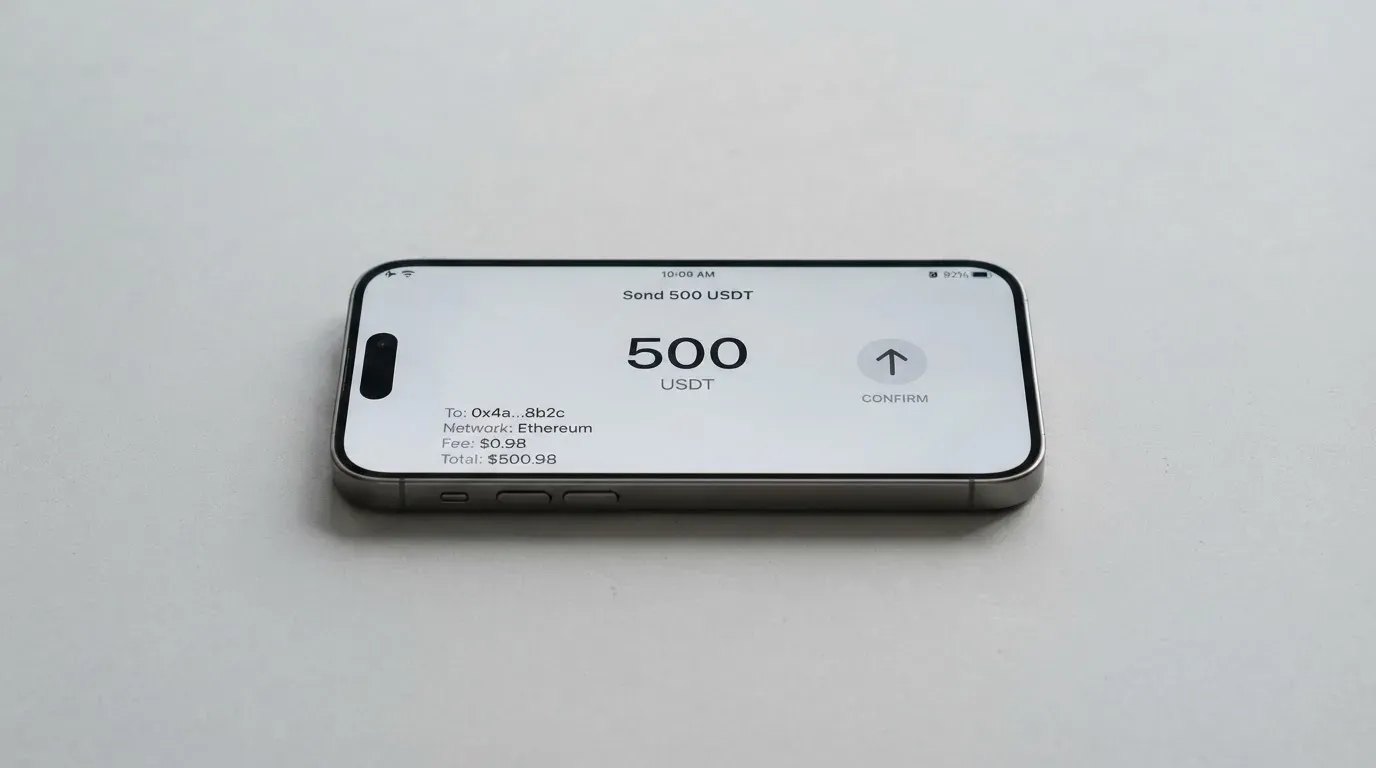
Bitcoin is named. That is what the card’s pages say they support. Other coins and networks are not stated — not stablecoins, not which network the Bitcoin should arrive on. The cashback is paid in Bitcoin, and the separate credit card is “respaldada en Bitcoin”. So Bitcoin runs through this product in all three directions, and nothing else is documented.
The steps of a top-up are not stated. Which network, which address, minimum, arrival time, whether there is a fee on the card’s side — the card’s public pages do not say. That matters more than it might sound. Blockchain transfers are irreversible. If you send on a network the provider does not support, or to an address belonging to a different network, the money can be gone and recovery may need manual support involvement with no guarantee attached.
Two things about networks that trip people up, in case you are new to this. On Ethereum, fees are paid in ETH, so a wallet holding a token but no ETH cannot send it at all. On Tron, fees are paid through bandwidth and energy resources, often by burning TRX. And Circle stopped supporting USDC on Tron in February 2024, so “USDC over TRC20” is not a native option any more. If Lemon’s unstated network turns out to be one where you hold nothing but the token, you will learn this the expensive way.
And the network fee itself is charged by the blockchain, not by Lemon. That part is general to the category, not a Lemon term.
I would not send a meaningful amount until you have asked support, in writing, which network to use, and tested with a small amount.
Paying with it every day
Virtual card for online purchases, physical card delivered to you, cash out at participating shops. You can pause the card whenever you want (“pause the card whenever you want”), which is one of the better safety features here, and configure daily spending limits. Loss or theft gets a dedicated report page at report.lemon.me.
The rewards: “Earn up to 2% cashback in Bitcoin on every purchase” — up to 2% cashback in Bitcoin on every purchase. Payments over $10.000 also earn raffle tickets. Two notes. “Up to” is doing real work in that sentence; the page does not publish which purchases earn the full rate and which earn less. And cashback arriving in Bitcoin is not the same as cashback arriving in dollars: it puts a crypto balance on your spending money every month, which is exposure most people do not think about when a card is sold as ordinary.
What is not stated, and what you would want to know before making this your everyday card: whether the app supports Apple Pay or Google Pay, what the app is rated in the stores, and how disputes work when something goes wrong. Store ratings were not read and the site carries none. Disputes — not stated.
That last gap is the one I would weigh most heavily. A chargeback is a refund ordered by the card issuer, with reason codes for fraud, duplicate billing, goods not received. Your protection depends on the programme’s structure and on the issuer’s policy, and prepaid-card coverage varies by jurisdiction and should not be assumed. If a merchant takes your money and delivers nothing, you need to know who you call.
What can go wrong
The company behind the card is Bay Treasure Caramel S.A., Tax ID 30-71753495-2, registered as virtual asset service provider No. 162 in Argentina’s CNV VASP registry. The site states that Digifin S.A. is not a financial institution and that Lemon is not a bank. The issuing bank is not named. Lemon has presented a VISA credit card backed by Bitcoin — the announcement cites 0.01 Bitcoin collateral and a $1.000.000 credit line, undated.
Your crypto sits in a custodial wallet. Lemon is a VASP, so it holds the credentials, and you must trust it completely; the wallet’s private key is not yours. Self-custody puts the funds in your own wallet until the moment of payment, but makes you solely responsible for key loss, phishing, and malware that swaps copied addresses. Neither is free of risk — custodians fail. Mt. Gox reported about US$350 million stolen between 2011 and 2014; Coincheck about US$400 million in 2018; Ronin Network US$625 million in 2022. Transfers are typically irreversible, and a stolen key has no recovery path because the network cannot freeze or return funds. Safeguarding is not stated for Lemon’s balance.
Then the reviews. Trustpilot shows 2.5 out of 5 from five reviews — a tiny sample, and I weight it accordingly. Within it: “El peor soporte del mundo”, the worst support in the world. A report that Lemon Cash stopped accepting SEPA IBAN transfers from online betting sites because the banking partner rejects them. And one claim that people from certain birthplaces were told they could not become customers.
That last one is the one to sit with. If birthplace can decide whether you are let in, your application can be refused for reasons that have nothing to do with your documents, and nobody at a help desk will be able to explain the policy. Support is Spanish, by email at [email protected], with an FAQ at help.lemon.me/es and a status page at status.lemon.me — hours not stated. A betting-related restriction is also worth understanding on its own terms: merchants are classified by a four-digit category code, and the gambling code is one that many issuers block on specific cards by policy rather than by law, with the blocked list varying by issuer.
What can also go wrong in this category generally. Visa and Mastercard do not issue crypto cards to consumers themselves — they license issuers, and they can suspend a programme. Visa terminated its global agreements with FTX on 13 November 2022 and the FTX US debit card was wound down. WaveCrest, a Visa issuer that supplied crypto card brands, was suspended by Visa in Europe in 2018, closing all its Visa programmes. Programme closures typically mean a notice period, then spending and loading stop, then users are asked to withdraw remaining balances. And because merchants can look up the issuer identification number at the front of a card number, a card issued in Argentina can look foreign to a shop elsewhere and attract extra scrutiny, or a decline. Address verification, which compares the street number and postcode a buyer types against issuer records, is mainly offered in the US, Canada and the UK and is generally unavailable for foreign-issued cards — a common cause of declines. Some merchants simply refuse prepaid or foreign-issued cards.
One more, quietly relevant: stablecoins are not fixed to a currency by the word in their name. TerraUSD collapsed in May 2022 and USDC lost its peg briefly in March 2023 during the US banking crisis. Tether disables tokens in wallets on the OFAC sanctions list and has frozen funds tied to illicit activity.
What to take instead
If your problem is “an ordinary bank card is hard to get”, Lemon is not the only shape of answer, and the alternatives below are worth weighing. Here is how the four compare on what their own pages publish — which is itself the point.
| Lemon | Gemini | Lava | GoMining | |
|---|---|---|---|---|
| Score | 4.7 / 10 | 4.9 / 10 | 7.1 / 10 | 6.6 / 10 |
| Card | Prepaid VISA, virtual plus delivered; separate Bitcoin-backed credit card | Mastercard World Elite credit card | Lava Card; spend claimed at 150 million merchants in 150+ countries | Virtual now; physical “coming soon” |
| Annual or maintenance cost | None, none for shipping | No annual fee; issuance fee not stated | “no annual fees”; issuance fee not stated | Not stated; opening a card grants a free 1 TH miner |
| Conversion and FX | Not stated; unofficial 0.5% auto-sell commission | No foreign transaction fees; crypto conversion not applicable (credit card) | “no FX fees, and no FX spread”; no exchange fee or spread on Bitcoin buy/sell per page | Not stated |
| How it is funded | Bitcoin named; other coins and networks not stated | Not a prepaid card — credit card paid off in fiat | Deposits in local currency or stablecoins; networks not stated | BTC, USDT, GOMINING and other coins |
| Rewards | Up to 2% cashback in Bitcoin on every purchase | Gas/EV/transit 4% on the first $300 a month, dining 3%, groceries 2%, other 1%, paid instantly in Bitcoin or 50+ cryptos; 10% Vault Rewards at some merchants, capped and varying | “Earn up to 5% back in bitcoin on every purchase”, conditions not stated | Cashback in mining power, rate rising with VIP level, “up to 5% cashback” |
| Who can get it | Official pages: Argentina | Not stated on the card page | Not stated | Not stated as a list; products “may not be available in your jurisdiction” |
Read that table twice. Every one of these cards has blanks — Gemini does not say who qualifies, Lava does not say who qualifies, GoMining does not publish its fees. But Lava publishes the most about what you pay: no annual fees, no FX fees, no FX spread, and no exchange fee or spread on buying and selling Bitcoin. On cost clarity, which is the whole subject of this section, Lava beats Lemon. Lemon’s 8 out of 10 for cost is generous and deserved on fees that are stated — but a zero fee on a card whose conversion fee you cannot find is not the same as a zero fee on a card that says what it charges.
GoMining is a different proposition again: opening the card gets you a free 1 TH miner, and cashback arrives as mining power rather than coins. If you are here for compute, that is coherent; if you are here for spending, it is not.
Gemini’s card is a credit card, which changes the fundamental model: paid off in fiat, rewards paid in crypto. Its reward rates are the most specific of the four and it does not convert on payment at all, which sidesteps the single biggest unknown in Lemon’s setup. Its score is a half point above Lemon’s, and if your reason for wanting a crypto card is the Bitcoin back rather than the crypto balance, that is the comparison to run.
Two caveats on all of them. None of these is a bank deposit, and none should be treated as one. And the regulatory picture is still moving: MiCA is the EU’s crypto-assets regulation, in legal effect since June 2023, with its stablecoin rules applying from 30 June 2024 and the crypto-asset service provider rules from 30 December 2024; under it, e-money tokens may be issued only by a credit institution or an electronic money institution; the transitional period runs until 1 July 2026 or until a provider is authorised or refused, whichever comes first; and a card is regulated separately from the crypto side, so a crypto card often rests on two licences. ESMA keeps an interim register of authorised providers and non-compliant entities that you can check.
Who I would recommend it to
To an Argentine resident with a crypto balance who wants to spend it at ordinary merchants, keep some Bitcoin coming back every time, and does not mind a small app ecosystem with published Spanish support and an unstated fee schedule. For you, the free-of-charge part is real, the 2% in Bitcoin is the most interesting reward structure of the four cards above, and the pause-and-limit controls are the right ones to have.
I would not recommend it as your only card. Not because the company is dishonest — on the evidence I read, it is registered, it discloses that it is not a bank, and that disclosure is a point in its favour — but because you cannot answer three questions from public information: what the conversion costs, what currency the balance is in, and what happens when a payment goes wrong. A card you cannot debug is a card you will be stressed about at the wrong moment.
And if you are outside Argentina, or in Argentina but without a crypto balance to spend, none of this applies. Look at the alternatives, ask each one the same three questions, and see which one actually answers.
Frequently asked questions
What is Lemon?
Lemon is an Argentine crypto platform that sells a prepaid Visa card, available virtually and delivered physically, that converts a crypto balance into ordinary card spending. A separate VISA Lemon Credit Card backed by Bitcoin also exists, and is a different product with different terms. The platform is operated by Bay Treasure Caramel S.A., a registered virtual asset service provider.
How does the Lemon card work?
You hold a balance, and the card spends it like a stored-value card rather than a debit card linked to a bank account. Lemon converts crypto into spendable currency at the point of payment, and pays cashback in Bitcoin — up to 2% per purchase. You can pause the card whenever you want and set your own daily purchase limits. Cash can be taken out at participating shops listed on a map in the app.
Is Lemon a bank?
No. Lemon’s own pages state that it is not a bank, and that Digifin S.A. is not a financial institution. It is registered as virtual asset service provider No. 162 in Argentina’s CNV registry. The issuing bank for the card is not named on the public pages, so I cannot tell you which institution stands behind the card programme.
Who owns Lemon?
Lemon is operated by Bay Treasure Caramel S.A., with Tax ID 30-71753495-2, listed in Argentina’s CNV registry of virtual asset service providers under number 162. The site claims 4M validated users. Separately, Lemon presented a Bitcoin-backed Visa credit card citing 0.01 Bitcoin collateral and a $1.000.000 credit line — an undated announcement I could not verify further.
Is Lemon card available in my country?
The card’s official pages mention Argentina only, with QR payments described in Argentina and Brazil. There is no statement about citizenship versus residence, so I cannot tell you whether a foreigner living in Argentina qualifies. Unofficial reporting says Lemon opened a waitlist for Colombia, but that comes from Noticias RCN with no date, and is not something the card itself confirms.
How do I apply, and how long does it take?
The card’s public pages do not give an application timeline, and the delivery time for a physical card is not stated either — shipping itself is free, “sin costo de envío”. The site suggests creating a virtual card to start using it within seconds, which is the fastest route if you are eligible. Identity verification requirements are not stated on the card page, so ask support before you send documents.
Does Lemon card require KYC?
The card page does not state its KYC level. Lemon is a registered virtual asset service provider, so as a regulated business it must verify customers and monitor transactions under anti-money-laundering law, and card issuance normally requires identity documents. What is missing is the specific standard. Note also that one Trustpilot report describes being refused over place of birth, which is a different matter from documentation.
How do I top up the Lemon card?
Only Bitcoin is named on the official pages. Which network to use, the address, minimums, arrival times and any card-side fee are all not stated — and getting the network wrong on a blockchain transfer can mean the money is simply lost, since transfers are irreversible. Support also does not publish withdrawal terms. Ask which network to use in writing, and test with a small amount first.
Is Lemon card safe?
Your crypto sits in a custodial wallet, so Lemon holds the credentials and you depend on it; that is the same exposure that produced the Mt. Gox, Coincheck and Ronin losses in the general category. Safeguarding is not stated. Against that, the card can be paused instantly and daily limits set. On Trustpilot it scores 2.5 out of 5 from just five reviews, with complaints about support and a reported birthplace-based refusal — a small sample, but not a comfortable one.
Is Lemon card free, and is it worth it?
It is free to obtain: no shipping cost and no maintenance fee, which the card states plainly. Whether it is worth it depends on whether you are the person it fits. If you are in Argentina with a crypto balance to spend and want up to 2% back in Bitcoin, the reward is the best-structured of the cards I compared. If you want predictable conversion costs, a stated card currency, or a clear dispute process, this is not the card — the official pages do not publish any of those.
Credit and cashback card reviews – cryptocardcheck
Content created by the «cryptocardcheck» team