
The card that works where a bank card will not — and what it costs to find out
 Available in US
If you are reading this, you are probably in a position where an ordinary bank card is either impossible to open, permanently refused, or simply not offered where you live. That is the reader this review is written for: someone who already holds USDT or USDC, already has a phone and an email address, and needs a card number that a shop will accept — not a lecture about crypto, and not a promise that it will be painless. The BKJ card exists in that gap, and on paper it fits the gap well. Six point nine out of ten is not a compliment; it is a card with a genuinely good top-up system and an ordinary set of unanswered questions around price.
The score comes from five criteria I weighed separately: who can get it, what it costs, how you top it up, how reliable the operator looks, and how it handles everyday use. The single most striking thing in the table below is not the good rows. It is the cost row, and the emptiness of it.
The conditions described here are current as of October 28, 2026.
Verdict: 6.9 out of 10, with one serious question mark
| Criterion | Mark | Why |
|---|---|---|
| Who can get it | 8 / 10 | Russia, Belarus and a long list of other regions are closed off; a payment network across 180+ countries is claimed in the listing |
| Cost | 4 / 10 | Physical card costs 100 USDT including delivery, no annual fee; virtual card price, conversion fees and ATM charges are not disclosed |
| Top-up options | 9 / 10 | USDT and USDC on the major networks including Ethereum and Tron, plus conversion between 40+ fiat currencies and crypto |
| Reliability and complaints | 6 / 10 | BKJ PAYMENT INC (Canada), MSB licence C10001249 (FINTRAC), no issuer named; no complaints found, few ratings in the App Store, and terms allow shutdown without notice |
| Everyday use | 9 / 10 | Virtual and physical cards, Apple Pay and Google Pay, ATM access on the physical card |
| Total | 6.9 / 10 | A solid top-up rail wrapped in a pricing page that does not exist in public |
The best fit is someone who already sits on stablecoins, funds through Tron or Ethereum, and wants a spendable balance rather than an investment product. That is a real population and the card is built for it. Who it does not suit: anyone who needs a card they can defend in a dispute, anyone on a tight budget where a 100 USDT fee plus undisclosed conversion charges could quietly exceed the spending itself, and anyone whose country is anywhere near the restricted list — because the restriction can change without you choosing it.
Will they give you the card?
Mostly yes, but not everywhere, and the line between “not everywhere” and “not to you” is drawn by a list that moved recently.
Here is what the card’s own public pages actually say, and it is thinner than you might expect. Neither the site nor the app listing publishes a country list. What they do publish is a claim of a payment network reaching “180+ countries and regions” — that is where the card is accepted, not who is eligible. Those are two different things and marketing copy tends to blur them.
What is stated officially: BKJ services are not available in Russia and Belarus, and the terms require users to “reside in a country where the Services are available.” That second clause is the one to sit with. It is not a promise about your specific country; it is a clause that lets the operator decide.
Then, on 11 September 2026, the help centre posted an announcement adjusting service regional access permissions. The restricted list named there is long: Russia, Belarus, North Korea, Iran, Myanmar, Cuba, Syria, Ukraine including Crimea, Venezuela, Sudan, South Sudan, Libya, Burundi, the Central African Republic, Somalia, Zimbabwe, Afghanistan, Chinese Mainland, and Iraq. The announcement also says the list “can change.”
So if you are in one of those places, the answer is no. If you are elsewhere and your citizenship is different from where you live, you should know something general about this industry before you apply: nationality is recorded and screened separately from residence, because sanctions screening and issuer risk policy often apply to citizenship and country of birth as well as address. The country you hold a passport in can matter as much as the country you sleep in.
How to get it
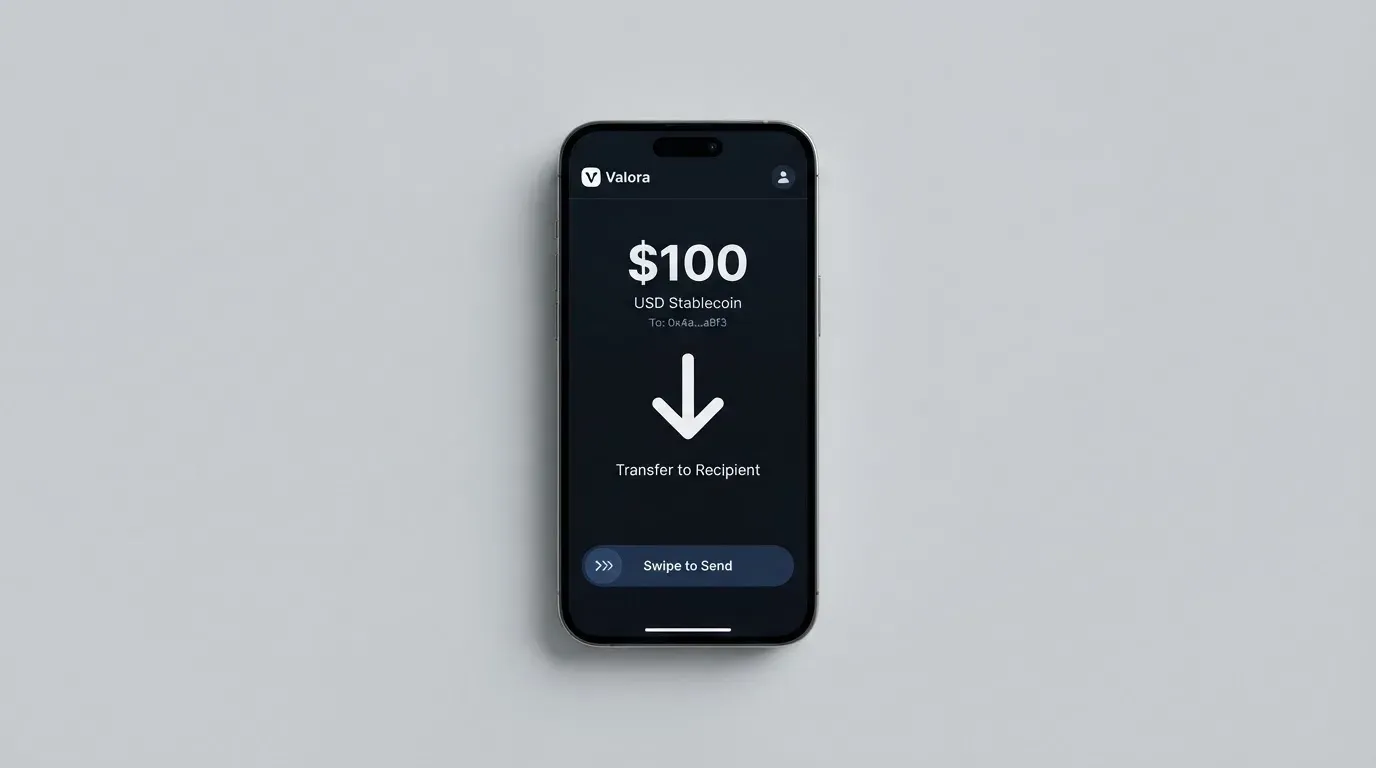
The signup path is short on paper: download the app, complete user registration and identity verification, then apply for the card. The site puts it exactly that way. Which documents you will need is not stated anywhere I could find — that is a real gap, and it is the kind of gap that turns into an afternoon of guessing between a passport, a residence permit and a utility bill.
Identity verification must be completed before you can apply for a card; that is official, and it is repeated in the terms. The terms do not define verification levels, but they do say more documents may be requested at any time. There are help-centre articles titled “How to Conduct KYC Identity Verification” and “What functions can be used on BKJ without completing KYC verification” — I have not read them, so I will not pretend to know what they say. Processing time and rejection reasons are not stated, which means if a verification fails you will likely find out why only after the fact.
Both virtual and physical cards exist. The help centre contains an article on a “BIN449924 Singapore Virtual Card”, which tells you the virtual card sits under a Singapore BIN. The card network is not stated — for a virtual card or a physical one.
For the physical card, the specifics are clearer:
- Issuance fee 100 USDT, described as covering card production and global logistics shipping costs
- Non-refundable, and the order cannot be cancelled after payment
- Production takes about one week
- Delivery normally around 20 business days, varying by country or region — and the countries are not listed
- A replacement card’s cost is not covered, meaning a lost card is a second 100 USDT question you would have to ask support
- Activation by an emailed code, then set a PIN and a contactless limit
- The email step is one of two channels; the other is a Google Authenticator code
Twenty business days is six weeks of not having a card, so if you need one next week, the virtual route is the one that arrives in time.
Fees: the part the card does not publish
I want to be direct about this section, because it is where the score loses most of its points and where your money is actually decided. The public pages do not disclose a cost of use. There is no fee schedule. No conversion percentage. No ATM charge. No published daily or monthly limits, and no tier structure at all — the card page and help collections list no tiers, although the physical-card application page shows a “monthly limit” field without explaining what it means.
What is stated officially is thin but concrete: the physical card costs 100 USDT including shipping, the annual fee is zero, and the virtual card’s issuance fee is not stated. The physical card gives “access to the global ATM network with instant fiat withdrawals” — with no ATM fee and no limits published.
The listing carries a marketing claim about saving up to 90% on fees, with no schedule behind it. You should treat a percentage like that as decoration.
| Item | What the card publishes |
|---|---|
| Physical card issuance | 100 USDT, including shipping |
| Annual fee | Zero |
| Virtual card issuance | Not stated |
| Crypto-to-fiat conversion fee | Not stated |
| Foreign exchange fee | Not stated |
| ATM fee | Not stated |
| Deposit / top-up fee | Not stated |
| Daily spending limit | Not stated |
| Monthly spending limit | Not stated; a limit field exists on the physical-card application page |
Now the three everyday payments, because “not stated” only means something once you know where it lands.
A coffee abroad. You tap, the terminal authorises, and somewhere between your balance and the merchant’s account your crypto is converted. Whether that conversion costs you a percentage, a fixed fee, or a spread is not stated. Zero annual fee does not help you here — the cost lives in the conversion, not the subscription.
An online subscription in a currency that is not your balance currency. This is the payment most likely to surprise you, because a foreign exchange fee and a conversion fee can both apply, and neither is published. A help article titled “Explanation of Deduction Amount Difference” exists and I have not read it; its existence suggests differences between the charged amount and the displayed amount are a known topic.
Withdrawing cash at an ATM. The card advertises access to the global ATM network with instant fiat withdrawals. The fee is not stated, and neither is any withdrawal limit. If cash is part of how you use a card, this is the line item to ask support about in writing before you rely on it.
One thing I can say generally about the category: on-chain network fees for a deposit are charged by the blockchain, not by the card provider. So there are potentially two separate costs when you top up — whatever the platform charges, plus the network fee. Only the first is even nominally the card’s business.
How to top it up
This is the strong part, and the reason the top-up row scores 9.
The card supports stablecoin top-ups, USDT and USDC, on major blockchains including Ethereum and Tron. The app listing adds conversion between more than 40 fiat currencies and crypto. Between those, this covers the two funding paths most people in the situation this card serves actually have: crypto already in hand, or local currency they need to turn into a spendable balance.
Two things are not stated and both are the ones that cause expensive mistakes:
- Deposit fee, minimum top-up amount, and who pays the network fee
- Fiat top-up options on the card page itself; the 40+ currency conversion is described in the listing rather than in card terms
On networks specifically, and this matters more than it sounds: ERC-20 tokens on Ethereum are paid for with ETH, so a wallet holding USDT but no ETH cannot send. On Tron, fees are handled through bandwidth and energy and often burn TRX. And one asymmetry catches people: Circle stopped supporting USDC on Tron in February 2024, so “USDC over TRC20” is not a native option. If you hold USDC and the only chain that is convenient for you is Tron, you have a problem that is not yours.
The general risk here is not a BKJ-specific one. Blockchain transfers are irreversible. A deposit sent on a network the provider does not support, or to an address belonging to a different network, can be lost, or need manual support recovery with no guarantee attached. Check the network and the address against the provider’s own instructions before you send, every time.
On withdrawal, the public pages are silent — there is no withdrawal process described in the terms. What the terms do say is more relevant to your planning than a process would be. Section 7.2 lets BKJ “set off any of your liability” against balances. Section 9 allows BKJ to terminate services without notice, and a closed user may not open a new account. What happens to your balance on closure is not stated. If you hold a meaningful balance in a card wallet, that gap deserves an answer from support in writing before you fund it.
Paying with it every day
Virtual and physical cards, Apple Pay and Google Pay support, ATM access on the physical card. In practice that covers groceries, travel, subscriptions and phone bills, and the mobile wallet support is what makes the card feel ordinary rather than awkward.
The rewards are modest and worth a sentence. Spending rewards accrue as points exchangeable for BTC, at a rate not stated. There is a sign-up reward of US$5. That is not nothing, but it is not a reason to choose a card either.
The app situation is the one place where the enthusiasm should pause. It is on iOS — 16.0 and above, also Mac M1 and visionOS — and on Android via Google Play and an APK. The App Store listing in India shows no rating at all: “has not received enough ratings or reviews to display an overview.” The Google Play rating I did not read. The latest iOS version is 1.4.5, dated 24 September. An app with almost no public ratings and a recent version number is exactly the profile of a young product, which cuts both ways.
Blocked merchant categories are not stated, so you cannot tell from the pages whether gambling, adult content or ticketing will be refused. If any of those matter to you, ask.
If something goes wrong with a payment, the terms route disputes to arbitration at the Hong Kong International Arbitration Centre, in English, under Hong Kong law. Chargebacks are not mentioned. Fees are non-refundable under 7.3. Read that combination carefully: no ordinary chargeback route, a fee already spent, and a dispute path that ends in Hong Kong arbitration. There are help articles on refunds not received and on failed transactions; I have not read them and they captured no time frames.
For everyday use, though, the honest summary is that it will probably work at the till, and that when it doesn’t, the help you get may not resemble what your bank would give you.
What can go wrong
Country access can change. The 11 September 2026 announcement adjusted regional permissions and says the list can change. You can become ineligible without doing anything.
Shutdown is a contractual possibility. The terms permit termination without notice. Programme closures typically follow a pattern — a notice period, then loading and spending stop, then users are asked to withdraw remaining balances. I found one 2026 closure reported by a secondary source, where new loads ended 8 July 2026 and spending stopped 8 August 2026; that is a single unconfirmed report, but the shape of it is the shape to expect.
Your money sits with someone else. The terms refer to “Custodian Account(s)” and state that an Account is not a banking service. That is a custodial arrangement, and it means the provider holds the credentials — you have to trust them completely. The general risk in this category is well documented: Mt. Gox, about US$350 million reported stolen between 2011 and 2014; Coincheck, about US$400 million in 2018; Ronin Network, US$625 million in 2022. The FAQ says BKJ employs multiple layers of security protection. In-app freeze and spending controls are not stated, and insurance or safeguarding arrangements are not stated either.
Identity checks can be reopened at any time. More documents may be requested at any time. In the EU, if due diligence cannot be completed, rules require the institution to refrain from the transaction or relationship and, where necessary, end it — which is why accounts get frozen pending papers. Nothing tells you BKJ will never do this.
Payments can be declined for reasons that are not yours. Address Verification Service compares the numeric parts of your billing address against issuer records; it is mainly offered in the US, Canada and the UK and is generally unavailable for foreign-issued cards, which causes declines. Some merchants refuse prepaid or foreign BINs outright, because the BIN lookup reveals the card type and the issuer country — and a card issued in one country can look foreign to a shop in another. A declined authorisation may also leave a hold on funds for several days, typically up to 7.
Complaints: nothing found, which is not the same as nothing happened. I found no complaints about BKJ. The App Store has too few ratings to summarise. Company details: BKJ PAYMENT INC is registered in Canada, with MSB licence C10001249 under FINTRAC; the app developer is BKJ TECHNOLOGY LIMITED; the cards are “issued by partners holding appropriate licences” — the issuer is not named. That last gap is the one I would press on. Visa and Mastercard do not issue crypto cards to consumers themselves; they license issuers and can suspend a programme. An unnamed issuing partner means you cannot easily check the licence of the entity whose name is on your card.
Support runs through a contact page, a Telegram community, X, WhatsApp, Instagram and LinkedIn. The help centre is in English, Simplified Chinese and Traditional Chinese. Russian is not offered. There is a notice about customer service contact details and working hours that I did not read, so I cannot tell you what hours they keep.
One last category point, since it explains the pattern rather than this card specifically: in November 2022 Visa said it had “terminated our global agreements with FTX” and the FTX US debit card programme was wound down by its issuer. WaveCrest, a Visa issuer that supplied several crypto card brands, was suspended by Visa in Europe in 2018, closing all WaveCrest-issued Visa programmes. Cards get switched off. Ask what your fallback is.
What to take instead
If the BKJ card’s gaps are gaps for you too, the comparison is not glamorous — the alternatives are thinner in some ways and none of them is better documented.
Cardex scores 5.6 out of 10. It advertises one crypto card across 200+ countries with no country list or exclusions given. Its App Store listing is Naira-focused, with the card denominated in Naira. It is a debit crypto card on VERVE, Visa, Mastercard and UnionPay, virtual and physical. Funding is USDT, USDC and BTC wallets, networks not stated. Conversion happens at the moment of payment: the site describes an “AI-Powered Conversion Rate” scanning global exchange rates and picking the best one as you spend, with no fee percentage stated. Worth considering if you are paid in or live in Nigeria; its listing makes that clear in a way BKJ’s does not.
CardFlow scores 4.9. It targets Nigeria explicitly — “Nigeria’s smartest fintech card platform” — and “Nigerians and global users”. A virtual USD Mastercard created in about 3 minutes. Creating a virtual card is free per its FAQ; no monthly fee is stated, and no fees at all are stated. Funding by Bitcoin, USDT, ETH or Naira bank transfer, networks not stated.
HyperCard scores 4.7. A prepaid card with a balance in USD or EUR. The App Store says it works in more than 176 countries, which is an acceptance claim, not an eligibility list — the official pages state no country list. Network not stated on the page I could read; the listing shows no fees. You deposit crypto such as USDT, BTC or ETH in the app and it is converted to USD or EUR on the card, networks not stated.
| BKJ | Cardex | CardFlow | HyperCard | |
|---|---|---|---|---|
| Score | 6.9 | 5.6 | 4.9 | 4.7 |
| Geography | 180+ countries claimed; long restricted list | 200+ countries claimed; no exclusions given | Nigeria-focused; also global users | 176+ countries acceptance claim |
| Card form | Virtual and physical | Virtual and physical | Virtual USD Mastercard | Prepaid, USD or EUR |
| Networks | Not stated | VERVE, Visa, Mastercard, UnionPay | Mastercard | Not stated |
| Funding | USDT, USDC on Ethereum, Tron; 40+ fiat currencies | USDT, USDC, BTC | BTC, USDT, ETH, Naira transfer | USDT, BTC, ETH |
| Published fees | Almost none; 100 USDT physical, zero annual | None; rate-optimised conversion claim | Virtual creation free | None listed |
The honest reading of this table is that all four publish their fees less completely than you would like, and BKJ’s one advantage is a genuinely strong funding story: stablecoins on the two networks most people actually hold them on, plus broad fiat conversion. If your priority is a documented all-in cost, none of these four is going to satisfy you, and a regulated exchange with a card attached is probably a more honest place to look.
Who I would recommend it to
I would recommend the BKJ card to someone in this specific shape: you hold USDT or USDC, you are not in a restricted country, your nationality does not raise a flag, and you want to spend from a stablecoin balance at shops that accept cards. The top-up system is the best part of the package and the day-to-day mechanics — virtual card, Apple Pay, Google Pay — are the right set of tools.
I would not recommend it if you are paid in fiat and need a bank account in your own name, if you depend on chargebacks, if 100 USDT plus an unknown conversion percentage is a meaningful fraction of what you spend, or if you are anywhere near the restricted list. I would also not recommend it as your only route to spending, because the terms allow closure without notice and the balance-handling on closure is not stated.
Before you commit, ask support three questions in writing and keep the answers: what is the conversion fee, what is the ATM fee, and what happens to my balance if the service is terminated. Any card that cannot answer those has told you something about itself.
Frequently asked questions
What is the BKJ card?
It is a crypto payment card, virtual and physical, that spends a balance rather than a bank account. You load it, largely with stablecoins, and the balance is converted at the point of payment. The operator is BKJ PAYMENT INC, registered in Canada with MSB licence C10001249 under FINTRAC, and the app developer is BKJ TECHNOLOGY LIMITED. The cards are described as issued by partners holding appropriate licences, though the issuer is not named.
Is BKJ a bank?
No, and the card’s own terms say so — an Account is not a banking service, and the terms refer to custodial accounts. That makes it closer to a prepaid card or electronic money arrangement than to a bank account. In the EU such firms must safeguard customer funds by segregating or insuring them, but those funds are not bank deposits and may not carry deposit guarantee protection.
Does BKJ require KYC?
Yes. Identity verification must be completed before you can apply for a card, and the app flow is download, registration and verification, then the card. The public pages do not say which documents are needed, do not define verification levels, and do not state processing times or rejection reasons. The terms do say additional documents may be requested at any time, which is worth assuming when you weigh the hassle.
How much does the BKJ card cost?
The physical card costs 100 USDT including shipping, non-refundable, with production about a week and delivery normally around 20 business days. The annual fee is zero. Everything else — virtual card issuance, conversion, foreign exchange, ATM, deposit fee, daily and monthly limits — is not stated in the public pages. There is a marketing claim about saving up to 90% on fees with no schedule behind it.
How do I top up the BKJ card?
With USDT or USDC on major blockchains including Ethereum and Tron, and through conversion between more than 40 fiat currencies and crypto. Deposit fee, minimum top-up and who pays the network fee are not stated, and fiat top-up options are not detailed on the card page. Check the network before sending: transfers are irreversible, and Circle stopped supporting USDC on Tron in February 2024.
Where can I use the BKJ card?
The listing claims a payment network across 180+ countries and regions, and the help centre references a Singapore virtual card BIN. That is an acceptance claim rather than an eligibility list — the two are often blurred. Practical limits come from the card side of things: some merchants decline prepaid or foreign-issued cards, and address verification is generally unavailable for foreign-issued cards, which can cause declines.
Is BKJ card available in my country?
The card publishes no country list. It states that services are not available in Russia and Belarus, and the terms require users to reside in a country where the services are available. A help-centre announcement on 11 September 2026 adjusted regional access permissions and named a long restricted list including North Korea, Iran, Myanmar, Cuba, Syria, Ukraine including Crimea, Venezuela, Sudan, South Sudan, Libya, Burundi, the Central African Republic, Somalia, Zimbabwe, Afghanistan, Chinese Mainland and Iraq — and said the list can change.
Is BKJ card safe?
Handle it as custodial, because that is what it is. The terms refer to custodian accounts, so the provider holds the credentials. The FAQ says multiple layers of security protection are used, and activation uses an emailed code or a Google Authenticator code. What is not stated: in-app freeze and spending controls, insurance or safeguarding arrangements, and the identity of the issuing partner. I found no complaints about BKJ, and the App Store has too few ratings to display an overview.
Can I withdraw money from BKJ?
The public pages do not describe a withdrawal process. The physical card advertises access to the global ATM network with instant fiat withdrawals, but the fee and limits are not stated. This is the item I would raise with support first, along with the terms’ clause allowing BKJ to set off any liability against your balances and to terminate services without notice — what happens to the balance on closure is not stated.
Does BKJ card work with Apple Pay and Google Pay?
Yes. Both virtual and physical cards are supported on Apple Pay and Google Pay, and virtual cards are described for Apple Pay and online purchases. Note that adding a card to a mobile wallet does not make the underlying account any less custodial, and the tokenised number can still be restricted by the issuer for phone or website use.
Virtual card reviews – cryptocardcheck
Content created by the «cryptocardcheck» team