
A free physical Mastercard that spends your crypto at 1% — priced for Australian residents only
 Available in US
The CoinJar card is not really a credit card or an ordinary bank card. It is a prepaid Mastercard that draws on the “Spendable Balance” of a CoinJar Everyday Account: you pick a cryptocurrency as your Spend account, CoinJar converts it at its own rate when you pay, and the card pays the merchant in ordinary Australian dollars. Get it right, that is a neat trick — one crypto balance behaves like a normal everyday card in Apple Pay, at a coffee shop, in a shop. Get it wrong, you are paying a 1% fee on every purchase plus the spread on the conversion, on a card that only Australians can hold.
My score for the card is 5.5 out of 10. It scores well on the boring, practical part of card life and poorly on the part that would matter most to someone outside Australia. Everything below is what I checked on the card’s own pages, with the third-party material clearly marked as such.
The conditions described here are current as of October 28, 2026.
Verdict: 5.5 out of 10
The single most important thing to know before you read further: this is an Australian product. The card’s own terms say the eligible person is 18 or older, a resident of Australia, with a verified CoinJar account. The public card page does not name any countries at all, which is why you may have read something else elsewhere. If you do not live in Australia, there is no path here, and reading the rest of this page is mostly wasted effort.
If you *do* live in Australia and already keep a balance in CoinJar, the picture is more favourable. The physical card is free, the digital card is free, there is no annual fee line in the fee table, Apple Pay and Google Pay work, and ATM withdrawals cost 1% plus whatever the machine charges. That is a decent everyday card, provided you accept that every purchase costs 1% and every foreign purchase costs “2.99%+”.
The number that holds the score down is not the fees. It is that the top-up story is thin where it needs to be thick. The card’s public pages do not disclose which coins or networks you can use as your Spend account, there is no listed minimum or top-up fee, and the card page does not publish transaction limits at all. You are asked to trust a working setup rather than read it.
| Criterion | Mark | Why |
|---|---|---|
| Who can get it | 3 / 10 | 18+, Australian resident, verified CoinJar account (per the AU PDS); the card page names no countries |
| Cost | 5 / 10 | Issuance and replacement free; 1% on purchases, “2.99%+” abroad, 1% at ATMs, $27.50 per dispute |
| Top-up options | 5 / 10 | You choose a crypto as a “Spend” account with auto-conversion at CoinJar rates; the list of coins is not disclosed |
| Reliability and complaints | 7 / 10 | Issued by EML Payment Solutions Limited (AFSL 404131), CoinJar Australia Pty Ltd as authorised representative; Trustpilot 3.3/5 on 2,549 exchange reviews, one card complaint |
| Everyday use | 9 / 10 | Free physical and digital Mastercard, Apple Pay and Google Pay, 1% ATM fee |
| Total | 5.5 / 10 | Strong as a daily payment tool, narrow as an offer |
Who should look at this and who should not? If you are an Australian resident who holds crypto, wants a card that behaves normally in shops, and does not mind a 1% fee for that convenience, this card does the job. If you are anywhere else, if you want a card with no spending fee, or if you want to hold your own keys and pay from your own wallet, then you want a different card, and I have listed the alternatives further down.
Who will they give you the card to?
Eligibility is narrow and it is stated in the terms rather than on the marketing page. The Australian product documentation says the eligible person is 18 or older, an Australian resident, with a verified CoinJar account. That is the whole test. The card page itself does not state eligibility or list any countries, so if you are reading the website you will not find this sentence.
Two things follow from that, and both matter if you are reading from another country.
First, residence is the criterion, not citizenship. Australia is where you must live, and the card is denominated in Australian dollars. The dollar is not incidental: all the fees in the product documentation are stated in Australian dollars and inclusive of GST, and a foreign transaction is the Mastercard rate plus a 2.99% foreign exchange fee.
Second, the verification requirement is not a formality you can skip or work around — it is the gate. A verified CoinJar account is a precondition for the card. What documents are needed, how many verification levels exist, how long they take, and what causes a rejection are all not stated on the card documents. I cannot tell you what to have ready, because the card’s public pages do not say, and I would rather say that plainly than guess.
How to get it
The route runs through an existing CoinJar relationship rather than a separate card application. You need a verified CoinJar account first, and then a CoinJar Everyday Account with a crypto chosen as your Spend account. What you end up with is a single prepaid Mastercard — one card, available as a digital card and as a free physical card. There are no tiers, no second card with better terms, no metal option. Per-tier perks are not applicable to a product with one tier.
The physical card costs nothing, and so does a replacement: the product documentation’s fee table lists the Card Issue Fee as free and the Replacement Card Fee as free. Both physical and digital cards are Mastercard-branded, prepaid, reloadable, and issued in AUD by EML.
What is not stated anywhere on the public pages is delivery. Which countries it ships to, how long it takes, whether tracking is available — none of that appears. So if you are in Australia and expecting a card in the post, you are relying on a delivery process whose length I cannot quote. There is also no stated activation procedure, so if you want to know what happens in the app between tapping the order button and being able to pay, I do not have an official answer.
Everything card-related happens in the CoinJar app, on iOS and Android. Cards are managed there. The store ratings I could read were not from an official listing, and I treat them as unofficial below.
Fees: what it really costs
Issuance is free. There is no account keeping fee line charged, and no annual fee in the table. That is genuinely unusual in this category and it is the strongest thing about the cost side.
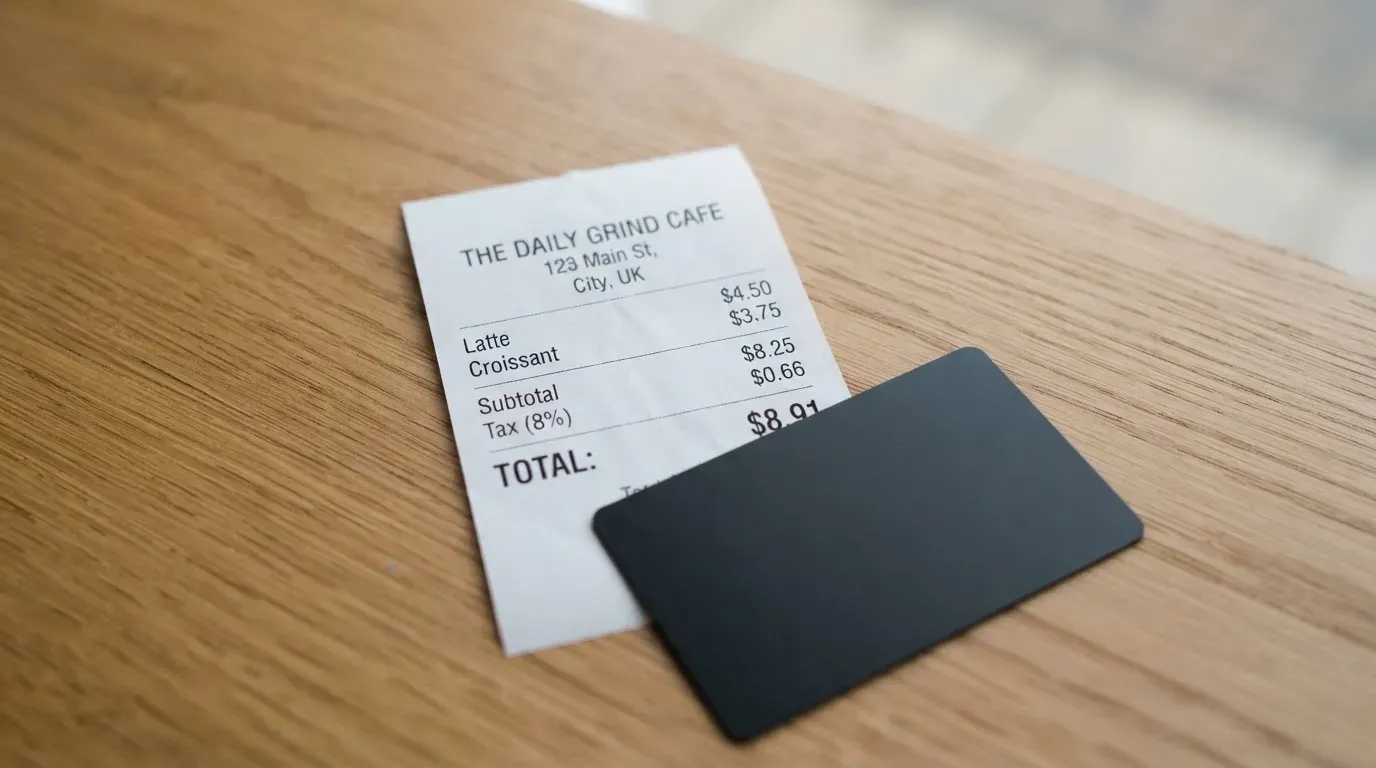
What it charges instead is a percentage on the things you actually do with the card. In-store and online purchases cost 1%, which comes back to you as Rewards points. Foreign transactions cost “2.99%+” — in practice the Mastercard rate plus a 2.99% foreign exchange fee. ATM withdrawals cost 1% of the withdrawal on the physical card, plus the ATM operator’s own fee. And if you dispute a transaction and lose, that is $27.50 per transaction.
| Fee or limit | What the card states |
|---|---|
| Card issuance | No fee |
| Replacement card | Free (PDS fee table) |
| Account keeping / annual fee | No line charged in the fee table |
| In-store and online purchase | 1% (returned in Rewards points) |
| Foreign transaction | Mastercard rate plus 2.99% foreign exchange fee (“2.99%+”) |
| ATM withdrawal | 1% of the withdrawal (physical card only) plus the ATM operator’s fee |
| Dispute fee | $27.50 per transaction |
| Rewards | 1 point per $1 spent |
| Max point-of-sale transaction | $5,000 |
| Daily point-of-sale limit | $5,000, including ATM withdrawals |
| ATM limit | $1,000 per day; $20 minimum, $1,000 maximum per withdrawal |
Three everyday payments, so the arithmetic is concrete rather than abstract.
A $40 grocery shop. 1% is $0.40. You earn one Rewards point per $1, so 40 points, which offset future trades or buy something in the Rewards Store. Nothing else applies — no conversion fee is charged at the till, because the conversion happens behind the scenes when CoinJar sells your crypto. That is the point of the Spendable Balance model: the merchant sees an ordinary Australian dollar payment.
A $60 meal paid abroad while you are in Asia or Europe. The 1% is $0.60. The foreign exchange fee adds 2.99% on top of the Mastercard rate, so $1.79 on $60 before the network’s own conversion margin. This is where the card is at its weakest: a normal Australian bank card typically charges the Mastercard rate plus nothing or a small percentage, so on a spending holiday the difference between this card and a bank card is real money. If most of your card use happens outside Australia, read the “2.99%+” as the deciding number rather than the 1%.
A $200 cash withdrawal. 1% is $2.00, plus whatever the ATM operator charges, which the card does not control and does not include in its stated fee. Daily ATM limit is $1,000, minimum $20, maximum $1,000 per withdrawal. And note that CoinJar sells crypto to fund it — that sale carries CoinJar’s normal trading fee on top of everything else. Cash is the most expensive way to use this card.
One more cost that is easy to miss: refunds go back into your CoinJar Everyday Account in Australian dollars, not into the original cryptocurrency. So a returned $60 shirt does not restore your coin position. You are left holding AUD cash inside the account.
Top up: how the balance gets there
There is no separate top-up button and no separate top-up fee that I could find. The card spends the AUD value of the “Spendable Balance” in your CoinJar Everyday Account, and that balance is funded by the cryptocurrency you have chosen as your Spend account. When you pay, CoinJar automatically converts at CoinJar’s rates. That is the whole mechanism, and it is elegantly invisible at the point of sale.
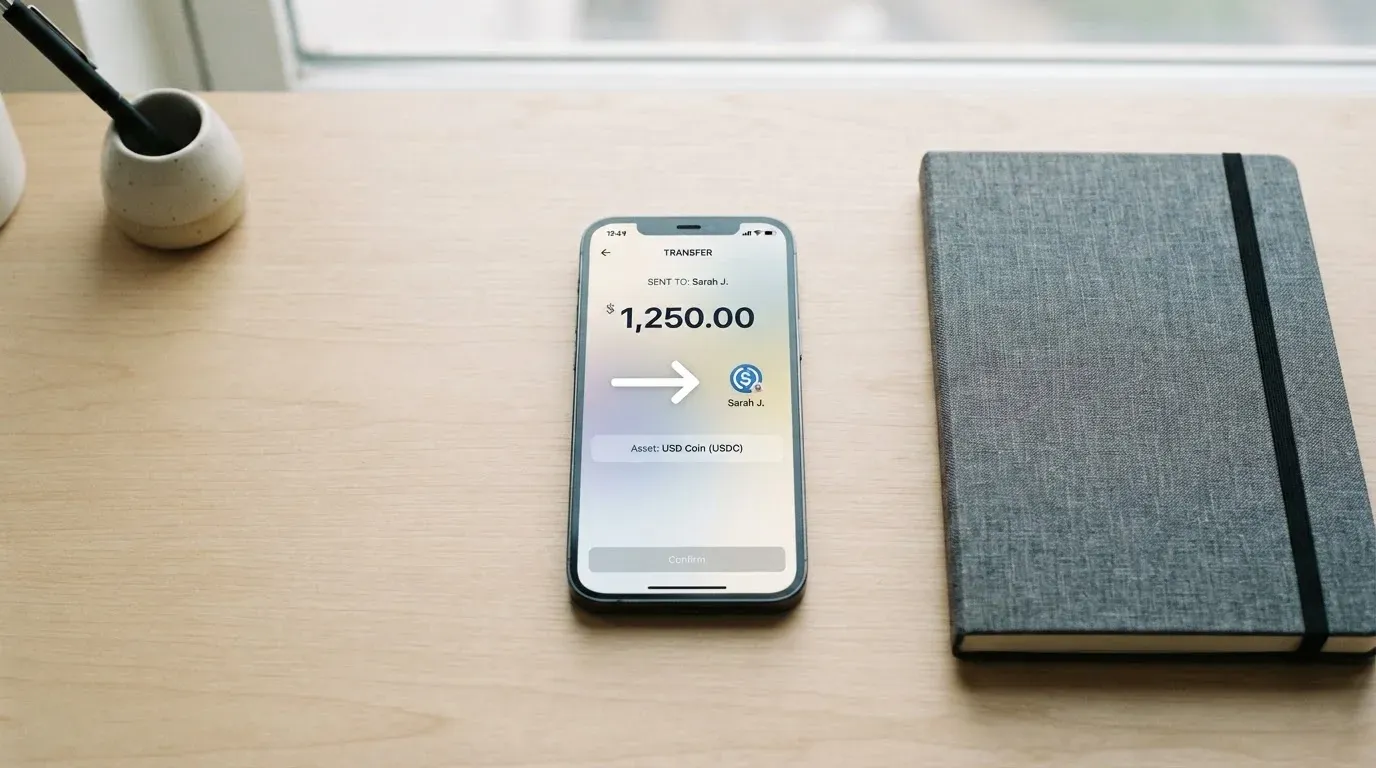
What that means in practice is that your crypto is sold whenever you spend. CoinJar separately charges its normal trading fee when it sells crypto for the purchase, so the real cost of a purchase is the 1% card fee *plus* that trading fee. The card page does not publish a top-up fee, a minimum top-up, or network fees, and the coins and networks you may select are not listed. A 2021 launch press release mentioned 30 digital currencies and a flat 1% conversion, but that is press material from launch, not a current specification.
That gap is the one to press on before you commit. I cannot tell you which coins work. Ask support directly, and get the answer in writing, before you plan to run the card off a single token.
If you want out, the process is documented and orderly. Cancel the card whenever you like; the issuer can cancel with 14 days’ notice, or immediately if it suspects misuse or false information. The remaining value on the card is paid to CoinJar, which pays it into your Everyday Account in Australian dollars once no pending authorisations remain and you instruct them to. Note the sequencing: you wait for pending payments to clear first, so cancelling mid-month means waiting.
And the model itself deserves a warning. This is a pre-loaded balance card, which is why it cannot overdraw — but it also means your crypto sits with a custodian until you spend it. Control of crypto belongs to whoever holds the private key, and with a custodial wallet the provider holds the credentials, so you are trusting CoinJar completely. Custodial platforms have a history: Mt. Gox (about US$350 million reported stolen 2011-2014), Coincheck (about US$400 million, 2018), Ronin Network (US$625 million, 2022). Transfers are also typically irreversible, and a stolen key has no recovery path because the network cannot freeze or return funds.
Paying with it every day
This is the part the card is genuinely good at, and it is why it scores 9 out of 10 here. A free physical and digital Mastercard, Apple Pay and Google Pay, app-based freeze and PIN change, transaction history, and contactless under the $100 limit. When the card is added to Apple Pay the number is replaced with a device-specific Device Account Number stored in the Secure Element, never on Apple’s servers, and each payment uses a one-time dynamic security code. That is the standard modern safeguard, not an unusual one.
Rewards are straightforward: one point per $1 spent, offsetting future trades or redeemable in the Rewards Store. Since 1% of your spend comes back as points worth one per dollar, a heavy spender is effectively rebating a meaningful slice of the fee — though points are CoinJar’s own currency, not cash, so “worth” depends on how you use them.
Two practical notes for daily life. Card payments can be declined for reasons that have nothing to do with your balance: merchants may apply extra scrutiny when the issuer country differs from the billing address, some merchants decline prepaid or foreign BINs because the BIN lookup reveals the card type and issuer country, and Address Verification is mainly offered in the US, Canada and the UK and is generally unavailable for foreign-issued cards, which can cause declines. For an Australian card used in Australia this rarely bites; it bites when you travel. Separately, a declined authorisation may leave a hold on funds that can remain for several days, typically up to 7.
If something goes wrong, the route is real. Notify EML as soon as possible; the time limit is generally 90 days from the transaction. You have 10 days to provide extra information or the chargeback may be lost or reversed. Each unsuccessful dispute costs $27.50. Complaints are aimed at resolution within 5 days, otherwise within 30 days, then escalation to AFCA. You can email [email protected].
Blocked categories. The card page does not state which merchant category codes are blocked. This matters more than it sounds: MCC 7995 covers gambling, and issuers often block it by policy rather than by law, with the list varying by issuer. I cannot tell you whether you can pay for betting on this card. Ask.
What can go wrong
Let me separate the things I checked from the things I could not.
Official complaints: none found. No Reddit or Trustpilot card-specific complaints surfaced. The only criticism I found from a third party, at news level, is that the 1% purchase fee is the main drawback — which is not a surprise, and you have already read that number.
User reports about the exchange, unofficial and not card-specific. Trustpilot for coinjar.com — the exchange, not the card — shows a TrustScore of 3.3 from 2,549 reviews with 17% one-star (read 2026-10-20). The recurring themes are transfers and withdrawals held “under review” or Travel Rule holds (June to October 2026, including a BTC transfer paused for more than four days in August 2026), identity re-checks and account freezes (May to September 2026), and slow support (June to October 2026). CoinJar replies to 100% of negative reviews. In fairness, none of this is about the card; it is about the exchange underneath it, which is where your money sits.
The one card complaint. A single review, dated 18 October 2026, describes the virtual Mastercard as “constantly having technical issues”. One review is one review. But it is the only card-specific signal I found, and virtual-card reliability is exactly what you depend on when the physical card is in a drawer.
Programme history. The card launched in Australia in August 2021 and a UK GBP card followed in February 2022 (BusinessWire and EML press releases, third-party). I found no 2026 programme change, and CoinJar’s own blog in February 2026 still describes the card — so this is a live product, not a wind-down. Still, the category has a scar tissue: Visa terminated its global agreements with FTX on 13 November 2022 and the FTX US debit card was wound down; WaveCrest, a Visa issuer that supplied crypto card brands, was suspended by Visa in Europe in 2018, closing all WaveCrest-issued programmes. Visa and Mastercard do not issue crypto cards to consumers — they license issuers and can suspend a programme. Programme closures typically give notice, then stop spending and loading, then ask users to withdraw remaining balances. So keep enough off the card that a closure would not hurt.
The identity problem. KYC rules require regulated businesses to verify customers and assess risk under anti-money-laundering law, including ongoing monitoring and suspicious-activity reporting. If due diligence cannot be completed, EU rules require the institution to refrain from the transaction or end the relationship — which is why accounts get frozen pending documents. Nationality is screened separately from residence, because sanctions screening is often applied to citizenship and country of birth as well as address. This is normal and unavoidable; it is also why any frozen-account reports above should be read as compliance friction rather than as a trick to route around. There is nothing here I am going to help you circumvent.
Unstated safeguards. Insurance or safeguarding of the card balance is not stated. The card is custodial: funds sit in your CoinJar account and EML issues the card. If you are comfortable with a counterparty relationship, fine; if not, this is the wrong structure.
Support contacts: [email protected], the issuer at [email protected], and a help centre at support.coinjar.com. App store ratings, unofficial: App Store 4.1/5 from 123 reviews (per App Pricing Lab, listing updated 7 March 2026; Marlvel gives 128 ratings); Google Play 3.91 from about 2.6 thousand ratings (per AppBrain), searched 2026-10-20. Those are the CoinJar exchange app, not the card.
What to take instead
All three alternatives below scored higher than CoinJar’s 5.5, and the reasons are instructive: CoinJar’s weak points are eligibility narrowness and fee load, and these cards are built differently.
| Card | Score | Fees | Where it works |
|---|---|---|---|
| CoinJar | 5.5 / 10 | 1% purchases, “2.99%+” abroad, 1% ATM, $27.50 dispute | Australian residents only |
| Bybit Card | 6.0 / 10 | 0.9% crypto conversion (Australia, Asia Pacific, Georgia, Kazakhstan, Brazil, Mexico); 2% FX on top of the network rate in Australia, Asia Pacific, Mexico; 2% “International Fee” in Kazakhstan (AIFC); 7% Argentina; 1.5% Brazil; 1% Peru | Argentina, AIFC (Kazakhstan), Georgia, Kazakhstan, Australia, Mexico, Brazil, Peru, Asia Pacific |
| MSX | 6.4 / 10 | Not stated | Not stated on an official page I could read |
| Young Card | 5.7 / 10 | Not stated | Not stated |
Bybit is the serious comparison, and it wins on reach. It offers virtual and physical cards across nine listed regions, with card currency set by country — USD for AIFC, Georgia, Kazakhstan, Australia and Asia Pacific; ARS for Argentina; MXN for Mexico; BRL for Brazil; PEN or USD for Peru. Virtual issuance is free in all regions “until further notice”, and the cards page states “Auto interest, no annual fees”. Physical issuance is 29.99 USD in Australia, 5 USD or USDT in Argentina, 29.99 USDT in Georgia, 29.99 USDT in Kazakhstan (AIFC), 5 USDT in Asia Pacific, and nothing in Brazil or Mexico; VIPs holding an Australia, Kazakhstan (AIFC), Georgia or Asia Pacific physical card pay no issuance or replacement fee.
Its fee structure is more complex but often cheaper where it counts: 0.9% crypto conversion over the One-Click Sell rate, against CoinJar’s flat 1% plus a normal trading fee. Its FX fee is 2% on top of the network rate versus CoinJar’s 2.99% — though watch Kazakhstan’s 2% “International Fee” on purchases outside Kazakhstan even in USD, and Argentina’s punishing stack: VAT 21% on foreign digital services, 30% tax on foreign transactions, and provincial gross-income tax of 1%–13.2%. Two further differences: a physical card is not available in Peru, and the card has no balance of its own — it draws on the Funding Account and Flexible Easy Earn balance, fiat first, then selling crypto at the One-Click Sell rate plus the conversion fee.
Its rewards are far richer but more conditional. From 5 October 2026 at 10:00 UTC, only crypto-funded transactions earn points or cashback; fiat-funded spending does not. Tiers run from Base at 2.00% with a 5 USD monthly cap to Infinite at 10% with a 600 USD cap, and points pend for four calendar days. And it is explicit about geography in a way CoinJar is not: “This product is not meant for European Economic Area customers. All European Economic Area customer participation is strictly prohibited.” If you are in the EEA, Bybit is closed to you too.
MSX, at 6.4, I simply could not read — no official page on eligibility, card terms, fees or top-up was available to me. That is a reason for caution, not a recommendation.
Young Card, at 5.7, also publishes almost nothing I could verify on eligibility, card type, fees or funding. What it does publish is cashback in YNG tokens at a rate set by club tier: Essential 0.1%, Gold 1.8%, Platinum 3.6%, with Bronze and Silver not stated. Paying yourself in your own token is not cashback in the ordinary sense.
One thing to know about how these cards work
A payment card number starts with an issuer identification number (BIN/IIN) of 6 or 8 digits identifying the issuing institution; the rest is an account identifier and a check digit. Merchants can look up the BIN to see which institution and country issued a card, and may apply extra scrutiny if the issuer country differs from the billing address. That is why an Australian card can look “foreign” to a shop elsewhere — and why prepaid cards get declined at some merchants. In this category, card networks route messages and set rules, the issuer holds the programme, and the crypto brand is often only a programme manager or front-end that markets the card. On CoinJar, that split is between CoinJar and EML Payment Solutions Limited.
Who I would recommend it to
I would recommend the CoinJar card to one specific person: an Australian resident who already holds crypto at CoinJar, wants a physical and digital card for everyday spending, is comfortable with a custodial balance, and treats the 1% as the price of not having to sell manually before every coffee. For that person it is a good card, honestly — free to issue and replace, no annual fee, works in Apple Pay and Google Pay, and the Rewards points claw back a slice of what you pay.
I would not recommend it to anyone who travels on card spending, to anyone outside Australia, to anyone who objects to 1% on every purchase, or to anyone who wants to hold their own keys. For the first group, Bybit’s 2% FX fee and CoinJar’s “2.99%+” are both poor against a plain bank card; for the last, a self-custody-linked card keeps funds in your own wallet until the moment of payment, at the cost of sole responsibility for key loss, phishing, and clipboard-hijacking malware that swaps copied addresses.
Before you commit, ask three questions in writing: which coins and networks can I use as my Spend account; what is the actual trading fee applied when the card converts; and which merchant categories are blocked. Two of those the public pages do not answer, and I would not sign up on a guess.
Frequently asked questions
What is the CoinJar card?
It is a prepaid Mastercard that spends the Australian-dollar value of your CoinJar Everyday Account balance rather than drawing on a bank account. You nominate a cryptocurrency as your Spend account, and CoinJar converts it at its own rate each time you pay. You get a free digital card and a free physical card, issued by EML Payment Solutions Limited. There is no credit, and no overdraft.
How does the CoinJar card work day to day?
Every payment converts your crypto first, invisibly. When you tap or insert the card, CoinJar sells enough of your Spend crypto to cover the amount and debits the AUD value from your Spendable Balance. The merchant sees a normal Mastercard payment in dollars and knows nothing about crypto. The catch is that this sale carries CoinJar’s normal trading fee, on top of the card’s 1% purchase fee.
Is CoinJar a bank?
Not as far as the card documents describe it. The card is issued by EML Payment Solutions Limited, which holds an Australian Financial Services Licence, 404131, with CoinJar Australia Pty Ltd as authorised representative. EML is an e-money style issuer rather than an ordinary retail bank, and whether your balance is safeguarded or insured is not stated on the card’s public pages.
Who owns CoinJar?
CoinJar is an Australian cryptocurrency exchange business, and the card sits on top of it. The product documentation is dated 2021, with CoinJar Australia Pty Ltd named as authorised representative for the issuer. Third-party press material reports the Australian card launched in August 2021 and a UK GBP card in February 2022; I found no 2026 programme change, and CoinJar’s own blog in February 2026 still describes the card.
Can I use the CoinJar card outside Australia?
The card is issued in AUD and usable abroad, but it is expensive there. Foreign transactions cost “2.99%+” — the Mastercard rate plus a 2.99% foreign exchange fee — on top of the 1% purchase fee. You can also hit declines: some merchants refuse prepaid or foreign-issued cards, and address verification is generally unavailable for foreign-issued cards. Availability is for Australian residents only; the card page names no countries at all.
How do I get and activate the CoinJar card?
You need a verified CoinJar account first — the eligibility terms require being 18 or older, an Australian resident, with a verified CoinJar account. The card itself is managed in the CoinJar app on iOS and Android. Issuance and replacement are both free. What documents verification needs, how long it takes, and the activation steps are not stated on the card documents, and delivery countries and timing are not stated either.
How do I top up the CoinJar card?
There is no separate top-up action. The card draws on the Spendable Balance of your CoinJar Everyday Account, which your chosen Spend cryptocurrency funds. Card top-up fee, minimum top-up and network fees are not stated, and the list of coins and networks you can select is not published. A 2021 launch release mentioned 30 digital currencies, but that is launch material rather than a current specification, so ask before you rely on a particular token.
Is the CoinJar card safe, and is it anonymous?
It is not anonymous. A verified CoinJar account is required, which means identity checks under anti-money-laundering law, and nationality is screened separately from residence. On security, the practical safeguards are there: app-based card freeze, PIN change, transaction history, tokenised cards in Apple Pay and Google Pay. What is not stated is any insurance or safeguarding of the balance — and because the funds are custodial, they sit with a provider rather than in a wallet you control.
What are the CoinJar card’s fees and limits?
Purchases cost 1% in store and online, returning as one Rewards point per $1. Foreign transactions are “2.99%+” over the Mastercard rate, ATM withdrawals 1% plus the operator’s fee, and a lost dispute $27.50. Issuance, replacement and any annual fee are free. Limits: $5,000 maximum per point-of-sale transaction, $5,000 daily including ATM withdrawals, and $1,000 per day from ATMs with a $20 minimum.
Is the CoinJar card worth it?
It depends entirely on where you spend. For Australian everyday spending from a crypto balance you already hold, the convenience is real and the 1% is the price. For travel, a lot of card use, or anyone wanting zero fees, it is not — and the hidden extras are the normal trading fee on each conversion and the fact that refunds come back as AUD, not as your original coin.
Exchange card reviews – cryptocardcheck
Content created by the «cryptocardcheck» team