
The Wasabi card in detail: virtual and physical, stablecoin-funded, and quiet on prices
 Available in US
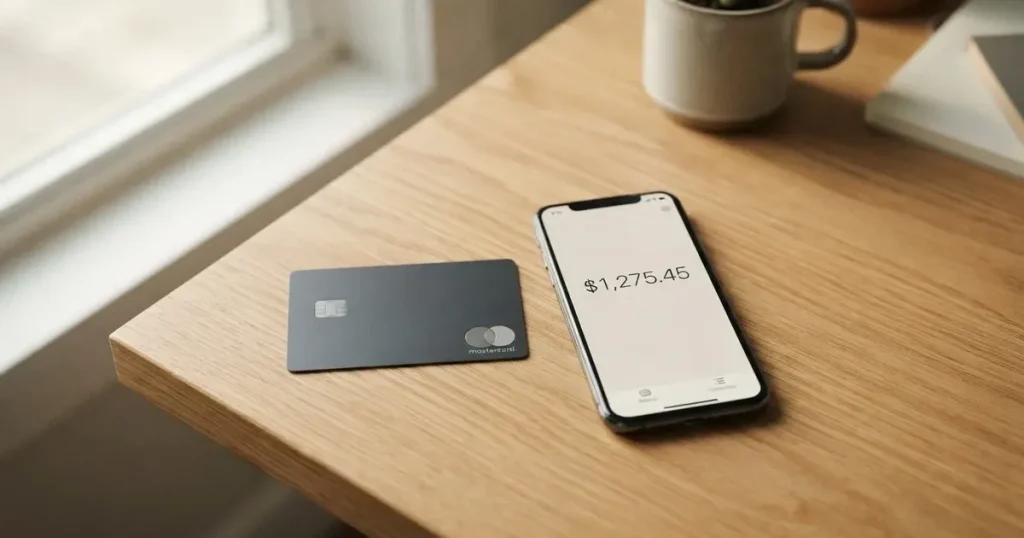
The Wasabi card is a stablecoin-funded payment card offered in two forms — a virtual card you can bind to Apple Pay straight away, and a physical card you can also push into Apple Pay. It converts and spends a stored balance rather than dipping into a bank account at the till, and the people behind it position it for businesses and users who want stablecoin virtual and physical cards. The reach is broad on paper: the starting data says 200+ countries and regions, with the terms excluding “any prohibited or sanctioned jurisdiction” and no list published on the pages I read.
What holds it back is silence about money. The Wasabi terms list the fee *types* — card issuance, foreign exchange, cross-border transactions, ATM withdrawals, chargeback handling, replacement — and attach no amounts to any of them. No monthly fee is named. The card currency is not stated on the pages I read. The issuer and the licences are not named either; Wasabi Ltd describes itself as a financial technology company and “not bank or custodians”, with OTC and card issuing “provided in partnership with licensed institutions or banks”. So the practical experience of using the card is easy to describe and hard to price in advance.
My score is 6.4 out of 10.
The conditions described here are current as of October 28, 2026.
Verdict: 6.4 out of 10, a broad reach with an unpriced cost sheet
Wasabi scores highest on the two things a card in this category can actually get right. Eligibility is generous — 9 out of 10 — because the starting data claims 200+ countries and regions and the only stated exclusion is the sanctioned-jurisdiction wording. Everyday use is 8 out of 10: a virtual card with instant Apple Pay binding, a physical card, and ATMs “across the world” as the site puts it.
The weak spots are cost and reliability. Cost takes 5 out of 10 because the fee schedule exists as a list of categories and nothing more; you cannot compute what a month of spending will cost you from what the card publishes. Reliability and complaints take 4 out of 10, the lowest mark on the card, and there are two separate reasons for it: the issuer and its licences are unnamed, and the only user report I could find describes high setup fees and restricted cards. Top-up options take 6 out of 10 — stablecoins, with the specific coins and networks left off the pages I read.
| Criterion | Mark | Why |
|---|---|---|
| Who can get it | 9 / 10 | Starting data: 200+ countries and regions; excluded are “prohibited or sanctioned jurisdiction”, with no list published |
| Cost | 5 / 10 | Terms name issuance, conversion, cross-border, ATM, chargeback and replacement fees without any amounts; no monthly fee stated |
| Top-up options | 6 / 10 | Stablecoin top-ups (“Spend with Stablecoin”); unofficial starting data names USDT TRC20 and BEP20; other coins not disclosed |
| Reliability and complaints | 4 / 10 | Wasabi Ltd says it is “not bank or custodians”; issuer and licences unnamed; unofficial: one Trustpilot review of 8 July 2026 on high setup fees and card restrictions |
| Everyday use | 8 / 10 | Virtual card with instant Apple Pay binding plus a physical card, ATMs worldwide; Google Pay not disclosed |
| Total | 6.4 / 10 | Broad reach and good daily mechanics, weighed down by costs that are never quantified |
Who this suits: someone who already holds stablecoins, already knows which network they are on, and treats the card as a spending tool rather than a financial product — the kind of user who wants a prepaid-style balance that converts at the moment of payment and a physical card for cash. Who it does not suit: anyone who needs to know what a year of spending will cost before they start, anyone who needs a bank-style deposit guarantee, and anyone in a hurry who wants a support line with published hours.
Will they give you the card?
Broadly, yes — the reach is the strongest thing about this card. The starting data says 200+ countries and regions, and no list of eligible countries appears on the pages I read. The terms phrase the restriction in residence terms: users must not be located in or residents of “any prohibited or sanctioned jurisdiction”. That is deliberately open-ended. Sanctions lists change, and the phrase is not a country list you can check yourself against.
So the practical question — is Wasabi card available in my country — has an honest answer: the card says “probably, and the exclusion is about sanctions rather than about nationality”, and then leaves the boundary undefined. If you are in a place under comprehensive sanctions, the answer is effectively no. If you are elsewhere, the answer is that nobody outside the company can confirm it from public pages.
Two more things worth knowing before you apply. First, this is a card from a company that says it is not a bank and not a custodian. Second, the audience is specific: businesses and users who want stablecoin virtual and physical cards. That is a business-first framing, which matters for support, documentation and what happens if something goes wrong.
How to get it
The route is the ordinary regulated one: apply, complete identity verification, then receive a virtual card you can use immediately and a physical card to follow. The terms put it as a condition rather than a description — you must “successfully complete any required identity verification (KYC/KYB) procedures”. What may be requested:
- a government-issued ID;
- proof of address;
- a selfie verification;
- for corporate applicants, registration documents and beneficial ownership information.
The age requirement is not stated on the pages I read, and neither is the number of KYC levels or what happens at each tier — there is a KYC guide article in the help centre, but the terms themselves do not summarise it. Delivery terms for the physical card are also not stated: no window, no countries, no fee. If the timing of the plastic matters to you, that is a question to ask in support before you apply, not after.
What the terms do say is the consequence of failing: verification failure may lead to suspension or termination. Treat the documents as the price of admission.
In the wider category, prepaid and debit cards are generally available to adults 18 and over, and some issuers set higher limits — but that is background about crypto cards generally, not a Wasabi requirement. Wasabi’s own pages do not state an age.
Fees: what it really costs
Here is the honest part: I cannot tell you what the Wasabi card costs, and neither, on the evidence, can you before you start. The terms enumerate the fee categories without amounts. That is not a small gap — it is the whole price sheet.

The table below reproduces what the card’s own pages actually publish. Where a cell says “not stated”, that is the card’s silence, not my estimate, and I have left every figure out rather than fill it in from elsewhere.
| Fee or limit | What the card publishes |
|---|---|
| Card issuance | Listed as a fee type in the terms; no amount stated |
| Monthly fee | Not stated |
| Currency conversion | Listed as a fee type; the site says “Currency conversion rates may apply”; no figures |
| Foreign exchange | Listed as a fee type; no amount stated |
| Cross-border transactions | Listed as a fee type; no amount stated |
| ATM withdrawal | Listed as a fee type; no amount or allowance stated; the site advertises “competitive rates” |
| Chargeback handling | Listed as a fee type; no amount stated |
| Replacement card | Listed as a fee type; no amount stated |
| Virtual card limit | “card limit up to 10,000 USD” |
| Physical card limit | “flexible spending limits”; no values given in the terms |
| Tiers | Card types are virtual and physical; no tiers stated |
| Card currency | Not stated on the pages read (starting data: Visa or Mastercard, USD balance) |
Three everyday payments, and what applies to each:
A subscription in your own country. If the balance and the card currency line up, this is the cheapest shape of spend the card offers — you are drawing down a pre-loaded balance. The catch is that the card currency is not stated, so “your own country” may still be a conversion for the card if its balance is held differently from the price you are charged. Confirm the card currency before you commit to a monthly subscription in a currency you did not choose.
A purchase from a merchant in another currency. This is where the listed-but-unquantified fees bite hardest. The terms list both foreign exchange and cross-border transaction fees as separate categories, and the site says conversion rates may apply, without a number. You could be paying the rate spread, a conversion fee and a cross-border fee, or some combination — the pages do not say which apply together.
A withdrawal at an ATM abroad. The site invites you to “withdraw cash from millions of ATMs worldwide with competitive rates”. The terms list ATM withdrawal as a fee type with no amount and no allowance. The physical card carries “flexible spending limits” with no values. So the cost of getting cash abroad is the least knowable thing on this list.
One more cost that is not the card’s: on-chain network fees for your deposit are charged by the blockchain, not by Wasabi. If you are topping up from a self-custody wallet, that gas or bandwidth is yours.
Top up: how the balance gets there
The card is stablecoin-funded. The product name is “Spend with Stablecoin”. The coins and networks are not stated on the pages I read; unofficial starting data names USDT on TRC20 and BEP20. Treat that as unconfirmed — it is third-party information, not something the card has published to me.
The mechanics of a stablecoin top-up are where people lose money, and the risk is not Wasabi’s to carry. Blockchain transfers are irreversible. A deposit sent on a network the provider does not support, or to an address belonging to a different network, can be lost or need manual support recovery with no guarantee. Before you send anything, confirm the network the card expects on that network.
A few category facts that bear directly on this step. USDT and USDC are US-dollar-pegged, and the BIS (July 2025) put about 90% of stablecoin market capitalisation in those two. USDT has been issued on networks including Ethereum, Tron, Solana, Polygon and Avalanche. USDC is not the same story on Tron: Circle stopped supporting USDC on Tron in February 2024, so “USDC over TRC20” is not a native option — if your informal source told you it was, that source is out of date. Stablecoins can also depeg: TerraUSD collapsed in May 2022, and USDC temporarily lost its peg in March 2023 during the US banking crisis.
Network mechanics differ in ways that catch people out. ERC-20 is the Ethereum token standard (proposed November 2015), and gas is paid only in ETH — a wallet holding USDT with no ETH cannot send it. Tron prices transactions with bandwidth and energy, often burning TRX. And Tether says it disables tokens in wallets on the OFAC sanctions list and has frozen funds tied to illicit activity, so stablecoins are not censorship-proof in either direction.
Withdrawal back out: not stated on the pages I read. The terms do say “Funds may be temporarily withheld pending investigation” — worth weighing if you are holding more on the card than you need for the week.
Paying with it every day
Day-to-day, this is the part the card does well. You get a virtual card with “instant binding” to Apple Pay, and a physical card that can also be added to Apple Pay. Cash comes out of ATMs worldwide. Google Pay is not disclosed, and blocked merchant categories are not disclosed — so the usual question about gambling and similar categories cannot be answered from the card’s pages.
How a payment actually happens is worth knowing, because it explains most of the friction people report with cards like this. Your card number starts with an issuer identification number (BIN/IIN) of 6 or 8 digits identifying the issuing institution; the rest is an account identifier and a check digit. Merchants can look up that BIN to see which institution and country issued the card, and may apply extra scrutiny if the issuer country differs from your billing address — which is why a card issued in one country can look “foreign” to a shop in another. Some merchants decline prepaid or foreign BINs for exactly this reason. Address Verification Service, which compares the numeric parts of the billing address you type with issuer records, is mainly offered in the US, Canada and the UK and is generally unavailable for foreign-issued cards, which can cause declines.
The model itself is the prepaid model: you convert or top up a balance first, and the card spends only that balance, so it cannot overdraw. That is reassuring in one specific sense — there is no credit line to exceed — and unhelpful in another, since a declined authorisation may leave a hold on funds that can stay for several days, typically up to 7.
Apple Pay has one genuine advantage: it replaces your card number with a device-specific Device Account Number stored in the Secure Element, never on Apple servers, and each payment uses a one-time dynamic security code. The issuer can still restrict the tokenised number — blocking it on magnetic-stripe, phone or website use — so the card’s terms matter even when you pay by phone.
Two extras the card does list. A “Cashback” product is offered — “Get Cashback on your card purchases” — plus a referral programme. The rate and conditions for cashback are not stated, so treat the headline as a reason to look rather than as a number to plan around.
The app is a web app at app.wasabicard.com; no store listing was found and ratings were not read. Disputes have a clock: “Refunds may take up to 30 business days to be reflected”, chargebacks require supporting documentation, and recovery is not guaranteed.
On your rights: US debit card reversal rights come from Regulation E and credit card rights from Regulation Z; prepaid-card coverage varies and should not be assumed. Under 3-D Secure — Visa’s brand is Visa Secure, Mastercard’s is Identity Check — liability for a fraudulent online payment can shift from the merchant to your bank, or, per critics, to you.
What can go wrong
Four things, roughly in order of how likely they are to matter to you.
The cost surprises you. This is the one I would plan around hardest. A card that lists fee categories without amounts cannot be budgeted, and if the conversion spread is wide, the effective cost of ordinary spending is invisible until you check a statement. If you are moving meaningful money onto this card, keep a buffer and check balances frequently in the first weeks.
A merchant declines you. Prepaid and foreign BINs get declined for the structural reasons above, not because of anything you did. AVS being unavailable on foreign-issued cards, and extra scrutiny when the issuer country differs from your billing address, are ordinary occurrences rather than bugs.
A payment leaves your balance short for days. Holds after declined authorisations can persist. With draws on a balance rather than a credit line, a hold is felt immediately.
The programme or the company changes. Wasabi Ltd says it is “not bank or custodians”; OTC and card issuing are “provided in partnership with licensed institutions or banks”; the issuer and licences are not named on the pages I read, although a “Licenses & Compliance” page exists at /en/licenses-compliance. This category has a history: Visa terminated its global agreements with FTX on 13 November 2022 and the FTX US debit card was wound down; WaveCrest, a Visa issuer that supplied crypto card brands, was suspended by Visa in Europe in 2018, closing all WaveCrest-issued Visa programmes. And Visa and Mastercard do not issue crypto cards to consumers themselves — they license issuers and can suspend a programme. Program closures typically give notice, then stop spending and loading, then ask you to withdraw remaining balances.
The complaint picture is thin but not clean. A Trustpilot page shows a TrustScore of 3 from a single review dated 8 July 2026, one star, saying the provider is aimed at businesses, charges high setup fees (“$15,000 and up”) and that cards are restricted. I read that on 2026-10-21. That is one user’s account, unofficial and not confirmed by the card; no Reddit threads were found. But it aligns with what the pages do say — the business-first framing, and the absence of any published amounts. Treat it as a question to ask, not a verdict.
Security features the card does name: “Security by Design” with the ability to create, delete and isolate funds per card, and non-custodian custody. Two-factor authentication is not stated. Support is live chat, email (“respond within 24 hours”) and phone, plus a Telegram channel at t.me/wasabicard_official; languages and hours are not stated. A support presence is not the same as a support guarantee — test it before you depend on it.
If you are in the EU, note that a card is a payment service regulated separately from the crypto side: MiCA (Regulation (EU) 2023/1114) took legal effect in June 2023, its stablecoin rules applied from 30 June 2024 and the remaining provisions including crypto-asset service provider rules from 30 December 2024, and a crypto card often depends on two licences. EMIs must safeguard customer funds by segregating them in dedicated accounts or insuring them — and such funds are not the same as bank deposits and may not be covered by deposit guarantee schemes. The transitional period lets providers already operating under national law continue only until 1 July 2026 or until they receive or are refused a MiCA authorisation, whichever comes first. ESMA keeps an interim register of authorised CASPs, white papers and non-compliant entities, and it is worth checking a provider there.
What to take instead
None of the three alternatives I compared scores higher than Wasabi’s 6.4 — they are here as a shape of comparison, not as upgrades. What changes between them is who they are built for and how much they publish.
| Wasabi | Cardex | CardFlow | HyperCard | |
|---|---|---|---|---|
| Score | 6.4 / 10 | 5.6 / 10 | 4.9 / 10 | 4.7 / 10 |
| Stated reach | 200+ countries and regions (starting data); sanctioned jurisdictions excluded | “One crypto card, 200+ countries”; no list or exclusions | Aimed at Nigeria, “Nigerians and global users” | No country list; app listing says works in “more than 176 countries” (acceptance, not eligibility) |
| Card | Virtual and physical, stablecoin-linked; card currency not stated | Debit crypto card on VERVE, VISA, Mastercard and UnionPay; virtual and physical; Naira per listing | Virtual USD Mastercard, created in about 3 minutes | Prepaid “HyperCard”; balance in USD or EUR; network not stated on the app page |
| Costs | Fee types listed, no amounts; no monthly fee | Not stated | “Creating a virtual card is completely free”; monthly fee not stated | Not stated; app page lists no fees |
| Conversion | “Currency conversion rates may apply” | Real-time crypto-to-fiat conversion at payment, with an “AI-Powered Conversion Rate” claiming to pick the best rate; no percentage stated | Not stated | Not stated on pages readable |
| Funding | Stablecoin; unofficial: USDT TRC20/BEP20 | USDT, USDC and BTC wallets; networks not stated | Bitcoin, USDT, ETH or Naira bank transfer; networks not stated | Crypto deposits such as USDT, BTC, ETH, converted to USD or EUR |
| Rewards | Cashback product and referral programme; rate not stated | Not stated | Not stated | Not stated |
Read across the row on costs and you notice a pattern: CardFlow is the only one of the four that states a price for anything — creating a virtual card is free, according to its own FAQ. Wasabi, Cardex and HyperCard all leave the amounts out. If your first question is “what will this cost me”, CardFlow is the one that answers, though it says nothing about the rest of the price sheet either.
On reach, Cardex and Wasabi both claim 200+ countries. CardFlow’s framing is openly Nigerian. HyperCard’s “more than 176 countries” describes where the card is accepted, which is a different and easier claim than where you can sign up — a distinction worth holding on to whenever you read one of these listings.
There is one more difference that is not in the table. Wasabi’s audience note names businesses and users wanting stablecoin virtual and physical cards, and its single public complaint is that the provider is aimed at businesses. If you are an individual rather than a company, that framing may matter to you more than the fee table does.
Who I would recommend it to
I would recommend the Wasabi card to someone who has decided on their own that a pre-loaded stablecoin balance is the right shape for their spending, who knows which network their coin sits on, and who will keep a healthy buffer on the card rather than running it to zero. Under those conditions it is a competent tool: instant Apple Pay binding on the virtual card, a physical card for cash, ATMs worldwide, per-card isolation of funds, and cashback on purchases.
I would not be the person who recommends it to someone asking what it will cost them, to someone who needs their money to sit in an account protected by a deposit guarantee scheme, or to someone who wants to know which institution actually stands behind the plastic. Those are not criticisms of the product so much as the shape of what is published — and for a card whose entire use is spending other people’s money through a machine, an unpriced fee sheet and an unnamed issuer are two large gaps to accept on trust.
One thing to do before you commit: ask support the two questions the pages do not answer — what the card currency is, and what the total cost of a typical month looks like including conversion. Both fit in one message to the live chat or the email that answers within 24 hours. Whatever they say, check that the answer matches what you read here.
Frequently asked questions
What is Wasabi card?
Wasabi is a stablecoin-funded payment card offered as a virtual card and a physical card. It works on a stored balance rather than a bank account: you convert or top up first, and the card spends that balance, so it cannot overdraw. Wasabi Ltd presents itself as a financial technology company, “not bank or custodians”, serving businesses and users who want stablecoin virtual and physical cards.
How does Wasabi card work?
You complete identity verification, receive a virtual card you can bind to Apple Pay immediately, and get a physical card to follow. Spending draws on your pre-loaded stablecoin-funded balance. The site mentions sending money in 7+ currencies, though the card currency itself is not stated on the pages reviewed, and the network is unconfirmed by the card.
Is Wasabi a bank, and who owns it?
No — the card’s own wording is that it is “not bank or custodians”. The company is Wasabi Ltd, and it says OTC and card issuing are “provided in partnership with licensed institutions or banks”. The issuing institution and the specific licences are not named on the pages reviewed, though a Licenses & Compliance page exists on the site.
Is Wasabi card available in my country?
Probably, but you cannot confirm it from public pages. Starting data says 200+ countries and regions with no published list, and the terms exclude users located in or residing in “any prohibited or sanctioned jurisdiction” — open-ended wording that changes with sanctions lists. If comprehensive sanctions apply where you live, the answer is effectively no.
Does Wasabi card require KYC?
Yes. The terms require you to “successfully complete any required identity verification (KYC/KYB) procedures” before use. They may request a government-issued ID, proof of address and a selfie; corporate applicants may need registration documents and beneficial ownership information. Failure can lead to suspension or termination. Age is not stated on the pages reviewed.
How do I top up the Wasabi card?
Through stablecoins, under the product name “Spend with Stablecoin”. The coins and networks are not stated on the pages reviewed; unofficial starting data names USDT on TRC20 and BEP20, which I could not confirm with the card. Confirm the expected network before sending, because blockchain transfers are irreversible.
What does the Wasabi card cost?
The terms list the fee types — issuance, foreign exchange, cross-border transactions, ATM withdrawals, chargeback handling and replacement — without amounts, and name no monthly fee. The site says “Currency conversion rates may apply” and advertises competitive ATM rates, again without figures. Budgeting a month of spending on this card is not possible from what it publishes.
Is the Wasabi card free, and is it safe?
Free is not something the pages state either way, and no amounts are published for any fee. On safety: the card describes itself as non-custodian with “Security by Design” per-card fund isolation; two-factor authentication is not stated. Support runs live chat, email within 24 hours and phone, with languages and hours unstated.
Can I use Wasabi card in Apple Pay and where else?
Yes, Apple Pay is the strongest integration here: the virtual card supports “instant binding”, and the physical card can be added to Apple Pay, where your card number is replaced by a device-specific number and each payment uses a one-time code. Google Pay is not disclosed, blocked merchant categories are not disclosed, and cash withdrawals are advertised at ATMs worldwide.
Is Wasabi card worth it?
Worth it if you already hold stablecoins, know your network, and keep a buffer. Hard to justify if you need a known monthly cost, a named issuer, or funds protected by a deposit guarantee scheme — the card currency, issuer and licences are all unstated. Before committing, ask support for the card currency and a realistic monthly cost including conversion.
Virtual card reviews – cryptocardcheck
Content created by the «cryptocardcheck» team