
The Gemini card is a US credit card with crypto rewards, not a crypto wallet card — and its support record is the bigger problem than its fees
 Available in US

If you came here looking for a card that spends your Bitcoin or Ethereum directly, the Gemini card is not that. It is a Mastercard World Elite credit card issued by WebBank, aimed at residents of the United States, and the crypto part is the reward it pays you rather than the money you load into it. That single distinction explains most of what follows: why applying means a credit check, why “topping up” does not apply, why your balance is dollars and not coins, and why the rewards are generous while the interest rate is not.
My score for it is 4.9 / 10. That is not a rounding of a bad experience — it is the average of six criteria that are genuinely good, one that is poor, and several that are mediocre. One section of this review will tell you that daily use is the strongest thing here, at 8 out of 10. Another will tell you that topping up is the weakest, at 2 out of 10, and the reason is structural rather than a mistake someone made.
Conditions described here are current as of October 28, 2026.
Scorecard
| Criterion | Mark | Why, in short |
|---|---|---|
| Who can get it | 4 / 10 | Residents of all 50 US states; no other country is named anywhere on the card’s pages |
| Cost | 7 / 10 | No annual fee and no foreign transaction fee, but purchases run at 16.49%-34.49% APR, cash advance costs $10 or 3%, a second replacement card costs $50 |
| Top-up options | 2 / 10 | Nothing to top up — it is a credit card repaid in fiat; crypto arrives only as rewards, from 1% to 4% |
| Reliability and complaints | 3 / 10 | Trustpilot 1.3 out of 5 across 1,513 reviews: frozen accounts, withdrawal delays up to 35 days, declined disputes, no phone support |
| Everyday use | 8 / 10 | Apple Pay, Google Pay and Samsung Pay; cash advance available at ATMs; unofficially, a metal physical card alongside the virtual one |
| Total | 4.9 / 10 | Strong daily mechanics, weak access outside the US, no flexibility on funding, and a support record that gives me pause |
Who this suits, in one line: a US resident with a solid credit history who already pays a card off in full each month, spends heavily on fuel, charging, transit, dining and groceries, and does not mind banking with an issuer whose support channels are thin. Who it does not suit: anyone outside the United States, anyone carrying a card balance, anyone who needs to hold crypto and spend it directly, and anyone for whom frozen accounts and unreturned calls would be a serious problem.
One note on what I could not verify. The card’s public pages do not state the application steps, the verification process, the delivery countries, the ATM limit, the credit limit, or the issuer and licence details — I will say so once here rather than repeat it, and in each of those sections I will point you at what is actually published.
Will they give you the card?
The card page itself does not state the eligibility rules. What Gemini’s support does say is that residents in all 50 US states are eligible to apply, with terms and restrictions applying. So the short answer to “will they give me this card” is: if you live in the United States and pass a credit check, you are in the intended audience; if you live anywhere else, there is nothing on the card’s own pages suggesting an opening.
Two more eligibility details come from outside the card, and I want to be clear about their status. Unofficial sources — a CryptoSlate review and a piece by Gerald, neither dated on the points they report — describe the card as US residents only, application as involving a hard credit pull, and a valid US Social Security Number as a requirement. Gemini’s own text does not mention a Social Security Number. Treat those three as plausible and unconfirmed.
There is also the general shape of what a US credit application involves, which helps even before you look at a specific card. In the US, the customer identification programme requires name, date of birth, address and an identification number, and electronic verification systems also check proof-of-address documents against records. Nationality is recorded and screened separately from residence, because sanctions screening and issuer risk policy are often applied to citizenship and country of birth as well as country of address. So citizenship is not a technicality here even when residence is the qualifying criterion.
If you are outside the US, the honest answer is that this card is not aimed at you, and reading further is only useful if you are deciding whether a US-resident family member or a US company could hold it.
How to get it
The application steps are not on the card page. What is documented is the shape of the check you will face: a credit application with a creditworthiness assessment, and the APR for purchases set at between 16.49% and 34.49% by your creditworthiness at the moment of account opening. The cash advance rate is 29.49% and the penalty rate 33.49%; all three are variable and move with the Prime Rate.
That last detail deserves a pause. Your rate is not a fixed price for the life of the account. It is set when you open, and it can move afterwards with the Prime Rate. Someone who takes the card at 16.49% because their credit looked strong that week is not guaranteed to keep it.
The card itself is a Mastercard World Elite credit card. Gemini’s own page does not specify the application form (virtual, physical or metal), nor the currency. Unofficial reporting describes a metal physical card arriving about 5–7 days after approval, and a virtual card issued after verification.
On delivery, the cardholder agreement gives one concrete commitment: one free card replacement per 12 months, with each additional replacement costing $50. Delivery countries, delivery time and shipping cost are not stated. Since eligibility is US-only on the official wording, the countries question is largely theoretical — but it is exactly the kind of thing people outside the US should notice.
What is not stated anywhere: KYC tiers, processing time, and the reasons a specific application might be declined. If a hard credit pull is the part that gives you pause, the prudent route is to check your own credit file before applying, not to apply repeatedly and compare offers.
Fees and what a purchase actually costs
The headline numbers here are good. What they attach to is a credit card, and that is where the detail lives.

| Fee or limit | Value as published |
|---|---|
| Annual fee | None |
| Issuance fee | Not stated |
| Purchase APR | 16.49% to 34.49%, variable, set by creditworthiness at opening |
| Cash advance APR | 29.49%, variable |
| Penalty APR | 33.49%, variable |
| Cash advance fee | $10 or 3% of each cash advance, whichever is greater |
| Late payment fee | Up to $35 (first late fee up to $25) |
| Returned payment fee | Up to $35 |
| Foreign transaction fee | None |
| Crypto conversion fee | Not applicable — credit card, rewards paid in crypto |
| ATM fee | Not stated; ATM limit not published |
| Card replacement | One free per 12 months, then $50 each |
| Credit limit | Not stated |
| 4% rewards cap | $300 spend per month, resets on the 1st, then 1% |
Take three ordinary payments and walk through them.
A $60 grocery shop. No annual fee, no foreign transaction fee, no conversion fee — the reward is 2% back in crypto. If you pay the statement in full, the card cost you nothing for the privilege of that 2%. That is how a modest balance quietly becomes expensive.
A $90 dinner. Reward 3% in crypto. Same fee logic: no fee to pay the card, $90 on a carried balance at 34.49% is about $3.10 for the month. The rewards are the reason to hold the card; they are not a reason to ignore the rate.
$40 of fuel, charged monthly, so $480 a year. This is the tier that matters most for the people this card is built for: 4% on the first $300 of fuel, EV charging and transit spending each month, then 1%. At $480 a year, most of that clears the cap within the year, which puts a real ceiling on the headline 4%. The cap resets on the 1st.
Two fee lines deserve attention because they are the ones people trip over. A cash advance costs $10 or 3%, whichever is greater, at 29.49% APR — for a small withdrawal that percentage is doing almost nothing, and the flat $10 is what you actually pay. And the late fee is up to $35, with the first one up to $25, under the cardholder agreement dated 1 April 2026. If you are going to carry a balance, these are the numbers that matter.
On currencies, the account is in US dollars. Foreign-currency transactions are converted to USD by the card network at its own exchange rate, and the foreign transaction fee is None. Read that precisely: you pay no separate FX fee, but you do pay whatever spread the network’s rate contains. That is a real distinction, not a technicality.
Top up: there is nothing to top up
This is the section where most people who search “how do I top up the Gemini card” get an answer they did not want. The card is not a prepaid card. It is a credit card that is repaid in fiat. There is no stored balance to load, no network to choose, no deposit fee concept, and no coin or token is accepted as a top-up. Coins and networks are simply not applicable.
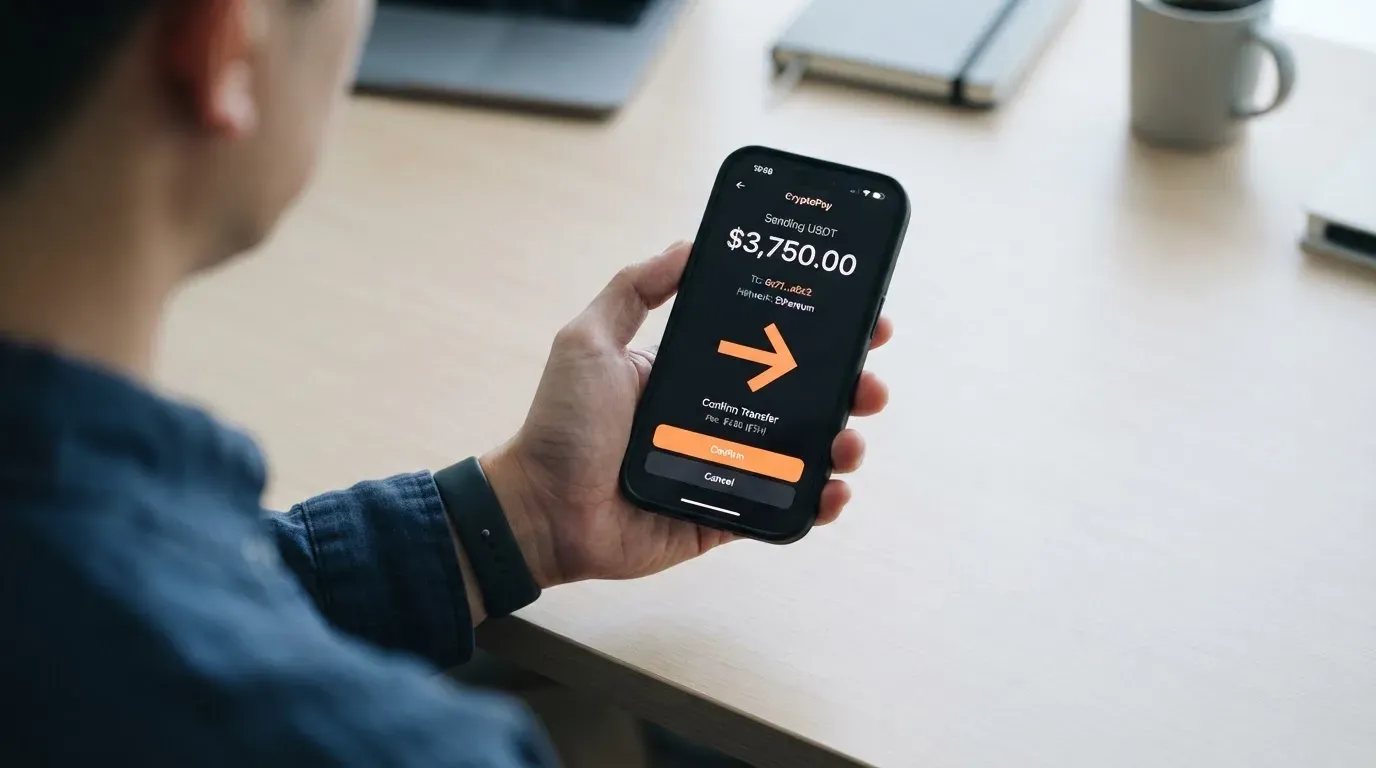
What you do instead is pay a bill. The cardholder agreement carries the late payment fee of up to $35, a first late fee of up to $25, and a returned payment fee of up to $35. There is also a cash advance: $10 or 3%, whichever is greater, at 29.49% APR, allowed at ATMs — though the ATM fee and ATM limit are not published.
Withdrawing money is not applicable to a credit card, because there is no stored balance to withdraw. Closure and payoff terms are set out in the cardholder agreement, which governs how you settle the account when you stop using it.
So the crypto enters your life on the way back, not on the way in. Rewards are paid instantly in Bitcoin or in 50+ cryptocurrencies on Gemini, and the choice is changeable at any time. The tiers are 4% on gas, EV and transit up to $300 a month, 3% dining, 2% groceries, 1% everything else, plus 10% Vault Rewards at some merchants, which are capped and vary. Referral terms are $50 in crypto each, $250 per five referrals, up to 50 a year.
The page also names Solana Edition, XRP Edition and Bitcoin Credit Card variants with “Same Benefits”, and a World Elite Mastercard. If you were hoping one of those editions gave you a different funding model, it does not — the same benefits means the same benefit structure, not the same product type.
Paying with it every day
Everyday use is where this card scores best, and the reasons are concrete. Gemini’s support states that the card works with Apple Pay, Google Pay and Samsung Pay. That matters more than it sounds: a tokenised mobile wallet number is device-specific, stored in the phone’s Secure Element rather than on the vendor’s servers, and each payment carries a one-time dynamic security code. An issuer can also restrict a tokenised number for magnetic-stripe, phone or website use, so what works in the phone may not work in a terminal that takes the physical card.
- Apple Pay, Google Pay and Samsung Pay are supported.
- Cash advance is available at ATMs, at 29.49% APR plus $10 or 3%.
- Unofficial reporting describes both a metal physical card and a virtual card.
- The Gemini app on the US iOS App Store listing shows 4.8 out of 5 from 110K ratings; it supports iPhone on iOS 17.2+, Apple Watch and Apple Vision, in English, French, German, Italian, Portuguese and Spanish. Google Play was not read.
The language list is worth a second look if you read Russian. There is no Russian among the app’s listed languages, and the card itself is US-only on official wording — a double narrowing for readers who are not in the US.
Blocked categories are not stated on the page, though some instant-reward exclusions do apply, meaning not every purchase earns its advertised tier. That is a detail to watch in practice: rewards that depend on merchant coding are less predictable than a flat discount.
On disputes, the cardholder agreement has a “Billing Rights” section covering the process for disputing transactions. Treat the dispute route as documented in the cardholder agreement. It matters because one recurring complaint theme involves disputes denied after card data was compromised — see below.
For scale, a declined authorisation can leave a hold on funds that stays for several days, typically up to seven. If a payment is refused at a till, the money may be unavailable even though it never left your account.
What can go wrong
This is the part that pulled the reliability mark down to 3 out of 10, and I want to be precise about what is official and what is not. Official incidents are not stated on the card’s pages. Everything below is user and review-site reporting, and it is the reason I hesitate.
Trustpilot reads 1.3 out of 5 across 1,513 reviews, 212 of them in the last 12 months, read on 20 October 2026. Gemini replied to 3% of negative reviews. An earlier reading in the same material put the figure at roughly 1.5 out of 5 across about 1,475 reviews. Either way, the level is the same.
| Complaint theme | Detail as reported |
|---|---|
| Frozen accounts and holds | Accounts locked after a third-party fraud email; frozen accounts and withdrawal holds reported Aug-Sep 2026, up to 35 days |
| Support channel | Slow or absent support, no phone line, Jul-Sep 2026; a card that could not be activated after sitting unopened; slow email-only support |
| Credit limits | Low starting limits unofficially reported at $1,000-$3,000, and available credit slow to update after payments |
| Disputes and declines | Disputes denied after card data was compromised (Oct 2026); repeated declines over three months (Oct 2026); card closed without explanation (Sep 2026) |
| App and billing | App stopped showing balance and payment history after a July payment; late fees charged after app glitches (Jul 2026) |
| One fraud case | A January 2026 review describes a fraud freeze still unresolved two months later |
Behind those complaints sits a structural point. The card is issued by WebBank, and Gemini’s corporate and licence details are not on the card page. So the entity whose credit line you carry, and the brand whose app you use, are related but not the same thing, and only one of them is documented on the pages you are reading.
Security features — freeze in the app, two-factor authentication, spending controls — are not stated on the card page. Note the nature of the account: it is a credit account, not crypto custody. Your coins are not held against this card line; the rewards arrive to your Gemini account after the fact. That reduces the custody risk described below to the rewards portion only, which is a genuine point in the card’s favour. It does not reduce the credit risk or the support risk.
The frozen-account theme is worth understanding on its own, because it applies well beyond crypto. KYC rules require regulated businesses to verify customers and assess risk as part of anti-money-laundering and counter-terrorism-financing law, including ongoing monitoring and suspicious-activity reporting. If due diligence cannot be completed, EU rules require the institution to refrain from the transaction or relationship and, where necessary, end existing relationships — which is exactly why accounts get closed or frozen pending documents. A fraud email that triggers a freeze is the system working as designed, at the moment it is least convenient.
What to take instead
None of these are the same product, and it is worth saying why before comparing scores. Gemini scores 4.9. The three below score 7.1, 6.6 and 4.8 — but a higher number on a different card is not a reason to switch if your problem is geography.
| Alternative | Score | What it is | Funding model |
|---|---|---|---|
| Gemini | 4.9 / 10 | Mastercard World Elite credit card, issued by WebBank | Credit, repaid in fiat; crypto only as rewards |
| Lava | 7.1 / 10 | “Lava Card”, spend at 150 million merchants in 150+ countries; network and physical/virtual not stated | Deposits in local currency or stablecoins; networks not stated |
| GoMining | 6.6 / 10 | Virtual card now, physical “coming soon”; network and card currency not stated | Top up with BTC, USDT, GOMINING and other coins |
| Kinesis | 4.8 / 10 | Virtual card; network not stated officially, currency not stated | Instant conversion of gold, silver, crypto and C1USD at the point of sale |
Lava is the one that looks closest to what a “crypto card” usually means. It takes deposits in local currency or stablecoins, has no annual fees, no FX fees and no FX spread, and offers up to 5% back in bitcoin on every purchase — though the conditions on that rate are not stated. Eligibility is not stated on the page, so I cannot tell you who gets one.
GoMining is the most different: you can top up with actual coins, and its cashback is paid in mining power rather than cash, with the rate rising with VIP level and described as up to 5%. Its own page notes that products may not be available in your jurisdiction. Opening a card grants a free 1 TH miner, which is a real incentive with a real ongoing commitment attached.
Kinesis is a virtual card tied to a metals account: instant conversion of gold (KAU), silver (KAG), crypto and C1USD at the point of sale, with 2% cashback in gold and six months free access to the cashback plan from launch. Its fees are not stated; the site links a general fees page that was not read.
If you are outside the US, the interesting comparison is not “which scores higher” but “which is even open to you”. If you are inside the US with clean credit and a habit of paying in full, the comparison is more about whether the 4% fuel tier and the virtual card in your phone beat an existing no-foreign-fee credit card.
Who I would recommend it to
To a US resident with an established credit history who pays the balance in full every month, spends meaningful amounts on fuel, charging and transit, eats out often, and will happily take crypto as a reward rather than as a funding source. For that person the maths is straightforward: no annual fee, no foreign transaction fee, 4% on the first $300 of fuel, EV and transit, 3% dining, 2% groceries, and money back in Bitcoin or one of 50+ other coins, changeable whenever.
I would not recommend it to someone carrying a balance, at any APR. At 34.49%, the rewards do not come close to compensating. Nor to anyone outside the United States, since no other country is named. Nor to someone whose priority is spending crypto directly rather than earning it, because this card cannot do that at all.
And I would be cautious — for anyone — about the support picture, which is the single thing that separates this from an otherwise competent card. A frozen account with a 35-day hold and no phone line is a bad afternoon. If you travel, work across time zones, or simply cannot afford to have a purchase blocked while support takes a day to answer, weigh that against the rewards before applying. The reward tiers are the strongest argument for the card; the complaint record is the strongest argument against it, and both are true at once.
Frequently asked questions
What is the Gemini card?
It is a Mastercard World Elite credit card issued by WebBank, aimed at residents of the United States. It is not a prepaid crypto card: you do not load coins onto it, and you repay it in US dollars like any other credit card. Crypto enters the picture as rewards, paid instantly in Bitcoin or 50+ other cryptocurrencies on Gemini, and the coin you receive is changeable at any time.
Is Gemini a bank, and who actually issues the card?
The card page says only that it is issued by WebBank. Gemini’s own corporate and licence details are not on that page. Gemini is the brand and the app you use; WebBank holds the credit account and issues the card under Mastercard’s licence. That distinction matters when something goes wrong, because it is not always clear from the interface whose problem you are dealing with.
Who can apply for the Gemini card?
Gemini’s support states that residents in all 50 US states are eligible to apply, with terms and restrictions applying. Unofficial sources describe a hard credit pull and a valid US Social Security Number as a requirement, though Gemini’s own text does not mention a Social Security Number. If you live outside the US, nothing on the card’s pages suggests an opening for you.
What is the interest rate and are there hidden fees?
There is no annual fee and no foreign transaction fee, but purchases carry 16.49% to 34.49% APR, variable and set by your creditworthiness at opening. Cash advances are 29.49% plus $10 or 3%, whichever is greater. A late payment costs up to $35, a returned payment up to $35, and a second replacement card within 12 months costs $50.
How do I top up the Gemini card?
You do not — it is a credit card, not a prepaid one, so there is no stored balance to load and no coin or network to choose. You pay the bill in fiat. Cash advances are possible at ATMs at the same 29.49% rate plus the $10 or 3% fee, though the ATM limit is not published. Crypto arrives instead as rewards of 1% to 4% depending on the spending category.
Can I add the Gemini card to Apple Wallet?
Gemini’s support says the card works with Apple Pay, Google Pay and Samsung Pay, which is the strongest part of the card: paying through the phone uses a tokenised number stored on the device rather than the card number itself. The card page itself does not list the wallets, so if this matters to you, confirm it before applying. Physical card availability is described only in unofficial reviews.
Is the Gemini card safe?
Two things to weigh. This is a credit account rather than crypto custody, so the card line is not exposed to exchange hack risk — but your app account holds your crypto, and one-sided support is a real problem: 3% of negative Trustpilot reviews got a reply, and there is no phone line. Card-level controls such as app freeze, two-factor authentication and spending limits are not stated on the card page, so confirm them before you rely on them.
What are the rewards and how much are they worth?
Four percent on the first $300 per month of gas, EV and transit, resetting on the 1st, then 1% beyond that; 3% dining; 2% groceries; 1% everything else; and 10% Vault Rewards at some merchants, which are capped and vary. Referral terms are $50 in crypto each and $250 per five referrals, up to 50 a year. Some instant-reward exclusions apply.
Is the Gemini card worth it?
For a US resident who pays in full, spends heavily on fuel, charging and transit, and takes payment in crypto as a perk — yes, the fees are genuinely zero and the tiers are good. For anyone carrying a balance, living outside the US, or wanting to spend crypto directly — no, and the 16.49%-34.49% range plus a 1.3-out-of-5 Trustpilot score makes it a poor choice for you.
How do I close the account and get my money out?
Closure and payoff terms are set out in the cardholder agreement dated 1 April 2026, which is the document that governs this. Withdrawing money is not applicable in the usual sense, because a credit card has no stored balance to withdraw — what remains is the amount you owe, and the agreement covers how it is settled. Read that document before you carry a balance.
Credit and cashback card reviews – cryptocardcheck
Content created by the «cryptocardcheck» team