
A Visa card you fund with stablecoins, aimed at Africa and emerging markets — useful, but young and thin on safeguards
 Available in US
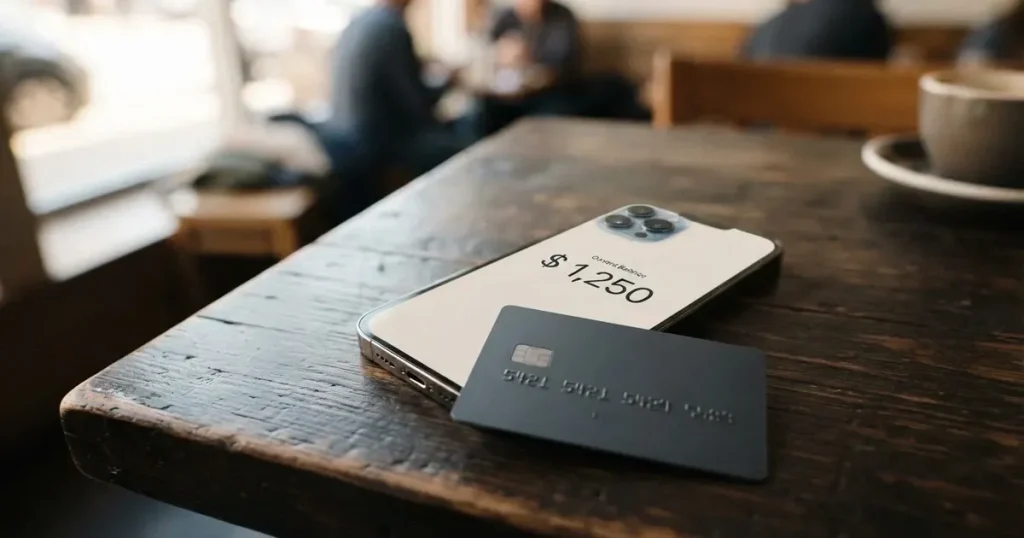
The HoneyCoin card is a Visa debit card you load with stablecoins and spend like an ordinary bank card. It costs nothing to issue, nothing per month, and nothing when you pay in US dollars. The catch is that the card is young, its public pages are thin on the details that matter when something goes wrong, and the company’s own app store listing shows a single rating. I scored it 6.7 out of 10 — solidly in the middle, better than some alternatives but not the one I’d put my own money behind without thinking.
The conditions described here are current as of October 28, 2026.
| Criterion | Mark | Why |
|---|---|---|
| Who can get it | 8 / 10 | Accepted wherever Visa is accepted; live in 45+ countries; some countries, merchants, and MCCs may be restricted, but no list is published |
| Cost | 7 / 10 | Issuance, monthly and yearly free; USD transactions 0%; up to 3% FX spread in other currencies; crypto conversion fee not disclosed |
| Top-up options | 6 / 10 | Mobile money, bank transfer, card, on-chain stablecoins; the token table lists only USDC on Base, the FAQ also mentions USDT |
| Reliability and complaints | 5 / 10 | HoneyCoin, Inc., Nairobi; issuer not named; card payments in the consumer app were paused for months due to card-testing attacks (August 2025); App Store rating 1.0 from 1 rating |
| Everyday use | 7 / 10 | Virtual card instantly, physical 2–3 weeks; Apple Pay and Google Pay; ATM support not disclosed |
| Total | 6.7 / 10 |
Who this suits: users in Africa and emerging markets who already hold stablecoins or use mobile money and want a Visa number that works at ordinary merchants. Who it does not suit: anyone who needs a bank with a named issuer, a published ATM policy, or a long track record of not freezing payments.
Will they give you the card?
Yes in most places, but the card’s public pages don’t tell you where the exceptions are. The company says the card is accepted wherever Visa is accepted, and that it is live in 45+ countries. But it also says that “some countries, merchants, and MCCs may be restricted” — and does not publish the list. A merchant category code (MCC) is a four-digit number that classifies a business by what it sells, assigned when the business starts taking cards; gambling (MCC 7995) is one that many issuers block on specific cards by policy rather than by law, and the blocked list varies by issuer. HoneyCoin does not say which MCCs it blocks.
That silence matters more for you than it sounds. If you are in a country the card quietly does not support, or you try to pay somewhere that declines foreign-issued cards, you will find out at the till, not in advance. The Binance-style workaround of “just try it” is how people discover this. My advice: put a small amount on the card, test it at one ordinary shop before you depend on it.
One structural detail worth understanding. A payment card number starts with a 6- or 8-digit issuer identification number (BIN/IIN) that says which institution and country issued the card; the rest is an account identifier and a check digit. Merchants can look up that BIN and may apply extra scrutiny if the issuer country differs from your billing address. This is why a card issued in one country can look “foreign” to a shop in another. HoneyCoin’s issuing bank is not named — the site only refers to “licensed partners” — so I cannot tell you which country your BIN will carry.
How to get it
Sign up, verify your identity, and you have a virtual Visa card immediately. Identity verification is required before use. What documents you need, whether proof of address is required, and what the minimum age is — the card does not state. For context, prepaid and debit cards in this category are generally available to adults (18+), and some issuers set higher limits, so assume an age check exists even though the page doesn’t spell it out.
What you get is a virtual Visa card denominated in US dollars. A physical card is also available, but it is not instant: physical cards take about 2–3 weeks to arrive. The cost of the physical card is not stated. There is a single tier, not a ladder of paid plans.
KYC itself is not optional anywhere in this category. In the EU, customer due diligence covers name, address, date of birth, nationality and identity documentation, a sanctions check, the purpose of the relationship, and whether you are a politically exposed person. In the US the customer identification programme requires name, date of birth, address and an identification number. Nationality is recorded and screened separately from residence, because sanctions screening is often applied to citizenship and country of birth as well as country of address. If due diligence cannot be completed, EU rules require the institution to decline the transaction or, where necessary, end the relationship — which is why accounts close or freeze while documents are pending. I am not going to tell you how to get around any of this; the point is that the check is real and it is where many applications stall.
Fees: what it really costs
The card is free to hold and free to spend in dollars. Everything else is where the money goes. The costs table below is drawn from what the card actually publishes; where a number is missing I have said so rather than guessed.
| Fee or limit | What the card says |
|---|---|
| Issuance | Free |
| Monthly / yearly fee | Free |
| Spending in USD | 0% |
| Other currencies | FX spread up to 3% |
| Crypto conversion fee | Not stated |
| ATM withdrawal fee | Not stated |
| Default daily limit | 10,000 USD/day for both spending and loading |
| Monthly limit | Not stated; increases with usage |
Now three everyday payments, with the fees that apply:
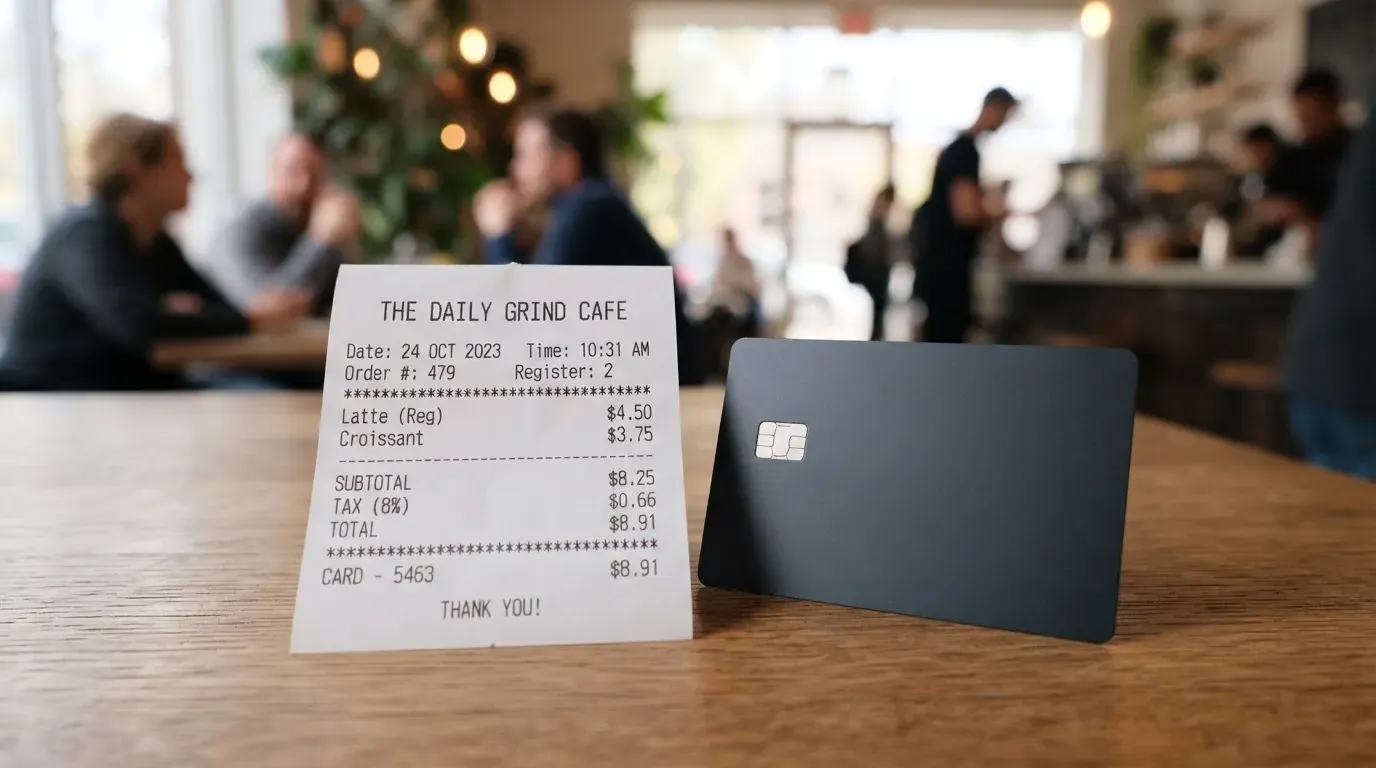
- Coffee in your own country, priced in dollars. If the local currency is the dollar, the fee is 0%. This is the cleanest case.
- Anything priced in euros, pounds or naira. A foreign exchange spread of up to 3% applies. On a 20 euro purchase that is up to 0.60 in cost, charged implicitly in the rate you get rather than as a line item.
- Anything bought with crypto you just received. The crypto conversion fee is not stated on the card’s public pages. You are spending from a USD balance backed by stablecoins, but the rate at which your crypto became that balance is the part I cannot price for you.
One more category cost belongs to the blockchain, not to the card: when you send stablecoins on-chain to top up, the network itself charges a gas or bandwidth fee. That is set by the network you use, not by HoneyCoin.
What does not cost extra: the card itself, the month, the year, and a USD transaction. There is no cashback or rewards stated. There is a single tier — you are not choosing between Classic, Pro and Max plans with different monthly costs; the only variable is that limits rise with usage.
Top up: getting money onto the card
Four methods, and one of them is more complicated than the marketing suggests. The card lists mobile money, bank transfer, card, and on-chain stablecoins. Fees, minimums, and who pays the network fee are not stated, so I cannot tell you what a top-up costs.
The on-chain route needs care. The token table lists only “USDC on Base”. The FAQ adds USDC and “select other assets where enabled”, and the funding section also mentions USDT — so the set of assets you can actually send depends on the app you are looking at. Sending to the wrong network is the classic way to lose money here: blockchain transfers are irreversible, so a deposit sent on a network the provider does not support, or to an address belonging to a different network, can be lost or need manual support recovery with no guarantee. Two technical facts worth knowing before you touch a transfer: on Ethereum, gas is paid only in ETH, so a wallet holding USDT but no ETH cannot send; and Tron prices fees by burning TRX rather than paying gas. Circle also stopped supporting USDC on Tron in February 2024, so “USDC over TRC20” is not a native option.
The other top-up methods — mobile money and bank transfer — are the ones that matter most in the markets this card targets, because they need no crypto wallet at all. A card transfer from an existing bank card is the third. Site wording also mentions “payout to local accounts or wallets on demand” at platform level; withdrawal fees from the card balance are not stated.
On-chain transfers are not censorship-proof either. Tether says it disables tokens in wallets on the OFAC sanctions list and has frozen funds tied to illicit activity. That is a feature for compliance and a risk for you if a wallet you use is ever frozen.
Paying with it every day
For spending, the experience is ordinary: Apple Pay and Google Pay work, and the card is a Visa. Once loaded, the mechanics are simple — the card spends your stored balance and cannot overdraw, because in the pre-loaded model it draws on a balance you already funded. This is how most crypto cards behave: crypto is converted and loaded as fiat balance, rather than the card asking your bank to withdraw funds at the moment of purchase.
Getting it into a phone wallet is standard. Apple Pay replaces the card number with a device-specific Device Account Number stored in the Secure Element, never on Apple servers, and each payment uses a one-time dynamic security code. The issuer can restrict a tokenised number — for example blocking it on phone or website use — so in theory your virtual card could be limited in ways the plastic one is not.
Two things the card does not tell you: whether cash withdrawal at ATMs works and what it costs, and whether there is a dispute process if a payment goes wrong. For disputes generally, a chargeback is a refund ordered by the card issuer, with reason codes such as fraud or duplicate billing — but whether HoneyCoin offers one, and how prepaid-card coverage applies, is not stated. In the US, debit card reversal rights come from Regulation E and credit card rights from Regulation Z; prepaid-card coverage varies and should not be assumed. Do not assume your protection transfers to a card like this.
One more everyday detail: online payments may trigger a 3-D Secure check, Visa’s brand for it being Visa Secure. The issuer assesses risk and either approves frictionlessly or challenges you with a one-time code or biometric. And if a merchant’s address-verification check fails — it compares the numeric parts of the billing address you type against issuer records and is generally unavailable for foreign-issued cards — the payment can decline even though everything is in order. That is a known quirk of foreign-issued cards, not a sign you did anything wrong.
What can go wrong
This is where the card earns its lowest mark, and you should read it before loading anything.
The card payments were paused for months. In August 2025 the company’s own blog reported that card payments on the consumer app had been paused for months because of card-testing attacks — the practice of testing stolen card numbers against merchants. Card-testing attacks are a fraud technique that hits card programmes, and the result here was that ordinary users could not use the card they had loaded. This is the single most important fact in the review. It tells you that operational fraud at the programme level is not hypothetical, and that when it happens, you wait.
There is no public complaint record to check. I found no Trustpilot or Reddit reviews for HoneyCoin — the Trustpilot results that come up are for an unrelated company called Honeycard. With no independent complaint history, you cannot tell whether people are happy or quietly losing money. The absence of complaints is not the same as the absence of problems.
The app has almost no public rating. The US App Store listing for the consumer app shows 1.0 from 1 rating. One rating tells you nothing either way, but it tells you the app is new to public scrutiny.
The company is real but the issuer is not named. HoneyCoin, Inc., with starting data under Quicknode Technologies Ltd, is based in Nairobi, Kenya (The Cube, Riverside Drive) and was founded in 2021. It says it is “licensed in key markets including the US, Canada, the EU, and several African jurisdictions” — but it does not name the bank that issues the card, only “licensed partners”. When you cannot see the issuer, you cannot see whose balance you are trusting.
What they say about safeguarding. The company states client money is safeguarded and held completely separate from its own, with 2FA on login and on privileged actions, and PCI DSS Level 1 compliance. A freeze function is not mentioned on the security page. In the EU, e-money institutions must safeguard customer funds by segregating them in dedicated accounts or insuring them — but such funds are not the same as bank deposits and may not be covered by deposit guarantee schemes. Treat the balance as held by a partner, not as a bank deposit.
Support is aimed at institutions. 24/7 support is offered for institutional and corporate clients; for individuals the listed contacts are email addresses (sales and api at honeycoin.app). If your card is frozen mid-payment, a self-serve resolution is what you should expect.
Category-level risks that apply to any card like this. Visa and Mastercard do not issue crypto cards to consumers themselves; they license issuers and can suspend a programme. Visa terminated its global agreements with FTX on 13 November 2022, and the FTX US debit card was wound down by its issuer. WaveCrest, a Visa issuer that supplied crypto card brands, was suspended by Visa in Europe in 2018, closing all its Visa programmes. Programme closures follow a pattern: a notice period, then spending and loading stop, then users are asked to withdraw remaining balances. Keep your balance small enough that you could withdraw it quickly if that ever happened.
What to take instead
If you need a card that is unambiguously regulated and named, a conventional international Visa is the safer pick — if you are eligible. Here is how the main alternatives compare, all figures as published by each provider.
| HoneyCoin | International Visa Card | UNi Card | Whop Cards | |
|---|---|---|---|---|
| Score | 6.7 / 10 | 6.7 / 10 | 6.1 / 10 | 5.2 / 10 |
| Network / type | Visa, virtual + physical | U.S.-issued Platinum Visa, virtual; physical “coming soon” | Mastercard, multicurrency | Visa |
| Issuance / monthly | Free / free | $5 one-time / free (Classic free, Pro $9/mo, Max $19/mo) | Not stated / no annual fee | Not stated / “no extra fees” |
| USD spending | 0% | Free on all plans | No annual or FX fee | Not stated |
| FX | Up to 3% spread | Visa rate + 2% FX fee | Live OTC rates, no hidden exchange fees | Not stated |
| Rewards | None stated | None stated | Spend-to-Earn up to 3% | 5% cashback at select merchants (Uber) |
| Funding | Mobile money, bank transfer, card, on-chain stablecoins | USDC/USDT into USD account; USD, EUR, SEPA, SWIFT, FedNow | Not stated | Whop balance, stablecoin-collateral backed |
| Availability | 45+ countries, some restricted | Excludes residents of ~17 named countries | Not stated | 31 US states for consumers |
International Visa Card is the closest thing to a well-litigated alternative. It is a U.S.-issued Platinum Visa, virtual, paying in USD, with a physical card “coming soon”. It is not open to residents or legal registrants of Belarus, mainland China, North Korea, Cuba, India, Iraq, Iran, Israel, Myanmar, Nepal, Nicaragua, Russia, Syria, Turkey, Ukraine, Venezuela or Vietnam; FATF grey-list countries are reviewed case by case with compliance approval; and purchases are blocked in North Korea, Cuba, Iran, Russia, Syria, Ukraine and Venezuela. The rule is by residence or registration, not citizenship. Its fees are $5 to issue, no maintenance on Classic, $9/month for Pro and $19/month for Max; USD use is free on all plans, foreign currency is the Visa exchange rate plus a 2% FX fee, and deposits are free. If you are eligible and can tolerate a paid tier, the named US issuer is worth more than a cheaper unnamed one.
UNi Card is a Mastercard that spends from the UNi.Global balance and converts assets at “live OTC rates” with “no hidden exchange fees” and no foreign transaction fee. Its draw is rewards — “Spend-to-Earn” up to 3%. But its eligibility is not stated, its funding routes are not stated, and whether you get a physical or virtual card is not stated. It scores 6.1, below HoneyCoin, mostly because too much of the basics are missing.
Whop Cards score lowest at 5.2. They are Visa cards spending from a Whop balance, backed by stablecoin collateral from a linked wallet, with 5% cashback at select merchants currently including Uber. But the availability is narrow and specific: consumers in 31 named US states, businesses in 41; unsupported consumer countries include Belarus, mainland China, Cuba, Hong Kong, India, Iran, Iraq, Israel, Myanmar, Nepal, Nicaragua, North Korea, Russia, Syria, Turkey, Ukraine, Venezuela and Vietnam; and whether the limit is citizenship or residence is not stated. For most people outside the US this is not an option.
Who I would recommend it to
I would recommend HoneyCoin to someone who already deals in stablecoins or mobile money, lives in one of the 45+ countries it operates in, and wants a Visa number for everyday spending without opening a traditional bank relationship. For that person the card is genuinely useful: it is free, it is 0% in dollars, it works with Apple Pay and Google Pay, and it turns a balance they already have into everyday purchases.
I would not recommend it as your only card, and I would not load it with money you cannot afford to have frozen for a few months. The reasons are specific, not vibes: the issuer is unnamed, card payments were already paused once for months, ATM support is undisclosed, withdrawal fees are undisclosed, the crypto conversion fee is undisclosed, and there is no independent complaint history to fall back on. A card that is free to hold is free partly because it is not carrying the cost of a full banking relationship.
If your situation is “I cannot open a normal bank card where I live,” this may be one of the few options in front of you, and the comparison above is not really a comparison — it is a list of alternatives that may be closed to you too. In that case: test it small, keep the balance low, read the app’s own fee screens before you send anything on-chain, and save the support email addresses now while you are thinking about it.
Frequently asked questions
What is the HoneyCoin card?
The HoneyCoin card is a Visa payment card you fund with stablecoins or, in some markets, mobile money and bank transfers. You convert or deposit money into a USD balance and the card spends that balance, so it behaves like a prepaid card rather than a normal bank debit. It is issued by HoneyCoin, Inc., a company founded in 2021 and based in Nairobi, Kenya. The card works wherever Visa is accepted, subject to some country, merchant and category restrictions the company does not publish.
Is HoneyCoin a bank?
No, not as far as its public pages say. HoneyCoin describes itself as licensed in key markets including the US, Canada, the EU and several African jurisdictions, and refers to “licensed partners” without naming the bank that issues the card. It is best understood as a fintech that runs a card programme through a licensed issuer, not as a bank holding your deposits. That distinction matters for deposit-guarantee purposes.
How do I get the HoneyCoin card?
You sign up for an account, complete identity verification, and receive a virtual Visa card immediately. A physical card is also available but takes about 2–3 weeks to arrive, and its cost is not stated. The card itself is free to issue with no monthly or yearly fee. Identity verification is required before use, though the specific documents and minimum age are not published on the card’s pages.
Does the HoneyCoin card require KYC?
Yes. Identity verification is required before use, which is standard across this category and required by anti-money-laundering law. In the EU that process covers name, address, date of birth, nationality, ID documentation, a sanctions check, and whether you are a politically exposed person; in the US it covers name, date of birth, address and an ID number. The card does not publish which specific documents it asks for.
How much does the HoneyCoin card cost?
Issuance is free and there is no monthly or yearly fee. Spending in US dollars costs 0%. Spending in other currencies carries an FX spread of up to 3%. The crypto conversion fee and any ATM withdrawal fee are not stated on the card’s public pages, so if either matters to you, check the app’s fee screen before you rely on the card. Network fees for on-chain deposits are paid to the blockchain, not to HoneyCoin.
How do I top up the HoneyCoin card?
Four methods are listed: mobile money, bank transfer, card, and on-chain stablecoins. The token table lists only USDC on Base, while the FAQ also mentions USDT and “select other assets where enabled”. Fees, minimum amounts and who pays the network fee are not stated. Because blockchain transfers are irreversible, sending on an unsupported network or to a wrong-network address can lose the funds or require manual recovery with no guarantee.
Can I use the HoneyCoin card at any shop?
It is accepted wherever Visa is accepted, which is most ordinary shops and online merchants. The company warns that “some countries, merchants, and MCCs may be restricted” but publishes no list, so you cannot check in advance whether a specific merchant or country is excluded. Some merchants also decline prepaid or foreign-issued cards because the BIN lookup reveals the card type and issuer country — a routine technical fact, not a judgement about you.
Is the HoneyCoin card safe?
It has the safeguards you would expect from a regulated fintech: client money said to be held separately from company funds, 2FA on login and privileged actions, and PCI DSS Level 1 compliance. But two things temper that. Card payments on the consumer app were paused for months in 2025 because of card-testing attacks, and the issuing bank is not named. Visa itself terminated FTX’s agreements in 2022, and WaveCrest’s Visa programmes were closed in 2018 — card programmes can end.
Is there cashback or rewards on the HoneyCoin card?
No cashback or rewards are stated. The card is a single tier with no paid upgrade path, and the only published variable is that limits rise with usage. By contrast, UNi Card advertises spend-to-earn rewards up to 3%, and Whop Cards advertise 5% cashback at select merchants. If rewards are a priority, HoneyCoin is not the card for it.
What are the HoneyCoin card limits?
The default limit is 10,000 USD per day for both spending and loading, and the card says increases come “with Usage”. You can set lower custom limits in the app, and higher limits are available after review. A monthly limit is not published. Whether there is a separate limit on the crypto converted per transaction, or on ATM withdrawals, is not stated.
App and neobank card reviews – cryptocardcheck
Content created by the «cryptocardcheck» team