
A prepaid crypto card that is still half-built: solid 1% cost in USD, but the physical card is not here yet
 Available in US

Spending crypto through a virtual card is exactly what YPT is built for. If your income arrives as USDT, USDC, BTC or ETH and your usual bank keeps refusing to serve you, a card like this solves a real problem, and YPT’s fee structure is among the more transparent in the category: 1% when you pay in the card’s own currency, 2.2% when you don’t. That is the good news, and it is genuine good news in a sector full of cards that make you guess.
The rest is thinner. The physical card is labelled “IT WILL BE PUT INTO USE SOON” in the card’s own navigation. The ATM feature carries the same wording. The issuing bank is never named. No tiers, no rewards, no pricing for the card itself. My score is 7.4 out of 10 — above average for the category, mostly because the numbers that exist are clear, and dragged down by the parts that plainly do not exist yet.
The conditions described here are current as of October 28, 2026.
| Criterion | Mark | Why |
|---|---|---|
| Who can get it | 9 / 10 | Only five places are excluded as a mailing address; a billing address is supported |
| Cost | 7 / 10 | 1% in USD, 2.2% in other currencies; $0.20 per small authorisation, $0.5 per decline; the price of issuing the card is not disclosed |
| Top-up options | 7 / 10 | USDT, USDC, BTC and ETH, converted at payment; networks unstated; deposits must be above 1U |
| Reliability and complaints | 7 / 10 | Launched by YPT and RedotPay; assets held by a licensed trust company with $50 million of insurance; issuer unnamed; no complaints found |
| Everyday use | 6 / 10 | Virtual card with Apple Pay and Google Pay; physical card still marked “IT WILL BE PUT INTO USE SOON” |
| Total | 7.4 / 10 |
Who it suits, and who it does not
YPT is for one specific situation: you hold crypto, you want to spend it as ordinary money, and either a conventional bank will not open an account for you or opening one is a bureaucratic slog. If that is you, the card is genuinely useful today, because the virtual card is live, it works with Apple Pay and Google Pay, and the fee is a flat 1% in dollars.
It is not for you if you need a physical card in your wallet next week, if you withdraw cash regularly, or if you want to know which bank actually stands behind the plastic. It is also not for you if you plan to hold a large balance on it for a long time without asking hard questions about who holds your funds — more on that further down.
There is a second category to be honest about: people who want to spend BTC, ETH and stablecoins via a virtual card specifically, and do not need anything else. For them the fit is close to exact. Everyone else should read the fees and the risks sections before deciding.
Will they give you the card?
Almost certainly, yes. This is the strongest criterion on the sheet, and the reason is simple: YPT’s help centre names the places it will not ship to, and the list is short.
Not supported as a mailing address:
- Egypt
- Tunisia
- Palestine
- Puerto Rico
- Tanzania
The same page makes an important distinction that is easy to skim past and expensive to miss: a billing address is supported. In other words, the exclusions above relate to where the card is posted, not to where you live or what nationality you hold. If you are in one of those five places, your address may still be accepted for billing purposes — but that is not the same as receiving a card, and you should not treat the two as interchangeable.
What the public pages do not say is anything about the KYC tier structure, whether nationality is screened separately from residence, or what happens at the edges of the list. Where a card provider’s own pages are silent, silence is not permission; it just means you will find out at application time.
For context on why this matters more broadly: card payments run on rules that most people never see. A card number starts with a 6 or 8 digit issuer identification number, and a merchant can look it up to see which institution and country issued the card. If the issuer country does not match the address the customer typed, some merchants apply extra scrutiny. That is the ordinary background against which any crypto card operates, and it is why “where is the card issued from” is never a silly question.
How to get it
The application runs through electronic know-your-customer checks handled by Sumsub. You supply your full legal name, your date of birth, and an identity card, passport or driver’s licence. The provider may ask for more than that if it needs to. Third-party descriptions of the card also state that identity verification is required for compliance reasons — that is consistent with what the official pages describe, though it comes from an unofficial source and is not confirmed by the card itself.
Everything else about the sign-up is thin. Here is what the public pages do and do not tell you.
- A virtual card is described, and it is the part that is actually usable now.
- A physical card appears in the site’s navigation with no details attached, and is marked “IT WILL BE PUT INTO USE SOON”.
- Whether the card is Visa or Mastercard is not stated.
- The currency of the card itself is not stated, though the settlement currency is USD (see the fees section).
- Delivery times and destinations are not stated.
- Whether KYC levels or tiers exist is not stated.
So the honest version of “how do I get it” is: apply online, pass an identity check, receive a virtual card in your account, and treat the physical card as an announced feature rather than an existing one. If your daily life runs on having a card in your wallet — a till that will not take a phone, a shop that wants a physical card — this card cannot serve you yet, whatever the marketing pages imply by listing it.
Fees: what it really costs
YPT publishes its fees. That is rarer than it sounds, and it deserves credit before the caveats, which deserve space too.

| Fee or limit | Value |
|---|---|
| Issuance (price of the card) | not stated |
| Monthly fee | not stated |
| Payment in the card’s default currency (USD) | 1% |
| Payment in any other currency | 2.2% |
| Small-amount authorisation, $0 to $1 | $0.20 per transaction; first 5 per card per month waived |
| Declined transaction | $0.5; first 3 per card per month waived |
| ATM withdrawal | not stated; “ATM offline withdrawal” is listed with the note “It will be put into use soon” |
| Per-transaction limit (USD card) | $100,000 |
| Daily limit | unlimited |
| Monthly limit | not stated |
Two of these deserve a second look. The small-amount authorisation fee is the one that catches people out. It applies to any transaction between $0 and $1, costs $0.20, and the first five per card per month are waived — which sounds generous until you notice that it is a *per card* allowance, and a coffee is exactly the kind of purchase that falls in that band. If you buy four coffees a day, the fifth one is costing you more than the coffee.
The declined-transaction fee is $0.5, with the first three per card per month waived. Declines happen for ordinary reasons: a merchant declines a foreign-issued card, a hotel places a hold the balance will not cover, an online shop rejects the billing address. Note also that a decline is not always clean — an authorisation that later fails can leave a hold on your funds for several days, typically up to seven.
The ATM situation is genuinely unresolved. “ATM offline withdrawal” appears in the feature list, and so does a note saying it will be put into use soon; the physical card and its ATM withdrawals carry the same wording. Which feature the note applies to is unclear, and no fee is published either way. Treat cash as unavailable.
Let me walk through three everyday payments, because percentages only mean something once you have something to multiply.
A $40 supermarket shop in the United States. The card settles in USD, which is its default currency, so you pay the 1% rate: $0.40. No small-amount fee, because the transaction is well above $1. No decline fee, because it cleared. Total cost, $40.40. This is the case the card is designed around, and it is handled cleanly.
A €25 dinner in Berlin. The card is not in euros, so the non-default rate applies at 2.2%: €0.55 — though the charge is converted to dollars on your statement, so the real figure is whatever $0.55 becomes at that day’s rate. Expect your bank or the merchant’s bank to add its own spread on top of that. Cross-border spending is where the “1% card” marketing stops being accurate, and 2.2% plus a currency spread is a normal, respectable number, not a bargain.
A $0.60 app subscription. This is the case the $0.20 fee exists for. You pay $0.20 on top, and if it is your sixth such charge this month the fee applies in full. A $0.20 charge on $0.60 is a third of the price, and it is the clearest example of a fee that only matters if your spending pattern is fragmented into very small amounts.
On top of all of this sit the network costs of moving crypto onto the chain at all — but those are charged by the blockchain, not by the card provider, and they belong to the top-up conversation rather than the spending one.
There are no tiers, and no rewards, mentioned anywhere in the public material. So there is no cashback to offset the 1%, and no reason to think a higher tier would lower the rate.
How to top up
This is the part of YPT that works as advertised, and also the part where a mistake is most expensive.
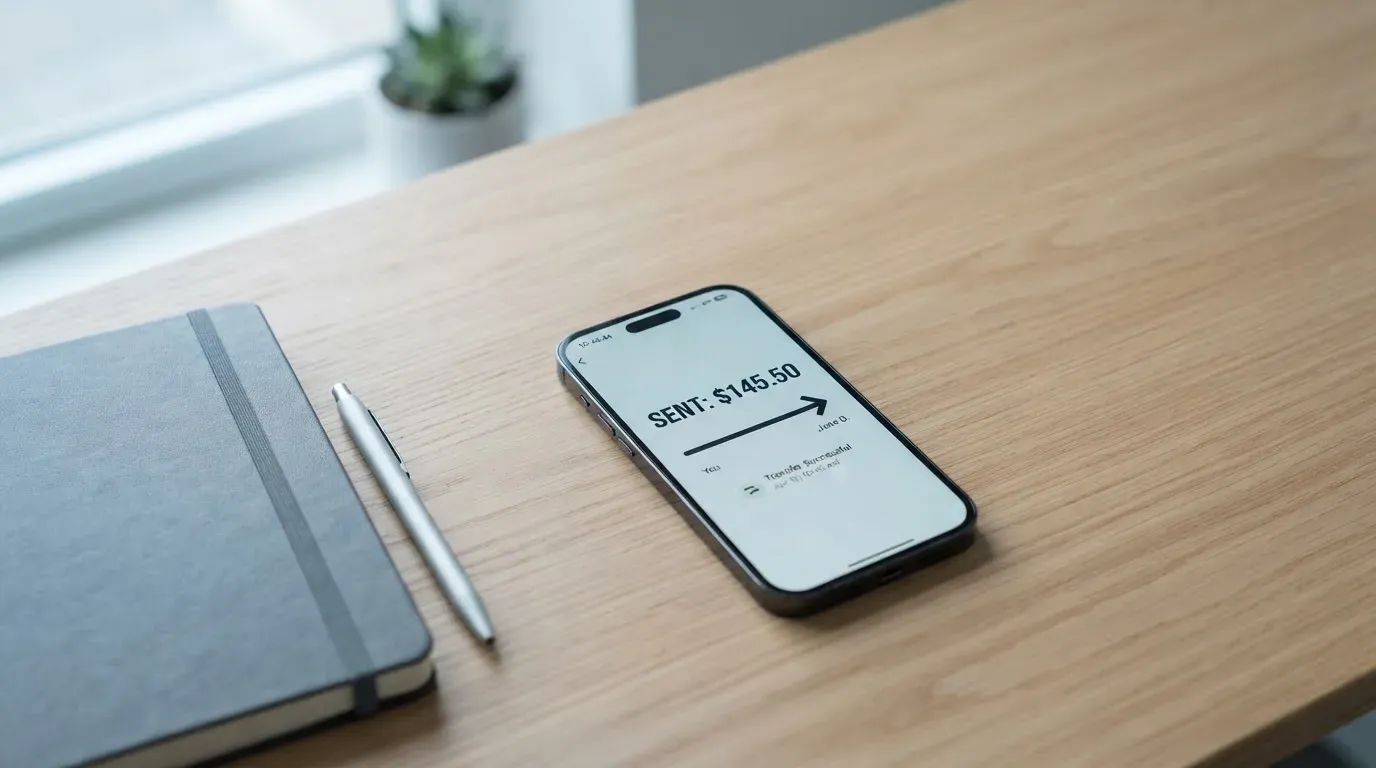
The recharge list is USDT, USDC, BTC and ETH. Crypto arrives, is converted to fiat, and the card spends that fiat balance. The conversion happens at the moment of payment rather than as a separate event you trigger, which is convenient and means you are exposed to the rate at the second you tap, not the rate you hoped for.
Inside the app, the flow is: choose a currency and a network, and the app shows an address or a QR code to send to. That is straightforward. What the page does not say is which networks are supported. And this is not a cosmetic gap.
Send crypto on the wrong network, or send a coin the provider does not support, and the deposit is lost. Blockchain transfers are irreversible by design — there is no customer service department that can reverse a mistaken transfer, because the network itself cannot. Every crypto card that lists coins without listing networks is asking you to supply the missing information yourself, and the errors are not recoverable.
Two hard rules, both stated by the card:
- Your recharge must be more than 1U. A deposit of 1U or less is not credited and cannot be retrieved.
- Unsupported coins or networks are lost. Not “may be recovered”, not “subject to review” — lost.
Two more practical notes. On Ethereum, sending a token costs gas paid in ETH, so a wallet holding USDT with no ETH cannot send at all — a small trap for anyone whose funds sit in one asset. And on Tron, fees are paid through bandwidth and energy resources rather than straightforwardly in ETH or BTC, which surprises people the first time they try it.
Withdrawal is not addressed on the public pages at all. So the direction I can describe in detail is the one going in.
Paying with it every day
Day-to-day use is the card’s weakest criterion at 6 out of 10, and the reason is not a design flaw — it is that half the product is unbuilt.
What works now:
- The virtual card, for online and contactless spending.
- Binding to Apple Pay, Google Pay, and what the site calls “multiple payment platforms”.
- Payments up to $100,000 per transaction on the USD card, with no stated daily limit. Unusually high ceilings, if you ever need them.
What is not there: the physical card, ATM withdrawals, and a stated list of blocked merchant categories. That last one matters. Card providers routinely restrict whole categories — gambling is the classic example, carried by a four-digit merchant category code that issuers block by policy rather than by law, with the blocked list differing from one issuer to the next. YPT does not publish its list, so you cannot know in advance whether a category you use will be declined.
When you add the card to Apple Pay, the card number is replaced by a device-specific number stored in the phone’s secure hardware, never on Apple’s servers, and each payment uses a one-time dynamic security code. That is the standard, and it is a good one. It is also worth knowing that the issuer can restrict the tokenised number separately — blocking it on websites, on phone payments, or on magnetic stripe — so a card that works in one channel can fail in another.
The app is described by third parties as available on iOS and Android for applying, depositing and tracking, with no ratings read. I could not confirm details officially.
The other everyday question is what happens when something goes wrong with a purchase. YPT’s stated position on refunds: they usually take 2 to 15 days, sometimes longer than a month, and YPT credits you after it receives the refund from the merchant. That sequence matters. The money leaves your balance when you pay, and it comes back only after the merchant’s money has reached the issuer — so a merchant who is slow to refund leaves your balance short for weeks. Whether a disputed charge can be forced through a formal chargeback procedure, and what consumer protections apply to this card specifically, is not stated on the public pages.
What can go wrong
Start with the one nobody in this category advertises: you do not know which bank issued the card. YPT is described as jointly launched by YPT and RedotPay, and the issuer is not named. That gap matters more here than in ordinary banking. A crypto card is typically not issued by the crypto brand at all — the brand is usually a programme manager and front-end, while an actual licensed bank or e-money institution holds the card programme. Knowing which institution that is determines who you complain to, whose rules you are under, and whether your funds sit behind a safeguarding regime.
The reassuring part: the card states that digital assets are held by a licensed trust company with $50 million in insurance, and that each user gets a unique blockchain address. Identity checks run through Sumsub, there is a PIN code, and there are anti-misuse fees and negative-balance rules — that last pair means a balance can go below zero and stay there, which is worth understanding before it happens to you rather than after.
The honest counterweight is that insurance held by a trust company is not the same as a bank deposit guarantee. Funds safeguarded in a dedicated account or insured under e-money rules are not deposits, and deposit guarantee schemes may not cover them.
Where there are no complaints, that is not the same as a track record. I found no complaints, and no Trustpilot page for YPT Group either. A young service with no complaints has usually simply not been around long enough, or not been used heavily enough, to produce them.
Then the general risks of the category, which apply to any card like this:
- Programme shutdown. Card programmes do close. Visa terminated its global agreements with FTX in November 2022 and the US debit card was wound down. WaveCrest, a card issuer that supplied crypto card brands, was suspended by Visa in Europe in 2018, closing all its Visa programmes. Closures typically mean a notice period, then loading and spending stop, then you are asked to withdraw what is left.
- Stablecoins are not what they are called. Despite the name, stablecoins are not necessarily stable. One pegged dollar token collapsed outright in May 2022, and another briefly lost its peg in March 2023 during the banking crisis.
- Custody risk. If the provider holds the credentials to your crypto, you are trusting them completely, and the sector has a documented history of large losses — exchanges going back to 2011 have reported losses in the hundreds of millions.
- Not censorship-proof. Stablecoin issuers maintain the ability to freeze funds tied to illicit activity, and one issuer describes disabling tokens in wallets on the sanctions list.
- Merchant declines. Prepaid and foreign-issued cards are declined at higher rates than people expect, because the issuer lookup reveals the card type and country to the merchant.
- Tax. Spending crypto is generally a disposal of an asset, measured in your local currency at the value on the date of the transaction, which means each card payment funded from crypto may be a separate taxable event. I am not giving tax advice here and neither should you rely on this page for it — but you should check your own position, because a card that converts and spends silently can produce a long trail of small taxable events you did not think about when you opened it.
What to take instead
If the comparison is with the other crypto cards in this space, none of them is dramatically better, and the honest thing is to show where each one wins. All three below are also far from complete — two of them score under 5 out of 10 — but they fail in different directions, and one of them may fit your situation better.
| YPT | Cardex | CardFlow | HyperCard | |
|---|---|---|---|---|
| Score | 7.4 / 10 | 5.6 / 10 | 4.9 / 10 | 4.7 / 10 |
| Who it is for | Broad; 5 places excluded as a mailing address | “200+ countries”, no exclusion list published | Aimed at Nigeria and Nigerian users | No country list on official pages |
| Card | Virtual described; physical card “soon”; network not stated | Debit card on VERVE, VISA, Mastercard, UnionPay; virtual and physical; Naira per the store listing | Virtual USD Mastercard, created in about 3 minutes | Prepaid; network not stated; balance in USD or EUR |
| Fees | 1% in USD, 2.2% otherwise | Real-time conversion, “AI-Powered Conversion Rate”; no percentage published | Not stated | Not stated |
| Card cost | Not stated | Not stated | “Creating a virtual card is completely free”; monthly fee not stated | Not stated |
| Top-up | USDT, USDC, BTC, ETH | USDT, USDC, BTC | Bitcoin, USDT, ETH or Naira bank transfer | Crypto such as USDT, BTC, ETH |
Cardex is the one to consider if network coverage abroad matters most to you. It runs on four networks including UnionPay, which opens doors that a single-network card does not, and it markets itself as one card across 200+ countries. The catch is that it publishes no fee percentage at all — its conversion is described as scanning global exchange rates and picking the best available moment, which sounds appealing and is impossible to check. Its store listing is Naira-focused, so read the fine print on what that means for you.
CardFlow is explicit about its market — Nigeria’s fintech card platform — and it is the only one of the four that states a price for the core product: creating a virtual card is completely free. If you are Nigerian, or bank there, that is a concrete advantage over a card that will not say what it charges. Its USD Mastercard is created quickly, and it accepts Naira bank transfers alongside BTC, USDT and ETH. Against that: no fees published, no rewards mentioned, and a 4.9 score reflecting how much of the picture is missing.
HyperCard has the simplest proposition: a prepaid balance in USD or EUR that you load with crypto. Its store page says it works in more than 176 countries, though that describes acceptance, not who may sign up, and the official pages list no eligibility rules at all. Fees are not stated anywhere I could read. It is the least documented of the four and scores lowest, but “simple” and “unclear” are not the same thing, and if you want a plain prepaid balance without crypto-specific complexity it may still serve you.
Against ordinary banking, none of these compete. If your bank will give you a normal debit card, a normal card is cheaper, better protected and better understood. These cards exist because that option is closed to some people — and paying 1% to have any card at all is a completely different calculation from paying 1% when you had a free alternative.
Who I would recommend it to
I would recommend YPT if you have tried a normal route and it did not work, you hold USDT, USDC, BTC or ETH, and you want to spend it at ordinary merchants without thinking about crypto. In that case the 1% is a fair price for a working solution, the virtual card is live today, and the fee schedule is written down in public — which is more than most of the category manages.
I would hold off if any of these are true: you need the physical card now; you need cash; you want to run a large balance without knowing the issuing institution; you spend in a lot of non-dollar currencies, where 2.2% plus a currency spread will add up; or you make many sub-dollar purchases, where the $0.20 authorisation fee is punitive. If you are in Egypt, Tunisia, Palestine, Puerto Rico or Tanzania, be especially careful about the mailing-address exclusion, since a card you cannot receive is not a card.
And whatever you decide, do the unglamorous work first: confirm your own address and currency against the card’s own help pages, read the app’s screen at the moment of transfer rather than trusting a coin’s name, and check the fee lines in the table above rather than the headline rate. If you are unsure about your tax position when you spend crypto, take that to a professional rather than to a card review.
Frequently asked questions
What is the YPT card?
YPT is a prepaid-style crypto card. You load it with USDT, USDC, BTC or ETH, the crypto is converted to fiat, and you spend that balance through a virtual card that works with Apple Pay and Google Pay. It is aimed at people who hold crypto and want to pay ordinary merchants. It was launched by YPT and RedotPay, and the bank that issues it is not named in the public material.
How does the YPT card work?
You fund the balance, then spend from it. Recharge by choosing a currency and network in the app and sending to the address or QR code shown; the crypto is converted to fiat at the moment of payment. Payments in USD cost 1%, and payments in any other currency cost 2.2%. Your deposits must be above 1U, and the physical card is not yet available.
Is YPT a bank?
No, it does not present itself as one. YPT is a card programme fronted by YPT and RedotPay, with assets held by a licensed trust company carrying $50 million in insurance. The actual issuing bank or licensed institution is not named on the public pages, which is a real gap if you are deciding how much to trust it with.
Who owns YPT?
YPT is described as jointly launched by YPT and RedotPay — so it is a joint venture between the two rather than one company’s own product. Beyond that, the public pages do not set out the corporate structure, funding, or the identity of the issuer. I found no Trustpilot page for YPT Group either.
How do I get the YPT card?
Apply online, complete the identity check through Sumsub with your full legal name, date of birth and an identity card, passport or driver’s licence, and you receive a virtual card. A physical card is listed in the navigation but marked as coming soon. Delivery times are not stated, so if you need a card in your hand quickly, that is the problem to think about.
Does the YPT card require KYC?
Yes. Identity verification runs through Sumsub and asks for your full legal name, date of birth and a government identity document, and more information may be requested. This is normal for regulated services, which are required to verify customers and monitor transactions. It does mean you need a genuine identity document and a usable address to get through.
How do I top up the YPT card?
In the app, choose the currency and network, then send crypto to the address or QR code displayed. USDT, USDC, BTC and ETH are supported, converted to fiat for spending. Two things to watch: the deposit must be higher than 1U or it is not credited and cannot be retrieved, and the public pages do not list the supported networks, so sending on the wrong one loses the money.
Where can I use the YPT card?
Anywhere a normal card is accepted, since the virtual card runs on the standard rails and works with Apple Pay and Google Pay. Per-transaction limits are $100,000 on the USD card with no daily limit. Two practical caveats: merchant category codes mean some categories are routinely blocked, and YPT does not publish its blocked list, and merchants may decline a prepaid or foreign-issued card more often than you expect.
Is the YPT card safe?
Partly answered, not fully. Stated safeguards include a licensed trust company with $50 million in insurance, a unique blockchain address per user, Sumsub KYC, a PIN, and anti-misuse and negative-balance rules. What is missing is the name of the issuer, which determines who stands behind disputes. And insurance held by a trust company is not a bank deposit guarantee — treat any balance as money you could lose access to.
Is the YPT card worth it?
If a normal bank will not give you a card, then yes — 1% in dollars for a working virtual card is a reasonable price. If you do have a normal card available, it is hard to justify, because that one is cheaper and better protected. And if you spend mostly outside the dollar currency, the rate is 2.2% plus a currency spread, which changes the arithmetic considerably. The score I give it is 7.4 out of 10.
Virtual card reviews – cryptocardcheck
Content created by the «cryptocardcheck» team