
The verdict on the Phantom Cash virtual card
 Available in US
If you have read this page hoping for a crypto card that works anywhere, the Phantom Cash card is not that. It is a virtual prepaid Visa debit card, available only to residents of the United States (excluding New York), and it spends the balance of your CASH stablecoin account in Phantom. That is a genuinely narrow offer — and, at least at the time of writing, an incomplete one on paper. I gave it 5.3 out of 10 after checking what the card’s own pages state, what they do not state, and what third-party databases report. The short version: the card suits US residents who already hold dollar stablecoins in Phantom and want a simple Visa number in their Apple or Google Wallet. It does not suit anyone who needs a physical card, an ATM, a published fee table, or a card that works outside the United States.
The conditions described here are current as of October 28, 2026.
Let me walk you through what I found, section by section, so you can decide whether this card fits your situation — or whether you should read the alternatives section instead.
Who the card is for, in one number
The score breaks down into six criteria, each of which I judged against the card’s official pages first and only then against unofficial third-party data. Here is the full picture:
| Criterion | Mark | Why |
|---|---|---|
| Who can get it | 4 / 10 | US only, excluding New York, by residence |
| Cost | 7 / 10 | Fees officially undisclosed; unofficial: issuance, replacement and inactivity free, top-ups free, international transactions 1% + $0.30 |
| Top-up options | 4 / 10 | Card spends the CASH balance; funding via Apple Pay, Google Pay, debit card or bank; withdrawal to a bank or Solana wallet; no direct crypto top-up named |
| Reliability and complaints | 6 / 10 | Issuer Lead Bank, program manager Bridge Ventures LLC, Stripe; virtual card replaced on issuer change, no dates; no complaints found |
| Everyday use | 5 / 10 | Virtual Visa, Apple Wallet and Google Wallet only; unofficial: no ATM |
| Total | 5.3 / 10 | — |
A 5.3 is not a rejection, but it is not a recommendation either. It is a card for one specific situation: you are in the US, you already use Phantom, and you want to convert a dollar stablecoin into everyday spending without touching an exchange account. Outside that situation, the alternatives at the end of this review do more of what you probably actually want.
Who will they give you the card?
The answer is short and, for most of the world, unhelpful: United States residents only, and not residents of New York State. Eligibility is based on where you live, and the card’s pages do not extend this to citizens of other countries who happen to live in the US, nor to US residents who moved here recently without a US address and ID. If you are reading this from Lagos, Manila, Berlin or São Paulo, this card is not for you — no matter how much you like the Phantom wallet itself.
There is one nuance worth understanding. Phantom as a self-custody wallet is available broadly, and Phantom Cash does not, in general, require identity verification just to hold funds. But the *card* is a different thing. Because the card is issued by a US bank under a US licence, the card side of the product runs through the identity checks that a US issuer must perform. So the wallet being open to you and the card being open to you are two separate questions, and the answer to the second is much narrower.
I want to be direct about the limits of what I can tell you here. The card’s public pages do not say what proof of address you need, how long verification takes, or why an application might be rejected. They do say applicants must be 18 or older — which matches the general pattern for prepaid and debit cards, where the floor is 18+ and some issuers set higher limits of their own.
How to get it
The stated path is short and, once you have the balance, quite quick:
- Fund your CASH balance.
- Complete identity verification.
- Receive your virtual card.
- Add the card to Apple Wallet or Google Wallet.
Who verifies what. Identity verification for the virtual card runs through Link. The marketing material adds a useful detail: for bank transfers, direct deposit and the debit card, verification is handled by Stripe. In practice this means your identity documents go to a third party, not to Phantom itself — a point I return to in the risks section.
The card itself. It is a virtual, prepaid Visa debit card. It works anywhere Visa is accepted, and there is no physical card. Because it is virtual, there is no delivery to wait for and no shipping address to worry about — you get a card number and add it to your wallet. What the card’s pages do not state is which currencies it handles beyond the US dollar that the CASH balance implies; treat multi-currency spending as unconfirmed.
What I could not confirm. Proof of address requirements, verification timing, and rejection reasons are not stated on the pages I read. The verification *levels* — how many documents, how many checks — are also not stated. If any of that matters to you, the honest answer is that you will learn it during the process, not before it.
Fees: what a Phantom Cash payment really costs
This is where I have the most to say, and where the biggest caution flag sits. The card’s official pages say only that “fees may apply” and point you to the Cardholder Agreement. The amounts are not stated there. That is not a small gap — it is the central question for anyone choosing a spending card, and the public pages leave it open.

To be fair to the card, third-party databases report a generous picture, and I have set it out below as unofficial data rather than confirmed terms. I have marked clearly which is which.
| Fee or limit | What the card says | What a third-party database reports (unofficial) |
|---|---|---|
| Issuance | Not stated | No issuance fee |
| Replacement | Not stated | No replacement fee |
| Inactivity | Not stated | No inactivity fee |
| Top-ups | Not stated | Free cash loads; US purchases free |
| Conversion / trading | Stablecoin trades described as fee-free | — |
| International transaction | Not stated | 1% + $0.30 |
| ATM | Not stated | No ATM withdrawals; fee not disclosed |
| Daily spending limit | Not stated | $2,000 by default, up to $5,000 on request |
| Monthly limit | Not stated | Not disclosed |
Two honest caveats on that table. The unofficial figures come from a card-details database whose data was last verified in late September 2026 but partly carried forward from an older dataset — so treat them as a starting point, not a promise. And “fees may apply” in the official text means the Cardholder Agreement is the document that actually governs, and I have not read it for you.
Three everyday payments, and which fees apply. Let me walk through three ordinary situations so the fee picture has some texture:
- Buying coffee in a US city. On the unofficial figures, a US purchase is free. On the official figures, all you have is “fees may apply” — so the safest assumption is that a small fee exists and you learn its size at settlement.
- Buying something online from a US store. Same as above. The card is a Visa, so the payment itself is processed normally; watch for the fact that a declined authorisation can leave a hold on your funds for several days.
- Paying a foreign merchant, say a hotel abroad. Here the unofficial number bites: 1% + $0.30 per international transaction. On top of that, remember the general category rule — a foreign-issued or prepaid card can look unusual to the merchant’s systems, and some merchants decline prepaid cards or foreign BINs as a matter of policy, not law.
The conversion question deserves one more sentence. The balance you spend is a CASH stablecoin, and the card describes stablecoin trades as fee-free. But a card that spends a stablecoin balance is still, underneath, converting value as the network and issuer settle it, and the official pages do not break down what, if anything, that costs you at the margin. Read the Cardholder Agreement for the number you will actually be charged.
Top up: how you put money in
There are two halves to funding, and it is worth keeping them separate. First, the CASH balance that the card spends. Second, how that balance itself gets funded — and here the card is, for most people, a bridge from ordinary fiat rather than from crypto.
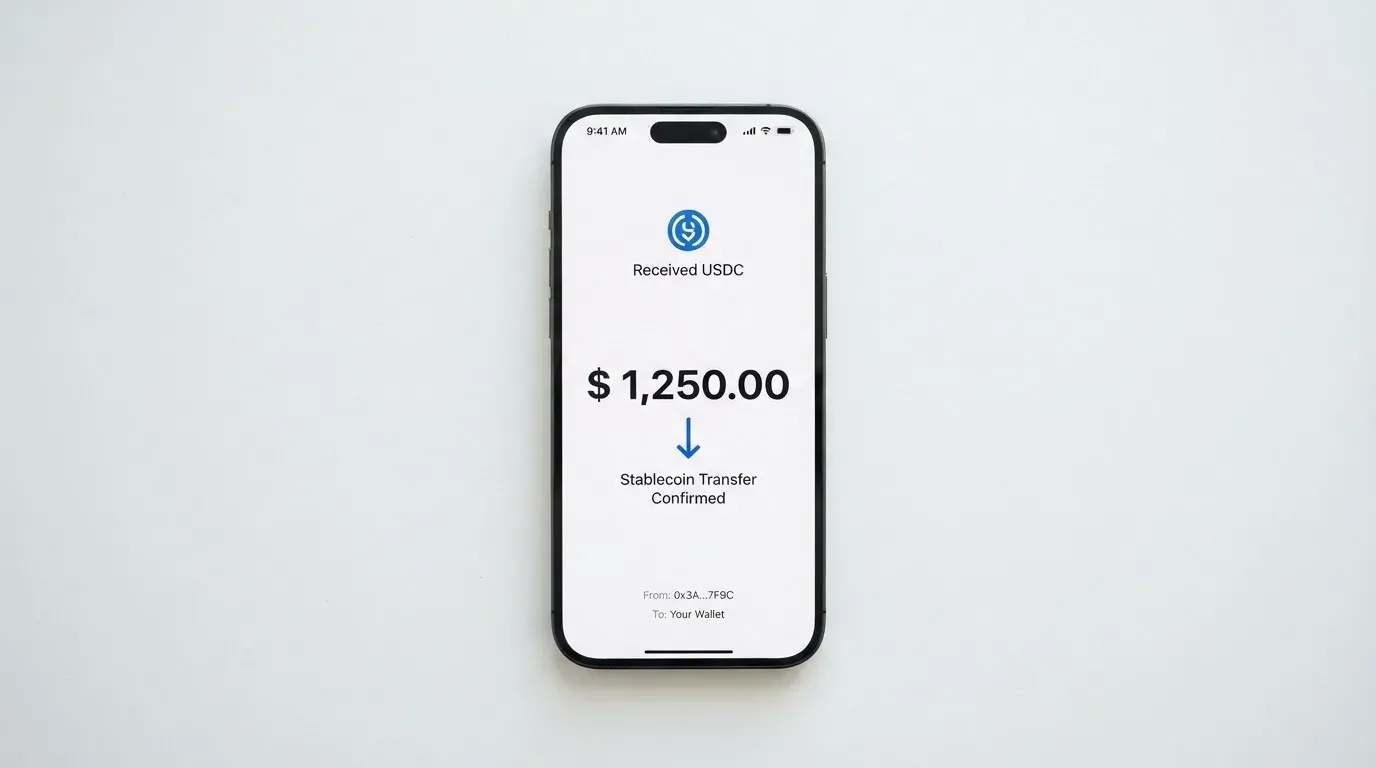
Funding the balance. CASH can be funded via Apple Pay, Google Pay, a debit card or a bank account, depending on your region. The card’s pages do not state fees or minimums for these routes, and they do not name a direct crypto top-up. That last point is the one that surprises people: there is no stated way to load the card balance straight from a crypto wallet. If your plan was “buy stablecoin, load card, spend”, the load step runs through a fiat rail, not a blockchain one.
Getting money back out. CASH can be withdrawn to a US bank account or to a Solana wallet. Fees and timing for withdrawal are not stated on the pages I read, and what happens to your balance if you close the account is also not stated. If you are planning to move a meaningful amount, that last gap is the one to raise with support before you commit.
So the top-up story in one line: card-to-bank, or card-to-wallet out; Apple Pay, Google Pay, debit card or bank in. The score I gave this was 4 out of 10 precisely because the entry points are fiat rails and the direct crypto route is not named.
Paying with it every day
Using the card day to day is straightforward, within its limits. You add it to Apple Wallet or Google Wallet and tap. Apple Pay in particular works the way Apple Pay always works — the card number is replaced by a device-specific number stored in the phone’s secure hardware, and each payment carries a one-time code — so the everyday security of the mobile wallet is on your side.
What you do not get. There is no physical card, so no chip-and-PIN, no contactless tap of a plastic card in a terminal, and — on the unofficial data — no ATM withdrawals at all. If cash withdrawal is part of how you live, this card cannot do it.
Merchant categories. The pages do not state which spending categories are restricted. Some issuers block categories such as gambling by policy rather than by law, and that list differs by issuer, so I cannot tell you what, if anything, Phantom Cash blocks. Check before you assume a purchase will go through.
Rewards. No card cashback is stated. Holding CASH is described as earning passive income with no lockups, but no rate is given. If someone pitched this card to you on a cashback number, that number is not one the card publishes.
Support and app. The card lives in the Phantom mobile app, and support runs through a Help Center with a “Start a chat” option. Languages and hours are not stated. For disputes on debit-card transactions, Stripe handles them, though the process and time frames are not spelled out.
My verdict on everyday use is 5 out of 10: it is a clean, single-purpose tap-to-pay card, and it does that job — just not many jobs.
What can go wrong
Every crypto card has a structural risk, and this one has two on top of the usual ones. I want to name them plainly.
The card is being replaced. Phantom’s Help Center carries an official notice: “Your virtual Phantom debit card is being replaced as we move to a new card issuer.” Users are told to add the replacement to their Apple or Google Wallet. No dates are given. This is not a scandal — switching issuer is routine — but it is a live change, and right now the existing stack is Lead Bank as issuer, Bridge Ventures LLC as program manager, and Stripe processing transactions and disputes, all of which are set to change. If you are deciding whether to rely on this card, you are deciding during a transition.
Nobody has complained, and that cuts both ways. I searched for Phantom-specific complaints on the usual forums and review sites and found none. That is mildly reassuring about the current product. It is also what you would expect from a young card with a narrow user base, so I would not read it as evidence of a long, clean track record.
You are trusting a chain of third parties. The balance is secured on-chain as CASH, and Phantom says it does not store KYC information — verification is handled by Stripe. Phantom is explicit that it is “not a bank.” So the parties in your payment are: a network (Visa), a bank (Lead Bank), a program manager (Bridge Ventures LLC), a processor (Stripe), and a wallet front-end (Phantom). Each does one job, and a problem at any of them is your problem on the spending side.
The wider category risks, for context. Crypto balances can be stolen and transfers are typically irreversible — if someone gets your keys or tricks you into sending to the wrong address, the network cannot undo it. Custodial platforms have a history of large failures. And on prepaid cards specifically, protection depends on which rules apply to your product; coverage should not be assumed, and debit versus credit rules differ. None of this is specific to Phantom Cash, but it is the backdrop you are buying into.
On safety features. The card does not state whether you can freeze it instantly, whether two-factor authentication is offered, or whether any insurance applies. Those are exactly the features you would want before putting spendable balance behind a product mid-issuer-migration. Ask support directly.
If your card is ever declined, a declined authorisation can leave a hold on your funds that lingers for several days. That is standard across cards, not a Phantom quirk, but with a prepaid balance it means your money is genuinely unavailable in the meantime.
What to take instead
If Phantom Cash does not fit — because you are outside the US, want a physical card, need an ATM, want published fees, or want to spend straight from a self-custody wallet — here are three alternatives I looked at, with scores from the same exercise.
TokenPocket (5.8 / 10). Broader geography than Phantom Cash: Visa debit for a list of European countries and territories (Germany, France, Spain, Switzerland among them), Mastercard debit for Australia, Canada, Hong Kong, Japan, Taiwan, New Zealand, Singapore, South Korea and the UK, with the Americas planned. It is a virtual Mastercard/Visa card running on Arbitrum, with balances in EUR24 and USD24. On cost, an NFT creation fee is partly covered by TokenPocket and you pay “a small portion,” but otherwise it says it charges no additional fees. One fee to know: a 1% fee on depositing cryptocurrency into the card, later refunded via rewards or reduced transaction fees. That refund-through-rewards structure is a small print to read carefully.
MetaMask (7.1 / 10) — the strongest of the three. Sign-up is open in 45 listed countries and territories (Andorra, Argentina, Brazil, Canada, Mexico, Germany, France, Spain, Uruguay among them); other regions join a waitlist. Proof of residency is required, and — importantly — ineligible regions limit sign-ups, not spending. US and UK sign-ups were temporarily closed per the FAQ. The card is Mastercard, virtual first with instant issuance, and a metal version can be pre-ordered in-app at $199/year (the virtual card is free with no annual or maintenance fee). It spends directly from your connected wallet on Linea, Base, Monad and Solana, and pays cashback in mUSD — 1% on Virtual, a headline 3% on Metal limited by footnote to the first $10,000 spent. If your priority is “spend directly from my own wallet”, this is the one to look at first.
KAST (6.1 / 10). The most elaborate structure and the most to read. Virtual and physical cards, up to 10 per user, across Visa tiers (Standard Platinum, Premium Infinite metal, Private Infinite gold-plated) with other designs like Pengu, Solana and Bitcoin. Membership is $0 / $1,000 / $10,000 per year by tier, billed annually. Fees are genuinely low and unusually well published: 0% on stablecoin top-ups, USD card spend, transaction fee and Apple/Google Pay; 0.5%–1.75% FX depending on your country, transaction country and programme; $0.10 on non-USD transactions under $25; $0.50 for a declined transaction; 1 USD/month inactivity after 12 months. Cashback runs 1.5% / 2% / 3% USD up to monthly caps of $2,000 / $10,000 / $40,000 by tier. Two catches: eligibility is residence-based with a restricted-locations list that is referenced but not published, and holding only an ID from a restricted region can disqualify you even if you live in a supported country. There is also a conflict between the app (USDT, USDC, PYUSD, RLUSD) and the Terms (“currently USDT and USDC”) that is worth asking about.
Comparing the three alternatives, and Phantom Cash itself, on the questions that decide it:
| Phantom Cash | TokenPocket | MetaMask | KAST | |
|---|---|---|---|---|
| Where | US except New York | Europe, APAC, Canada, UK; Americas planned | 45 countries, others waitlist | Residence list not published |
| Card type | Virtual Visa debit | Virtual Visa/Mastercard | Virtual Mastercard (+ metal) | Virtual + physical Visa, up to 10 |
| Physical card | No | Not mentioned | Metal, pre-order | Yes, by tier |
| Spends from | CASH balance | EUR24 / USD24 balance | Connected self-custody wallet | Own USD balance (1:1) |
| ATM | None (unofficial) | Not stated | Not stated | Not stated |
| Rewards | None stated | 1% deposit fee refunded via rewards | 1% (Virtual) / 3% capped (Metal) mUSD | 1.5–3% USD cashback + points |
| Published fees | No — “fees may apply” | Partial | Partial | Yes, itemised |
The pattern in that table is the pattern I would draw for you: the card with the clearest published fees is not the card with the widest reach, and the card with the widest reach is not the one with the most complete documentation. Choose on the constraint that hurts you most.
Who I would recommend it to
I would recommend the Phantom Cash card to exactly one reader: a US resident, outside New York, who already holds dollar stablecoins in Phantom, is comfortable with a virtual-only card, does not need an ATM, and is willing to read the Cardholder Agreement for the real fee numbers because the marketing pages do not give them. For that person, it is a tidy way to turn a stablecoin balance into a tap-to-pay Visa in their phone, and the unofficial picture on costs and limits is favourable.
I would not recommend it to you if any of these are true: you live outside the US; you are in New York; you need a physical card or cash withdrawals; you want fees published before you commit; you are put off by the card being mid-issuer-migration; or you want to load the balance directly from crypto rather than through a bank, debit card or mobile wallet. In each of those cases, read the alternatives above — MetaMask if you want to spend from your own wallet, KAST if you want published fees and cashback, TokenPocket if you want a virtual card across more of the world than the US.
And one caution for everyone: your US dollar stablecoin spending is a taxable disposal, each payment potentially measured at its value on the date of the transaction. That is a matter for a qualified professional in your country, not for me — but it is a real cost line that sits alongside the card’s fees.
Frequently asked questions
What is the Phantom Cash card?
Phantom Cash is a virtual, prepaid Visa debit card that spends the CASH stablecoin balance inside the Phantom wallet. It is available by adding the card number to Apple Wallet or Google Wallet and tapping in person or online. There is no physical card. Eligibility is limited to residents of the United States, excluding New York. Treat it as a narrow, single-purpose spending tool rather than a general-purpose bank card.
How does the Phantom Cash card work?
You first fund a CASH balance, then the card draws down that balance as you spend. CASH can be funded via Apple Pay, Google Pay, a debit card or a bank account, depending on region, and withdrawals can go to a US bank account or a Solana wallet. The card is issued by Lead Bank under Visa, with Bridge Ventures LLC as program manager and Stripe processing transactions and disputes — all of which are set to change as Phantom moves to a new card issuer.
Is Phantom Cash a bank?
No. Phantom states plainly that it is “not a bank” and is the platform provider. Lead Bank issues the card under Visa’s licence, Bridge Ventures LLC manages the programme, and Stripe processes payments and handles disputes. Your balance is secured on-chain as CASH. This is an important distinction: you are dealing with a wallet platform plus a set of regulated partners, not with a bank account in the ordinary sense.
Who is eligible for the Phantom Cash card?
US residents only, excluding the state of New York, and applicants must be 18 or older. Eligibility is based on residence, not citizenship. What the card’s pages do not state is any proof-of-address requirement, how long verification takes, or the grounds on which an application might be rejected — so if you need those answered before you start, ask support first.
Does getting the Phantom Cash card require KYC?
Yes, for the card. Identity verification through Link is required for the virtual card, with Stripe handling verification for bank transfers, direct deposit and the debit card. Note the nuance: KYC is not required for Phantom or Phantom Cash in general, only for these specific card and banking rails. Phantom says it does not itself store KYC information, since verification is handled by Stripe.
How much does the Phantom Cash card cost?
Officially, the card says only that “fees may apply” and points to the Cardholder Agreement; the amounts are not published on the pages. Unofficial third-party data reports no issuance, replacement or inactivity fee, free top-ups and free US purchases, and an international transaction fee of 1% + $0.30. Read the Cardholder Agreement for the numbers that actually bind you.
Are there ATM withdrawals with the Phantom Cash card?
Unofficial sources indicate there are none, and that the ATM fee is not disclosed. Since the card is virtual-only and the official pages do not mention cash withdrawal at all, I would not rely on getting cash out. If access to physical cash matters to you, treat this card as unable to serve that need.
What are the spending limits?
The official pages do not state limits. Unofficial data reports a default daily spending limit of $2,000, raisable to $5,000 on request, with no monthly limit disclosed. Since these are third-party figures rather than published terms, confirm them in the app before you plan a large purchase.
Is the Phantom Cash card safe and worth it?
For an already-committed Phantom user, the everyday payment security is reasonable: the card lives in your mobile wallet, where Apple Pay and Google Pay tokenise the number and use one-time codes per payment. But two things temper that. First, the card is currently being replaced as Phantom moves to a new issuer, so you are adopting during a migration. Second, safety features like instant freeze or two-factor authentication are not stated. Read it as convenient, not as something to hold a large balance in.
Can I top up the Phantom Cash card with cryptocurrency directly?
The card’s pages do not name a direct crypto top-up route. The CASH balance is funded through Apple Pay, Google Pay, a debit card or a bank account depending on region, and CASH trades are described as fee-free. You can withdraw CASH out to a Solana wallet, but the funding path described is fiat. If loading straight from crypto is central to your plan, this is the single most important limitation on the card.
Wallet card reviews – cryptocardcheck
Content created by the «cryptocardcheck» team