
A USD Visa you fill with USDT, for eleven Latin American countries
 Available in US
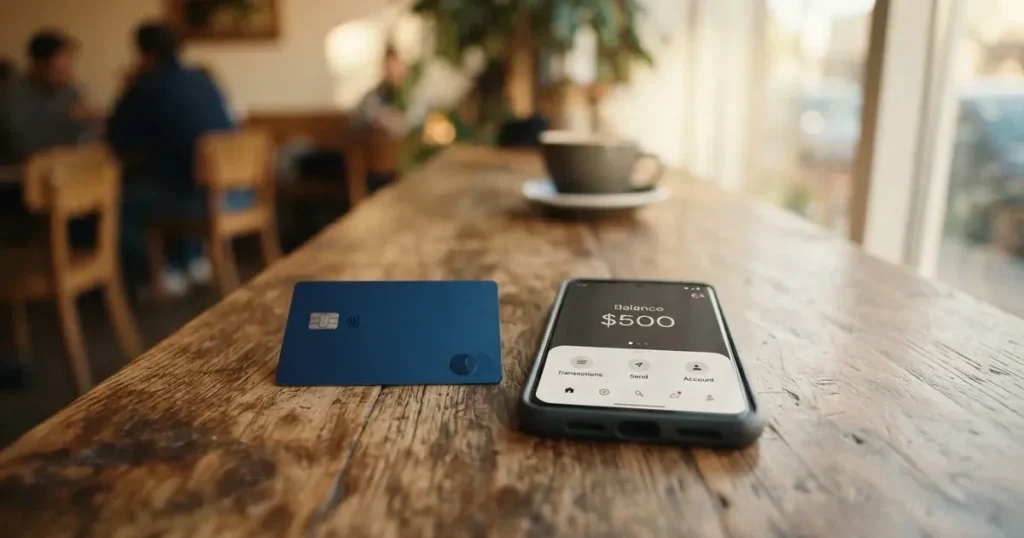
If ordinary banking is awkward where you live — a bank account is hard to open, or the local currency makes saving painful — a card that turns a crypto balance into dollars you can spend is genuinely interesting. El Dorado is one of those cards: a prepaid Visa in USD, virtual by design, funded with USDT, dollars or local payment methods. The catch is that it is not a global card. It is built for eleven named countries in Latin America and the Caribbean, and it is not available to US residents at all. So the first question is not “is this good crypto card” but “does it exist for someone like me at all” — and for many readers the honest answer is no.
For the readers it does exist for, the card is competently built but narrow. It charges 3.99 USDT once and nothing monthly. It has no cash withdrawals at all, no monthly limit, and a daily cap of USD 2,000. It pays in US dollars and lets you add it to Apple Pay and Google Pay. What it does not publish is almost as important: the conversion fee the card charges when it converts your balance, and the fee for paying in another currency, are both not stated anywhere on the public pages. You are told, in effect, the price of the plumbing and not the price of the water.
I scored it 6.6 out of 10.
The conditions described on this page are current as of October 28, 2026.
El Dorado card review: the score, and who it suits
The overall mark is 6.6 out of 10. That number is not a rounding of something flattering. It sits above the mid-point because the fundamentals a card cannot do without are all present and mostly free, and because the company behind it is real, licensed and funded. It sits below because two of the numbers that matter most to a spender — what the conversion costs and what a foreign-currency payment costs — are absent from the public pages, and because the card is a phone object with no plastic and no cash.
Here is the breakdown, criterion by criterion.
| Criterion | Mark | Why |
|---|---|---|
| Who can get it | 4 / 10 | Card exists in 11 Latin American and Caribbean countries (Bolivia, Brazil, Argentina, Colombia and others); the US is closed |
| Cost | 8 / 10 | Issuance 3.99 USDT one-time, monthly maintenance free, USDT top-up free; the card’s conversion fee is not disclosed |
| Top-up options | 8 / 10 | USDT on Arbitrum and Tron, dollars via ACH or wire, 80+ local methods through P2P |
| Reliability and complaints | 8 / 10 | Issued by Lead Bank under a Visa U.S.A. licence, VASP registration in Argentina, investors Multicoin, Coinbase Ventures, Paradigm; Trustpilot 2.7 from 62 reviews, and not about the card |
| Everyday use | 5 / 10 | Virtual Visa, Apple Pay and Google Pay present; no plastic, and cash machines forbidden |
The audience this card was built for is Latin Americans funding a USD card with USDT. If that sentence describes you — you earn or hold in pesos, reais, bolivianos or colones, you already use stablecoins, and you want a dollar-denominated card that works at international merchants — then the card does the one thing you need it to do, and the 6.6 is arguably too low for you personally.
If instead you want to draw cash, you need a physical card for a shop that takes cash, you are a US resident, or you plan to travel widely and want a card with a published FX rate, this is the wrong card. The day limit is USD 2,000, which can be raised through support but is not automatic, and there is no monthly limit at all, so people spending heavily will need to talk to support before they start.
Will they give you the card?
The list is short and it is residency-based, not citizenship-based: Bolivia, Brazil, Argentina, Colombia, Costa Rica, Ecuador, Guatemala, Honduras, Paraguay, Peru, Trinidad and Tobago. Not available to US residents.
That is the whole eligibility test as published. There is no stated income requirement, no minimum balance and no credit history to pass. The rule attaches to where you reside.
There is one thing worth noticing about how these lists are built, and it applies to every card in this category. Rules like this are drawn by citizenship, country of birth and residence in roughly equal measure, because international sanctions screening and issuer risk policy look at all three. The list above is framed by residence. If you are a national of one country and live in another, you do not get to reason from whichever answer suits you — you ask support directly and take the answer you get.
Who is the card issued by, and who is actually in front of you? El Dorado Labs PY Inc is the platform provider. Bridge Ventures LLC is the programme manager and is explicitly not a bank. Lead Bank issues the card under a Visa U.S.A. licence. So the money sits with a licensed issuing bank while a company you have never heard of runs the programme — that arrangement is normal for this category, and it is worth understanding before you deposit anything.
How to get it
You must be 18 or older. Beyond that, the public pages do not say what documents you need: proof of address and identity documents are not stated.
The route itself is short. A “Get your card” button leads to the El Dorado site or app, and from there you complete verification inside the app. Cards require Level 2 (L2) KYC under the terms, plus an additional verification step in the app on top of that. What L1 and L2 each contain, how long processing takes, and what the rejection reasons are, are all not stated.
The additional check is worth pausing on, because it is where most friction lives in this category. El Dorado may ask for more information at any time, and refusing to provide the KYC data is listed in the terms as a ground for cancelling the card. That is ordinary and lawful — anti-money-laundering rules require regulated businesses to verify customers, keep monitoring transactions and report suspicious activity, and where due diligence cannot be completed the institution must not proceed and may end the relationship. But it means a refusal to hand over a document can end your access, and you should know that before you start rather than discover it at the point where you need the card.
The card itself is a prepaid Visa debit in USD. You get a card number, CVV and expiry for online use worldwide, of the kind usually described as “physical-style” details. Whether a physical card exists is not stated — and it does not, in practice: the card is virtual, with the number, CVV and expiry in the app, and no physical card is described.
Fees: what it really costs
Here is the honest version. The costs the card publishes are low. The one cost that decides what a payment actually costs you is the one it does not publish.

| Item | Amount |
|---|---|
| Card issuance | 3.99 USDT one-time, taken from the El Dorado balance |
| Monthly maintenance | Free |
| USDT deposit to account | Free |
| ACH or wire deposit | 1.49% |
| USDT withdrawal under 200 | 0.99 USDT + network fee |
| USDT withdrawal 200 and above | 0.5% + network fee |
| P2P taker fee | From USD 0.49 flat to 0.24% by size; P2P minimum 1 USDT |
| Card conversion / FX fee | Not stated |
| Fee for paying in another currency | Not stated |
| ATM withdrawal | Not allowed |
| Daily limit | Up to USD 2,000 |
| Monthly limit | None |
A note on the issuance fee: it is taken from the El Dorado balance, and a replacement virtual card is issued free of the issuance cost under a September 2026 notice. El Dorado may also set other costs, including USD 0 promotions.
Now let us follow three ordinary payments through this table, because that is where the missing numbers actually bite.
Paying USD 30 for lunch in a USD-priced online store. The balance is USD, so per the FAQ USD payments involve no currency conversion, and no card-level fee is published for a USD purchase. What you are exposed to is upstream: converting the USDT holding into spendable balance may itself be a conversion event with its own rate, and on-chain network fees for any top-up are charged by the blockchain, not by the card. The card costs you 3.99 USDT, once, before any of this.
Paying a EUR 40 subscription. This is where you are flying blind. The card is USD, the merchant prices in euros, and the amount the merchant charges depends on the Visa exchange rate plus whatever the card adds on top — and the card’s own FX fee is not stated, and neither is the fee for paying in another currency. If that fee exists and is not small, it is the single largest number in your cost model and you cannot see it. Ask support for it in writing before you commit to anything you will pay for repeatedly. The page does say “no extra charges” on subscriptions and international purchases, and it also says fees may apply; both sentences are there, and neither cancels the other.
Trying to take cash out at an airport. You cannot. The terms say the user cannot withdraw cash with the card or use it for person-to-person transfers, and the ATM fee is listed as not stated because there is no such transaction to price. This is a structural feature of the product, not an oversight — it is what keeps a card like this cheap to run — but it means it is useless for a specific and common need.
How to Top up the card
The card is topped up from the main El Dorado wallet, using the Card section’s “Depositar” button, confirmed with a PIN or your biometrics. The tip describes it as instant, up to a couple of minutes. There is no limit on the number of top-ups. The card top-up fee and minimum are not stated — but the wider picture is good, because the underlying account funding costs are published: USDT deposits are free.
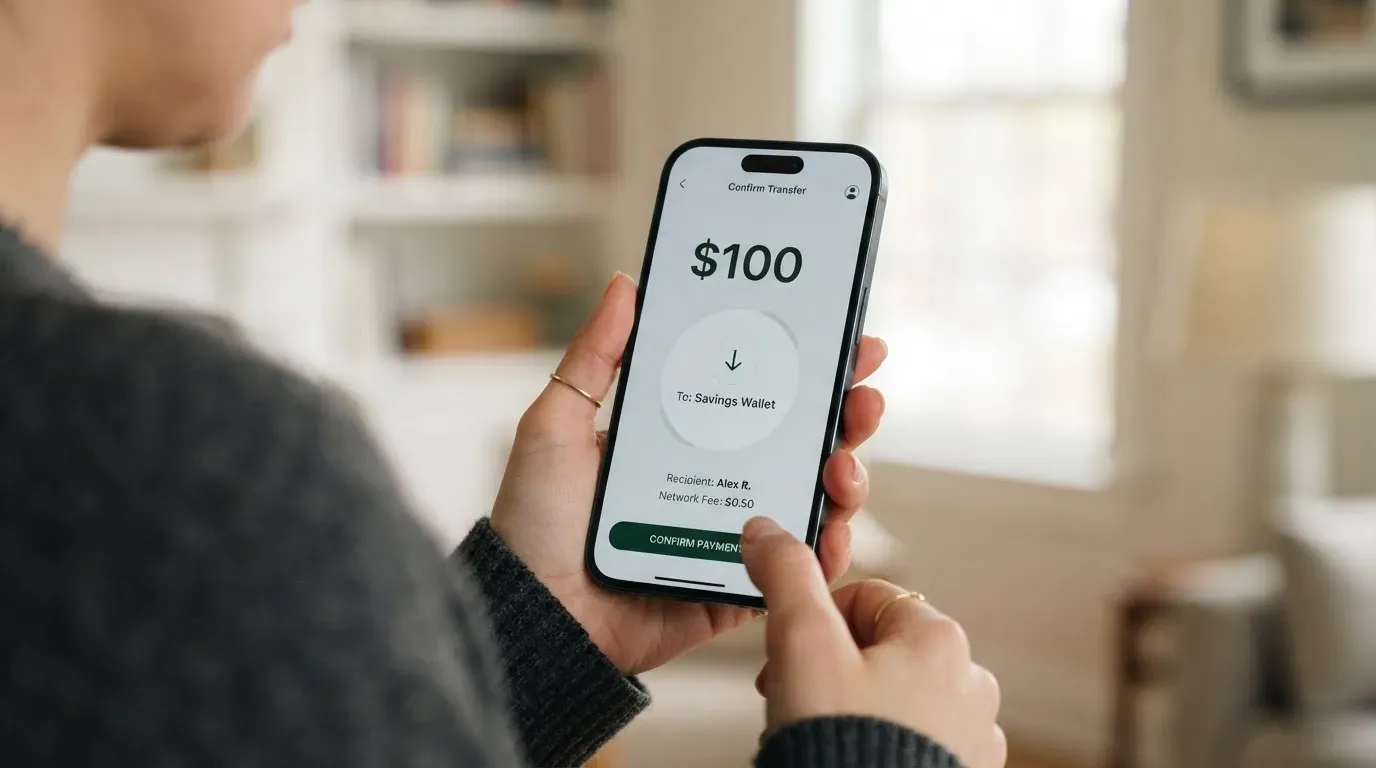
The account itself is funded three ways.
- USDT on the Arbitrum or Tron networks. Free to deposit.
- Dollars via ACH or wire, at 1.49%.
- 80+ local payment methods through El Dorado P2P, with taker fees from USD 0.49 flat down to 0.24% by size, and a minimum of 1 USDT.
Two of those deserve care. ACH is a US bank rail; wire costs more in time and often more in fees than ACH, so pick ACH unless you have a reason not to. And the network choice for USDT is not a preference — it is a correctness decision. El Dorado supports Arbitrum and Tron specifically, and a transfer sent on a network it does not support, or to an address belonging to a different network, can be lost or need manual support recovery with no guarantee. Blockchain transfers are irreversible by nature, so check the network twice before you press send. Note also that Circle stopped supporting USDC on Tron in February 2024, so “USDC over TRC20” is not a native option.
Two further structural facts about networks. On Ethereum, fees are paid only in ETH, so a wallet holding USDT and no ETH cannot send at all. On Tron, fees are paid through bandwidth and energy, often by burning TRX. Neither is a card problem, but both are ways a deposit you thought you made quietly costs more or does not move.
What happens at the end of the road — cancelling the card — is set out in the terms. You ask Customer Service, pass an identity check, and the cancellation is processed within 15 business days; there must be no pending transactions, pre-authorisations or chargebacks outstanding, and any obligations can be deducted from your balance. How the remaining card balance comes back to you is not explained. That gap is worth resolving in advance, not on the day you cancel.
Paying with it every day
The daily reality of this card: a virtual Visa in USD that works online worldwide, plus Apple Pay and Google Pay. You add it to your phone wallet and that is the physical form it takes.
It is worth understanding what makes the mobile wallet function the way it does. Apple Pay replaces your card number with a device-specific Device Account Number held in the Secure Element on the phone, never on Apple’s servers, and each payment uses a one-time dynamic security code. That is why adding the card to your phone is a meaningful step up from typing the number into websites — and why an issuer can restrict a tokenised number, blocking it on magnetic-stripe, phone or website use, independently of the card itself.
Where declines come from is worth understanding too, because it is not El Dorado’s choice alone. A card number begins with a 6- or 8-digit issuer identification number that tells the merchant which institution and which country issued it, and a merchant can look that up and apply extra scrutiny when the issuer country differs from the billing address. This is why a card issued in one country can look foreign to a shop in another. Address Verification Service, which compares the numeric parts of the billing address you type against the issuer’s records, is mainly offered in the US, Canada and the UK and is generally unavailable for foreign-issued cards. Some merchants decline prepaid or foreign-issued cards outright for the same reason. So if a card payment fails, the cause may be the shop’s risk rules rather than anything you did wrong.
Two more ordinary-life mechanics. Some declines leave a hold on your funds that can persist for several days, typically up to 7. And 3-D Secure — Visa’s version is called Visa Secure — adds an identity step to online payments, where the issuer either approves without friction or challenges you with a one-time code or biometric. Under 3-D Secure, liability for fraudulent online payments can shift, and critics argue that in some flows it shifts to the cardholder rather than the merchant.
Blocked merchant categories and gambling policy are not stated, and rewards are not stated. If spend-to-earn matters to you, this card does not offer it.
The app is iOS “El Dorado P2P”, read on the Colombian storefront on 2026-10-20, rated 4.9 from 777 ratings, requiring iOS 15 or later, in Spanish, English and Portuguese. A Google Play listing at io.eldorado.app exists; its rating was not retrieved because the page was truncated. The site claims 1,000,000+ users and 1M+ Google Play downloads — company claims, not something independently verified.
Support is in-app chat under Profile > Soporte, email at [email protected], with the card terms listing [email protected] and notifications going to [email protected]. Card disputes have a phone number, 1-855-679-8445. The help centre is at faq.eldorado.io in Spanish and English. Support hours and the languages support actually answers in are not stated.
What can go wrong
Money on this card is held by El Dorado, not by you. The platform is custodial: your balance sits in the account, so you must trust the provider completely. That is a real category of risk, not a technicality. Custodial platforms have a history of failure — Mt. Gox, about US$350 million reported stolen between 2011 and 2014; Coincheck, about US$400 million in 2018; Ronin Network, US$625 million in 2022. And crypto transfers are typically irreversible with no built-in recovery, since no network can freeze or return funds once they have moved.
Add to that the platform-specific risks. El Dorado and its partners monitor transactions and may block, suspend or cancel the card. A security PIN for the card is announced as “coming soon” — so do not assume that feature protects you today. No insurance is stated, and e-money customer funds are not the same as bank deposits and may not sit under a deposit guarantee scheme even when they are safeguarded.
If a charge you do not recognise appears, the route is: report it to Customer Service, which may recommend a temporary freeze; formal disputes go to the issuing bank or programme administrator. A USD 30 charge may apply if a formal dispute is opened. Claims are answered within up to 15 business days, the direct settlement period is 30 calendar days, and El Dorado may auto-deduct funds to cover chargebacks. Transactions, refunds and chargebacks follow Visa rules. No refund policy is stated. A prepaid card’s coverage varies and should not be assumed to match the US debit-card rights that come from Regulation E.
On the complaint front, one search across Trustpilot and Reddit found no reviews or news about the El Dorado card at all; the results were unrelated pages. Reading the Trustpilot listing for El Dorado, on 2026-10-20, gives 2.7 out of 5 from 62 reviews, 6 of them in the last 12 months, with 61% five-star and 28% one-star. The recent one-star themes are P2P seller scam accusations and missing refunds (December 2025), slow delivery and unhelpful support (July 2026), and seller verification rejected without reason (March 2025). One reviewer claims a move from .io to .gg, which the company denies. Read that carefully: these reviews are not about the card. They concern the P2P marketplace, which is a separate part of the business. No card-specific complaints were found — which cuts both ways. It is mildly reassuring and it means nobody is publicly vouching for the card either.
What I found on news is one thing you must act on. A help article dated 8 September 2026 says cards are being replaced by a new virtual card with a new number, CVV and expiry, at no issuance fee; balance, verification and the USD 2,000 daily limit are unchanged; and the old card stops working on a date the article leaves as the unfilled placeholder. So if your card is being replaced and you take that literally, you will look at that page and find a bracketed field where a date should be. Ask Customer Service for the actual cutover date in writing before you rely on the old card for anything. Separately, a Paradigm-led USD 9 million round was reported by The Block in June 2026, per El Dorado’s own press list.
One background point that bears directly on this card’s structure. Visa and Mastercard do not themselves issue crypto cards to consumers; they license issuers and can suspend a programme. Visa said in November 2022 that it had “terminated our global agreements with FTX”, and the FTX US debit card programme was wound down by its issuer. WaveCrest, a Visa card issuer that supplied crypto card brands, was suspended by Visa in Europe in 2018, closing all its Visa-issued programmes. Programme closures typically run in stages: a notice period, then spending and loading stop, then users are asked to withdraw remaining balances. One 2026 closure reported by a secondary source ended new loads on 8 July 2026 and spending on 8 August 2026 — single source, unconfirmed, and included as an illustration of the pattern rather than a forecast about this card.
Tax is worth one paragraph of its own because it is easy to forget. The IRS treats digital assets as property, so exchanging them for goods, services or dollars generally produces a taxable gain or loss. For personal or investment holdings that is a capital gain or loss, short-term if held a year or less, measured in local fiat currency at the fair market value on the date of the transaction. Each card payment funded from crypto can therefore be a separate disposal. I am not advising you on what you owe; I am telling you that this is a thing that exists and that your own jurisdiction may treat it differently.
What to take instead
Here is how the alternatives compare. Read the scores first, then the rows.
| Card | Score | Card type | Issuance / monthly | Conversion and FX | Who |
|---|---|---|---|---|---|
| El Dorado | 6.6 / 10 | Prepaid Visa, virtual, USD | 3.99 USDT once / free | Not disclosed | 11 Latin American and Caribbean countries; not the US |
| International Visa Card | 6.7 / 10 | US-issued Platinum Visa, virtual, pays in USD | $5 once / Classic free, Pro $9.00 per month, Max $19.00 per month | USD free on all plans; foreign currency “Visa exchange rate + 2% FX fee” | Excludes residents or registrants of Belarus, mainland China, North Korea, Cuba, India, Iraq, Iran, Israel, Myanmar, Nepal, Nicaragua, Russia, Syria, Turkey, Ukraine, Venezuela, Vietnam |
| UNi Card | 6.1 / 10 | Multicurrency card on Mastercard, spends from the UNi.Global balance | No annual fee; issuance not stated | No foreign transaction fee; live OTC rates; “no hidden exchange fees” | Not stated |
| Whop Cards | 5.2 / 10 | Visa, online and in stores | “No extra fees”; no amounts listed | Not stated | 31 US states for consumers, 41 for businesses; unsupported consumer countries include Belarus, mainland China, Cuba, Hong Kong, India, Iran, Iraq, Israel, Myanmar, Nepal, Nicaragua, North Korea, Russia, Syria, Turkey, Ukraine, Venezuela, Vietnam |
International Visa Card scores 6.7, a hair above El Dorado, and its decisive advantage is transparency: it publishes the foreign-currency fee outright as the Visa exchange rate plus 2%. That is a number you can plan around, and El Dorado’s is not stated. Its cost is plans — Pro at $9.00 per month and Max at $19.00 per month, plus a $5 issuance on the virtual card, and a physical card listed as “coming soon”, so you are buying the same virtual-only reality at a higher running cost in the regions it serves. Deposits of any kind are free, and you can fund with USDC or USDT into the USD account at 1:1, or with USD, EUR, SEPA, SWIFT and FedNow. No cashback is stated. FATF grey-list countries are reviewed case by case with compliance approval.
UNi Card scores 6.1 and is the most interesting of the three if your problem is currency rather than access. It is multicurrency, on Mastercard, spends from the UNi.Global account balance, and charges no annual fee and no foreign transaction fee, converting at live OTC rates with what it calls no hidden exchange fees. It also offers spend-to-earn rewards up to 3%. Against it: who can get it is not stated, the funding routes are not stated, and the physical-versus-virtual question is unanswered — so you would be applying without knowing two of the things you actually need to know.
Whop Cards scores 5.2, the lowest here, and its appeal is narrow and specific. It is a Visa that works anywhere Visa is accepted, backed by stablecoin collateral from a linked wallet, and it offers 5% cashback at select merchants, currently Uber, with more planned. Payout currency and conditions are not stated, as are the card’s conversion and FX fees and its currency. Its geography is the widest of the three — 31 US states for consumers, 41 for businesses — but its unsupported-country list is the longest of the three that publish one. If you are in a listed US state and Uber spending is your goal, it is worth a look. If you need a dollar card funded from a stablecoin balance, it is not the direct answer.
The pattern across all four is worth stating plainly. El Dorado and UNi both leave something significant unstated — for El Dorado the conversion fee, for UNi the eligibility. International Visa Card is the most expensive to hold and the clearest to understand. Whop is the cheapest to read and the vaguest to price. None of them prints a number for everything, and that is the category, not the individual companies.
Who I would recommend it to
I would recommend El Dorado to someone in one of those eleven countries who already holds USDT, earns in local currency, and wants a dollar card for online and international spending without wrestling a local bank. The free USDT top-up, the USD 2,000 daily spendable limit with no monthly cap, Apple Pay and Google Pay, and a free monthly maintenance fee make that case cleanly. Free USDT deposits on Arbitrum and Tron mean that if your money is already in a stablecoin, moving it costs you nothing at the card level.
I would not recommend it to someone whose main problem is access to banking, because eleven countries is a short list and the US is closed to residents. Nor to anyone who needs cash, who needs a physical card, or who plans to spend abroad across many currencies — the FX fee is not stated, and an unpublished fee on a foreign-currency payment is a fee you cannot budget.
If I were advising someone in that position, the order of questions would be: can I open it at all; what exactly does the conversion cost; what happens to my balance if the programme ends; and does this replace a bank account or sit next to one. Answer the second question in writing before you deposit, and treat the third as a live possibility rather than a theoretical one, because in this category it has happened repeatedly.
Frequently asked questions
What is the El Dorado card?
It is a prepaid Visa debit card denominated in US dollars, issued by Lead Bank under a Visa U.S.A. licence, and it is virtual: your card number, CVV and expiry live in the app rather than on plastic. It draws on a balance you load yourself, most commonly from USDT, so it behaves like a dollar wallet you can spend at online merchants worldwide. It is not a bank account and the balance is held by El Dorado, not by you.
How does the El Dorado card work?
You fund your El Dorado balance by USDT on Arbitrum or Tron, by dollars over ACH or wire, or through 80+ local methods on its P2P marketplace. From the main wallet you top up the card section with a button labelled “Depositar”, confirming with a PIN or biometrics, and the balance is spendable immediately, up to a couple of minutes. Balances are automatically converted from USDT to USDC for card use and shown in dollars, up to USD 2,000 a day.
Is El Dorado a bank?
No. El Dorado Labs PY Inc is the platform provider and Bridge Ventures LLC is the programme manager, explicitly not a bank. The card itself is issued by Lead Bank under a Visa U.S.A. licence. El Dorado Labs S.R.L. is registered as a virtual asset service provider in Argentina (PSAV No. 63, 5 August 2024), and EL DORADO MT LLC is registered in Florida. Backers named include Multicoin, Coinbase Ventures and Paradigm.
Who can get the card?
Residents of eleven countries: Bolivia, Brazil, Argentina, Colombia, Costa Rica, Ecuador, Guatemala, Honduras, Paraguay, Peru and Trinidad and Tobago. It is not available to US residents. The rule is based on residence rather than citizenship, and you must be 18 or older and complete Level 2 verification plus an additional check in the app.
How much does the El Dorado card cost?
Issuance is 3.99 USDT once, taken from your balance, and monthly maintenance is free. A replacement virtual card is free of issuance cost under a September 2026 notice. USDT deposits are free, ACH and wire cost 1.49%, and P2P taker fees run from USD 0.49 flat to 0.24% by size. The card’s own conversion fee and its fee for paying in another currency are not stated.
Can I use the El Dorado card in my country?
You can use it online worldwide wherever Visa is accepted, in any country, because it is a Visa with a dollar balance. But you can only *open* it if you reside in one of the eleven listed countries. Some merchants decline foreign-issued or prepaid cards after checking the issuer identification number, so a decline abroad may be the shop’s risk policy rather than anything you did.
How do I top up the El Dorado card?
Open the Card section in the app and use the “Depositar” button, confirming with your PIN or biometrics; the tip describes it as instant, up to a couple of minutes, and there is no limit on the number of top-ups. The card top-up fee and minimum are not stated. Make sure any USDT you send is on Arbitrum or Tron, since a transfer on an unsupported network can be lost or need manual support recovery.
Can I withdraw cash or use Apple Pay with it?
Cash is not possible: the terms say the card cannot be used to withdraw cash or for person-to-person transfers. Apple Pay and Google Pay are supported. When you add the card to your phone, the number is replaced by a device-specific token stored in the phone’s secure element, with a one-time code per payment, which is safer than typing the card number into websites.
Is the El Dorado card safe?
It carries the same risks as any custodial crypto platform, because your balance is held by El Dorado and not by you. El Dorado monitors transactions and may block, suspend or cancel the card, unrecognised charges go to Customer Service who may suggest a temporary freeze, and El Dorado says it never asks for your card number, CVV, password or codes. No insurance is stated, a card security PIN is “coming soon”, and Trustpilot shows 2.7 from 62 reviews about the P2P marketplace rather than the card.
Why are my old card details being replaced, and what about the fees?
A help article dated 8 September 2026 announces new virtual cards with a new number, CVV and expiry at no issuance fee, with balance, verification and the USD 2,000 daily limit unchanged. The date when the old card stops working is left in that article as an unfilled placeholder, so ask Customer Service for the real cutover date in writing before you depend on the old card.
App and neobank card reviews – cryptocardcheck
Content created by the «cryptocardcheck» team