
A self-custody USDC card that spends in dollars, weighed up against its real limits
 Available in US
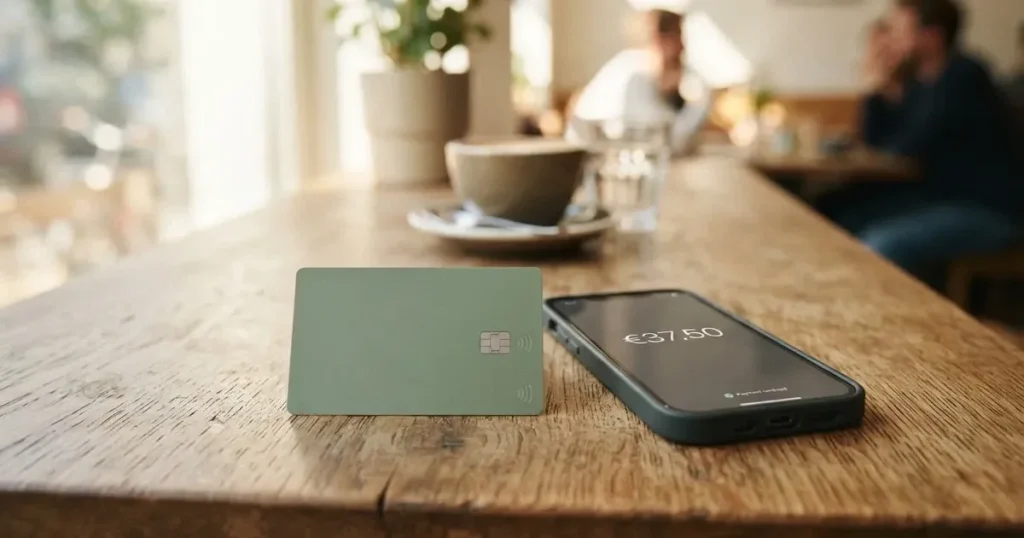
The ZAR card is a Visa issued under the ZAR app, designed for people who already hold stablecoins and want a card to spend them from, without giving up control of their crypto. The product sits in an unusual spot: it leans on USDC on Solana for funding, a Singapore company for the legal framework, an American bank (SSB, Member FDIC) for the dollar side, and a card issuer that the public pages do not name. That shape explains both the score and the reservations I have about it.
Conditions are current as of October 28, 2026.
This review is based on the ZAR website, its App Store listing, and the publicly available terms of service, all checked on 20 October 2026. Conditions are current as of 2026-10-20. I am not a customer of ZAR and the card has not been sent to me; everything below is taken from those public sources and is presented as such. The aim here is plain: to walk you through who can get the card, what it costs, how you fund and use it, what could go wrong, and where the honest alternatives stand.
Verdict
ZAR earns 7.3 out of 10 in my scoring, with the breakdown shown in the table below. It is a strong product for one specific use case: holding USDC in a self-custody wallet and spending those dollars through a virtual Visa, with Apple Pay tap-to-pay, no stated foreign transaction fees, and the comfort of a US bank on the fiat side. For that reader, the card makes sense. It is weaker if you want a tiered rewards programme, a wide choice of top-up coins, or a physical card in the post — the plastic version is still listed as “coming soon”, and the company gives no shipping timeline.
| Criterion | Score | Why it scores that way |
|---|---|---|
| Who can get it | 8 / 10 | The site says 100+ countries and the App Store says 110+, but the excluded list (Russia, Belarus, Iran, Iraq, China, Japan, Vietnam, Venezuela) is shorter than most rivals |
| Cost | 9 / 10 | Account opening and virtual cards are free, and the marketing line is “no foreign fees”; what is missing is a published monthly fee, FX spread and ATM allowance |
| Top-up options | 5 / 10 | Right now the terms accept USDC on Solana only, with other stablecoins converted to USDC on the way in; bank transfer and cash at a merchant are also listed |
| Reliability and complaints | 7 / 10 | Operated by a named Singapore company (Golden Age Dev Lab Pte Ltd), dollars from Circle, bank from an FDIC-member institution; no public complaint trail found, but the card issuer is not named |
| Everyday use | 6 / 10 | Virtual Visa in USD, Apple Pay confirmed, ATM withdrawals claimed; no Google Pay confirmation and no physical card available yet |
The audience this card suits is a reader who already holds dollars in USDC and wants a clean way to spend them in shops and online, in a setup where the app does not custody the crypto. The reader it does not suit is someone who wants cashback, several stablecoin top-up networks, or a physical card to hand to a waiter this week.
Who will they give you the card
ZAR is open in a long list of countries, but not an unbounded one. The website says “100+ countries”, the App Store says 110+, and neither gives a full list. The terms of service spell out the excluded jurisdictions in more detail: Russia, Belarus, Iran, Iraq, China, Japan, Vietnam and Venezuela are all named, and the terms add a catch-all that ZAR “may refuse service in certain locations” without promising that the named list is the only one. If you are in a country outside that list, the door is probably open; if you are in it, or if your country adds you to its own restricted list later, the door is closed.
The rule applies to where you are, not just where you were born. The terms list the excluded countries without saying whether the test is citizenship, residence, or both, so the same person can be refused at the sign-up screen even if their passport is from a permitted country. You must also be 18 or older, and you must not be on a sanctions list.
That openness is the reason this criterion scores 8 out of 10, not higher. Wider acceptance than several rivals is a real plus, but the unpublished country list and the imprecise legal test keep it just below the top mark.
KYC is required for bank connectivity and for card services, and the verification is handled by Plaid, a third-party identity provider. The acceptable documents include passports and driving licences, and the screening extends to politically exposed persons (PEPs), the standard extra check for people who hold or have held a prominent public role. The terms do not mention a separate proof-of-address step, and they do not give a processing time, so a slow week at the verifier is a possibility you should plan for if you have a flight to pay for soon. There is also a single KYC tier — the card is not pitched as bronze, silver and gold with different limits — and the account can be suspended for fraud, legal obligation or breach of the terms.
If you are reading this from a permitted country, with an ID document in hand, and you do not need a card in the next 24 hours, the sign-up screen is the place to start. The next section walks through what that screen asks of you.
How to get it
The sign-up is built around the ZAR app, which is available on iOS and Android. After installing it, you create an account, pass the Plaid identity check, and link a self-custody wallet for the USDC you intend to spend. Once the checks clear, you can issue a virtual Visa immediately, add it to Apple Pay, and start tapping. The plastic card is still listed as “coming soon” on the public pages and no delivery date is given, so treat any “physical card” expectation as something that may arrive months after the virtual one.
The KYC step is the part most people underestimate. Plaid will ask for the document, the selfie, and possibly a follow-up question about your address or your source of funds. PEP screening is automatic, and the result can take longer for people with common names whose records overlap with public figures. The terms do not publish a processing window, which means a one-day result is just as plausible as a one-week one. If your account is approved, you are in; if it is held, the only contact path is email ([email protected] or [email protected]), and there is no public phone line.
There is no level system behind the scenes. One KYC pass gives you the same account that anyone else gets, with daily transaction limits set on registration. The terms say those limits depend on the currency, the payment method and the outcome of the KYC/AML assessment, but no numbers are published, so the only way to know your own limit is to set up the account and read the limit screen. If the card is refused, the only public recourse is the support email.
The sign-up screen also wants a wallet connection. That is the part where the card’s nature shows: ZAR is “self-custodial wallet software”, and “we do not custody or control your funds”, so the app expects you to bring your own USDC and your own keys. If you have never held a seed phrase, this is the moment to read up on it before you sign up; a lost phrase means a frozen balance, because no one at ZAR can recover a self-custody wallet for you.
What it really costs
ZAR is unusually cheap on the headline numbers and unusually quiet on the smaller ones. Account opening is free, virtual cards are free, and the marketing line is “no foreign fees”. The physical card, when it ships, will charge a one-off fee that depends on the country of delivery, and the monthly fee is not stated. Conversion fees, ATM fees and FX spreads are not published either; the promise is that the fees you owe are shown in the app before you confirm the transaction, and that fee changes are announced one week in advance.
| Fee or limit | What is published |
|---|---|
| Account opening | Free |
| Virtual card issuance | Free |
| Physical card issuance | Fee depends on country (amount not stated) |
| Monthly maintenance fee | Not stated |
| Foreign transaction fee | “No foreign fees” |
| Conversion / FX spread | Not stated |
| ATM withdrawal | Fee not stated; allowance not stated |
| Daily transaction limit | Set at registration, depends on currency, payment method, KYC |
| Monthly transaction limit | Set at registration |
| Card currency | USD |
Two everyday payments illustrate what the cost structure looks like in practice. The first is a dinner paid by tapping the virtual card through Apple Pay. The merchant receives the amount, the card network applies the wholesale Visa rate, and the app debits the corresponding amount from your USDC balance after the conversion at the rate shown on the confirmation screen. There is no published foreign transaction fee and no published network surcharge, so the only number you can check is the conversion rate at the moment you tap; if it looks fair, you confirm and the meal is paid. The second example is a coffee in Berlin, paid the same way. The card settles in USD, so the local currency amount is converted to USD by Visa at the wholesale rate; the card does not charge a stated FX fee, and the rate on screen is the rate you get. The risk in both cases is the unstated spread inside that rate, which is how most “no foreign fee” cards actually earn their margin.
The ATM case is the place to be most careful. The App Store says you can “withdraw dollars as local currency from ATMs worldwide”, which sounds straightforward, but the fee and the allowance are not stated. If you take out cash in Frankfurt, you will see a screen showing the fee and the rate before you confirm; the question to ask yourself is whether the unstated daily cap covers the amount you want, and whether your own bank charges a fee on top. Treat the first ATM withdrawal as a small test, not a primary use of the card.
The honest summary is that the headline fees are good and the small print is thin. For a reader who only ever spends small amounts and reads the confirmation screen every time, that is fine; for a reader who wants to know the all-in cost before they start, the missing monthly fee and FX spread is a gap.
How to top up ZAR up
Funding is the part of the card where the marketing story runs into the practical limits. The terms say the system currently accepts USDC on Solana, and that other stablecoins (USDT is named as the obvious example) may be accepted but are converted into USDC on the way in. The site also lists two other options: a bank transfer and cash at a merchant. A bank transfer arrives as dollars from an external account, and a cash top-up is the older prepaid-card pattern of walking into a partner shop and paying over the counter.
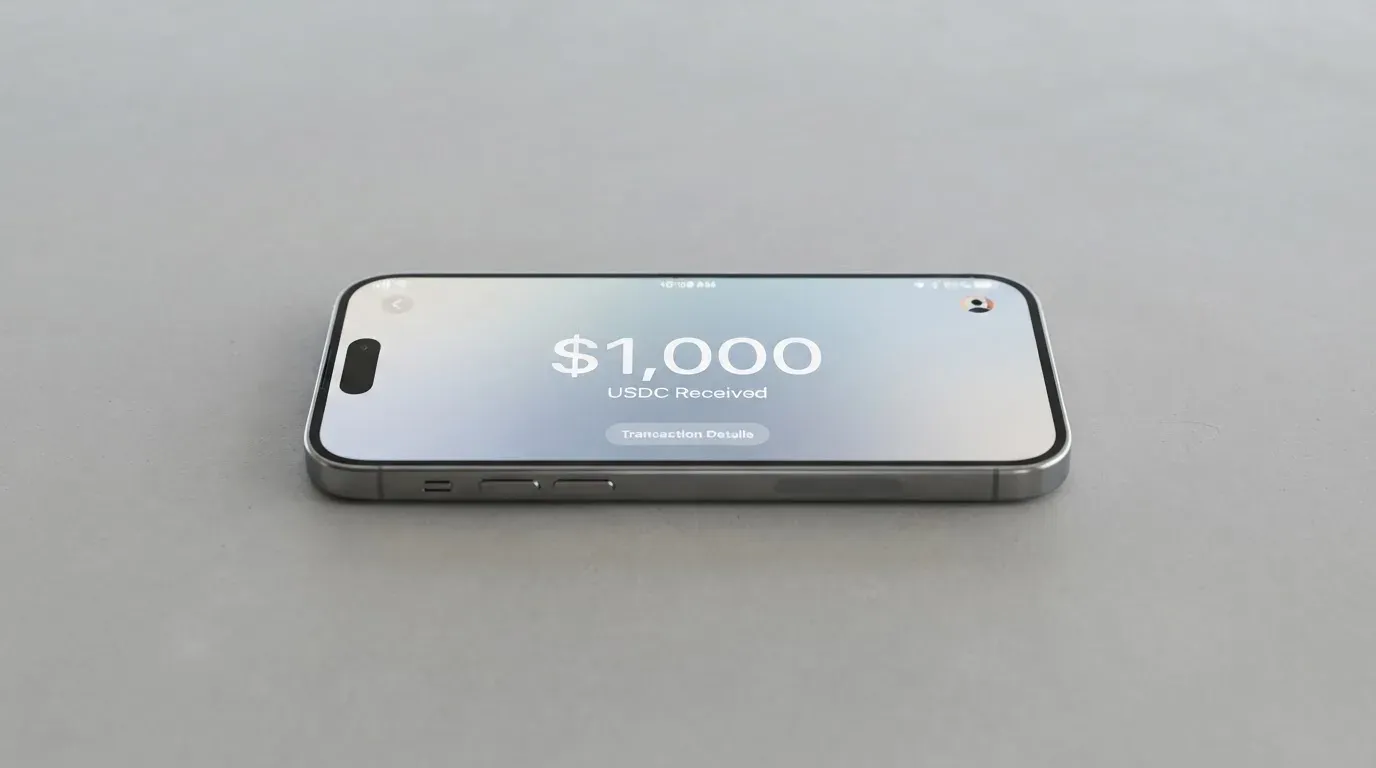
The USDC route is the one the app is built around, and it comes with three rules that are worth memorising before you send anything. First, the network has to be Solana; the terms warn that a transfer on a different chain may be lost, and stablecoin transfers on a blockchain are not reversible. Second, the wallet you send from has to be your own; ZAR describes itself as self-custodial wallet software, so the deposit is matched to your address. Third, if you are sending USDT, the app converts it to USDC at the rate shown on the confirmation screen, and that rate is what you get. None of the public pages publish a minimum top-up, and none of them publish the network fee you will pay to the Solana blockchain for the transfer itself; the app shows the fee before you confirm, and that is the only number to go on.
The bank transfer route is the one to use if you do not want to touch crypto. The fees depend on the method (a domestic transfer is cheap, a SWIFT transfer is not), and the same rule applies: the fee is shown before you confirm. The cash-at-a-merchant option is country-specific and not described in detail on the public pages; if you need it, the app will tell you whether there is a partner near you.
The most common mistake, by some distance, is sending USDT on the wrong network. USDT exists on several chains (Ethereum, Tron, Solana, Polygon, Avalanche and others), and the destination address in ZAR is a Solana address. A USDT-on-Tron transfer to that address can be lost permanently, because cross-chain sends are not supported and the blockchain has no way to refund. Circle stopped supporting USDC on Tron in February 2024, which removes a second source of confusion, but it does not change the rule that the chain has to match.
Withdrawing money from the account is the symmetric operation, and the rules are similar. The account can be closed at any time, but all funds have to be withdrawn first; the withdrawal fees are not stated, and the same “fee shown before you confirm” rule applies. Plan a small test withdrawal before you treat the card as a primary cash account.
Paying with it every day
In daily use, the card is a USD-denominated virtual Visa that you add to Apple Pay, hold over a payment terminal, and watch the confirmation screen for the amount and the rate. The app is on iOS and Android; the App Store rating in the UK is 3.9 out of 5 from 44 ratings (read on 21 October 2026), and the Google Play rating was not read for this review. The Tap to Pay function is also listed on the website, and that is the headline everyday feature.
Google Pay is not confirmed in the public materials. If your phone is Android, the absence is worth checking on your own device before you rely on the card at a shop that does not take a physical swipe. The terms do not list blocked merchant categories, so the standard gambling and high-risk MCCs (the four-digit merchant codes that classify a business — 7995 covers gambling, for instance) are not explicitly excluded, which is unusual for a self-custody card and means the policy on gambling and similar categories is something to confirm in the app itself.
Online checkout works through the standard Visa rails. The card number, expiry and CVV are visible in the app for online use, and 3-D Secure may be required on some sites: the issuer (whose name is not published by ZAR) assesses the risk and either approves the payment or asks for a one-time code or biometric. A small number of foreign-issued cards are declined by US merchants that use Address Verification Service, because AVS is mostly available in the US, Canada and the UK and tends not to cover foreign-issued BINs (the first six or eight digits of a card number that identify the issuing institution). If a payment fails, the funds are not necessarily lost: a declined authorisation can leave a hold for several days, often up to seven, before it releases.
The dispute process is the unusual part. The terms say disputes about smart contracts, oracles, APIs, the ZAR backend and account access go to “automated in-app resolution”, and that you waive litigation and arbitration for those cases; other disputes go to the Singapore courts. The standard Visa chargeback process for a faulty online purchase is not described in the public materials, and that is a real gap for a reader who plans to use the card for larger online orders. Treat the card as a strong tap-to-pay tool and a careful online tool, until the dispute process is clearer.
The rewards picture is, in a word, absent. The card does not advertise a cashback rate, a points programme or any spending tiers, and the public materials are silent on the topic. If rewards matter to you, the next section on alternatives is the more useful read.
What can go wrong
The risks fall into three groups: the company behind the card, the technology under it, and the operational edges of a thin public record.
The company is Golden Age Dev Lab Pte Ltd, a Singapore private company. The terms put the legal relationship under Singapore law and the Singapore courts, and describe ZAR as a “fintech company, not a bank” and “not a money services business”. The dollar side is provided by Circle (USDC) and the banking side by SSB, a Member FDIC institution; the customer funds held at SSB in custodial accounts are FDIC-insured up to US$250,000 per depositor, but the insurance is against the bank’s failure, not against ZAR’s. The card issuer is not named on the public pages, which is unusual for a Visa product and worth treating as a known unknown: the BIN on the card reveals the issuer in practice, and the public materials do not contradict that, but they do not confirm it either.
The technology risk is the standard self-custody risk with a stablecoin twist. The private key (or seed phrase) for your wallet is yours alone, and a lost phrase means a lost balance; phishing, clipboard-hijacking malware that swaps copied addresses, and a seed phrase written on a piece of paper in a drawer are all ways to lose access. Stablecoins can depeg: USDC briefly lost its peg in March 2023 during the US banking crisis, and TerraUSD collapsed in May 2022. Neither event is a reason to avoid stablecoins, but both are reasons to keep the working balance on the card small.
The operational risk is the thin public record. I searched the usual complaint channels (Trustpilot, Reddit, app reviews) for “ZAR app zar.app card review trustpilot reddit complaints” and found no ZAR Trustpilot page and no public complaint trail. That is a double-edged finding: there is no loud evidence of trouble, but there is also no track record of recovery when something does go wrong. The lack of a published card issuer, the unpublished monthly fee, the unpublished FX spread and the unpublished ATM allowance are all places where the public information is thinner than the comparison products below.
The support contact is email only: [email protected] and [email protected]. There is no published phone line, no published live chat, and no published response-time target. If your card is declined on a Saturday night, the only channel is a Monday email.
What to take instead
Three cards make a useful comparison set, chosen because they cover the main reasons a reader might look past ZAR: a more explicit fee schedule, a multicurrency Mastercard, and a US-restricted card with cashback.
International Visa Card is a US-issued Platinum Visa that scores 6.7 out of 10. It is not available to residents or legal registrants of Belarus, mainland China, North Korea, Cuba, India, Iraq, Iran, Israel, Myanmar, Nepal, Nicaragua, Russia, Syria, Turkey, Ukraine, Venezuela or Vietnam, and FATF grey-list countries are reviewed case by case; the test is residence or registration, not citizenship. Purchases are blocked in North Korea, Cuba, Iran, Russia, Syria, Ukraine and Venezuela. The card itself is a US-issued Platinum Visa, virtual, paying in USD, with the physical version listed as “coming soon”. The virtual card costs US$5 one-time, with no maintenance fee, and the plans are Classic (free), Pro (US$9.00 per month) and Max (US$19.00 per month). The fee schedule is more explicit: card use in USD is free on every plan, foreign-currency payments are “Visa exchange rate + 2% FX fee”, and deposits of any kind are free. Funding is deposit of USDC or USDT into the USD account at 1:1 (free), with USD, EUR, SEPA, SWIFT and FedNow deposits also supported; networks are not stated. The published materials do not list cashback.
UNi Card is a multicurrency Mastercard on the UNi.Global account balance, scoring 6.1 out of 10. Country availability is not stated, the physical and virtual split is not stated, and the card currency follows the account. The cost is “no annual fee”, with no published issuance fee and “no foreign transaction fee”; assets are converted at “live OTC (Over-the-Counter) rates”, with “no hidden exchange fees” claimed. Funding details are not stated. The reward is “Spend-to-Earn rewards up to 3% with UNi Card”, which is the main reason to consider it over a rewards-light card.
Whop Cards is a Visa that works anywhere Visa is taken, scoring 5.2 out of 10. Consumer availability is 31 US states (Alabama, Alaska, Arkansas, California, Colorado, Connecticut, Florida, Hawaii, Illinois, Indiana, Iowa, Kansas, Kentucky, Maine, Massachusetts, Michigan, Minnesota, Montana, Nebraska, New Hampshire, New Jersey, New York, North Carolina, Oklahoma, Pennsylvania, South Carolina, Texas, Utah, Virginia, West Virginia and Wyoming), with business availability in 41 states; unsupported consumer countries include Belarus, mainland China, Cuba, Hong Kong, India, Iran, Iraq, Israel, Myanmar, Nepal, Nicaragua, North Korea, Russia, Syria, Turkey, Ukraine, Venezuela and Vietnam. The card currency and the virtual/physical split are not stated. The published cost line is “no extra fees”, with no issuance or monthly amounts. Rewards are 5% cashback at select merchants, currently Uber, with more planned. The funds sit as a Whop balance backed by stablecoin collateral from a linked wallet; coins and networks are not stated. The narrower US footprint and the limited cashback list are the trade-offs.
| Card | Score | Where it works | Headline cost | Rewards | Funding |
|---|---|---|---|---|---|
| ZAR | 7.3 | 100+ countries, named exclusions | Free account, free virtual card, “no foreign fees” | Not stated | USDC on Solana, bank transfer, cash at merchant |
| International Visa Card | 6.7 | Long exclusion list, residence/registration test | US$5 virtual, plans from free to US$19/month, 2% FX | Not stated | USDC/USDT at 1:1, USD, EUR, SEPA, SWIFT, FedNow |
| UNi Card | 6.1 | Not stated | No annual fee, no FX fee | Up to 3% Spend-to-Earn | Not stated |
| Whop Cards | 5.2 | 31 US states (consumers); long exclusion list | “No extra fees”, no amounts | 5% at select merchants, currently Uber | Whop balance from linked wallet, stablecoin collateral |
The pattern across the comparison is the trade-off ZAR makes: it is more open than International Visa Card, simpler than UNi Card, and global in a way Whop Cards is not, but it is the only one of the four that has no published cashback and no choice of top-up networks. If rewards and a wide funding menu are the priority, the comparison cards win; if a single USDC balance, a self-custody model and a broad country list are the priority, ZAR wins.
Who I would recommend it to
I would recommend ZAR to a reader who already keeps dollars in USDC, is comfortable with a self-custody wallet and a 12- or 24-word seed phrase, lives in one of the 100-plus permitted countries, and wants a virtual Visa to spend that balance in shops, online and through Apple Pay without moving dollars through a centralised exchange first. For that reader, the combination of a named Singapore company, an FDIC-member bank on the dollar side, a self-custody model on the crypto side and a “no foreign fees” line is a sensible package, and the missing monthly fee or FX spread is a known unknown they can live with.
I would not recommend ZAR to a reader who wants a physical card this quarter (the plastic version is still “coming soon”), who wants cashback or a points programme (none is published), who plans to top up with USDT on a chain other than Solana (the conversion and the network have to be right), or who needs a robust public dispute and chargeback process (the standard Visa chargeback is not described in the public materials). For those readers, the alternatives above are a more honest match.
The honest summary is that ZAR is a focused, well-shaped product for a specific kind of reader, and that focus is also the limit. The score of 7.3 out of 10 is a fair reflection of a card that does the core job well, with thin public information on a few points that a careful reader will want to confirm in the app before they trust it with a large balance.
Frequently asked questions
What is the ZAR card?
ZAR is a virtual Visa debit card issued under the ZAR app, paid from a USDC balance held in your own self-custody wallet. The company behind it is Golden Age Dev Lab Pte Ltd, a Singapore fintech, and the dollars are provided by Circle and held at SSB, a Member FDIC bank in the United States. The card spends in USD, supports Apple Pay, and the physical version is listed as “coming soon”.
How does the ZAR card work?
You install the ZAR app, complete KYC through Plaid, connect your own self-custody wallet holding USDC on Solana, and issue a virtual Visa. When you tap to pay, the app converts USDC to USD at the rate shown on the confirmation screen and the Visa network settles the payment with the merchant. Your crypto stays in your wallet until the moment of payment, and ZAR does not hold the keys.
Is ZAR a bank?
No. ZAR describes itself as a fintech company, not a bank, and the terms say it is not a money services business. The banking partner is SSB, a Member FDIC institution, and the customer funds held in custodial accounts at SSB are FDIC-insured up to US$250,000 per depositor, with the insurance covering the bank’s failure rather than ZAR’s.
Who owns ZAR?
The legal entity is Golden Age Dev Lab Pte Ltd, a Singapore private limited company. The terms put the legal relationship under Singapore law and the Singapore courts. The card issuer (the bank that actually issues the Visa) is not named on the public pages, which is one of the known unknowns in the public record.
Is the ZAR card available in my country?
The site says 100+ countries and the App Store says 110+, with no full list. The terms name Russia, Belarus, Iran, Iraq, China, Japan, Vietnam and Venezuela as excluded, and add a catch-all that ZAR may refuse service in certain locations without promising the list is exhaustive. The legal test (citizenship, residence, or both) is not stated, so the only safe way to confirm is to start the sign-up and see whether the country screen accepts you.
How do I get a ZAR card?
You download the ZAR app on iOS or Android, create an account, complete the Plaid identity check with a passport or driving licence, connect your self-custody wallet, and issue a free virtual Visa. Adding the card to Apple Pay takes a tap, and the virtual card is ready to use as soon as KYC clears. The physical card is still “coming soon” and has no published delivery date.
Does the ZAR card require KYC?
Yes. KYC and AML checks are required for bank connectivity and card services, and the verification is handled by Plaid. The acceptable documents are passports and driving licences, the screening covers politically exposed persons, and the terms do not give a processing time. There is a single KYC tier, and your daily transaction limit is set at registration based on the outcome.
How do I top up the ZAR card?
You send USDC on Solana from your self-custody wallet to the address shown in the app, or you arrange a bank transfer, or you pay cash at a partner merchant. The terms say other stablecoins (USDT is named) may be accepted but are converted to USDC on the way in, and that a transfer on the wrong chain may be lost. The app shows the fee and the rate before you confirm.
How do I add the ZAR card to Apple Wallet?
Open the ZAR app, go to the card view, and tap the option to add the card to Apple Wallet. Apple Pay then replaces the card number with a device-specific Device Account Number stored in the Secure Element, and each payment uses a one-time dynamic security code. The setup is the standard Apple Pay flow and usually takes under a minute after KYC has cleared.
Is the ZAR card safe?
The card uses a self-custody wallet, so the private key (or seed phrase) for your crypto is yours alone; ZAR does not custody the funds, and a lost phrase means a lost balance. The dollar side is held at SSB in custodial accounts insured by the FDIC up to US$250,000 per depositor, with the insurance covering the bank’s failure rather than ZAR’s. There is no published complaint trail and no public Trustpilot page, so the track record is short and the support channel is email only.
App and neobank card reviews – cryptocardcheck
Content created by the «cryptocardcheck» team