
What I found checking the Bix card's fees, funding routes and licensing
 Available in US
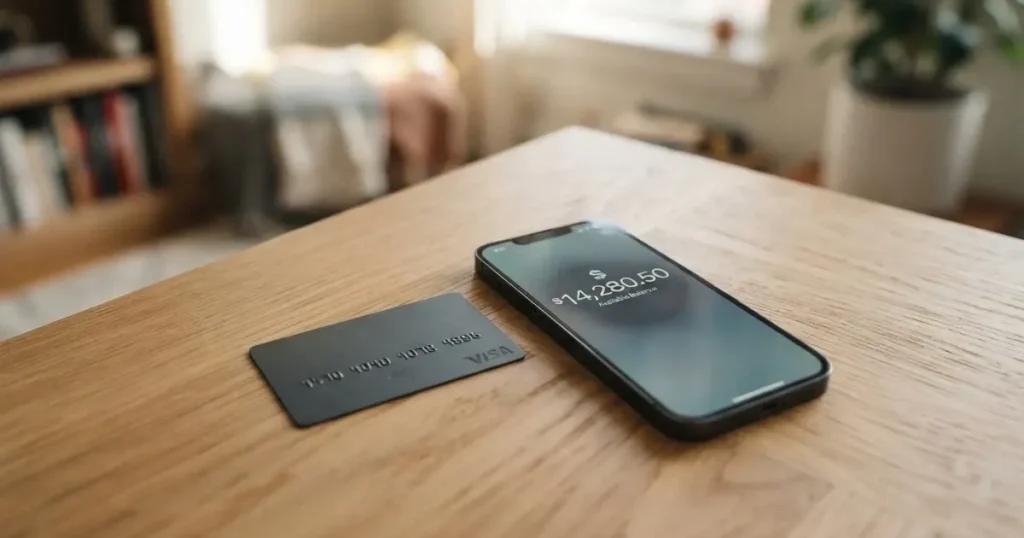
The Bix card is a Visa debit card tied to the BIX Wallet, and the part that makes it interesting is also the part that makes it demanding: your crypto stays in a wallet you control. Nothing is deposited into a custodial account held by the company. You lock stablecoins as collateral, the card draws against that collateral, and you keep the keys.
That design is genuinely different from most crypto cards, where the provider custodies your money and hands you a spending balance. It also puts the work on you — the wrong network, the wrong address or a lost seed phrase are your problem, not the company’s. Bix scores 5.2 out of 10 in my assessment. That is not a dismissal; it is what you get when a technically careful product is offered through an unnamed issuer, in 29 US states, with a purchase fee that its own press release contradicts.
This review is written for you if you are anywhere in the world, have trouble getting an ordinary bank card, and are weighing Bix against other options. Country and citizenship rules below are as the card states them, and they matter more here than usual.
The conditions described here are current as of October 28, 2026
Verdict: 5.2 out of 10, and the middle of the table is exactly where it sits
The score is not a rounding of something rosier. Bix does the custody part well and does the card part thinly. If you hold USDT or USDC in a self-custody wallet, live in one of the 29 states the service currently covers, and want to spend that balance through a Visa number without handing your coins to a platform, it fits. If you want a metal card, cashback in hand today, a long complaint history to lean on, or a card you can open from anywhere on Earth, it does not.
| Criterion | Mark | Why |
|---|---|---|
| Who can get it | 2 / 10 | The issuer names residents of 29 US states with a target of 49; there is no country list anywhere on the site |
| Cost | 5 / 10 | Virtual Visa $9.99, standard membership free; 3% on card purchase and 1% conversion, against a press release claiming no funding fees and 1% FX |
| Top-up options | 8 / 10 | USDT and USDC as collateral in a self-custody wallet on Ethereum, BNB Smart Chain, Base, Solana, Optimism; fiat “coming soon” |
| Reliability and complaints | 6 / 10 | Bix Ltd in the Cayman Islands with operating offices in Dubai, no issuer named, no complaints found; iOS app 4.4 out of 5 from 7 ratings |
| Everyday use | 7 / 10 | Virtual card now, physical and metal “coming soon”; Apple Pay and Google Pay supported; ATM $1 + 0.6% |
| Total | 5.2 / 10 |
Two of those five lines deserve a note. Reliability at 6 out of 10 is a score for absence of bad evidence, not for evidence of good: I found no official incident notice and no user-report source within my search budget, which is not the same as a clean record. And top-up options at 8 out of 10 is the strongest line here, because self-custody funding across five networks is a real answer for someone who already keeps funds on-chain — provided you never send on the wrong chain.
The single number I would weigh most heavily is the 2 out of 10 on eligibility. Everything else in this review matters less if you are not in the covered states.
Will they give you the card
Here is the blunt answer: only if you live in one of a limited set of US states, and the card’s own website will not tell you which ones.
The site says service availability depends on your location, your eligibility and the relevant provider’s terms. There is no country list on the site. A press release dated 25 September 2026 says the card is open to eligible residents of 29 US states, with a target of 49 states within six to eight months. That is the only concrete geographic statement the company has made.
So the practical sequence is this:
- If you are outside the United States, there is nothing to apply for. The programme as announced is a US programme, and the site does not claim otherwise.
- If you are inside the US but outside the announced states, the honest answer is that the card’s public pages do not say. There is no list to check against.
- If you are in a covered state, eligibility still runs through identity verification and programme requirements for eligible users. The documents required, whether proof of address is needed and what the minimum age is: not stated.
One more thing worth knowing before you spend an afternoon on this. Bix Ltd is a Cayman Islands company with operating offices in Dubai, and it describes itself plainly: BIX is a technology company, not a bank, with regulated services delivered by third-party partners. The bank that actually issues your Visa is not named on the pages I could see. When a provider routes regulated services through partners, that is normal and legal. It also means the entity standing behind your card is not the one whose app you download.
How to get it
You apply through the BIX Wallet, and the card you get first is a virtual Visa. That is the concrete answer, and it comes with a string of things the public pages leave open.
The card is a Visa debit card linked to the BIX Wallet. A virtual card is available now; a physical card and a metal card are described as “coming soon”. The card’s currency is not stated, which matters because the conversion fee is 1% and you cannot price that fee without knowing what it is charged on.
Here is the checklist of what you will and will not find:
- Entry point: the BIX Wallet app, with the card issued into it.
- Card format on day one: virtual Visa.
- Later formats: physical and metal, both “coming soon”.
- Identity checks: “identity verification and programme requirements” for eligible users.
- Documents, proof of address, minimum age: not stated.
- Delivery time for a physical card: not stated.
- Any tiered verification levels: not stated.
Two practical notes. First, the iOS app is called BixPay, and the app listing sits under Bit One Ventures Inc. — a different name from Bix Ltd, which is the company behind the programme. Second, if your plan depends on a physical card, plan around “coming soon” rather than around a delivery estimate, because there is no estimate to plan around.
Fees: what a Bix payment really costs
This is the section where the card’s own materials contradict each other, and you should hold both numbers in your head rather than picking the friendlier one.

The help centre publishes a fee table. The press release from 25 September 2026 describes a US programme with no funding fees and 1% foreign exchange. Those two accounts do not agree on the card purchase fee, and the help-centre figure is the one I would budget from.
| Fee or limit | What the card states |
|---|---|
| Standard membership | Free |
| Virtual Visa card | $9.99 |
| BIX Plus membership | $119/year, planned |
| Physical card | $99, planned |
| Card purchase | 3% |
| Currency conversion | 1% |
| Small authorisation | $0.75 (charges under $50) |
| Declined transaction | $0.65 |
| ATM withdrawal | $1 + 0.6% |
| ATM free allowance | Not stated |
| Monthly spend limits | Configurable, based on your deposited collateral |
| Limits in amounts | No amounts stated |
| Card currency | Not stated |
The help centre adds a caveat worth reading twice: fees may vary depending on the transaction type or the payment network. On ATM withdrawals the press release says a 0.6% physical-card ATM fee is planned, against $1 + 0.6% in the help centre.
Now let me walk through three ordinary payments and apply the table, because that is where a fee list stops being abstract.
A coffee purchase. The card purchase fee of 3% applies to transactions, and there is no stated minimum on the purchase fee itself. The $0.75 small-authorisation charge applies to charges under $50. This is the case where the fee structure does the most damage, because small purchases are exactly the ones people make most often with a new card.
A $60 online subscription in dollars, paying from a euro balance. The 3% card purchase fee applies to the transaction, and if the payment is converted from another currency the 1% conversion fee is the stated charge for it. Address verification is mostly a US, Canada and UK service and is generally unavailable for foreign-issued cards, which is one reason a payment like this can be declined; a declined transaction carries the $0.65 charge, and a declined authorisation can leave a hold on funds for several days.
A $40 withdrawal from a cash machine abroad. $1 plus 0.6% on the amount, with no free allowance stated. On a $40 withdrawal the fixed $1 is the larger half of the cost, which is the usual shape of ATM pricing: small withdrawals are punished, large ones less so.
Add the tier picture to this: virtual now, physical and metal “coming soon”, with BIX Plus at $119/year on the planned list. So the card’s own roadmap implies a paid tier, and the free standard membership today is the entry point rather than the finished product.
Top up: how the money actually gets in
The funding route is the strongest thing about Bix, and it is also the part where a careless mistake is expensive.
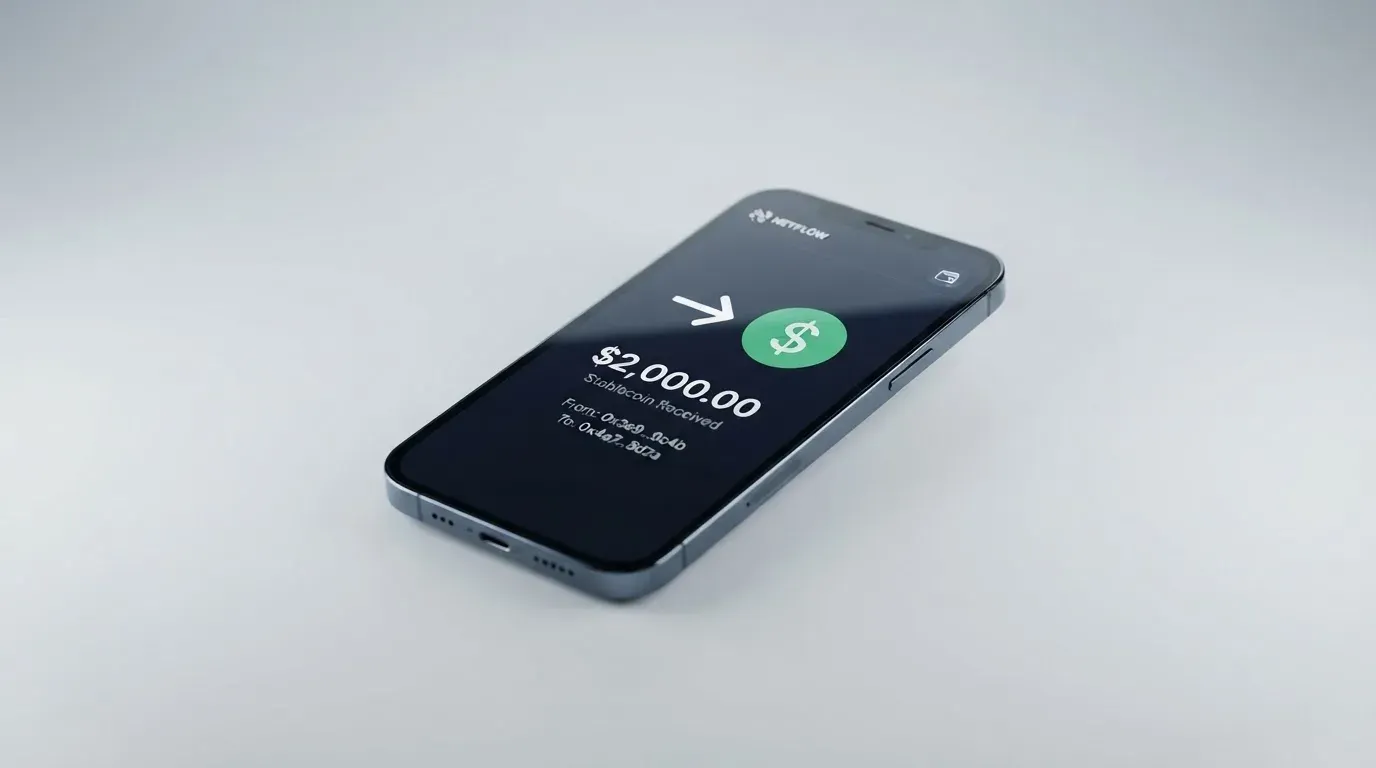
USDT and USDC are held as collateral in a self-custody wallet, on Ethereum, BNB Smart Chain, Base, Solana or Optimism, in supported combinations. The fiat on-ramp is “coming soon”, so there is no bank-transfer route to speak of yet. The company says there are no funding fees. The minimum deposit and who pays the network fee are not stated, and withdrawal terms are not stated either.
Here is how I would think about it:
- What you send: USDT or USDC, nothing else, and only on one of the five named networks.
- Where it lives: your own wallet, under your own keys. Bix says your keys are never stored in complete form.
- What it does there: it becomes collateral against your spendable card balance.
- Funding fee: none, per the company.
- Minimum amount, network-fee payer, withdrawal rules: not stated.
Now the part I would not skip. Blockchain transfers are irreversible. A deposit sent on a network the card provider does not support, or sent to an address belonging to a different network, can be lost or need manual support recovery with no guarantee. The company has published a help centre at help.bix.fi, but recovery is a request, not a right.
Two further wrinkles belong in the same breath. On Ethereum, gas is paid in ETH, so a wallet holding USDT with no ETH cannot send it. And stablecoins are not censorship-proof — Tether says it disables tokens in wallets on the OFAC sanctions list and has frozen funds tied to illicit activity. Your collateral is self-custodial in the sense that nobody at Bix can move it, not in the sense that nobody in the world can.
I would test the whole route with an amount you would not mind losing, on a network you already use, before committing anything you care about.
Paying with it every day
In practice the daily use is narrow but workable: a virtual Visa number, addable to Apple Pay and Google Pay, spending a balance you funded yourself.
The app and the everyday mechanics:
- Wallets: the card can be added to Apple Pay or Google Pay.
- Blocked merchant categories: not stated.
- Spending: against collateral you deposited, with configurable monthly limits based on that collateral.
- Rewards: BIX Rewards “coming soon”, with no rate given.
- Visa Signature benefits listed: lounge access, travel and rental car insurance, hotel discounts up to 65%, and a concierge.
- The iOS app: 4.4 out of 5 from 7 ratings, read on 2026-10-21. Google Play was not read. Seven ratings is a very thin base for a 4.4.
- Dispute handling: not stated.
The Visa Signature list is worth a second look, because it is the part of the proposition that is real today rather than promised. Lounge access, insurance and hotel discounts come from the card programme and do not depend on BIX Rewards shipping. Whether you qualify for them at your spend level is something the pages do not say.
What you will not get today: a metal card, a points rate, or a stated policy on disputed transactions. And in a category where merchant declines are common — some shops refuse prepaid or foreign BINs because the BIN lookup reveals the card type and the issuer country — the unstated blocked-category list is a real gap. I would find out by trying, not by asking.
What can go wrong
Here is my honest list, ordered by how likely it is to affect you.
You are not in a covered state. The single largest risk. 29 states live, 49 targeted, no published list. If you are outside the US, the answer is no.
The issuer is not named. Bix Ltd is a technology company, not a bank, and regulated services come through third-party partners. Knowing which institution issues your Visa matters when something goes wrong with your card.
The purchase fee is 3%, and the press release says something else. If you budget from the press release you will be surprised at the till. Budget from the help-centre table.
Small payments are penalised. A $0.75 charge on transactions under $50 sits uncomfortably next to a 3% purchase fee, which is a significant cost for small purchases.
A wrong-network deposit is gone. Irreversible, and the provider does not control the blockchain that lost it.
Programme interruption. Cards of this kind close. WaveCrest, a Visa issuer that supplied crypto card brands, was suspended by Visa in Europe in 2018, closing all its Visa programmes. Visa terminated its global agreements with FTX on 13 November 2022 and the FTX US debit card was wound down. Closures typically mean a notice period, then spending and loading stop, then you are asked to withdraw what is left.
The security claims are strong and the counterparty is small. Bix points to Shamir’s Secret Sharing, AWS Nitro TEEs, SOC2 Type II, audits by Cure53, Zellic and Doyensec, and 24/7 monitoring. Those are the right words. They describe how the company’s software is built, not whether it will still be operating in three years.
No complaints found — but no complaints record either. I found no official incident notice and no user-report source within my search budget, and no Trustpilot page for Bix. On a two-year-old product with seven app ratings, an empty complaint record is weak evidence.
On the positive side, and I want to be fair here: the non-custodial design means a hack of Bix’s servers does not hand an attacker your coins, because your keys are never stored in complete form and BIX says it does not hold or control assets in your wallet. The risk you carry instead is your own — key loss, phishing, and malware that swaps a copied address. A seed phrase is typically 12 to 24 words, and anyone who obtains it can restore the wallet and spend from it, with no built-in recovery on the network.
What to take instead
I compared Bix against three alternatives. None of them is a straight swap — they differ on geography and on custody — and the right comparison is against your own situation.
| Card | Score | Where | Custody | Cost to open |
|---|---|---|---|---|
| Bix | 5.2 / 10 | 29 US states, 49 targeted | Self-custody | $9.99 virtual |
| TokenPocket | 5.8 / 10 | Visa across European countries and territories; Mastercard across Australia, Canada, Hong Kong, Japan, Taiwan, New Zealand, Singapore, South Korea, UK and others | Wallet-based, provider-held | NFT creation fee partly covered by TokenPocket |
| MetaMask | 7.1 / 10 | Sign-up open in 45 listed countries and territories; other regions waitlist; US and UK temporarily closed | Spends directly from your connected wallet | Virtual free; Metal $199/year |
| KAST | 6.1 / 10 | Residence-based list shown at KYC; country list not published | Own balance, spent directly | Standard $0; Premium $1,000/year; Private $10,000/year |
TokenPocket is the geographic answer if you are outside the US. Visa for European countries and territories such as Germany, France, Spain and Switzerland; Mastercard for Australia, Canada, Hong Kong, Japan, Taiwan, New Zealand, Singapore, South Korea and the UK, among others. It runs on Arbitrum, and Fiat24 cards are virtual. Its fees: a 1% fee on depositing cryptocurrency into the card, refundable later through rewards or reduced transaction fees, plus settlement costs that can come from other institutions. No cashback stated. A modest improvement on Bix’s score, and a better fit for most of the world.
MetaMask scores highest of the four at 7.1 out of 10 and is the closest thing here to a mature option. Sign-up is open in 45 listed countries and territories, with proof of residency required; other regions join a waitlist, and US and UK sign-ups were temporarily closed. It spends directly from your connected wallet on Linea, Base, Monad and Solana, and holds mUSD, wETH, EURe, GBPe, USDC and USDT. The virtual card is free with no annual or maintenance fee; Metal is $199/year. Fees are described as minimal with no additional MetaMask fees and no foreign transaction fee, using the Mastercard rate. Cashback is paid in mUSD: 1% on Virtual, and on Metal a headline 3% with a footnote limiting it to the first $10,000 spent and 1% after. It is issued by Monovate with Crypto Life as card provider, one card per user.
KAST is the one with the widest product range and the oddest price ladder. Virtual and physical, up to 10 cards, from Visa Platinum through Visa Infinite metal and gold plated, with Penguin, Solana and Bitcoin designs. Standard is $0, Premium $1,000/year, Private $10,000/year, billed annually upfront. Its fee story is the cleanest of the four: 0% on stablecoin top-up, 0% on USD spending, 0% transaction fee, 0% for Apple and Google Pay, and a 0.5%–1.75% non-USD conversion fee depending on where you reside and where you are spending. Cashback is 1.5% / 2% / 3% USD on the first 2,000 / 10,000 / 40,000 dollars a month. But eligibility is judged at KYC against an unpublished list, and holding an ID from a restricted region can disqualify you even while living in a supported country. A VPN does not bypass it.
My read: outside the US, MetaMask or TokenPocket beat Bix on availability and, in MetaMask’s case, on price and transparency. Inside the covered states, Bix’s self-custody model is the differentiator, and 3% on purchases is what you pay for it.
Who I would recommend it to
I would recommend Bix to someone specific rather than to a category. That person already runs a self-custody wallet, already holds USDT or USDC on one of the five supported networks, lives in one of the 29 states, and wants to spend from that balance without giving the coins to a platform. They are comfortable with an app not yet on Google Play’s visible ratings, a provider that has not said who issues the card, and a 3% purchase fee they will notice at the till.
I would not recommend it to someone who wants a card that works everywhere, needs a physical card today, is chasing cashback, or expects a mature complaint and dispute record to lean on. Nor to anyone whose first question is whether the deposit is reversible, because it is not.
And a warning that belongs to everyone reading this rather than to Bix specifically: paying with crypto-backed cards can be a taxable event. The IRS treats digital assets as property, so exchanging them for goods, services or dollars generally produces a taxable gain or loss measured in local currency at the value on the date of the transaction — which means each card payment funded from crypto may be a separate disposal. I am not able to tell you what your position is; that is a conversation with someone qualified in your jurisdiction.
Frequently asked questions
What is the Bix card?
The Bix card is a Visa debit card linked to the BIX Wallet, a self-custody crypto wallet. You deposit USDT or USDC as collateral and the card spends against that balance. The defining feature is custody: your keys are never stored in complete form by the provider, and Bix says it does not hold or control assets in your wallet. A virtual card exists now; physical and metal versions are described as “coming soon”.
How does the Bix card work?
You lock stablecoins as collateral in your own wallet, and the card draws spending against that collateral with configurable monthly limits based on what you deposited. Payment is essentially prepaid: the balance you have funded is the balance you can spend, so it cannot overdraw. The card number is a standard Visa PAN with an issuer identification number at the front, which is what makes it usable at ordinary shops and inside Apple Pay or Google Pay.
Is Bix a bank, and who owns it?
No. Bix says plainly that it is a technology company, not a bank, and that regulated services are provided by third-party partners. The company is Bix Ltd, registered in the Cayman Islands, with operating offices in Dubai, and its app appears in the store listing under Bit One Ventures Inc. The bank that issues the Visa is not named on the public pages I could see, which is worth knowing before you need it.
Is the Bix card available in my country?
Outside the United States, no. A press release dated 25 September 2026 says the card covers eligible residents of 29 US states with a target of 49 states within six to eight months, and the website publishes no country list at all. If you are outside those states there is nothing to apply for; if you are inside the US but outside the announced set, the card’s own pages do not say either way.
How much does the Bix card cost, and is it free?
The standard membership is free and the virtual Visa card costs $9.99. Then come the transaction fees: 3% on card purchase and 1% on currency conversion, per the help centre. A $0.75 charge applies on small authorisations under $50, a declined transaction costs $0.65, and an ATM withdrawal is $1 plus 0.6%. A press release described a US programme with no funding fees and 1% FX, which conflicts with the 3% purchase figure.
How do I top up the Bix card?
You send USDT or USDC to your own self-custody wallet on Ethereum, BNB Smart Chain, Base, Solana or Optimism, in supported combinations, and that balance becomes the card’s collateral. The company states there are no funding fees. A fiat on-ramp is “coming soon”. The minimum deposit and who pays the network fee are not stated, and transfers are irreversible — send on the wrong network and the money can be gone.
Is the Bix card safe, and is it anonymous?
On custody, yes, it is built differently: keys are never stored in complete form, and the company cites Shamir’s Secret Sharing, AWS Nitro TEEs, SOC2 Type II and audits by Cure53, Zellic and Doyensec. But self-custody transfers the risk to you — key loss, phishing and address-swapping malware have no built-in recovery. And it is not anonymous: identity verification is part of the programme, and anti-money-laundering rules apply to regulated businesses.
Can I use the Bix virtual card in Apple Wallet?
Yes, the card can be added to Apple Pay or Google Pay. Apple Pay replaces your card number with a device-specific account number kept in the Secure Element, never on Apple’s servers, and generates a one-time code for each payment. The issuer can still restrict a tokenised number to certain channels, and which merchant categories are blocked on the Bix card is not stated.
Is the Bix card worth it?
For spending from crypto you already hold on-chain, the self-custody model and five supported networks are real advantages, and Visa Signature benefits come with the card today. Against that: 3% on every purchase, a $0.75 small-authorisation charge, availability limited to 29 US states, an unnamed issuer, a physical card that does not exist yet and rewards marked “coming soon”. I would call it worth it only if you have funds already sitting on-chain and no other card option.
Where can I withdraw money from Bix?
Cash machine withdrawals are stated at $1 plus 0.6%, with no free allowance mentioned, and the press release describes a 0.6% physical-card ATM fee as planned. On a small withdrawal the fixed dollar amount dominates the cost. The card’s general withdrawal terms are not stated, and stablecoins can be frozen by their issuers, so the balance is yours but not unconditionally spendable.
Wallet card reviews – cryptocardcheck
Content created by the «cryptocardcheck» team