
No KYC, but you pay to hold it: a review of the CardUpNow virtual card
 Available in US

CardUpNow sells something simple to describe: a virtual Visa or Mastercard you open with an email address and a password, no ID documents, then load with crypto and spend like an ordinary payment card. That simplicity is the appeal. The catch is what the service is built on. You pay $50 to activate the account, 5% on card issuance, 5% on every deposit and 5% on every withdrawal, and the public pages do not name the company behind it or the institution that issues the card. Users report frozen cards and money that never came back. My score is 4.2 out of 10.
Conditions described here are current as of October 28, 2026.
Verdict: 4.2 out of 10
Let me show you the score first, because the number is only half the story — the breakdown tells you which single criterion is doing the damage, and here it is cost.
| Criterion | Mark | Why |
|---|---|---|
| Who can get it | 8 / 10 | Open worldwide with no country list, non-residents allowed; UK and India named as markets; use in sanctioned countries or with sanctioned entities prohibited |
| Cost | 1 / 10 | $50 activation, 5% card issuance, 5% top-up, 5% withdrawal |
| Top-up options | 6 / 10 | Bitcoin, Ethereum, USDT and “other major coins”; networks not named |
| Reliability and complaints | 2 / 10 | Legal entity and issuer not named; 79% of Trustpilot ratings are one star, about frozen cards and unreturned funds |
| Everyday use | 4 / 10 | Virtual Visa and Mastercard only; Apple Pay and Google Pay for the Visa; no ATM |
Total: 4.2 / 10
The one strong line is eligibility. There is no country list to fail, non-residents are allowed, and you are not asked for a passport, a selfie or a social security number — the marketing phrases it as “for eligible plans” and “where allowed by law”, and higher limits or business accounts may still ask for verification. If you specifically cannot get an ordinary bank card and you want one without handing over documents, that is a real, narrow need, and this product answers it.
Everything around that answer is expensive or unclear. A 5% top-up fee on every deposit is not a rounding error: load $300 and $15 goes to the service before the card spends a cent. Then the card issuance fee is another 5% of the card amount. Add the $50 activation and you are paying to hold a thing that costs nothing to open at competitors. And on top of the price, the page does not tell you who you are trusting with the balance. No legal entity, no registration, no issuing bank. That is not a small gap in paperwork; it is the first thing I would want answered before sending money.
Who gets the card
Who gets it: essentially anyone, and that is the honest good news here.
The card’s own material describes it as worldwide with no country list. The UK and India are named as markets. Use in sanctioned countries, or with sanctioned entities, is prohibited. Non-residents are allowed. So there is no nationality screen, no residency screen, no documentation screen at the entry level. If your blocker for a normal card is paperwork, this door is open.
Two things I would not read into that. First, “no country list” is not the same as a published statement that every country is accepted; it means the card does not tell you which ones it turns away. Second, the sanctioned-country prohibition is real and it is the one place where the card does draw a line. I am not going to explain how to work around any country’s rules — if you are in a restricted jurisdiction, the answer from this service is simply no, and that is the end of it.
What is not stated: any verification level beyond the entry tier, and any limits on who may hold an account beyond age 18 or over. If you are reading this hoping for an answer about your specific country, the card’s public pages will not give you a clear one, and I would not want to guess on your behalf.
How to get it
You register with an email address and a password. That is the whole flow. No ID, no phone number, no social security number. You must be 18 or over.
What you get is virtual only — there is no physical card in the product at all. You choose a virtual Visa or Mastercard, either single-use or reloadable. There is also a higher tier called CardUp Elite.
Details are expected within 15 minutes of payment. That is fast, and it is worth noticing that the clock starts after you pay, not after you sign up.
So the sequence is short: register, pick your card, pay. The payment is where the cost story starts, which is why the next section is where you should slow down and read.
One honest gap: the card does not state what verification, if any, sits above the entry level, or exactly which limits are gated behind it. Higher limits and business accounts are mentioned as things that may require verification. If you need a large balance or a business account, you are finding out the rules at the point where you need them, not in advance.
Fees and what a payment really costs
This is where the score lives, and where the price is worst in this category. Before I go line by line, the honest arithmetic: with 5% on top-up, another 5% on issuance, a $50 activation and no published FX fee but a $0.40 decline charge and a $0.40 surcharge under $30, this is not a cheap way to spend crypto. It is one of the more expensive ways.

| Fee or limit | What the card’s pages say |
|---|---|
| Account activation | $50 one-time, non-refundable |
| Card issuance | 5% of the card amount |
| Elite tier | Free with a $300 top-up |
| Deposit | 5% deposit fee |
| Withdrawal | 5% wallet withdrawal fee |
| Declined transaction | $0.40 |
| Payment under $30 | Extra $0.40 |
| Refund overuse | $0.50 or 2% |
| FX fee | Not stated |
| ATM | Not stated; the card is virtual |
| Published caps | None published; user can set limits per card; Elite has higher limits, amount not given |
| Fees charged in | USD; “international currencies” claimed, none listed |
Now, three everyday payments, because that is where the percentages bite.
A $12 coffee. Under $30, so the extra $0.40 applies. Then the 5% issuance fee if this is a new card amount, and 5% if the money reached the balance as a deposit. If you funded with crypto, the conversion sits on top. A twelve-dollar coffee, with fees, stops being a twelve-dollar coffee.
A $250 flight. Above $30, no small-payment surcharge. But the 5% deposit fee and 5% issuance fee still apply if this is a fresh card amount, and any decline costs $0.40. A large payment is proportionally cheaper in fees than a small one — the small payments are where the fixed charges dominate.
A subscription you forget about. This is the one that worries me most. A decline costs $0.40, and overuse of refunds is penalised at $0.50 or 2%. If a merchant tries to bill a card you have cancelled and it declines repeatedly, the charges accumulate quietly.
There is one contradiction you should know about rather than discover. The fees page and the fees-and-usage page disagree: the latter says crypto deposits carry no CardUpNow fee. The former says 5%. I would assume the 5% is real until you have seen a receipt that says otherwise.
Two tiers exist. Standard Visa or Mastercard, or CardUp Elite — free with a $300 top-up, zero reload and transaction fee, higher limits and premium support. The catch is that “free” is reached only by committing $300 first, and the higher limits are described without an amount.
Top up: what you send, and what it costs
Top up: you send crypto, and the coin list is short enough to name — Bitcoin, Ethereum, USDT, and “other major coins”. Networks are not stated. That single omission is the biggest practical trap on this page, and I will come back to it.
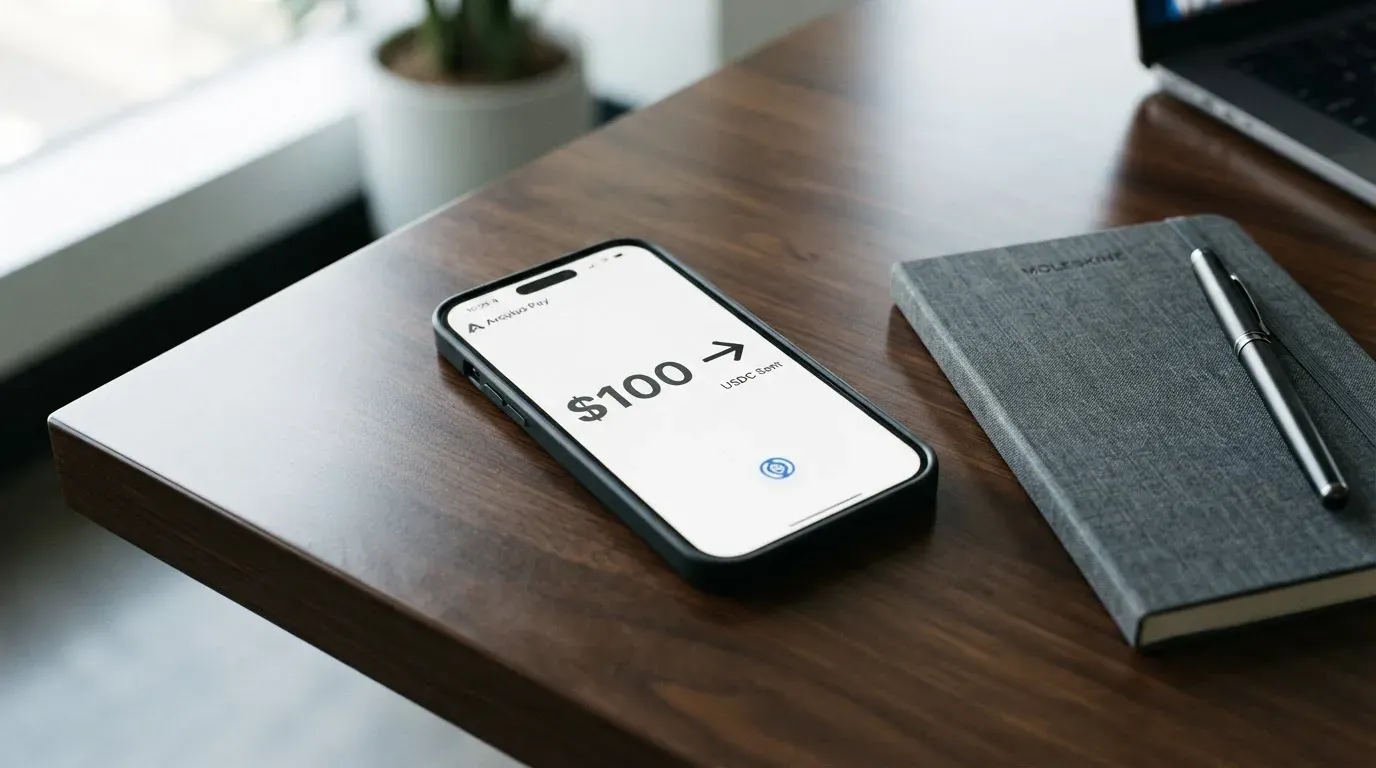
The deposit costs 5%. The minimum is $50 on the fees page and $100 on the fees-and-usage page — the same conflict as above, in a second place. Deposits under $100 in USDT carry an extra $1 USDT handling charge. Blockchain network fees may apply on top, charged by the network rather than by the card. There is no maximum.
Withdrawal is 5% of the wallet balance, with a $50 minimum on the fees page and none on the fees-and-usage page. If you delete the card or close the account, any remaining balance may be returned subject to policy.
Here is why “networks not stated” matters more than it looks. Sending USDT is not one action but several, depending on the chain it travels on. USDT exists on Ethereum, Tron, Solana, Polygon, Avalanche and others. If you send on a network the provider does not support, or to an address belonging to another network, the transfer can be lost or need manual support recovery with no guarantee — blockchain transfers are irreversible by design. Before you send, you need to know the chain, and this card does not tell you.
One more coin-specific detail: on Ethereum, fees are paid in ETH, so a wallet holding USDT but no ETH cannot send. Tether also states that it disables tokens in wallets on the OFAC sanctions list and has frozen funds tied to illicit activity. Stablecoins are not censorship-proof, and neither is a stablecoin card.
Paying with it every day
Day to day you are holding a virtual card number on your phone, not a piece of plastic. The Visa can be linked to Apple Pay or Google Pay; the Mastercard does not get that on these pages. Everything is done through a web app at app.cardupnow.com — no store app was found, so there is no native app to lose.
Balances are custodial prepaid. That means the provider holds the balance and the credentials; you are spending from a stored value, not from a bank account, so the card cannot overdraw. It also means you trust the provider with the money. Encryption is claimed and you can set limits per card, which are real safeguards when they work — and per-card limits are something only the provider can lift.
Prohibited uses are stated: unlawful gambling, pornographic services, and dark-web markets. Note that gambling is also blocked by many issuers by policy rather than by law, and the exact list varies by issuer, so your own merchant mix may be narrower than you expect.
Two everyday features are promised but unquantified. CardUp Elite offers “cashback, rewards and perks” with no rate given. And refunds have a stated flow: request within 48 hours of the transaction, reviewed within 3 business days, paid out in 5 to 10 business days, and only for system errors or unusable cards, escalable by email under “Refund Dispute”. Chargebacks are not mentioned at all. If a merchant simply never delivers, that route is not described.
Two more practical notes from how card payments work in general. Merchants can look at the BIN and see which institution and country issued the card, and some decline prepaid or foreign-issued cards as a result. Address verification is mainly offered in the US, Canada and the UK and is generally unavailable for foreign-issued cards, which causes declines. And a declined authorisation may leave a hold on your funds for several days, typically up to 7. None of that is this card’s fault; all of it is more likely to happen with a virtual card from an unnamed issuer.
What can go wrong
This is the section I would read twice.
Nobody is named. No legal entity, no registration, no issuer. The card says it is “not a traditional bank” and that is all. When your balance sits with a provider that has not told you who it is, you have no one to complain to in a regulator’s forum, no company to name in a dispute, no jurisdiction to point at. The card is explicit that it is not a bank — which is fine as a description, provided you understand that ordinary depositor protections are not implied by anything on these pages.
The complaints are about money, not gripes. Reports include high fees, the $50 account fee, a $300 Elite upsell, and failed-authorisation charges in May 2026. A card was removed with about $7 left in May 2026. Frozen cards, restricted accounts and unreturned funds were reported in September 2026. Declined cards run from August to October 2026. The company replies and disputes.
The review profile is bleak and thin. Trustpilot shows 79% one-star ratings — read on 21 October 2026. The rating itself is shown as unavailable because of a breach of guidelines with fake reviews removed, and there are 14 reviews, with the page also saying 16 in the last 12 months. Fourteen to sixteen reviews is a very small sample, so I will not oversell it as statistically meaningful. But the pattern is consistent with the individual reports: failed and declined cards from May to October 2026, frozen cards and unreturned funds from June to September 2026, fees and upsells from May to June 2026. No news coverage was found either way, which tells you the company is not a household name.
Support has no published hours. There is a contact page, a Telegram channel at t.me/CardUpNowSupport and WhatsApp, and Elite promises “premium support”. No hours are stated. If your card is frozen on a Sunday, you have a Telegram channel and no published response time.
Bigger-picture risk, for context. Custodial platforms have a documented history of failure — Mt. Gox, about US$350 million reported stolen between 2011 and 2014; Coincheck, about US$400 million in 2018; Ronin Network, US$625 million in 2022. Holding funds with a custodian carries counterparty and hack risk. And card programmes do get closed: Visa terminated its global agreements with FTX on 13 November 2022, and WaveCrest, a Visa issuer that supplied crypto card brands, was suspended by Visa in Europe in 2018, closing all WaveCrest-issued Visa programmes. Closures typically mean a notice period, then spending and loading stop, then you are asked to withdraw what is left. On this card the “withdraw what is left” step costs 5%.
Also worth knowing, though not this card’s fault. A card is a payment service regulated separately from crypto, so a card like this normally rests on two licences — one for the money side, one for the crypto side. If you want to check any provider, the EU’s MiCA regime took legal effect in June 2023, its stablecoin rules applied from 30 June 2024 and the crypto-asset service provider rules from 30 December 2024, with a transitional period running only until 1 July 2026 or until authorisation is granted or refused. ESMA keeps an interim public register of authorised providers. I am not telling you where to look up a card that does not name itself.
What to take instead
I am comparing on the same axes; most of these do not publish fees, which is itself informative.
| CardUpNow | Cardex | CardFlow | HyperCard | |
|---|---|---|---|---|
| Score | 4.2 / 10 | 5.6 / 10 | 4.9 / 10 | 4.7 / 10 |
| Who it is for | Worldwide, no country list, non-residents allowed | “One crypto card, 200+ countries”; no list or exclusions | Aimed at Nigeria; “Nigerians and global users” | No country list on official pages; App Store says works in “more than 176 countries” |
| Card | Virtual Visa and Mastercard; no physical card | Debit card on VERVE, VISA, Mastercard, UnionPay; virtual and physical | Virtual USD Mastercard, about 3 minutes to create | Prepaid card, network not stated; balance in USD or EUR |
| Cost | $50 activation, 5% issuance | Not stated | Virtual card creation free; monthly fee not stated | Not stated |
| Fees | 5% deposit, 5% withdrawal, small-payment charges | Real-time conversion at payment, no percentage stated | Not stated | Not stated |
| Top-up | Bitcoin, Ethereum, USDT, other major coins; networks not stated | USDT, USDC and BTC wallets; networks not stated | Bitcoin, USDT, ETH or Naira bank transfer | Crypto such as USDT, BTC, ETH in the app |
| Rewards | Elite “cashback, rewards & perks”, rate not stated | Not stated | Not stated | Not stated |
Cardex scores highest at 5.6. It offers virtual and physical cards across four networks including UnionPay, funds from USDT, USDC and BTC wallets, and describes an “AI-Powered Conversion Rate” that scans exchange rates and picks the best one when you spend — read on 22 October 2026. Its app listing is Naira-focused, meaning you pay in naira. Costs are not stated.
CardFlow at 4.9 is aimed squarely at Nigeria and “global users”, issues a virtual USD Mastercard in minutes, and says creating a virtual card is completely free. You can fund with Bitcoin, USDT, ETH or a naira bank transfer. No fees are published.
HyperCard at 4.7 is a prepaid card with USD or EUR balance, funded with crypto in the app. Its App Store page claims acceptance in more than 176 countries — acceptance, not eligibility, a distinction worth keeping in mind.
The pattern across all three: none of them publishes a clear fee schedule either. The advantage Cardex has over CardUpNow is not cheaper fees — it is that you can hold a physical card if you want one, and its card cost is unstated rather than high. The advantage CardFlow has is a free virtual card to create. If you need no-KYC and no physical card, these three are at least worth a look before you commit $50.
Who I would recommend it to
To the person whose bank application was refused, who cannot produce documents a normal card requires, and who needs a virtual card number today more than they need to know who issued it. For that person this is a genuinely useful answer, and the eligibility policy is the best part of the product.
To nobody else — and I say that plainly. If you have an ordinary card and a working exchange account, this is strictly worse: you pay $50 to open, 5% to load, 5% to issue and 5% to withdraw, versus paying nothing to hold a card you already have. If you are putting money in expecting cashback, the Elite rewards rate is not stated, so you are buying an unquantified benefit with a $300 commitment.
My own order of checks before you send a cent: can you find out who the legal entity and the issuer are; what the total cost is on a realistic monthly volume; which networks the supported coins can actually arrive on; and what happens to your balance if you want to leave. Four of those four are unanswered on the public pages. That is the whole review, really. The card is cheap to walk away from and expensive to trust.
Frequently asked questions
What is the CardUpNow card?
It is a virtual payment card issued in the Visa and Mastercard networks, sold as a way to spend crypto without identity documents. You register with an email and password, load a balance from crypto, and the card spends that stored balance like a prepaid card. There is no physical card. It is marketed with no KYC at the entry level, subject to “eligible plans” and “where allowed by law”.
Does CardUpNow require KYC?
Not at the entry level. The card’s own material says no ID, no phone number and no social security number are needed to register. It does note that higher limits and business accounts may require verification, and phrases the no-KYC promise as applying to eligible plans and where allowed by law. The specific verification level above the entry tier is not stated on the public pages.
Is CardUpNow a bank, and who owns it?
No, it is not a bank — the card says so itself. Beyond that, no legal entity, no registration and no card issuer are named on the pages I read. For comparison, in a normal card setup the issuer is a bank or e-money institution licensed under the network’s licence, and the crypto brand is often only a programme manager. CardUpNow does not tell you which of those it is.
How much does CardUpNow cost to open and use?
$50 one-time, non-refundable activation, 5% of the card amount for issuance, 5% on each deposit and 5% on each withdrawal. A declined transaction costs $0.40, a payment under $30 adds $0.40, and refund overuse costs $0.50 or 2%. The fees page and the fees-and-usage page conflict on whether crypto deposits carry a CardUpNow fee. No FX fee is stated.
What can I top up CardUpNow with?
Bitcoin, Ethereum, USDT and “other major coins”. Deposits cost 5%, the stated minimum is $50 on the fees page and $100 on the fees-and-usage page, and USDT deposits under $100 carry an extra $1 handling charge. Network fees may apply. Crucially, the networks are not named — and USDT exists on several chains, so sending on an unsupported one can mean a lost transfer.
Is the CardUpNow card free?
No. There is a $50 non-refundable activation fee and 5% on issuance, deposits and withdrawals. CardUp Elite is described as “free with a $300 top-up” and comes with zero reload and transaction fee, higher limits and premium support — so it is free only after you commit $300, and the higher limits are not quantified.
Can I use CardUpNow in Apple Pay or Google Pay?
The virtual Visa can be linked to Apple Pay or Google Pay, per the card’s own material. The Mastercard does not get that on these pages. There is no physical card. Everything is done through a web app at app.cardupnow.com — no store app was found — so Apple Pay and Google Pay are in practice your most convenient route to a physical payment.
Is CardUpNow safe to use with money on it?
The safeguards described are encryption, custodial prepaid balances and per-card spending limits you can set — real when they work, but all controlled by the provider, since the balance is custodial and only the provider can lift a limit. Against that: no entity or issuer is named, and 79% of the small number of Trustpilot reviews are one star, with reports of frozen cards, restricted accounts and unreturned funds between May and October 2026.
Why would my CardUpNow payment be declined, and can I get the money back?
Declines are reported repeatedly, and a decline itself costs $0.40. Three general reasons apply: merchants may refuse prepaid or foreign-issued cards after looking at the BIN, address verification is largely unavailable for foreign-issued cards, and prohibited categories such as unlawful gambling are blocked. For refunds, the card’s stated route is a request within 48 hours, reviewed within 3 business days, paid in 5 to 10 business days, for system errors or unusable cards only. Chargebacks are not mentioned.
What happens if I want my money back or leave?
Withdrawing costs 5% of the wallet balance, with a $50 minimum stated on the fees page and none on the fees-and-usage page. If you delete the card or close the account, any remaining balance may be returned subject to policy. Worth knowing that card programmes do get wound down — when that happens the usual sequence is a notice period, then spending and loading stop, then users are asked to withdraw what is left.
Virtual card reviews – cryptocardcheck
Content created by the «cryptocardcheck» team