
Blackcatcard is cheap to open and awkward to rely on
 Available in US
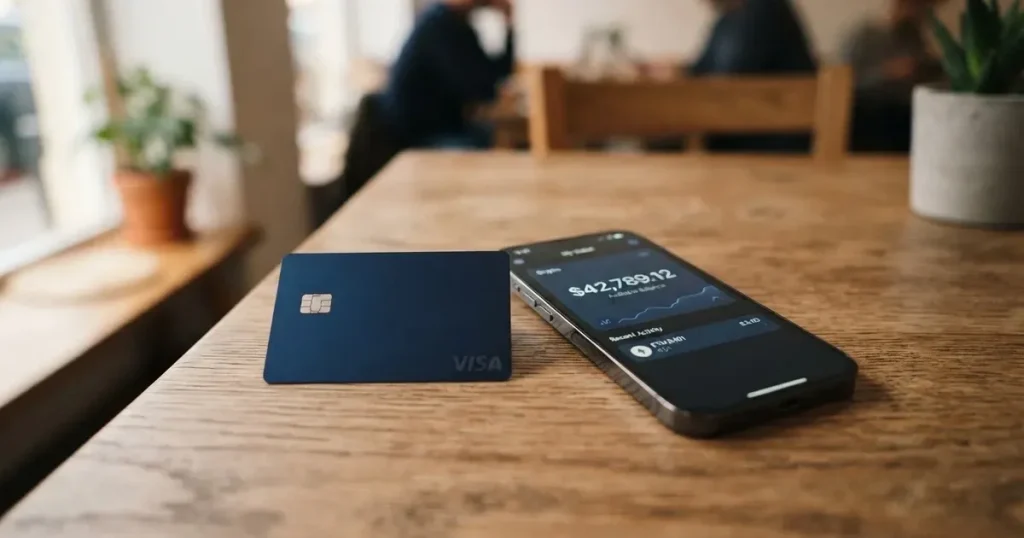
Blackcatcard is not a bank and not, on the evidence I could check, a company you can lean on when something goes wrong. It is an electronic money institution in Malta — Papaya Ltd. — that issues a euro account with an IBAN, a virtual Mastercard you get instantly, and a plastic one you can order. On paper the pricing is friendly: opening the account and the first card are free, ordinary top-ups by bank transfer cost nothing, and there is no monthly fee as long as you keep one card. Then you read the fee page and find that the number you actually care about — the crypto conversion fee — is not published anywhere, only described as “lowest fees on the market”. And then you read the reviews: a TrustScore of 1.9 out of 5 across 744 reviews, with the recurring complaint being that payments and transfers got blocked shortly after money arrived.
That combination is what produces the score below. I am not going to soften it, and I am not going to overstate it either: the product itself looks competently built for a specific person, and the complaints may be a mix of real problems and a difficult few months. What I can tell you is exactly what the card states, what it does not state, and where the risk sits.
*The conditions described here are current as of October 28, 2026.*
The score, and who this card actually suits
| Criterion | Mark | Why |
|---|---|---|
| Who can get it | 5 / 10 | Euro IBAN available worldwide after registration, 16+; the card itself is for EEA residents |
| Cost | 4 / 10 | Opening and first card free; 3% to top up the card; a simple €15/month after seven idle months; the conversion fee is not disclosed |
| Top-up options | 4 / 10 | BTC, ETH and USDT bought for euros in-app; SEPA into the account free; networks not named |
| Reliability and complaints | 2 / 10 | Papaya Ltd., Malta, with an MFSA licence named; but Trustpilot 1.9 of 5 from 744 reviews — payments blocked after funding, withdrawals suspended |
| Everyday use | 7 / 10 | Virtual card instantly, plastic available; ATM free in the EU up to €200 a month, then 1%; Apple Pay and Google Pay not disclosed |
| Total | 4.3 / 10 |
So who is this for? The card suits one reader in particular: someone living in the EEA who wants a euro IBAN and a Mastercard without opening a traditional bank account, and who is comfortable treating the balance as spend money rather than savings. It also suits someone who has a stablecoin balance already and wants to move it onto a card in euros — although even here the missing network list is a real friction point, and I come back to it below.
Who it does not suit: anyone whose income depends on this account being reliably payable, anyone with meaningful savings on it, and anyone who cannot absorb a surprise freeze. It also does not suit you if you are outside the EEA and want the card, because the card is described as being for EEA residents while the account is opened worldwide — a distinction worth understanding before you sign up, and I explain it in the next section.
Will they give you the card
The short version: the account is open to almost anyone who registers, and the card is not.
Here is the split as the card describes it. There is no country list on the site. A personal IBAN account is described as “available straight after the successful registration”, which reads as no country restriction. Business accounts are said to be available “from most jurisdictions” — most, not all. The card file describes a card for EEA residents and an account available globally at 16+. I could not confirm that last part on the pages I read, so treat the 16+ threshold as unofficial.
That means the practical answer to “will they give me the card” depends on where you live, not where you are from. If you are in the EEA, you are in the intended market. If you are not, you may well be able to open an account and get an IBAN, and then find the card is not something they will issue to you. The card states the rule by residence, not citizenship.
Two more things you will want to know before you start. Identity verification requirements are not stated on the pages I read — and for an EU-regulated electronic money institution that is genuinely unusual to find unstated, so I would treat it as something you must ask about rather than assume either way. The card does not publish any tier structure that I could find either, so there is no “verified” or “premium” level to work towards on the published material.
How to get it
Registration gets you an account; the card is a separate step, and there are two versions of it.
The Mastercard is described as “Free Mastercard”. A virtual card is issued instantly. The euro account sits behind it. The physical card is implied rather than spelled out — the delivery and reissue fees below only make sense if a plastic card exists.
Getting the plastic card is where the timing and cost live:
- Regular mail is free and takes 15–20 business days.
- Express delivery takes 1–5 business days, with the fee calculated individually.
- Reissuing a card costs €7 or €12 — the page tables disagree with each other on this, so confirm the number in your account before you need it.
Instant access to a virtual card is the reason this product is interesting in practice: if you need a card number today for an online payment, you are not waiting two to three weeks for the post.
Fees: what it really costs
Here is every number the card publishes, in one place. The gaps are as informative as the values.

| Fee or limit | What the card states |
|---|---|
| Account opening | Free |
| First card | Free |
| Monthly maintenance | Free with one card; €2/month with additional cards |
| Additional card | €7 (€12 with nickname) |
| Dormancy fee | €15/month from the 7th month of inactivity |
| Crypto conversion fee | Not stated (“lowest fees on the market”, no figures) |
| FX fee | Not stated |
| Card top-up and card transfers | 3% |
| ATM in the EU | Free up to €200/month, then 1% |
| ATM outside the EU | 1%, minimum €1.50 |
| Cash withdrawal limit | €5,000 daily; €10,000 monthly |
| Spending limits | Not stated |
| Minimum crypto purchase | 5 EUR |
| Disputed transaction (“claim without grounds”) | €10 |
| SEPA withdrawal out | 5 free per month, then €0.20 |
| Account closure | Free; €50 monthly fee on closed accounts holding funds |
Let me walk three ordinary payments through this, because the fee page is where a card like this usually surprises people.
Buying something in euros. This is the good case. A euro payment on a euro balance has no conversion to pay, so the 3% top-up fee does not apply and there is no FX fee — the card does not state one. Buy in euros, spend in euros, and the only thing between you and the shop is whatever the shop charges.
Paying in a currency other than euros. Here I have to tell you plainly: the FX fee is not stated. I cannot tell you what percentage is withheld or whether it is bundled into a spread. Ask before you rely on this, because a holiday or a foreign supplier can cost a multiple of what you expect if the rate is poor.
Buying crypto with euros and then spending it. You pay at least the 3% card top-up fee if you load the card that way, the crypto purchase minimum is 5 EUR, and the conversion fee — the margin between the quoted rate and the market rate — is the number that is not published. A card that advertises low fees while declining to publish its conversion fee is asking you for trust rather than evidence. You are entitled to that information.
The €15 dormancy fee is the one that catches people out. It starts in the seventh month of inactivity and is charged monthly. If you use the card for a subscription you forgot about, or you set it aside for a trip, that is the fee waiting for you.
How to top it up
There are two distinct doors, and they cost different things.
The free door is bank transfer. Incoming SEPA is free with no amount limit, as are SEPA and internal transfers within the account. If you are paid into this account, or you move euros in from elsewhere, that costs nothing.
The paid door is crypto. BTC, ETH and USDT can be sold for euros through the integrated crypto service, which the card file attributes to a partner, Manerio UAB. The minimum purchase is 5 EUR. What the card does not tell you is which networks to send on — and for crypto transfers that is not a small omission. Send on a network the provider does not support, or to an address belonging to a different network, and the transfer is usually lost, or has to be rescued by support with no guarantee of success. Transfers are irreversible by design; there is no network-level “undo” and no freeze button. On top of that, whoever sends you the coins still pays the blockchain’s own network fee, charged by the blockchain and not by the card.
So: the crypto route is convenient and the bank route is cheap. If you know which network to use — and you should confirm that with support in writing before your first transfer — the crypto route is the one this card exists for.
Withdrawing is a separate matter and worth reading. Five SEPA withdrawals a month are free, then €0.20 each. Closing the account is free, but a closed account that still holds funds carries a €50 monthly fee. Crypto withdrawal fees are not stated at all, which means the cost of moving coins out is something you have to ask about.
Paying with it every day
Day to day, this is the part of the card that works well.
The virtual card arrives instantly, which covers online payments and lets you start spending before any plastic arrives. Cash withdrawal is generous for a card in this category: €5,000 a day and €10,000 a month, with the first €200 a month of ATM use in the EU free.
What you cannot use, at least not from what the card publishes, is your phone. Apple Pay and Google Pay are not disclosed. That is not a small gap — tokenised mobile wallets are the single most effective way to avoid a card being declined at a terminal and the most convenient way to pay at all. The app is an iOS app called “Blackcatcard – My prepaid card”; I did not read its rating.
There are rewards on offer — “up to 5% cashback”, “Up to 4% p.a. reward”, and 2% cashback on Amazon — but the currency they are paid in and the conditions attached are not stated, so I would not build any spending around them. If you are comparing cards on rewards, that is the section to ask hard questions in.
One fee to know about before it surprises you: a “transaction claim without grounds” costs €10. The time frames for disputing a payment are not stated. In the US, chargeback rights come from Regulation E for debit and Regulation Z for credit, and prepaid-card coverage varies and should not be assumed; in the EU, the legal position depends on what the account is treated as. Do not file a dispute lightly, and do not assume a quick refund — the €10 is not even the main cost of a losing or fruitless claim.
What can go wrong
The biggest risk here is not a fee. It is access.
The card’s own company is straightforward enough to check: Papaya Ltd., 31 Sliema Road, Gzira GZR 1637, Malta, authorised and regulated as an Electronic Money Institution by the MFSA under reg. no. C55146. The loyalty programme runs through Baltic Technology Solutions OÜ. And the important line: funds are not covered by the Depositor Compensation Scheme. Your balance is e-money in a safeguarded account, not a bank deposit. If the institution fails, you are a creditor of a payments company, not a depositor with a guarantee behind you.
The private keys are described as protected by “a licensed institution” — this is a custodial setup, meaning you trust the provider with your coins entirely, and the provider’s security posture is something you cannot audit yourself.
Then there is what users actually report. On Trustpilot the card has a TrustScore of 1.9 out of 5 from 744 reviews, 56% of them one-star, as read on 2026-10-21. The recurring themes are consistent and specific: outgoing transfers and card payments declined or cancelled shortly after money arrived, with examples dated 8 May, 27 June, 28 July, 4 September, 25 September and 2 October 2026; withdrawals suspended; problems closing accounts; and support that replies generically. There are also allegations of scams. I found no official incident notice from the company acknowledging any of this, and user reports are user reports — a sample of unhappy customers is not a random sample of all customers. But a pattern this consistent, across months and in a specific sequence (fund the account, then get blocked), is exactly the failure mode that matters for a prepaid-style card, and you should weigh it accordingly.
The mechanism is not mysterious. Card payments involve several parties: the network routes the messages and sets the rules, the licensed issuer holds the programme, and the crypto brand is often only a manager or front-end. An EMI can issue e-money and cards but cannot lend, and the same EU licence can cover services across the EU/EEA. Visa and Mastercard do not issue crypto cards themselves — they license issuers and can suspend a programme. In November 2022 Visa terminated its global agreements with FTX and the US debit card programme was wound down; WaveCrest was suspended by Visa in Europe in 2018, closing all its Visa programmes. So the entity you trust with your balance is a regulated company, but it sits inside a commercial chain that can be switched off. That is the category’s structural risk, and Blackcatcard is inside it like everyone else.
Two more practical hazards. Some declines are mundane rather than sinister: a declined authorisation can leave a hold on your funds for several days, typically up to seven, and merchants can decline prepaid or foreign-issued cards because the BIN lookup reveals the card type and issuer country. Address Verification Service, which compares numeric parts of your billing address with issuer records, is mainly available in the US, Canada and the UK and is generally unavailable for foreign-issued cards — another reason a purchase can simply fail.
And note the asymmetry in the regulation. In the EU, customer due diligence covers your name, address, date of birth, nationality and identity documents, a sanctions check, the purpose of the relationship, and whether you are politically exposed — and if due diligence cannot be completed, the institution must refrain from the transaction or end the relationship. That is why accounts get frozen pending documents. It is not malice; it is the rule working. But it means a frozen account is a normal outcome of a failed check, not an exception.
What to take instead
None of these are perfect, and I am not going to pretend the alternatives are cheap. I am comparing them on the three things that matter here: who can open one, what the fees are, and whether the provider’s standing is clearer.
International Visa Card — 6.7 / 10. A U.S.-issued Platinum Visa, virtual, paying in USD, with the physical card listed as coming soon. It publishes its numbers: $5 to issue, no maintenance fee on the free Classic plan, $9/month for Pro, $19/month for Max; card use in USD is free on all plans, foreign currency is “Visa exchange rate + 2% FX fee”, and deposits of any kind are free. Rewards are not stated. The catch is eligibility: it is not available to residents or registrants of Belarus, mainland China, North Korea, Cuba, India, Iraq, Iran, Israel, Myanmar, Nepal, Nicaragua, Russia, Syria, Turkey, Ukraine, Venezuela or Vietnam, with FATF grey-list countries reviewed case by case; purchases are blocked in several of those same countries. The rule is by residence or registration, not citizenship. If you are outside the blocked list and want published fees, this is the more transparent of the two — though a virtual card with no physical option yet is a serious limitation for everyday use.
UNi Card — 6.1 / 10. A multicurrency Mastercard-network card spending from a UNi.Global account balance, with “no annual fee or foreign transaction fee”, assets converted at “live OTC rates” and “no hidden exchange fees”, plus “Spend-to-Earn rewards” up to 3%. That fee story is better on paper than Blackcatcard’s, because the conversion method is stated rather than promised. Against it: eligibility is not stated, the funding routes are not stated, and physical versus virtual is not stated. You are buying a fee structure, not a documented picture of who can open one.
Whop Cards — 5.2 / 10. Visa, usable anywhere Visa is accepted, spending from a Whop balance; pending balance becomes usable as soon as a payment arrives, standard withdrawals use settled funds, and it is backed by stablecoin collateral from a linked wallet. Rewards are 5% cashback at select merchants, currently Uber, with more planned — though payout currency and conditions are not stated. Coverage is wide but partial: 31 US states for consumers, 41 for businesses, with a long unsupported-country list for consumers including Belarus, China, Cuba, Hong Kong, India, Iran, Iraq, Israel, Myanmar, Nepal, Nicaragua, North Korea, Russia, Syria, Turkey, Ukraine, Venezuela and Vietnam, and Russia and Belarus unsupported for companies. Whether the list turns on citizenship or residence is not stated. Coins and networks are not stated either, and the fee page says only “no extra fees” without amounts.
Where Blackcatcard sits against these: it is the only one of the four with a named EU-regulated issuer and an MFSA licence number you can look up, and the only one offering a Euro IBAN alongside the card. It is also the only one that will not tell you its conversion fee or its FX fee. That trade — verifiable regulator, opaque pricing — is the whole card in one sentence.
One background point worth holding on to while you compare. A crypto card usually sits on two licences at once: the card is a payment service regulated under e-money and payment-services law, while MiCA covers the crypto side — custody, exchange, transfer. Under MiCA, which took legal effect in June 2023, e-money tokens may be issued only by a credit institution or an electronic money institution, with the token rules applying from 30 June 2024 and the remaining provisions including crypto-asset service provider rules from 30 December 2024. Providers operating under national law had a transitional period running only until 1 July 2026 or until a MiCA authorisation was granted or refused, whichever came first. ESMA keeps an interim register of authorised crypto-asset service providers, and you can check a provider there before you fund anything. If you want a second opinion on any of these companies, that register is the place to start — not a review site.
Who I would recommend it to
I would recommend this card to one person: someone in the EEA who needs a euro IBAN and a Mastercard quickly, has a small spend-only balance, and checks the exact conversion and FX fees with support before putting real money in. For that person it is a reasonable tool — instant virtual card, free account, free SEPA in, free first €200 of EU cash withdrawals.
I would not recommend it if you are outside the EEA and hoping for the card, because the card is described as an EEA product. I would not recommend it if you are planning to hold savings, because there is no deposit guarantee behind the balance. I would not recommend it if you are making salary-receiving payments or anything time-critical, because that is precisely what the reviews describe going wrong. And I would not recommend it if you cannot get a straight answer on the conversion fee, because a card that will not publish its central number is asking for more trust than the 1.9 rating earns.
The score is 4.3 out of 10. The mechanics are good; the trust evidence is not. That combination is recoverable if the fee transparency improves and the complaints clear — but you should go in knowing which of those two you are betting on.
Frequently asked questions
What is Blackcatcard?
Blackcatcard is an electronic money account with a euro IBAN and a Mastercard, run by Papaya Ltd., a Malta-licensed Electronic Money Institution regulated by the MFSA under reg. no. C55146. You get an account worldwide after registration and a virtual card instantly. It is not a bank, and funds are not covered by the Depositor Compensation Scheme.
How does Blackcatcard work?
You hold a euro balance and spend it. You can load that balance by SEPA transfer free of charge, or buy BTC, ETH or USDT for euros through the integrated crypto service with a 5 EUR minimum. The card then behaves like a prepaid card: purchases draw down the stored balance, and it cannot overdraw.
Is Blackcatcard a bank?
No. It is an electronic money institution, which can hold e-money, issue payment cards and offer e-wallets, but cannot lend. Customer funds must be safeguarded — segregated or insured — but that is not the same as a bank deposit, and Blackcatcard states its funds are not covered by the Depositor Compensation Scheme.
Who owns Blackcatcard?
Papaya Ltd., at 31 Sliema Road, Gzira GZR 1637, Malta. The loyalty programme is run by Baltic Technology Solutions OÜ, and the integrated crypto service is attributed to a partner, Manerio UAB. Only the first of those is the licensed party.
Is Blackcatcard available in my country?
The account appears open worldwide after registration, and there is no country list on the site; business accounts are said to be available “from most jurisdictions”. The card, however, is described as being for EEA residents. So outside the EEA you may get the account and not the card — ask before you rely on it.
Does Blackcatcard require KYC?
Identity verification requirements are not stated on the pages I read, and verification levels are not published either. As a regulated EU electronic money institution, its customer due diligence would normally cover name, address, date of birth, nationality, documents, a sanctions check and PEP screening — so expect checks and be ready to supply documents.
How much does Blackcatcard cost?
Opening the account and the first card are free, as is monthly maintenance with one card; extra cards add €2/month and cost €7, or €12 with a nickname. Card top-up and card transfers are 3%, ATM use is free up to €200 a month in the EU then 1%, and dormancy costs €15/month from the seventh idle month.
What are Blackcatcard’s hidden fees?
Two that matter are not published at all: the crypto conversion fee, described only as “lowest fees on the market”, and the FX fee. There is also a €10 charge for a transaction claim without grounds, and €50/month on a closed account that still holds funds. Ask for the conversion and FX rates in writing before you load anything.
How do I top up Blackcatcard?
SEPA bank transfers into the account are free with no limit, as are internal transfers — that is the cheapest route. To use crypto, buy BTC, ETH or USDT for euros in-app (minimum 5 EUR) or send coins in. If sending coins, confirm the supported network first: an unsupported network or a mismatched address usually means lost funds.
Is Blackcatcard safe?
Structurally it is a custodial e-money product: the provider holds the keys, described as protected by a licensed institution, and funds sit outside any deposit guarantee. Trustpilot shows 1.9 of 5 across 744 reviews, with repeated reports of payments and transfers blocked after funding. Expect to verify support’s answers against the card’s own published terms.
App and neobank card reviews – cryptocardcheck
Content created by the «cryptocardcheck» team