
A prepaid card for paying online with USDC, and not much more
 Available in US
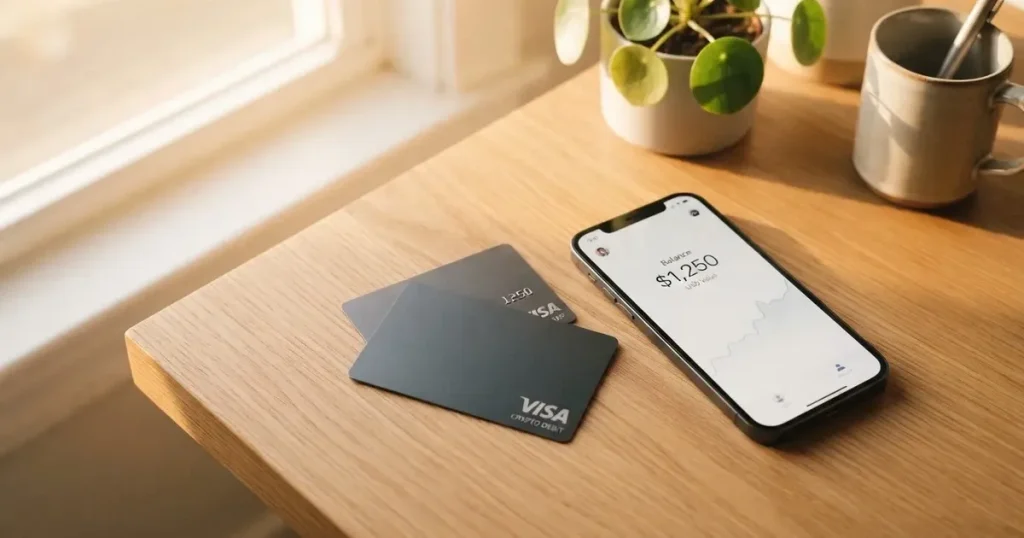
Laso Finance is not really a bank card in the ordinary sense. It is a prepaid card — virtual, USD-denominated, funded with USDC — aimed at people and automated agents that need to pay merchants online without going through a normal bank account. That narrow purpose is both its strength and its problem. If paying online from a crypto balance is exactly your problem, the card does that job. If you want a card you can hold, use in shops, take out cash from, and top up with ordinary money from your bank, this is the wrong product, and several of its numbers make that plain.
I scored it 5.6 out of 10.
| Criterion | Mark | Why |
|---|---|---|
| Who can get it | 8 / 10 | The official API names no restricted countries; the international card is described as having “No fixed list”. Third-party sources say 170 countries, with 26 restricted. |
| Cost | 3 / 10 | 0% on the US card, 3.8% on top of the on-card amount on the international card. Unofficially about 2% FX on international spending and a 14% unused-balance refund fee with a $10 minimum. No monthly fee is stated. |
| Top-up options | 8 / 10 | USDC over x402 on Base and Solana. Unofficially also USDT and DAI across Ethereum/EVM, Solana, Stellar, Arbitrum, Polygon, Optimism, Base, BNB Smart Chain and PulseChain. |
| Reliability and complaints | 6 / 10 | Laso Finance LLC, Austin, Texas, registered with FinCEN as a money services business; issuer not named. Trustpilot 4.1, with complaints about Apple Pay, regional account closures, and the bug bounty paused indefinitely on 21 September 2026. |
| Everyday use | 3 / 10 | Virtual only. Unofficially Apple Pay is not guaranteed, in October 2026 only Google Pay was said to work, and ATM withdrawals are blocked. |
The conditions described here are current as of October 28, 2026.
A word on what this card is for. The card’s own description frames the audience as users and AI agents paying online with USDC. That is a real and fairly neglected need — but it is a need, not a general-purpose payment account. Read the sections below as “is this the right tool for my one specific job”, and you will not be disappointed by it. Read it as “a bank card that happens to be cheap”, and you will be.
Will they give you the card?
Two products, and the difference matters more than anything else on this page.
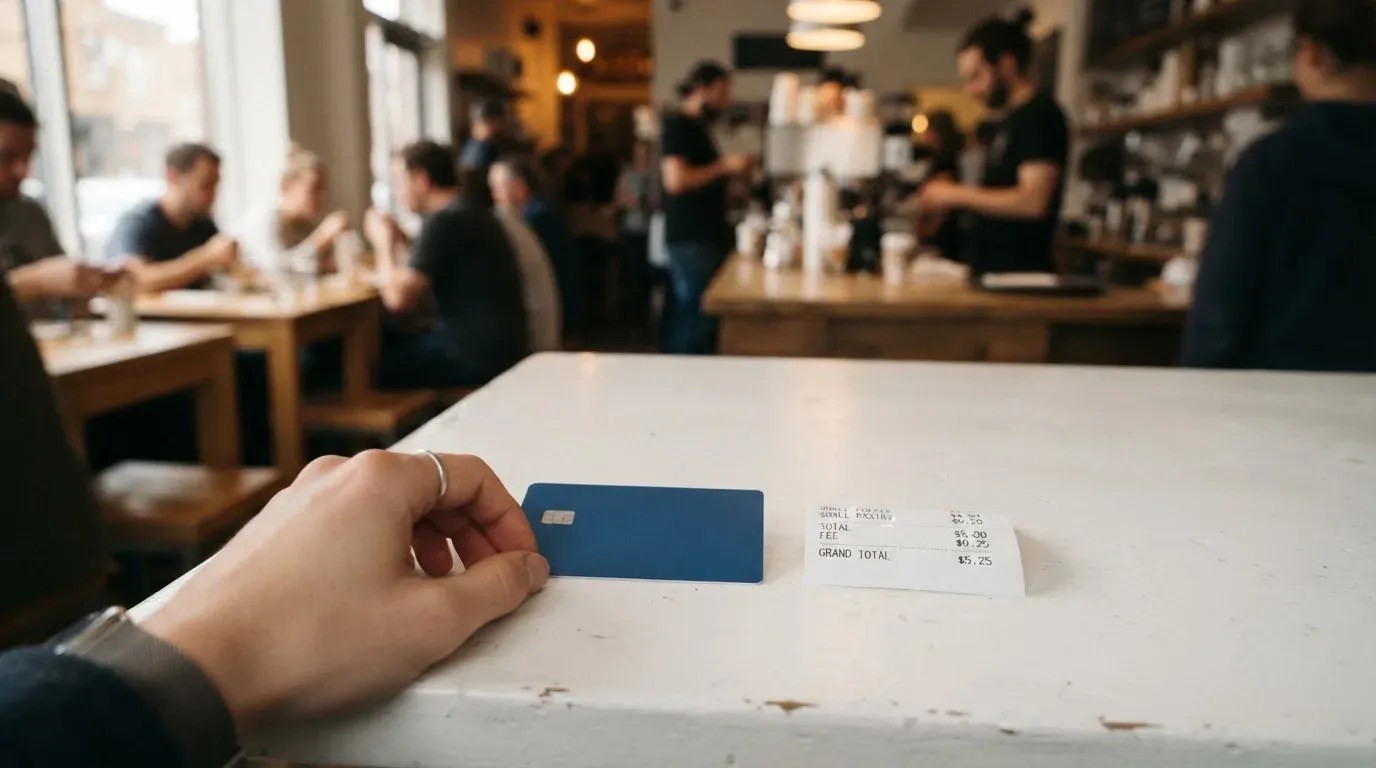
The USA card is for U.S. merchants. Physical goods have to ship to a U.S. address.
The International card is for merchants outside the United States and for non-USD checkouts. Its country list is described officially as “No fixed list” — that is the card’s own wording, and the official API names no restricted countries either.
That official position is unusually open. Third-party sources, which are not confirmed by the card, say the service is available in 170 countries with 26 restricted: Afghanistan, Albania, Belarus, the Central African Republic, Cuba, DR Congo, Eritrea, Ethiopia, Iran, Iraq, Lebanon, Libya, Mali, Myanmar, Nicaragua, North Korea, Russia, Somalia, South Sudan, Sudan, Syria, Tunisia, Ukraine, Venezuela, Yemen and Zimbabwe. Those same sources explain that the “100+ countries” figure you may see quoted refers to where the international card is *used*, not to who can sign up.
One detail from a company reply on Trustpilot in August 2026 is worth more weight than the country list itself: restrictions are enforced by device fingerprinting. That is a blunt instrument. Your location is read from your device, not from a form you fill in, so a VPN or a border region can be enough to trip it. It is also the mechanism behind the account-closure complaints in the section on risks below.
There is no country list to study, and that is both the appeal and the risk. You will not be turned away for being on a published exclusion list, because there is no published exclusion list. What you may be turned away for is where your device appears to be.
How to get it
The card is virtual — there is nothing shipped to you. The USA card is instant; international orders are queued and fulfilled manually, “typically within 24 hours”. You can cancel while an international order is still queued.
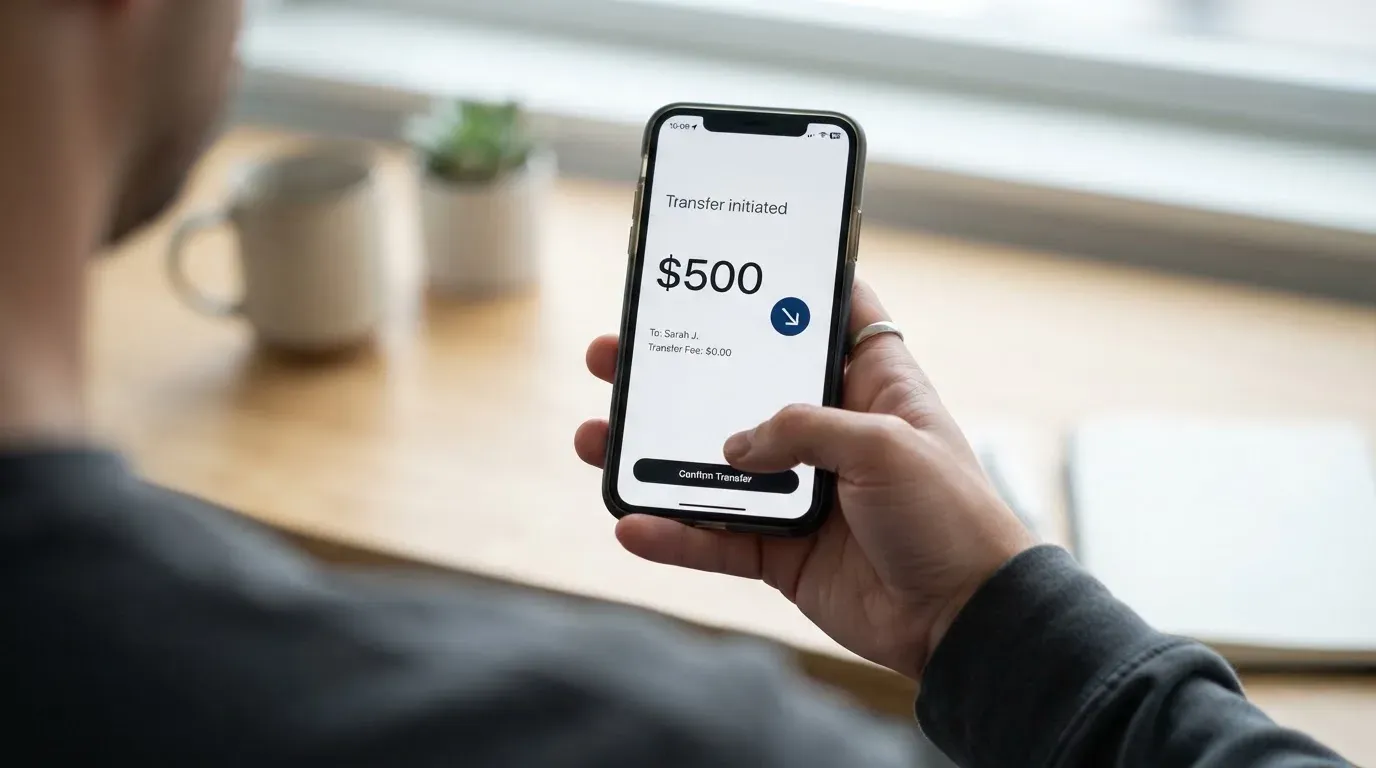
The account is not designed to be held by an agent. Agents cannot be the account holder; the principal completes identity verification personally, in their own name, with their own documents. Venmo and PayPal payments require identity verification.
Here is the distinction that decides whether this card suits you at all. Unofficial sources report that Laso does not require the conventional identity-document upload or a credit check *for card purchases* — wallet screening, sanctions checks, device fingerprinting and monitoring still apply. The card itself publishes no KYC tiers, so there is no ladder of levels to climb and no published statement about what documents are needed to buy the card. The public pages simply do not say.
So the honest answer to “does this require KYC” is: identity verification is part of the process, the card does not publish a tier structure, and third-party reporting suggests the document upload and credit check are not what stands between you and a virtual prepaid card. Whether that is enough depends on your situation and on the rules where you live — and I am not going to speculate past what the card publishes.
What it really costs
This is where the card is weakest, and it is worth reading the two numbers side by side before anything else.
| Fee or limit | USA card | International card |
|---|---|---|
| Issuance | Not stated as a fee; single-load card | Not stated as a fee; non-reloadable, Visa-compatible per third-party source |
| Card purchase fee | 0% | 3.8% on top of the on-card amount; a promotion can lower it, possibly to 0% |
| Monthly fee | Not stated | Not stated |
| Conversion fee | Not stated separately | Included in the 3.8% |
| FX on non-USD spending | Not applicable as described | About 2%, unofficially (CryptoCardHub, August 2026) |
| ATM withdrawal | Not stated; ATM withdrawals blocked per third-party source | Not stated; ATM withdrawals blocked per third-party source |
| Refund of unused balance | Not stated | 14% with a $10 minimum, unofficially; international refund only if the card was never used |
| Card limits | $5 to $1,000 | $100 to $1,000 on-card |
| Daily spend | $1,000, unofficially | $1,000, unofficially |
| Spending caps | Account owner sets per-payment and rolling 24-hour caps | Account owner sets per-payment and rolling 24-hour caps |
The card’s own summary is unusually blunt: “Every fee, no per-authorization or per-decline charges.” You are not going to be surprised by a small charge for trying a card at a shop that does not want it.
Now, three everyday payments, and which fees actually bite.
A $40 grocery order in the United States. The USA card is 0%, so you pay $40. That is the cleanest use of this card and there is no way to make it cheaper.
A $40 subscription from a merchant outside the US, paid on the international card. The on-card amount is $40, the card adds 3.8%. If the merchant bills in a currency other than USD, unofficial reporting puts another roughly 2% on top. Two layers of percentage on the same purchase, neither of which you see at the point of sale.
A $600 laptop. The international card’s on-card limit tops out at $1,000, so this fits, and 3.8% of $600 is $22.80. But if the laptop ships outside the US, the USA card is not the product for it. And on the USA card, the $5 to $1,000 range means a bigger basket simply does not go through.
The pattern to notice: the international card’s costs are percentage-based and they apply at the moment of purchase, while the limits are hard caps set at load. There are no tiers to negotiate upward — the card has no tiers at all; USA, International and Canadian are separate products, not levels of one. If your spending is regular and above $1,000 a month, this card will not quietly grow with you.
One unverified note, in case it helps you: an older Chrome Web Store listing said there is no currency exchange fee. That is an old listing, not the card’s current position, and it does not match the 2% figure circulating now. When you see a fee contradicted, go with the newest statement from the company itself.
How to top it up
Topping up is where this card is genuinely good, and it is the strongest part of the proposition.
Officially, the card is funded in USDC. Payments settle on Base and Solana through x402 — the payment protocol that lets a stablecoin balance be spent directly at checkout. International orders are paid in USDC from the agent’s wallet via x402. Loading the international card costs the same 3.8% as the purchase, and you load between $100 and $1,000.
Unofficially, and this is the detail that matters if you already hold something other than USDC, funding also covers USDT and DAI across Ethereum/EVM, Solana, Stellar, Arbitrum, Polygon, Optimism, Base, BNB Smart Chain and PulseChain.
Two things are not stated: network fees, and whether you can top up with ordinary fiat currency from a bank account. Both are real questions and neither has a published answer. Network fees are charged by the blockchain rather than by the card provider, so a deposit on a busy network costs whatever that network costs at that moment — and blockchain transfers are irreversible, so a deposit sent on a network the card does not support, or to an address belonging to a different network, can simply be gone or need manual recovery with no guarantee. Getting the network right is on you.
There is also an expiry to be aware of, and it is not a small one. Non-reloadable cards expire six months after issuance, and the remaining balance is “forfeited to the card issuer (not Laso Finance)” — the wording is the card’s own, and it draws a distinction that matters: the money goes to the issuer, not back to you and not necessarily to Laso. A reloadable version with withdrawals to a Base wallet, usually within one to three business days, existed and was discontinued by January 2026 per third-party reporting. Unofficially, refunds on unused balances cost 14% with a $10 minimum, and on the international card only if the card was never used.
So: excellent top-up variety, and then a six-month clock on the balance. If you are going to load $1,000, you had better have something to spend it on within two terms.
Paying with it every day
“Every day” is where this card stops, and I want to be plain about it rather than generous.
It is virtual. There is no plastic. That is fine if you pay online; it is decisive if you do not.
Apple Pay and Google Wallet: the help centre has a collection of four articles under that heading, which I did not read, so the cards’ own guidance on the mechanics is there and I am not going to paraphrase it. What matters more is the unofficial picture, and it is not reassuring. Apple Pay “depends on device eligibility and isn’t guaranteed”, per a company reply on Trustpilot in September 2026. A reviewer writing in October 2026 said only Google Pay currently works. And financial-transfer merchant categories are reported as blocked — the categories that matter for moving money rather than buying things.
Rewards: none stated officially, and third-party reporting says no cashback and no points. If you are comparing against cards that give you something back, that is a real difference, not a technicality.
Apps: there is a Chrome extension. The mobile platforms I did not read. As an unofficial indicator, the Apple U.S. App Store listing sat at 3.9 out of 5 from 11 ratings as of 8 August 2026. Eleven ratings is a small sample and I would not read much into it, but it is the only mobile signal available.
Disputes and refunds: the help centre has a “Withdrawals & Refunds” collection of five articles covering merchant refunds, reversals, duplicate charges and disputes. I did not read the contents. What I can tell you is that the card-lifecycle documentation does not cover disputes, so if you want to know how a chargeback works here, that is a question for support, not something the public documentation settles. It matters in the United States, where reversal rights for debit cards come from Regulation E and prepaid-card coverage varies and should not be assumed.
Which brings up a structural point about crypto cards in general, because it explains the Apple Pay situation better than any individual review will. Apple Pay does not store your card number. It replaces it with a device-specific Device Account Number kept in the Secure Element on the phone, and each payment uses a one-time dynamic code. That is a good design — but it means adding a virtual card to a wallet is a request to the issuer, and the issuer can decline it or restrict it, for example by blocking the tokenised number on phone use entirely. A card that is virtual-only, with Apple Pay reportedly not guaranteed and a bug bounty paused, is a card whose mobile story is exactly as stable as its issuer’s policy on the day you try it.
What can go wrong
Let me separate the official record from the user reports, because they carry different weight.
Officially: the bug bounty is “paused indefinitely as of September 21, 2026”. And the reloadable US and International cards were discontinued, with Canadian cards added.
From users, on Trustpilot at 4.1 out of 5 with 22 reviews in the last 12 months as of 21 October 2026 — 73% five-star, 14% one-star. The recurring themes:
- Apple Pay promised and not delivered (September–October 2026). This matches the unofficial “depends on device eligibility” line, and it is the most common complaint in the recent window.
- Account deleted as a “prohibited region” after device fingerprinting decided the user was somewhere they were not (August 2026). This is the sharp edge of the “no country list” selling point.
- Cards not working at some merchants (January 2026). Some of this is category-level and not the company’s fault: some merchants decline prepaid or foreign-issued cards because the BIN lookup reveals the card type and the issuer country, and AVS address checks are generally unavailable for foreign-issued cards, which causes declines.
- Manual balance updates after the reloadable cards were discontinued (January–March 2026).
One news item I would not repeat as fact: a competitor’s page claims a Laso card stopped working in July 2026. Single source, unconfirmed, and it comes from a rival.
The company itself: Laso Finance LLC, founded March 2023, based in Austin, Texas, registered with FinCEN as a money services business under number 31000328975254. The issuer is not named — the card says “regulated partners”. Earlier material cited Celtic Bank via Stripe Issuing; that is unofficial and out of date, so I would not repeat it as the issuer.
On the security side: the managed agent wallet is a Laso-custodied Solana wallet, which means Laso holds the keys. Card funds sit on the prepaid card itself. You set your own per-payment and 24-hour caps, and guardrails refuse certain external x402 challenges. Those are sensible safeguards for what this card does — they are also not the same as self-custody, where the funds stay in your own wallet until the moment of payment and the only risk you carry is your own key loss and phishing.
Custody is the risk worth weighing carefully. With a custodial wallet the provider holds the credentials, so you must trust the provider completely. A seed phrase is typically 12 to 24 words and anyone who obtains it can restore the wallet and spend its funds. Transfers are irreversible and a stolen key has no built-in recovery: the network cannot freeze or return the funds. This is not theoretical for the category — Mt. Gox reported about US$350 million stolen between 2011 and 2014, Coincheck about US$400 million in 2018, Ronin Network US$625 million in 2022.
Two further exposure points specific to this card. Card-programme closures are a known failure mode: a notice period, then spending and loading stop, then users are asked to withdraw remaining balances. And declined authorisations may leave a hold on funds for several days, typically up to seven.
Support, at least, is a positive: help.laso.finance, [email protected] and [email protected], and reviewers specifically praise the Telegram support.
What to take instead
If your problem is paying online from a crypto balance, these are the three I would weigh against it. Scores are on the same scale as the 5.6 above.
Cardex — 5.6 / 10. One crypto card across 200+ countries, no country list or exclusions published. Debit crypto card on the VERVE, VISA, Mastercard and UnionPay networks, virtual and physical cards per the App Store listing. The App Store listing is Naira-focused and the card currency is Naira. Funded from USDT, USDC and BTC wallets; networks not stated. Fees are not stated — the site describes real-time crypto-to-fiat conversion at the moment of payment with an “AI-Powered Conversion Rate” that scans global exchange rates and picks the best one, but no percentage is published. If you spend in naira, this is the one that makes sense; the physical card option is the thing Laso does not have.
CardFlow — 4.9 / 10. Aimed at Nigeria — “Nigeria’s smartest fintech card platform” and “Nigerians and global users” — with no country list or exclusions stated. A virtual USD Mastercard created in 3 minutes. Creating a virtual card is “completely free” per the site FAQ, which makes it the cheaper front end; monthly fee and other fees are not stated. Funded with Bitcoin, USDT, ETH or a Naira bank transfer. If you want zero card-creation cost and you spend in USD, this is worth a look.
HyperCard — 4.7 / 10. A prepaid card, balance in USD or EUR, funded by depositing crypto such as USDT, BTC or ETH in the app and converting to USD or EUR. Official pages state no country list; the App Store says the card works in “more than 176 countries” — that is acceptance, not eligibility, and the difference matters. Fees are not stated on the pages I could read, and there are no rewards.
| Laso Finance | Cardex | CardFlow | HyperCard | |
|---|---|---|---|---|
| Score | 5.6 | 5.6 | 4.9 | 4.7 |
| Card form | Virtual only | Virtual and physical | Virtual | Not stated |
| Countries | “No fixed list” official; 170 with 26 restricted unofficial | 200+, no exclusions stated | Nigeria focus | None stated; “176+” is acceptance |
| Stated card cost | 0% USA / 3.8% International | Not stated | Free to create | Not stated |
| Card currency | USD | Naira per listing | USD | USD or EUR |
| Funding | USDC over x402 on Base and Solana; unofficial USDT, DAI on many networks | USDT, USDC, BTC; networks not stated | BTC, USDT, ETH or Naira transfer; networks not stated | USDT, BTC, ETH in the app; networks not stated |
The honest summary of this table is that every one of these cards has a large blank space where the fee schedule should be. Laso is unusual in publishing 0% and 3.8% at all. Unpublished is not the same as free, but it does mean the comparison is not apples to apples.
Who I would recommend it to
I would recommend this card to someone who pays online, in USDC, from a wallet, to merchants who do not take stablecoins directly — an AI agent running API and hosting bills, or a person paying for software subscriptions they cannot or will not put a bank card behind. In that setting it is 8-for-8 on who can get it and 8-for-8 on top-up options, it costs 0% on the US card or 3.8% internationally, and it does something nothing else in this comparison does: settle through x402 on Base and Solana without a bank in the middle.
I would not recommend it to anyone who wants an everyday card. It is virtual only, Apple Pay is reportedly not guaranteed, ATMs are blocked, there are no rewards, there is no monthly fee stated either way, the international card stacks 3.8% plus roughly 2% FX on your purchase, and your unused balance is forfeited to the issuer six months after issue. If your plan involves a shop, a cash machine, or a phone wallet as a matter of course, keep looking.
And I would hold the region question in front of you before anything else. No published country list sounds like freedom until you are the account that gets closed for a location you never chose. That is a real complaint pattern here, and device fingerprinting is the mechanism behind it.
Frequently asked questions
What is the Laso Finance card?
It is a prepaid, virtual USD payment card that you fund with USDC rather than from a bank account. Two products exist: a USA card for U.S. merchants, and an International card for merchants outside the US and non-USD checkouts. Both are virtual, with no plastic card shipped, and the stated audience is users and AI agents paying online with USDC. It is a payment tool for a narrow job, not a general bank card.
How does the Laso Finance card work?
You load USDC into the card, and payments settle through x402 on Base and Solana — international orders are paid in USDC directly from the wallet. The card then behaves like a stored-balance prepaid card: it spends only what you loaded, so it cannot overdraw. Third-party reporting adds USDT and DAI across several networks. Network fees are charged by the blockchain, not by the card, and transfers are irreversible.
Is Laso Finance a bank?
No — Laso Finance LLC is registered with FinCEN as a money services business in Austin, Texas, founded March 2023. That is money-transmitter registration, not a bank licence, and there is no deposit guarantee behind it. The card’s issuer is not named, only “regulated partners”, and card funds sit on the prepaid card itself rather than in a bank account.
Who owns Laso Finance?
Laso Finance is the company behind the card, registered in Texas. The issuing institution behind the card programme is a separate question and the card does not name it. Earlier third-party material cited Celtic Bank via Stripe Issuing, but that is unconfirmed and out of date, so I would not treat it as the issuer.
Is the Laso Finance card available in my country?
The official position is unusually open: the international card’s country list is “No fixed list” and the official API names no restrictions. Unofficially, availability is reported in 170 countries with 26 restricted. The catch is that restrictions are enforced by device fingerprinting, so a VPN or a border region can matter as much as where you actually live.
How much does the Laso Finance card cost?
The USA card is 0%, and the international card adds 3.8% on top of the on-card amount, though a promotion can lower that, possibly to 0%. Unofficially, spending in a non-USD currency on the international card adds about 2% more, and refunding an unused balance costs 14% with a $10 minimum. No monthly fee is stated either way.
How do I top up the Laso Finance card?
Officially you pay in USDC through x402, settling on Base and Solana, and loading the international card costs the same 3.8% with a load between $100 and $1,000. Unofficially, USDT and DAI are also accepted on Ethereum/EVM, Solana, Stellar, Arbitrum, Polygon, Optimism, Base, BNB Smart Chain and PulseChain. Whether fiat top-up is possible is not stated.
Can I add the Laso Finance card to Apple Wallet?
Maybe, and you should not plan around it. Apple Pay reportedly depends on device eligibility and is not guaranteed, per a company reply on Trustpilot in September 2026, and a reviewer in October 2026 reported that only Google Pay was working at the time. The help centre has four articles on Apple Pay and Google Wallet, but the card is virtual-only, so the wallet is the only way it reaches a physical terminal.
Can I withdraw cash or money from the Laso Finance card?
Cash is out: ATM withdrawals are reported as blocked. The reloadable version that supported withdrawal to a Base wallet, usually within one to three business days, was discontinued by January 2026. Non-reloadable cards now expire six months after issuance, with any remaining balance forfeited to the card issuer, and unofficial reporting puts a 14% refund fee with a $10 minimum on unused balances.
Is the Laso Finance card safe and worth it?
Worth it depends entirely on the job. For paying online in USDC without a bank in the middle, it is genuinely good and I scored it 8 out of 10 on both eligibility and top-up options. On cost and everyday use it scored 3 out of 10 each, because the international card’s fees stack, there is no physical card, no ATM, no rewards, and Apple Pay is not guaranteed. Treat it as a payment tool, not as money storage.
Virtual card reviews – cryptocardcheck
Content created by the «cryptocardcheck» team