
Coinbase Card review: a clean, US-only Visa prepaid card that spends your crypto, with no spending fees and a spread you cannot avoid
 Available in US
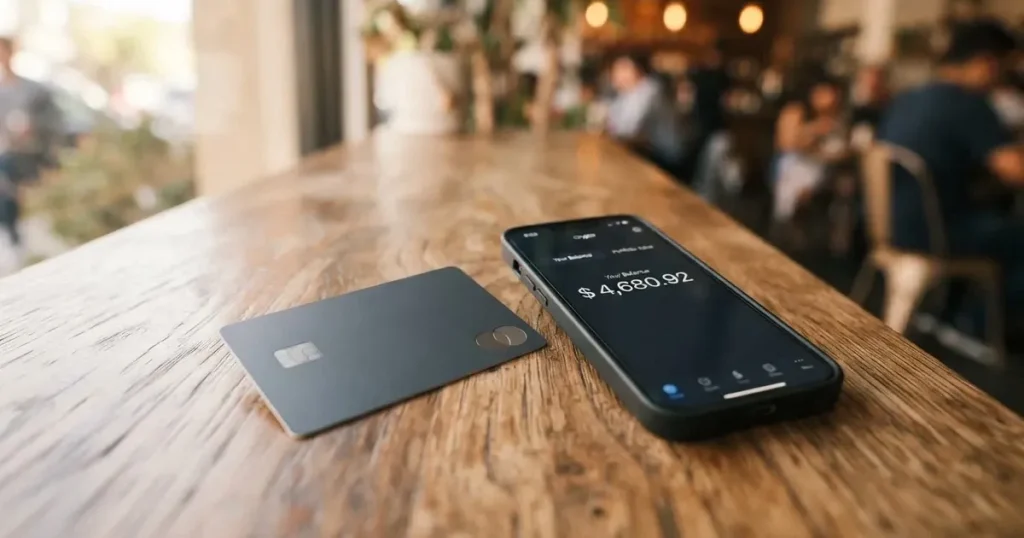
The Coinbase Card is a Visa prepaid debit card that spends either your cash balance or your crypto balance on Coinbase, with every purchase converted to US dollars. There is no monthly fee, no annual fee and no spending fee. The cost is not in the card — it is in the conversion spread, the US-only availability, and the custodial setup where your money sits with Coinbase and its issuing bank rather than in a wallet only you control. I scored it 6.4 out of 10.
Conditions are current as of October 28, 2026.
Verdict: 6.4 out of 10
The card earns its highest marks where you would expect a well-run prepaid card to: fees and everyday use. It loses them on access and on funding flexibility, because it exists only in the United States and offers two documented ways to load it. It is a good card for US residents who already hold crypto on Coinbase and want to spend it without wiring money out to a bank first. It is the wrong card for anyone outside the US, anyone who needs several currencies on one card, and anyone who does not want to hand custody of their balance to a platform.
| Criterion | Mark | Why |
|---|---|---|
| Who can get it | 4 / 10 | Available in all US states except Hawaii; no other countries. |
| Cost | 8 / 10 | “Zero spending fees and no annual fees”; ATM withdrawals $0 from Coinbase; 0% international fee from the issuer, but a spread applies on conversion. |
| Top-up options | 4 / 10 | A linked bank account or part of a paycheck, both free; crypto balance converts to USD at payment; coins and networks are not named. |
| Reliability and complaints | 7 / 10 | Issuer Pathward, N.A., Member FDIC, on the Marqeta platform; Trustpilot 4.0/5 from 23,282 reviews, with complaints about account blocks and slow support. |
| Everyday use | 9 / 10 | Virtual or physical Visa prepaid, cash machines, and — unofficially — Apple Pay and Google Pay. |
| Total | 6.4 / 10 | A polished card with a narrow door and a fixed price for exchange. |
The pattern in that table is the whole review in miniature. This is a well-engineered product inside a very small box. If you are inside the box, the experience is close to what a normal prepaid card gives you, minus the fee. If you are outside it, nothing else on this page matters, because there is no application to make.
Who can get the card
Only US residents in every state except Hawaii. No other countries are served. That single fact is the reason two of the six criteria score 4.
Account opening follows the USA PATRIOT Act identity rules: name, address, date of birth and identification. An older version of the agreement additionally stated that eligibility requires being 18 or older and a US citizen or permanent resident, and that use may be limited until identity is verified. The current public pages do not repeat those eligibility lines, so treat them as historical terms rather than current promises.
If you are reading this from outside the United States, you can stop here. There is no waiting list, no invitation and no alternative route — the card simply is not issued there, and no third-party site has information suggesting otherwise.
How to get it
The process is short, and unusually for a financial product it does not involve a credit check or staking any crypto.
Opening the card account requires:
- your name, address and date of birth, plus other identifying information
- possibly a driver’s licence or other identifying documents — Coinbase “may also ask to see” these
- no credit check and no stake of any coin
The card itself is a Visa prepaid debit card, available as a virtual card or a physical one. It spends cash or crypto, and all crypto is converted to US dollars for purchases and ATM withdrawals. The steps are: sign up, then create a virtual card or order a physical card in the app.
What the public pages do not say: delivery time and delivery cost for a physical card. An older agreement mentioned no fee for replacement cards sent because of expiry, but that is a different thing from what shipping a new card costs today. If a physical card in the post matters to you, treat that as an open question rather than an assumed free service.
What it really costs: Fees
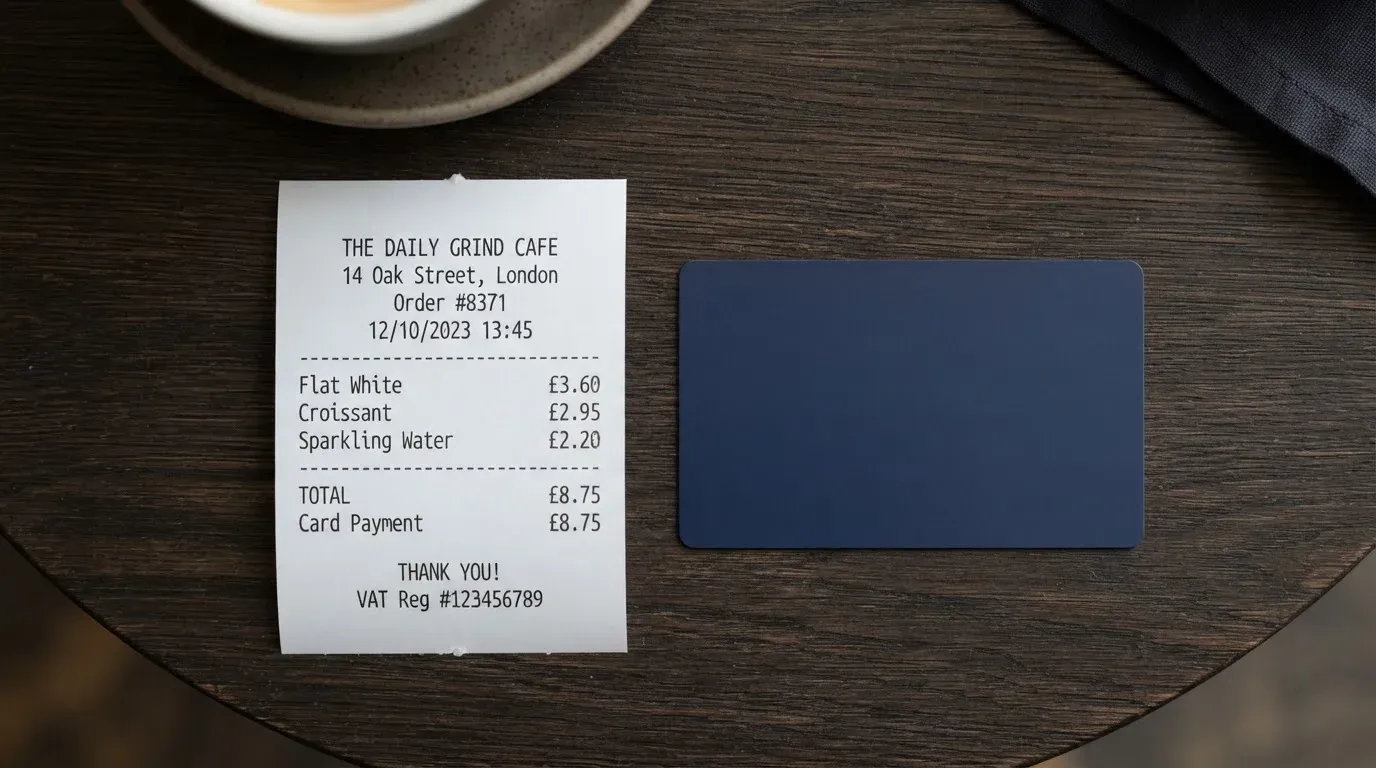
Here is the honest headline: the card charges you nothing to run. Coinbase states “Zero spending fees and no annual fees”, and the full fee schedule is disclosed in the Cardholder Agreement and User Agreement. There are no Coinbase transaction fees on card spending. What you pay is a spread, and the spread applies at the moment of payment when Coinbase converts your crypto.
| Fee or limit | What it is | Value |
|---|---|---|
| Issuance | Cost to get the card | No spending fee and no annual fee; delivery fee not stated |
| Monthly fee | Recurring card cost | $0 |
| Conversion | Crypto to USD at payment | No Coinbase transaction fee, but a spread applies when Coinbase buys, sells or trades crypto |
| International transactions | Issuer fee | 0% from the issuer; the network converts the foreign-currency purchase |
| Foreign purchase, Coinbase side | Extra charge by Coinbase | “You may also be charged a fee by Coinbase” (older fee schedule) |
| ATM withdrawal | Cash machine | $0 from Coinbase; the ATM operator may charge |
| Balance inquiry | ATM balance check | $0 (older fee schedule) |
| Cash limits | Older Combined Terms (2021) | No more than $1,000 per 24 hours in ATM or over-the-counter cash withdrawals; maximum 6 cash withdrawals a day |
| Spending limits | Current position | Vary by customer; risk checks may lower them. Check in the app under Card > Support > “View spending and ATM limits” |
| Tiers | Paid levels | None. A single tier; the only variation is which rotating crypto reward you pick |
Three everyday payments, and which fees apply to each:
- A grocery shop paid from your Coinbase cash balance. You pay the purchase amount. No spending fee, no conversion, no spread — the money is already in dollars.
- A dinner paid from your BTC balance. No Coinbase transaction fee, but Coinbase sells the bitcoin at its rate minus a spread, and the restaurant sees the transaction as a plain Visa charge. The spread is the whole cost.
- A purchase while you are in Europe. The issuer charges 0% on the international transaction and the network does the currency conversion. The old schedule adds that Coinbase “may also be charged a fee by Coinbase”. The exact amount of that conversion margin is the one number I could not pin down from the public pages.
The limits are worth reading twice. Current spending and ATM limits are personal and can be lowered by risk checks, so the only reliable number is the one in your own app. The $1,000-per-24-hours cash cap and the six-withdrawals-a-day cap come from the 2021 Combined Terms and may not reflect today — but they are the kind of ceiling that decides whether a card works as your only cash route or just a secondary one.
How to Top up the card
Two documented ways, both free:
- Link a bank account. The card page describes this as “zero fees”.
- Deposit part of a paycheck into Coinbase. Also described as free.
On top of that, any crypto balance you hold on Coinbase can be spent directly, converted to USD as you pay. An older cardholder fee schedule listed funding from the Coinbase USD Wallet at $0 and the monthly fee at $0.
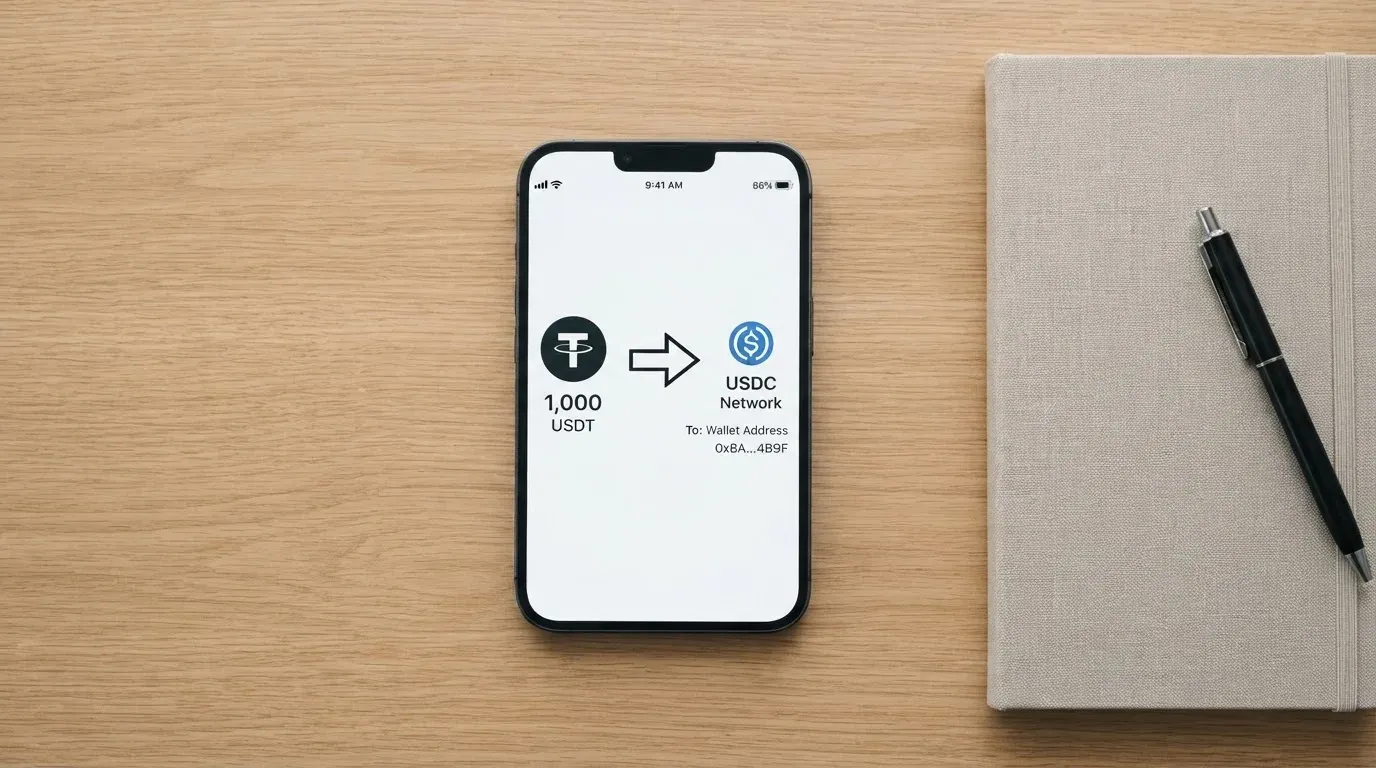
What is not stated publicly: any minimum top-up amount, and any network fees. If you plan to load the card by transferring a stablecoin from your own wallet rather than by bank transfer, that is not the documented path for this card, and I would not assume the network cost is absorbed.
One rule from the older agreement deserves attention because it catches people out: if the cardholder’s address changes to a non-US address, the card may be cancelled and funds returned. The same agreement says funds on the card do not expire after the “Valid Thru” date on the card. Taking your balance out is not described on the current pages — how to withdraw money from Coinbase is a platform question more than a card question, and the card pages do not answer it.
Paying with it every day
This is where the card scores best, and the reason is simple: it behaves like a normal prepaid Visa.
What you get in daily use:
- Virtual or physical Visa prepaid card, spending cash or crypto
- ATM withdrawals at $0 from Coinbase, with the operator’s own fee possible
- Optional crypto rewards on every purchase, for US Card users only — the rate is variable and shown in the app, and you pick from a rotation of crypto rewards
- The app itself is solid: iPhone (iOS 16.4+), Mac and Vision, 18 interface languages including Russian and Turkish, and an App Store rating of 4.7 from 1.8M ratings
- Apple Pay and Google Pay support, reported by third-party tech sites but not confirmed by Coinbase’s own card pages — unofficial
That last point deserves a flag rather than a shrug. TechRadar carried a headline saying Coinbase lets customers use the card with Apple Pay and Google Pay, and CryptoSlate lists the support, but the card’s own public pages do not state it. I found no list of blocked merchants either — absence of evidence, not evidence of a clean record.
When something goes wrong, the older agreement gives you a timeline. Report unauthorised transactions to the issuer. The issuer decides within 10 business days, may take up to 45 days, and credits the account within 10 business days in the meantime. Losses after 60 days from the statement may not be recoverable. Merchant refunds are handled by the merchant and may post with delay. How chargebacks work through Visa specifically is not stated.
What can go wrong
The structural risk is custody. The funds sit with Coinbase and the issuing bank. An older agreement said funds transferred from the Coinbase USD Wallet are eligible for FDIC insurance up to $250,000 if deposit-insurance requirements are met, and that Visa Zero Liability applies, with lost or stolen cards to be reported at once. Card freeze and spending controls in the app are not stated, so I would not bank on them.
Who is actually behind the card: issued by Pathward, N.A., Member FDIC, under a licence from Visa U.S.A. Inc., and powered by Marqeta.
There is a document discrepancy I would want a reader to know about. The agreement sitting in the official static-assets folder names MetaBank, N.A. as the issuer with Marqeta as programme manager, while the current card page names Pathward, N.A. If you are checking your own legal documents, read who your agreement actually names.
Complaints, from several angles:
- Trustpilot for Coinbase as a whole — not the card alone — shows 4.0/5 from 23,282 reviews, read on 2026-10-20, with 5-star at 45% and 1-star at 43%
- Recurring themes in 2026 reviews: slow or absent support in fraud cases, account lockouts and heavy verification, multi-day holds on larger deposits, and fees on conversions and debit-card transfers
- A US PIRG study ranked Coinbase third among digital wallets by CFPB complaints, on difficulty retrieving money
- Interesting Engineering reported that Coinbase confirmed mistakenly overcharging users’ bank accounts
- Third-party reviews disagree on the foreign-exchange fee and the region, unverified
Support contacts from the older agreement: phone 1-888-908-7930, email [email protected], mail 100 Pine Street, San Francisco, CA 94111, plus the help center and in-app Card > Support.
I found no dated official incidents to report. The issuer change described above is the only concrete corporate event in the documents.
What to take instead
If the Coinbase Card is not right for you, it is usually because of geography or because of fees on conversion. Here is how the alternatives compare.
| Card | Score | Where | Rewards | Notable |
|---|---|---|---|---|
| Coinbase Card | 6.4 / 10 | US states except Hawaii | Optional rotating crypto rewards, variable rate | Zero spending and annual fees; spread on conversion |
| Bybit Card | 6.0 / 10 | Argentina, AIFC (Kazakhstan), Georgia, Kazakhstan, Australia, Mexico, Brazil, Peru, Asia Pacific — no EEA customers | Tiers from Base 2.00% to Infinite 10%, cashback caps 5 to 600 USD | Virtual card free; physical card fees vary by region; crypto conversion fee 0.9% |
| Young Card | 5.7 / 10 | Not stated | Cashback in YNG tokens by Club tier: Essential 0.1%, Gold 1.8%, Platinum 3.6% | Little stated publicly |
| MSX | 6.4 / 10 | Not stated on an official page I could read | Not stated | Little stated publicly |
Bybit Card is the one worth a closer look if you are outside the US. Its help centre lists card regions across Latin America, the Caucasus, Kazakhstan, Australia and Asia Pacific, and the cards page states the product is not meant for European Economic Area customers, with all EEA participation strictly prohibited. Its currency depends on your country of Advanced Identity Verification — USD for AIFC, Georgia, Kazakhstan, Australia and Asia Pacific; ARS Argentina; MXN Mexico; BRL Brazil; PEN or USD Peru. The cost profile is heavier: a 0.9% crypto conversion fee over the One-Click Sell rate in most regions, 0.5% in Argentina, and an FX fee of 2% on top of the network rate in Australia, Asia Pacific, Georgia and Mexico, 7% in Argentina, 1.5% in Brazil, 1% in Peru. Virtual card issuance is free in all regions “until further notice”. Since 2026-10-05, only crypto-funded transactions earn points or cashback; fiat-funded spending does not. The card has no balance of its own — it draws on the Funding Account and the Flexible Easy Earn balance, fiat first, and sells crypto only if fiat runs short.
For Young Card and MSX, the honest summary is that the public pages say very little. Young Card’s one clear published detail is its YNG-token cashback ladder. I would not sign up to either on the strength of a rewards rate alone; read their current terms yourself first.
Who I would recommend it to
I would recommend the Coinbase Card to a US resident who already keeps crypto on Coinbase, spends most of it in dollars anyway, and values paying no spending or annual fee more than earning a rewards rate they cannot predict. For that person it is a genuinely good tool: a clean Visa prepaid card, a strong app, and zero cost to run.
I would not recommend it to anyone outside the United States — that is not a preference, it is a fact of availability. Nor to someone who needs a second currency on one card, who wants to move money to several countries regularly, or who holds crypto they are unwilling to leave in custody. If you are comparing against a self-custody card, the difference is who holds the keys: with a custodial card you trust the provider entirely, and with your own wallet you alone carry the risk of key loss, phishing and clipboard malware that swaps copied addresses.
One last thing worth saying plainly, because it is not card advice but it will cost you money if you ignore it: in the US the IRS treats digital assets as property, so exchanging them for goods, services or dollars generally produces a taxable gain or loss, measured at fair market value on the date of each transaction. Every card payment funded from crypto may be a separate disposal. That is a conversation with a tax professional, not with me — and it is a cost that belongs in your own arithmetic about whether this card is worth having.
Frequently asked questions
What is the Coinbase Card?
It is a Visa prepaid debit card, virtual or physical, that spends either your cash balance or your crypto balance on Coinbase. All crypto is converted to US dollars at the moment of payment, for both purchases and ATM withdrawals. Coinbase states there are zero spending fees and no annual fees, with the full fee schedule disclosed in the Cardholder Agreement and User Agreement.
How does the Coinbase Card work?
You sign up, then create a virtual card or order a physical one in the app. The card behaves like a prepaid card: it draws on a stored balance, so it cannot overdraw. If your balance is crypto, Coinbase converts it to dollars when you pay, applying its spread when it buys, sells or trades crypto. No credit check and no staking are required.
Is the Coinbase Card available outside the United States?
No. It is available in all US states except Hawaii, and no other countries. There is no waiting list and no alternative application route for residents elsewhere. If you are outside the US, look at cards published in your own region instead, and check carefully whether that region is one the issuer serves at all.
How much does the Coinbase Card cost to keep?
Nothing to keep: Coinbase states “Zero spending fees and no annual fees”, and lists ATM withdrawals at $0 with the ATM operator’s own fee being the only possible charge. There are no Coinbase transaction fees on card spending. The real cost is the spread applied when Coinbase converts your crypto at payment, plus anything Coinbase charges on a foreign-currency purchase.
Does getting the Coinbase Card require KYC?
Yes. Opening the account requires your name, address, date of birth and other identifying information, and Coinbase “may also ask to see your driver’s license or other identifying documents”. This follows the USA PATRIOT Act identity rules. No credit check and no crypto stake are needed, but an older version of the agreement said use may be limited until your identity is verified.
How do I top up the Coinbase Card?
Two documented methods, both free: link a bank account, or deposit part of your paycheck into Coinbase. Separately, any crypto balance you hold on Coinbase can be spent, with conversion to USD at the moment of payment. Minimum top-up amounts and any network fees are not stated on the public card pages, so if you plan to load by transferring a stablecoin from your own wallet, check the current terms first.
Can I use the Coinbase Card with Apple Pay or Google Pay?
Third-party tech sites say yes — TechRadar ran a headline saying Coinbase lets customers use its card with Apple Pay and Google Pay, and CryptoSlate lists the support. That is unofficial and not confirmed by the card’s own public pages. I also found no published list of blocked merchants, which is worth reading as absence of information rather than a clean record.
What happens if someone spends from my Coinbase Card?
Report it straight away. Under the older agreement the issuer decides within 10 business days, may take up to 45 days, and credits the account within 10 business days meanwhile. Losses after 60 days from the statement may not be recoverable. Merchant refunds come back through the merchant and can post with a delay. How chargebacks specifically work through Visa is not stated.
Is the Coinbase Card safe?
It is custodial: your funds sit with Coinbase and the issuing bank, Pathward, N.A., which is an FDIC member, with the programme on the Marqeta platform. An older agreement said funds transferred from the Coinbase USD Wallet are eligible for FDIC insurance up to $250,000 if deposit-insurance requirements are met, and that Visa Zero Liability applies. Report a lost or stolen card immediately. Card freeze and spending controls in the app are not stated.
Is Coinbase a bank, and is the card worth it?
No, Coinbase is not a bank; it is a crypto platform, and the card is issued by a bank under a Visa licence. Whether it is worth it depends on one thing: whether you want to spend crypto you already hold. If you do, zero spending and annual fees are hard to beat. If you want predictable rewards, note that the crypto reward rate is variable, and that paying from crypto means accepting Coinbase’s spread plus whatever tax your jurisdiction attaches to disposing of digital assets.
Exchange card reviews – cryptocardcheck
Content created by the «cryptocardcheck» team