
The Trastra card, a euro prepaid debit card you fund from a Mover crypto wallet, scored 4.1 out of 10 in our review
 Available in US
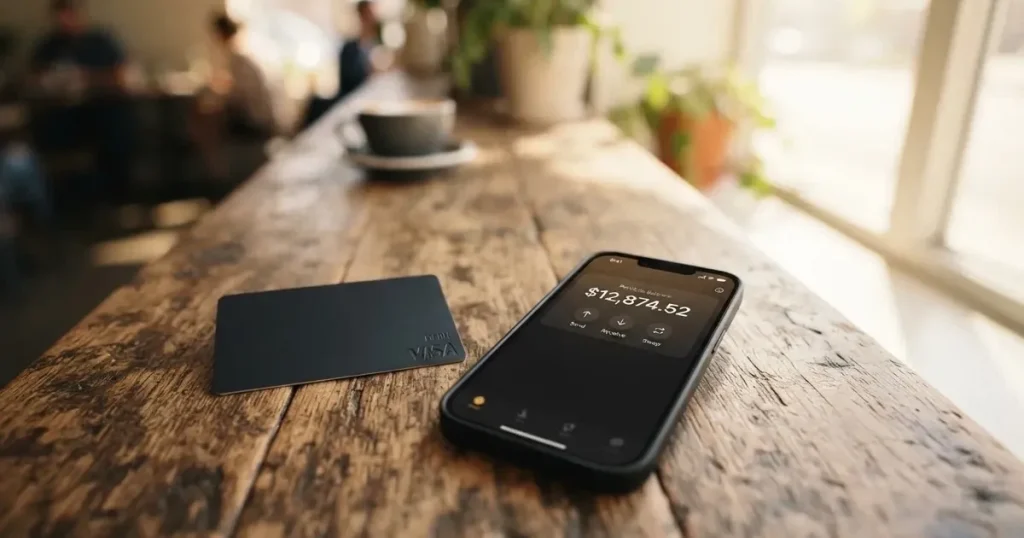
The Trastra card is a euro prepaid Visa debit card that you load from a Mover crypto wallet. You convert crypto to euro in the app, the card then spends that euro balance at any Visa merchant, and the same balance can be withdrawn in cash at ATMs across Europe. On paper it looks straightforward; in practice the card comes with a €9 order fee, a €15 annual fee, a 3% surcharge on every non-euro purchase, a €2.25 ATM fee inside the eurozone, and a long trail of user complaints on Trustpilot about frozen funds and unresponsive support. I went through the card’s public pages and the review record around it, and here is what I found, what the fees really add up to, and who this card actually suits.
The conditions described below are current as of October 28, 2026.
Verdict: 4.1 out of 10
The Trastra card lands at 4.1 out of 10. That is a below-average score in this category, and it is the combination of two things: a card product that is, on its own terms, narrow but functional, and a company record that raises real questions about whether your money will be there when you need it.
The score is broken down like this:
| Criterion | Mark | Why it scored that way |
|---|---|---|
| Who can get it | 5 / 10 | Available in 31 listed countries, with Germany, France and the UK named, and the plan to extend to all EEA residents; non-European residents cannot apply yet |
| Cost | 3 / 10 | €9 to order, €15 a year to keep, 3% on every non-euro payment, €2.25 per euro ATM withdrawal; card delivery is free |
| Top-up options | 4 / 10 | Funded with crypto held in the Mover wallet, and the crypto-to-euro exchange itself is free, but the supported coins and networks are not named on the card page |
| Reliability and complaints | 3 / 10 | Card issued by a Bank of Lithuania-licensed EMI (UAB “Finansinės paslaugos ”Contis“”), but Trustpilot sits at 2.0 out of 5 from 747 reviews, with recurring reports of frozen funds, blocked withdrawals and worries about the parent company |
| Everyday use | 6 / 10 | Accepted at any Visa merchant and at ATMs across Europe, with a dedicated personal euro IBAN; Google Pay and Apple Pay are mentioned by the company on its own Trustpilot page but not on the card page |
The card is built for one specific reader: an EEA resident who already funds a euro card from a Mover crypto wallet and treats the card as a way to spend that balance in shops. If you do not fit that picture, the costs and the complaint record make the card hard to recommend over alternatives I look at later.
Will they give you the Trastra card
The card is offered in 31 listed countries, and Germany, France and the United Kingdom are named among them. The card’s public text says it “will be available for all residents of the European Economic Area (EEA)”; for now, the rule is the 31 countries on the list rather than the full EEA. If you live outside Europe, the page is direct: “Not at the moment.” The rule appears to be based on where you live, not on your citizenship, so a German citizen resident in Brazil would not qualify today and a Brazilian resident in Germany would, subject to whatever documents the issuer asks for.
The card is described on the public page as a “prepaid debit card” accepted at Visa merchants worldwide, and the underlying currency is the euro. The page does not spell out whether the card is physical or virtual, but the fact that you can withdraw cash at an ATM tells you there is a physical card behind the product, with a PIN and the usual Visa rails. Virtual-card issuance is not stated on the page.
For the security side, the card runs on Visa Identity Check and 3-D Secure for online payments, with two-factor authentication and device authorisation on the wallet. The card’s own page does not list which documents you need to provide, what the address-proof requirements are, or what the minimum age is; that is information you only get once you start the application.
How to get the Trastra card
The signup path is not described in any detail on the public pages, and that itself is a useful thing to know before you start. The card’s website tells you the card is a prepaid Visa, the order fee is €9, delivery is free, and the rest of the onboarding takes place inside the Mover app. The actual documents you need to upload, the address proof, the time it takes to be approved and the time it takes the card to arrive in the post are not stated on the card’s pages.
In practice, that means a few things to check before you commit:
- Whether the country you live in is on the 31-country list, and whether the list has been updated since this review.
- What your onboarding documents will be. EEA-licensed e-money issuers typically ask for a government ID, a proof of address, and a selfie or video check.
- Whether the card is delivered to your country. Delivery is described as free in the listed countries, but the delivery time and the replacement cost for a lost or stolen card are not stated.
- How the €9 order fee is collected. It is charged from your first top-up, so the card will not be ordered until you have funded the wallet.
The single biggest onboarding gap, in my reading, is verification depth. The page only mentions Visa verification, 3-D Secure and 2FA, not the KYC documents the issuer will actually ask for, so do not assume you can sign up with just an email.
Trastra card fees: what it really costs
The headline fees on the Trastra card are higher than they first look, and the right way to think about them is to run them over a year of typical use, not as a list.

Here is the full costs table as it appears on the public card pages and the Mover pricing material:
| Fee or limit | Amount |
|---|---|
| Payment account creation | Free |
| Card order (charged from first top-up) | €9.00 |
| Card delivery | Free |
| Card management (annual) | €15.00 (first charge within 45 days of ordering) |
| Non-euro card purchase (online or offline) | 3% |
| Internal card-to-card transfer | €0.20 |
| Crypto to euro exchange | Free |
| ATM balance inquiry | €0.35 |
| ATM PIN change | €0.40 |
| Euro ATM withdrawal | €2.25 |
| Non-euro or outside-EEA ATM withdrawal | €2.25 + 3% |
| Max card balance | €8,000 |
| Daily card spend | €7,700 |
| Daily ATM withdrawal | €300 |
| Overall daily spend (purchases + ATM) | €8,000 |
| Weekly, monthly, annual limits | None stated |
Two everyday examples make the cost real:
- A €40 grocery shop paid with the card in Berlin, with no currency conversion needed. There is no per-transaction fee on a euro payment, so you pay €40. Over a year of similar use the only standing costs are the €9 order fee and the €15 annual fee if you only use the card for euro spending.
- The same €40 shop, but paid at a merchant that charges in US dollars, or paid while travelling in the United States. The 3% non-euro fee applies, so the same basket costs you €41.20. On a €1,000 month of non-euro spending, that is €30 in currency fees, before any fee your own bank or the merchant’s bank might add.
Cash adds up faster. A €100 ATM withdrawal in Germany costs you €2.25. A €100 withdrawal in Switzerland or the UK costs €2.25 plus 3%, so €5.25 in fees on a €100 cash-out. And before you even take the cash out, balance inquiries cost €0.35 and PIN changes cost €0.40, which is unusual for a Visa card and worth knowing if you tend to check balances at the ATM.
A few small fees are easy to miss: card-to-card transfers inside the app cost €0.20 each, the €9 order fee is deducted from your first top-up, and the €15 annual fee starts to be charged within 45 days of ordering the card. The €9 can be covered by Smart Treasury bonuses according to the public text, but the €15 cannot.
How to top up the Trastra card
Topping up the Trastra card is not the same as topping up a debit card from your bank account. The card is funded from the Mover wallet, and the wallet is funded with crypto. The chain looks like this: you send crypto into your Mover wallet, the wallet converts it to euro inside the app, and the resulting euro balance is what the card spends.
The card page does not name which coins and which networks the wallet accepts, and that is a real gap to be aware of. The only stated funding detail is that the top-up is done with cryptocurrencies held inside the Mover wallet and that the crypto-to-euro exchange is free, with the rate set at the moment of the transaction. The €9 order fee is charged from your first top-up, which means the card does not get ordered until your wallet actually holds something to convert.
The card also gives you a dedicated personal euro IBAN, so once the euro balance sits in the wallet you can move it back to a European bank account. The fees for moving a euro balance back to crypto, and the closure handling if you decide to close the card, are not stated.
A practical question worth asking before you fund the wallet: which network are you sending the crypto on, and which network does Mover expect? The card page does not say, and a transfer on the wrong network to the wrong address is one of the most common ways people lose money in this category. If the wallet is silent on this, contact support before sending anything.
Paying with the Trastra card day to day
Once the card is loaded, the everyday experience is broadly standard for a euro prepaid Visa. The card is accepted at any Visa merchant worldwide, ATM cash withdrawals are supported at ATMs across Europe, and the dedicated personal euro IBAN lets you receive euros from a regular bank account or send euros out to one.
The card’s mobile app is available for Android and iOS, and the web app lives at app.viamover.com. The store ratings of those apps were not read for this review. The card’s own company self-description on its Trustpilot page mentions that the card can be used with Google Pay and Apple Pay, but the card page itself does not list mobile wallet support, and that should be treated as unofficial until you confirm it inside the app. There is no mention of a virtual card on the public page, even though several competitors in this category now issue one by default.
There is no cashback, no rewards programme and no merchant category restriction list on the public page. The card is a plain spending tool, which is a fair product to build, but it does mean the card has no way to give the fixed costs back to you in the form of rewards. The blocked-MCC list, which would tell you whether the card works at gambling sites, fuel stations or adult entertainment, is also not stated.
Disputes and chargebacks are not addressed on the card page, and that is a meaningful gap. With a regulated EMI, the formal dispute process exists, but you should check the cardholder agreement for the specific reasons you can dispute a transaction, the evidence you need, and the time limit.
What can go wrong with the Trastra card
The reliability score is the part that pulls the overall number down, and the most useful way to think about it is the issuer, the operator, and the user record around them.
The card itself is issued by UAB “Finansinės paslaugos ”Contis“”, an electronic money institution that holds EMI licence No. 53 from the Bank of Lithuania. That is a real, regulated EU EMI: customer funds are held in segregated accounts, but the card’s public text is clear that the product is “not covered by the Deposit Insurance System of the Republic of Lithuania”, so your balance is not protected the way a bank deposit would be.
The brand around the card is layered. Mover is presented as the partner that runs the wallet and the card programme, Holyheld Labs has been described in public material as an authorised partner of Trastra Inc., and Trastra is the name on the card. For you as a customer, what matters is which of these entities holds your euro balance, which one is your contractual counterparty, and which regulator’s reach applies. The card’s pages do not make that easy to read in one place, and you should look for it before you load a meaningful amount of money.
The user record around the service is the part that gave me pause. On Trustpilot, the company sits at 2.0 out of 5 from 747 reviews (the earlier figure I read was 1.8 from 758). 65% of reviewers give it five stars, 23% give it one star, and only 7 reviews were posted in the last 12 months, so the bulk of the record is from earlier periods. The recurring user complaints, in 2025, are:
- Blocked or frozen funds and denied withdrawals, reported in waves from January through December 2025.
- Unresponsive or copy-paste support replies, reported from January through May 2025.
- Maintenance windows during which balances were not visible, reported from March through June 2025.
- Worries about the company closing, in some cases linked to a March 2025 email that mentioned “Initiation of Insolvency Proceedings” against a related entity, and a May 2025 wave of claims that the company was shutting down with reference to police information about bankruptcy proceedings.
These are user reports rather than confirmed facts, and the reviews concern the Trastra service rather than necessarily the Mover-issued card, but the volume and the consistency of the pattern is the kind of thing that should make you check, not assume.
A few things the card does well on the safety side: every transaction is verified by Visa and 3-D Secure, login uses a wallet password plus a 2FA one-time code, new devices and browsers must be approved by email, and customer funds are held in a segregated account. In-app card freeze, which is now a standard feature on most modern card apps, is not mentioned on the public page. Support is reached by email at [email protected] and through the knowledge centre at faq.viamover.com; the languages supported and the response hours are not stated.
What to take instead of the Trastra card
If the Trastra card is not the right fit, the three cards I would look at first are Gemini, Lava, and the GoMining Card. None of them is a perfect substitute, and each is a different kind of product, so the right pick depends on what you actually want from a crypto card.
| Card | Score | What it is | Cost shape | Rewards |
|---|---|---|---|---|
| Gemini | 4.9 / 10 | Mastercard World Elite credit card, paid in fiat and rewarded in crypto | No annual fee, no foreign-transaction fees | 4% on gas, EV charging and transit (on first $300/month), 3% on dining, 2% on groceries, 1% elsewhere; rewards paid instantly in Bitcoin or 50+ other cryptos; a separate Vault Rewards programme at selected merchants |
| Lava | 7.1 / 10 | “Lava Card” accepted at 150 million merchants in 150+ countries | No annual fee, no FX fees and no FX spread, no exchange fees or spread on Bitcoin trades | Up to 5% back in bitcoin on every purchase with the Lava Card |
| GoMining Card | 6.6 / 10 | Virtual card now, physical card “coming soon” | Fees not stated on the page; opening a card grants a free 1 TH miner | Up to 5% cashback, paid in mining power, with the rate rising through VIP levels |
The Gemini card is a credit card, not a prepaid card, so it is a different product in a structural way. You pay it off in fiat, your credit history is involved, and the rewards are paid in crypto on the Gemini platform. If you live in a country where the Gemini card is available, the lack of an annual fee and the lack of foreign-transaction fees make it a strong everyday card; the catch is that you are paying credit-card interest on any balance you carry, and crypto rewards are not the same as a discount on what you spent.
The Lava card is closer in spirit to the Trastra card in that it is a spending card, but the public materials describe it as fee-free in the spots that hurt on Trastra: no FX fees and no FX spread, and no exchange fees on Bitcoin trades. The headline reward is up to 5% back in bitcoin, with the conditions not stated on the public page. The score is the highest of the three alternatives.
The GoMining Card is a virtual card today, with a physical version “coming soon” according to the page. The opening gesture is unusual: opening a card grants a free 1 TH miner, and the cashback is paid in mining power, with the rate tied to your VIP level and a stated ceiling of 5%. The page does not list fees or supported coins in detail.
In all three cases, what is and is not available to you depends on your country, the same way it does for Trastra. Treat the card pages, not this comparison, as the source of truth for your country.
Who I would recommend the Trastra card to
I would recommend the Trastra card to a narrow reader. If you are an EEA resident, you already use a Mover wallet to hold crypto, and you want a euro prepaid Visa to spend that balance in shops and at ATMs without going through a third-party exchange, the card does the basic job: it converts crypto to euro in the wallet, the card spends the euro balance, and the €24 a year in fixed costs is bearable if you only use the card for euro spending.
I would not recommend the Trastra card if you are outside the listed countries, if a non-trivial share of your spending is in a non-euro currency (the 3% non-euro fee will dominate the cost), if you withdraw cash often (the €2.25 euro fee and the €2.25 + 3% non-euro fee add up), or if you are not willing to load only what you are comfortable having on a single EMI licence with a mixed user record. For those readers, a card with no FX fees, or a credit card that pays you back in crypto, is likely to be a better fit.
Before you sign up, three checks are worth doing in this order:
- Confirm the card is available in your country today, on the 31-country list, and that the list has not changed since the date of this review.
- Read the Mover and Trastra cardholder terms for the KYC documents you will need, the dispute process, and the closure procedure.
- Decide in advance how much euro you are comfortable holding on the card at any one time, given that the maximum balance is €8,000 and the funds are not covered by a deposit guarantee scheme.
Frequently asked questions
What is the Trastra card?
The Trastra card is a euro prepaid Visa debit card that you fund from a Mover crypto wallet. You hold crypto in the wallet, the app converts it to euro, and the card spends the resulting euro balance at any Visa merchant and at ATMs across Europe.
How does the Trastra card work?
You sign up in the Mover app, order the card for €9, top up the wallet with crypto, convert to euro inside the app (the exchange is free), and the card then spends that euro balance. Every online payment is verified by Visa Identity Check and 3-D Secure, and the wallet itself is protected by two-factor authentication and device authorisation.
Is Trastra a bank?
No. Trastra is not a bank. The card is issued by UAB “Finansinės paslaugos ”Contis“”, an electronic money institution licensed by the Bank of Lithuania (licence No. 53), and the card product is not covered by the Lithuanian deposit insurance system, so funds on the card are not protected the way a bank deposit would be.
Who owns Trastra?
The card is operated as a partnership. Mover is presented as the partner that runs the wallet and the card programme, Holyheld Labs has been described in public material as an authorised partner of Trastra Inc., and the card itself is issued by Contis. The public pages do not lay out the ownership structure in a single diagram, so the relationship between the entities and which one is your contractual counterparty is something to confirm in the cardholder agreement before you load a large balance.
In which countries is the Trastra card available?
The card is available in 31 listed countries, with Germany, France and the United Kingdom named, and the stated plan is to make it available to all EEA residents. Non-European residents are not accepted at the moment, and the public page does not give a date for a wider rollout.
Does the Trastra card require KYC?
Yes, in practice, because the issuer is a Bank of Lithuania-licensed EMI. The card’s public page does not list the documents, address proof or minimum age, so the actual KYC requirements only become clear once you start the application. EU EMI onboarding typically includes a government ID, a proof of address, and a selfie or video check.
Is the Trastra card free?
No. The card costs €9 to order, €15 a year in management fees, €2.25 per euro ATM withdrawal, and 3% on every non-euro purchase. The crypto-to-euro exchange in the wallet is free, the card delivery is free, and the €9 order fee can be covered by Smart Treasury bonuses.
How do I add the Trastra card to Apple Wallet or Google Pay?
The card’s own public page does not list Apple Pay or Google Pay as supported, and there is no step-by-step instruction. The company self-description on its Trustpilot page mentions Google Pay and Apple Pay, which is unofficial and not confirmed by the card’s own product pages, so the right place to check is the Mover app after you have the card in hand.
Is the Trastra card safe?
The card is issued by a regulated EU EMI, customer funds are held in a segregated account, and every online payment goes through Visa Identity Check and 3-D Secure. Two factors to be aware of: the funds are not covered by the Lithuanian deposit insurance system, and the public user record on Trustpilot (2.0 out of 5 from 747 reviews) includes recurring reports of frozen funds, blocked withdrawals and worries about the parent company, so the right amount to keep on the card is the amount you are comfortable holding on a single EMI licence.
How do I close the Trastra card and get my money back?
The card page mentions that the card can be used for “transferring money to local banks” and supports ATM cash withdrawals, but the specific closure procedure, the fees for closing the card, and the time it takes to get the balance back are not stated on the public page. The right place to read this is the cardholder agreement and, if it is not clear there, the support team at [email protected] before you load a large balance.
Credit and cashback card reviews – cryptocardcheck
Content created by the «cryptocardcheck» team