
The card programme stopped, so the real question is what happens to your money
 Available in US
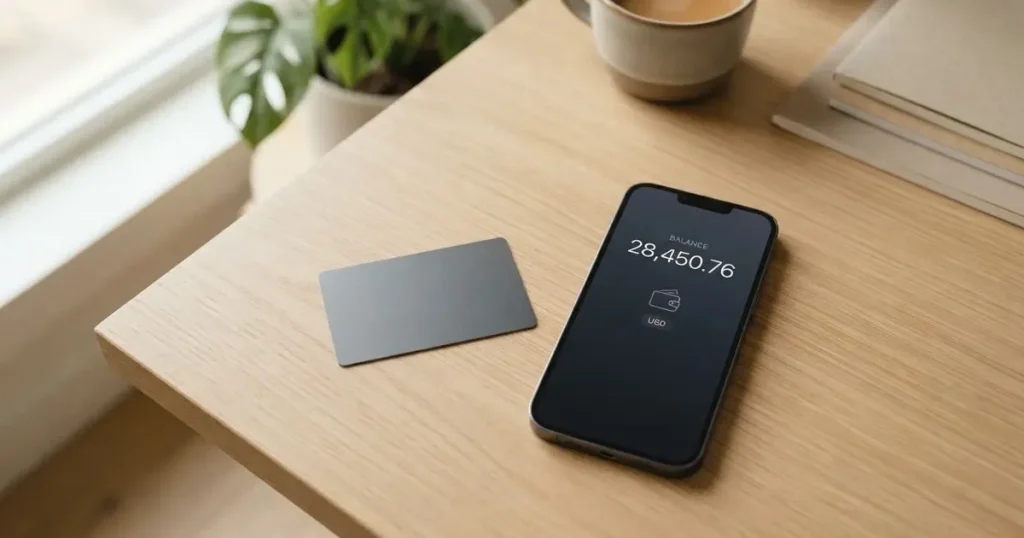
Infini looked, for a while, like one of the more interesting answers to a plain problem: you want an ordinary-looking payment card that spends money you hold in crypto, and ordinary banks in many countries will not give you one. On paper the numbers were good — the first card free, no monthly fee, no transaction fee, no fee on spending in dollars — and the app was clean. Then on 17 June 2025 Infini suspended its Global, Lite and Tech cards for both use and new applications. The status of the Max card for private customers has been unclear since. That is the single fact that should shape any decision here, and it is the reason this review is not a verdict on fees.
My score for Infini is 4.1 out of 10. The cost side earned almost full marks; the reliability side earned almost none.
The conditions described below are current as of October 28, 2026.
Verdict: 4.1 out of 10
Infini is a closed card programme. If you are reading this to decide whether to apply for an Infini card, the practical answer is that the cards people were signing up for no longer work and new applications were refused. If you are reading it because you already have money or a card balance sitting in Infini, the useful answer is in the next two sections: what happened, and what you should do about it.
Who this suited, in its time: someone who already held USDC or USDT, wanted a card that spends dollars for nothing, and did not mind that the card was virtual rather than plastic. Who it does not suit now: anyone who needs a card that will still work next month, and anyone whose fallback for ordinary payments is this balance.
| Criterion | Mark | Why |
|---|---|---|
| Who can get it | 0 / 10 | Global, Lite and Tech cards suspended for use and new applications on 17 June 2025; the Max card’s status for private customers is unclear |
| Cost | 9 / 10 | First card free, no annual or monthly fee, $0 transaction fee; FX 1% Pro, 3% Lite, 0% Max; stablecoin top-up free |
| Top-up options | 6 / 10 | USDC and USDT, networks not named; plus USD and EUR local accounts; fiat through Iron at 0.20% plus the rail’s fee |
| Reliability and complaints | 1 / 10 | Issuer not named, operator Cynosure Technology LLC (Hong Kong); $49.5 million USDC taken from the Infini vault in February 2025; cards suspended 17 June 2025 |
| Everyday use | 5 / 10 | Virtual card; Apple Pay and Google Pay on Max; plastic and ATM not disclosed |
| Total | 4.1 / 10 | Good pricing on paper, no programme left to spend it on |
The cost score is worth pausing on, because it explains how the review went. The pricing really was unusually good on the page: 0% on dollar spending, $0 monthly, $0 per transaction, free first card, free stablecoin top-up. And yet a card that cannot be used is worth nothing, whatever it cost. That is also the audience note in miniature: the population that matters now is existing holders drawing down a remaining balance, and for them the pricing is irrelevant and the exit terms are everything — which is exactly the part Infini does not publish.
What happened to the programme
The timeline is short and it is not a scheduled retirement. On 24 February 2025 Decrypt reported that roughly US$49.5 million in USDC had been taken from Infini’s vault, with retained administrator privileges from a former developer named as the route in, in reporting by Cyvers and QuillAudits. Infini said at the time that withdrawals and payments continued and that the founder said full compensation could be paid.
Then on 17 June 2025 Infini issued a notice, reported by WuBlockchain on 23 June 2025, that all Global, Lite and Tech cards would be suspended for both usage and new applications. The same reporting says card issuance fees would be refunded automatically to the Infini balance within 10 business days, that the co-founder pointed to high compliance costs and thin margins and a shift toward wealth management, and that deposits, withdrawals and the Earn product continued.
Read those two events together and the shape of the thing is clear. A platform lost a large sum from its own vault, and four months later it stopped selling and honouring its cards. The company did not fold, and the app kept shipping updates afterwards: the September 2026 App Store notes show a new “Max Card experience” and Business sub-accounts, and version 1.3.0 is the newest listed. So the platform is alive while most of its consumer card products are not.
That leaves an awkward middle state, and it is the honest core of this review. Max appears to have survived as a product line with cashback, zero FX and Apple Pay and Google Pay support, but its availability to private customers is not something the public pages state clearly. If you are a private customer reading about Max, the reasonable assumption is that you cannot sign up for it and should not build a plan around it.
Two things are simply not stated and I will not guess at them. The first is which institution issues the card. Infini says it partners with regulated financial institutions and shows an FCA mark with no licence number attached, but the issuer is not named. For anyone who has ever been declined by a bank, an unnamed issuer is not a small gap — it is the thing you would most want to know before trusting a balance to it. The second is what happens to balances now. There are no withdrawal fees, limits or closure terms for the card balance on the pricing page or the site, and the app release notes only ever mention Bitcoin withdrawals and fixes to withdrawal address matching. Nobody has published a schedule for getting your money out.
If you already have the card
If you hold Infini rather than merely considering it, the practical posture is simple: treat the Infini balance as money in transit, not as money parked. Deposits, withdrawals and Earn continued after the suspension, according to the notice reporting — so the platform is not dead, and the withdrawal path is presumably inside the app. But the terms of that path are not published, and a platform with this history is not somewhere to leave a working balance sitting for months.
What you can still do, based on what Infini has stated and what its app listing shows:
- Withdraw what you can. Withdrawals continued after 17 June 2025. Bitcoin withdrawals and withdrawal address matching are mentioned in the app release notes. The terms — fees, limits, timing — are not stated.
- Expect your card issuance fee back in the Infini balance, not on your original card, reportedly within 10 business days of the suspension notice. A refund to a balance inside the thing you are trying to leave is a slower exit than a refund to a card.
- Add money only if you have a reason to. Top-ups are still possible, in USDC and USDT, plus USD and EUR local accounts. For someone winding down, there is no reason to.
- Set limits and controls per card, which the site does offer as a feature, and freeze the card in-app rather than assuming an unused card is harmless.
- Move any Apple Pay or Google Pay token off your phone if the underlying card is suspended. Tokenised numbers can be restricted by the issuer independently of the plastic, and a token that outlives its card is a liability, not a convenience.
What you will not find, and should not go looking for: a stated refund process, a stated chargeback procedure, or a stated timeframe for either. Refunds on the Pro and Max cards were listed at a 1% fee, but the dispute and chargeback process itself is not stated, and that matters more than the fee once the card no longer authorises anything. If money went missing from your balance, you are in the position of a claim against an unnamed issuer with no published procedure; the practical first step is written evidence — the notice in your inbox, transaction IDs, and support contacts — rather than an in-app message that disappears with the account.
Support, for what it is worth, is reachable at [email protected], a Help Center channel on Telegram at t.me/infini_official, and X at @0xinfini. Languages are not listed on the site, though the app added Thai in version 1.1.0, and opening hours are not stated.
What can go wrong
The reliability column scored 1 out of 10, and that is not a stylistic choice. Here is the list, in the order I would worry about it.
The issuer is a name you cannot check. Infini’s public pages do not name the institution that issues the card. The operator is Cynosure Technology LLC in Hong Kong, named as both the App Store seller and on the site. The site says it partners with regulated financial institutions, shows an FCA mark without a licence number, and claims SOC 2 Type II and PCI-DSS Level 1. Claims of this kind are not the same as a named issuer you can look up in a register.
A vault loss already happened. In February 2025 about US$49.5 million in USDC left the Infini vault via retained admin privileges after a developer departure, according to Decrypt and audits by Cyvers and QuillAudits. That is a custody failure at the platform level, and it happened to this platform.
Programme suspensions are normal in this category. They happen to other companies too. In November 2022 Visa said it had terminated its global agreements with FTX, and the FTX US debit card was wound down by its issuer. In 2018 Visa suspended WaveCrest in Europe, closing all WaveCrest-issued Visa programmes. This is why the card network matters even when you have no relationship with it: Visa and Mastercard do not issue crypto cards to consumers themselves — they license issuers, and they can suspend a programme. When a card dies, the network is usually not the reason, but the issuer relationship is what you would need to find out.
Deposits can be lost on the wrong network. Infini supports USDC and USDT but does not name the networks. That is not a cosmetic gap. On Ethereum, token transfers are paid in ETH, so a wallet holding USDT and no ETH cannot send at all; Tron prices fees by burning TRX through bandwidth and energy resources; and Circle stopped supporting USDC on Tron in February 2024, so “USDC over TRC20” is not a native option. A deposit sent on a network Infini does not support, or to an address belonging to a different network, can be lost outright — blockchain transfers are irreversible, and recovery then depends on manual support work with no guarantee attached.
Stablecoins are dollars-shaped, not dollars. USDT and USDC are US-dollar-pegged, and the BIS put about 90% of stablecoin market capitalisation in those two as of July 2025, so both are mainstream assets. But “stablecoin” is a description of intent. TerraUSD collapsed in May 2022 and USDC temporarily lost its peg in March 2023 during the US banking crisis. Circle describes USDC as redeemable 1:1 for dollars and fully backed by cash and equivalents, mostly in an SEC-registered government money market fund, with monthly reserve attestations by a Big Four firm; Tether describes USDT as issued on multiple blockchains with reserves intended to back it 1-to-1. Reassuring, and not the same as a bank deposit.
Your money is not a bank deposit, whoever holds it. Electronic money institutions must safeguard customer funds by segregating them or insuring them, and such balances are not the same as bank deposits and may not sit under a deposit guarantee scheme. Infini says funds are held with regulated financial institutions in “bankruptcy-remote, segregated accounts” and crypto in multi-sig MPC wallets, with audits and penetration tests by Exvul. The custody model for personal users, and any insurance, are not stated.
Sanctions screening applies to citizenship, not just address. Nationality is recorded and screened separately from residence, because sanctions screening and issuer risk policy often follow citizenship and country of birth as well as the country you live in. This is the part people who “just want a card” most often underrate. If due diligence cannot be completed, EU rules require the institution to refrain from the transaction or relationship and, where necessary, end it — which is why accounts close or freeze pending documents. In the US, the customer identification programme requires name, date of birth, address and an identification number, and electronic KYC systems validate proof-of-address documents against records. Infini’s own pages say the card works “where available” and that feature availability varies by account permissions, account status and region; they describe business KYB — full approval for higher volumes typically under eight hours — but do not state the personal-card documents or age threshold. Prepaid and debit cards are generally for adults, 18 and over.
Nothing about your complaint path is published. No Trustpilot or Reddit page for Infini itself turned up when I searched. That is not proof of a clean record or a bad one; it means there is no public body of reviews either way, so a dispute has no visible process to lean on.
One more thing worth knowing about how cards behave, because it explains the odd declines people report. A card number begins with a 6- or 8-digit issuer identification number that a merchant can look up to see which institution and country issued it, and shops may apply extra scrutiny when that country differs from the billing address. Some merchants decline prepaid or foreign-issued cards for exactly this reason. Address verification is mainly offered in the US, Canada and UK and is generally unavailable for foreign-issued cards, which causes declines. Gambling (MCC 7995) is blocked by many issuers by policy rather than law, and the blocked list varies by issuer. A declined authorisation can also leave a hold on your funds for days — typically up to seven.
What to take instead
None of these is a recommendation, and none of them is a like-for-like replacement for what Infini’s Max card promised. They are the alternatives I looked at, with their own gaps named. If your problem is that a bank will not open an account for you, read the eligibility lines first: they are where these products differ most.
| Alternative | Score | Who it says it is for | Card | Top-up |
|---|---|---|---|---|
| Cardex | 5.6 / 10 | “One crypto card, 200+ countries”; no country list or exclusions; app listing is Naira-focused | Debit crypto card on VERVE, Visa, Mastercard and UnionPay; virtual and physical; card currency Naira per the listing | USDT, USDC and BTC wallets; networks not stated |
| CardFlow | 4.9 / 10 | Aimed at Nigeria — “Nigeria’s smartest fintech card platform” — and “Nigerians and global users” | Virtual USD Mastercard, created in about 3 minutes | Bitcoin, USDT, ETH or Naira bank transfer; networks not stated |
| HyperCard | 4.7 / 10 | Official pages state no country list; the app says the card works in “more than 176 countries”, which is acceptance, not eligibility | Prepaid “HyperCard”; network not stated on the app page; balance in USD or EUR | Crypto such as USDT, BTC or ETH in the app, converted to USD or EUR; networks not stated |
Three things stand out when you put them side by side.
Nobody publishes the numbers you need. Cardex has no stated card cost and no stated conversion percentage — it describes an “AI-Powered Conversion Rate” that scans global exchange rates and picks the best one when you spend, which is a nice idea and not a price. CardFlow says creating a virtual card is completely free and states no monthly fee. HyperCard’s app page lists no fees. Infini at least printed a full fee table, which is why it scored 9 on cost.
CardFlow is the only one with a stated country focus. “Nigerians and global users” is vague, but Nigeria is named. For the other two, “200+ countries” and “more than 176 countries” describe where the card might be accepted, not who can hold one — and Cardex’s app listing being Naira-focused suggests the same pattern: a Nigerian product with a wide acceptance claim.
Acceptance is not eligibility. This is the single most common trap. A card can work in a country because it is a Visa or Mastercard product, while the provider will only onboard people with a specific nationality or residence. The reverse also holds: a provider may onboard you and then your card declines abroad for reasons that have nothing to do with you.
If you are moving from Infini, the more useful question than “which of these three” is what you actually need. A virtual dollar card you can load with stablecoins is one job. A physical card that works at a shop counter is another. Apple Pay and Google Pay, cashback, and a fee you can name in advance are a third. None of the three alternatives above covers all of them, and none of them has published the withdrawal terms that Infini left blank — so you would be trading one unknown for another unless you ask.
Who I would recommend it to
In the present tense, to almost no one as a card. The programme that people signed up for was suspended on 17 June 2025, and the private-customer status of the surviving Max line is not clear.
In the past tense, it was a reasonable fit for a narrow group: someone already holding USDC or USDT, comfortable with a virtual card and with a Hong Kong operator rather than a named local issuer, who wanted zero cost on dollar spending and could afford to lose the convenience if it stopped working. The pricing was genuinely good — first card free, $0 monthly, $0 transaction, 0% on USD spending, free stablecoin top-up, FX 1% on Pro, 3% on Lite, 0% on Max, Max cross-border 1% outside Hong Kong, a $0.30 small-transaction fee under US$50, and a 1% refund fee on Pro and Max. Fiat deposits through Iron cost 0.20% plus the rail: ACH $1, FedNow $1, RTP $1, wire $20, SEPA EUR 1. That table is the reason the cost score is 9 and it deserves to be stated plainly, because “the fees were fine” and “the card works” are different sentences.
For an existing holder, my advice is to convert Infini into a withdrawal queue and nothing else. Withdraw what you can, keep written records, do not top up, and do not treat the remaining balance as savings. If you keep funds on any custodial card platform, keep the amount small enough that its failure would be an inconvenience rather than a crisis — that is not fear of this company specifically, it is the ordinary consequence of the custody model, which is exactly what Mt. Gox, Coincheck and Ronin each demonstrated with losses of roughly US$350 million, US$400 million and US$625 million.
For someone choosing today: pick a product whose issuer, withdrawal terms and eligibility rules are published in plain words. Infini was not a scam-looking operation — it published a real fee table, a support channel and an app with a 4.7 rating, though from only 3 ratings in the App Store, for iPhone on iOS 16.0 and above. It was a Hong Kong programme manager fronting an unnamed issuer, and that structure is where the risk lived all along.
And a final note for your own records: if you spend digital assets through any card, the IRS treats digital assets as property, so exchanging them for goods, services or dollars generally produces a taxable gain or loss, measured in local currency at the value on the transaction date. A card payment funded from crypto may therefore be a separate taxable disposal each time. That is a reporting question to take to a professional in your own jurisdiction, not something to settle from a card review.
Frequently asked questions
What is the Infini card?
Infini was a Hong Kong-based crypto card platform, operated by Cynosure Technology LLC, offering prepaid-style cards that spend a balance loaded from stablecoins. The cards included Global, Lite and Tech tiers, plus a Max card with cashback and Apple Pay and Google Pay support. It was a programme manager rather than an issuer: the site says it partners with regulated financial institutions but does not name the institution that issues the card. On 17 June 2025 the Global, Lite and Tech cards were suspended for use and new applications.
Is Infini a bank?
No — Infini is not a bank. It was a card programme manager and crypto platform, not a deposit-taking institution. The site claims SOC 2 Type II and PCI-DSS Level 1 and says funds are held with regulated financial institutions in segregated, bankruptcy-remote accounts, and it shows an FCA mark without a licence number. That means a balance held there is not a bank deposit and should not be assumed to sit under any deposit guarantee scheme.
Why were the Infini cards suspended?
WuBlockchain reported on 23 June 2025 that Infini’s notice of 17 June 2025 suspended all Global, Lite and Tech cards for both usage and new applications. The co-founder cited high compliance costs, thin margins and a shift toward wealth management, while deposits, withdrawals and the Earn product continued. The suspension came four months after roughly US$49.5 million in USDC was taken from the Infini vault in February 2025 via retained administrator privileges.
Can I still use my Infini card?
Probably not, and that is the honest answer. Global, Lite and Tech cards were suspended for usage on 17 June 2025. The Max card was not covered by that notice, but its status for private customers has been unclear since, and the app has continued shipping updates including a new Max Card experience. Treat any Max access you have as something that may be withdrawn rather than as a permanent card.
How do I withdraw money from Infini?
The app is the route — withdrawals continued after the suspension — and Bitcoin withdrawals and withdrawal address matching appear in the app release notes. The problem is the terms: no withdrawal fees, limits or closure conditions are published on the site or the pricing page. There is also no stated deadline for withdrawing a balance. If it matters to you, contact support at [email protected] and ask in writing what the terms are.
Is the Infini card free?
It was, on the published numbers: the first card was free, with a $0 monthly fee, a $0 transaction fee and a 0% fee on USD spending. The minimum initial top-up was US$10. You needed to top up before you could spend, so “free” meant no card charge, not no cost — and none of it matters now that the cards are suspended.
Was Infini safe to use?
Not as a place to hold money over time, in my view. The issuer is not named, the operator is a Hong Kong entity, the February 2025 vault loss of about US$49.5 million is on the record, and no public review page for Infini itself was found. The app’s own security features — biometric authentication, passkey sign-in, multi-sig MPC wallets — are reasonable, but the custody model for personal users and any insurance are not stated.
What are the fees Infini charged?
Across all three cards: USD spending 0%, monthly fee $0, transaction fee $0. FX was 1% on Pro, 3% on Lite and 0% on Max. Max added a 1% cross-border fee outside Hong Kong and a $0.30 small-transaction fee under US$50. Pro and Max charged a 1% refund fee. Stablecoin top-up was free; fiat deposits through Iron cost 0.20% plus the rail — ACH $1, FedNow $1, RTP $1, wire $20, SEPA EUR 1.
What should I use instead of Infini?
Cardex (5.6/10), CardFlow (4.9/10) and HyperCard (4.7/10) are the alternatives I looked at. None states a full fee table the way Infini did, none publishes withdrawal terms, and “200+ countries” or “more than 176 countries” describes where the card is accepted, not who can hold one. CardFlow is the only one naming a country focus. Check eligibility, fees and withdrawal terms in writing before moving a balance.
How do I delete my Infini account or close my card?
The public pages do not describe an account closure or card closure process, which is itself part of the problem for anyone winding down. Freeze the card in-app rather than leaving it active, withdraw the balance, and keep written records of every step. If you hold a balance you cannot withdraw, that is a claim against an unnamed issuer with no published dispute procedure, and written evidence is what you will want.
Virtual card reviews – cryptocardcheck
Content created by the «cryptocardcheck» team