
I Went Through DiCard's Terms — Here's What You Get for $5
 Available in US
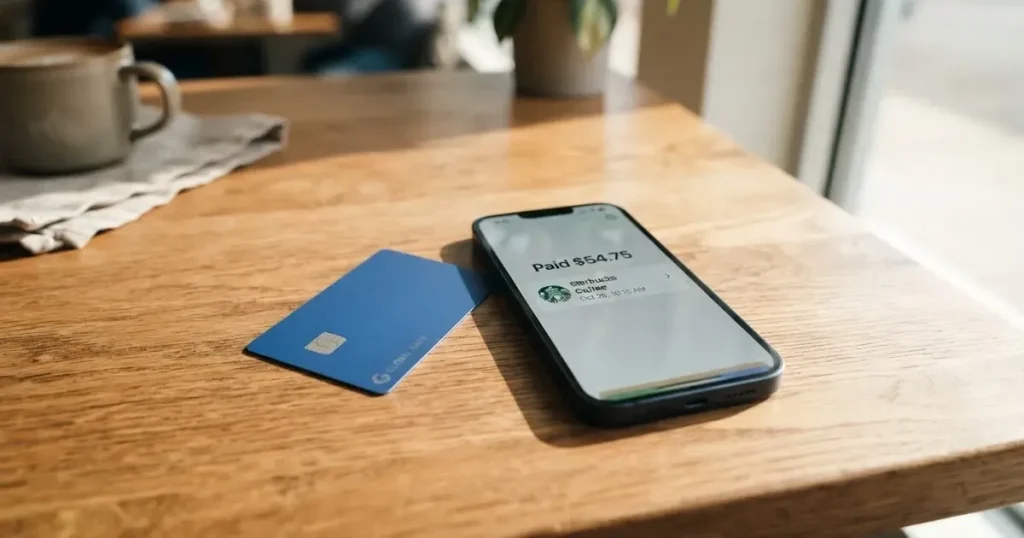
If you’re someone who can’t get an ordinary bank card, or you’d rather not deal with one, DiCard looks like a straightforward solution: a virtual Mastercard you load with USDT from a DigiFinex account and then spend like any other card. That much is true. What’s less visible is how much of the card’s operation simply isn’t published — which countries issue it, who the licensed issuer is, what the ATM fee is, which networks your USDT deposit should travel on. I’ve gone through everything the card’s own pages state, and marked clearly what they leave out. The short version: it’s a real card with real limits and real fees, wrapped in a thin layer of published information, attached to an exchange with a difficult complaint record.
The conditions described here are current as of October 28, 2026.
The verdict: 4.7 out of 10
I score DiCard 4.7 out of 10. It’s a legitimate virtual card for a specific job — spending USDT from a USD balance without a traditional banking relationship — but the score is pulled down by thin disclosure, a narrow single-asset funding rail, and unresolved trust questions about the company behind it.
Who it suits: you already hold or are willing to hold USDT, you mostly spend in USD, and you need a card number that appears instantly rather than one shipped in the mail. Who it does not suit: anyone who wants a physical card, cash withdrawals, a wide range of cryptocurrencies, or clear published answers about licensing, fees at ATMs, or country eligibility.
| Criterion | Score | Why |
|---|---|---|
| Who can get it | 7 / 10 | Country eligibility list not published; unofficial sources note DigiFinex restricts the United States, Singapore, Canada, and China |
| Cost | 4 / 10 | $5 application per card, $0 annual; 1.3% top-up fee (0.3% for the first 5); fixed fee $0.25 (Lite) / $0.5 (Premier) per transaction; 1.5% FX fee |
| Top-up options | 4 / 10 | USDT only, minimum 15 USDT and maximum 5000 USDT per transaction; networks not named |
| Reliability and complaints | 3 / 10 | Issuer and licences not named; Trustpilot DigiFinex score 2.1 from 121 reviews — stuck withdrawals, a card that stopped working with frozen funds (Dec 2024) |
| Everyday use | 5 / 10 | Virtual card instantly, Apple Pay and Alipay; physical card, Google Pay, and ATM not stated |
| Total | 4.7 / 10 | A real but narrowly scoped card, attached to a platform with a difficult public record |
The card is a real financial instrument, but the information a customer would need to plan around it — country rules, issuer identity, ATM costs, deposit networks — is largely absent from the readable pages. That absence, more than any single fee, is why the total sits below the midpoint.
Who will they actually give the card to?
The short, honest answer: I can’t tell you from what the card publishes. The country list is not stated in any page I could read. That means there’s no official way, from the card’s own materials, to know whether your residence will be accepted.
What I do have is unofficial context. Older DigiFinex pages — the ones about credit-card top-up for crypto, two to six years old, not about DiCard itself — exclude United States and Singapore citizens. DigiFinex’s own terms list the United States, Singapore, Canada, and China as restricted areas, according to an undated web summary of those terms. None of this is confirmed on the DiCard pages, and all of it may be out of date. Treat it as a direction, not a decision: check your own country before you invest any time in the application.
The practical takeaway: assume you are applying at your own risk on residency. If you’re in a restricted country, you may be refused or, worse, approved and then frozen later. The card states no rule either way, so the safety net isn’t there.
How to get the card
You apply through the card page at digifinex.com/card, and you need a DigiFinex exchange account before you start. The virtual card is issued instantly once you’re through. It’s a USD-based Mastercard — the announcement calls it a “credit card” — and its currency is USD.
What the card doesn’t publish: the specific documents required, whether proof of address is needed, any age requirement beyond the category default, or a step-by-step of what the approval process looks like. The identity-verification level required to hold this card is not stated either. You will be applying through a process whose details are, for the most part, unpublished.
One thing worth flagging: the card is virtual. A physical card is not stated. If you were picturing a piece of plastic with your name on it, that isn’t what the materials describe. Physical card shipping is likewise not stated, so there’s no announced timeline for one.
Fees: what it really costs
Here’s the cost picture as published. An application fee of $5 per card applies to both the Lite and Premier tiers; the annual fee is $0, and no monthly fee is stated. Note one conflict I found: an unofficial, undated reading of the DigiFinex card page lists a 1 USDT application fee instead of $5. The $5 figure is the one the card states; treat the discrepancy as a signal to confirm at checkout.

| Fee or limit | Lite | Premier |
|---|---|---|
| Application fee | $5 per card | $5 per card |
| Annual fee | $0 | $0 |
| Monthly fee | Not stated | Not stated |
| Top-up fee | 1.3% (0.3% first 5 deposits) | 1.3% (0.3% first 5 deposits) |
| Fixed fee per transaction | $0.25 | $0.50 |
| FX conversion fee | 1.5% | 1.5% |
| Currency conversion on USD transactions | $0 | $0 |
| ATM fee | Not stated | Not stated |
| Per-transaction limit | $5,000 | $25,000 |
| Daily limit | $20,000 | $50,000 |
| Monthly limit | $100,000 | $400,000 |
| Annual limit | $500,000 | $1,000,000 |
The card is USD-based, and the announcement says payments in other currencies are allowed. Transactions in USD carry no currency conversion fee; transactions in other currencies attract the 1.5% FX fee.
Two tier notes. The Lite and Premier fees are identical except the fixed per-transaction charge ($0.25 versus $0.5). Premier carries the higher limits and adds one capability Lite lacks: you can withdraw the card balance back to your DigiFinex spot account, with a minimum of 1 USD and a maximum of 5000 USD per day. On Lite, that withdrawal option does not apply.
Another conflict, again unofficial and undated: a reading of the card page lists a 2% currency conversion fee on the USD-based card, against the 1.5% the card states. Use 1.5% in your planning, and verify if the difference matters to you.
Now a few everyday payments, with the fees that actually apply:
- A $30 subscription in USD on Lite. Top-up fee would have applied at the load stage; the payment itself carries the $0.25 fixed fee and no conversion fee, because it’s already USD.
- A $30 purchase priced in euros on Lite. The $0.25 fixed fee plus the 1.5% FX conversion fee both apply, so you pay a little over $30 in total.
- A $30 purchase priced in euros on Premier. Same as above, but the fixed fee is $0.50 rather than $0.25.
The pattern to notice: a USD-only spender pays the least. Every currency other than USD adds 1.5%, and the fixed fee is per transaction regardless of amount, so many small purchases add up.
Top up: how the card gets funded
The card is funded with USDT. The minimum is 15 USDT and the maximum is 5000 USDT per transaction, and those bounds apply on both tiers. The starting data indicates the funds come from your DigiFinex spot account. The top-up fee is 1.3%, or 0.3% for your first five deposits.
The gap that matters here is networks. The card does not name which blockchain networks your USDT transfer should use. That is a real operational risk, not a detail: sending a deposit on a network the provider doesn’t support, or to an address belonging to a different network, can lose the funds or require manual support recovery with no guarantee. Tether, which issues USDT, lists the token on networks including Ethereum, Tron, Solana, Polygon, and Avalanche — so there is no single obvious default. Before your first deposit, find out in writing which network the card expects.
Two more things aren’t stated: who absorbs the on-chain network (gas) fee for your deposit, and whether you can fund the card with fiat directly rather than crypto.
There’s one cash-out path, and it’s Premier-only. You can withdraw the card balance back to your DigiFinex spot account, minimum 1 USD, maximum 5000 USD per day. On Lite this isn’t available. The fee for that withdrawal is not stated in the support article, and there’s an unofficial, undated $0.50 withdrawal fee from a reading of the card page. What happens to a leftover balance if you close the card is also not stated.
Paying with it every day
This is where the card is genuinely useful, and where it gets in its own way.
The good: Apple Pay and Alipay are both supported, and there’s a dedicated article on adding your DiCard to Apple Pay (last updated 2026-08-19). Tokenising into Apple Pay means your card number is replaced by a device-specific number stored on the phone, not on Apple’s servers, and each payment uses a fresh one-time code — a meaningfully safer way to tap than handing over a card. Google Pay is not stated either way.
Then the category restrictions, which are extensive and worth reading before you rely on this as your everyday card.
On Lite, the blocked list names crypto exchanges, gambling, gaming, lending and payment platforms, gift-card sellers, charities, adult and dating sites, and takeaway/delivery services. It also flags Apple.com, YouTube, Telegram Premium, and TikTok as high-failure merchants — meaning these have a track record of the payment failing. That’s a strange list, because it includes some of the most ordinary digital purchases you’d make.
On Premier, the restrictions are by merchant category code — the four-digit number that classifies a business — and block weapons, drugs, tobacco, pawn and jewellery, direct marketing, financial institutions and cash or money transfers, securities brokers, escort and dating, gambling, unions and political or religious organisations, and bail. Premier is more permissive on everyday online spending but has its own financial-sector blocks.
A specific safety feature cuts both ways: three consecutive low-amount transactions lock the card. Make several small test purchases in a row and the card freezes until you sort it out. That’s a safeguard against small-amount fraud, but it catches innocent users too.
On rewards, don’t plan around them yet. Deposit and spending cashback was announced as “coming soon” back in August 2025. A points system does exist — 100 points equals 1 USDT, redeemable against card top-ups, earned through activities — but the points article says spending cashback isn’t yet covered. On the app side, note that the DigiFinex app is the exchange app, not a card-specific one; its App Store rating was 3.2 out of 5 from 59 ratings when I read it (2026-10-21).
Finally, dispute handling — what happens if a merchant takes your money and doesn’t deliver — is not stated. The Lite restricted list does flag some merchant types as carrying cancellation or refund risk, so the card itself acknowledges the danger without telling you what remedy you have.
What can go wrong
This is the section I’d read twice if I were you.
The issuer and licences aren’t named. The readable pages don’t identify the card issuer or the e-money institution behind DiCard. Visa and Mastercard don’t issue crypto cards to consumers themselves; they license issuers. So there is a licensed institution somewhere in this chain, and the card isn’t telling you which. When you can’t name the entity that owes you the balance, you have less to point at if it goes wrong.
The custody model. The funds are tied to a DigiFinex exchange account, and the custody model is not stated. In plain terms, your money is held by a company, not by you. That is the same arrangement behind several of the largest custodial failures in crypto history — Mt. Gox (about US$350 million reported stolen, 2011–2014), Coincheck (about US$400 million, 2018), and the Ronin Network bridge (US$625 million, 2022). That is not an accusation about DigiFinex; it’s the shape of the risk you’re accepting by leaving funds on a platform.
The complaints record. No official incident notice was found. But third-party reviews of DigiFinex on Trustpilot paint a picture: the TrustScore was 2.1 out of 5 from 121 reviews when I read it (2026-10-21). Themes include withdrawals stuck for weeks or months during compliance reviews, generic or slow support, and — most directly relevant to a card — a card that stopped working with funds stuck, in December 2024. DigiFinex replied that supplier issues led to refunds to spot accounts.
The freeze risk is written into the card’s own rules. The card states that card transactions tied to virtual currency, gambling, or gaming may lead to a freeze or cancellation. So does the security model: high-risk transactions can lead to the card being frozen or permanently deactivated. Two-factor authentication and in-app freeze are not stated.
Declines can hold your money. A declined authorisation can leave a hold on your funds for several days, typically up to seven. That’s true of crypto cards generally, not just this one, but it bites harder when the balance behind the card is money you were planning to move.
Where it stands against the wider category. Providers and networks do close programmes. Visa terminated its global agreements with FTX in November 2022, and the FTX US debit card was wound down. Visa suspended the card issuer WaveCrest in Europe in 2018, closing all WaveCrest-issued Visa programmes. Closures typically mean a notice period, then loading and spending stop, then you’re asked to withdraw whatever’s left. One reported 2026 closure had new loads end 8 July 2026 and spending stop 8 August 2026 — a single secondary source, unconfirmed, but it shows the timeline can be weeks, not years. And Tether, which issues USDT, says it disables tokens in wallets on sanctions lists and has frozen funds tied to illicit activity, so stablecoins aren’t censorship-proof.
One tax note, offered as information and not advice. The IRS treats digital assets as property, so exchanging them for goods, services, or dollars generally produces a taxable gain or loss, measured in your local currency at fair market value on the date of the transaction. Each card payment funded from crypto may be a separate taxable disposal. I’m not a tax adviser and this isn’t tax advice — but if you’re spending repeatedly from crypto, it’s worth checking with a professional how this applies to you.
What to take instead
If DiCard’s gaps bother you — the unnamed issuer, the USDT-only rail, the thin country information — the honest move is to compare it against a card whose terms are published in more detail. I looked at three alternatives. Their own details are also unevenly published, which is itself part of the picture, so take these as points of comparison rather than recommendations.
| Card | Score | What stands out | What’s not stated |
|---|---|---|---|
| DiCard | 4.7 / 10 | Instant USD-based Mastercard virtual card, USDT funding | Issuer, licences, country list, ATM fee, networks |
| Young Card | 5.7 / 10 | Cashback paid in YNG tokens at a Club-tier rate: Essential 0.1%, Gold 1.8%, Platinum 3.6% (Bronze and Silver not stated) | Country eligibility, card details, costs, fees, funding |
| MSX | 6.4 / 10 | — | Everything officially; essentially nothing published on an official page I could read |
| Bybit Card | 6.0 / 10 | Clearest published detail of the four: named regions, tiered cashback from 2.00% up to 10.00%, no annual fee | Much, but not everything |
Bybit Card is the one whose terms are documented most fully, and it’s the useful counter-example. It names its regions (Argentina, AIFC/Kazakhstan, Georgia, Kazakhstan, Australia, Mexico, Brazil, Peru, Asia Pacific), issues both virtual and physical cards, and sets virtual card issuance to none “until further notice” with no annual fees. It has a defined cashback ladder — Base 2.00% up to Infinite 10.00%, each with a monthly cap and a monthly spend threshold — but only crypto-funded transactions earn points or cashback since 2026-10-05; fiat-funded spending doesn’t. It also draws on a funding account and converts crypto when fiat runs out, so it’s not restricted to one token, and its FX fee structure is published region by region (2% on top of the network rate in several regions, 7% in Argentina, 1% in Peru). It has a published rewards program, and its card currency “depends on the country of your Advanced Identity Verification.” Its own guardrails are explicit too — the cards page says the product is not meant for European Economic Area customers and that participation is strictly prohibited.
Young Card scores above DiCard and offers tiered cashback in YNG tokens, but its country eligibility, card details, costs, fees, and funding are not stated on its official page. MSX scores highest of these three, but likewise nothing was stated on an official page — a high score built on thin public information is its own caution.
The takeaway isn’t that one of these is safe and the others aren’t. It’s that when you compare cards, the amount of *published* information is itself a signal. DiCard’s silence on the issuer and the country list is a practical risk you’re carrying, and Bybit’s willingness to print its restrictions — including strict ones — makes it easier to know what you’re agreeing to.
Who I’d recommend it to
I’d recommend DiCard to a specific person: someone who already lives in USDT, spends mostly in dollars, needs a virtual card number today rather than a plastic card next week, and is comfortable leaving a balance on an exchange platform while accepting that they can’t yet name the licensed institution behind it. For that person, the economics are workable — $0 annual, $0.25 per Lite transaction, no conversion fee on USD purchases — and Apple Pay support makes it genuinely convenient to tap.
I’d steer it away from you if any of these are true: you need a physical card; you plan to use ATMs; you hold anything other than USDT and want to spend it; you spend in many currencies and would rather not pay 1.5% each time; you travel to high-failure merchants like the ones the card’s own list flags; or you’re the kind of person who needs the issuer’s name and licence number in front of you before you load money. In that last case this isn’t the card for you, and no discount will fix it.
The honest summary is that DiCard does a narrow job competently, and asks you to accept a lot of not-knowing for the privilege. Decide whether that trade suits your situation — and check your own country’s rules, because the card won’t check them for you.
Frequently asked questions
What is the DiCard card?
The DiCard card is a virtual Mastercard issued by DigiFinex. It is USD-based and can be obtained instantly once you’re approved. You fund it with USDT from your DigiFinex spot account and then spend the balance like an ordinary payment card. The card also supports Apple Pay and Alipay. A physical card is not stated in the published materials, so what is described is a virtual card you hold in your phone or wallet.
How does the DiCard card work?
You top the card up with USDT, it converts to a USD balance, and the card spends that stored balance — much like a prepaid card, not a debit card linked to a bank. A top-up fee of 1.3% applies, or 0.3% for your first five deposits. Each payment then takes a fixed fee of $0.25 on Lite or $0.50 on Premier. USD payments carry no conversion fee; other currencies add a 1.5% FX fee. Three consecutive low-amount transactions lock the card as a safeguard.
Is DiCard a bank?
No — DiCard is a card product from DigiFinex, which is a cryptocurrency exchange, not a bank. The readable pages don’t name the card issuer or the e-money institution licensed to issue it, so you can’t verify a banking licence from what’s published. Your balance sits with the exchange platform, which is a custodial arrangement. That means your money is held by a company rather than by you, a structure that has been involved in major industry failures.
Who owns DiCard?
DiCard is operated by DigiFinex, whose App Store seller is listed as DIGIFINEX PTE. LTD. Beyond that company, the issuer and any licences behind the card are not named in the pages I could read. Since Visa and Mastercard only license issuers rather than issuing crypto cards themselves, a licensed institution exists somewhere in the chain, but the card does not identify it for you. That absence is worth weighing before you load funds.
Is DiCard available in my country?
The card does not publish a country eligibility list, so I can’t confirm availability for you. Unofficial context: older DigiFinex pages exclude United States and Singapore citizens, and DigiFinex’s terms list the United States, Singapore, Canada, and China as restricted areas, though this is undated and not confirmed on the DiCard pages. Check your own country’s status before applying, and treat any approval as provisional.
How do I get the DiCard card?
You apply through digifinex.com/card, and you need a DigiFinex exchange account first. Once you’re through, the virtual card is issued instantly. The published materials don’t state which documents are required, whether proof of address is needed, the age requirement, or a step-by-step approval process, so expect some uncertainty about what you’ll be asked for. An application fee of $5 per card applies to both tiers.
Does DiCard require KYC?
Almost certainly some form of identity verification is part of getting through, but the card does not state the required KYC level or the specific documents. Identity checks are standard for regulated crypto services under anti-money-laundering law, so you should expect to prove who you are. If verification can’t be completed, accounts can be closed or frozen pending documents, so have your identification ready before you apply.
How do I top up the DiCard card?
You top it up with USDT from your DigiFinex spot account, with a minimum of 15 USDT and a maximum of 5000 USDT per transaction. The top-up fee is 1.3%, or 0.3% for the first five deposits. One important gap: the card does not state which blockchain network to use, and sending on an unsupported network can lose the funds. Confirm the network in writing before your first deposit. Only USDT is supported — no other crypto, and no stated fiat top-up.
How do I withdraw money from the card?
Only the Premier tier supports it. You can withdraw the card balance back to your DigiFinex spot account, with a minimum of 1 USD and a maximum of 5000 USD per day. On the Lite tier, withdrawal isn’t applicable. The withdrawal fee is not stated in the support article, though an unofficial, undated source lists $0.50. What happens to any leftover balance if you close the card is also not stated, so don’t leave more on the card than you plan to use.
Is DiCard card safe and worth it?
It depends on what you’re comparing it to. Safe in the sense that it uses standard card security and tokenised Apple Pay — not safe in the sense of transparent, because the issuer, licences, and ATM fee aren’t published and the balance is custodial. Trustpilot shows DigiFinex at 2.1 out of 5 from 121 reviews, with reports of stuck withdrawals and a card that stopped working in December 2024. For spending USDT in USD, it’s workable; for anything requiring an ATM, a physical card, or peace of mind about licensing, it’s worth looking at cards with fuller published terms.
Exchange card reviews – cryptocardcheck
Content created by the «cryptocardcheck» team