
UstarPay review: a USDT-funded Visa from a very young operator
 Available in US
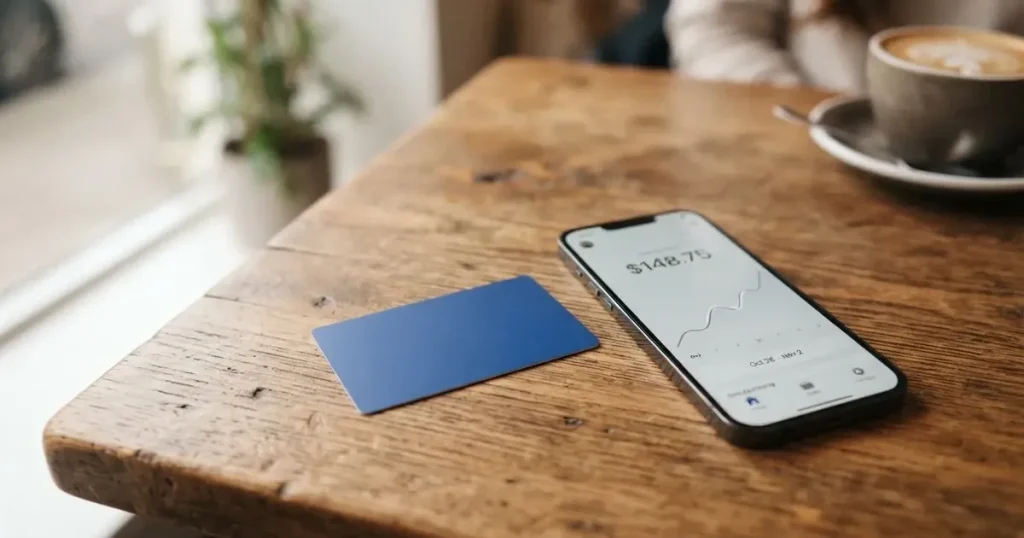
UstarPay is a payment card that pulls from a crypto balance held inside its own app, and it is one of the newest products in the crypto-card space. The company behind it was incorporated in Hong Kong in January 2026, so it is, at the time of writing, only a few months old. That freshness is the story of this review: there is very little UstarPay has published about who it accepts, what it charges or how it handles disputes, and almost no independent feedback exists yet. The card itself scores 4.8 out of 10 in my assessment, mainly because the funding path is clear but everything around it is a question mark.
This is a review for anyone who is curious about UstarPay specifically, or who is weighing it against other crypto cards that target the same problem: spending crypto at a normal point of sale. I have not used the card, so everything here is built from what the company and third-party sources publish, and I flag where that is thin. If you already have crypto and a phone, the idea of paying with a Visa from a USDT balance sounds simple; the questions are who can actually get one, what it costs in practice and what happens if something goes wrong.
Conditions on this page are current as of October 28, 2026.
Verdict
A score of 4.8 out of 10 is, in plain terms, a “wait and see”. The single point of clarity is the funding flow: you send USDT to an in-app wallet on Ethereum, Bitcoin or Solana, and a Visa draws on that balance. That is enough for a small group of early adopters to consider. For almost everyone else, the absence of a published country list, fee schedule, issuing bank or independent track record is too much to balance on trust alone.
| Criterion | Mark | Short reason |
|---|---|---|
| Who can get it | 5 / 10 | Country list not published; eligibility is KYC and a regulated-list decision |
| Cost | 5 / 10 | Issuance fee exists in the base product but the amount is not published; FX, ATM and replacement fees are not published |
| Top-up options | 5 / 10 | USDT is the only confirmed path; other listed assets swap into USDT in-app; three networks accepted |
| Reliability and complaints | 4 / 10 | Operator is a Hong Kong company incorporated 12 January 2026; no issuing bank named; Trustpilot has 0 reviews |
| Everyday use | 5 / 10 | Card can be added to Apple Pay or Google Pay depending on device and region; physical form, ATM and delivery are not described |
| Total | 4.8 / 10 |
Who the card suits: early adopters funding a new Visa with USDT who are comfortable being the test case. Who it does not suit: anyone who needs to see a published fee schedule, an issuing bank and a track record of dispute handling before they commit a meaningful balance.
Who will they give you the card
The short answer is: UstarPay has not said publicly. There is no country list, no eligibility check on the website that I could read, and no list of excluded jurisdictions. In practical terms, the only published gate is that you have to pass KYC before you can fund or spend — identity documents are required, and the exact set varies by region, with approval taking some time. A third-party write-up notes that access also depends on your country being on a regulated list, but that list is not published either.
That is the most important sentence in this whole review, so I will say it again in different words. Two things decide whether you can hold a UstarPay card: (1) you pass the KYC check, and (2) your country is, in the operator’s judgment, on a regulated list. Both decisions happen inside an app that does not tell you the rules up front. If you are in a country where card-issuing is tightly licensed, or where the operator is unsure, the most likely outcome is that you will not get a card and the reason will not be spelled out.
For comparison, ordinary bank cards have a much clearer acceptance path. The bank says in plain terms whether it serves your country, you can usually read its full fee schedule before you sign up, and there is a regulator you can complain to. None of those features are visible with UstarPay right now. That asymmetry is the reason the “Who can get it” line scores only 5 out of 10: a product can be excellent and still be a bad deal for you if you cannot tell whether you are allowed to use it.
If UstarPay interests you, my practical advice is to ask the support channel — there is a website, an X account at @ustarpay and a Telegram channel — for a written confirmation that your country is supported before you submit any documents. Do not assume that because the app lets you download, it will let you finish. KYC also requires a real identity document, so be ready to upload a government ID and a proof of address. Treat anything you submit as you would treat an application to a new bank.
How to get it
The signup process is, like eligibility, underdocumented. From what third-party sources describe, the flow looks like this: you install the app, create an account, complete KYC by uploading the documents your region requires, wait for approval, then order a card. The card itself is described as a Visa; whether the first thing you get is virtual, physical or both is not stated officially. Delivery time for a physical card is not stated either.
Two practical observations follow. First, since the issuing bank is not named, you are not “applying for a Visa card” in the sense banks usually use; you are asking a Hong Kong-incorporated company to enrol you in a programme whose back end you cannot see. The regulator who supervises that programme is not named either. Second, the app and its review page on the App Store are too new to rate, which means that even the rough signal other users give about onboarding — was the upload fast, did the approval come back, did the card arrive — is missing.
If you do decide to sign up, the same rule as for KYC applies: do it on the official site or the official app store listing, never through a link in a Telegram chat, a paid ad or a referral from a stranger. The reason is not that UstarPay itself is untrustworthy; it is that, in a brand-new product with no track record, the easiest way to be defrauded is by a fake site that looks like the real one.
What it really costs
This is the part of any crypto-card review I usually look forward to, and the one that, with UstarPay, is the most painful to write. I will start with what the operator has published, which is almost nothing, and then describe what third-party sources have reported, which is also almost nothing.
A virtual card issuance fee exists in the base product, but the amount is not published. Time-limited campaigns have waived it. FX fees, ATM fees, decline fees and replacement fees are not published. In-app swap pairs and spreads between assets are not published. Daily and monthly spending limits are not published. Card tiers — for example, a “standard” and a “metal” version — are not published. The settlement currency or currencies your balance is held in are not published.
That is a long list of not-published lines, and it is the reason the cost criterion scores 5 out of 10 rather than higher. A fee that is not stated is not the same as a fee that is zero. With a brand-new product, a common pattern is to charge a higher mark-up in the FX spread or the in-app swap than the headline suggests; if you cannot see those numbers, you cannot know what you are paying.
Here is the costs table as I can fill it from the facts:
| Fee or limit | Status |
|---|---|
| Virtual card issuance | Fee exists; amount not published (sometimes waived in campaigns) |
| Monthly fee | Not published |
| Crypto-to-fiat conversion / FX | Not published |
| ATM withdrawal fee | Not published |
| Card replacement fee | Not published |
| In-app swap spread | Not published |
| Daily spending limit | Not published |
| Monthly spending limit | Not published |
| Settlement currency | Not published |
To turn that into something a person can use, let me walk through three everyday payments and what the published rules tell you about them. None of these are exact numbers, because the numbers do not exist; they are the questions you should ask the operator before you load any balance.
- A coffee at a local café. The merchant sees a Visa and charges you in your local currency. Two conversions can happen: your USDT is converted to whatever fiat the card spends in, and then that fiat is converted again to the merchant’s local currency. Each conversion has a spread or fee. Neither rate is published. What you do know is that the blockchain fee for the original USDT transfer is on UstarPay’s network, not the card’s, so on-chain cost is at least transparent.
- A subscription paid in US dollars to a US streaming service. The card is charged in dollars and the merchant is paid in dollars. The conversion question is whether your USDT is converted once (to USD, then paid out) or twice (USD to local, then back to USD on the merchant side). The first path is cheaper if UstarPay settles in USD; the second is more expensive. The card’s settlement currency is not published.
- An ATM withdrawal abroad. The bank that owns the ATM will add a foreign-ATM fee, and your card can add another. UstarPay has not published its share. A common floor for crypto cards is a percentage for FX plus a flat ATM fee; the same product then applies a card-network foreign-transaction fee on top. Until UstarPay publishes numbers, the only safe assumption is that there is some non-zero cost in every layer.
The general pattern, for anyone who reads a lot of card reviews, is that crypto cards usually make their money in the places they do not advertise: the FX spread, the swap spread between two crypto assets, and the gap between “no monthly fee” and a “metal tier” that does charge one. With UstarPay, the absence of a published schedule is a feature of the newness, not a sign that the product is free. Treat the card as if it costs you a small percentage on every conversion, until the operator shows you otherwise.
How to top it up
Funding a UstarPay card, once you have one, is the most clearly documented part of the product. The confirmed path is to send USDT to the wallet address shown in the app. Three networks are listed: Ethereum, Bitcoin and Solana. Bitcoin here is the native BTC rail, and the app converts BTC into USDT for the card balance, so even if you hold BTC, you are spending USDT.
A few practical points follow from that design. First, USDT is the only asset the card balance is held in, but it is not the only asset you can send. The app has an in-app swap that converts other listed assets into USDT before they reach the card balance. If you hold USDC, BTC, ETH or another token the app supports, the swap is the bridge. Second, the network you send on matters a lot. USDT exists on many networks — Tron, Polygon, Avalanche and others — and UstarPay lists only three of them. Send USDT on Tron to an Ethereum address, and the deposit is lost. Blockchain transfers are irreversible, so a wrong-network deposit is a problem that no support team can fix in your favour without manual work, and there is no guarantee of recovery.
Third, the on-chain fee for your deposit is paid to the network, not to UstarPay. So if you send USDT on Ethereum, you will need a small amount of ETH in the same wallet to pay gas; an ERC-20 transfer of USDT cannot move if the sending wallet has no ETH. That is a quirk of how ERC-20 tokens work, and it is a place where new users lose money by sending USDT to the card and finding out the transfer never confirmed. Tether is the largest USDT issuer and lists the networks USDT runs on; the BIS (July 2025) puts about 90% of the stablecoin market in USDT and USDC combined. If you already hold USDT, you almost certainly know which network it is on; if you are buying USDT for the first time, pay close attention to the network selector at the exchange or wallet.
Fourth, stablecoins are not risk-free just because they are pegged to a dollar. The two peg failures most often cited are TerraUSD in May 2022 and USDC’s brief depeg in March 2023 during the US banking stress, and Tether itself reserves the right to freeze wallets on the OFAC sanctions list. So even a USDT balance held inside the UstarPay app is, ultimately, a balance with a counterparty — the issuer and the operator combined — and that combination is the same shape of risk that has hit other crypto platforms before.
Withdrawal, meaning getting money off the card and back into your own bank or wallet, is not officially described. That is a meaningful gap: many cards publish a clear withdrawal path, and its absence is worth asking the support team about before you load anything.
Paying with it every day
Once the card is loaded, the day-to-day use is supposed to look like any Visa: tap to pay in shops, enter card details online, withdraw from ATMs. The confirmed mobile-wallet integration is that official posts say you can add the card to Apple Pay or Google Pay, depending on your device and your region. That is helpful, because tokenised mobile wallets replace the long card number with a device-specific number, which means a merchant cannot store your real PAN if something goes wrong.
What is not confirmed is the form factor of the physical card, whether there is a contactless symbol, whether you can withdraw cash from any ATM, and whether delivery is free, paid or timed. I list these not to complain but because, again, these are questions the operator could answer in a single page, and that page does not exist yet.
For online use, two structural points are worth knowing. Visa Secure is Visa’s brand of 3-D Secure, the identity check that fires on some online payments. It is the same standard most Visa cards use, so behaviour will be familiar. Address Verification Service (AVS), by contrast, is mostly a US, Canada and UK tool that compares numeric parts of the billing address; foreign-issued cards, including most crypto cards, often do not produce an AVS match, and that can cause legitimate online purchases to be declined. If you shop at merchants who rely on AVS, expect a few more failed authorisations than you would with a domestic debit card.
A note on MCC 7995, the merchant category code for gambling. Some issuers block gambling on specific card products by policy, not by law, and the blocked list varies by issuer. UstarPay has not published its policy, so if you intend to use the card for that, the only way to know is to ask.
A second note on holds. A declined authorisation can leave a hold on funds for up to several days — often up to 7 — even when the merchant never actually charged you. With a pre-paid model like a crypto card, that hold can lock part of your balance for a few days. It is not unique to UstarPay, but it is more visible on a small, fixed balance than on a large bank account.
A third note on rewards. There is no permanent cashback rate published. The only incentives I could find in third-party sources were time-limited: a $1 sign-up coupon, a $2 verification coupon, a $50 prize for the top referrers running until 31 October 2026, and a referral payout of 3 USDT per qualifying friend up to a cap. None of these are a cashback programme; they are launch promotions. As always, treat the size of a launch promo as a marketing budget, not as a sign of how the product will look in a year.
The everyday-use criterion scores 5 out of 10, and the reason is the same as elsewhere: the shape of the product is fine, but the details are not filled in. The card can be added to a phone wallet in some setups; whether your setup is one of them, and what the limits and acceptance are, is something you have to discover yourself.
What can go wrong
Most of the risks in this section are not unique to UstarPay; they are structural to crypto cards in general, and UstarPay simply has fewer published mitigations than an established product. I will list them in the order a user is most likely to meet them.
The company is very young. The app operator is named in third-party sources as USTAR GLOBAL TECH LIMITED, a Hong Kong company incorporated on 12 January 2026. Some starting data also names a Singapore entity and a Canadian MSB, and the two sets of names do not match, so the exact corporate trail is unclear; the card-issuing bank is not named. A company that is less than a year old has no multi-year track record on outages, security incidents, customer support or dispute resolution. The earlier the operator, the more important it is that the legal entity, the regulator and the issuing bank are clearly named. None of those three are clearly named.
There is no independent complaint or review record. Trustpilot has 0 reviews for the brand, the profile is unclaimed, and there is no recurring theme to summarise because there is nothing to summarise. No complaint or chargeback history is published either. That is not, on its own, a sign of a bad product — it is a sign of a product that has not been used enough by the public to leave a paper trail. For an early user, the consequence is that you are the paper trail.
Self-custody claims are not audited. Third-party sources describe multi-signature and cold/hot wallet claims, but those claims are not independently audited in any document I could read. With a custodial wallet the provider holds the credentials, and the user must trust the provider completely; if the provider is hacked or fails, the user is exposed. The history of custodial platforms is not reassuring: Mt. Gox (about US$350 million reported stolen between 2011 and 2014), Coincheck (about US$400 million in 2018), Ronin Network (US$625 million in 2022).
Programme risk is real. Cards are issued by banks or e-money institutions under a network licence (Visa or Mastercard), and the network can suspend the issuer. Visa terminated its global agreements with FTX in November 2022, and the FTX US debit card programme was wound down; WaveCrest, which had supplied several crypto card brands, was suspended by Visa in Europe in 2018 and all of its programmes were closed. When a programme is closed, the typical pattern is a notice period, then new loads are stopped, then spending is stopped, and finally users are asked to withdraw their remaining balances. There is no public reason to think this will happen to UstarPay, but the structural risk is part of the product class.
Sanctions and country changes. Sanctions screening and issuer risk policy are usually applied to citizenship and country of birth as well as country of address, not just where you live today. If you move, change citizenship, or travel, your eligibility can change. National laws can also change quickly; the MiCA transitional period in the EU, for instance, lets providers already operating under national law continue only until 1 July 2026 or until they receive or are refused a MiCA authorisation, whichever comes first. If UstarPay is relying on a national licence that runs out, the card’s status in the EU can shift.
Stablecoin risk. USDT and USDC are dollar-pegged, but “stable” is a name, not a guarantee. Tether’s USDT and Circle’s USDC are US-dollar-pegged, and Circle says USDC is redeemable 1:1 for USD and 100% backed by cash and cash equivalents, mostly in an SEC-registered government money market fund, with monthly reserve attestations by a Big Four firm. None of that removes the risk that a future stress event can depeg a stablecoin; it just means the largest ones have so far held.
Tax treatment. The IRS treats digital assets as property, so exchanging them for goods, services, dollars or other digital assets generally produces a taxable gain or loss. Each card payment funded from crypto can be a separate disposal, measured in your local fiat currency at fair market value on the day of the transaction. I am not a tax adviser, and the rules where you live will differ, but the principle is that spending a stablecoin is a taxable event in many jurisdictions, even if the price did not move. Keep records of cost basis and dates; this is general information, not advice.
Operational risks you cannot see. A wrong-network deposit is unrecoverable without manual support, and blockchain transfers are irreversible. A lost or stolen card is a small risk; a lost seed phrase or a clipboard-hijacker that swaps the address you copy is a much larger one if you also keep the source crypto in a self-custody wallet and transfer manually each time. The card does not protect you from a phishing email that asks you to “verify” by re-entering your seed phrase.
Customer support. The published support channels are the website, an X account at @ustarpay and a Telegram channel. No support hours are published, so check if they offer the language you need. New products often have thin support, and a thin support team is the difference between a problem solved in hours and a problem that drags for days.
The reliability-and-complaints criterion scores 4 / 10, the lowest of the five, and that is the reason. None of these risks by itself is unusual for a brand-new crypto card; the issue is the combination of youth, unnamed issuing bank, no complaints record, no audit and a regulatory environment in flux.
What to take instead
Three alternatives are worth a side-by-side. They are not ranked “best to worst”; they are simply the cards a person shopping around should look at next. Each is described only on the dimensions where UstarPay’s facts left a gap, so the comparison is useful.
| UstarPay | Cardex | CardFlow | HyperCard | |
|---|---|---|---|---|
| Score | 4.8 / 10 | 5.6 / 10 | 4.9 / 10 | 4.7 / 10 |
| Geographic claim | Country list not published | “200+ countries”; no list or exclusions | Aimed at Nigeria; “Nigerians and global users”; no list | No official list; App Store says “more than 176 countries” (acceptance) |
| Card form | Visa, not specified | Debit card on VERVE, VISA, Mastercard, UnionPay; virtual and physical; card currency Naira per listing | Virtual USD Mastercard, created in about 3 minutes | Prepaid “HyperCard”; balance in USD or EUR; network not stated |
| Issuance fee | Exists; amount not published | Not stated | “Creating a virtual card is completely free” | Not stated |
| Conversion | Not published | Real-time crypto-to-fiat at the moment of payment; site describes an “AI-Powered Conversion Rate” that scans global exchanges | Not stated | Crypto is converted to USD or EUR on the card at load |
| Top-up | USDT in-app; Ethereum, Bitcoin, Solana | USDT, USDC, BTC wallets; networks not stated | Bitcoin, USDT, ETH, or Naira bank transfer; networks not stated | USDT, BTC, ETH in app; converted to USD or EUR; networks not stated |
| Cashback | Not stated | Not stated | Not stated | Not stated |
A few words on each, in the spirit of giving you a starting point rather than a recommendation.
Cardex scores higher than UstarPay (5.6 vs 4.8) mainly because its geographic claim is wider and its conversion story is more fully described: a real-time conversion at the moment of payment, with the site describing an algorithm that scans global exchanges and picks a rate when you spend. The card runs on multiple networks including VISA, Mastercard, UnionPay and VERVE, which is unusual; that breadth is helpful for acceptance but also a sign that the product is built for cross-border use. The App Store listing is Naira-focused, so the product still has a regional centre of gravity.
CardFlow scores 4.9 and is, on its own description, free to create as a virtual USD Mastercard in about 3 minutes. It is aimed at Nigeria and “Nigerians and global users”, and accepts Bitcoin, USDT, ETH or a Naira bank transfer. Its biggest published advantage is the zero-cost creation; its biggest published gap is also fees beyond creation, which are not stated.
HyperCard scores 4.7, almost the same as UstarPay, and is a prepaid card held in USD or EUR. The “176 countries” figure on the App Store refers to acceptance, not eligibility, and the operator has not published an eligibility list. Funding is in USDT, BTC or ETH in the app, converted to USD or EUR; networks are not stated.
If you are looking for a published fee schedule, a named issuer and a track record longer than a year, none of these three is obviously that product either — the crypto-card space as a whole skews young — but each of them has more published information than UstarPay does today.
Who I would recommend it to
I would recommend UstarPay to a narrow group, and I would warn the rest of the readers off until more is published.
The narrow group looks like this. You already hold USDT, you are comfortable sending on Ethereum, Bitcoin or Solana and you understand gas and on-chain failures. You are willing to be one of the first users of a product whose operator was incorporated less than a year ago. You can afford to lose the balance you load, both because the operator is new and because you understand that a stablecoin peg, while stable in normal conditions, has failed before. You do not need the card for anything that must work the first time, like a salary. If that is you, the card is a fine way to convert USDT into a Visa balance and test mobile-wallet integration on a new product.
The wider group, who I would steer elsewhere, includes anyone who needs a card with a published fee schedule before loading real money; anyone who needs a clear answer on whether their country is supported; anyone who needs a named issuing bank they can look up in a regulator’s register; anyone who holds a balance large enough that a hidden spread on every conversion is meaningful; anyone who needs strong dispute handling or chargeback rights for online purchases; and anyone whose tax position requires a clean record of disposals at fair market value, because the operator has not described how it reports that data.
A useful rule of thumb for the whole crypto-card category, and one this review keeps coming back to, is that you should treat a new crypto card the way you would treat a new bank you have never heard of: ask who the regulator is, ask who the issuing bank is, ask what happens if the operator disappears tomorrow, and only then decide how much you can afford to load. UstarPay, in the autumn of 2026, leaves most of those questions open, and that is the single biggest reason the score is what it is.
Frequently asked questions
What is the UstarPay card?
It is a Visa payment card that draws on a crypto balance held inside the UstarPay app. The card balance is held in USDT, which is funded by sending USDT to an in-app wallet on Ethereum, Bitcoin or Solana. Other listed assets are swapped into USDT inside the app.
How does the UstarPay card work?
You install the app, complete KYC with the documents your region requires, wait for approval, then order a card. You send USDT on one of the three supported networks to the wallet address shown in the app, and the card spends from that balance. The card can be added to Apple Pay or Google Pay depending on device and region.
Is UstarPay a bank?
No, UstarPay is not a bank. The app operator is named in third-party sources as a Hong Kong company, USTAR GLOBAL TECH LIMITED, incorporated on 12 January 2026. The card-issuing bank is not named in any document I could read, and UstarPay does not appear to hold a banking licence itself.
Who owns UstarPay?
The app operator is named as USTAR GLOBAL TECH LIMITED, a Hong Kong company. Some starting data also names a Singapore entity and a Canadian MSB, and the three names do not match; the ownership trail is therefore not clear from public information, and the card-issuing bank is not named. The product is too new to have built an ownership record.
Is the UstarPay card available in my country?
The country list is not published. Eligibility is a KYC decision combined with a regulated-list decision made by the operator. The only way to find out is to ask the support channels — the website, X at @ustarpay, or Telegram — and to get a written confirmation before submitting documents. Treat “the app installed” as not the same as “the app will serve you”.
How do I get the UstarPay card?
You sign up in the app, complete KYC, wait for approval and order a card. The operator has not published whether the first card is virtual, physical or both, nor how long physical delivery takes. Use the official app store listing and the official website; do not sign up through a referral link from a stranger.
Does the UstarPay card require KYC?
Yes. KYC is mandatory before funding or spending. The exact documents depend on your region and typically include a government ID and a proof of address. Approval takes some time and is at the operator’s discretion. If KYC cannot be completed, the operator is required to end the relationship, which is why some accounts are closed during onboarding.
How do I top up the UstarPay card?
You send USDT to the in-app wallet on Ethereum, Bitcoin or Solana. The card balance is in USDT, so other listed assets are converted into USDT by an in-app swap before they reach the balance. Make sure you pick the right network: a USDT transfer sent on a network UstarPay does not list, or to an address of another network, is at high risk of being lost, because blockchain transfers are irreversible.
Is the UstarPay card free?
The only published fee is that a virtual card issuance fee exists, and its amount is not published; campaigns have waived it. FX, ATM, decline and replacement fees are not published, and the in-app swap spread is not published either. Treat the card as if every conversion costs a small percentage until the operator publishes a fee schedule; this is a safe default for any new card, not a criticism of this one.
Is the UstarPay card safe?
It is a custodial product, which means the operator holds the credentials for the wallet that holds your USDT, and you must trust the operator. The operator is less than a year old, the issuing bank is not named, and there is no independent complaint or chargeback history. Standard precautions apply: use 2FA in the app, freeze the card when you are not using it, keep a small balance, and never enter a seed phrase into a website that asks for it. None of this is advice specific to UstarPay; it is the same baseline that any custodial crypto product warrants.
Virtual card reviews – cryptocardcheck
Content created by the «cryptocardcheck» team