
The card is generous where it counts, quiet where it matters
 Available in US

If you have been reading about crypto cards as a way to get a piece of plastic — or a piece of card number — that behaves normally at an ordinary shop, XHYPE deserves a careful look before you commit money. It scores 7.0 out of 10 in my assessment, and the reason for that number is not that the card is bad. It is that the card is good at the things you can read on a page, and strangely quiet about the things that decide whether you can actually live with it.
Let me put the shape of the thing first, because the headline numbers are misleading in both directions. XHYPE is a prepaid card, not a bank account. Your money sits on a stored balance, not in a current account with a sort code and a direct debit mandate. The card is issued by an unnamed independent third party under the card network’s licence; XHYPE itself says plainly, in its terms, “We are not a card issuer”. The company behind the product is XHYPE FZCO of Dubai Silicon Oasis, United Arab Emirates, and the terms are governed by UAE law with Dubai courts as forum. The last update to those terms was 04-Jun-2025.
The conditions described here are current as of October 28, 2026.
Who this is for: people who already live in a crypto-native way. Self-custody wallet users who want both a virtual card they can create in seconds and, on the pricier plans, a physical card that arrives in the post. People who move USDT or USDC across several networks and want to load them without a bank in the middle. People for whom a normal bank card is not something they can simply open.
Who it is not for: anyone who needs a documented, deposit-guaranteed bank balance. Anyone whose priority is a crystal-clear, published exchange rate on every purchase. Anyone who plans to lean on chargebacks and formal dispute rights when a payment goes wrong — the terms are silent on refunds, disputes and chargebacks, which is a very different thing from saying they are available. And anyone who wants to know exactly who is holding their balance: the card balance is held by the independent card issuer, and the issuer is not named on the public pages.
Score card
| Criterion | Mark | Why |
|---|---|---|
| Who can get it | 9 / 10 | Orderable from 203 countries and territories, with admission depending on residence and citizenship; use is prohibited “in jurisdictions where such services are restricted”. |
| Cost | 5 / 10 | Essential at 10 USD a year, Premium 58 USD for one year, Whale 70 USD for one year; top-up fees of 2.1%, 1.8% and 1.2%; the FX fee is not disclosed. |
| Top-up options | 9 / 10 | USDT, USDC or the native coin on BNB Smart Chain, Ethereum, Base, Polygon and Arbitrum through the XHYPE Superwallet. |
| Reliability and complaints | 4 / 10 | XHYPE FZCO in Dubai, the terms say “We are not a card issuer”, and no issuer is named; third-party profiles report a Visa recharge disruption, slow refunds and weak ratings. |
| Everyday use | 9 / 10 | A virtual card on every plan, a physical card on Premium and Whale, Apple Pay and Google Pay on all cards, ATMs up to 1,500 USD a day. |
| Total | 7.0 / 10 | A strong product on paper, held back by silence on costs and on what happens when something fails. |
Two of those rows deserve a word before we go further, because averages hide more than they show. The two best rows — eligibility and top-ups — are both about *getting in*, not about *being treated fairly once you are in*. The worst row is the one that matters most after month three. That asymmetry is the whole review in miniature.
Who can get it
Cards can be ordered from 203 countries and territories, and whether you are admitted depends on your country of residence and your nationality at the moment you apply. That is the official position, and on its own it is unusually wide. The terms also carry a blanket restriction: use is prohibited “in jurisdictions where such services are restricted”.
Here is where I have to be careful about my sources, because this is exactly the kind of number that gets quoted and requoted. A third-party profile (CryptoCardHub, August 2026) gives a different figure: 184 countries available, with 9 restricted — Afghanistan, Cuba, Iran, North Korea, Somalia, South Sudan, Sudan, Syria and Yemen. That list comes from a third-party profile, not from the XHYPE terms, and I have not confirmed it against the card. Treat the difference between 203 and 184 as something to check yourself before you plan around it.
The reason there are two numbers is worth understanding, because it applies to every card in this category and not just this one. Sanctions and country rules are enforced against *citizenship* as well as *address*. A regulator or an issuer’s risk team screens the document you upload, and that document carries your nationality whether or not the form asked for it. So you can live in a supported country and still be refused, and you can find a long list of countries marked as available while your passport quietly rules you out. The general rule in EU due diligence is the same idea in sharper form: customer checks cover name, address, date of birth, nationality and identity documentation, a sanctions check, the purpose of the relationship, and whether you are a politically exposed person. In the US, the customer identification programme requires name, date of birth, address and an identification number, and electronic systems also validate proof-of-address documents against records.
So the honest reading of “203 countries” is: the front door is wide, the bouncer still has a list. If your situation is not straightforward — a country of residence different from your citizenship, dual nationality, a second passport — check that specific combination with support before you deposit anything, because a deposit you cannot get back is a worse outcome than a declined application.
Age is 18 and over, per the terms.
How to get it
You sign up in the web app at superwallet.xhype.io, verify your identity, pick a plan, deposit crypto, and load the card. There is no app to download: the card describes the product as a web app with “nothing to download”. That matters more than it sounds — there is no App Store or Google Play listing to rate, and the terms do not state what processing time to expect for verification, nor the specific reasons an application might be refused.
On identity checks, the official description is “Private KYC” through Verinex, with XHYPE receiving only the result. What the public pages do not say: which documents are accepted, whether proof of address is required, what the verification tiers are, how long verification takes, and on what grounds someone can be turned down. That is a real gap, not a technicality — under anti-money-laundering law, regulated businesses must verify customers and assess risk, including ongoing transaction monitoring and suspicious-activity reporting, and where due diligence cannot be completed, EU rules require the institution to refrain from the transaction or end the relationship.
Against that, third-party sources say something quite different. One site (cryptocards.so, 2026) advertises the card as “No KYC”. Another (CryptoCardHub, August 2026) says routine ID checks are not advertised at signup but that every deposit is AML-screened and that flagged funds may be rejected. Neither of those is the card’s own statement, and neither should be read as a promise that you can move money without being identified. If avoiding identity checks is part of what you are hoping for, this is not the product that gives it to you — and I would not want a reader discovering that after a transfer.
Once you are through, the card arrives in one of two ways, and the difference matters if you need it today:
- The virtual Essential card is delivered instantly.
- Physical cards take about 15 days after a correct address is entered — on the Premium and Whale plans.
- Shipping countries, shipping cost and the cost of a replacement card are not stated.
Ten days of waiting, for something you may need in a country with a difficult postal service, is the number I would want you to hold in mind. Note also that the physical card is a paid feature on the two expensive tiers, which means the cheapest way in is also the one with no plastic at all.
Fees: what this card really costs
The headline price is 10 USD a year for Essential, and the parts of the bill you cannot see are the top-up fee and an exchange rate that is never published. Let me put the whole picture in one place first.
| Fee or limit | Essential | Premium | Whale |
|---|---|---|---|
| Annual price | $10/year (1 virtual) | $58 (1 yr) or $118 (3 yrs) (1 virtual + 1 physical) | $70 (1 yr) or $148 (3 yrs) (2 virtual + 1 physical) |
| Top-up fee | 2.1% | 1.8% | 1.2% |
| Conversion | Not stated officially; a third-party profile says the card converts USDT to USD for spending | Same | Same |
| FX fee | Not stated | Not stated | Not stated |
| ATM | Not available on this tier’s cards | $1,500 per transaction and per day, 30 operations per day, $15,000 per month; ATM fee not stated | Same |
| Annual limit | $50,000 | $250,000 | $1,000,000 |
Two things in that table need me to stop and underline them, because they are the difference between a 7 and a 9.
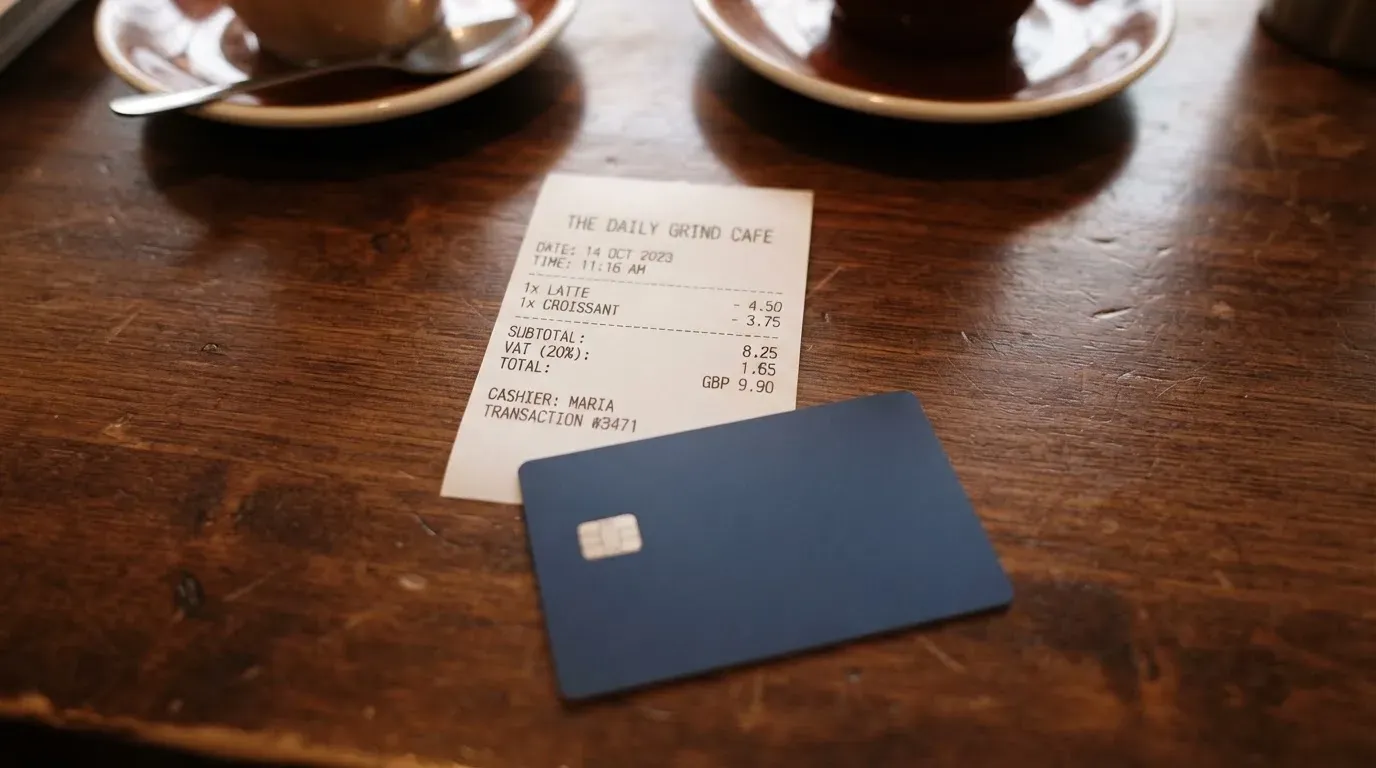
First: the FX fee is not stated. If you spend outside the United States — and if you are one of the people this card is for, you will — the card must convert something into whatever the shop’s terminal asks for. The card’s own pages do not publish that rate. A third-party profile (CryptoCardHub, August 2026) says the FX fee is described only as a “standard fee” with no percentage published. “Standard” is not a number, and I would not build a budget on the assumption that it is small. On-chain network fees are separate and are yours: they are charged by the blockchain for your deposit, not by the card provider, and on Ethereum they are paid in ETH, which means a wallet holding USDT but no ETH cannot send at all. On Tron the fee is paid through bandwidth and energy resources, often burning TRX.
Second: the same third-party profile lists completely different prices. It gives Essential at $108/year, Premium at $228 and Whale at $588, with monthly equivalents of $9, $19 and $49, and says these auto-renew. It also gives reload fees of 4.5%, 3.5% and 2.3%, and annual recharge limits of $25,000, $50,000 and $100,000, while saying there is no universal daily or monthly spend cap. All of that conflicts with the official figures, and the official site itself says the app shows current prices.
I cannot resolve that conflict from the public pages. What I can tell you is how to resolve it yourself in under a minute: open the app and read the price screen before you pay anything. That single screen settles a question this review otherwise cannot.
Now, what does a normal day look like on these numbers? Take three ordinary payments, using only the fees the card actually discloses.
A 40 USD grocery shop. If you already hold the balance loaded, nothing in the card’s disclosed fee list applies at the till — a prepaid card spends its stored balance. If you had to top up to make that purchase possible, you were already charged 2.1% on Essential, 1.8% on Premium or 1.2% on Whale, plus whatever the network charged you for the transfer. That is the honest shape of it: the fee is charged on the money going in, not on the coffee going out.
A 12 USD taxi in a currency your balance is not in. Here the undisclosed FX fee lands, because this is the purchase the card’s published numbers say nothing about. You will be charged some rate the public pages do not disclose, applied to the conversion. This is the purchase to ask about in support before you rely on the card.
A 200 USD ATM withdrawal. On Premium or Whale this is inside the limits — 1,500 USD per transaction and per day, 30 operations a day, 15,000 USD a month. What it costs is not stated. The ATM operator’s own surcharge is separate and outside the card’s control, and there is no published figure for XHYPE’s own share.
Two more cost facts worth a bullet each. The card currency is not stated officially. And the minimum top-up amount is not stated either; a third-party profile (CryptoCardHub, August 2026) says the user guide gives a minimum crypto deposit of 15 USDT.
That is where the 5 / 10 comes from. Not because the card is expensive — for its target user it is not — but because a fee you cannot find before you spend is a fee you cannot plan around, and this card asks you to plan around several of them.
How to Top up
You send USDT, USDC or the native coin on BNB Smart Chain, Ethereum, Base, Polygon or Arbitrum to the XHYPE Superwallet, and then load the balance onto the card. That is five networks and two major stablecoins, and it is the strongest single feature of the product. Five is well above what most cards in this category support.
The flow is worth walking through slowly, because the order matters. A crypto transfer is *not* what puts money on the card. The transfer puts it in the Superwallet. Loading it onto the card is a separate step. Readers who expect one action to do both will end up with money sitting in a wallet and a card that still says zero.
What is not stated: the minimum top-up, who pays the network fee, and whether fiat top-ups exist at all — the public pages do not say. The card also notes that gift cards and eSIMs can be paid for in crypto, which is a different thing from funding the card but is part of the same product line.
A third-party profile (CryptoCardHub, August 2026) says something narrower and different: USDT only, on Tron (TRC20) and BNB Chain (BEP20). That conflicts with the official page, and the difference is not academic — if you trusted the narrower version and sent USDC on Ethereum, you would be outside what you were told was supported.
The warning that matters most here is one that applies to every card, and it is not a small one. Blockchain transfers are irreversible. If you send on a network the provider does not support, or to an address belonging to a different network, the funds can be lost or need manual support recovery with no guarantee. Before your first transfer, send a small amount, watch it arrive, and only then send the rest. And before you do anything else, check the address character by character — malware that swaps a copied address for its own is one of the standard ways crypto is stolen, and there is no chargeback afterwards.
One more asymmetry to be aware of: USDC over TRC20 is not a native option. Circle stopped supporting USDC on Tron in February 2024. If a guide tells you to send USDC on TRC20, the guide is out of date.
Paying with it every day
A virtual card on every plan, a physical card on the two paid tiers, and Apple Pay and Google Pay on all of them — this is the part of XHYPE that works as advertised. If your question is “can I tap this in a shop”, the answer is yes, and the setup is standard.
The virtual card is the part you will actually use most, because it exists on Essential, the 10 USD plan, and it arrives instantly. It is also the part you can load, test and freeze in a minute.
Some practical notes on what the card does and does not tell you:
- Apple Pay and Google Pay work on all virtual and physical cards. The card number itself is never stored by the phone maker — Apple Pay replaces it with a device-specific number kept in the Secure Element, and each payment carries a one-time dynamic code.
- Blocked merchant categories are not stated. This one deserves attention. Most card issuers block certain categories by policy — gambling (MCC 7995) being the classic example — and the list varies by issuer. You cannot check XHYPE’s list, because it is not published.
- No cashback is mentioned on the official page. A third-party profile (CryptoCardHub, August 2026) confirms no cashback, and instead lists a welcome credit of $5, $10 or $40 by plan, XTraveler points of 290, 690 or 2,490, and a referral commission of 15% of referred users’ reload fees paid in USDT.
- Refunds, disputes and chargebacks are not specified in the terms. Under EU law, prepaid-card coverage varies and should not be assumed; US debit reversal rights come from Regulation E and credit card rights from Regulation Z, and neither is automatically yours on a prepaid card issued outside the US.
- Withdrawals are not stated. The terms are silent on refunds, account closure and what happens to a remaining balance.
- A declined payment can leave a hold for up to seven days. The money is not always gone — it is often just stuck pending.
That last pair is where a card that looks frictionless stops being frictionless. In a self-custody wallet, the money is yours and irreversible. On a prepaid card, a hold is reversible but slow, and a refund you have to ask for is a refund that depends on the support desk answering.
Which brings up support: 24/7 in English and Spanish, on Telegram only, at @xhype_support. Telegram-only support is a real operational fact, not a formality. There is no email address, no ticket system described, no phone number. If you need to argue about a refund, you are arguing over Telegram.
What can go wrong
The single most important thing I found is not an incident — it is an unnamed issuer behind an unnamed balance, combined with terms that were last updated on 04-Jun-2025. Everything else in this section is downstream of that.
Let me separate what is official from what is not, because the line matters here more than anywhere else in the review.
Official, from the terms and pages:
- XHYPE FZCO, Dubai Silicon Oasis, United Arab Emirates.
- The terms state: “We are not a card issuer”. The cards come from an unnamed independent third-party issuer.
- UAE law governs, with Dubai courts as forum. Licences are not stated.
- Your card balance is held by the independent card issuer — not by you, and not visibly by XHYPE.
- The terms were last updated 04-Jun-2025.
- No official incident is recorded on the site.
Third-party reports, not confirmed by the card (CryptoCardHub, August 2026, and others):
- A disruption in June–July 2025 affected HKD Visa recharge and spending. It was later marked resolved, with balances reportedly refunded.
- Complaints cluster around high combined costs, AML-related restrictions, refunds missing for months, and slow support.
- KYCnot.me shows 7 ratings averaging about 2.9 out of 5.
- The issuer is reportedly a licensed provider in jurisdictions including Hong Kong. That is a third-party claim, not a disclosure by XHYPE.
- XKARD v2 was announced in April 2025.
One caution about looking for reviews: there is no Trustpilot page for xKard — the Trustpilot hit that comes up is for a different service — and no Reddit thread was found. So do not read a stranger’s enthusiasm as evidence about this card. The thinness of the independent record is itself a finding, and it is why the reliability mark is 4.
Now the structural risks, in order of how much they should worry you.
Who holds the money. This is the risk I would put at the top, ahead of any incident. The Superwallet is self-custody — you control the authentication factors, and you can export your private key into wallets such as MetaMask or Trust Wallet, so the crypto side genuinely is yours. But the card balance is not. It sits with an issuer the public pages do not name. Crypto you can export is crypto you cannot lose to a provider’s balance sheet; card balance you cannot. Those are two very different risk profiles, and only one of them is the self-custody story the marketing leads with. The card also describes a “Zero Data model” for privacy, while 2FA, card freeze and spending controls are not stated — so the emergency tools you would reach for when a card is stolen are, as far as the public pages go, undocumented.
The unnamed issuer. Cards involve several parties: the network routes messages and sets rules, the issuer holds the card programme under the network’s licence, and the crypto brand is often only a programme manager and front end. XHYPE is openly that third party. The danger is not that this is unusual — it is common — but that you cannot check a licence you cannot find. Networks themselves can end programmes: Visa terminated its global agreements with FTX on 13 November 2022 and the FTX US debit card was wound down, and WaveCrest had all its Visa programmes closed in Europe in 2018 after Visa suspended it. When a programme closes, the pattern is usually a notice period, then spending and loading stop, then you are asked to withdraw remaining balances. With an unnamed issuer, you have no way to know in advance how much notice you would get, or from whom.
Merchant declines, the quiet one. A card number starts with a 6- or 8-digit issuer identification number (the BIN) that tells the merchant which institution and country issued it. Merchants can look that up, and may apply extra scrutiny when the issuer country differs from your billing address. Address Verification Service — which compares the numeric parts of the billing address you type against issuer records — is mainly offered in the US, Canada and the UK and is generally unavailable for foreign-issued cards, which can cause declines on their own. This is why a card issued in one country can look foreign to a shop in another, and why prepaid or foreign BINs get declined. It is not a malfunction; it is the system working as designed, and no support desk can fix it.
Sanctions and compliance. Tether says it disables tokens in wallets on the OFAC sanctions list and has frozen funds tied to illicit activity, so stablecoins are not censorship-proof. And stablecoins are not what their name suggests: TerraUSD collapsed in May 2022, and USDC temporarily lost its peg in March 2023 during the US banking crisis. If your balance holds a stablecoin and that stablecoin wobbles, your card balance wobbles with it.
Regulation around you. MiCA — the EU’s markets-in-crypto-assets regulation — took legal effect in June 2023, with its rules on asset-referenced tokens and e-money tokens applying from 30 June 2024 and the remaining provisions, including crypto-asset service provider rules, from 30 December 2024. Its transitional period lets providers already operating under national law continue only until 1 July 2026 or until they are refused or granted a MiCA authorisation, whichever comes first. ESMA keeps an interim register of authorised providers, white papers and non-compliant entities, and you can check a provider there. Under MiCA, e-money tokens may be issued only by a credit institution or an electronic money institution. The relevant point for a reader: a crypto card often depends on two licences — one for the crypto side and one for the card, which is a payment service regulated separately — and card balances held by an e-money institution must be safeguarded in dedicated accounts or insured, which is still not the same as a bank deposit and may not be covered by a deposit guarantee scheme.
And what you may owe. In the US the IRS treats digital assets as property, so exchanging them for goods, services or dollars generally produces a taxable gain or loss, measured in your local fiat currency at the value on the date of the transaction. Each card payment funded from crypto may therefore be a separate disposal. I am not giving you tax advice and you should not treat this paragraph as any — but the *structure* matters: a card that converts crypto at the moment of purchase can create many small taxable events rather than one large one. Ask a qualified adviser in your own jurisdiction what that means for you.
What to take instead
None of these is a blanket recommendation over XHYPE. They are for readers whose priority is different — mostly transparency of cost, or a named and checkable issuer.
TokenPocket — 5.8 / 10. The most open fee sheet of the four, and the weakest on reach. It offers a Visa debit card for a list of European countries and territories (Germany, France, Spain, Switzerland among them) and Mastercard debit for Australia, Canada, Hong Kong, Japan, Taiwan, New Zealand, Singapore, South Korea and the UK, among others; the Americas were “planned for Q2 2025”. The card runs on Arbitrum, Fiat24 cards are virtual, and balances are held in EUR24 and USD24. Costs: an NFT creation fee is partly covered by TokenPocket and the user pays “a small portion”, the amount unstated, and “apart from these, TP Card does not charge any additional fees”. What it does charge is “a 1% fee … when depositing cryptocurrency into the TP Card”, refundable later via rewards and reduced transaction fees. Crypto deposits come from the TokenPocket wallet; specific coins and networks are not listed in the FAQ. Take this one if transparency matters most. Leave it if you are outside Europe and the listed Asia-Pacific markets.
MetaMask Card — 7.1 / 10. The strongest score here, and the one with the most familiar name. Sign-up is open in 45 listed countries and territories — Andorra, Argentina, Brazil, Canada, Mexico, Germany, France, Spain, Uruguay among them — with other regions on a waitlist, proof of residency required, and the useful line that “ineligible regions limit sign-ups, not spending”. US and UK sign-ups were temporarily closed per the FAQ. The card is Mastercard: a virtual card issued instantly, a metal card pre-orderable in the app after approval, one card per user, issued by Monovate with Crypto Life as card provider. Virtual is free with no annual or maintenance fee; metal is $199 a year. Fees are described only as “a minimal fee for each transaction” with the amount not stated on the pages, “no additional MetaMask fees”, and no foreign transaction fee — the Mastercard rate is used. It spends directly from your connected wallet on Linea, Base, Monad and Solana, with mUSD, wETH, EURe, GBPe, USDC and USDT named. Cashback in mUSD is 1% on Virtual; on Metal the headline is 3% but the footnote caps it at 3% up to the first $10,000 spent and 1% after. Drawbacks: the fee amount is not published on the page I read, and Solana-only wallets cannot withdraw credit.
KAST — 6.1 / 10. The one with the most explicit compliance posture. Residence-based: if your country is not listed at KYC, the card is not available there, and the country list is not published — a Restricted Locations list is referenced without naming countries. Citizenship is handled separately and precisely: living in a supported country while holding only an ID from a restricted region may still fail KYC, dual citizens with a supported-country ID may pass, only the account holder’s own ID is accepted, and a VPN does not bypass it. You can create an account in an unsupported country but KYC stays locked. Cards are virtual and physical, up to 10 per user, on Visa Platinum (Standard), Visa Infinite metal (Premium) and Visa Infinite gold plated (Private), with other designs on Pengu, Solana and Bitcoin; balance in USD, stablecoins converted 1:1 at 0% spread. The cost structure is the most complete: Standard 0 USD a year, Premium 1,000 USD, Private 10,000 USD, billed annually upfront with no monthly option; extra virtual card 2 USD; Standard physical card 0 USD plus 40 USD delivery; inactivity fee 1 USD a month after 12 months, with renewal and reactivation fees of unstated amounts. Fees: stablecoin top-up 0%, USD card spend 0%, transaction fee 0%, Apple and Google Pay 0%, non-USD FX 0.5%–1.75% depending on residence, transaction country and card programme, non-USD transactions under 25 USD costing 0.10 USD, and a declined transaction for insufficient balance costing 0.50 USD. Cashback is USD: 1.5% on the first 2,000 USD a month (Standard), 2% on the first 10,000 (Premium), 3% on the first 40,000 (Private), with KAST Points at none, +1% and +2%. The catch: the entry tiers are priced for people with far more money than most of us.
| XHYPE | TokenPocket | MetaMask | KAST | |
|---|---|---|---|---|
| Score | 7.0 / 10 | 5.8 / 10 | 7.1 / 10 | 6.1 / 10 |
| Physical card | Premium and Whale | Not mentioned | Metal, pre-ordered | Yes, on Standard (fee) and up |
| Annual cost from | $10 | Unstated beyond the NFT fee | $0 (virtual), $199 (metal) | $0 (Standard) |
| Top-up fee | 2.1% / 1.8% / 1.2% | 1% (refundable via rewards) | Not published | 0% |
| FX fee | Not stated | Not stated | No foreign transaction fee | 0.5%–1.75% |
| Cashback | None on the official page | None; 1% back via rewards | 1% virtual, up to 3% metal | 1.5% / 2% / 3% by tier |
| Reach | 203 countries and territories | Europe and listed Asia-Pacific | 45 countries | Residence list not published |
Reading that table across rather than down is the useful part. The cheapest way into XHYPE is cheaper than everything else here. The card with the fewest unknowns about where it can be used is MetaMask. The card where I would most want a published table of every number is KAST, and where I would least want to pay for it is also KAST. And XHYPE is the only one of the four where the FX rate is simply absent.
Who I would recommend it to
I would recommend this card to three specific people, and be more cautious with everyone else.
If you run your money in a self-custody wallet and you travel across more than one chain, this is a good fit. Five networks, two stablecoins, a virtual card in seconds, and a physical card if you pay for the tier that includes it. That combination is genuinely better than most of the field, and the 9 / 10s on eligibility and top-up options are earned.
If a normal bank card is not something you can open, this solves a real problem. That is the card’s reason to exist, and judging it against a premium travel card would be missing the point.
If you are comfortable that the card side is not self-custody and that you are trusting an issuer you cannot name. That is not a flaw I am inventing. It is stated plainly in the terms — “We are not a card issuer” — and I would rather you absorb it now than discover it during a refund dispute.
I would hold back if any of these is you:
- You need your money to be legally yours in a way a bank balance is. Card balances sit with the issuer; safeguarded e-money is not a bank deposit, and deposit guarantee schemes may not reach it.
- You spend in many currencies and want a number before you spend. The FX fee is not disclosed. KAST publishes 0.5%–1.75%; XHYPE publishes nothing.
- You plan to lean on chargebacks. Refunds, disputes and chargebacks are not specified in the terms. That is not the same as being covered.
- You need the cheapest possible way to hold a balance, because the published prices and the third-party prices disagree sharply — 10 USD versus 108 USD for the same tier.
- You need a phone number, an email address or a person. Support is Telegram only.
My actual advice is short. Open the app, read the price and fee screen, send a small test deposit on a network you are sure about, load the virtual card, and try one purchase you do not care about failing. Everything I could not tell you from the public pages, that sequence will tell you in a short time — and if the answer to any of the three questions above is not what you needed, you will have lost 10 USD and a little gas, not a year of fees.
Frequently asked questions
What is XHYPE card?
XHYPE is a prepaid crypto payment card: you load stablecoins or native coins from your own wallet, and the card spends a stored balance in shops, online and at ATMs. It runs as a web app rather than a downloadable application, and the crypto side is self-custody. A virtual card exists on every plan, while a physical card comes with the Premium and Whale tiers. XHYPE FZCO, based in Dubai, is the company behind it and states it is not the card issuer.
Does XHYPE require KYC, and can I get one without ID?
The official description is “Private KYC” through Verinex, with XHYPE receiving only the result, and the terms set the minimum age at 18. The public pages do not state which documents are accepted, whether proof of address is required, or how long verification takes. Third-party sites advertise “No KYC”, while also noting deposits are AML-screened. Treat the card as requiring verification and expect screening of transfers.
How much does XHYPE cost a year?
Officially, Essential is $10 a year, Premium $58 for one year or $118 for three, and Whale $70 for one year or $148 for three. Top-up fees are 2.1%, 1.8% and 1.2% by plan. But a third-party profile lists $108, $228 and $588 for the same tiers with auto-renewal and higher reload fees. The two sets conflict, so read the current price screen in the app before paying.
Which currencies and networks can I use to top up?
Officially you can deposit USDT, USDC or the native coin on BNB Smart Chain, Ethereum, Base, Polygon and Arbitrum into the XHYPE Superwallet, then load the card. A third-party profile says USDT only, on Tron and BNB Chain, which conflicts. The card currency itself is not stated officially. Always confirm the network before sending, because transfers are irreversible.
Can I use the XHYPE card in Apple Pay and Google Pay?
Yes — Apple Pay and Google Pay are supported for all virtual and physical cards on every plan. The card number itself is never stored by the phone maker: Apple Pay substitutes a device-specific number held in the Secure Element, with a one-time code per payment. What the pages do not state is which merchant categories are blocked, which matters if you expect to use the card for anything sensitive.
Is XHYPE safe, and who holds my money?
The crypto in the Superwallet is self-custody: you control the authentication factors and can export your private key into wallets such as MetaMask or Trust Wallet. The card balance is different — it is held by an independent card issuer that the public pages do not name. The terms say plainly “We are not a card issuer”. A self-custody wallet and a prepaid card balance carry very different risks.
What happens if a payment is declined or a refund goes missing?
A declined authorisation can leave a hold on your funds for up to seven days even though the money was never spent. For actual disputes, the terms do not specify refunds, chargebacks or dispute handling at all, which is not the same as being covered — prepaid-card protections vary by country and should not be assumed. Third-party reports describe refunds delayed by months and support as slow. A hold clears itself; a missing refund needs the support desk.
Is XHYPE a bank, and is my balance protected?
No. XHYPE is not a bank: it is XHYPE FZCO of Dubai Silicon Oasis, governed by UAE law with Dubai courts as forum. The card is issued by an unnamed third party under a card network’s licence. Card balances held by e-money institutions must be safeguarded in dedicated accounts or insured, but such funds are not bank deposits and may not be covered by a deposit guarantee scheme.
Can I withdraw my money back to a wallet?
The public pages do not say, and the terms are silent on refunds, account closure and the fate of a remaining balance. What is stated is that you can export your private key from the Superwallet into an external wallet, which covers the crypto you hold there. Whether a loaded card balance can be withdrawn, and on what terms, is a question to put to support before you load more than you can afford to lose.
Which countries can I order the XHYPE card in?
Cards can be ordered from 203 countries and territories, with eligibility depending on your country of residence and your nationality when you apply. A third-party profile instead says 184 countries are available with nine restricted — Afghanistan, Cuba, Iran, North Korea, Somalia, South Sudan, Sudan, Syria and Yemen — and that list comes from the profile rather than the terms. Nationality is screened separately from address, so check your own situation before depositing.
Wallet card reviews – cryptocardcheck
Content created by the «cryptocardcheck» team