
VantaCard review: a Telegram-native Visa with thin disclosures and a steep ATM tier
 Available in US

VantaCard is a USD Visa debit card that lives entirely inside a Telegram bot, accepts deposits in 14 cryptocurrencies across 38 networks, and is issued in about 2 minutes. That is the entire pitch, and it is genuinely fast: open the bot, pass a quick identity check, pay the issuance fee, and a card number lands in the chat. The trouble starts the moment you try to read the small print. Monthly fees, conversion fees, FX fees, ATM fees, sanctions and country rules, the name of the issuing bank, the licence under which the programme runs — none of it is published on the public pages. For a person who simply wants a card that works, that thinness is the whole story: convenient on the surface, opaque underneath.
I went through the card’s public materials, the operator’s company filings, and the third-party sources I could find, and put together a single review page that walks through who it suits, what it really costs, how to top it up, and which alternatives are worth a look first. If you are weighing VantaCard against another crypto Visa or Mastercard, or you have struggled to get an ordinary bank card, this is the page to read first.
Conditions are current as of October 28, 2026.
Verdict
VantaCard lands at 5.9 / 10. It is fast, accepts a wide range of crypto, and supports Apple Pay out of the box, but it loses points hard on cost and on what the company chooses not to publish. The basic tier charges a 20 USDT issuance fee plus 1 USD + 3.8% on every top-up, the ATM tier jumps to 125 USDT to issue and 4.5% per top-up, and you still don’t get a published monthly fee, conversion fee, or ATM fee. If you are a Telegram user who wants a quick USD Visa for Apple Pay and you don’t need to draw cash, the basic online tier is a reasonable fit. If you want an ATM, a clear fee schedule, or a named regulated issuer on the back of the card, look elsewhere.
The score table below breaks the overall mark into the five criteria. Scores are as described in the evaluation.
| Criterion | Mark | Why it scores that way |
|---|---|---|
| Who can get it | 6 / 10 | Not available to residents of “certain countries and territories”; the list is shown inside the app and the number of countries is not disclosed |
| Cost | 3 / 10 | 20 USDT (Online) or 125 USDT (USD + ATM) to issue, plus 1 USD + 3.8% or 4.5% per top-up; monthly and conversion fees not published |
| Top-up options | 9 / 10 | 14 cryptocurrencies across 38 deposit networks (BTC, ETH, USDT named), with automatic balance updates |
| Reliability and complaints | 6 / 10 | Vanta Group Ltd, England and Wales, company no. 16546788; the issuer is named only as “card issuing partners” with no licences disclosed, no Trustpilot page found, and placeholder text still visible in the terms |
| Everyday use | 7 / 10 | A real Visa, issued in 2 minutes, works in Apple Wallet and for contactless payments; ATM only on the USD + ATM tier, capped at 750 USD per day, and the app itself is a Telegram bot |
| Total | 5.9 / 10 | Quick and broad on top-up, opaque and uneven on cost and disclosure |
The audience note in the underlying research puts it neatly: VantaCard is best for Telegram users who want a quick USD Visa with Apple Pay. If that is you, the basic online tier is workable. If you want cash access, a real regulator on the back of the card, or fees you can plan around, it is not.
Will they give you the card
VantaCard is open to most people, but the public pages do not give you a country list. The card’s materials say it is “not available to residents of certain countries and territories” and that the excluded list is “shown inside the app” — which means you only find out whether you qualify after you have opened the bot. The number of excluded countries is not disclosed. That is not unusual for a card on a Telegram bot, but it does mean you should not assume you are eligible until the app tells you so.
The verification itself is described as “a quick identity check” after you open the dashboard. The company says issuance is “subject to identity verification and eligibility”, but the public pages do not name the documents you will be asked for, the minimum age, or how the checks are graded (no mention of tiered KYC, source-of-funds questions, or enhanced due-diligence thresholds). For anyone who has used a regulated EMI before, this is the section where you would normally expect to see those details. They are simply not there.
One more thing worth knowing up front. Vanta Group Ltd is registered in England and Wales (company no. 16546788, 17 Montgomery Road, Newark, NG24 4HA), and the card is described as being issued by “card issuing partners” — a placeholder phrase, not a name. The licences the programme runs under are not stated. In the EU, a card like this is typically issued by an electronic money institution authorised under payment-services law, with the crypto side covered by a separate MiCA authorisation. The VantaCard pages do not tell you which institution sits behind the Visa mark, which regulator supervises it, or what rules your money is held under. That is a real gap, and it matters when something goes wrong.
How to get it
There is no website signup and no app-store download. VantaCard runs entirely inside a Telegram bot, and that is also where you apply. The flow described on the public pages is: open the bot, complete a quick identity check inside the dashboard, choose a card, pay the issuance fee, and receive a card number in 2 minutes. There is no shipping because both products are virtual.
Two products are on offer. The first is “Online & Apple/Google Pay”, a USD virtual card that supports tokenised wallet payments. The second is “USD + ATM”, a USD card that also allows cash withdrawals. Both are real Visa cards, denominated in USD, with 16 designs to choose from and a 36-month validity. Whether the ATM tier is virtual, physical, or both is not stated — the public pages do not separate the two. In practice that means you may need to contact the bot to find out whether you will receive a piece of plastic or a card number only.
Activation is the same as funding. The card is issued in 2 minutes and becomes usable once you have loaded it. There is no separate “activate your card” step.
What it really costs: the Fees section
This is where VantaCard is weakest. The headline fees are clear, but the fee schedule is incomplete, and that combination is hard to plan around.

| Fee or limit | Online & Apple/Google Pay | USD + ATM |
|---|---|---|
| Issuance | 20 USDT (one-time) | 125 USDT (one-time) |
| Starting balance | 3 USD | — |
| Minimum top-up | 20 USD | 5 USD |
| Top-up fee | 1 USD + 3.8% | 1 USD + 4.5% |
| Per-transaction limit | 10,000 USD | 50,000 USD |
| Monthly spend limit | 150,000 USD | 100,000 USD |
| ATM withdrawal | — | up to 750 USD / day |
| Monthly fee | not stated | not stated |
| Currency conversion fee | not stated | not stated |
| FX fee | not stated | not stated |
| ATM withdrawal fee | — | not stated |
The card’s currency is USD across the board, so any non-USD payment goes through Visa’s foreign-exchange path. What the card charges on top of that is not published, and that is a real cost you cannot budget for in advance.
To make the published numbers feel more concrete, here are three everyday payments and which fees are visible.
A 50 USD online subscription paid with the Online tier. You top up 50 USD worth of crypto. The top-up fee is 1 USD + 3.8%, so you pay 2.90 USD in fees before the subscription even runs. The card payment itself then runs through Visa, and any currency conversion on top is not disclosed. The visible cost of using the card is around 4% of the transaction, plus FX fees.
A 500 USD in-store contactless payment in a country that uses USD. The top-up fee is the same 1 USD + 3.8% on whatever you load. If you load 500 USD, the fee is 20 USD (1 + 19), or 4% of the deposit. There is no additional published fee for the contactless payment itself. There is also no published reward, cashback or discount, so the 4% is the all-in cost of funding.
A 200 USD ATM withdrawal on the USD + ATM tier. You top up 200 USD worth of crypto at 1 USD + 4.5%, which is 10 USD in fees. The ATM withdrawal itself can be up to 750 USD per day, but the per-transaction fee, the operator fee, and any FX margin on the cash you receive are not published. You will only know the all-in cost after the receipt prints.
If you are cost-sensitive, the practical reading is simple. The published fees sit between roughly 4% and 5% per top-up, depending on tier, and that is your floor. Anything Visa adds on top — conversion, FX, ATM operator fees — is unaccounted for.
How to top it up: the Top up section
Top-up is the strongest part of the product. The card supports 14 cryptocurrencies across 38 deposit networks, with BTC, ETH and USDT named explicitly on the public pages. You send crypto from your wallet to a deposit address the bot shows you, and the balance updates automatically. There is no manual claim step and no waiting for support to credit you, which is unusual for a Telegram-native product and is the single best thing about the card.
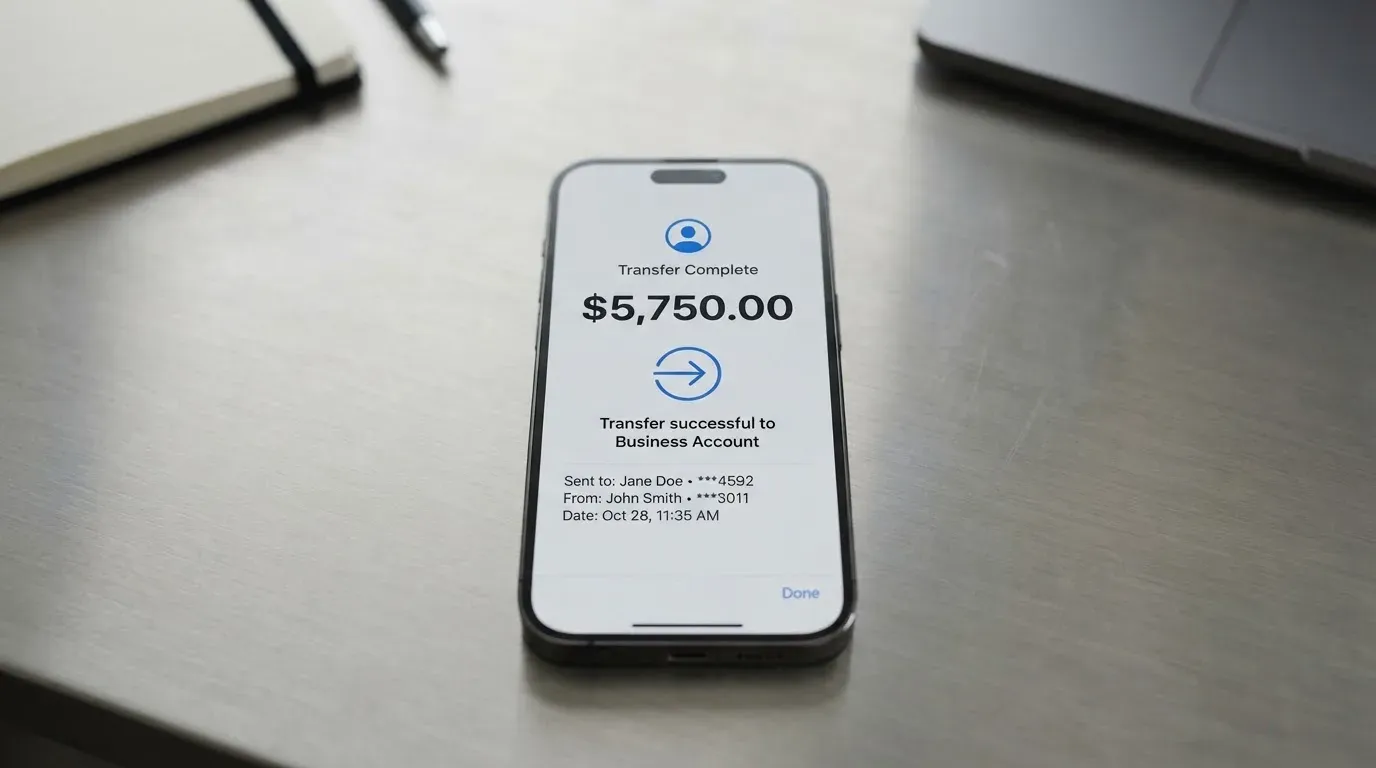
The minimum top-up is 20 USD on the Online tier and 5 USD on the USD + ATM tier, both well below what most bank-issued prepaid cards require. The top-up fee of 1 USD + 3.8% (Online) or 1 USD + 4.5% (USD + ATM) is charged on every deposit, regardless of size, which means small frequent top-ups are the most expensive way to use the card. The fixed 1 USD component matters.
Fiat top-up is not described on the public pages. The materials describe only crypto funding, and there is no mention of bank transfer, card-to-card transfer, or third-party payment processor. If you want to top up with a bank account, this is not the card for you.
Network choice is your responsibility, and this is where the irreversibility of crypto transfers starts to bite. A deposit sent on a network the bot does not support, or to an address of a different network, can be lost, and manual support recovery has no guarantee. The 38 supported networks are listed inside the app, not on the marketing page, and the bot picks the address for you once you choose a coin. Send from the right network, send to the address the bot shows you, and double-check both. The standard stablecoin footguns apply: USDT exists on many chains and they are not interchangeable, and USDC on Tron is not natively supported by Circle any more, so any “USDC TRC20” route is third-party. The card’s materials do not warn you about this, so the warning is on you.
Withdrawing back from the card to crypto or to a bank account is not described. The terms reserve the right to suspend or terminate access, and what happens to your balance in that case is not stated. For a card whose main appeal is the speed of top-up, the absence of a clear withdrawal path is a meaningful gap.
Paying with it every day
Once funded, the card behaves like a normal Visa debit card. The Online & Apple/Google Pay tier is built for tokenised wallet payments: you add the card to Apple Wallet or Google Pay and tap to pay at any contactless terminal. The card number itself is real, so it also works for online checkout, and the bot exposes the PAN, expiry and CVV inside the chat. There is no separate app, no notification centre, no in-app transaction list — the Telegram bot is the dashboard.
Cash is a different story. ATM access is reserved for the USD + ATM tier, and the limit is 750 USD per day, with no published fee. Per-transaction limits are 10,000 USD (Online) and 50,000 USD (USD + ATM), and monthly spend is capped at 150,000 USD on the Online tier and 100,000 USD on the USD + ATM tier. These are comfortable ceilings for personal use, but they assume a Visa authorisation goes through cleanly, which is not guaranteed for foreign-issued prepaid cards on every merchant.
Blocked merchant categories are not stated. The card’s materials do not list which MCCs are refused, so it is not possible to tell from the public pages whether you can use it for gambling, crypto purchases, adult entertainment, or any of the other categories that some prepaid cards restrict by policy.
Rewards and cashback are not stated. The card has no published loyalty programme, and there is no sign of a sign-up bonus or a referral scheme on the public pages.
Disputes are also not described. The card’s materials say that “crypto and card transactions are generally irreversible once confirmed”, and there is no published chargeback or refund process. In practice, a cardholder who has a problem with a merchant is dependent on whatever support the bot can route them to, and that support contact is itself described in the terms as a placeholder. If a payment goes wrong, your path to a fix is unclear.
What can go wrong
The risk picture has three layers, and the first is what the company chooses not to publish. The issuer is “card issuing partners” — not named. The licences are not stated. The dispute process is not stated. The terms still contain placeholder text where a real contact email should be. For a person comparing crypto cards, that is the central fact about VantaCard: it is operated by a UK-registered company (Vanta Group Ltd, company no. 16546788), the card is issued by an unnamed partner, and the rest is held back.
The second layer is the category risk that comes with any custodial crypto card. With a card like this, your balance is held in your name by the operator and converted to USD when you load, so the typical crypto-card warnings apply in full. Blockchain transfers are irreversible, a stolen private key has no built-in recovery, and custodial platforms have a long history of failure. Even when the operator is solvent, your money is at the mercy of the card-issuing partner and its regulator. The fact that the partner is unnamed makes that harder to verify, not easier.
The third layer is the operational risk that comes with a Telegram-only product. There is no native app to receive push notifications, no in-app fraud alert, no biometric login, and no 2FA mentioned on the public pages. Support is “ask in the app” via the Telegram bot, and the terms’ contact field is a placeholder. If your account is locked or the bot is down, there is no published escalation path. Two-factor authentication, instant card freeze and spending limits are common features on regulated cards; whether VantaCard has them is not stated.
A few specific things to check before you load meaningful funds.
- The list of unsupported countries, inside the app. If you are resident somewhere outside North America, Western Europe, the Gulf and a handful of Asian financial centres, you may find your country is on it.
- The name of the card-issuing partner, if you can get it from support. That is the entity that holds your balance and the one you will be dealing with if Visa or Mastercard raises an issue.
- The licence under which the programme runs (EMI, MiCA CASP, or US state-by-state money transmitter). That determines what protections apply if the operator stops trading.
- The 38 supported networks, before you send anything. The list is in the app, not the marketing page, and sending on the wrong network is a common way to lose money permanently.
- The published fee schedule in full, including monthly, conversion and ATM fees. If support cannot give you a number, that is the answer.
No official incident is on the public record. A targeted search for VantaCard Telegram crypto card reviews trustpilot reddit turned up nothing about the company, no Trustpilot page, no complaint thread of substance. That is not the same as a clean record — it is a thin record, and you should treat it as such.
What to take instead
Three alternatives are worth comparing on the same axes, in the order they make sense for someone considering VantaCard.
Azul Card — 5.3 / 10
Azul is a virtual Mastercard that works anywhere Mastercard is taken, with the card balance held in USD. It is open worldwide except for Russia, Belarus, North Korea, Iran, Syria, Cuba, Sudan, Venezuela, Ukraine and the Crimea, Donetsk, Luhansk, Zaporizhzhia and Kherson regions, and the restrictions apply regardless of the user’s nationality, so the card simply cannot be used in those places by anyone. Card creation costs 20 USD one-time and is refunded after 2,000 USD in spending, monthly maintenance is 5 USD, crypto top-up is 4% plus 0.25 USD per transaction, and the FX fee is not stated. The card is virtual only for now, with a physical card “may come later”. The interesting bit is the referral programme, which pays up to 40% of the platform’s fees on every transaction your referrals make, which is generous if you are willing to recruit. Top-ups settle in 1–5 minutes after the first one. Compared to VantaCard, Azul is more transparent on monthly fees and the country list, more expensive on small top-ups, and lighter on the number of supported coins and networks.
Telecard — 6.1 / 10
Telecard is a virtual Mastercard available in over 150 countries wherever Mastercard is accepted, with identity checks “available in most major regions” and no published list of supported or excluded countries; the terms only bar users blocked or sanctioned by the United States Government, including OFAC. The standard plan is 5 USD one-time with no monthly fee, the VIP plan is 49 USD setup then 19 USD per month, VIP card reissuance is 15 USD, and there is a 99 USD minimum deposit to activate (the operator describes this as “NOT a fee” because the money stays in your wallet). Currency conversion on non-USD payments is 1.5%, gas is 0.5 USDT per successful card transaction, FX and cross-border fees are “up to 3% each”, and the deposit fee is advertised as 0%. Funding is USDT on Tron (TRC-20) or Ethereum (ERC-20), or USDC on Ethereum (ERC-20); Polygon is not supported, and the main page also lists ETH and TRX which the help page does not. Bank transfers are “coming soon”. The referral programme pays Fiorini for every activated friend plus cashback when friends spend, at 1 USDT = 100 Fiorini, with a cashback rate that is not specified. Compared to VantaCard, Telecard is more expensive on VIP, clearer on FX and conversion, and narrower on the coins and networks it accepts.
OnCards — 4.6 / 10
OnCards is a virtual Mastercard or Visa delivered directly in Telegram (the network is not fixed on the public pages), with a card currency that is not stated. Country availability, fees and rewards are not stated either, and the only top-up method described is USDT on BEP-20; bank transfers are not accepted. The site’s claim is “Simple and clear fees — no hidden charges”, but the public pages do not publish a number, so the buyer has to take that on faith. Compared to VantaCard, OnCards is more opaque, narrower on funding, and has no disclosed country list, which is what puts it below VantaCard on this comparison despite a similar Telegram-native product shape.
If you want a quick read: VantaCard beats all three on the breadth of top-up options, loses to all three on disclosure, and sits in the middle on cost. Azul is the strongest alternative if you want a published country list and monthly fee, even though the card is virtual only. Telecard is the strongest alternative if you want a published FX and conversion fee and a clearer regulatory posture, with the trade-off that the coin and network list is much smaller. OnCards is the weakest of the four, and the only reason to consider it is if you already use BEP-20 USDT heavily and want a virtual card in Telegram for it.
Who I would recommend it to
VantaCard is the right card in a narrow set of circumstances, and the wrong card in most others.
It is the right card if you are a regular Telegram user, you already hold crypto and you want a USD Visa you can add to Apple Pay in 2 minutes, with the broadest top-up options of any Telegram-native product I looked at. The basic online tier’s 20 USDT issuance and 1 USD + 3.8% per top-up is reasonable for a one-off purchase or a small recurring subscription funded from a balance you are not in a hurry to spend. If that is your use case, the card does what it says on the tin.
It is the wrong card if you want to draw cash often, plan around monthly costs, or care about who is on the other end of the transaction. The USD + ATM tier charges 125 USDT to issue and 4.5% per top-up, with no published ATM fee and a 750 USD daily ceiling, which makes it a poor substitute for an ordinary debit card. It is the wrong card if you are a non-US resident with US subscriptions, because the FX and conversion fees are not published, so the all-in cost is unknowable in advance. It is the wrong card if you live somewhere whose inclusion in the supported-country list is not obvious to you, because the only place the list is published is inside the app. It is the wrong card if you need a published dispute process, because the public pages do not describe one.
In short, the card suits a Telegram-native user with a small USD spend funded from crypto, who values speed and breadth of top-up over the kind of disclosure you would expect from a regulated e-money institution. If you are not in that profile, the alternatives above — particularly Telecard for FX clarity and Azul for monthly-fee transparency — are the places to start.
Frequently asked questions
What is VantaCard card?
VantaCard is a USD Visa debit card that runs entirely inside a Telegram bot, with no separate mobile app. It supports 14 cryptocurrencies across 38 deposit networks, issues a card in 2 minutes, and adds to Apple Wallet or Google Pay for contactless payments. The operator is Vanta Group Ltd, registered in England and Wales.
How does VantaCard card work?
You open the Telegram bot, complete a quick identity check, pay the issuance fee in USDT, and receive a real Visa card number. You then send crypto from your own wallet to a deposit address inside the bot, the balance updates automatically, and the card spends the USD balance like any Visa debit card.
Is VantaCard a bank?
No. Vanta Group Ltd is a UK-registered company, and the card is described as being issued by “card issuing partners”, with no named bank or electronic money institution and no published licence. The card behaves like a prepaid Visa, not a bank account.
Who owns VantaCard?
Vanta Group Ltd, registered in England and Wales, company number 16546788, with a registered address at 17 Montgomery Road, Newark, NG24 4HA. The card-issuing partner is not named on the public pages.
Is VantaCard card available in my country?
The card’s public materials say it is not available to residents of “certain countries and territories”, and the actual list is shown inside the Telegram bot. The number of excluded countries is not disclosed, and the bot is the only way to confirm eligibility for your country and residence.
How do I get the VantaCard card?
Open the VantaCard Telegram bot, complete a quick identity check inside the dashboard, choose a product (Online & Apple/Google Pay, or USD + ATM), pay the issuance fee in USDT, and a card number is delivered inside the chat in 2 minutes. There is no separate app and no shipping.
Does VantaCard card require KYC?
Yes. The card’s materials describe a “quick identity check” after you open the dashboard, and issuance is “subject to identity verification and eligibility”. The exact documents, the minimum age, and any tiered KYC thresholds are not stated on the public pages.
How do I top up VantaCard card?
Inside the Telegram bot, choose one of 14 cryptocurrencies across 38 deposit networks (BTC, ETH, USDT are named), and send your crypto to the address the bot shows you. The balance updates automatically, with minimum top-ups of 20 USD (Online tier) or 5 USD (USD + ATM tier), and top-up fees of 1 USD + 3.8% or 1 USD + 4.5% respectively. Fiat top-up is not described.
How do I add VantaCard card to Apple Wallet?
After issuance, the bot exposes the card number, expiry and CVV. Add the card to Apple Wallet in the usual way: open the Wallet app, tap the plus icon, and enter the card details or scan them with the device camera. The card supports tokenised payments once added.
Is VantaCard card safe?
The card’s public pages do not describe 2FA, instant card freeze, spending limits, or a dispute process, and the terms still contain placeholder text where a real contact email should be. A targeted search for VantaCard Telegram crypto card reviews trustpilot reddit found no Trustpilot page and no complaint thread of substance, which is a thin record rather than a clean one. As with any custodial crypto card, your balance is held by the operator and the card-issuing partner, and crypto transfers are irreversible, so the usual custodial-wallet warnings apply.
Virtual card reviews – cryptocardcheck
Content created by the «cryptocardcheck» team