
The Visa card you fund with a stablecoin, not with a bank account
 Available in US
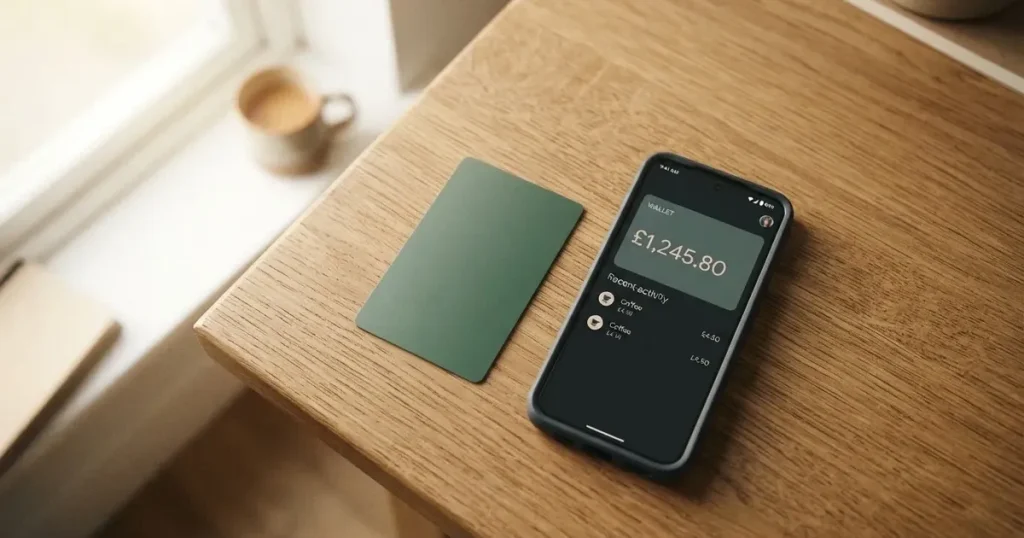
Stablecard by Western Union is a Visa card that you fill with USDPT, a dollar-pegged stablecoin on the Solana network, and then spend like any other card — in shops, online, in a mobile wallet, or at an ATM. There is no bank account behind it, no credit check and no minimum balance. You are spending a balance you loaded yourself, and the card simply converts that balance at the moment of payment.
That is the whole idea, and it is either exactly what you need or exactly irrelevant to you. If a normal bank card has been hard for you to get, this is one of the more interesting routes around that, because the card sits on Western Union’s remittance rails rather than on a retail bank’s. If you already have a card that works and you spend from a salary, there is very little here to gain.
I scored it 6.7 out of 10. That is a good card wrapped in a pricing page I could not fully read, and a top-up system with exactly one coin on exactly one chain. The two halves pull in opposite directions, and I explain both below.
The conditions described here are current as of October 28, 2026.
Verdict: 6.7 out of 10, and the split is unusually lopsided
The score is not one number hiding one opinion. It is seven marks averaged together, and they range from genuinely excellent to genuinely weak.
| Criterion | Mark | Why |
|---|---|---|
| Who can get it | 6 / 10 | Live in 37 markets at launch with no country list published, 60+ targeted by end of 2026, availability “subject to geographic, regulatory, and eligibility requirements” |
| Cost | 5 / 10 | “No hidden fees” at account setup, physical card “for a fee”, “foreign transaction fees may apply”, but no actual amounts published anywhere I could reach |
| Top-up options | 4 / 10 | USDPT on Solana only — from another wallet or exchange, or by redirecting a Western Union transfer |
| Reliability and complaints | 9 / 10 | The Western Union Company (NYSE: WU), issued by Rain (Third National, a Visa Principal Member), USDPT issued by Anchorage Digital Bank, no incidents since launch, App Store 5.0 |
| Everyday use | 10 / 10 | Instant virtual card, physical card on request, Visa, Apple Pay and Google Pay, ATM withdrawals |
So: the card you use is a 10, and the card you fund is a 4. That is the shape of this product in one sentence. Once USDPT is sitting in your balance, everything about spending it is well covered. Getting it there is narrow.
Who it suits. You already hold USDPT on Solana, or you receive money through Western Union and want it to become spendable balance rather than cash on a counter. You have no usable ordinary card, or you want a second one that does not sit on a bank account. You are comfortable with crypto plumbing — you know what a network is and you can check an address before you send.
Who it does not suit. You want a card in your own country’s currency with fees you can see before you spend. You are sending or receiving USDT or USDC on Ethereum, Tron or Polygon and expect to top up directly — that will not work, and if you convert first, you have taken on a conversion of your own. You want cashback. There is no cashback and no rewards programme on this card in any official source I checked; Western Union has a separate Rewards programme, but that is for money transfers, not for spending on the card.
And one warning about the tone of the marketing. This is not a scrappy crypto startup with a forum account. It is The Western Union Company, a listed company, on one side, and a regulated US trust bank issuing the token on the other. There is no incident history to worry about — the product is two and a half months old. But the absence of a track record is not the same as a good track record, and I would rather say that plainly than imply safety I cannot demonstrate.
Will they give you the card?
They will, in 37 markets, and they have not told us which 37.
That is the honest answer. The card launched on 4 August 2026 in 37 markets, the specific country list has not been published, and the stated target is 60+ markets by the end of 2026. Above that, the card’s own wording is “Availability is subject to geographic, regulatory, and eligibility requirements” — which is the standard sentence for “you need to open the app and find out.”
Here is what I could and could not establish about eligibility:
- No official source I checked mentions Russian or Belarusian citizens or residents, either way. Neither inclusion nor exclusion.
- Western Union screens against sanctions lists in the US, EU and UK. This is routine and applies to the whole company, not something specific to the card.
- There is a single verification level. Everyone gets the same check; there is no basic-versus-advanced tiering where a light check buys you a small balance.
- The app carries an age rating of 18+, so it is an adult product.
- Prepaid and debit cards in this category are generally adult products, and some issuers set higher limits for some customers. Stablecard does not publish its limits.
If your question is “can I have this where I live?”, the only honest route is the app itself. Countries that support crypto but not this card will simply fail at some step, and the published list is not there for you to pre-check against.
How to get it
The flow is short and entirely inside the app. Download it, complete onboarding and identity verification, and the virtual card arrives immediately on approval. There is no branch, no application form on paper, and no waiting period that anyone has published — although note the fine print: the virtual card is available immediately *upon approval*, and how long approval itself takes is not stated anywhere I found. The same goes for the reasons a decision might be negative. Nobody has published a rejection-reason list.
Identity verification is described as “personal information and documentation as required by applicable laws and regulations, including anti-money laundering, sanctions screening, and customer identity verification requirements,” and it is carried out by Rain or its authorised service providers.
Two things that are worth separating, because readers often merge them:
There is no credit check and no minimum balance. Nobody is assessing whether you are a good credit risk, because there is no credit. This is a stored-balance card. If you have been refused a bank card for that reason, that reason does not apply here.
There is identity verification anyway. The reasons you might have been refused an ordinary card — no stable address, thin paperwork, unfamiliar with the country’s banking system — are not the same as the reasons this card asks for. What is verified is identity, sanctions status and the law’s own requirements. If you cannot produce valid identity documents from a supported country, this route is closed to you too.
You start with a virtual card. If you want the physical one, you request it after approval, it is “mailed to the address on file for a fee,” and “delivery time varies by shipping method and destination.” Which countries it ships to, what it costs, and what a replacement costs — none of that is stated.
There is one more practical detail about the app itself, and for iPhone users it is not a small one: the iOS app requires iOS 17.6 or later and is iPhone only. There is an Android app, and the app is in English and Spanish.
Fees and what a payment actually costs
Here is my least comfortable section. I want to lead with the honest limitation rather than bury it.
The card’s marketing says “no hidden fees” for setting up the account. Beyond that, the published material tells me what *kinds* of fees exist but not what any of them *are*. The full fee schedule is said to live in the Terms and Conditions at westernunionstablecardlegal.com, and that page sat behind a Cloudflare anti-phishing block in October 2026. Third-party sources: none found publishing exact issuance, monthly or annual fees either.
So the table below has some blank cells, and the blanks are the point — they are not oversights on my part.
| Fee or limit | What the card publishes |
|---|---|
| Account setup | “No hidden fees”; no credit check; no minimum balance |
| Physical card | Mailed “for a fee” — amount not stated |
| Monthly or annual fee | No amounts published on the site; the Terms and Conditions page could not be accessed |
| Crypto conversion | A specific conversion fee or spread is not stated on the public FAQ or the product page |
| Foreign transaction | “Foreign transaction fees may apply” |
| Card use in general | “Fees may apply, including charges for card use and ATM withdrawals” |
| ATM withdrawal | Supported at “any supported ATMs with the Visa logo” and as cash at Western Union agent locations globally; “fees may apply”; no free allowance stated |
| Spending and transaction limits | “based on program-level risk controls and regulatory requirements”; described in the Terms and Conditions and may change; no amounts published |
| Tiers | Single tier — no tiered plans mentioned in any official source |
| Currency | USDPT, pegged 1:1 to USD; “The merchants will be paid through the Visa network in their local currency” |
What this means for three everyday payments
Take a Saturday coffee. You tap the terminal, the merchant charges you their local currency, Visa converts, and you are billed in your balance — which is USDPT. Whether you pay 100 or a different amount in that local currency depends entirely on the foreign transaction fee and on how USDPT converts at that instant, and neither number is published. What I can tell you is that the merchant is paid “through the Visa network in their local currency,” so there is a conversion at that boundary and it is not free of question.
Take a monthly online subscription in dollars. Same mechanics, and here the currency mismatch disappears but the underlying question does not: if the service prices in dollars and your balance is a dollar-pegged token, the visible risk is that the peg itself moves. Stablecoins are not guaranteed to hold their peg — the label describes an aim, not a guarantee.
Take a cash withdrawal abroad. This is the one to think hardest about, because there are two fees in sequence: whatever the ATM operator charges, and whatever the card charges on top — and the card says fees may apply without saying how much. There is also no stated free allowance, so I would plan on there not being one.
And one category fee that belongs to the network, not to the card: when you top up from an external wallet on Solana, the blockchain charges its own network fee. That cost comes from the network, not from Western Union, and the card does not state what it is.
The blunt summary: you will not be caught by a surprise you were never warned about, because the card warns you about all of them. You will not be able to budget in advance either.
Top up: one coin, one chain, two routes
This is where the card is narrowest, and it is worth being blunt about it, because “top up” sounds more open than it is.
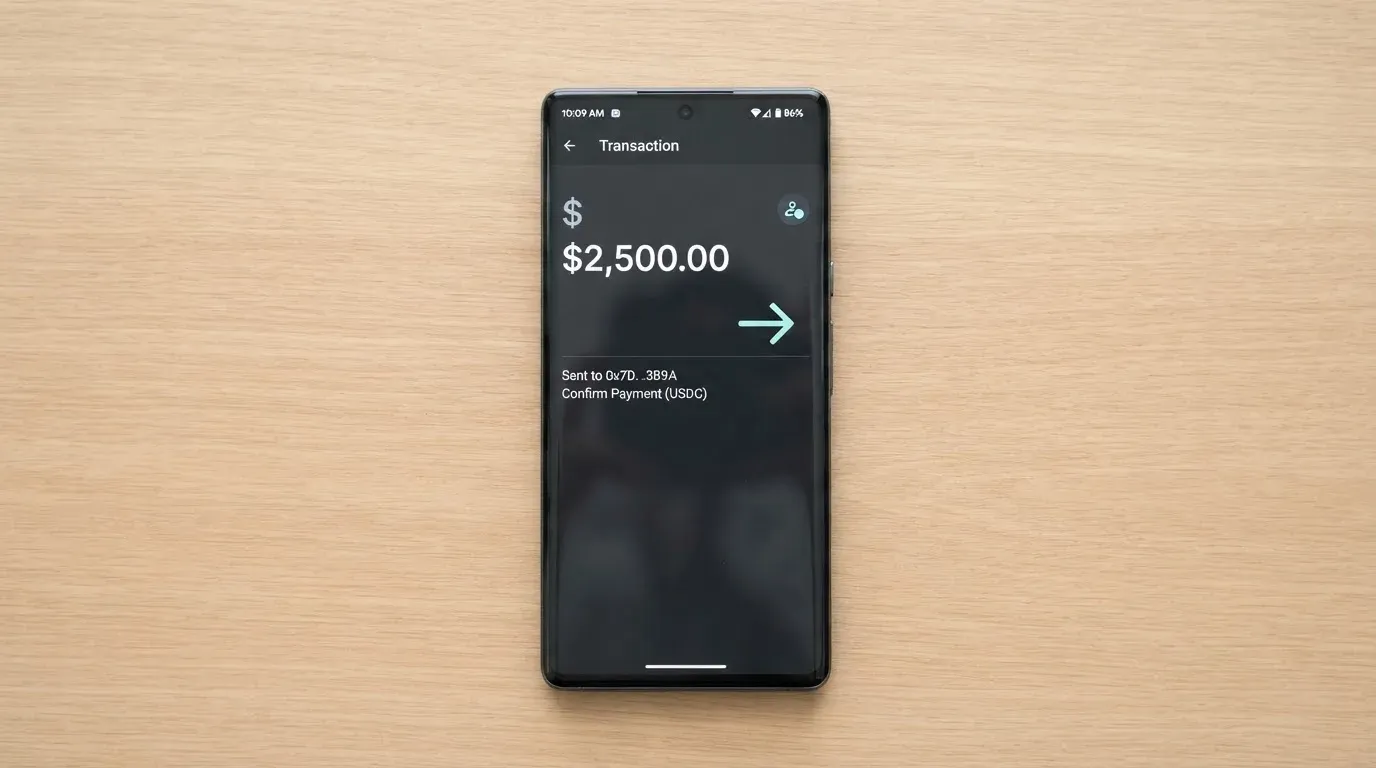
You fund the card with USDPT — US Dollar Payment Token, issued by Anchorage Digital Bank, N.A. on the Solana blockchain. There are two ways in:
- Transfer USDPT from another digital asset wallet or a compatible crypto exchange wallet. This is the direct route, and it is the only route where you choose the moment.
- Redirect an incoming Western Union money transfer originally sent for cash pickup. The fiat arrives and is converted into USDPT instead of being collected in cash.
There is no minimum balance, and no deposit fee is stated — the site claims “no hidden fees.” Solana network fees for your transfer are not stated. And there is no bank-card top-up and no bank-transfer top-up mentioned anywhere: if you hold ordinary fiat and no USDPT, the only way in is to have money sent to you through Western Union. That is a real constraint, not a formality.
Two warnings about the mechanism, both of which general beyond this card. Blockchain transfers are irreversible: send to the wrong network or the wrong address and the funds can be gone, with recovery being a support matter and never guaranteed. And a note about the “USDPT” name — it is not USDT, and it is not USDC. Tether’s USDT is a different token. Bybit added USDPT trading and transfers in June 2026, which is useful to know if you need somewhere to buy or move it, but it does not make the other tokens work here.
Coming the other way, both directions exist and both are narrow. To move crypto off, you transfer USDPT to a compatible wallet or exchange. To get fiat, you “initiate cashout to yourself through Western Union’s global network and pick up cash at a Western Union retail location,” fees may apply. And if you close the account, “remaining USDPT balance must be transferred or spent according to the Terms and Conditions” — worth reading that clause before you decide the card is not for you, because a balance you cannot move is a balance you have lost.
Paying with it every day
This is the good half, and I found very little to complain about.
The virtual card is issued the moment you are approved, the card is Visa, and the currency of the balance is USDPT. You can add it to Apple Pay and Google Pay — the card’s own words are “Add Stablecard to their digital wallets such as Apple Pay and Google Pay” — and you can withdraw cash at supported ATMs and at Western Union agent locations worldwide. The card can be locked and unlocked in the app, and the USDPT sits in a non-custodial wallet.
The mechanics of mobile wallet payments are worth a word, because people ask whether adding the card to a phone is risky. Apple Pay replaces the card number with a device-specific Device Account Number held in the phone’s Secure Element, not on Apple’s servers, and each payment carries a one-time dynamic security code. The issuer can also restrict the tokenised number to certain channels — for instance, blocking it for online use while leaving contactless working. So the token is not simply a copy of your card number floating around.
What I could not establish:
- Blocked merchant categories are not stated. This matters more than it sounds. In this category, issuers often block gambling (merchant category 7995), and such blocks are policy, not law, and differ per issuer. Stablecard publishes no list. If gambling or another restricted category matters to you, assume it may fail at the till and find out for yourself.
- No cashback and no rewards. Stated plainly above, and worth restating because most cards in this category offer something.
- No stated spending controls or two-factor authentication. Identity verification is required and data is described as encrypted in transit, but two-factor authentication, spending controls and safeguarding arrangements are not stated. The typical toolkit for this category is app-based 2FA, instant freeze, spending limits, 3-D Secure confirmation and a tokenised mobile wallet; the freeze and the wallet I can confirm, the rest I cannot.
There is a wrinkle you may hit abroad that has nothing to do with crypto. Address verification — the check comparing the numeric parts of the billing address you type against issuer records — is mainly offered in the US, Canada and the UK, and is generally unavailable for foreign-issued cards. The merchant is paid through Visa in their local currency, and the card is treated as foreign-issued wherever it is not domestic. Some merchants decline prepaid or foreign-issued cards simply because the BIN lookup shows what they are. If a decline surprises you, this is often the reason, and it is not a fraud flag against you.
What can go wrong
Not a dark list — the opposite, in fact. There are no reported incidents since launch on 4 August 2026, two and a half months ago. No shutdowns, no hacks, no programme changes. But the product is young enough that this is what you would expect, so here is the more useful version: the specific ways this could go wrong for you.
The token loses its peg. Stablecoins aim to hold a value against a fiat currency and, in the words of the BIS via the category background, “despite the name, stablecoins are not necessarily stable.” TerraUSD collapsed in May 2022; USDC temporarily lost its peg in March 2023 during the US banking crisis. Your balance would fall with it, and no card programme insures you against that.
The programme changes or ends. This is the crypto-card category’s characteristic failure. WaveCrest, a Visa issuer that supplied crypto card brands, was suspended by Visa in Europe in 2018, closing all WaveCrest-issued Visa programmes. Visa terminated its global agreements with FTX on 13 November 2022 and the FTX US debit card was wound down. The pattern is usually a notice period, then spending and loading stop, then you are asked to withdraw what’s left. I have not verified a 2026 closure of this kind beyond a single unconfirmed secondary report, so treat the specifics as unconfirmed — but the shape of it is real and has happened to other people’s cards.
You make a transfer mistake. Irreversible sends, wrong network, wrong address. And note that on Tron and Ethereum the fee mechanics are their own: on ERC-20 chains gas is paid only in ETH, so a wallet holding USDT with no ETH cannot send; on Tron, fees are paid through bandwidth and energy resources, often burning TRX. Solana is the one network here where your top-up is expected to work, and it is still worth checking the address character by character.
A payment is declined and the money hangs. A declined authorisation can leave a hold that persists for days — typically up to seven. Combined with “spending and other transaction limits are based on program-level risk controls and regulatory requirements,” that means your available balance and your spendable balance may not be the same number on a given afternoon.
Disputes are Visa’s, not yours. Customer Care is reached through in-app chat with transaction details, and “disputes are handled according to the Visa dispute rules and program policies.” No time frames are stated. Worth knowing that your rights depend on which regime you are under: in the US, debit card reversal rights come from Regulation E, credit card rights from Regulation Z, and prepaid-card coverage varies and should not be assumed.
You are affected by sanctions screening regardless. Tether says it disables tokens in wallets on the OFAC sanctions list and has frozen funds tied to illicit activity — stablecoins are not censorship-proof. Whatever your citizenship, screening applies, and nationality is recorded and screened separately from residence.
One thing that is *not* a risk here, and I want to be clear about it: nothing in the published record suggests Western Union’s money transfer business is exposed to you through this card in a way that would let a problem there reach your balance. The card issuer is a separate regulated entity, Rain (Nimbus LLC dba Third National), a Visa Principal Member licensed in Puerto Rico, United States. The network is Visa. USDPT comes from Anchorage Digital Bank, N.A., a US national trust bank. The transfer side is Western Union Financial Services, Inc. (NMLS #906983) and/or Western Union International Services, LLC (NMLS #906985), licensed as Money Transmitters by the New York State Department of Financial Services.
On the complaint side, I found no dedicated Stablecard review page on Trustpilot. Western Union’s general page there sits at 4.5 out of 5 across roughly 173,168 reviews — but that is the money transfer business, not this card, and I would not borrow its score. No recurring complaint themes have emerged, which is unsurprising for a two-and-a-half-month-old product.
The company history is worth one paragraph because it tells you how new and how fast this is. In May 2025 Rain joined Visa’s stablecoin settlement pilot. In January 2026 Rain raised $250M in a Series C. In May 2026 Western Union unveiled USDPT, on Solana, issued by Anchorage Digital Bank, designed to align with the GENIUS Act framework. In June 2026 Bybit added USDPT trading and transfers. In August 2026 the card launched in 37 markets. That is a lot of movement in eighteen months, which is a reason for both confidence and caution.
What to take instead
The comparison is unfair to Stablecard in one direction and flattering in the other, so let me be specific about the axes.
If you already hold USDT or USDC. This is the card that most obviously does not fit you. Its token is USDPT, on Solana, and nothing else. Every other option in this category takes mainstream stablecoins on mainstream networks.
TokenPocket scored 5.8 in my assessment — the lowest here, and its reason is narrowness too. It issues Visa debit for a list of European countries and territories (Germany, France, Spain, Switzerland among them) and Mastercard debit for Australia, Canada, Hong Kong, Japan, Taiwan, New Zealand, Singapore, South Korea, the UK and others, with the Americas planned. It runs on Arbitrum, balances sit in EUR24 and USD24, and cards are virtual with no physical card mentioned. On cost, TokenPocket says it partly covers the NFT creation fee and the user pays “a small portion” — amount not stated — and otherwise “TP Card does not charge any additional fees.” The catch: a 1% fee on depositing cryptocurrency into the card, said to be refunded later via rewards or reduced transaction fees, with the FX fee not stated. No cashback is stated outright.
MetaMask scored 7.1, and it is the strongest of the three on both access and rewards. Sign-up is open in 45 listed countries and territories (Andorra, Argentina, Brazil, Canada, Mexico, Germany, France, Spain, Uruguay among the examples), with other regions on a waitlist, proof of residency required, and the citizenship rule not stated; US and UK sign-ups were temporarily closed per the FAQ. It is a Mastercard, virtual card issued instantly, with a metal card you can pre-order after virtual approval; one card per user, issued by Monovate, card provided by Crypto Life. Cost: virtual free with no annual or maintenance fee, metal at $199/year. Fees are described as a “minimal fee for each transaction” with no amount published on the pages I read, no additional MetaMask fees, and no foreign transaction fee — the Mastercard rate applies. It spends directly from your connected wallet on Linea, Base, Monad and Solana, naming mUSD, wETH, EURe, GBPe, USDC and USDT. Rewards are real: cashback in mUSD into the Money Account at 1% on Virtual, with Metal headline 3% but the footnote capping 3% to the first $10,000 spent and 1% after, plus $FLY bonuses of 5X and 7X through the Blackbird dining app. One catch worth knowing: Solana-only wallets cannot withdraw credit.
KAST scored 6.1, and it is the transparent-fee option. Availability is residence-based, shown at KYC — “If your country isn’t listed, it means KAST is not available there” — with the list itself unpublished and a Restricted Locations list referenced without naming countries. It also looks at your ID document, not just where you live: living in a supported country with an ID from a restricted region may still fail KYC, dual citizens with an ID from a supported country may pass, only the account holder’s own ID is accepted, and a VPN does not bypass it. Cards are virtual and physical, up to ten per user, on Visa Platinum and Visa Infinite tiers plus themed designs, with balance in USD from stablecoin deposits converted 1:1 at a 0% spread. Here is the fee picture in full: annual membership Standard 0 USD, Premium 1,000 USD/year, Private 10,000 USD/year billed annually upfront; an extra virtual card 2 USD; a Standard physical card 0 USD card fee plus 40 USD delivery, with Premium and Private physical cards included; 1 USD/month inactivity fee after 12 months. On spending: stablecoin top-up 0%, card spend in USD 0%, transaction fee 0%, Apple and Google Pay 0%, non-USD FX fee 0.5%–1.75% depending on your residence country, the transaction country and the card programme; non-USD transactions under 25 USD cost 0.10 USD; a declined transaction for insufficient balance costs 0.50 USD. It takes USDT, USDC, PYUSD and RLUSD on Ethereum, Solana, Polygon, Arbitrum and TRON, with no bank account needed. Cashback is 1.5% on the first 2,000 USD/month on Standard, 2% on the first 10,000 USD/month on Premium, 3% on the first 40,000 USD/month on Private, plus KAST Points on the paid tiers.
| Stablecard by Western Union | MetaMask | KAST | TokenPocket | |
|---|---|---|---|---|
| My score | 6.7 / 10 | 7.1 / 10 | 6.1 / 10 | 5.8 / 10 |
| Network | Visa | Mastercard | Visa | Visa / Mastercard |
| Card currency | USDPT | Not stated | USD | EUR24 / USD24 |
| Top-up asset | USDPT on Solana only | Connected wallet, incl. USDC and USDT | USDT, USDC, PYUSD, RLUSD | Crypto, Arbitrum |
| Physical card | Yes, for a fee | Yes, metal $199/year | Yes, 0 USD + 40 USD delivery on Standard | Not mentioned |
| Rewards | None stated | Cashback in mUSD, 1% Virtual / up to 3% Metal | Cashback 1.5%–3% by tier | None stated |
| Published fee detail | Weakest — amounts withheld | “Minimal fee”, amount not published | Most complete | 1% deposit fee |
The pattern worth naming: every one of these cards spends from a balance you already control, and none of them lends. The differences are entirely in which coin, which chain, which countries, which fees, and what happens when the programme changes. There is also a regulatory split you will run into repeatedly — in the EU, a card is a payment service regulated separately (e-money or payment-services law), while MiCA covers the crypto side of custody, exchange and transfer, so a crypto card in Europe often rests on two licences. If you are in the EU and want to check a provider, ESMA keeps an interim register of authorised crypto-asset service providers, white papers and non-compliant entities.
Who I would recommend it to
Three people, in order of how clearly they fit.
You receive money through Western Union and want to spend it, not collect it. This is the strongest case, and it is the one the product was clearly built around. A transfer sent for cash pickup can be redirected into a spendable balance instead, with no fiat-to-crypto step of your own. If that describes your month, there is no equivalent here.
You already hold USDPT on Solana and have no usable ordinary card. You understand what you are sending, you will check the address, and you have opinions about card issuers. You will not be surprised by a single-coin design because it already matches how you hold money.
You want a card that is not attached to a bank account. No credit check, no minimum balance, a balance you funded. For someone who has been turned down for an ordinary card, that is a real advantage and not a marketing line.
And one person I would steer away: anyone who wants to budget in euros, pounds or dollars without thinking, anyone who wants cashback, and anyone who is going to hold a balance through a period of crypto-market stress and be surprised by a peg move. If your priority is knowing the number before you spend, this is not the card — the price list is not published.
If it is right for you, the first thing to do is open the app and confirm three things in order: that your country is among the served ones, that your identity documents pass, and what the Terms and Conditions at westernunionstablecardlegal.com actually say about fees and limits — because that page is where the numbers I could not find are kept, and it is the one thing I would want in front of me before funding anything.
Frequently asked questions
What is Stablecard by Western Union card?
It is a Visa payment card you load with USDPT, a dollar-pegged stablecoin issued by Anchorage Digital Bank on the Solana blockchain. You spend that balance like any cardholder — in shops, online, in Apple Pay or Google Pay, or at an ATM. There is no bank account behind it, no credit check and no minimum balance, and merchants are paid through the Visa network in their local currency.
Is Stablecard by Western Union a bank, and who owns it?
The card itself is not a bank account. The Western Union Company (NYSE: WU), based at 7001 E. Belleview, Denver, CO 80237, USA, is the brand behind it, while the card is issued and the programme managed by Rain (Nimbus LLC dba Third National), a Visa Principal Member licensed in Puerto Rico. USDPT comes from Anchorage Digital Bank, N.A., a US national trust bank. Western Union is separately licensed for transfers.
Does the card require KYC?
Yes. Identity verification is required for all applicants, described as covering personal information and documentation “as required by applicable laws and regulations, including anti-money laundering, sanctions screening, and customer identity verification requirements,” carried out by Rain or its authorised providers. There is a single verification level rather than tiered checks, the app is rated 18+, and Western Union screens against US, EU and UK sanctions lists.
Where is it available and can I use it in my country?
It launched in 37 markets on 4 August 2026, with 60+ targeted by the end of 2026, but the country list has not been published and availability is “subject to geographic, regulatory, and eligibility requirements.” The app itself is the only reliable check. No official source I checked mentions Russian or Belarusian citizens or residents in either direction.
How do I get the card?
Download the app, complete onboarding and identity verification, and the virtual card is issued immediately on approval — though the approval time itself is not stated, nor are the reasons for a decline. A physical card can be requested after approval, is mailed to the address on file for a fee, and delivery time varies by shipping method and destination. Countries served, fee and replacement cost are all unstated.
What does it cost to hold and use?
This is where I have the fewest certainties. The site claims “no hidden fees” for account setup and no minimum balance, and the physical card is “for a fee” with the amount not published. Foreign transaction fees “may apply,” as may charges for card use and ATM withdrawals, and no monthly or annual figure appears anywhere public. The full schedule sits at westernunionstablecardlegal.com, which was inaccessible to me behind a Cloudflare block.
How do I top it up, and can I use USDT or USDC instead?
You fund it with USDPT on Solana, either by transferring from another wallet or compatible exchange wallet, or by redirecting an incoming Western Union cash-pickup transfer so the fiat converts into USDPT. No bank card or bank transfer top-up is mentioned. USDT and USDC are different tokens and will not work directly — you would have to convert to USDPT yourself first.
How do I withdraw money from it?
Two ways out. For crypto, transfer USDPT to a compatible wallet or exchange. For cash, initiate a cashout to yourself through Western Union’s global network and collect at a Western Union retail location, with fees applying. If you close the account, “remaining USDPT balance must be transferred or spent according to the Terms and Conditions,” so read that clause before you ever fund it.
Is it safe, and is there cashback?
There are no reported incidents — no shutdowns, hacks or programme changes — since the 4 August 2026 launch, and the card uses a non-custodial wallet with app-based locking and identity verification; two-factor authentication and spending controls are not stated. On cashback: there is none for Stablecard in any official source. Western Union’s separate Rewards programme covers money transfers, not card spending, and there is no rewards programme on this card at all.
Is it worth it, and can I add it to Apple Wallet?
Yes to Apple Pay and Google Pay — the card is designed to be added to digital wallets — and worth it if you receive money via Western Union or already hold USDPT on Solana. The App Store rating is 5.0 from 10 ratings, and the Google Play listing shows 1K+ downloads with no star rating displayed, which tells you how young the product is. The 6.7 out of 10 I gave it is mostly that: excellent once loaded, narrow on how you load it.
Wallet card reviews – cryptocardcheck
Content created by the «cryptocardcheck» team