
Relopay Review: A USDT-Funded Virtual Card With Very Low Fees and a Very Short List of Countries
 Available in US
Relopay is a virtual payment card you fund with USDT and spend like an ordinary card, delivered through a Telegram mini app rather than a conventional banking app. It charges 3 USD to issue the card, 0.2 USD per successful transaction, nothing for annual maintenance, inactivity or closure, and a 0% top-up fee on its virtual plan. It works in 170+ countries, but accounts are limited to a “Supported Countries” list inside the app, and a long exclusions list bars citizens and residents of the United States, Canada, Hong Kong, Russia, Belarus and Ukraine, among others. The card is USD-denominated, virtual only for now — the physical card is still “launching soon” — and its terms say transactions are final and may not be disputed. My score: 6.0 / 10.
The conditions described below are current as of October 28, 2026.
Verdict: 6.0 out of 10
This is a competent, narrow product rather than a bad one. If you live in a supported country, hold USDT, and want a card number you can push into Apple Pay or Google Pay today, Relopay does that with fees low enough to be almost invisible on small purchases. If you need a physical card, a big spending limit, a card in your local currency, or a way to reverse a payment that went wrong, it does not do those things, and the terms are unusually blunt about it.
| Criterion | Mark | Why |
|---|---|---|
| Who can get it | 3 / 10 | Accounts only in “Supported Countries” listed in the app; the card itself works in 170+ countries, but the US, Canada, Hong Kong and many other jurisdictions are excluded for citizens and residents |
| Cost | 7 / 10 | Issuance 3 USD, annual, inactivity and closure fees free, 0.2 USD per successful transaction, 0.5 USD for a decline, 0% top-up; the crypto conversion rate is not published |
| Top-up options | 8 / 10 | USDT on TRC20, minimum 5 USD; the cards page names Bitcoin, USDT and other coins, with conversion at the moment of payment |
| Reliability and complaints | 7 / 10 | Issuer Xfers Pte. Ltd. (MAS licence per a third-party profile), alongside 1507613 B.C. LTD in Canada and RELOPAY PTE. LTD in Singapore; no complaints found, but transactions are final and cannot be disputed |
| Everyday use | 6 / 10 | Virtual card with Apple Pay and Google Pay; the physical card is still “launching soon”, and ATMs belong to that future physical card |
| Total | 6.0 / 10 | Strong on price and top-up flexibility, weak on reach, limits and recourse |
One thing worth naming before the details: the audience this card was clearly built for is residents of Southeast Asia who already hold USDT and already live in Telegram. That is not a criticism — it is a well-aimed product — but it explains both the strengths (fast Telegram-native funding) and the ceiling (a country list that does not extend beyond the region it started in).
Will They Give You the Card?
Accounts are limited to the “Supported Countries” listed in the website and app. That list is not published in text the card’s own pages make readable, so I cannot quote it; an earlier check of the app showed Vietnam, Thailand and Indonesia, plus a waitlist for further countries. If your country is not in that list, there is nothing else to try — the app itself is the gate.
At the same time, the documentation claims the card can be used in 170+ countries once you hold it. Those are two different statements and people mix them up constantly: 170+ countries is where the card spends, “Supported Countries” is where you can hold an account. Being in Vietnam does not help you open an account if you live in, say, Nigeria.
The exclusions are the more visible part of the picture. The restrictions page bars citizens *and* residents of many jurisdictions, including the United States, Canada, Hong Kong, Belarus, Russia and Ukraine, among others. Note the double bar: residency counts as well as citizenship, so a Canadian citizen living in Vietnam is still excluded, and a Ukrainian resident of Thailand is too. Belarus and Russia are excluded outright.
If you are reading this list hoping to find a workaround, stop here. I am not going to describe any, and neither would a card that keeps your money and your account in order. The honest answer is: if your country or citizenship is on that list, Relopay is not for you.
How to Get It
The sign-up path runs through Telegram. You use the mini app at @RelopayBot — there is no App Store or Google Play app, and no ratings to read on either store.
Verification is a single standard check, handled by Sumsub, the identity platform used by a lot of financial services. You must be 18 or older with full legal capacity. In the flow, you choose the region “All countries except USA”, pick your country and document type, upload a photo of the document, then complete a selfie or camera check. The card’s own words are that the result comes back in “a few seconds”. Prepaid products in the app are labelled “KYC required”. Proof of address is not mentioned anywhere in the description of the flow, which may be a pleasant surprise and may also simply mean the requirement has not surfaced yet.
What is not stated is as informative as what is. There are no named tiers of verification, no published processing times per country, and no list of rejection reasons. Anyone who tells you exactly how long your check will take, or exactly what will get you refused, is guessing on top of the documentation.
What you end up with is one of three things:
- Virtual card — 24 months validity, reloadable, in USD, with 3-D Secure. This is the main product and the one marked most popular.
- Prepaid virtual card — 60 days validity, maximum balance $1,000. Short life, small ceiling; useful as a disposable online card, not as a daily card.
- Physical card — “launching soon”, with a stated three-year validity. It is not launched. There is no shipping information, no delivery fee, no timeline I can quote.
The card network is not named in the documentation. An earlier check said Visa; I would treat that as unofficial rather than confirmed by the card. Neither Visa nor Mastercard issues these cards to consumers themselves — they license issuers, and they can suspend a programme.
What It Really Costs: Fees and Everyday Payments
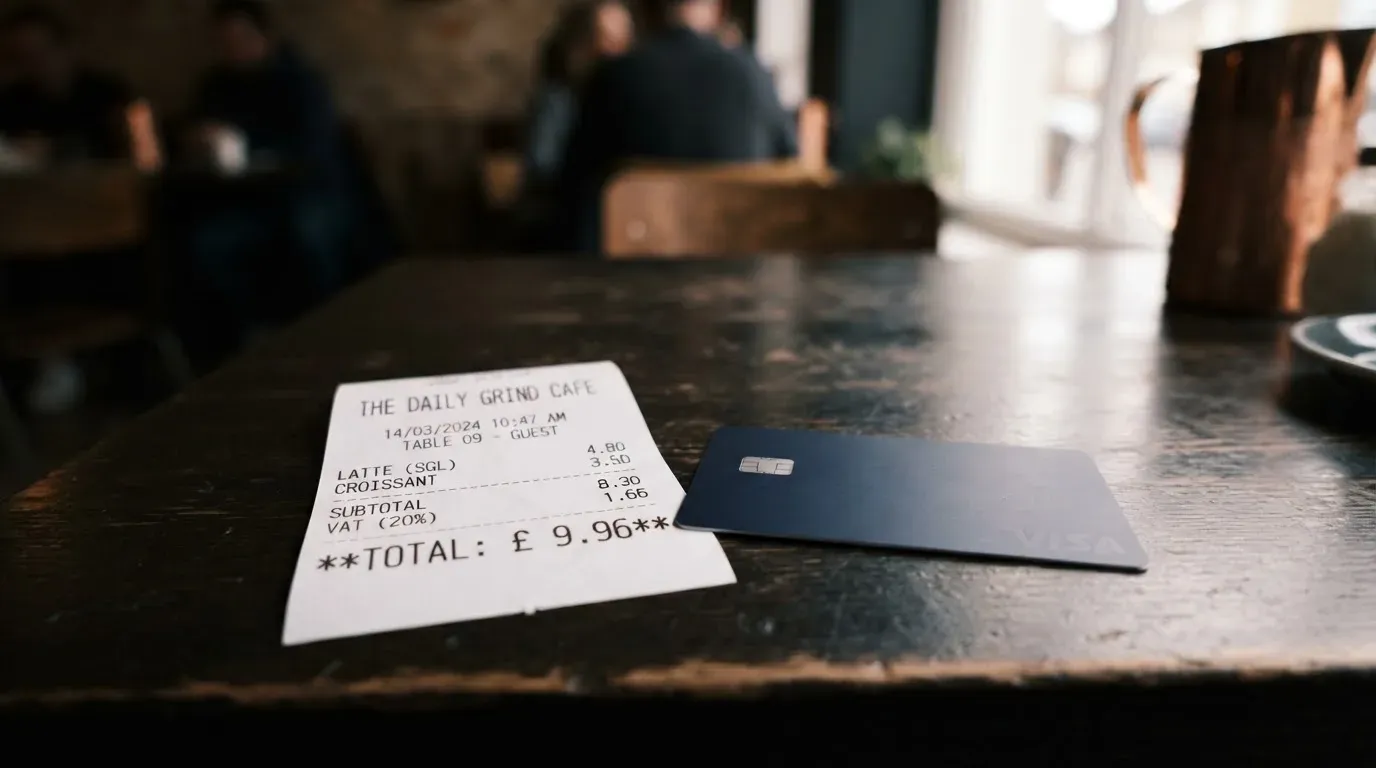
Here is where Relopay is genuinely competitive. Issuance is 3 USD. Annual, inactivity and cancellation fees are all free. A successful transaction costs $0.2, a declined one $0.5, and topping up the virtual plan costs 0%. The catch is the one number the card does not publish: “conversion fees apply when cryptocurrency is converted to fiat at the time of purchase”, with no rate given.
| Fee or limit | What the card states |
|---|---|
| Issuance | 3 USD |
| Annual fee | Free |
| Inactivity fee | Free |
| Cancellation fee | Free |
| Successful transaction | $0.2 per transaction |
| Declined transaction | $0.5 per transaction |
| Crypto conversion at payment | Applies; rate not published |
| Foreign-exchange fee | Non-USD payments are converted automatically; fee not stated |
| ATM withdrawal | “May include small charges”; no amounts published; virtual cards are online-only |
| Top-up fee, virtual plan | 0% |
| Top-up fee, physical plan | 1% USDT (plan not yet launched) |
| Top-up and transaction fee currency | Calculated in USDT |
| Virtual card maximum monthly spending | $4,000 in the usage terms; the cards page shows a virtual card max balance of $4,000 and monthly spending of $50,000 — the sources disagree |
| Prepaid card maximum balance | $1,000 |
| Per-transaction and daily limits | The issuer and Relopay may set daily, monthly and per-transaction limits; no figures published |
That contradiction on the virtual card limit is worth pausing on. The usage terms say maximum monthly spending is $4,000. The cards page says the virtual card has a maximum balance of $4,000 and monthly spending of $50,000. One of those is stale or wrong, and I cannot tell you which. Assume $4,000 a month until you have seen your own limit inside the app, and do not plan around the higher figure.
Three everyday payments, so the arithmetic is concrete. A $12 coffee: $0.2 transaction fee, no conversion if you pay in USD — call it $12.20 out. A $30 dinner paid in euros: $0.2 plus whatever the conversion costs, and the FX fee is not stated, so the final amount is not knowable in advance. A $4 monthly subscription: $0.2, roughly 5% of the purchase, which is the case where a per-transaction fee is most visible and where you might be better off paying another way.
The card’s advice, in its own terms, is to hold and pay in USD. Funds are held in USD; EUR and JPY payments are converted automatically. If you are paid in another currency and spend it immediately, you are taking two conversions in a row — crypto to USD, then USD to your local money — and only one of those rates is published.
One more cost that is not a fee but behaves like one: a declined transaction costs $0.5, and declines are more common on foreign-issued and prepaid cards than on ordinary bank cards, because merchants can read the card type and issuing country from the first six or eight digits of the number.
How to Top Up
Top-ups are USDT on TRC20 — the Tron network. The minimum is $5. The cards page also names Bitcoin, USDT and “other cryptocurrencies”, and an earlier check listed USDT, USDC, ETH, BTC, TON and BNB; treat the fuller list as unofficial. The mechanic is the same either way: crypto is converted into local currency at the moment of payment, so what sits behind the card is a fiat balance, not crypto.
Two practical things about networks, because this is where people lose money. Sending USDT on the wrong network is usually irreversible and may need manual support recovery with no guarantee of success — USDC over TRC20, for example, is not a native option since Circle stopped supporting USDC on Tron. And if your exchange or wallet does not support Tron, the transfer itself can cost you more in network fees than the card saves in transaction fees; those network fees are paid to the blockchain, not to Relopay.
The refund position is worth reading twice before you load a large balance. Under the usage terms, deposits on the virtual plan are non-refundable, and unused balances cannot be refunded to your wallet. The card expires after 24 months with whatever balance is left on it. If you close the account, funds are withdrawn within “a reasonable period” less fees, and unclaimed funds are kept for three years.
So: treat the top-up as money you have spent, on something with a two-year life and no chargeback. Small and regular beats large and occasional.
Paying With It Every Day
The virtual card works with Apple Pay and Google Pay. Adding it uses a $0 verification transaction, which may carry a small fee and can briefly push the balance negative — something to know before you conclude the card is broken.
Everyday categories that work: anything a normal card works. What does not work is the restricted list, which includes gambling, dating, money transfers, quasi-cash, fuel and EV charging, telecoms, gift cards, brokerage and charity. Charity is the one with teeth: a 30% penalty of the transaction value, minimum $5. That is not a decline — it is a charge, and it is the sort of rule that reads as an oddity until the day you donate and find a third gone.
Online payments use 3-D Secure, where the issuer assesses risk and either approves without a prompt or challenges you with a code or a biometric check. That is the same machinery ordinary cards use, and it works the same way here.
There is no cashback and no rewards scheme — none is stated. The only reward on offer anywhere near this card is at competitors: Azul pays referral fees, Telecard runs a points scheme. If the appeal of a crypto card to you is that it gives something back, this is not it.
And then the sentence that changes how you should use it. Terms 9.11: “All Relopay Card transactions are final and may not be disputed, reversed, or cancelled”, except where the issuer or the law provides otherwise. Terms 9.13 adds that disputes about goods are between you and the merchant. In practice: if you pay for something that never arrives, or a merchant takes the money and goes quiet, your route is not a chargeback through the issuer. It is a support request to a Telegram bot. That is a meaningfully different position from a bank card, and it is the single strongest argument for keeping the balance here small.
What Can Go Wrong
Nothing has gone publicly wrong that I can find — and that phrase matters. There is no Trustpilot page for Relopay, no ratings, and a search for reviews turned up only unrelated companies with similar names. “No complaints found” and “no complaints” are not the same claim, and on a product with no track record and no public review footprint, absence of evidence is what you would expect whether things are fine or not.
The structural risks are clearer than the incident record.
- No chargeback. Finality is contractual, not accidental. Your recovery path is a chat with a bot.
- Custodial funds. Your fiat balance is held by the issuer, Relopay Pte. Ltd. being a programme manager rather than a bank. Custodial providers have a history of failing — Mt. Gox, Coincheck, Ronin — though none of those is this company. The category risk is real; do not treat it as a prediction.
- Non-refundable deposits and a two-year expiry. Money in, no way back out, and a clock running.
- A country list you cannot read in advance. “Supported Countries” lives in the app. You find out by trying.
- Unpublished rates. The crypto conversion rate and the FX fee are both unstated, so your true cost per purchase is unknown until it happens.
- A physical card that does not exist yet, with no ATM access from the virtual one.
- A Telegram-only surface. One bot holds your account. That is a single point of failure with no app-store fallback and no second channel.
On the corporate side: the card is issued by Xfers Pte. Ltd., with fiat balances held by the issuer, alongside 1507613 B.C. LTD (Canada, a FINTRAC-authorised payment services provider) and RELOPAY PTE. LTD (Singapore, UEN 202514348M). Xfers is described as holding a Major Payment Institution licence from the Monetary Authority of Singapore — that comes from a third-party profile, not from the card’s own pages, so treat it as unofficial. Support runs through @RelopaySupportBot, a Telegram channel, X and Instagram; there is no email support and no phone number mentioned. 3-D Secure is in place; freeze controls and two-factor authentication are not stated.
If you want the general picture of how these things break: card programmes do get shut. Visa terminated its global agreements with FTX on 13 November 2022 and the FTX US debit card was wound down. WaveCrest, a Visa issuer that supplied crypto card brands, was suspended by Visa in Europe in 2018, closing every WaveCrest-issued Visa programme. Closures typically mean a notice period, then no spending and no loading, then a request to withdraw what’s left. Check the issuer register where one exists — in the EU, ESMA’s interim register of authorised crypto-asset service providers is public.
What to Take Instead
| Relopay | Azul Card | Telecard | OnCards | |
|---|---|---|---|---|
| Score | 6.0 / 10 | 5.3 / 10 | 6.1 / 10 | 4.6 / 10 |
| Countries | “Supported Countries” in the app; long exclusion list | Worldwide except Russia, Belarus, North Korea, Iran, Syria, Cuba, Sudan, Venezuela, Ukraine and the Crimea, Donetsk, Luhansk, Zaporizhzhia and Kherson regions; restrictions apply regardless of nationality | Over 150 countries; terms bar only users blocked or sanctioned by the US Government, including OFAC | Not stated; no country list published |
| Card type | Virtual; physical launching soon | Virtual only | Virtual Mastercard; no physical or metal | Virtual Mastercard/Visa in Telegram |
| Issuance / plan cost | 3 USD | $20 one-time, refunded after $2,000 of spending | $5 one-time standard; VIP $49 setup then $19/month | Not stated |
| Transaction fee | $0.2; $0.5 declined | $0.25 | 0.5 USDT gas fee per successful transaction | Not stated |
| Conversion / FX | Crypto conversion rate not published; FX fee not stated | Crypto top-up 4%; FX fee not stated | Conversion 1.5% on non-USD payments; FX and cross-border fees “up to 3% each” | Not stated |
| Top-up | USDT (TRC20), minimum $5, 0% fee | Crypto sent to the card in Telegram; coins and networks not named; first top-up up to 10 minutes, later 1–5 minutes | USDT on Tron (TRC-20) or Ethereum (ERC-20); USDC on Ethereum; Polygon not supported; $99 minimum deposit to activate, stated as “NOT a fee”; bank transfers “coming soon” | USDT BEP20 only; bank transfers not accepted |
| Rewards | None stated | Referral programme pays “up to 40% of our fees” | Fiorini points and cashback; rate not specified | Not stated |
Read across the rows and the trade-offs get sharp. Azul is the cheapest to establish and has the broadest stated reach, but it charges 4% to top up, which on anything but small amounts dwarfs Relopay’s 0%. Its referral scheme is more generous than anything Relopay offers. Telecard is the only one of the four with a published conversion fee and an explicit gas fee, which makes its costs the easiest to predict — and its fees are the highest on paper: 1.5% conversion plus fees of “up to 3% each” for FX and cross-border. Its $99 minimum deposit to activate is described by the card as “NOT a fee” because the money stays in your wallet, which is fair, but it does put a floor under how small you can start. OnCards publishes almost nothing: no country list, no fees, no currency, no rewards. I would not commit money to a card whose pricing I cannot read.
Relopay’s actual advantage over all three is narrow and real: 0% top-up and $0.2 per transaction is the cheapest everyday spend of the four, and USDT on TRC20 is a network with low fees and wide exchange support. Its disadvantage is equally narrow: the least readable terms on reach and limits, and the only one of the four with an explicit no-disputes clause.
If you are outside the “Supported Countries” list, the comparison above may not matter — none of these four will help you. What matters more broadly is that a crypto card is a payment service regulated separately from the crypto side, often depending on two licences, and that custody, not the card, is where most of the risk lives. Cards in this category draw on a stored balance rather than your bank account, which is why they cannot overdraw — and why the balance is gone if the provider is.
Who I Would Recommend It To
I would recommend the Relopay card to someone who is a resident of a supported country, holds USDT on Tron, and wants a USD card in their phone wallet this afternoon for online spending they can repeat cheaply. If your life is Telegram, online subscriptions, travel booking and small everyday purchases, and you are comfortable that payments are one-way, this card does that job for 3 USD and a rounding error in fees.
I would not recommend it to someone who needs cash, who needs a physical card, who needs to spend above a few thousand dollars a month, who needs to charge back a bad purchase, or who lives in one of the excluded countries. I would also hesitate to recommend it as the card you keep your emergency money on, for the same finality reason that affects every prepaid card — but with less protection, because the balance is smaller and the support channel is a chat bot.
The score of 6.0 out of 10 is really two scores wearing one coat: 8 out of 10 on what it costs and how you fund it, and 3 out of 10 on who can have it. If you are on the right side of the country list, that is a good deal. If you are not, nothing else on this page will change that.
Frequently asked questions
What is the Relopay card?
The Relopay card is a USD-denominated virtual payment card funded with USDT and used like an ordinary card, mostly online and through Apple Pay or Google Pay. It is delivered through a Telegram mini app at @RelopayBot rather than a bank app. Issuance costs 3 USD, a successful transaction costs $0.2, and top-ups on the virtual plan carry a 0% fee. There is also a prepaid variant with a $1,000 balance cap and 60-day life.
How does the Relopay card work?
You open an account, pass a standard Sumsub identity check, receive a virtual card number, and top it up with USDT on TRC20. Crypto is converted into a fiat balance, held in USD by the issuer, and the card spends only that balance — so it cannot overdraw. Payments in other currencies are converted automatically. Because it behaves like a prepaid card, merchants can see the card type and issuing country from its first digits.
Is Relopay a bank, and who owns it?
No — Relopay is not a bank, and the card does not come from one. The card is issued by Xfers Pte. Ltd., with fiat balances held by that issuer; RELOPAY PTE. LTD (Singapore, UEN 202514348M) and 1507613 B.C. LTD (Canada) also appear in the structure. A third-party profile says Xfers holds a MAS Major Payment Institution licence, but that is not confirmed on the card’s own pages.
Which countries can use the Relopay card?
Accounts are limited to a “Supported Countries” list inside the app, which is not published in readable text; an earlier check showed Vietnam, Thailand and Indonesia plus a waitlist. The card is said to work in 170+ countries once issued. Citizens and residents of many jurisdictions are barred, including the United States, Canada, Hong Kong, Belarus, Russia and Ukraine.
Does the Relopay card require KYC, and how long does it take?
Yes. You must be 18+ with full legal capacity, and “standard verification is required”. Verification runs through Sumsub: choose the region “All countries except USA”, pick your country and document, upload a photo, then a selfie or camera check. The card says the result arrives in “a few seconds”. Proof of address is not mentioned, and no tiers, timings or rejection reasons are published.
How much does the Relopay card cost to use?
Issuance is 3 USD; annual, inactivity and cancellation fees are free. Each successful transaction costs $0.2 and each declined one $0.5. Top-ups cost 0% on the virtual plan and 1% USDT on the not-yet-launched physical plan. The crypto conversion rate and the FX fee are not published, so your true cost on a non-USD payment cannot be calculated in advance.
How do I top up the Relopay card, and can I get the money back?
Top up with USDT on TRC20, minimum $5; the cards page also names Bitcoin and other coins. Coins are converted at the moment of payment. The catch: deposits on the virtual plan are non-refundable, unused balances cannot be refunded to your wallet, and the card expires after 24 months with whatever balance remains.
Is the Relopay card safe, and can I reverse a payment?
It uses 3-D Secure and works with Apple Pay and Google Pay, but it is not a bank deposit and your balance is held by the issuer. More importantly, the terms state that all card transactions are final and may not be disputed, reversed or cancelled, except where the issuer or the law provides otherwise. So a chargeback is not something to plan on; recovery runs through a support bot.
Can I use the Relopay card in Apple Wallet?
Yes, the virtual card supports Apple Pay and Google Pay. Adding it triggers a $0 verification transaction that may carry a small fee and can briefly leave the balance negative. The tokenised card number can also be restricted by the issuer on specific channels. You add the card from the Telegram mini app, since there is no App Store or Google Play app.
Is the Relopay card worth it?
It depends on which of two Relopays you are looking at. If you are in a supported country, pay online in USD and top up with USDT, the fees are among the lowest in this category and it is worth it. If you need a physical card, cash, higher limits or dispute rights, it is not worth it — and outside the “Supported Countries” list it is not available at all.
Virtual card reviews – cryptocardcheck
Content created by the «cryptocardcheck» team