
Bitstack reviewed: a euro card that spends your bitcoin balance, if you live in France
 Available in US
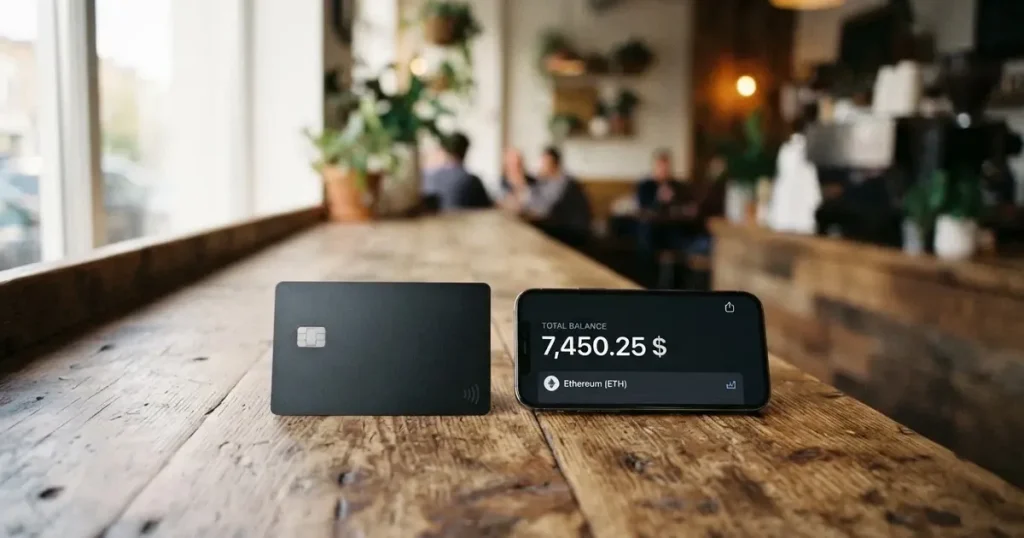
Bitstack is a French crypto platform, and the card it offers is a euro debit card that draws on the cash balance sitting in your Bitstack account. You spend euros; the bitcoin side is something you do inside the app, selling coins to put money into that balance. That is the whole product in one sentence, and it tells you most of what you need to know before you start reading further. If the idea of carrying a crypto exchange balance as your everyday spending money appeals to you, keep going. If you simply want a card that works everywhere without thinking about crypto, the honest answer is that a normal bank card will do the same job for less effort — and in most countries you cannot get this one at all.
Conditions are current as of October 28, 2026.
Everything below reflects what the card’s own public pages said when I checked them.
Verdict: 5.5 out of 10, and the reason is eligibility, not quality
My score for the Bitstack card is 5.5 / 10. That is not a verdict on whether the card works well — on the things it does, it is unusually competent. It is a verdict on a product that, at the moment, serves one country’s residents and nobody else, with a feature set that is still half-finished. The single biggest number in the table below is not the price or the fees; it is who can hold it.
| Criterion | Mark | Why |
|---|---|---|
| Who can get it | 2 / 10 | Only residents of France, including overseas territories; rollout is gradual, other EU countries on a waitlist on starting data |
| Cost | 8 / 10 | EUR 9.99 card plus delivery, no monthly subscription; FX free on the first EUR 1,000 a month; ATM free to EUR 200 or 5 withdrawals; top-up via Apple Pay and Google Pay 0.70% |
| Top-up options | 3 / 10 | The card spends euros from the Bitstack cash account; to top up you sell bitcoin in the app; other coins and networks are not named |
| Reliability and complaints | 9 / 10 | Bitstack Digital Assets SAS (Aix-en-Provence trade register no. 899 125 090), as an agent of Xpollens (an e-money institution authorised by the ACPR), manages the program. The card is issued by BPCE. AMF-registered as a crypto-asset service provider no. A2025-003. |
| Everyday use | 5 / 10 | Physical Visa Classic, Apple Pay since 30 June 2026, ATMs; Google Pay in development, virtual card planned |
| Total | 5.5 / 10 |
The audience this suits is narrow and specific: French residents who save in bitcoin and want to spend euros. If that is you, the card does its job with few hidden charges. If you are anywhere else in the world, this is not a product you can evaluate, because the door is closed — the card is described as available exclusively to residents of France.
Who they will give you the card to
France only. The card is described as available exclusively to residents of France, and the pages I read treat that as including the overseas territories. Eligibility is residence-based rather than citizenship-based, which matters if you moved: what counts is where you live, not what is in your passport.
The rollout is gradual rather than universal. The order option appears in the app’s Cash tab once your account qualifies, so there is no page where you click a button and a card arrives next week. On starting data, other EU countries sit on a waitlist. If you are in Madrid or Berlin reading this, your realistic options are to watch the Cash tab, or to look at the alternatives further down.
This is the chapter where readers usually want the small print about identity checks, and here I have to tell you plainly: the card’s public pages do not state which documents are required — no proof of address, no ID scan, no age requirement is listed anywhere I could find. That does not mean there are none. Every regulated European crypto service runs customer due diligence, which normally covers name, address, date of birth, nationality and identity documentation, plus a sanctions check. The absence of detail on the marketing pages is a gap in the documentation, not an exemption.
How to get it
The path is short and runs entirely inside the app. In the Cash tab you choose to order a card, pick your PIN, enter a delivery address, check the total — EUR 9.99 plus delivery — and pay. The payment for the card itself can come from your Bitstack cash account, a bank card, Apple Pay or Google Pay. There is no separate application form and no branch to visit.
What you get is a physical Visa Classic debit card that spends the Bitstack cash balance. A virtual card is planned but not yet available, so if your use case is online-only shopping right now, that is not an option yet. Metal is not stated, so I will not guess at it. The currency is euros — fees are all listed in EUR, though the card currency is not explicitly spelled out on the pages.
Delivery is France-only, including the overseas territories, and the timings differ sharply by where you are. Production of the card usually starts the day after you confirm the order. In metropolitan France delivery then takes up to 10 business days. Overseas, up to 3 weeks. The delivery fee varies by address and the amount is not stated, which is a real annoyance when you are trying to work out a total. The cost of a replacement card is also not stated.
One thing you should know before you order: a user report on Trustpilot from July 2026 describes slow identity verification that ended in rejection. Bitstack’s reply was that decisions follow regulatory requirements and the specifics are not shared publicly. That is a complaint from one person, not a pattern I measured — but if your verification stalls, you should expect a decision without a detailed explanation.
Fees: what it really costs you
Bitstack is one of the cheaper cards in this category, and the pricing is unusually transparent. There is one genuine problem, which is that the card’s own pages contradict each other on price. I am going to give you both numbers rather than pick a winner.
The help article says EUR 9.99 for the card plus a variable delivery fee. The pricing page says a Standard card is EUR 14.97 or 14.98 with delivery included, a Plus monthly plan is EUR 9.99 with free shipping, and a Plus annual plan includes card and delivery at no extra cost. The page is internally inconsistent, so treat the final number on your own checkout screen as the one that counts.
There is no monthly subscription on the card itself. That is the sentence the help centre uses, and it is the single best thing about the cost profile.
| Fee or limit | Value |
|---|---|
| Card issuance | EUR 9.99 plus a variable delivery fee (pricing page: EUR 14.97 or 14.98 with delivery included) |
| Monthly fee | None — “The Bitstack card has no monthly subscription” |
| Conversion | Bitcoin purchase: Standard 1.5% under EUR 250, 1.25% from EUR 250 to 1,000, 1% over EUR 1,000; Plus 0.75% flat |
| FX | No extra fee on up to EUR 1,000 of foreign-currency spending per month; about 1% on the excess above that, at the Visa rate at the time of the transaction |
| Card top-up | 0.70% on deposits via Apple Pay and Google Pay, on all plans; purchases not funded by the cash account carry an extra 0.70% |
| ATM | Free up to EUR 200 per month or 5 withdrawals, whichever comes first; beyond that the higher of EUR 1 or 1% per withdrawal, in France and abroad |
| Card payment cap | EUR 5,000 per month |
| ATM limits | EUR 200 per week, EUR 1,000 monthly total |
| International payments | Up to EUR 1,000 per month on Standard, EUR 3,000 per month on Plus |
| Other limits | No daily limits or per-KYC-level limits listed; limits “cannot be changed” |
Now let me walk three everyday payments through that table, because fee percentages only mean something once you see them applied.
Buying bread for EUR 4. The card is Visa Classic, it is accepted where Visa is accepted, and the purchase comes straight out of your cash balance. There is no card fee, no monthly fee, and no conversion because the euros are already there. This is the payment the card is designed for, and it costs you nothing beyond whatever you paid when you sold bitcoin to get those euros — which is where the 1.5% / 1.25% / 1% tiers on Standard come in, if you were topping up from bitcoin rather than from an existing balance.
Buying something in a Tokyo shop for EUR 300. This falls inside the EUR 1,000 a month of foreign-currency spending with no extra fee, converted at the Visa rate at the time of the transaction. If you had already spent EUR 900 abroad this month, this purchase is EUR 200 above the allowance, and about 1% of that EUR 200 becomes an FX fee. The rule is easy to remember: your first EUR 1,000 abroad each month is free, everything after that is not.
Taking EUR 100 out of a cash machine in Lyon. Inside the free allowance — EUR 200 or five withdrawals a month, whichever arrives first — this costs nothing. Your seventh withdrawal, or a EUR 250 withdrawal, moves you past it, and the higher of EUR 1 or 1% applies per withdrawal, in France and abroad alike. One more caution: third-party ATM operators can add their own charge, and that one is shown to you before you confirm.
The FX rule is generous by category standards. The ATM rule is generous until it suddenly is not, and it is fixed — the limits cannot be changed.
Top up: how money gets into the card
Here is the part you should read twice, because it is where this card differs most from what people imagine. The card spends euros from your Bitstack cash account, and it is a debit card against that balance with no overdraft. If the balance is empty, the payment simply declines; you cannot spend money you have not converted.
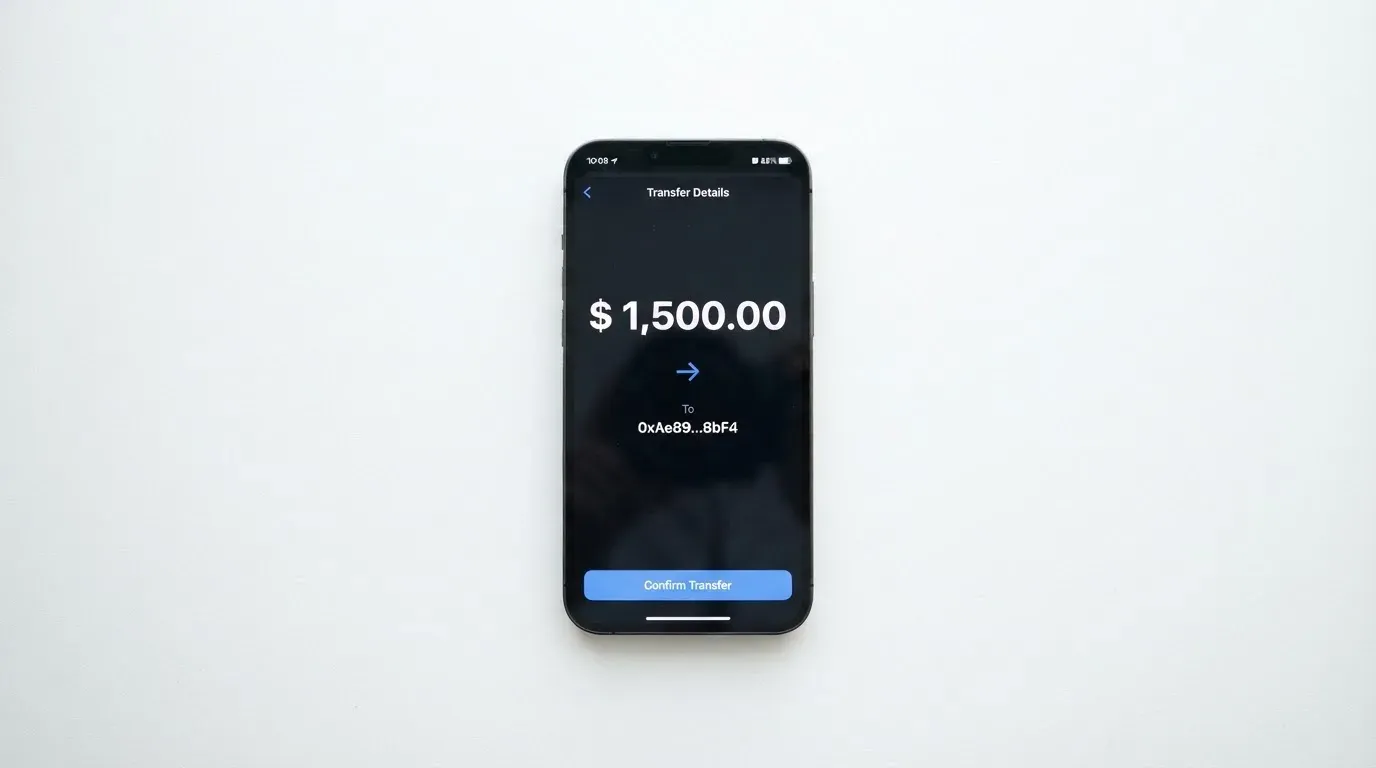
To fill that balance, the documented route is selling bitcoin inside the app. The card pages do not name any other coins or networks you can deposit, so if you were hoping to arrive with USDC on Solana, a USDC balance on Base, or anything else, the public documentation does not promise you that path. What I can tell you about the two routes that do exist: depositing via Apple Pay or Google Pay costs 0.70% on all plans, and purchases not funded from the cash account carry an extra 0.70%.
That minimum top-up is not stated, and neither is who pays the blockchain network fee when you deposit crypto. Those are real gaps, and they are gaps in the card’s documentation rather than in my reading of it.
On the way out, the card pages do not describe withdrawals at all. Trustpilot users mention getting money out by bank transfer via support, but I found no stated fee and no rule about what happens to a leftover balance when you close the account. If part of your plan is to eventually move the balance to your own bank, ask that question before you commit, not after.
Paying with it every day
The physical card is a Visa Classic, and Apple Pay has worked since 30 June 2026, arriving in app version 3.10.0. That is the practical reason to get the plastic at all: for a large share of daily purchases you would use the phone, and the phone holds a tokenised number rather than the card number itself. Google Pay is described as in development and not yet available. Merchant categories blocked for spending are not stated on the pages.
The reward is called Stackback and it is paid in bitcoin once a purchase has fully settled — not at the moment you tap, but afterwards. The base rate without activation is 0.1% on Standard and 0.15% on Plus, with a minimum of one satoshi. With automatic savings switched on — recurring buys and round-ups — the rate can rise, up to 1% on Standard and up to 1.5% on Plus. There is a cap: the boost is limited by what you saved in the previous month, and once you drop below it you fall back to the base rate. From 10 August 2026, round-ups count toward the Stackback tier.
The exclusions are worth knowing before you plan around this. Stackback does not apply to peer-to-peer transactions and top-ups, ATM withdrawals, gambling and cash equivalents, loan repayments, government payments, or some securities purchases. If gambling is part of your spending, this card handles the payment but pays you nothing for it.
The app itself rates well on the French iOS App Store: 4.79 from 11,152 ratings when I read it on 2026-10-21. I did not read the Google Play listing, so I will not characterise it.
If a payment goes wrong, the dispute route is specific and worth memorising before you need it. You can freeze the card instantly in the app. From there, opposition is mandatory by phone on +33 9 69 32 00 61, and you state that the card was issued by BPCE. Then you call +33 9 69 39 03 49 to open a contestation case, which BPCE handles. The window is 13 months from the date the payment settled — a long time, but only if you know the two numbers exist.
What can go wrong
The official record is clean: I found no incidents on the official pages. The problems that do show up come from user reports on Trustpilot, and their character is worth naming because it tells you what to plan around.
The recurring themes are timing and silence. Withdrawal to bank and support delays were reported in July 2026. Identity-verification rejection without explanation was reported in July 2026. Card delivery delays were reported in June 2026, which fits the 10-business-day metropolitan and three-week overseas windows rather than contradicting them. Low limits and no Apple Pay at some merchants appeared in June 2026. Against that, the overall Trustpilot score is 4.3 out of 5 from 1,417 reviews — high, and consistent with complaints that are irritations rather than scandals. Someone in this position should be clear about one thing: I have not used this card, and a review score is a snapshot of other people’s experiences, not a promise about yours.
The structural risks are the ones the category carries regardless of this particular company. Bitstack is custodial: your funds sit in a Bitstack account, not in a wallet you hold the keys to. Every payment needs strong authentication, you can freeze the card instantly, the limits are fixed, and funds are held through regulated payment infrastructure via the Xpollens e-money partner. There is no built-in insurance. That trade is the deal — convenient, and dependent on the provider’s solvency and security for the whole time.
Who you are dealing with, precisely: Bitstack Digital Assets SAS (Aix-en-Provence trade register no. 899 125 090) operates the card program as an agent of Xpollens (an e-money institution authorised by the ACPR). The card is issued by BPCE. Bitstack is AMF-registered as a crypto-asset service provider no. A2025-003. Trustpilot 4.3/5 from 1,417 reviews (read 2026-10-21). Complaints typically concern withdrawal or support delays, identity-verification rejection, and card delivery.
Support runs through a FAQ and help centre, a Telegram community and a contact page. Hours are not stated.
What to take instead
If France is your residence, your alternatives are thin and this card is competitive. If it is not, you need a different comparison entirely. Here is how the three main alternatives I looked at line up against Bitstack, and each scores better than Bitstack’s 5.5 on the same scale — for reasons that mostly have nothing to do with quality.
| Bitstack | International Visa Card | UNi Card | Whop Cards | |
|---|---|---|---|---|
| Score | 5.5 / 10 | 6.7 / 10 | 6.1 / 10 | 5.2 / 10 |
| Who can get it | Residents of France incl. overseas territories | Excludes residents/registrants of a long list incl. Belarus, mainland China, Russia, Turkey, Ukraine, Vietnam and others; not stated | Not stated | 31 US states for consumers, 41 for businesses; several countries unsupported |
| Card | Physical Visa Classic debit | US-issued Platinum Visa, virtual; physical “coming soon” | Multicurrency Mastercard network | Visa, virtual/physical not stated |
| Card cost | EUR 9.99 plus delivery; no monthly fee | $5 one-time virtual issuance, no maintenance; plans Classic free, Pro $9.00/mo, Max $19.00/mo | “No annual fee”; issuance not stated | “No extra fees”; amounts not listed |
| FX | Free to EUR 1,000/mo, then about 1% | Visa rate plus 2% FX fee | “No foreign transaction fee” | Not stated |
| Funding | Euros from cash account; sell bitcoin in app | USDC or USDT into the USD account, free at 1:1; also USD, EUR, SEPA, SWIFT, FedNow | Not stated | Whop balance, backed by stablecoin collateral from a linked wallet |
| Rewards | Stackback in bitcoin, base 0.1–0.15% | No cashback stated | Spend-to-Earn up to 3% | 5% cashback at select merchants, currently Uber |
Two things stand out from that table. The International Visa Card excludes residents and legal registrants of a long list of countries — Belarus, mainland China, North Korea, Cuba, India, Iraq, Iran, Israel, Myanmar, Nepal, Nicaragua, Russia, Syria, Turkey, Ukraine, Venezuela, Vietnam — and FATF grey-list countries are reviewed case by case with compliance approval; purchases are blocked in North Korea, Cuba, Iran, Russia, Syria, Ukraine and Venezuela. Its rule is by residence or registration, not citizenship. UNi Card is the simplest on paper, with no annual fee and no foreign transaction fee, converting at live OTC rates — but it tells you almost nothing about eligibility or how you fund it, and a card whose funding route is unstated is a card I cannot recommend to anyone. Whop Cards is US-state-based with a 5% cashback angle, and it does not state its conversion or FX fees either.
Against those, Bitstack’s genuine strengths are the euro-native pricing, the free first EUR 1,000 of FX, and the fact that it is issued by an actual bank. Its genuine weakness is that it is the only one of the four here that is limited to a single country.
Who I would recommend it to
I would recommend this card to a person living in France, including the overseas territories, who already holds bitcoin and wants to spend euros from the same balance — and who is comfortable with a custodial account and with a product that is still arriving in pieces.
I would not recommend it to anyone outside France, because you cannot have it. I would not recommend it to a frequent traveller who will exceed EUR 1,000 of foreign spending a month, because the FX fee above that line is real. I would not recommend it to someone whose income arrives in a currency other than the euro, because the card spends euros and the conversion route for anything else is not documented. And I would not recommend it to anyone who needs a virtual card today or Google Pay, because neither exists yet.
My honest summary: this is a competently built card with a narrow door. Wait for the virtual card, or wait for the EU waitlist to open, if either is on your timeline.
Frequently asked questions
What is the Bitstack card?
It is a physical Visa Classic debit card that spends the euro cash balance held in your Bitstack account, with no overdraft. You convert or sell crypto inside the app, and the resulting euros are what the card draws on. A virtual card is planned but not yet available.
How does the Bitstack card work?
The card is a debit card against your Bitstack cash account. When you tap, the amount leaves that euro balance at the moment of purchase. If the balance is empty, the payment declines. The card is issued by BPCE, while Bitstack Digital Assets SAS manages the programme as an agent of Xpollens.
Who can get the Bitstack card?
Residents of France, including the overseas territories, and the eligibility test is residence rather than citizenship. The rollout is gradual — the order option appears in the app’s Cash tab once your account qualifies — and other EU countries are on a waitlist on starting data. That is the whole eligibility story as the pages describe it.
Is Bitstack a bank?
No. Bitstack Digital Assets SAS (Aix-en-Provence trade register no. 899 125 090) operates the card program as an agent of Xpollens (an e-money institution authorised by the ACPR). The card is issued by BPCE (Banque Populaire Caisse d’Epargne). Bitstack is AMF-registered as a crypto-asset service provider no. A2025-003.
How much does the Bitstack card cost?
The card is EUR 9.99 plus a variable delivery fee according to the help article, while the pricing page lists EUR 14.97 or 14.98 with delivery included — the pages contradict each other. There is no monthly subscription on the card. Deposits via Apple Pay and Google Pay cost 0.70%, and foreign currency is free up to EUR 1,000 a month.
Is the Bitstack card free?
Not entirely. The card itself carries a one-off charge of EUR 9.99 plus delivery on the help page, and there is no monthly fee. But free does not mean costless: cash machine withdrawals are free only up to EUR 200 or five a month, foreign currency above EUR 1,000 a month costs about 1%, and bitcoin purchases carry 1.5%, 1.25% or 1% on Standard depending on the amount.
Does Bitstack require KYC?
The card’s public pages do not state which documents are required — no proof of address, ID or age requirement is listed. As a regulated European crypto service, Bitstack is subject to customer due diligence covering identity, address, nationality and sanctions screening. A July 2026 user report describes a rejection after slow verification, with no explanation given.
How do I top up the Bitstack card?
The documented route is selling bitcoin in the app, which converts it into euro balance for the card. You can also deposit via Apple Pay or Google Pay at 0.70% on all plans. The card pages do not name other coins or networks, do not state a minimum top-up, and do not say who pays the network fee.
Is the Bitstack card safe?
It is custodial — your funds sit in a Bitstack account rather than a wallet you hold keys to — and there is no built-in insurance. Against that, the card is issued by BPCE, funds run through regulated e-money infrastructure via Xpollens, payments need strong authentication, and you can freeze the card instantly in the app.
Can I use the Bitstack card in my country?
Only if you live in France, including the overseas territories; the card is described as exclusively for French residents, with other EU countries on a waitlist. Once you hold it, the card works wherever Visa is accepted, with international spending capped at EUR 1,000 a month on Standard and EUR 3,000 on Plus, and about 1% charged on foreign currency above EUR 1,000.
App and neobank card reviews – cryptocardcheck
Content created by the «cryptocardcheck» team