
What the Nexo card actually does, and where it trips up
 Available in US
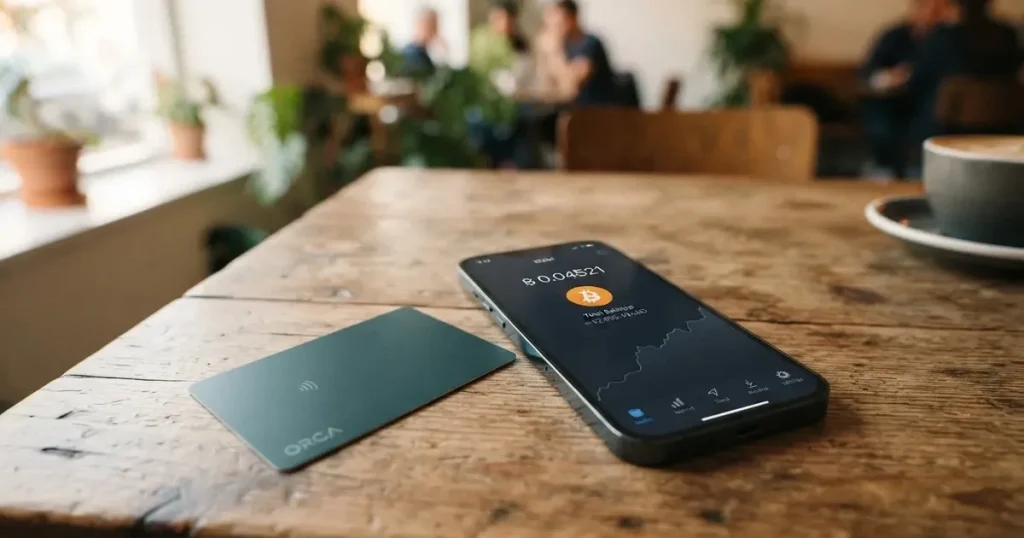
The Nexo card sits in an awkward middle ground between a crypto exchange product and a real payment card. It looks like a Mastercard in your wallet, it works with Apple Pay and Google Pay, and it pays cashback in NEXO tokens or Bitcoin. But it is not a bank card, the eligibility geography is narrow, and the published fee schedule has gaps that the card page itself does not fill. I went through the card’s own pages, the support centre, recent press coverage, and the public Trustpilot to figure out what a cardholder actually gets. Here is what I found, in the order I would want to read it if I were choosing one today.
Conditions are current as of October 28, 2026.
The conditions described in this article are current as of October 2026.
Verdict: 6.3 out of 10
My overall mark for the Nexo card is 6.3 out of 10. The card is solid where it counts in daily use: it is free to issue, it has no monthly or annual fee, it works with mobile wallets, and the cashback on Credit Mode is genuinely attractive for the right tier. It loses marks because the eligibility list is vague, the plastic card is gated behind a $5,000 balance and a Gold loyalty tier, the published fee tables leave several real costs to third-party reporting, and the regulatory picture is in flux after the MiCA transition. The card suits Europeans who already hold a meaningful crypto balance with Nexo and are willing to lock up the loyalty tier. It does not suit someone who wants a transparent fee sheet, someone outside the EEA and the UK, or someone who treats their crypto as a long-term hold they do not want to move onto a card programme.
Below is the criterion-by-criterion scoring, with the reason I gave each mark.
| Criterion | Mark | Why |
|---|---|---|
| Who can get it | 5 / 10 | Card page says “selected European countries, including the EEA and the United Kingdom” with no published list. Unofficial reporting lists about 30 countries and names Bulgaria, Estonia and the United States as restricted. |
| Cost | 7 / 10 | No monthly, annual or inactivity fee; virtual card issuance is free. FX is 0.2% on weekdays inside the EEA, UK and Switzerland and 2% outside; weekends are 0.7% and 2.5%. ATM withdrawals above the free monthly allowance are 2% with a EUR 1.99 / GBP 1.99 minimum. The plastic card needs a $5,000 balance and a Gold tier. |
| Top-up options | 7 / 10 | The card spends directly from a Nexo account holding 100-plus digital assets. Debit Mode works with stablecoins, crypto and Nexo’s FiatX tokens. Supported networks are not stated. |
| Reliability and complaints | 5 / 10 | Card is issued by DiPocket UAB, an e-money institution authorised by the Bank of Lithuania. Trustpilot TrustScore is 4.4 out of 5, but recent reviews cluster around delayed withdrawals, locked accounts, regional restrictions and the $5,000 plastic-card threshold. A 2025 Bulgarian police raid and the MiCA restructuring add regulatory noise. |
| Everyday use | 8 / 10 | Virtual card activates inside the app, plastic is free to order (when you qualify), Apple Pay and Google Pay are both supported, ATM access is included with a free monthly allowance. The plastic-card gate is the one real friction. |
| Total | 6.3 / 10 |
If you are a European with a chunky crypto balance already sitting on Nexo and you want cashback paid in NEXO or BTC, the card earns its place. If you are anyone else, the answer is more likely a different product, and I will get to those at the end.
Who will they give you the card
The official wording on the card page is short. Nexo says the card is available to residents and citizens of “selected European countries, including the EEA and the United Kingdom”. That phrasing is the whole eligibility statement. The page does not name the countries, does not list excluded jurisdictions beyond a generic “not available in certain jurisdictions” line, and does not publish a minimum age. Proof of address requirements are not stated on the card page.
The unofficial picture is more concrete. Third-party reporting (CryptoCardHub, August 2026) lists 30 countries where the card is available: Argentina, Austria, Belgium, Croatia, Cyprus, the Czech Republic, Denmark, Finland, France, Germany, Greece, Hungary, Iceland, Ireland, Italy, Latvia, Liechtenstein, Lithuania, Luxembourg, Malta, the Netherlands, Norway, Poland, Portugal, Romania, Slovakia, Slovenia, Spain, Sweden and the United Kingdom. The same source names Bulgaria, Estonia and the United States as restricted. I am treating this as unofficial, not confirmed by Nexo on the card page, and I would check the in-app sign-up flow before assuming any country is currently served.
Two things are worth flagging from recent news coverage. First, Cointelegraph reported a 2025 police raid on Nexo’s Sofia office in Bulgaria over alleged Russia-sanctions and AML breaches. There is no official Nexo statement I can point you to on the question of Russian cardholders. Second, after the MiCA transition window (which ended on 1 July 2026), Nexo has said it moved EEA custody and trading to licensed partners — Tangany for custody and DLT Finance for trading — and an Aug-Sep 2026 ESMA-register check did not show an entity named Nexo among authorised CASPs. The card itself is still issued by DiPocket UAB, authorised by the Bank of Lithuania, which is a separate licence and a separate question.
What this means in practice: if you are reading this from outside the EEA or the UK, expect the sign-up to fail. If you are inside that footprint, expect the sign-up to ask for a government-issued ID from an eligible country and to be subject to whatever internal risk scoring Nexo applies.
How to get the card
The application is built around identity verification. The card page says you need Identity Verification with a supported ID document issued in the EEA, the UK or another eligible European country. The page does not publish the list of acceptable documents, does not state whether proof of address is required, and does not name the processing time or rejection criteria. There is a single KYC level described, not a tiered system.
The card itself comes in two forms: a virtual card that activates inside the Nexo app, and a physical card that you order from the Card tab. The card page carries a Mastercard trademark notice, which matches third-party reporting that the network is Mastercard, though the network is not stated explicitly on the card page. The issuer named on the page is DiPocket UAB, the Lithuanian e-money institution. Card currency is not stated on the card page, but the published fee allowances are quoted in euros and sterling, which suggests you choose between the two at activation.
A few practical steps you will go through:
- Confirm your country is served by checking the sign-up flow in the app; the website does not gate it.
- Complete Identity Verification with an eligible ID.
- Activate the virtual card inside the app. The card page says you need at least $50 in the Nexo account to do this.
- Order the physical card from the Card tab if you want one. Standard delivery can take up to four weeks, and the card may be delivered to your local post office. There is no additional shipping fee, but ordering the physical card requires a balance above $5,000 in digital assets and a Gold loyalty tier or higher. The card needs to be activated in the app once it arrives.
- Add the card to Apple Pay or Google Pay. Both are supported; blocked merchant categories (such as gambling) are not stated on the card page.
Two things I would test in your own time before relying on the card: first, that the in-app card order path is available to you, because third-party press has flagged contradictory statements on whether physical cards can be ordered in some regions after the MiCA transition; and second, the card currency selection, which is fixed at virtual-card activation and requires you to contact Nexo if you choose the wrong one.
Fees: what it really costs
There is no monthly fee, no annual fee and no inactivity fee. Virtual card issuance is free, provided you have at least $50 in the account. Physical card shipping is free, provided you meet the $5,000 balance and Gold tier gate. The card page is unambiguous on those points.
The fees that do exist are these:
| Fee or limit | Value |
|---|---|
| Monthly fee | None |
| Annual fee | None |
| Inactivity fee | None |
| Virtual card issuance | Free (with at least $50 in the account) |
| Physical card issuance | Free (with more than $5,000 in digital assets and Gold tier or higher) |
| Foreign-transaction fee (EEA / UK / Switzerland, weekday) | 0.2% |
| Foreign-transaction fee (EEA / UK / Switzerland, weekend) | 0.7% |
| Foreign-transaction fee (rest of world, weekday) | 2% |
| Foreign-transaction fee (rest of world, weekend) | 2.5% |
| Crypto conversion fee (Debit Mode swap, unofficial) | 0.75% |
| ATM fee (above free monthly allowance) | 2% (min 1.99 EUR/GBP) |
| ATM free monthly allowance (Base tier) | EUR 200 / GBP 180 |
| ATM free monthly allowance (Silver tier) | EUR 400 / GBP 360 |
| ATM free monthly allowance (Gold tier) | EUR 1,000 / GBP 900 |
| ATM free monthly allowance (Platinum tier) | EUR 2,000 / GBP 1,800 |
| Daily spend limits (unofficial) | EUR 10,000 |
| Monthly spend limits (unofficial) | EUR 60,000 |
A few of those rows deserve to be walked through as everyday payments, because the headline “0.2% FX” hides the way fees stack on a crypto-funded spend.
Buying coffee at home in euros on a weekday from your Debit Mode balance. The merchant gets paid in euros, the card currency is already in euros, and you are spending stablecoin or FiatX like EURx. The 0.2% EEA FX fee does not apply, because there is no foreign-currency leg. Unofficial reporting puts the Debit Mode crypto-to-fiat swap at 0.75%, which would be the only fee on this transaction in practice. You should treat that 0.75% as unofficial until Nexo publishes it; the card page does not name the crypto conversion fee.
Paying a hotel in US dollars from a euro-denominated card on a weekend. Three things stack. There is a 0.7% weekend FX fee, there is a network conversion from your euro balance to dollars at whatever rate the issuer applies, and if you are topping up from crypto there is the unofficial 0.75% Debit Mode swap. Total cost on the FX-related leg alone is 0.7%; on a EUR 1,000 hotel bill that is EUR 7 in fees, before any conversion spread.
Withdrawing EUR 250 from an ATM in Spain on a Base tier weekday. The first EUR 200 is free, the next EUR 50 attracts a 2% fee (EUR 1) with a EUR 1.99 minimum, so you pay EUR 1.99. If you do the same withdrawal on a Gold tier, the first EUR 1,000 is free, so nothing is owed.
The costs table is short on purpose: I copied only what the card page states, plus the official ATM allowances and the unofficial conversion and limit figures clearly labelled. Anything else would be me guessing.
Top up: how the card gets funded
There is no separate “top up” step in the way you would think of one for a prepaid card. The Nexo card spends directly from the Nexo account balance, so what you are really doing is making sure the Nexo account holds the asset you want to spend. The card page says the account supports more than 100 digital assets. In Debit Mode the card can spend stablecoins, other crypto, and Nexo’s own FiatX tokens (EURx, USDx, GBPx). Cashback, when it applies, is paid in NEXO tokens or Bitcoin.

What the card page does not say is just as important as what it does:
- Deposit fees, minimum top-up amounts, and fiat top-up options are not stated.
- The supported networks for crypto deposits are not listed.
- Withdrawal fees and processing times are not stated.
This is the area where the most care is needed. If you send a deposit on a network Nexo does not support, the funds are very likely lost: blockchain transfers are irreversible, and the card page does not promise manual recovery. Before sending anything, check the deposit screen in the app for the address and the network, and send a small test transaction first.
A practical walkthrough looks like this. You hold USDC on a wallet on Ethereum and you want to use the card in Debit Mode. You open the Nexo app, go to the deposit screen, copy the USDC deposit address Nexo gives you, and check which network Nexo expects (Ethereum mainnet, in this example). You send a small test amount, wait for it to credit, then send the rest. Once the USDC sits in your Nexo account, the card can spend it; at the point of sale Nexo converts to fiat, applies whatever Debit Mode conversion fee applies (the unofficial 0.75% figure), and pays the merchant.
If you want a Credit Mode spend with cashback, the account needs to hold more than $5,000 in digital assets, and you need to be at Silver, Gold or Platinum tier. The cashback rates I have are NEXO/BTC: Platinum 2%/0.5%, Gold 1%/0.3%, Silver 0.7%/0.2%, Base 0.5%/0.1%. Those rates can change and may vary by region. The tier itself is set by the share of NEXO tokens in your portfolio, not by fiat balance.
Paying with it every day
Once the card is active, daily use is straightforward. The virtual card works in mobile wallets straight away, and the plastic card works once it arrives and is activated. Apple Pay and Google Pay are both supported. The card page describes instant card freeze, security spending controls and biometric locks as standard features; it does not state whether 2FA is available on the account, and it does not state whether cardholder insurance is included (third-party reporting says no).
The Nexo app on iOS carries a 4.2 out of 5 rating from roughly 2,000 reviews, and the interface is offered in 18 languages including Russian, Ukrainian, Kazakh and Uzbek. I did not read the Google Play rating. The support promise on the card page is “24/7 client care” with a help centre, a contact form and a status page.
A few things I would test in your own time:
- Whether a 3-D Secure step comes up on an unfamiliar online merchant. Mastercard’s brand is Identity Check; if the issuer challenges you, you should be able to confirm in the Nexo app.
- Whether the card declines on US merchants that rely on Address Verification Service (AVS). AVS is mainly a US, Canada and UK system and is generally not available on foreign-issued cards, so a US merchant may decline a Nexo card even when the balance is fine. This is not specific to Nexo; it is how AVS works.
- Whether the merchant category you want to spend in is blocked. The card page does not publish a blocked-list, so gambling and other restricted categories are likely to be discovered by being declined.
If you have $100,000 in assets on Nexo, the card page promises “higher Nexo Card spending limits” without naming them. I would ask support what those limits are before relying on the card for a large purchase.
What can go wrong
I read through the recent Trustpilot reviews, the published news coverage and the card page itself, and the risks cluster into four groups.
Regulatory and licensing flux. The card issuer is DiPocket UAB, authorised by the Bank of Lithuania — that part is stable. The Nexo operating entity’s MiCA status is less clear. A June 2026 Nexo post on social media (not a regulator record) said a MiCA-compliant structure had been set up under German oversight with products unchanged, but independent ESMA-register checks in August and September 2026 did not show an entity named Nexo among authorised CASPs. EEA custody and trading now run through partners Tangany and DLT Finance, and a Bulgarian FSC application was reportedly filed in February 2026 and is still pending. The practical risk is that the card programme could be restructured, and there have already been conflicting public statements about whether the plastic card can be ordered in some regions.
Account and withdrawal friction. Recent Trustpilot reviews (read 20 October 2026; 4.4 out of 5 across 18,805 reviews) flag delayed withdrawals, locked or closed accounts, slow-to-appear deposits and unhelpful support on technical issues. There is also a positive tail, with reviewers praising fast responses. I would read at least the last 50 one- and two-star reviews before committing a large balance, because the recurring themes in those are exactly the ones that hurt.
Restricted geographies and bank funding. The country list is narrow and not officially published, and reviews mention regional restrictions on bank funding and card access even inside the EEA. Bulgarian cardholders are out, and so are Estonians and US residents. If you travel and your residency or citizenship touches a restricted jurisdiction, expect extra friction.
The $5,000 plastic-card gate and cashback threshold. The plastic card needs $5,000 in digital assets and a Gold tier. Cashback on Credit Mode needs the same $5,000 floor. If your balance falls below the threshold, reviews mention a grace period, but the card’s free ATM allowance drops and the cashback does not pay. That is a real haircut if you only sometimes hold the balance.
What I did not find on the card page: 2FA, cardholder insurance, custody-security insurance, dispute resolution process, blocked merchant categories and processing times for KYC. The page also does not name the company that operates the Nexo platform, the registered country or the company’s own MiCA or VASP licences. The card page is not where you go for those answers; the platform’s terms and the regulator’s register are.
What to take instead
A few alternatives to weigh against Nexo, depending on what you want from a crypto card.
Sponge, 4.9 out of 10. A virtual Visa card issued by Rain (a Visa Principal Member), funded from a Sponge wallet with USDC collateral on the Base or Solana chain. The card is described on the Sponge homepage as accepted wherever Visa is accepted. Country list, fees and cashback are not stated on the card page; the platform terms only set a minimum age of 13. Sponge is a niche pick if you want a self-custody-style flow and are happy to live without a published fee schedule.
Xplace, 7.7 out of 10. A Visa card with both Cash mode (spends a stablecoin balance) and Credit mode (borrows against holdings). Virtual is instant; physical Silver ships in 7-14 business days, with Gold and Platinum coming later. Annual fees: Basic free, Silver $99, Gold $249, Platinum $999. “0% FX on Platinum”; FX on other tiers is not stated, and stablecoin spending is described as “no hidden spread”. Cash mode spends on the Solana network from BTC (cbBTC), ETH (wETH), SOL, JitoSOL, USDC, USDT and xStocks. Credit-mode cashback by tier: Basic 0.5%, Silver 1%, Gold 1.5%, Platinum 2%, paid in USDC at settlement. Country list is not published, though Visa acceptance is 160-plus. Xplace is the strongest alternative if you want published tiers, a USDC-denominated cashback and a card you can scale up over time, and you can stomach an annual fee on the paid tiers.
ether.fi, 6.7 out of 10. A Visa card available in a long list of jurisdictions (e.g. Andorra, Argentina, Australia, Austria, Brazil, Canada, Cyprus, the Czech Republic, France, Germany, Hong Kong, Hungary, Italy, Japan, Mexico, Poland, Portugal, Singapore, Spain, Switzerland, the UAE, the UK, and 31 US states; Belgium and Ireland without physical delivery). The first virtual card costs $10 in some regional-pricing countries (Argentina, Angola, Bangladesh, Bolivia, Colombia, Ecuador, Indonesia, Malaysia, Mexico, Nigeria, Peru, the Philippines, South Africa, Thailand); elsewhere Core members normally get one free. FX fee by tier: Core 0.5%, Luxe 0.25%, Pinnacle and VIP 0%; EUR purchases are advertised as 0% FX. Cashback is paid in ETHFI (locked 7 days, then claimable): Core 3% up to $2,000 monthly then 1% to $3,000 then 0.5%; Luxe 3% up to $10,000; Pinnacle 3% up to $50,000; EUR purchases use lower ladders. ATM, cash advances, P2P and gambling MCCs are excluded. ether.fi is the right alternative if you want a transparent published country list, an explicit FX ladder and an ETHFI-denominated cashback, and you do not mind the locked-up rewards week.
Two general rules when reading this list. First, a crypto card is not a bank account: the funds you load it from sit with the issuer or a custodian, not with you, and the card itself depends on a payment-services licence (often an e-money licence) plus a separate crypto-side licence. Second, the headline cashback rate is rarely the rate you actually earn, because of conversion spreads, FX fees, monthly caps, tier requirements and exclusions on certain merchant categories. Read the small print and the unofficial small print.
Who I would recommend it to
I would recommend the Nexo card to an existing Nexo customer in the EEA or the UK who holds more than $5,000 in digital assets, is comfortable holding NEXO tokens to reach Gold or Platinum, and is happy with the risk of a regulated platform in transition. For that person, the card is genuinely useful: it is free, the cashback on Credit Mode is competitive against most of the alternatives, and the mobile-wallet support makes it a real daily-use card rather than a marketing toy. The MiCA transition adds regulatory noise, but DiPocket UAB is still the named issuer, and the card programme is live as of the read date.
I would not recommend it to someone who needs a published country list before signing up, who wants a published daily or monthly spend cap, who lives outside the EEA and the UK, or who treats their crypto as a long-term cold-storage hold they do not want to move onto a programme. For those readers, the alternative section above is the better starting point.
FAQ
What is the Nexo card?
It is a payment card issued by DiPocket UAB under Mastercard, on the Nexo platform, that spends directly from a Nexo account holding more than 100 digital assets. It comes as a virtual card and as a physical card, and it works with Apple Pay and Google Pay.
How does the Nexo card work?
The card is linked to your Nexo account balance. At the point of sale, Nexo converts the asset you are spending (stablecoin, crypto or a FiatX token like EURx, USDx or GBPx in Debit Mode) into fiat and pays the merchant. In Credit Mode, the card borrows against your holdings and pays cashback in NEXO tokens or Bitcoin.
Is Nexo a bank?
No. Nexo is a crypto platform, and the card is issued by DiPocket UAB, a Lithuanian e-money institution authorised by the Bank of Lithuania. The card page does not state that funds on the platform are covered by a deposit guarantee scheme.
Who owns Nexo?
The card page does not name the operating entity, the registered country or the company’s MiCA or VASP licences. Public reporting in 2026 described a MiCA-compliant structure under German oversight, with EEA custody and trading run by partners Tangany and DLT Finance; the card issuer remains DiPocket UAB.
Is the Nexo card available in my country?
The card page says residents and citizens of “selected European countries, including the EEA and the United Kingdom”. Unofficial reporting lists 30 available countries and names Bulgaria, Estonia and the United States as restricted. The only way to confirm is to start the sign-up in the app.
How do I get the Nexo card?
Complete Identity Verification with a government-issued ID from an eligible European country, hold at least $50 in the Nexo account, and activate the virtual card in the app. The physical card is free to order from the Card tab, but requires more than $5,000 in digital assets and a Gold loyalty tier, and can take up to four weeks to arrive.
Does the Nexo card require KYC?
Yes. The card page describes Identity Verification with a supported ID document from an EEA, UK or other eligible European country. The page does not publish the list of acceptable documents, whether proof of address is required, the processing time or the rejection criteria.
How do I top up the Nexo card?
You do not top up the card in the usual sense. The card spends from the Nexo account balance, so you fund the account by depositing crypto or stablecoins. Deposit fees, minimum amounts and supported networks are not stated on the card page, so check the deposit screen in the app before sending anything.
Is the Nexo card free?
Virtual card issuance is free with at least $50 in the account. There is no monthly, annual or inactivity fee. The physical card is free to order and ship, but requires more than $5,000 in digital assets and Gold tier or higher. FX fees, ATM fees above the free monthly allowance, and the unofficial Debit Mode crypto conversion fee are still charged.
Is the Nexo card safe to use?
The card offers instant card freeze, security spending controls and biometric locks, and DiPocket UAB is a regulated e-money issuer. The card page does not state that cardholder insurance is included, and third-party reporting says it is not. The platform carries the usual risks of a custodial crypto product and the regulatory uncertainty of a provider whose MiCA status is in transition.
Credit and cashback card reviews – cryptocardcheck
Content created by the «cryptocardcheck» team