
A USDT-funded virtual Visa with a 3% foreign-purchase fee and an unnamed issuer
 Available in US
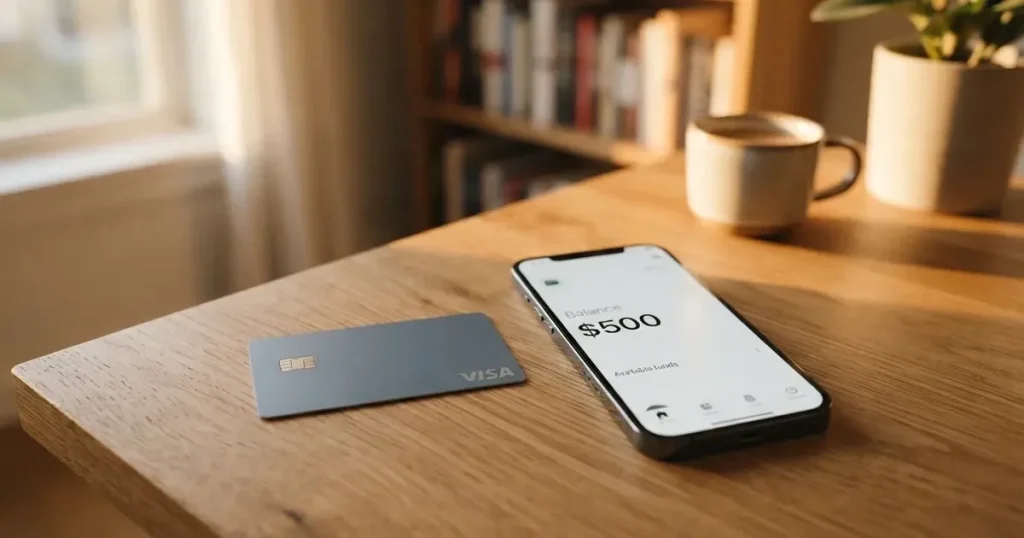
The NoOnes card is a virtual Visa in US dollars that you fund from a USDT wallet inside the NoOnes app. There is no physical card. It is not a bank account, and the company behind it does not name the bank that issues the card. For people who already sit inside the NoOnes ecosystem — most obviously peer-to-peer traders taking USDT payments — that arrangement is coherent and cheap to run. For everyone else, the costs at checkout and the murkiness underneath are hard to overlook.
Conditions are current as of October 28, 2026.
Verdict: 4.9 out of 10
I scored the NoOnes card 4.9 / 10. That is not a polite number and it is not a hostile one either. It is a card that does one job, does it inside an ecosystem most people have never joined, and charges a visible premium for every purchase made outside the United States.
| Criterion | Mark | Why |
|---|---|---|
| Who can get it | 7 / 10 | Any country where NoOnes operates except restricted jurisdictions; card launched in Ivory Coast, Kenya, South Africa |
| Cost | 4 / 10 | Activation 1 USDT; purchases outside the USA 3% + $0.50; top-up 2 USDT under $100 and 1.5% from $100; contactless 0.25% |
| Top-up options | 5 / 10 | Only the NoOnes USDT wallet balance; networks not named |
| Reliability and complaints | 4 / 10 | Issuer not named, licences not named; Trustpilot 2.9/5 across 1,131 reviews, one about a vanished card; custodial wallet |
| Everyday use | 4 / 10 | Virtual Visa USD only; Apple Pay, Google Pay and ATM not disclosed |
| Total | 4.9 / 10 | A specialist tool inside one ecosystem |
The highest mark, 7 out of 10, is for access. Any country where NoOnes operates is eligible apart from restricted jurisdictions, and the country on your account is what counts. That is genuinely open by the standards of this category.
The 5 out of 10 for top-ups is where the picture gets narrower. You cannot load the card from a bank account in the way you would a normal card. You can only load it from USDT sitting in the NoOnes wallet. The homepage also mentions crypto, mobile money and banks, but those routes are not specified with fees or limits, and the blockchain networks are not named anywhere I could read.
Everyday use is the real problem. A virtual card with no Apple Pay, no Google Pay and no ATM coverage on the public pages means every payment is online or in-app. Ask yourself honestly whether that is how you spend. If you tap cards at a supermarket till or take money out while travelling, this is the wrong shape of product.
Who it suits: P2P traders who take USDT into the NoOnes wallet and pay out of it, and anyone who needs a USD-denominated online card for subscriptions, SaaS tools and hosting that will not touch a crypto-looking card. Who it does not suit: anyone whose main money sits in a bank account, anyone who pays mostly in physical shops, and anyone who wants to know the name and licence of the institution holding their money — because the card’s own pages do not tell them.
Will they give you the card?
Yes, in most countries — eligibility follows the country on your NoOnes account, not your citizenship, and a defined list is excluded.
The rule as the card states it: any country where NoOnes operates, except restricted jurisdictions, with the account country deciding. Russia and Belarus are both on the unavailable list, along with Afghanistan, Cuba, Iran, Iraq, North Korea, Syria, Venezuela and others. Ukraine is restricted only for Crimea, Donetsk and Luhansk.
That distinction between country of account and citizenship matters more than it sounds. The card sets its rule by account country, so a citizen of an excluded country living elsewhere is not what the rule is written about — and a citizen of an allowed country with an account in an excluded country is squarely caught. If your country is anywhere near that list, do not apply and hope; the answer is fixed before you start.
Launch coverage gives a hint of the intended audience. The 31 May 2024 launch press release named Ivory Coast, Kenya and South Africa as the starting markets. Since then the service has widened to “any country where NoOnes operates”, which is a broad promise made in the absence of a list I could verify.
One thing the card does not say: no age requirement is stated. Every provider in this category normally prints one. Its absence is worth an email to support before you invest an afternoon in an application that ends in a refusal.
How to get it
The application is short, and the card itself appears almost immediately — but it is virtual only.
What you need:
- A verified email address and phone number
- ID verification at level 2
- Your explicit consent to share that ID with the card issuer
- Address verification, but only if you want to top up more than $500 in total or spend up to $50,000
The sequence is: create the account, verify your ID, deposit to the card. That is the whole flow, and it is a short one.
Then the card. It is a virtual Visa denominated in US dollars, and no physical card is offered. The card’s own pages say it is ready in under 5 minutes. If you were imagining a plastic card arriving in the post, that is not this product.
Verification runs in stages rather than one gate. Email and phone come first, then identity documents at level 2, then address verification for the higher top-up and spending thresholds. Two things the card leaves unstated: how long each stage takes, and what would make a check fail. Nobody publishes a rejection-reason list, so treat the timing as unknown rather than fast.
Also worth knowing at this stage: at sign-up, blocked e-mail domains are refused. That is the only category restriction the card discloses anywhere.
Fees: what it really costs
The headline fee is the one that should decide this for you. Every purchase made outside the United States costs 3% plus $0.50, and that percentage-plus-fixed structure is set by the issuing bank, not by NoOnes.
| Fee or limit | Value |
|---|---|
| Card activation | 1 USDT |
| Monthly fee | None listed |
| Purchase outside the USA | 3% + $0.50 per transaction, set by the issuing bank |
| Contactless payment | 0.25% |
| Failed payment | 0.75 USDT on the 2nd and 3rd attempts |
| Conversion fee | Not listed |
| ATM | Not stated |
| Spending limit | Up to $50,000, with address verification |
| Card creation | $3 minimum, $500 maximum |
| Minimum balance | $1 to keep the card active |
| Cards at once | Up to 3 active |
Let me walk through three ordinary payments, because the fee structure punishes different kinds of spending in different ways.
A $20 SaaS subscription. This is the card’s best case. You pay $20 plus 3% plus $0.50, so roughly $21.10. Against a bank card there is no foreign transaction fee to compare against — the card’s whole reason to exist is that most bank cards either refuse crypto-flavored issuers or add their own markup. If you pay for hosting, design software or an ad platform every month, $1.10 a month is survivable.
A $40 restaurant bill paid on a phone in Europe. Same 3% plus $0.50: $42.00 in total. Then ask whether the restaurant accepts virtual cards read through a phone wallet at all, because Apple Pay and Google Pay support is not disclosed. If you can only type the card into a payment link, some venues will decline. This is where the everyday-use mark of 4 out of 10 comes from.
Small, frequent purchases are the least efficient way to use the card. The fixed 50-cent fee means that for small items, the proportional cost is much higher than the 3% base rate. The fixed 50-cent component is what hurts — the smaller the purchase, the larger the proportional bite. Tap-to-pay in person would also carry the 0.25% contactless fee on top.
Two limits will shape your planning. Card creation runs from $3 to $500, so you are not opening a $5,000 card in one go. And the balance must stay at $1 or the card goes inactive — a small trap for anyone who spends down to near zero and forgets.
There is no monthly fee listed, and there is a single tier: one virtual Visa in USD. Multi-currency balances are not stated. If you are used to holding several currencies in one account, that option is not described here.
How to Top up the card
Top-up happens one way only: from USDT held in the NoOnes wallet. You buy USDT on the NoOnes Marketplace, convert other crypto, or deposit USDT you already hold.
Three routes, one wallet:
- Buy USDT on the NoOnes Marketplace inside the app
- Convert another crypto you hold into USDT
- Deposit USDT from elsewhere into the NoOnes wallet
The homepage additionally mentions crypto, mobile money and banks as ways to fund through fiat rails, but no fees are stated for those paths. The blockchain networks are not named either, which is not a small omission. Transfers on the wrong network can be lost or need manual recovery with no guarantee, so “deposit USDT” without a named network is a question you should get answered before you send anything of value.
Top-up pricing is a two-step fee: 2 USDT for amounts under $100, and 1.5% with a 2 USDT minimum once you are at $100 or above. It is paid in USDT.
The alternative in that schedule is worth a moment. Under $100 you pay a flat 2 USDT, which on a $50 top-up is 4% — the same territory as the foreign-purchase fee, applied on the way in rather than the way out. From $100 up, the 1.5% is the better deal and stays there. Frequent small loads are the expensive habit.
Getting money back out is cheaper. Card withdrawals are free and credited to the Tether wallet as USDT, and you can withdraw the balance minus $1. There are two timing gates to plan around: withdrawals and account termination are blocked for 72 hours after your last card activity, and a “Terminate” option appears once the balance falls below $2, with the remainder going to the Tether wallet. A card is also auto-terminated after three failed payment attempts — which lines up with the 0.75 USDT charged on the second and third tries.
Paying with it every day
Daily use is where this card narrows most, and the reasons are absences rather than failures.
- No physical card — virtual only
- Apple Pay and Google Pay support is not stated
- ATM withdrawals and fees are not stated
- Blocked merchant categories are not stated, beyond blocked e-mail domains at sign-up
- Cashback or rewards are not stated
- Dispute handling for card payments is not stated
Apps exist for both Android and iOS. I did not read store ratings, so treat the app’s reputation as unknown rather than good or bad.
The blocked-merchant silence deserves more weight than it first appears. Cards in this category often carry policy blocks on gambling (MCC 7995) and similar categories, imposed by policy rather than law, with the list differing between issuers. If gambling or adult content matters to you at all, do not assume it works.
The dispute silence is the one that could cost you real money. When a card payment goes wrong, the normal remedy is a chargeback — a refund ordered by the issuer against a reason code such as fraud, duplicate billing or goods not received. Nothing in the card’s public pages tells you how NoOnes handles a disputed card payment. That is not evidence they refuse charges; it is evidence you will be finding out at the worst possible moment.
There is a category-wide reason some payments simply fail, worth knowing so you do not blame the card. Address verification compares the numeric parts of the billing address with issuer records, and it is generally unavailable for foreign-issued cards. Merchants can also look up the issuer’s identification number and apply extra scrutiny when the issuer country differs from the billing address. A USD Visa issued outside the US can look foreign to a shop elsewhere, and some merchants decline prepaid or foreign-issued cards on that basis.
What can go wrong
The sharpest risk here is structural, not a bad review. Your money sits with NoOnes in a custodial wallet, and the card’s own pages name neither the issuing bank nor any licence.
Start with custody. NoOnes holds the funds, which means you hold no key. A seed phrase is the unencrypted form of a private key, and anyone who obtains it can restore the wallet and spend the balance — but with a custodial wallet you have trusted the provider with that control instead. The category has a documented history here: Mt. Gox with roughly US$350 million reported stolen in 2011–2014, Coincheck at about US$400 million in 2018, and Ronin Network at US$625 million in 2022. Blockchain transfers are typically irreversible, and a stolen key has no built-in recovery because the network cannot freeze or return funds. NoOnes describes its security as “advanced encryption and fraud detection on every payment”; freeze controls and spending controls are not stated.
Then the entity behind it. NoOnes is described in press coverage as Nigerian-founded. The issuing institution is described only as “our virtual card provider” — not named — and no licences are named. That is a gap you should weigh heavily, because a card that says nothing about who issues it gives you nothing to check against a regulator’s register.
The reviews add texture. Trustpilot shows 2.9 out of 5 from 1,131 reviews. Recurring themes are peer-to-peer disputes closed without explanation (August 2026), gift-card trade failures (April to August 2026), and slow or unanswered support (July to September 2026). On the card itself, one review reports the virtual card simply disappearing, and NoOnes replied that technical issues affecting access to the Virtual Visa Card had been resolved. Only one review in that set mentions the Visa card at all — which tells you the card is a side feature of a peer-to-peer crypto platform, not the product people review.
Support itself is offered 24/7 through a help centre and a contact form; languages are not stated. Given the complaint themes, the 24/7 claim and the slow-support reviews sit uncomfortably together.
A related structural risk to keep in view: even licensed card programmes can end. WaveCrest, a Visa issuer that supplied several crypto card brands, was suspended by Visa in Europe in 2018 and all its Visa programmes closed. Programme closures typically run as a notice period, then spending and loading stop, then users are asked to withdraw remaining balances. That is why the free withdrawal and the 72-hour gate both matter.
What to take instead
Three alternatives came up in this review. None is a clean substitute — but they fail in different places, and comparing them is the fastest way to see which trade-off suits you.
| Card | Score | What differs |
|---|---|---|
| NoOnes | 4.9 / 10 | Virtual Visa USD, USDT wallet funding, 3% + $0.50 outside the USA |
| Young Card | 5.7 / 10 | Cashback in YNG tokens by Club tier: Essential 0.1%, Gold 1.8%, Platinum 3.6% (Bronze and Silver not stated); eligibility, card format, fees and funding not stated officially |
| MSX | 6.4 / 10 | Eligibility, card format, cost, fees, funding and rewards all not stated |
| Bybit Card | 6.0 / 10 | Virtual and physical cards in listed regions; published fee and rewards schedules |
Be careful with the middle two. Young Card and MSX scored above NoOnes on my scale, but a large part of that gap is absence: their eligibility rules, card formats, fees and funding routes are not stated on official pages I could read. A card that publishes nothing is not a better card; it is a less documented one. Young Card does have one concrete advantage — token cashback tiered by Club level, from 0.1% Essential up to 3.6% Platinum — though that is paid in a platform token, not cash.
Bybit Card is the only alternative here with a published, itemised schedule, and it is worth reading as a benchmark.
On cost. Virtual card issuance is free in all Bybit regions until further notice, and the cards page states “no annual fees”. Physical issuance and replacement run 29.99 USD in Australia, 5 USD/USDT in Argentina and Asia Pacific, 29.99 USDT in Georgia and in Kazakhstan’s AIFC, and nothing in Brazil or Mexico; VIPs holding a physical card in Australia, Kazakhstan, Georgia or Asia Pacific pay no issuance or replacement fee.
On spending fees. Crypto conversion is 0.9% over the One-Click Sell rate in Australia, Asia Pacific, Georgia, Kazakhstan, Brazil and Mexico, and 0.5% in Argentina; Peru is not supported for this. FX fees are 2% on top of the network rate in Australia, Asia Pacific, Georgia and Mexico, 2% in Kazakhstan’s AIFC even on USD purchases outside Kazakhstan, 7% in Argentina, 1.5% in Brazil and 1% in Peru. Argentina adds VAT of 21% on foreign digital services, a 30% tax on foreign transactions, and provincial gross-income tax of 1%–13.2%. Put simply: Bybit’s worst FX figure beats NoOnes’s headline 3% + $0.50, and its best is far better.
On regions. Bybit’s card regions are Argentina, AIFC (Kazakhstan), Georgia, Kazakhstan, Australia, Mexico, Brazil, Peru and Asia Pacific, with the application asking for country of residence and registering interest where the country is unsupported. Its cards page states the product is not meant for European Economic Area customers and that all EEA participation is strictly prohibited. Bybit’s restricted list for its fiat services covers Belarus, the Russian Federation, Serbia, China and the United States, and Russian users can make only RUB transactions in fiat. Note the distinction: there is no card-specific statement on Russian or Belarusian citizens and no citizenship-versus-residence rule was found, and the card currency depends on the country of your Advanced Identity Verification. So the NoOnes answer — account country decides, Russia and Belarus excluded — is actually clearer on this point.
On rewards. From 5 October 2026 at 10:00 UTC, only crypto-funded transactions earn points or cashback; fiat-funded spending does not. Tiers run from Base at 2.00% with a 5 USD monthly cap and no spend requirement, through Beta 2%, Alpha 4%, Apex 6%, Omega 8%, to Infinite at 10% with a 600 USD monthly cap and 25,000 USD monthly spend to unlock. Cashback equals points × 0.002 in USDT, points stay pending four calendar days, and Auto Cashback must be on.
The verdict on alternatives: if you need a card that publishes its issuer, its fees and its regions, Bybit is the more legible option, at the price of excluding the EEA and locking rewards to crypto-funded spending. If you need a USDT wallet ecosystem and USD online payments specifically, NoOnes is usable and you already know its cost — 3% plus $0.50 on every non-US purchase.
Who I would recommend it to
I would recommend the NoOnes card to peer-to-peer traders already holding USDT in the NoOnes wallet, who take payments into that wallet and pay out from it. The free withdrawal, the USD balance and the 1.5% top-up above $100 all work in that loop, and the 3% + $0.50 purchase fee only stings on spending you would have made in the US anyway.
I would recommend it second to anyone paying US-dollar online subscriptions and software bills — hosting, SaaS, ad platforms — where a virtual card is genuinely the right shape and the extra ~$1 a month is a rounding error against the cost of a declined payment.
I would not recommend it for everyday physical spending, for anyone whose money sits in a bank account rather than in USDT, or for anyone who needs to know the licence and issuer behind their funds before they load them. Three named things are absent from the card’s public pages — the issuer, the licences and the blockchain networks for deposits — and each of those absences is a decision you have to make alone.
One closing thought on the category, since it changes how any of these should be read. Visa and Mastercard do not issue crypto cards to consumers themselves; they license issuers and can suspend a programme. Visa said in November 2022 that it had “terminated our global agreements with FTX”, and the FTX US debit card programme was wound down by its issuer. In Europe, MiCA covers the crypto side while a card is regulated separately as a payment service, so a crypto card often depends on two licences. And note what the rules do not protect: e-money institutions must safeguard customer funds, but those funds are not bank deposits and are not covered by a deposit guarantee scheme.
So check the register before you load. ESMA keeps an interim register of authorised crypto-asset service providers, white papers and non-compliant entities — a provider’s absence from it is not proof of wrongdoing, but it is not a reassurance either.
Frequently asked questions
What is the NoOnes card?
It is a virtual Visa card denominated in US dollars that you spend from a USDT balance held in the NoOnes app. There is no physical card. You buy or convert USDT inside the platform, load the card, and pay online. The card’s own pages say it is ready in under five minutes.
Is NoOnes a bank?
No — and the card is careful not to claim otherwise. Press coverage describes NoOnes as Nigerian-founded, and the issuing institution is described only as “our virtual card provider”, with no name and no licence given on the pages I could read. NoOnes is a platform that fronts a card programme.
Who can get the NoOnes card?
Any country where NoOnes operates, apart from restricted jurisdictions, and the country on your account is what decides. Russia and Belarus are both excluded, as are Afghanistan, Cuba, Iran, Iraq, North Korea, Syria and Venezuela. Ukraine is restricted only for Crimea, Donetsk and Luhansk. No age requirement is stated.
How much does the NoOnes card cost?
Activation is 1 USDT and no monthly fee is listed. Every purchase outside the United States costs 3% plus $0.50, set by the issuing bank, and contactless payments add 0.25%. Failed payments cost 0.75 USDT on the second and third attempts. Keep a $1 minimum balance or the card goes inactive.
How do I top up the NoOnes card?
Only from the NoOnes USDT wallet balance — by buying USDT on the Marketplace, converting another crypto, or depositing USDT you already hold. Top-ups cost 2 USDT under $100, and 1.5% from $100 with a 2 USDT minimum. The blockchain networks are not named on the card’s public pages.
Can I add the NoOnes card to Apple Pay?
I cannot tell you that you can, because the card does not say. Apple Pay and Google Pay support is not stated anywhere in its public pages, and with no physical card either, there may be no way to add it. Ask support directly before relying on tap-to-pay — this is the biggest gap for anyone paying in physical shops.
Where can I use the NoOnes card?
Anywhere a virtual Visa is accepted online, which means internet shops, subscriptions and software services. Physical shops may decline virtual cards, and some merchants apply extra scrutiny to prepaid or foreign-issued cards. Blocked merchant categories are not stated, and gambling is commonly blocked on cards like this.
Is the NoOnes card safe to use?
It is custodial: your funds sit in the NoOnes wallet and the company holds the key material, so you rely on them entirely. NoOnes cites encryption and fraud detection on every payment, but freeze and spending controls are not stated, and no chargeback process for card payments is described. Free withdrawal exists, with a 72-hour block after your last card activity.
How do I withdraw money from NoOnes?
Card withdrawals are free and arrive in your Tether wallet as USDT, and you can withdraw your balance minus $1. Withdrawals are blocked for 72 hours after your last card activity. Once the balance drops below $2 a Terminate option appears and the remainder goes to your Tether wallet — so do not leave money sitting idle in the card.
Is the NoOnes card worth it?
Worth it if you already hold USDT in the NoOnes wallet and pay US-dollar online bills — the maths works. Not worth it for everyday physical spending: 3% plus $0.50 fees add up quickly on small, frequent transactions, and there is no ATM, no Apple Pay and no Google Pay on the record. For anyone whose funds sit in a bank account, the first step is converting to USDT, which changes the calculation entirely.
Exchange card reviews – cryptocardcheck
Content created by the «cryptocardcheck» team