
Oobit card reviewed: a Visa you fund straight from your own wallet, if your country and your crypto are both on its list
 Available in US
The Oobit card is one of the few crypto payment cards that does not require you to hand your coins to a custodian before you can spend them. You connect a self-custody wallet like MetaMask, Phantom, or Trust Wallet, and the card pulls from that wallet at the moment of payment. It is a virtual Visa, you can add it to Apple Pay and Google Wallet, and the cost structure is simple: 1% on card purchases, 2.5% at ATMs, and a 0.95% swap fee when you move between tokens. The catch is that the card issuer is not named in the public materials, the support team is slow according to user reviews, and the country list, while wide at 75+ entries, omits some places crypto users tend to live (Russia and Belarus are explicitly blocked, the UAE and Turkey are not listed). The score I land on is 6.8 out of 10, and the reader who gets the most out of Oobit is someone who already keeps their crypto in their own wallet and wants a card that respects that.
The conditions described below are current as of October 28, 2026.
Verdict
Oobit earns 6.8 out of 10. That score reflects a product that does something genuinely useful, paying from a self-custody wallet at the point of sale, while still carrying the rough edges of a young company: no named card issuer, support that does not always respond, and a fee structure that is mostly fine until you start converting between currencies.
| Criterion | Mark | Why it lands here |
|---|---|---|
| Who can get it | 7 / 10 | 75+ countries across Europe (43), Asia and the Middle East (10), the Americas (17), Africa (3), and Oceania (2). Russia and Belarus are explicitly out. |
| Cost | 7 / 10 | No issuance or monthly fee. Card purchases 1% (minimum $0.25), ATM 2.5% (minimum $0.25), swaps 0.95%. |
| Top-up options | 7 / 10 | USDT, Bitcoin, Ethereum and other stablecoins, connected through MetaMask, Phantom, Trust Wallet or Base. Networks are not named. |
| Reliability and complaints | 5 / 10 | Issuer is not publicly identified. Trustpilot 3.8 out of 5 from 495 reviews, with held funds, card blocks and slow support the recurring themes. |
| Everyday use | 8 / 10 | Virtual Visa, Apple Pay and Google Wallet, ATM up to $250 per withdrawal. Physical card details are not stated. |
| Total | 6.8 / 10 |
If you already self-custody and want a card that does not ask you to deposit first, Oobit is one of the cleaner options on the market. If you need a physical card in your hand, named regulatory licences on the website, or responsive support when something goes wrong, you should look elsewhere.
Who Can Get the Oobit Card
Oobit advertises availability in 75+ countries, and the support site’s country list breaks the coverage down by region: 43 in Europe (including the UK, Germany and Spain), 10 across Asia and the Middle East, 17 in the Americas, 3 in Africa (Kenya, South Africa, Tanzania) and 2 in Oceania. The US is supported following a December 2025 launch through a partnership with Bakkt Financial Solutions I, LLC, and the product is reportedly live in all 50 states, though that detail comes from a secondary report rather than Oobit’s own pages.
The omissions matter as much as the inclusions. Russia and Belarus are on the “Not supported in” list. Turkey, the United Arab Emirates, Armenia, Georgia, Serbia, Kazakhstan and Kyrgyzstan do not appear on the published country list (a third-party breakdown counts 75 entries in total). The published coverage, in other words, is wide on a map and uneven in the places where crypto adoption is highest.
You need to be 18 or older, the standard age threshold for prepaid and debit cards. The company behind Oobit, Oobit Technologies, describes itself as operating through multiple entities globally and does not name a single card issuer in its public materials. In the US, crypto services are provided “in partnership with Bakkt Financial Solutions I, LLC”, and elsewhere the company refers to “licensed partners depending on your location” without naming them. For an EU user, that means the underlying issuer is a licensed bank or electronic money institution somewhere in the bloc, but you have to dig into the terms or ask support to find out which one. That opacity is part of why the reliability score sits where it does.
How to Get the Oobit Card
Oobit is an app, available on iOS and Android, and the card is requested inside it. The on-site app store ratings are high: 4.8 on the App Store from over 22,000 ratings and 4.7 to 4.8 on Google Play from over 25,000, though the US App Store listing I checked on 20 October 2026 showed 4.5 from 134 ratings, iPhone only, requiring iOS 15.4 or later.
The signup flow is straightforward. You download the app, create an account, and go through identity verification. The verification process is mandatory: a passport or driver’s licence, sometimes backed by proof of address. Most accounts are verified in minutes; some take up to 24 hours. Rejections happen for expired, unclear or mismatched documents, and the app lets you resubmit. For first-time bank transfers, Oobit also asks for a one-time proof of address before paying out.
Once you are verified, you request the card in the app. The card starts in “Pending” status and moves to “Active” once approved. There is no separate activation step. You can add it to Apple Pay, Google Wallet, or a compatible smartwatch right away. The card is described as a Visa Platinum, with transactions running over the Visa network and settling in local currency at the merchant. A physical card is not described in the public materials; the card you get is a virtual Visa, and the app lets you request a new one if your existing card goes unused for 90 days.
A note for people in the United States: Oobit launched there in December 2025 via a partnership with Bakkt, and secondary reporting says all 50 states are covered, but I did not see Oobit’s own pages confirm that line. Treat state-by-state availability as worth checking on the support site before you sign up.
What the Oobit Card Really Costs
The cost section of the Oobit card is unusually tidy. There is no issuance fee and no monthly maintenance fee. Account creation, card issuance and holding are all listed as free.
| Fee or limit | Amount |
|---|---|
| Card issuance | Free |
| Monthly / annual fee | None |
| Card purchase (point of sale) | 1% (minimum $0.25) |
| ATM withdrawal | 2.5% (minimum $0.25), plus any ATM operator fee |
| Swap (crypto-to-crypto) | 0.95% |
| Swap involving OOB token | 3% |
| Card purchase range | $1 to $2,000 per purchase |
| 24-hour card spend cap | Up to $25,000 rolling (FAQ says up to $10,000 per day; the two official pages differ) |
| ATM withdrawal cap | $250 per withdrawal, including operator charges, 3 attempts per 24 hours |
| Swap range | $5 to $10,000 |
| Brazil purchase fee | 1% without minimum, plus IOF and FX charges |
The 1% purchase fee is competitive with the category. MetaMask’s card charges a “minimal fee” that the published pages do not quantify. KAST charges 0% in USD but adds a 0.5% to 1.75% FX fee on non-USD transactions. TokenPocket charges 1% on crypto deposits, with a promise of refunds through rewards later. Oobit is in the middle of the pack on the headline fee and clearer about it than most.
Three everyday scenarios show what those numbers mean at the till.
Buying a coffee for $5 in your home currency. The merchant receives local currency via Visa. Oobit charges the 1% purchase fee with a $0.25 minimum, so the bill is $5.25. That is a 5% effective cost on a small purchase, which is why the minimum exists. The fee hurts small transactions.
Buying a $300 train ticket abroad. The merchant receives the local currency; Oobit charges 1% on the conversion, so $3.00. There is no separate FX line item in the published fee schedule, but if you are paying in a currency that is not your card’s home currency, the network conversion rate applies. One Trustpilot reviewer claimed about 7% on non-USD payments in August 2026, which is a much higher figure than the 1% headline. I could not confirm that number against Oobit’s own materials, and the company does not publish an explicit FX rate or markup. Treat non-USD spending as the place to watch your statement carefully.
Withdrawing $200 from an ATM in a foreign country. Oobit charges 2.5% with a $0.25 minimum, which is $5.00. The ATM operator may add its own fee, often $3 to $5 abroad. The 24-hour cap is $250 per withdrawal, with three attempts, so you cannot empty a large balance in one go.
The reward side partially offsets the fees. Oobit runs a five-level cashback programme tied to a 90-day spending cycle: Level 1 at 0 USD gives 1x points, L2 at $250 gives 2x, L3 at $500 gives 3x, L4 at $1,000 gives 4x and L5 at $1,500 gives 5x. 1,000 points equal 1 USD. The stablecoin cashback rate is 5% on eligible payments up to $200 of spend, or 10% with OOB tokens on spend up to $5,000. The headline on the marketing page is “10% Cashback Anywhere”, but the caps and eligible categories are narrower in the FAQ. Check the eligible categories in the app before you assume the headline number applies to your usual spending.
How to Top Up the Oobit Card
Top-up is the part of Oobit that is genuinely different from most crypto cards. There is no preloading required in the standard sense. The card can pay directly from a connected self-custody wallet through a product called DePay, with the crypto staying in your wallet until you authorise a payment, or from a balance held inside Oobit. The Oobit balance is the route you use when you want to fund the card the way you would fund any prepaid card.
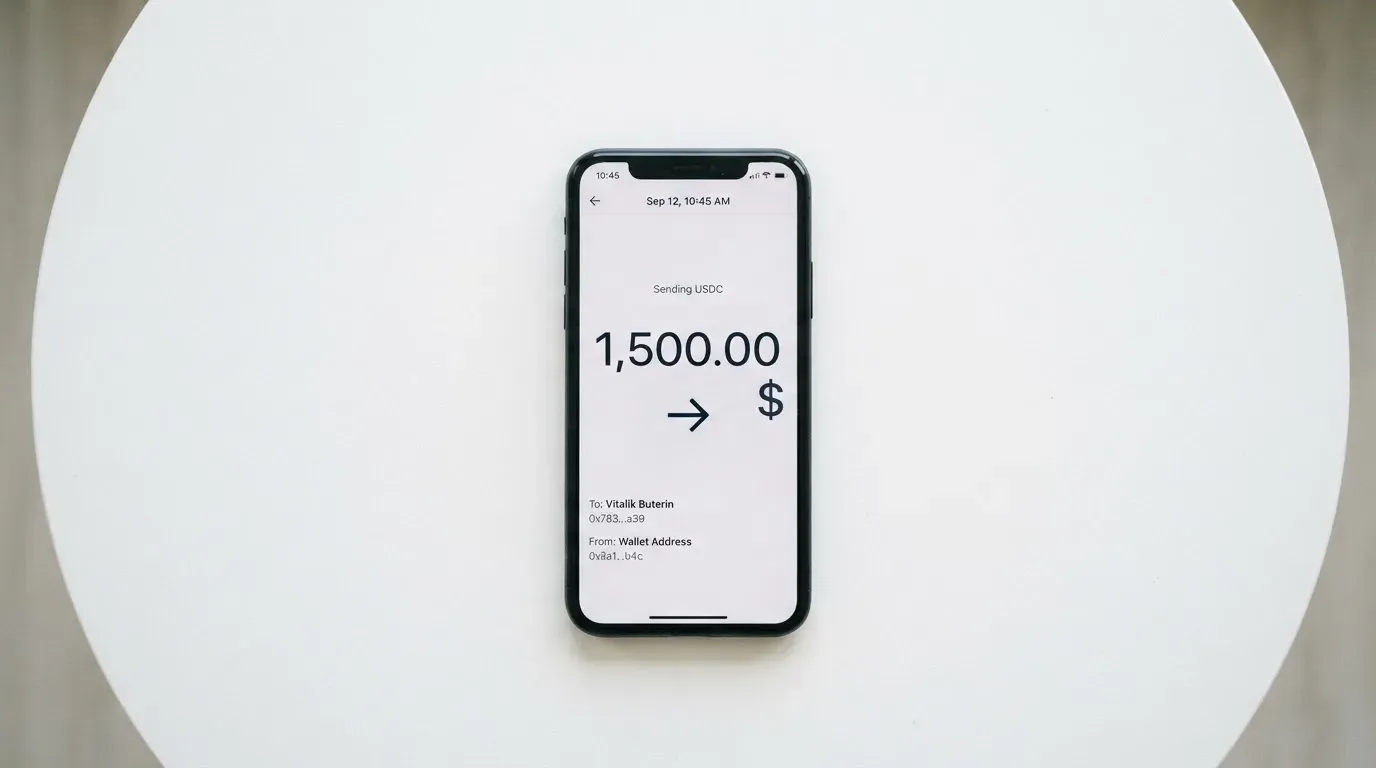
The supported assets include USDT, Bitcoin, Ethereum and other stablecoins. The wallet connections listed in the public materials are MetaMask, Phantom, Trust Wallet and Base. The networks on which those tokens arrive are not named on the cards-and-payments page; you see them in the app at the point of transfer. That is a meaningful gap. Sending USDT on the wrong network, for example ERC-20 versus TRC-20 versus Polygon, is one of the most common ways people lose crypto into a card product, and the public page makes you work to find the right network.
The limits and fees for moving money in and out are:
- Crypto deposit minimum: $0.10
- Buy-crypto limits: set by Transak at checkout, not by Oobit
- Crypto withdrawal: $1 to $50,000 per withdrawal ($5 minimum for US residents), with a per-asset daily limit whose amount is not stated publicly
- Network fee on withdrawal: shown in the app before you confirm
- Bank transfer out: up to $50,000 per transfer, minimum €10 / £10 / $10, fee not specified
- Failed bank transfers: auto-refunded to the balance
The fiat top-up fee is not stated. The swap fee between assets inside the app is 0.95% (3% when the destination token is OOB). The bank-transfer fee is the one piece of the cost picture that is genuinely opaque, so if you intend to cash out a balance, ask support what your corridor costs before you commit.
A practical tip: do the first top-up with a small amount. Send the minimum, see it land, check the network fee you actually paid against the fee the app quoted, and only then send a larger amount. This is the cheapest insurance you can buy in crypto.
Paying With the Oobit Card Every Day
The card is a virtual Visa, and the public materials call it a Visa Platinum. Visa routes the authorisation, the merchant’s bank settles with the issuer in local currency, and your crypto or stablecoin balance is converted at the moment of payment. Because the card sits in Apple Pay and Google Wallet, you can pay contactless in stores, in apps, and on the web without ever taking a physical card out of your pocket. Smartwatch support is mentioned in the official materials.
Oobit does not publish a list of blocked merchant categories in the help center, which is one of the things you usually check before signing up. Standard category restrictions on crypto cards include gambling (MCC 7995) and a few high-risk verticals, but Oobit’s own list, if it exists, is not on the public pages. If you regularly spend in a category that other issuers block, the only way to know is to test it with a small transaction or to ask support.
Two things about the everyday experience are worth highlighting.
First, the rewards are real but capped. The cashback headline is “10% Cashback Anywhere”, and the FAQ specifies 5x Rewards points on card purchases from Level 1. The points convert at 1,000 points = 1 USD, with rewards growing from 1x points at Level 1 up to 5x at Level 5. The 5% stablecoin cashback (capped at $200 of spend) and 10% with OOB tokens (capped at $5,000) are the higher figures, and the eligible categories in the fine print are narrower than the marketing line suggests. The payout asset and the eligibility rules are not stated in the help center, so check them in the app before you plan a budget around the rewards.
Second, when a payment fails, the failure mode is gentle. The help center describes declined payments as recoverable: check the in-app notification, then retry. The edge case worth knowing is the merchant who charges more than the amount you first approved. If a hotel or car rental preauthorises $300 and then settles at $340, the extra $40 can leave a negative balance on the card and pause it. That is a property of prepaid-style cards in general, not an Oobit quirk, but it is the kind of detail you only learn when it happens. There is no formal card dispute process described in the help center, so for any non-trivial problem, you go through in-app support or the email address given in developer replies on the App Store, [email protected].
The app itself is the front door for everything: locking the card, requesting a new one, viewing transactions, contacting support. You can lock the card in the app if you lose your phone. Oobit claims “bank-grade encryption” and real-time blockchain monitoring, and the help center says 2FA is available, but the public materials do not state whether funds are insured or safeguarded, which is one of the standard questions to ask a regulated card provider.
What Can Go Wrong With the Oobit Card
The risk picture for Oobit has three layers: the company, the user experience, and the underlying crypto.
The company. Oobit Technologies operates through multiple entities globally, and the card issuer is not named in the public pages. In the US, crypto services run through a partnership with Bakkt Financial Solutions I, LLC; elsewhere, Oobit says it works with “licensed partners depending on your location”. Two of the public pages give different merchant counts, 175 million versus 150 million, which is the kind of small inconsistency that makes a careful reader pause. There are no official incident announcements on the help center, and the December 2025 US launch and November 2025 South Africa expansion are the most recent press milestones I found; no 2026 licence news has appeared.
The user experience. The Trustpilot score for Oobit is 3.8 out of 5 from 495 reviews, taken on 20 October 2026. The recurring themes in the one-star reviews over the last year are: deposits from another wallet that never arrived (April 2026), high fees when converting USDC or EURC to euros and on withdrawals (March 2026), delayed USDC-to-BTC conversions (March 2025), a Litecoin transaction that was not accepted within two hours (February 2025, with Oobit replying that delays can come from network conditions), an unresolved Amazon refund (8 October 2026), unresponsive support (July to October 2026), card suspensions and account blocks (July and September 2026), and opaque fees on non-USD payments (August 2026). Oobit answers 100% of the negative reviews I saw, usually with a templated reply asking the user to contact support. No Reddit threads on Oobit came up in my search.
The underlying crypto. The non-custodial option, paying through DePay, is the most interesting safety property of the card. Your crypto stays in your wallet until the moment you authorise a payment. That is meaningfully different from a custodial crypto card, where you deposit first and trust the issuer. The trade-off is that you alone bear the consequences of losing your seed phrase, falling for a phishing site, or having clipboard-hijacking malware swap an address you copied. Crypto transfers are irreversible, and a deposit sent on the wrong network, or to an address belonging to a different network, can be lost or require manual support recovery with no guarantee.
The country rules matter too. Russia and Belarus are on the “Not supported in” list. The US launch through Bakkt is a partnership, not a direct licence. If you live in a supported country but hold a passport from a sanctioned or restricted region, the help center’s guidance, drawn from comparable programmes, is that KYC may still fail. The published materials do not address citizenship separately from residence, so the only safe move is to confirm your specific case with support before you deposit.
What to Take Instead
Three alternatives cover the main reasons a reader might pass on Oobit: a card from a named issuer with a clearer regulatory story (MetaMask), a card with zero spend fees in USD and explicit FX tiers (KAST), and a card with a more transparent deposit fee (TokenPocket).
MetaMask Card (7.1 / 10). Sign-up is open in 45 listed countries and territories, with other regions joining a waitlist; the US and UK sign-ups are temporarily closed per the FAQ. The card is a Mastercard, virtual first and instant, with a Metal tier available for pre-order at $199 per year. The virtual tier is free, with no annual or maintenance fee. The card spends directly from the connected wallet on Linea, Base, Monad, or Solana, with tokens like mUSD, wETH, EURe, GBPe, USDC and USDT. The published fee line is “minimal fee for each transaction”, with no foreign transaction fee, using the Mastercard rate. The cashback is paid in mUSD into the Money Account: 1% on Virtual, headline 3% on Metal but limited to the first $10,000 spent then 1%. The issuer is named: Monovate, with Crypto Life as card provider. If the un-named issuer on Oobit is what gives you pause, MetaMask is the cleaner choice.
KAST (6.1 / 10). KAST is the option if you want zero spend fees in USD and explicit non-USD FX tiers. The country list is residence-based and shown only at KYC; the public pages do not publish it, and dual citizens with an ID from a restricted region can still be ineligible. The cards are Visa Platinum (Standard), Visa Infinite metal (Premium) and Visa Infinite gold plated (Private), and you can hold up to 10 cards. Annual membership is 0 USD at Standard, 1,000 USD at Premium and 10,000 USD at Private, billed annually upfront. Stablecoin top-up is 0%, card spend in USD is 0%, and non-USD FX is 0.5% to 1.75% depending on residence, transaction country and card programme. The supported stablecoins are USDT, USDC, PYUSD and RLUSD across Ethereum, Solana, Polygon, Arbitrum and TRON (the app shows the current list). The cashback is paid in USD at the moment of authorisation: 1.5% on the first 2,000 USD per month at Standard, 2% on the first 10,000 USD at Premium, 3% on the first 40,000 USD at Private. KAST is the right pick if your spending is heavy in USD and you want predictable non-USD fees, but the private tier pricing puts it out of reach for most users.
TokenPocket Card (5.8 / 10). TokenPocket is the lighter option: a Visa or Mastercard debit card running on Arbitrum, with balances in EUR24 and USD24, available in a list of European countries for Visa and a separate list for Mastercard (Australia, Canada, Hong Kong, Japan, Taiwan, New Zealand, Singapore, South Korea, the UK and others). The card is virtual; no physical card is mentioned. The deposit fee is 1% when you fund the card with crypto, and the published page says this fee will be refunded later through rewards or reduced transaction fees. Apart from the deposit fee, the page states “TP Card does not charge any additional fees”, though extra fees can come from inter-institution settlement. There is no cashback described. TokenPocket is the choice if you want a simple virtual card and you already use the TokenPocket wallet, but the overall feature set is thinner than Oobit’s.
If the priority is self-custody funding, Oobit is the strongest of the four. If the priority is a named issuer and clearer regulation, MetaMask wins. If the priority is zero spend fees in USD, KAST is the right tool. If the priority is a simple virtual card you can set up in an afternoon, TokenPocket is worth a look.
Who I Would Recommend the Oobit Card To
The reader who should pick Oobit is someone who already runs a self-custody wallet, who is comfortable with the network they use, and who wants to spend from that wallet without first depositing into a custodial balance. If that is you, the 1% purchase fee is reasonable, the Apple Pay and Google Wallet support is real, and the non-custodial payment flow through DePay is the cleanest part of the product. The published country list of 75+ covers most places you might be reading this from, and the absence of a monthly fee means the card does not punish you for the months you do not use it.
The reader who should pass is someone who needs a physical card, who wants the issuer and the regulatory licences named on the website, who plans to spend heavily in non-USD currencies (where the published 1% fee may not be the whole story), or who cannot tolerate slow support. The Trustpilot pattern of held funds and unresponsive support is a real signal, and the un-named card issuer is a real gap. If any of those points matter, MetaMask Card gives you a named issuer at a similar cost, KAST gives you zero spend fees in USD with explicit FX tiers, and TokenPocket gives you a simpler virtual card with a clearer deposit fee.
For the typical reader, my honest summary is this: Oobit is a useful tool for a specific job, paying from your own wallet, in a supported country, with a tolerance for a young company’s rough edges. If that is you, sign up, do a small first top-up to test the network, and treat the customer support channel as something you may need to use. If it is not you, the alternatives above give you the same general idea with different trade-offs.
Frequently Asked Questions
What is the Oobit card?
The Oobit card is a virtual Visa Platinum issued through the Oobit app. It works like a normal Visa at the point of sale, but it is funded by your crypto or stablecoin balance, and it can pay directly from a connected self-custody wallet (MetaMask, Phantom, Trust Wallet or Base) through a product called DePay, so your crypto does not have to move into a custodial balance before you spend it.
How does the Oobit card work?
You download the Oobit app, complete identity verification with a passport or driver’s licence (and proof of address if asked), request the card, and add it to Apple Pay, Google Wallet or a smartwatch. When you pay, Oobit converts the crypto or stablecoin in your wallet or balance into the local currency at the point of sale, and Visa routes the transaction to the merchant.
Is Oobit a bank?
No. Oobit is a crypto payments company, Oobit Technologies, that operates through multiple entities globally. In the US, crypto services run in partnership with Bakkt Financial Solutions I, LLC; elsewhere, Oobit works with “licensed partners depending on your location”. The card issuer is not named in the public materials.
Who owns Oobit?
Oobit is developed by Oobit Technologies. The company describes itself as operating through multiple entities globally; ownership and corporate structure beyond that are not detailed in the public materials I read.
Is the Oobit card available in my country?
Oobit is published as available in 75+ countries, including much of Europe, parts of Asia and the Middle East, most of the Americas, Kenya, South Africa, Tanzania, and two Oceanian countries. The full list is on the support site. Russia and Belarus are explicitly not supported; Turkey, the UAE, Armenia, Georgia, Serbia, Kazakhstan and Kyrgyzstan are not on the published list. The December 2025 US launch through Bakkt is reported by secondary sources to cover all 50 states, which I could not confirm on Oobit’s own pages.
Does the Oobit card require KYC?
Yes. Identity verification is mandatory. You need a passport or driver’s licence, and sometimes proof of address. Most accounts are verified in minutes, with some taking up to 24 hours. Rejections are usually for expired, unclear or mismatched documents, and the app lets you resubmit.
How do I top up the Oobit card?
There are two routes. You can fund an Oobit balance with USDT, Bitcoin, Ethereum or other stablecoins from a connected wallet (MetaMask, Phantom, Trust Wallet or Base), with a minimum deposit of $0.10. Or you can pay directly from a self-custody wallet through DePay, without first loading a balance. The networks on which the tokens arrive are shown in the app at the point of transfer; the public materials do not name them.
How do I add the Oobit card to Apple Wallet?
Inside the Oobit app, open the card, and follow the prompt to add it to Apple Pay (or Google Wallet). The card is virtual and works as a tokenised number on your phone or smartwatch; the public materials do not describe a physical card.
Is the Oobit card safe?
The non-custodial option, paying through DePay, keeps the crypto in your wallet until the moment of payment, which removes the custodian risk. The trade-off is that you alone are responsible for your seed phrase, your address-checking, and your resistance to phishing. Oobit also offers a built-in custodial balance, in-app card lock, 2FA, and what the company describes as “bank-grade encryption” and real-time blockchain monitoring. The help center does not state whether funds are insured or safeguarded.
How do I delete my Oobit account?
You can request account deletion in the app or by contacting Support. The help center describes the process but does not state what happens to the balance in your account on closure, so withdraw any balance you want to keep before you start the deletion flow.
Wallet card reviews – cryptocardcheck
Content created by the «cryptocardcheck» team