
Payth card reviewed: a quiet virtual card whose operators stay in the background
 Available in US

Payth is a virtual card product that lets you spend crypto at the point of sale. You fund it with BTC, ETH or USDT, the balance is converted to fiat when you pay, and the card is accepted wherever the network behind it is taken. On paper that is a tidy package, and the headline fee story — “zero transaction fees” — is the kind of thing that makes a person lean forward. The reason I am not leaning further is that the things a careful card user wants to know before signing up are mostly not stated. Where the company is registered, who issues the card, which network it runs on, what the card costs to get and keep, what the limits are, what happens if the programme is wound down — these are not on the public page. They are not buried in a PDF. They are simply not there.
This review walks through what is published, what is not, and what that means for you if you are considering Payth. The conditions described here are current as of October 28, 2026.
Verdict
Payth earns 6.2 out of 10 in my scoring. The card is easy to describe, broadly available, and offers what looks like a clean fee profile for everyday spending. It loses marks because so much of the information a person would normally check before trusting a payments product to a balance is missing from the public material, and because the company operating it, POPPO LLC, leaves the basics of its own corporate footprint unstated.

| Criterion | Mark | Why |
|---|---|---|
| Who can get it | 8/10 | Issued globally except for a named list of restricted countries; KYC partner is named. |
| Cost | 7/10 | “Zero transaction fees” and a flat 2% ATM fee, but issuance, monthly and FX fees are not stated. |
| Top-up options | 6/10 | BTC, ETH or USDT in the app; the network you must send on is not named. |
| Reliability and complaints | 4/10 | POPPO LLC, country, issuer and licences are not stated; no App Store rating; the wallet is custodial; no public complaints trail. |
| Everyday use | 5/10 | Virtual cards with ATM access, but Apple Pay/Google Pay support is not stated and there is no mention of cashback. |
| Total | 6.2/10 | A workable virtual card for a crypto holder who is comfortable with a small, opaque provider. |
In short: Payth is for the crypto holder who wants a virtual card, can live with the conversion happening at the till, and is not worried about the operator staying largely in the background. If you are the kind of person who reads a card’s terms before signing up — who wants to know the BIN, the issuer, the licence, the monthly fee, the FX margin, the network you have to send USDT on, the dispute process — most of those answers are not in the public material. That is what holds the score back.
Who will they give you the card
Payth is positioned as a global product, with the official site naming a list of countries it “cannot serve residents of”. That list includes Afghanistan, Russia, Ukraine, Iran and Syria, and the site adds the important caveat that the list “is updated periodically based on issuer policies” — so the country you are in today may be excluded tomorrow, without the change being framed as anything other than a routine update. The restriction is framed by residence, not citizenship, so a person whose passport is from a restricted country but who lives elsewhere may be in a different position. This is the kind of nuance the site does not spell out.
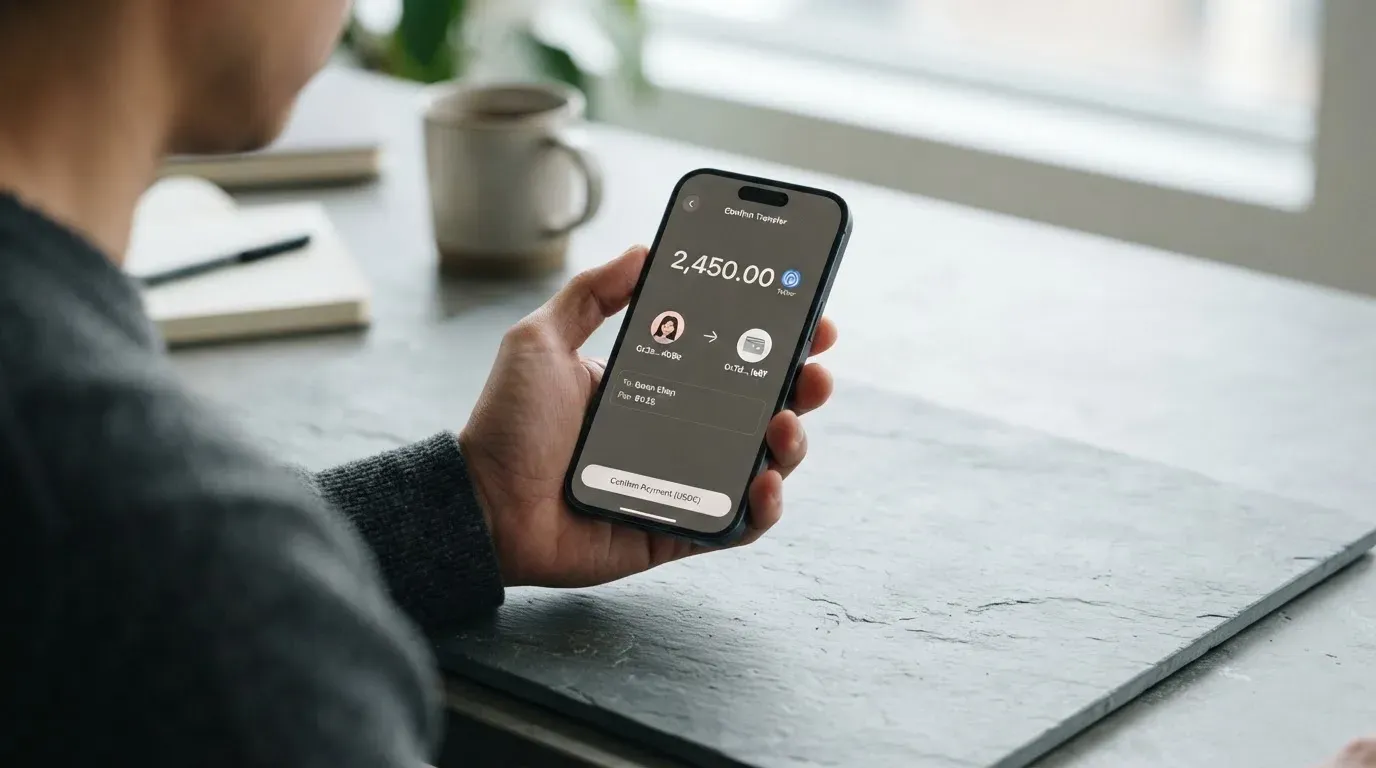
Beyond the country list, the company running Payth is POPPO LLC, identified as the developer on the App Store listing. Where POPPO LLC is registered, which bank or e-money institution issues the card, and which licences the programme runs under are all not stated in the public material I could read. For a payments product that is a meaningful gap, and I will come back to it in the risks section.
Age and proof of address are also not stated. The KYC partner is named as Sumsub, and the site says reviews “typically take 5–10 minutes”, which suggests the flow is set up for the simple case. Sumsub, the site adds, “only accepts IDs or passports issued by the same country as your ID” — so a person whose ID is from a country outside the residence they are applying from may find the flow does not accept their documents. This is a quiet but real edge case for expats.
The bottom line: if you are an adult in a country that is not on the restricted list, with a passport or national ID from the country you live in, you should pass the front door. If you are a dual national, an expat on a foreign passport, or a resident of a country that might reasonably end up on the next update, the answer is less clear.
How to get it
The flow described on the public pages is short: register in the Payth app, verify your identity through Sumsub, deposit crypto into the Payth wallet, and receive a virtual card. Multiple virtual card options are mentioned — the site does not say how many, what currencies they run in, or whether there is a physical or metal version. I did not find any mention of a physical card.
A single KYC tier is described, with declines attributed to “a high-risk flag” in general terms rather than specific thresholds. Tiered KYC, where a higher level unlocks higher limits, is not stated. If you have been through a more developed crypto card onboarding — where a basic tier caps daily spend and an upgraded tier raises it — Payth does not appear to describe that model on its public pages.
What is missing from the signup section is also worth listing:
- The card network (Visa, Mastercard, or anything else) is not stated.
- The card currency is not stated.
- Whether the card has a name on the front, a CVV changeable in the app, or single-use virtual numbers for online checkout is not stated.
- Delivery time for a virtual card is, of course, instant in most products, but the public material does not even say “instant”.
If you are comfortable that you will see the card details inside the app the moment KYC is done, the practical experience is likely to match the marketing copy. If you want a record of the BIN, the network and the card currency to plug into a wallet app, that information is something you may need to capture from the card itself once it is issued.
What it really costs
The published fees lean hard on the spend side and stay quiet on the rest. The site says Payth has “zero transaction fees” and a 2% fee on ATM withdrawals, with a “competitive” crypto conversion rate. That is what you are working with. Here is the table I would want before signing up:
| Fee or limit | What Payth says |
|---|---|
| Card issuance | not stated |
| Monthly or annual fee | not stated |
| Crypto-to-fiat conversion | “competitive rates”, no percentage |
| FX fee (spending in a currency other than the card’s base) | not stated |
| ATM withdrawal fee | 2% |
| ATM free allowance | not stated |
| Daily spend limit | not stated |
| Monthly spend limit | not stated |
Three things to walk through, because each one touches a real payment you might make.
Paying for a coffee in the card’s base currency. You tap or insert the card, the merchant charges in the card’s base currency (we do not know what that is), Payth converts the BTC, ETH or USDT balance at its “competitive” rate, and the “zero transaction fees” promise applies. What you give up is any visibility into the spread between the mid-market rate and the rate you actually got. With a stated FX fee you can compare; with an unstated conversion margin, you cannot.
Paying for something online in a different currency. This is where the missing FX fee starts to bite. A typical crypto card adds a fee on top of the network rate for cross-currency spending, on top of the crypto conversion spread. If Payth’s fee is in that range, the total cost is fine; if it is higher, you will not know until you compare a statement against an independent rate. The site does not say.
Withdrawing cash from an ATM. A flat 2% is the only fee published. A free allowance — for example, “free up to €200 a month, then 2%” — is not stated, so the assumption has to be that 2% applies to every withdrawal from the first euro. If you plan to use Payth for travel cash, that adds up.
The honest summary is that the headline fee is favourable, and the rest of the fee schedule is a question mark. A card user who treats the conversion margin as the real cost, and who checks the rate they actually got against an independent source, will be fine. A user who assumes “zero transaction fees” means “no cost to spend this card” will be surprised.
How to top it up
The funding flow is described in two sentences: deposit BTC, ETH or USDT into the Payth wallet, and “top up your digital assets and get spending credit instantly”. The App Store listing broadens the picture slightly by referring to “multiple cryptocurrencies” such as USDT and BTC, which suggests the published three may not be the whole list.
What is not stated is more important than what is:
- The networks you can send on. USDT alone runs on several blockchains — Ethereum, Tron, Solana, Polygon, Avalanche and others — and the fee and confirmation profile is different on each. The site does not name which networks Payth supports for any of the three coins. Sending USDT on the wrong network is a common way to lose a deposit, and the public material does not flag this risk.
- The deposit fee. Crypto on-ramps and custodial wallets typically charge something — a spread, a flat fee, or both. The site does not say.
- The minimum top-up. The site does not say.
- The on-chain network fee (gas, bandwidth). The blockchain charges this, not the card provider, so the wallet or the sending app will pay it; the site does not tell you which side Payth expects you to be on.
- Fiat top-up. There is no mention of buying crypto inside the app with a bank card or a bank transfer. The only funding model described is crypto in, fiat out.
The irreversible nature of blockchain transfers is worth keeping in mind here. A stablecoin transfer sent to the wrong network, or to an address of a network Payth does not support, can be lost or stranded in manual support recovery with no guarantee of return. For a reader who has not sent USDT before, that is a sharper edge than it sounds.
The model in plain language: you hold crypto on another exchange or wallet, you send it to a Payth deposit address, Payth credits your balance, and your next card payment pulls from that balance. At the till, the conversion to fiat happens automatically. That is the shape of the product, and it works for a person who is already moving crypto around. For a person whose only crypto lives on an exchange and who has never made a self-custody transfer, the gap between “deposit BTC, ETH or USDT in your wallet” and a successful first top-up is the place where most of the practical friction will show up.
Paying with it every day
The everyday-use case is where Payth is at its thinnest in terms of public detail, and where a careful card user will have the most questions.
The card is virtual, and the site says it works “at millions of merchants and ATMs worldwide” — that is acceptance language, not a guarantee. The merchant category codes that Payth blocks are not stated. Many issuers restrict gambling (MCC 7995), some restrict crypto top-ups at other providers, and a few restrict adult content or dating. The site does not tell you where Payth draws that line.
Apple Pay and Google Pay support is not stated. This is more important than it looks. Tokenised mobile wallets replace the card number with a device-specific number stored in the phone’s secure element, so a virtual card that supports Apple Pay or Google Pay can be used at a physical terminal by tapping the phone, even though the card itself is virtual. The public material does not say Payth supports either wallet. If you are weighing Payth against a card whose wallet support is published, this is one of the things the comparison will turn on.
Cashback and rewards are not mentioned. There is no statement of a percentage back, a points scheme, or any merchant-specific offer. The marketing copy does not even gesture at a rewards programme. If the value of the card for you is the cashback, you are looking at the wrong product.
In-app controls: the App Store listing mentions “built-in risk controls”. The site does not say whether those include instant card freeze, spend limits, merchant-category blocks, online-only or contactless-only toggles, or single-use virtual numbers for online checkout. Those are standard features in the better-known crypto cards, and their absence from the public material is a real omission.
The app itself: the Payth app is on iOS and Android (with an Android APK download as well, which is worth noting if you are on a device that does not have Google Play). The App Store listing, as of the time of writing, shows no rating — the page says the app “hasn’t received enough ratings or reviews to display an overview” — and the current version is 1.0.6. The release history shows version 1.0.5 on September 15 and 1.0.6 on September 20 (the year is not shown on the listing). A young version number on a young app, with no review base, is not in itself a red flag, but it is part of the picture. Google Play’s rating was not readable.
Disputes and refunds: the FAQ on the site lists topics about delayed refunds and failed transactions, both of which suggest the product has hit these situations in practice. The answers and the time frames behind those topics were not readable in the public material. For a card user, the dispute process is one of the things that separates a serious payments product from a basic one, and the absence of a published timeline or process is a gap.
What can go wrong
This is the section where Payth, as a public product, has the least to say, and the risks are not theoretical.
The company behind the card. Payth is operated by POPPO LLC, which is the App Store developer name. The country of registration is not stated, the issuing bank is not stated, and the licences the programme runs under are not stated. For a payments product, those are the basics. A user who is looking for a CASP register entry in the EU, an FinCEN MSB registration in the US, or a comparable national authorisation has nothing to check. The site does not invite that check.
Custodial wallet. The product’s own language — “deposit crypto in your wallet”, “Payth Wallet” — describes a custodial wallet. That means POPPO LLC holds the credentials, and your ability to recover the funds depends on the provider. Custodial platforms have a record of catastrophic failures, and a user who keeps a meaningful balance in a Payth wallet is taking on counterparty and hack risk that they would not take on with a self-custody wallet they controlled directly.
Network risk on the issuer side. Card programmes have been shut down before. WaveCrest, a Visa issuer that supplied several crypto card brands, was suspended by Visa in Europe in 2018, and every card it had issued stopped working. FTX’s US debit card was wound down by its issuer after Visa terminated its global agreements in November 2022. These are not Payth-specific risks, but they are the kind of tail risk that a reader of a card review should know about, and that the Payth public material does not address. When a programme closes, users typically get a notice period, then loading stops, then spending stops, and any remaining balance has to be withdrawn. The exact terms for Payth are not stated, because the programme structure is not stated.
AML and KYC risk. Payth runs through Sumsub, which is a mainstream KYC vendor, and the flow appears to be a standard document-and-selfie check. Two things follow. First, a person who cannot complete KYC — for example because their documents are from a country Sumsub does not accept, or because the high-risk flag is tripped — will be declined, and the reason will be general rather than specific. Second, an account that is opened today can be reviewed and frozen later if transaction monitoring flags something, and a frozen custodial balance is recoverable only through the provider’s support, on the provider’s timeline. The site does not describe the support process, the languages supported, or the response hours.
Operational risk on the app. A 1.0.6 version on iOS, with no rating, is a young product. The fact that the FAQ lists transaction-refund and failed-payment topics suggests real users have hit real issues. The fact that the answers and timelines are not in the public material is the gap to be aware of.
Public complaints. I searched for a Trustpilot page for the Payth website and for Payth on Reddit and did not find a complaints trail specific to this product. That is not the same as a clean record — a small user base generates few reviews — but it does mean there is no third-party signal to lean on either way.
Stablecoin and network risk. Even though Payth converts to fiat at the till, your balance sits in crypto until that moment, so the price of BTC, ETH and USDT between top-up and spend is your exposure. USDT has historically held its peg closely, but it has depegged in the past. The site does not describe how the wallet handles price movement between top-up and spend, or whether the balance is held in crypto or in a stablecoin-denominated internal unit. That is a real question for a user who tops up at one price and spends at another.
What to take instead
Payth is not the only virtual crypto card on the market, and three alternatives are worth a look. None of them is a perfect substitute, and the trade-offs are different in each case. The comparison below uses the same scoring logic as this review.
| Card | Score | What it does well | What it does not |
|---|---|---|---|
| Cardex | 5.6/10 | “One crypto card, 200+ countries”, no country list published, runs on Verve, Visa, Mastercard and UnionPay, virtual and physical available, real-time conversion with an “AI-Powered Conversion Rate” | Naira-focused app listing; cost, fees, FX, rewards all not stated |
| CardFlow | 4.9/10 | Virtual USD Mastercard, “completely free” to create, aimed at Nigeria but accepts “Nigerians and global users”, funded with BTC, USDT, ETH or Naira bank transfer | Country list not stated, fees not stated, rewards not stated, monthly fee not stated |
| HyperCard | 4.7/10 | Prepaid card with balance in USD or EUR, accepted “in more than 176 countries”, funded with USDT, BTC, ETH in the app | Network not stated, cost and fees not stated on the public material I could read, no published rewards |
Cardex is the closest in spirit to Payth — a crypto card with virtual and physical options, multiple networks, and a real-time conversion model. The site is louder about its technology (the AI-powered conversion language) and quieter about the actual fee schedule. If you are weighing Payth against Cardex, the comparison turns on which network you want to spend on, which countries the card is usable in for you, and whether the conversion rate you actually get is competitive in practice.
CardFlow is a faster, simpler proposition: a free virtual USD Mastercard created in minutes, with a Naira funding rail alongside crypto. If you are based in Nigeria or hold Naira, that is a meaningful edge. If you are elsewhere, the lack of stated country exclusions and the unstated fees are the same kind of gap as Payth.
HyperCard is a prepaid USD or EUR card funded with the same three coins as Payth, with a broad acceptance footprint but very little published detail. It is the kind of product you would only pick if the published cards did not work for you.
In all three alternatives, the same caveat applies: cost, fees, FX and rewards are either not stated or only partly stated, and the issuer / licence question is the same kind of question mark. A reader who is not comfortable with that level of opacity is, frankly, better served by one of the larger crypto card programmes whose fee schedule, issuer and licence are published in plain language — even if those products are not in this comparison. The cards above are the ones that match Payth’s shape, not the ones that exceed its disclosure.
Who I would recommend it to
If you have read this far, you have a good sense of the trade-offs, so let me be direct.
Payth is a reasonable fit if you are a crypto holder who already moves BTC, ETH or USDT around, who wants a virtual card for online and in-store spend, who does not need cashback or mobile-wallet tokenisation, who is comfortable with a flat 2% ATM fee, and who is not put off by an operator — POPPO LLC — that has not published its country of registration, its issuing bank or its licences. The headline fee story is favourable, the country list is broad, the KYC partner is a known vendor, and the wallet model is straightforward.
Payth is not a good fit if you want to plug a card into Apple Pay or Google Pay and have not confirmed the support yourself; if you want a physical card; if you want a published monthly fee, FX fee or daily limit; if you want a clear answer to “what network do I send USDT on”; if you want a published dispute process with a timeline; if you want to be able to look up the issuer on a CASP register or the equivalent; or if you keep a meaningful balance in the wallet for more than a few days at a time. The custodial wallet, in particular, is a sharper exposure than the marketing copy suggests.
A practical sequence if you do decide to try Payth: complete KYC with a single, clean document set; make a small first top-up on the network the app tells you to use (and only that network); do a small in-app payment to confirm the conversion rate you got against an independent source; only then scale up. Treat the wallet like a wallet you do not control, because you do not.
That is the honest version of the recommendation. Payth is a small, quiet, functional product for a person whose needs match what is published. For everyone else, the missing pieces in the public material are exactly the pieces that would tell you whether to trust it.
Frequently asked questions
What is the Payth card?
Payth is a virtual payment card that lets you spend crypto at the point of sale. You fund it with BTC, ETH or USDT, the balance converts to fiat when you pay, and the card is accepted wherever the network behind it is taken. The company running it is POPPO LLC.
How does the Payth card work?
You register in the Payth app, verify your identity through the KYC partner Sumsub, deposit crypto into the Payth wallet, and a virtual card is issued. At the till, the crypto is converted to fiat at the card’s “competitive” rate and the merchant is paid in fiat. The card behaves like a prepaid card drawn on a stored balance.
Is Payth a bank?
No. Payth is operated by POPPO LLC, and the public material does not name an issuing bank, an e-money institution, or any licence the programme runs under. A user who wants to look up the issuer on a regulator’s register will not find a name to search for.
Who owns Payth?
POPPO LLC, which is also listed as the developer on the App Store. The country of registration, the beneficial owner and the corporate structure behind POPPO LLC are not stated in the public material.
Is the Payth card available in my country?
Payth is issued globally except for a named list of restricted countries that includes Afghanistan, Russia, Ukraine, Iran and Syria, with the caveat that the list “is updated periodically based on issuer policies”. The site frames the restriction by residence, not citizenship.
How do I get the Payth card?
Register in the app, complete KYC through Sumsub, deposit crypto into the Payth wallet, and a virtual card is issued. The site says KYC review “typically takes 5–10 minutes”. A physical card is not mentioned in the public material.
Does the Payth card require KYC?
Yes. The KYC partner is Sumsub, which only accepts IDs or passports issued by the same country as your ID. Proof of address and the minimum age are not stated. A single KYC tier is described, with declines attributed to a “high-risk flag” in general terms.
How do I top up the Payth card?
You deposit BTC, ETH or USDT into the Payth wallet. The App Store listing refers to “multiple cryptocurrencies” such as USDT and BTC, which suggests the published three may not be the whole list. The networks you can send on, the deposit fee, the minimum top-up and the on-chain fee handling are not stated in the public material.
How much does the Payth card cost?
The site says “zero transaction fees” and a 2% fee on ATM withdrawals. Card issuance, the monthly or annual fee, the FX fee, the conversion spread, the ATM free allowance, and the daily and monthly limits are all not stated. A user who treats the conversion margin as the real cost will be the most accurate judge.
Is the Payth card safe?
It is a custodial product run by POPPO LLC, a small operator that has not published its country of registration, its issuing bank or its licences. The wallet holds the credentials, not you, so the counterparty and hack risk is real. Public complaints specific to Payth were not found, but the App Store listing has no rating and a young version number, and the dispute process and timeline are not published.
Virtual card reviews – cryptocardcheck
Content created by the «cryptocardcheck» team