
PSTNET card review: who it suits, what it really costs, and where it falls short
 Available in US

PSTNET is a payment-card service aimed squarely at people who need to spend crypto online without the friction of a traditional bank. In practice, that audience is narrow: media buyers running ad campaigns, affiliates managing many wallets, and anyone in a country where getting a Visa or Mastercard from a local bank is difficult. The product is virtual-only, priced in USD, and built around instant issuance rather than everyday spending. If that sounds like your situation, read on. If you want a card for groceries, cash, or a normal wallet experience, this is not it.
Conditions are current as of October 28, 2026.
Verdict
PSTNET earns 5.3 out of 10 in my review. That is a middling score, and it reflects a real split: the service does what it promises for its core audience, but several important details are missing from the public pages, and the user-feedback picture is uneven. Here is the breakdown.
| Criterion | Mark | Why it scored that way |
|---|---|---|
| Who can get it | 8 / 10 | Worldwide reach with few named restrictions; sign-up is quick |
| Cost | 4 / 10 | Card price and monthly fee are stated, but several other fees are not disclosed publicly |
| Top-up options | 7 / 10 | Instant crypto deposit is the headline feature, though exact coins and networks are not listed on the site |
| Reliability and complaints | 4 / 10 | No published legal entity or licences; user reports include slow withdrawals and unexplained card blocks |
| Everyday use | 3 / 10 | Virtual cards only, restricted merchant categories, and the card is not designed for physical-point-of-sale spending |
The card fits a particular profile. If you are an advertiser or media buyer who needs a fleet of virtual cards to run ad accounts, PSTNET’s BIN range, instant issuance, and ad-specific card variants (Google Ads, TikTok Ads) are built for you. If you are looking for a general-purpose crypto card for daily life, the lack of a physical card, the missing wallet support, and the long list of blocked merchant categories will frustrate you.
Will they give you the card
PSTNET is open in most of the world, with a caveat. The site itself says only that “PST solutions may not be available to all customers” and does not publish a country list. An earlier review of the company’s card documentation indicated worldwide availability excluding a set of restricted countries, with the United States specifically limited. A user review from July 2026 on Trustpilot reports that the user’s country was no longer supported, which suggests the list is not static.
The practical takeaway is that PSTNET does not pre-publish its eligibility geography, and the rules appear to change. If you are in a country where crypto cards are typically hard to obtain, this is a positive signal. If you are in the United States, do not assume access; the restriction noted in earlier checks may still apply.
There is no published age requirement on the pages I read, and no separate tier for residents versus non-residents. Sumsub handles the eKYC checks, which means identity documents, a selfie, and possibly a proof of address are part of the flow, but the specific documents the company asks for are not stated on the public site.
How to get it
The sign-up flow is straightforward. You can register with a Google account or an email address, complete the eKYC (electronic Know Your Customer) verification through Sumsub, and then issue a card. PSTNET markets “instant card issuance,” which aligns with the fact that all of its products are virtual: there is no plastic card to print, mail, or wait for, and the company does not state a delivery time because none exists.
Sumsub is the eKYC provider, and the verification is described as “full eKYC execution” with automated ID and biometric checks. What that means in practice for the documents PSTNET requires, whether you need a proof of address, what ages it accepts, and how the levels of due diligence work, is not stated on the pages I read. You should expect the standard set of requirements for a regulated or semi-regulated card service: a government-issued ID, a selfie or short video, and possibly a utility bill or bank statement.
The product lineup is worth understanding before you sign up:
- Ultima: a single virtual card with 3D-Secure, described as a USD card.
- PST Private: a higher tier with 22 BINs (Bank Identification Numbers, the first digits of a card number that identify the issuing bank), unlimited issued cards, unlimited deposits, express withdrawals, a free API, a “Private Manager” account feature, and 3% cashback.
- Google Ads, TikTok Ads, Advertisement: niche cards for media buyers, with 12, 3, and 15 BINs respectively, presumably tied to ad-network acceptance.
- Virtual prepaid, Virtual debit, Platinum: additional variants whose precise differences are not spelled out on the public pages.
The network (Visa or Mastercard) is not stated on the cards page. If the network matters to you, that is something to confirm with support before paying any fees.
What it really costs: fees and pricing
This is where the picture gets murky. Some fees are stated, others are not, and a couple of unofficial sources disagree with the official pages.

| Fee or limit | Amount |
|---|---|
| Ultima card price | from $7 |
| Ultima monthly maintenance (after first month) | $16 |
| PST Private first 100 cards | Free |
| PST Private monthly fee | not stated officially |
| PST Private transaction, declined-payment, refund and withdrawal fees | 0% |
| Ultima withdrawal fee | 0% |
| Top-up (deposit) fee | not stated officially; unofficial sources say 2% |
| FX (foreign exchange) fee | not stated |
| ATM fees | not stated (virtual cards only) |
| Daily and monthly spending limits | not stated |
| PST Private: number of issued cards, spends, deposits | Unlimited |
Unofficial sources (a third-party review from 2022-2025 and a Chrome extension listing) report a 2% top-up fee and, in one case, a $7 monthly and $99 annual maintenance fee for Ultima. These are not on PSTNET’s own pages, so treat them as unconfirmed.
What does this mean in practice? Let me walk through three everyday payments.
1. You load $500 in USDT and spend it on a SaaS subscription ($49/month).
The top-up fee, if the unofficial 2% applies, costs you $10 on the initial $500. After that, PST Private’s stated 0% transaction fee means the $49 goes through at cost. No FX is involved because the merchant charges in USD and the card balance is in USD.
2. You pay a contractor in Europe, who charges in EUR.
This is where the missing FX fee matters. If the card balance is USD-only, the payment will go through as a foreign-currency transaction. Without a published FX margin, you have no way to know what you are paying for the conversion. The merchant may also see a USD-issued card with a non-US billing address, which can trigger extra scrutiny or declines.
3. You try to withdraw cash from an ATM.
ATM use is not stated on the public pages. Since the cards are virtual and no physical card is offered, ATM access is not part of the product. If you need cash, look elsewhere.
The upshot: PSTNET is cheap to hold (0% transaction fees on PST Private, free first 100 cards), but the top-up cost, the FX margin, and the limits are not transparent. If you are loading large amounts, the 2% unofficial deposit fee alone can make a meaningful dent.
How to top up the card: funding your PSTNET account
Funding is the part PSTNET is clearest about, and also the part with the most unanswered questions. The headline feature is “instant crypto deposit into PSTNET account.” You send cryptocurrency from your own wallet or exchange, it lands in your PSTNET balance, and you can spend it through your virtual card.
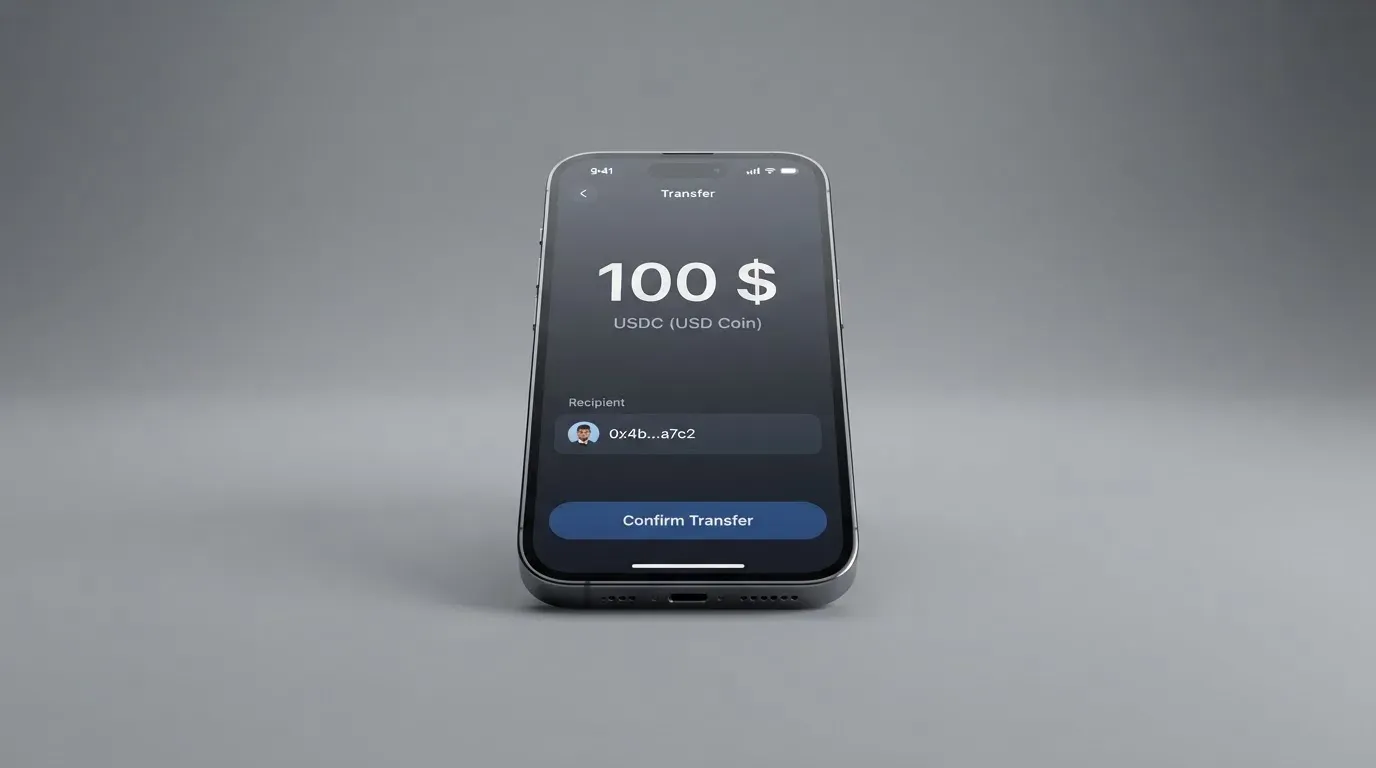
What the company does not say is which coins and which networks it accepts. Unofficial sources (a Chrome extension listing and payment-industry press from 2022-2025) name USDT on TRC20 and ERC20, plus BTC, but PSTNET’s own site does not confirm this. That gap matters because blockchain transfers are irreversible: if you send USDT on a network PSTNET does not support, or to an address of a different network, the funds can be lost or stranded in manual recovery with no guarantee of return.
A few practical points:
- Minimum top-up: not stated.
- Who pays the network fee (gas, bandwidth): not stated. The on-chain network fee is charged by the blockchain itself, not by PSTNET, so you will pay it in the network’s native asset (ETH for ERC-20, TRX for Tron, BTC for Bitcoin).
- Fiat top-up options: not stated. There is no public mention of a bank transfer, card top-up, or third-party payment processor.
- Balance on closure: not stated. If you close your account, what happens to remaining funds is unclear.
On the withdrawal side, PST Private advertises “0% withdrawal fee” and “express withdrawal.” User reports, however, mention crypto withdrawals taking up to 14 days, with the company citing manual processing and KYT (Know Your Transaction) checks as the reason. If you need to move funds out quickly, that is a risk to factor in.
Paying with it every day
PSTNET is built for online spending, and it shows. There is no physical card, no plastic, and the merchant category blocks reflect a card designed for advertising, subscriptions, and digital services rather than everyday life.
The Ultima card blocks the following merchant categories:
- Gambling (MCC 7995)
- Dating services (MCCs 7273, 7297)
- Money transfers (MCC 6051, 4829)
- Quasi-cash (MCC 6051)
- Fuel and EV charging (MCCs 5552, 5533)
- Freight and trucking (MCC 5541, 5542)
- Brokerage (MCC 6211, 5172)
- Massage parlours (MCCs 7800-7802, 7995)
- Other restricted codes (MCC 4215, 4214)
(MCC, or Merchant Category Code, is a four-digit number that classifies the type of business; card issuers use these codes to block or allow spending categories.)
This is a longer blocklist than most general-purpose cards, and it tells you something about the intended use case. PSTNET is not meant for a night at the casino, a fuel stop, or a wire transfer. It is meant for ad networks, SaaS, and online services.
Mobile wallets: support for Apple Pay and Google Pay is not stated on the public pages. Since the cards are virtual and no tokenisation is described, you should assume tokenised mobile-wallet use is not a feature, or at least not a confirmed one. This is a significant gap for anyone who wants to tap-to-pay in a shop.
App: there is no mobile app listed. A Chrome browser extension exists, but its ratings were not read for this review. If you prefer managing your card from a phone app, the absence is a real limitation.
Rewards: PST Private advertises 3% cashback. The conditions, the cap, and the currency in which the cashback is paid are not stated. Treat the headline figure as a maximum, not a guarantee.
Disputes: the process for disputing a charge is not described on the pages I read. There is restricted-usage guidance that mentions chargebacks and refunds for deactivated virtual cards, but that is a narrow case. If you are running large ad spends, the lack of a clear dispute path is a risk to consider.
What can go wrong
The risks around PSTNET fall into three buckets: company transparency, user-reported problems, and regulatory uncertainty.
Company transparency. PSTNET does not name its legal entity, its country of registration, or the licences it holds on the pages I read. The eKYC is handled by Sumsub, which is a third-party verification provider, but that is not a substitute for the issuer’s own regulatory status. For a card product, you would normally expect to see who issues the card, under what authority, and where disputes are adjudicated. None of that is published.
User-reported problems. Trustpilot shows 381 reviews for PSTNET (read on 21 October 2026), with a split that is worth paying attention to: 67% are 5-star, but 25% are 1-star. Trustpilot has withheld the overall TrustScore, citing a guideline breach after removing fake reviews, so the average is not visible. The company’s own site claims 458 reviews, a higher number.
The themes in the negative reviews, drawn from the period February to July 2026, are:
- Slow crypto withdrawals, sometimes up to 14 days, with PSTNET citing manual review.
- Crypto deposits held for days or weeks, with the company citing KYT checks.
- Account and card suspensions without clear notice or explanation.
- Declines on certain merchants, including Amazon digital goods and Stripe-processed payments.
- KYC and country-eligibility problems, including users whose countries stopped being supported.
These are serious complaints, and they cluster around the same operational areas: the speed of crypto processing, the clarity of account actions, and the stability of access. If you rely on a card for time-sensitive ad campaigns, a 14-day withdrawal delay or a sudden account suspension can be costly.
Regulatory uncertainty. PSTNET is custodial: your balance is held in a PSTNET account, not in your own wallet. That means the company has control of your funds until you spend or withdraw them. The site mentions “real-time AML transaction monitoring” and 3D-Secure on cards, but it does not state whether customer funds are safeguarded (segregated in dedicated accounts or insured, as electronic money institutions are required to do in the EU), whether there is a freeze function, or whether 2FA is available. In a custodial model, the absence of these details is a yellow flag.
Support channels. No direct support channel is listed on the pages I read. The company points to Twitter and Telegram for updates, which is fine for news but not a substitute for a helpdesk when your card is declined or your account is frozen.
What to take instead
PSTNET is not the only virtual crypto card on the market, and depending on your situation, one of these alternatives may suit you better.
| Card | Score | Best for | Key difference from PSTNET |
|---|---|---|---|
| Cardex | 5.6 / 10 | Users in 200+ countries who want debit and virtual options | Cardex is a debit crypto card on Verve, Visa, Mastercard, and UnionPay with an AI-driven conversion rate; PSTNET is virtual-only and USD-centric |
| CardFlow | 4.9 / 10 | Nigerians and global users needing a free virtual card | CardFlow issues a virtual USD Mastercard in about 3 minutes, free to create; PSTNET charges from $7 for its base card |
| HyperCard | 4.7 / 10 | Users in 176+ countries wanting USD or EUR balance | HyperCard is a prepaid card with USD or EUR balance; PSTNET is USD-only on the public pages |
Cardex offers broader network coverage and a real-time crypto-to-fiat conversion that, the company claims, scans global exchange rates at the moment of payment. That feature addresses the FX-transparency gap I flagged earlier. If you need a card that works in more countries and on more networks, Cardex is worth a look.
CardFlow is free to create, which is a meaningful contrast to PSTNET’s paid model. It is aimed at Nigeria and “global users,” and the virtual USD Mastercard can be issued in minutes. The fees beyond creation are not stated, so ask before you load.
HyperCard accepts deposits in USDT, BTC, and ETH and converts to USD or EUR on the card. If you want a EUR balance (useful for European merchants and for avoiding FX on euro-denominated SaaS), HyperCard has a clear advantage over PSTNET’s USD-only offering.
If your priority is a card for ad spending specifically, PSTNET’s niche products (Google Ads with 12 BINs, TikTok Ads with 3 BINs) are hard to replicate elsewhere. For general crypto spending, the alternatives above may serve you better.
Who I would recommend it to
PSTNET earns its score honestly. It is a focused product that does its core job, and it has clear weaknesses outside that core.
I would recommend PSTNET to:
- Media buyers and advertisers who need a fleet of virtual cards tied to specific BINs for ad accounts. The Google Ads, TikTok Ads, and Advertisement card variants are built for this, and the 22 BINs on PST Private give you room to spread risk.
- Affiliates and performance marketers who run many campaigns and want unlimited cards and deposits.
- Users in countries where local banks refuse to issue Visa or Mastercard, and who are comfortable with a virtual-only product.
- Anyone who needs instant card issuance and is willing to pay for it (from $7).
I would not recommend PSTNET to:
- Anyone who needs a physical card for in-store payments or ATM withdrawals. PSTNET does not offer one.
- People who want to spend at supermarkets, gas stations, or restaurants. The merchant blocklist covers too many everyday categories.
- Users who need a mobile app for card management. There is no app.
- Anyone in the United States, given the ongoing restriction.
- Users who want transparent FX and top-up fees. The official pages do not state them.
Before you sign up, here is what I would check:
- Confirm the country list with support. Since the site does not publish it, ask before you complete eKYC.
- Ask about the top-up fee. The unofficial 2% figure is a useful benchmark; confirm it with the company.
- Ask about the FX margin. If you plan to pay merchants in non-USD currencies, get the rate in writing.
- Read the latest Trustpilot reviews. The picture changes quickly, and a recent review is more useful than an old one.
- Start small. Issue one card, load a modest amount, and test the full cycle: top up, spend, withdraw. Do not commit large balances until you have seen the process work end-to-end.
PSTNET is a tool, and like any tool, it is the right choice in the right hands. For advertisers and media buyers in eligible countries, it is worth a try. For everyone else, the gaps in transparency, the operational complaints, and the restricted feature set are reasons to look at the alternatives first.
Frequently asked questions
What is the PSTNET card?
PSTNET is a virtual payment card service that lets you spend cryptocurrency online. You load your PSTNET account with crypto, it is converted to USD, and you spend through virtual Visa or Mastercard numbers (the network is not stated on the public pages). There is no physical card, and the product is aimed at online and ad spending rather than everyday purchases.
How does the PSTNET card work?
You sign up, complete eKYC verification through Sumsub, and issue a virtual card. You then deposit cryptocurrency into your PSTNET account, where it is converted to a USD balance. When you pay online, the card draws on that balance. The card is virtual-only, so you use the card number, expiry date, and CVV at checkout.
Is PSTNET a bank?
PSTNET does not present itself as a bank on the pages I read. The legal entity, country of registration, and licences are not stated publicly. The eKYC is handled by Sumsub, a third-party verification provider, and the cards are issued under programmes whose details are not published. Treat PSTNET as a card service, not a bank.
Who owns PSTNET?
Ownership is not stated on the public site. The company’s own pages do not name the parent entity, the founders, or the jurisdiction. If ownership matters to you (for example, for regulatory or tax reasons), ask the company directly before you sign up.
Is the PSTNET card available in my country?
The site says “PST solutions may not be available to all customers” but does not publish a country list. An earlier review of the company’s documentation indicated worldwide reach with a set of restricted countries, and the United States has been limited. A user review from July 2026 reported a country being dropped from support. The safest approach is to ask PSTNET’s support before completing eKYC.
How do I apply for a PSTNET card?
You register with a Google account or email, complete Sumsub’s eKYC (ID and biometric verification), and then choose a card product (Ultima, PST Private, or a niche ad card). Issuance is described as instant. The specific documents required (ID, proof of address, age) are not stated on the public site.
Does the PSTNET card require KYC?
Yes. PSTNET uses Sumsub for “full eKYC execution,” which includes automated ID and biometric verification. The level of due diligence (basic versus enhanced), the documents required, and how the checks are tiered are not stated on the public pages.
How do I top up my PSTNET card?
You send cryptocurrency from your own wallet or exchange to your PSTNET account. The site advertises “instant crypto deposit” but does not list which coins or networks it accepts. Unofficial sources mention USDT on TRC20 and ERC20, plus BTC. Because blockchain transfers are irreversible, confirm the supported networks and the deposit address with PSTNET before sending.
How do I add the PSTNET card to Apple Wallet or Google Pay?
Support for Apple Pay and Google Pay is not stated on PSTNET’s public pages. Since the cards are virtual and the company does not describe tokenisation (the process of replacing your real card number with a device-specific number for mobile wallet use), you should not assume wallet support is available. Ask the company if this matters to you.
Is the PSTNET card safe?
PSTNET describes 3D-Secure on cards and real-time AML monitoring, but it does not state whether customer funds are safeguarded, whether there is a freeze function, or whether 2FA is available. The company is custodial, meaning your balance is held in a PSTNET account, not your own wallet. The Trustpilot picture is mixed: 67% 5-star and 25% 1-star reviews out of 381, with Trustpilot withholding the overall score after removing fake reviews. Common complaints include slow crypto withdrawals, account suspensions, and merchant declines.
Virtual card reviews – cryptocardcheck
Content created by the «cryptocardcheck» team