
RedotPay scores 6.9 out of 10: broad country reach, a one-off fee of 10 or 100 dollars, and a thin layer of trust around the issuer
 Available in US
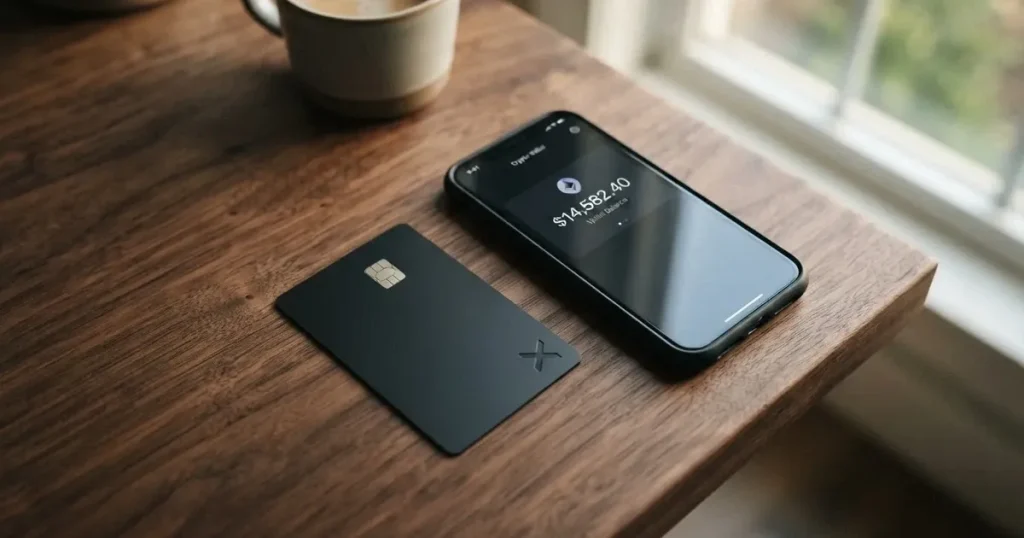
RedotPay is a crypto-branded payment card that converts your crypto into a spendable balance and pays like an ordinary Visa debit card, in virtual or plastic form. I scored it 6.9 out of 10. The high points are reach and everyday practicality: 47 places cannot get the card at all, everyone else can apply, and the virtual card handles Apple Pay and Google Pay without fuss. The weak point is trust. The card’s public pages never name the bank that actually issues it, the issuer is listed only as an unnamed “BIN Sponsor”, and the loudest complaints on Trustpilot — 778 reviews in 2026 — are about frozen funds and unanswered support tickets rather than about the card failing at payments. If you hold crypto outside the restricted list and want either a virtual card for subscriptions or a plastic card you can tap, this is a card I would not rush into; if you need something that works this week, this is one of the more reachable options. Here is what I checked and what I found.
The conditions described below are current as of October 28, 2026.
The score at a glance
| Criterion | Mark | Why |
|---|---|---|
| Who can get the card | 8 / 10 | 47 places closed to card issuance (list dated August 28, 2026), the rest of the world open; the service claims 9 Million+ Users |
| Cost | 6 / 10 | Virtual card 10.00 USD, physical card 100.00 USD, maintenance free; 1.00% conversion fee, 1.20% in another currency, 2% ATM up to 10,000 USD a month |
| Top-up options | 8 / 10 | Crypto on-chain, USDT-TRC20 from 1 USDT, USDC and ETH; topping up the card balance is free, the network list is visible on the deposit page |
| Reliability and complaints | 4 / 10 | Issuer not named (BIN Sponsor), program manager Redotpay Technology Pte. Ltd.; complaints about KYC freezes and source-of-funds reviews, Trustpilot 778 reviews |
| Everyday use | 9 / 10 | Virtual and physical, Apple Pay and Google Pay, ATMs worldwide |
| Total | 6.9 / 10 | Strong reach and daily practicality, held back by an unnamed issuer and a heavy complaint load |
Two marks sit above eight: reach and everyday use. Two sit at or below six: cost and reliability. The reliability mark is the one that drags the total down, and it is worth saying why before anything else — it is not a judgment about the fees. It is a judgment about who stands behind the money when the account is frozen.
Who will they actually give the card to
Two of RedotPay’s own lists describe the eligibility rule in two different ways, and the difference matters more than it looks.
The first is the KYC list, headed “Unsupported Countries/Regions”. It says: “If you are a citizen of any of the countries or regions listed below, you will not be able to complete identity verification (KYC) or use RedotPay’s services”. It also explains the reason: restrictions are “based on local regulations and sanction policies—not on individuals”. So this list is written in terms of citizenship. On it are Afghanistan, Albania, Belarus, Bosnia and Herzegovina, Bouvet Island, Burkina Faso, Burundi, Central African Republic, Congo (DR), Croatia, Cuba, Eritrea, Ethiopia, Guinea-Bissau, Haiti, Iran, Iraq, Kosovo, Lebanon, Liberia, Libya, Mainland China, Mali, Montenegro, Myanmar, Netherlands Antilles, Nicaragua, North Korea, North Macedonia, Russia, Serbia, Slovenia, Somalia, South Sudan, Sudan, Syria, Ukraine, United States, Venezuela, Yemen, Zimbabwe. Note that the United States is on this list. A US citizen does not get past verification, by the card’s own wording.
The second list is narrower in one way and wider in another: the card-issuance list, dated August 28, 2026, covering 47 places. It adds India, Indonesia, Morocco, Nepal, Singapore, Turkey to the picture and says: “Residents of these areas are ineligible for both virtual and physical cards”. Those same areas cannot be used as billing addresses. But citizenship is not mentioned on this list at all — it is written as a rule about residence.
So: where you were born and where you live are two separate gates, and one gate does not imply the other. Russia, Belarus, Ukraine and Serbia appear on both lists. Georgia, Armenia, Kazakhstan and the UAE appear on neither — which does not mean they are guaranteed, only that RedotPay’s own pages do not exclude them.
One more geography note, separate from eligibility: the card can be used in most of the world, but delivery is not the same as eligibility. As of July 21, 2026, delivery is unavailable in the issuance-restricted places plus Egypt, Palestine and Tunisia, “due to logistical and customs constraints”. If you live in Cairo or Tunis, you may be eligible and still wait forever for a plastic card — which is one of the reasons the virtual card exists.
How to get the card
The application is straightforward, and the identity side is stricter than the marketing suggests. Minimum age is 18. You need the original physical ID: “Do not use copies, screenshots, or photos of a screen”. The document must be valid at least 3 months from submission, both sides if there is data on the back, and extra documents (JPG, PNG, PDF, up to 10MB) only if the system asks for them. You type in your “true, current address in full” — no separate proof-of-address document is mentioned.
The sequence is: install the app, sign up (email / Google / Apple ID), verify identity, fund the account, open the Card section, choose virtual or physical. For a physical card, the billing and shipping address must be in English. One thing you cannot change later: the cardholder name printed on the back of the card.
You get one of two forms — virtual or physical. The network is Visa debit in the Singapore terms, while the card page only says “leading card networks”, so the Visa wording is the more specific one. There are two card currencies: a USD card (USD BIN) and an HKD card (HKB BIN).
On delivery: Standard Mail is waived, DHL Express “varies by country” and is calculated at checkout. Delivery time is not stated, so treat any promise you have heard as secondhand. And on verification itself, only one level is described — identity plus address, with extra documents on request. Processing time is not stated, and neither are the official rejection reasons. That is a small thing on paper and a real thing at 2 a.m. when your money is in the account and nobody will say why it has not cleared.
Fees: what it really costs to spend from crypto
The headline numbers are friendlier than the fine print. Application for the virtual card is 10.00 USD; the physical card is 100.00 USD and, once paid, is neither cancellable nor refundable. A virtual replacement is 5.00 USD the first time and 10.00 USD each time after. Account maintenance is waived — no monthly fee, no annual fee, no inactivity fee mentioned. The fee is taken from your balance, and the 5 USD welcome reward cannot be used toward the issuance fee. The paid tier, RedotPay Pro, is 12.90 USD monthly or 129.00 USD annual.

| Fee or limit | Amount |
|---|---|
| Virtual card application | 10.00 USD |
| Physical card application | 100.00 USD (not cancellable or refundable once paid) |
| Virtual card replacement | 5.00 USD first, 10.00 USD each later |
| Account maintenance | Free (no monthly or annual fee) |
| Transaction fee | 1.00% (the crypto conversion fee) |
| Default-currency transaction | Waived |
| Non-default currency | 1.20% |
| ATM | HKD card 2.00%; USD card 2% while monthly ATM withdrawals are 10,000 USD or less, 3% above |
| Paid tier RedotPay Pro | 12.90 USD monthly, 129.00 USD annual |
| Small authorizations (1.00 USD or less) | First 5 per card per month waived, then 0.2 USD |
| Declined transactions | First 3 per month waived, then 0.5 USD |
| Selected merchants | 1.5% (min 0.50 USD), first 3 per month waived — Gulf Health Counsel, Free Fire, PUBG Mobile, Brawl Stars, eFootball, Facebook Ads, Discord |
The fee table above is the one effective December 1, 2025.
Now let me walk three ordinary payments through this, because the 1.00% headline is not what you actually pay in most cases.
A coffee in your own card’s currency. Say you hold a USD card and buy coffee for 4.00 USD. It is a default-currency transaction, so it is waived. You pay 4.00 USD and nothing else.
A subscription billed in a different currency. Same USD card, a 10.00 USD monthly service billed in EUR. This is a non-default currency transaction at 1.20%, so roughly 0.12 USD on top. Small, but not nothing, and it recurs every month.
A train ticket from an ATM. Take 200 USD out of a USD card in one month. Withdrawals that month are under the 10,000 USD threshold, so the fee is 2%, roughly 4 USD. Above 10,000 USD in the month, the same withdrawal costs 3%. This is the one fee that scales visibly with how much cash you take, and it is the reason the Pro tier’s annual plan includes ATM fee waivers.
Where the small-authorization rules bite is subscriptions. A 1.00 USD app or a 0.99 USD service is a small authorization: the first five per card per month are free, the sixth costs 0.2 USD. And a declined transaction is not free of consequence either — the first three per month are waived, then 0.5 USD each. If a merchant declines your card and you retry, you are paying for the privilege of trying again.
Two things I could not find: no free ATM allowance is stated anywhere, and the card itself is a single tier — the only upgrade is RedotPay Pro. The fee table, the currency toggle (a disabled currency is declined), and the physical card being usable for cash “globally” by tap or swipe complete the picture.
How to Top up the card
Topping up is where RedotPay is genuinely good, and it is the strongest argument for the card. You deposit crypto on-chain, or you buy crypto with a credit card in the app (ETH, USDC, USDT — depending on region). The USDT-TRC20 minimum deposit is 1 USDT after network fees, and each asset is accepted only on the networks shown on the Deposit page, which RedotPay may change. Deposit to the card balance is free. Transfers in from a mainstream credit or debit card cost 3%, minimum 1 USD.
That network rule deserves a moment of attention, because it is the single most common way people lose money in this category. If a deposit goes out on a network the card provider does not support, or to an address belonging to a different network, blockchain transfers are irreversible: the funds can be lost or need manual support recovery, with no guarantee. On Tron, fees are paid through the network’s own bandwidth and energy model and often burn TRX, so a wallet holding USDT but nothing else may not be able to move it. Circle also stopped supporting USDC on Tron in February 2024, so “USDC over TRC20” is not a native option — a detail worth knowing if you have been copying deposit instructions from older guides.
For scale: Tether’s USDT and Circle’s USDC are the two dominant dollar-pegged tokens, and the BIS (July 2025) put about 90% of stablecoin market capitalisation in these two. Circle says USDC is redeemable 1:1 for USD and 100% backed by cash and cash equivalents, with monthly reserve attestations. Neither guarantee is RedotPay’s — it is context for what your balance is ultimately made of.
One thing the card’s public pages do not state: how to withdraw money. If you are planning to use this as a temporary bridge rather than a permanent card, that gap is worth raising with support before you commit.
Paying with it every day
The daily mechanics are the best part of the package. The virtual card integrates with Apple Pay and Google Pay, which means you can add it to a phone wallet and pay in shops without touching a plastic card. The physical card works by tap or swipe. ATMs are available, including worldwide cash withdrawal. In the app you get per-card limits, online / POS / ATM toggles, and currency toggles — you can switch a card off for online use while keeping it alive for point of sale, which is a genuinely useful control that most people never touch.
On limits, the numbers are generous and stated clearly: per transaction 100,000 USD, daily 1,000,000 USD, both BINs. ATMs: 3 per day and 30 per month; daily 23,000 HKD (HKD card) or 3,750 USD (USD card), monthly 75,000 HKD or 50,000 USD. Balance limit unlimited. The card also adds a caution for USD cards: “In some countries and regions, daily limits are $3,000 and monthly limits are $10,000”. That line is worth reading twice — the headline limit is not what you may actually be able to spend, in some places.
Two gaps in the everyday-use picture. There is no formal list of blocked merchant categories, though RedotPay notes that “Some individual merchants may have their own internal policies regarding prepaid or crypto cards”, and that no MCC list is given for the card. Illegal use is banned, and the card is not usable in sanctioned countries. The second gap is disputes: how a chargeback is handled is not stated. If you are spending on anything you would fight for in a dispute, that is a real absence.
Rewards are modest and slightly awkward. There is a 5 USD welcome reward, usable only on spending, valid 30 days. The card page lists “Points & Rewards” and “RedotPay Pro” as separate programmes, and no card cashback rate is stated. The app itself reviews well on the iOS App Store: 4.75 from 4,312 ratings, updated 2026-09-28, read 2026-10-20. The Android rating is not stated.
What can go wrong
This is where the 4 out of 10 lives, and I want to be plain about it.
RedotPay’s own pages acknowledge freezes “linked to P2P orders and dispute handling” — that is the official language, and it is telling that it exists at all. The user picture is heavier. On Trustpilot, the page shows 778 reviews in 2026, with recurring themes of KYC-related holds on funds, support escalations left unanswered for days, and limited daily payments. A user report from 2026 describes exactly that pattern. A third-party review-analysis site — unofficial, not confirmed by the card — says the most serious complaint is freezes with source-of-funds reviews lasting weeks.
The reason this happens is not a RedotPay quirk alone. Under KYC/AML rules, regulated businesses must verify customers and assess risk as part of anti-money-laundering law, including ongoing monitoring and reporting of suspicious activity. If due diligence cannot be completed, the rules require the institution to refrain from the transaction or, where necessary, end the relationship — which is exactly why accounts get closed or frozen pending documents. And nationality is screened separately from residence, because sanctions screening is often applied to citizenship and country of birth as well as address. A card from a crypto company is, structurally, more likely to be asked “where did this money come from?” than a card from a bank, because the answer is a chain of transactions.
Now the structural part, which I think a reader deserves plainly. A payment card number starts with a 6- or 8-digit BIN identifying the issuing institution; the rest is an account identifier. Merchants can look up that BIN and see which institution and country issued the card, and some apply extra scrutiny when the issuer country differs from the billing address. In RedotPay’s case, the Singapore terms name Redotpay Technology Pte. Ltd. as the program manager and an unnamed “BIN Sponsor” as the actual issuer, and require users to be “ordinarily resident outside of Singapore”. The App Store seller is “Red Dot Technology Limited”. The website footer carries an Argentine registration: “N° 144 en el Registro de PSAV de la CNV (República Argentina)”. So: the bank that puts its name on the card is not disclosed anywhere in the public terms. That is not proof of anything wrong, and the PSAV registration is a real credential — but it does mean you are trusting a program manager, an unnamed sponsor, and a chain of clauses rather than a bank you can name.
The Singapore terms add their own edges: fees are non-refundable (clause 16.3), and the terms allow RedotPay to freeze accounts. Insurance or safeguarding arrangements and two-factor authentication are not stated — so I would not assume either exists. Support channels and response times are also not stated.
What protections do exist in the category generally? A card payment passes through several parties: the network (Visa) routes messages and sets rules, the issuer holds the programme, and the crypto brand is often only a programme manager or front-end. Visa and Mastercard do not issue crypto cards themselves; they license issuers and can suspend a programme — in November 2022 Visa said it had “terminated our global agreements with FTX” and the FTX US debit card was wound down. That history is the reason to read your terms for the closure provisions: programme closures typically give notice, then stop spending and loading, then ask you to withdraw. If a card is being run on an unnamed sponsor, ask yourself what the exit looks like before you load it heavily.
Two smaller frictions worth naming. Declined authorisations may leave a hold that can persist for days, typically up to 7 — so a rejected hotel booking can quietly tie up money. And 3-D Secure can shift liability for fraudulent online payments from the merchant to your bank, or per critics to you. On that note, US debit reversal rights come from Regulation E and credit card rights from Regulation Z; prepaid-card coverage varies and should not be assumed. Also worth knowing: US debit cards are generally available to adults 18+, and some issuers set higher limits.
And a note I will put here because readers ask, not because it is advice: the IRS treats digital assets as property, so exchanging them for goods, services, dollars or other digital assets generally produces a taxable gain or loss, measured in local fiat currency at fair market value on the date of the transaction. Each card payment funded from crypto may be a separate disposal. I am not giving tax advice — but I am saying that “I just spent it on a coffee” is a disposal event, and people are surprised by this more often than they should be.
What to take instead
Three alternatives came up in the same category. They are not all solving the same problem, and I would rather say so than force a ranking.
| RedotPay | International Visa Card | UNi Card | Whop Cards | |
|---|---|---|---|---|
| Score | 6.9 / 10 | 6.7 / 10 | 6.1 / 10 | 5.2 / 10 |
| Network / form | Visa debit (Singapore terms), virtual or physical, USD or HKD | U.S.-issued Platinum Visa, virtual only, physical “Coming soon” | Multicurrency card on Mastercard, physical/virtual not stated | Visa, works online and in stores; type not stated |
| Issuance | Virtual 10.00 USD, physical 100.00 USD | 5 USD one-time | Not stated | Not stated |
| Monthly | Free; Pro 12.90 USD or 129.00 USD annual | Free; Pro 9.00/month; Max 19.00/month | No annual fee | “No extra fees”, no amounts listed |
| FX / conversion | 1.00% conversion, 1.20% non-default currency | Free in USD; “Visa exchange rate + 2% FX fee” abroad | “No foreign transaction fee”, live OTC rates, “no hidden exchange fees” | Not stated |
| Top-up | Crypto on-chain free; card-to-card transfer 3%, min 1 USD | USDC/USDT free at 1:1; also USD, EUR, SEPA, SWIFT, FedNow | Not stated | Whop balance; stablecoin-collateral backing |
| Rewards | 5 USD welcome, 30 days, spend only | No cashback stated | Spend-to-Earn up to 3% | 5% cashback at select merchants (Uber) |
| Geography rule | 47 places closed to issuance (Aug 28, 2026); wider KYC list by citizenship | By residence or registration: Belarus, mainland China, North Korea, Cuba, India, Iraq, Iran, Israel, Myanmar, Nepal, Nicaragua, Russia, Syria, Turkey, Ukraine, Venezuela, Vietnam; purchases blocked in several of those | Not stated | US consumers 31 states, businesses 41; unsupported consumer countries include Belarus, China (Mainland), Cuba, Hong Kong, India, Iran, Iraq, Israel, Myanmar, Nepal, Nicaragua, North Korea, Russia, Syria, Turkey, Ukraine, Venezuela, Vietnam |
Where each of them is genuinely better:
- International Visa Card is cheaper to enter (5 USD virtual) and has a cleaner FX story if you spend mostly in USD, but it is virtual-only for now, and its restriction list is long and written by residence or registration rather than citizenship.
- UNi Card has the most attractive fee structure on paper — no annual fee, no foreign transaction fee, live OTC rates and “no hidden exchange fees” — plus up to 3% Spend-to-Earn. But its eligibility rules are not stated, and physical/virtual form is not stated either, so I could not tell you whether it is open to you.
- Whop Cards are the narrowest: 5% cashback at select merchants, but US-state coverage for consumers (31 states) and a long unsupported-country list. Its spend balance is collateral-backed by stablecoins and pending balance is usable as soon as a payment arrives, which is a different model from a self-funded card.
All three scores are relatively close to RedotPay, which is the honest summary: this category’s cards are broadly comparable, and the differentiator is not the fee table.
Who I would recommend it to
I would recommend RedotPay to someone who already holds crypto, lives outside the restricted lists, and wants a card that behaves normally this week — a virtual card for subscriptions, a plastic card for cash, Apple Pay and Google Pay, 1.00% conversion, no monthly fee. The reach is genuinely broad, the top-up is free and the daily limits are high, and for that profile the annoyances are small.
I would not recommend it as the only card you have, and I would be cautious about holding a large balance on it. The reasons are specific: the issuing bank is not named in the public terms, an unnamed sponsor stands behind the card, insurance and two-factor authentication are not stated, and the complaint pattern on Trustpilot is about frozen money and unanswered tickets rather than about spending. Add a documented limit: “For USD cards: In some countries and regions, daily limits are $3,000 and monthly limits are $10,000”. If your situation is that a frozen balance would strand real money, this is the wrong card to be dependent on.
The cheapest version of the advice is simpler still. Treat a card like this as a spending tool with a load, not as an account. Keep the loaded amount to what you would be willing to have frozen for a few weeks while a source-of-funds review runs, and keep a fallback card from a different issuer. I would also read the closure clause in the Singapore terms before loading heavily — that is the paragraph you will need if the sponsor ever changes.
Frequently asked questions
What is the RedotPay card?
It is a Visa debit card that spends from a balance converted from crypto. You load crypto on-chain, the app converts it, and the card pays like an ordinary card online, in shops and at ATMs. RedotPay itself is the front-end: the Singapore terms name Redotpay Technology Pte. Ltd. as program manager and an unnamed “BIN Sponsor” as the actual issuer.
How does the RedotPay card work day to day?
You install the app, verify identity, fund the balance, then add the virtual card to Apple Pay or Google Pay, or order a plastic one. Spending draws down the stored balance — the model is closer to a prepaid card than to a normal debit card, so the card cannot overdraw. Each payment in your card’s own currency is free; conversion costs 1.00%.
Is RedotPay a bank?
No. It is a card programme manager, not a bank. The issuing institution behind the card appears in the terms only as an unnamed “BIN Sponsor”, and the site cites an Argentine PSAV registration, “N° 144 en el Registro de PSAV de la CNV”. Nothing on the public pages describes deposit insurance or safeguarding, which is not stated.
Which countries can get the card?
Everyone outside the restricted lists. A KYC list bars citizens of 38 places including the United States, Russia and Ukraine, and a separate issuance list dated August 28, 2026 closes both virtual and physical cards to residents of 47 places, adding India, Indonesia, Morocco, Nepal, Singapore and Turkey. Georgia, Armenia, Kazakhstan and the UAE are on neither list.
How much does the RedotPay card cost to get and keep?
Virtual card application is 10.00 USD, physical card application 100.00 USD and not refundable once paid. Account maintenance is free — no monthly or annual fee. The ongoing costs are conversion at 1.00%, 1.20% for a non-default currency, and 2% at ATMs on the USD card up to 10,000 USD a month.
How do I top up the RedotPay card?
Deposit crypto on-chain, or buy ETH, USDC or USDT with a credit card in the app. Deposits to the card balance are free, with a USDT-TRC20 minimum of 1 USDT after network fees. Send only on the networks shown on the Deposit page — a transfer on the wrong network is irreversible and may need manual support recovery with no guarantee.
Is the RedotPay card safe to use?
Safety here means two different things. Technically the app has useful controls: per-card limits, online / POS / ATM toggles, instant freezing, and tokenised Apple Pay and Google Pay. Financially, the card’s issuer is unnamed, no safeguarding or insurance is stated, and 778 Trustpilot reviews in 2026 centre on KYC holds and slow support. Load it lightly, not heavily.
Can I use the RedotPay card in my country, and where does it work?
Use depends on your citizenship and residence, not on where you are standing; the two official lists work that way. Spending works wherever Visa is accepted, with ATMs worldwide and cash available globally by tap or swipe on the physical card. Delivery is a separate matter — as of July 21, 2026 it is unavailable in the issuance-restricted places plus Egypt, Palestine and Tunisia.
Is the RedotPay card worth it, and does it pay cashback?
Worth it if you want a crypto-funded card with no monthly fee and generous limits; not worth depending on if a frozen balance would hurt you. There is a 5 USD welcome reward, spend-only and valid 30 days, plus separate “Points & Rewards” and RedotPay Pro programmes — but no cashback rate on the card itself is stated. RedotPay Pro costs 12.90 USD monthly or 129.00 USD a year.
How do I withdraw money or close my account?
Withdrawals are not described on the card’s public pages, so if turning the balance back into crypto or fiat matters to you, ask support before you load. For the app rating on iOS, the listing shows 4.75 from 4,312 ratings, updated 2026-09-28; the Android rating is not stated. Account deletion and support response times are also not stated in the public terms.
App and neobank card reviews – cryptocardcheck
Content created by the «cryptocardcheck» team