
A Solana-flavoured prepaid card with a thin support record
 Available in US
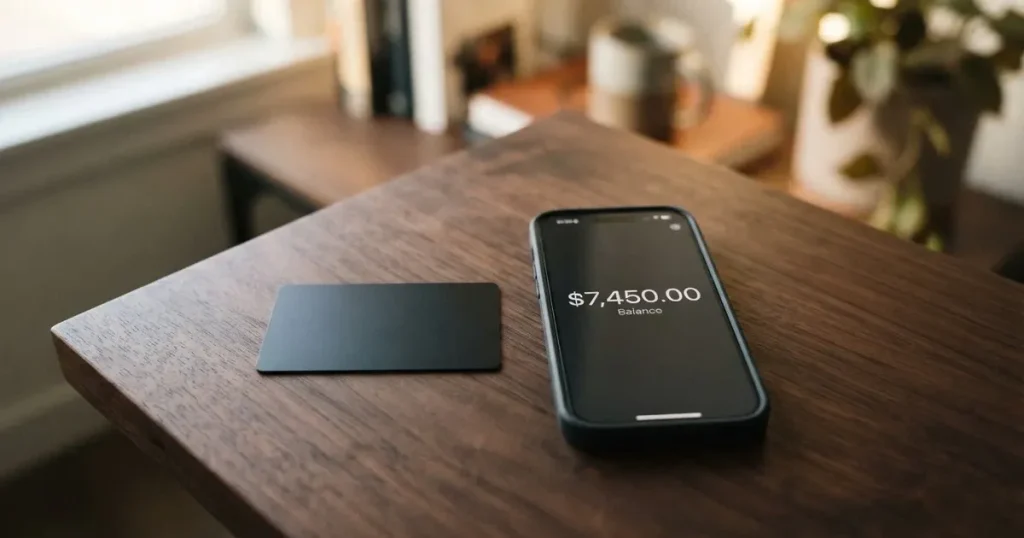
SolCard is a prepaid Visa-branded card that turns crypto into a spendable dollar balance, aimed squarely at people who want to pay for ordinary things from a crypto balance and who cannot get a normal bank card to cooperate. The idea is simple and, in fairness, the product does what it claims on paper: you load it with stablecoins or coins like SOL, USDC, ETH and BTC, and you spend dollars in shops. The reality around it is messier. There are two products with very different economics, a fee structure that quietly eats value on the entry side, a Hong Kong programme manager whose issuer is not named, and a complaints record that any honest reviewer has to put on the table before recommending anything.
My score is 5.6 out of 10. That is not a rounding of a better or worse number — it is the middle of a card that is genuinely convenient for one narrow group and genuinely risky for everyone else.
The conditions described here are current as of October 28, 2026.
Verdict: 5.6 out of 10, and it depends entirely on which of you you are
The score breaks down like this, criterion by criterion, with the marks exactly as I have them.
| Criterion | Mark | Why |
|---|---|---|
| Who can get it | 8 / 10 | Worldwide acceptance, “eligibility may vary by region”; Hong Kong residents and residents of sanctioned countries are excluded |
| Cost | 4 / 10 | Virtual: 5% + USD 10 top-up fee; FX 1-2%. Platinum: 0% top-up fee, FX 0-1.5%. No monthly fee, but 10% of balance per month after 90 days of inactivity |
| Top-up options | 6 / 10 | Stablecoins and crypto including SOL, USDC, ETH, BTC, from any wallet; networks are not named |
| Reliability and complaints | 3 / 10 | Issuer unnamed, SC PAYMENTS LIMITED (Hong Kong) is only the programme manager; Trustpilot 3.1 out of 5 with reports of stuck withdrawals and a card closed with funds inside |
| Everyday use | 7 / 10 | Virtual and physical Platinum, Apple Pay and Google Pay on Platinum only; ATM situation undisclosed; unofficial sources say physical cards are not being issued “for now” |
| Total | 5.6 / 10 |
If you hold SOL and want a USD card that spends from your balance without a bank’s approval process, the Platinum tier is the version worth looking at: no top-up fee, no published monthly spending cap, Apple Pay and Google Pay included, priority support in the terms. If you are not already inside crypto, the entry fee on the virtual card will cost you more than most people expect, and you would be starting from behind.
Who it does not suit: anyone whose money needs to be reliably withdrawable, anyone who has been burned before and cannot afford to be burned again, and anyone in a hurry. The complaints record is not a rumour I am repeating to frighten you — it is the single lowest mark on my sheet, and it deserves to shape the recommendation rather than sit in a footnote.
Who will they give you the card to?
Broadly: almost anyone, with caveats written into the terms that matter.
The card states worldwide acceptance and adds that “eligibility may vary by region”. That sentence is doing more work than it appears to. It means nobody has published a clean country list, and that the answer to “is SolCard available in my country?” is genuinely unknown from the card’s own pages.
What is excluded is stated clearly. Hong Kong residents, Hong Kong-domiciled persons and people located in Hong Kong are excluded. So are residents of countries under comprehensive sanctions by the UN, the US, the EU and the United Kingdom, and listed individuals. The practical reading: if you are in a sanctioned jurisdiction, this is not for you, and the card does not pretend otherwise.
There is one more structural point worth holding in mind while you read the rest. The company behind the card, SC PAYMENTS LIMITED, is registered in Hong Kong with BRN 78350827, at Unit 1603, 16/F, The L. Plaza, 367-375 Queen’s Road Central. Its stated role is programme manager and technology platform, and it says plainly that it is “not a bank”. The actual issuer is an unnamed licensed financial or e-money institution operating under a Visa licence. So you are not opening an account with the company whose website you are reading — you are opening it with a partner you are not told the name of. That is common in this category, and it is also exactly why you should read the terms rather than skim them.
How to get it
Expect verification, and do not assume how much of it.
The terms say that “identity verification may be required for certain card tiers, features, or spending limits”. Documents, proof of address and an age requirement of 18+ appear in the terms, but beyond that the card does not detail the process: no list of accepted documents, no stated processing time, no stated reasons for rejection, and no definition of the tiers that trigger which checks. The product page mentions only a “Dashboard”, and the platforms and store ratings were not found anywhere I could check.
On delivery, the card’s public pages do not say anything. That is worth stating plainly rather than filling the gap with an assumption.
What you get is one of two things. The virtual card is for online use with manually entered card details. The Platinum product is a physical card with contactless and Apple Pay and Google Pay. Both are issued under a Visa licence. The card currency is USD — implied by the pricing rather than stated outright.
There is a contradiction here that a careful reader should notice, because it changes what you can realistically expect to receive. Unofficial sources — the help centre text as reported by a third-party site on 11 August 2026 — say that no physical cards are being issued “for now”, and that the virtual card arrives in about 18 seconds once the first deposit confirms. At the same time, the product page sells a physical Platinum card, and a July 2025 Trustpilot review reports that physical cards with Apple Pay and Google Pay require identity verification. One third-party source also markets the virtual card as no-KYC, with verification attached to Platinum, which again does not match the official wording, which ties verification to tiers, features and limits rather than to one product name. The card’s own pages have not confirmed either version to me. My working assumption, and it is only an assumption, is that you will be using the virtual card first.
Fees: what it really costs
Here is the whole cost picture as the card publishes it.

| Fee or limit | Value |
|---|---|
| Virtual card top-up fee | 5% + USD 10 per new card (product page says “from USD 10”) |
| Platinum top-up fee | 0% |
| Monthly fee | None for active accounts |
| Dormancy fee | 10% of balance per month after 90 days of inactivity |
| FX rate, virtual | 1-2% |
| FX rate, Platinum | 0-1.5% |
| ATM withdrawal | Not stated |
| Virtual monthly spending limit | USD 5,000 |
| Platinum monthly spending limit | No limit |
Three everyday payments, to make this concrete.
Coffee abroad, virtual card. You are in a shop that charges you in euros. Your balance is dollars, so a conversion happens, and the virtual tier’s FX rate of 1-2% is what you pay on top. A USD 4 coffee becomes roughly USD 4.04 to USD 4.08 before the merchant’s own pricing. You also paid 5% plus USD 10 when you loaded the card in the first place, spread across whatever you loaded. The per-transaction cost is small; the loading cost is not.
An online subscription in dollars, virtual card. Here nothing exotic happens: the merchant sees a Visa, charges you dollars, and no FX applies. But you are still spending from a balance that cost you 5% plus USD 10 to create. If that subscription runs to, say, USD 20 a month, you are paying about USD 21 plus a share of the USD 10 — for every dollar of value, about five cents more than a dollar of value costs.
Anything at all, on Platinum. The 0% top-up fee and 0-1.5% FX rate change the arithmetic completely. This is the tier that makes sense if you are a regular spender rather than an occasional one. No published monthly cap, and no published monthly fee for active accounts.
The dormancy line deserves more attention than its position in the table suggests. 10% of the balance per month after 90 days of inactivity is not a rounding error; on USD 500 sitting untouched it is USD 50 a month. Whatever is in the card when you stop using it is being eaten on a schedule, whether you use it or not.
The card balance is in USD, and a foreign-exchange spread may apply when you spend in non-USD currencies. Top-ups with digital assets are also subject to fees and a conversion spread. Those two are separate from the numbers above, which is exactly the part people get caught by.
Top up: how money gets into the card
The accepted assets are clear: stablecoins and crypto including SOL, USDC, ETH and BTC, with “instant top-ups from any wallet”. The networks are not stated anywhere the card publishes — no list of chains, no indication of whether Solana, Ethereum or something else is expected for a given coin.
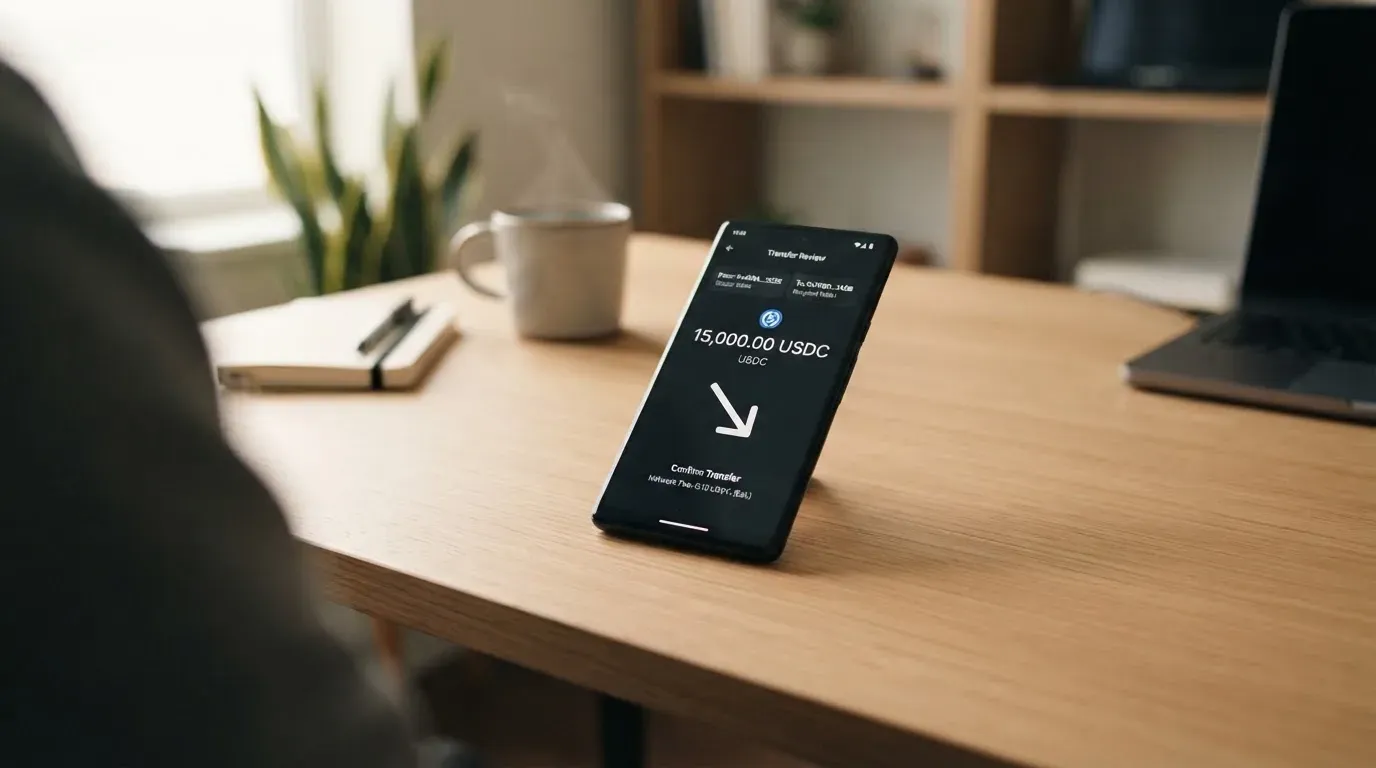
That missing detail is not a small one. Blockchain transfers are irreversible by their nature, and a deposit sent on a network the provider does not support, or to an address belonging to a different network, can be lost or need manual recovery with no guarantee attached. “Any wallet” tells you where the money comes from. It does not tell you where to send it. Before your first transfer, find the network in the app and match it there.
How the credit works is stated: crypto top-ups are credited in USD only after blockchain confirmation, at the price at that moment, less the displayed top-up fees and the conversion spread. Read that as the honest version of “instant”. The transfer itself is instant to send; the balance is credited when the chain says so, and at whatever the market has done in between. Minimum top-up amounts are published in the app and differ by card type. Fiat top-up options are not stated.
On the way out, unused balance can be withdrawn subject to minimums, verification and processing windows shown in the app. On cancellation, a balance at or above the published minimum refundable amount is returned and a balance below it is forfeited. On termination, eligible balances can be withdrawn except where holds, disputes, chargebacks or legal restrictions apply — and again, after 90 days of inactivity, the dormancy fee applies. Read those three sentences together and you will see the shape of the whole relationship: money in is straightforward, money out is conditional.
Paying with it every day
Where it works: anywhere Visa is accepted, subject to the regional eligibility caveat above. What you can actually do depends on the tier.
Apple Pay and Google Pay are not available on the virtual card and are included with Platinum. That is a substantial practical difference — typing a 16-digit number into every checkout is a friction that pushes people back to their old card, and if that friction is what stops you spending, the virtual tier may be self-defeating.
There is no published list of blocked merchants, but merchants restricted by the issuer or the card network may be declined. In this category that usually means gambling and similar high-risk merchant categories, and sometimes travel, fuel or adult merchants. Nobody publishes the list, so you find out by trying.
The ATM is not stated. Not “expensive” — not stated at all, which is a different problem, because you cannot budget around a number that does not exist publicly.
The dashboard is the only app surface the product page mentions. Rewards are not stated, and no cashback is mentioned anywhere in the card’s own material. One unofficial source reports no cashback and says eligible spending earns entries in a non-transferable prize draw instead, which is not the same thing as earning money back.
Disputes are the part I would want you to read twice. The terms give no dispute or refund time frames. Disputes can hold withdrawals. A handling fee may be charged for disproportionately many declines, reversals or disputes — note that word, disproportionately, and think about what it does to someone whose card is being declined for reasons outside their control. Contract disputes go to HKIAC arbitration in Hong Kong, in English, before one arbitrator. That is a real clause and it is far from where most of us live.
What can go wrong
Start with the complaints, because they are the reason for the lowest mark on my sheet.
Trustpilot reads 3.1 out of 5 from 29 reviews, of which 22 are from the last 12 months: 38% five-star, 52% one-star. That distribution is not a handful of unhappy customers; it is a split audience, which usually means two very different experiences depending on when you arrived and what happened. Trustpilot also attaches a notice that the company “may be associated with high-risk investments”.
The themes repeat. Withdrawals and transfers stuck, in September 2025, August 2026 and October 2026. Declined payments in October 2026. Unauthorised or disputed charges in June and July 2026. Support described as unresponsive or bot-like in March, August and October 2026. And a card cancelled with funds still on it, in September 2025. Separately, Tradersunion gives a trust score of 2.1 out of 5, though that score is automated.
Two fairness points. The sample is small — 29 reviews is not a dataset, and I am not going to pretend it settles anything. And the phishing flags attached to the name concern a look-alike domain, solcards.cc, not solcard.cc. If you see that warning while searching, it is not about the company itself.
The company’s own replies, per Trustpilot in October 2026, describe recent fixes: the USD 20 minimum withdrawal was removed, withdrawals and transfers were reworked, a deposit hold was fixed, and card declines are blamed on stricter card-issuer rules. A third-party source reports the company began publicly replying to older complaints in July 2026. I take that as a genuine effort rather than dismissal — but fixes announced in October 2026 tell you little about how the same category of complaint will be handled when you need it.
The structural risks are the ones no support team can fix.
The card is custodial. Your balance is held by SolCard and converted to USD on the way in. Control of crypto belongs to whoever holds the private key; where a provider holds the credentials, you trust them completely. And custody has a body count: Mt. Gox at about US$350 million reported stolen between 2011 and 2014, Coincheck at about US$400 million in 2018, Ronin Network at US$625 million in 2022. None of those were this card, but that is the category this money sits in.
You are liable for unauthorised use as the law allows, so protect the card number, CVV and PIN, and report loss promptly. Withdrawals may be delayed for a security review. Two-factor authentication, instant freeze and insurance are all not stated — the safeguards that most people assume a fintech has.
Then there is the licence risk, which is the one I would weigh most heavily. The issuer is unnamed. In this category, programmes do end: Visa terminated its global agreements with FTX on 13 November 2022 and the FTX US debit card was wound down, and WaveCrest, a Visa issuer that supplied crypto card brands, was suspended by Visa in Europe in 2018, closing all of its Visa programmes. Closures follow a shape — notice, then spending and loading stop, then you are asked to withdraw. One 2026 closure reported by a secondary source ended new loads on 8 July 2026 and spending on 8 August 2026; single source, unconfirmed, and I include it only as a shape rather than a fact.
What to take instead
None of these is a recommendation, and I would not switch you away from anything on the basis of a score. They are the alternatives I looked at while assessing SolCard, and the honest observation is that several of them are not obviously better.
| Alternative | Score | What it is | Where it looks weaker |
|---|---|---|---|
| Cardex | 5.6 / 10 | Crypto debit card on VERVE, Visa, Mastercard and UnionPay; “one crypto card, 200+ countries”; real-time crypto-to-fiat conversion at the moment of payment, with an “AI-Powered Conversion Rate” | No fee percentage published; no country or exclusion list; App Store listing is Naira-focused |
| CardFlow | 4.9 / 10 | Virtual USD Mastercard in about 3 minutes; aimed at Nigeria and “Nigerians and global users”; free to create; funded with Bitcoin, USDT, ETH or Naira bank transfer | Monthly fee and fees not stated; no exclusion list |
| HyperCard | 4.7 / 10 | Prepaid card with a USD or EUR balance; deposits crypto such as USDT, BTC and ETH in the app; App Store says it works in “more than 176 countries” | Card network not stated on the App Store page; no fees listed; 176 countries describes acceptance, not eligibility |
The pattern across all four is the same and it is worth naming: this category is thin on published detail. Networks unstated, fees unstated, exclusions unstated. SolCard at least publishes its dormancy fee, its FX band and its exclusions, which is more than most — and simultaneously publishes numbers that make the virtual tier expensive and a complaints record that makes the whole thing fragile. If you are choosing on transparency alone, it is not the clear winner either way.
One thing none of these cards fix: a card issued under a Visa licence looks, to a merchant’s systems, like a card issued in the country the issuer sits in, and that mismatch is a well-known cause of declines. It affects every card here.
Who I would recommend it to
To you, if all four of these are true. You already hold SOL or stablecoins and want to spend them as dollars without converting through an exchange. You spend in a way that makes 1-2% in foreign exchange irrelevant, because you mostly pay in dollars. You are on the Platinum tier, where the top-up fee is zero and Apple Pay works. And — this is the one people skip — you treat the balance as money you are willing to lose, because the complaints record gives you an honest reason to.
Not to you, if any of these apply. You need to get money out reliably and predictably, because “subject to minimums, verification and processing windows” and a 3.1-out-of-5 review history are not that. You are sending large sums you cannot afford to write off. You are in a hurry, because nobody publishes processing times. Or you are simply looking for a bank account, which this is not, and which the card’s own paperwork is careful to say out loud.
My honest summary is this: the product is competent within a narrow brief and the company is candid in its terms, and those two things together still are not enough to move it above the middle of the scale. The 5.6 is not a hedge. It is what a card that works on the happy path and goes quiet on the unhappy one has earned.
Frequently asked questions
What is SolCard card?
SolCard is a prepaid Visa card that converts crypto into a spendable dollar balance. You load it with stablecoins or coins such as SOL, USDC, ETH and BTC, then pay with it like an ordinary card in shops and online. It comes in two forms: a virtual card for online use and a physical Platinum card with contactless and Apple Pay and Google Pay. It is a prepaid card drawing on a stored balance, not a bank account, and the balance is held by the provider rather than by you.
How does SolCard card work?
You top up with crypto, the transfer is confirmed on the blockchain, and the amount is converted to dollars at that moment’s price, minus displayed fees and the conversion spread. The card then spends from that dollar balance. The balance is custodial: SolCard holds it, so the card behaves like a prepaid card and cannot overdraw. You are spending dollars by then, not crypto, which is why the FX rate matters when you pay in another currency.
Is SolCard card a bank?
No. The company behind it, SC PAYMENTS LIMITED in Hong Kong, describes itself as programme manager and technology platform and states it is “not a bank”. The card is issued under a Visa licence by an unnamed licensed financial or e-money institution. That partner is the regulated party; the company you are dealing with is the front end. Any confusion about this is worth resolving before you load money, because the entity that holds your balance may not be the entity whose terms you are reading.
Does SolCard card require KYC?
Possibly, and the wording is deliberately open. The terms say identity verification may be required for certain card tiers, features or spending limits. Documents, proof of address and 18+ appear in the terms, but the tiers are not defined, and no processing time or rejection reasons are given. Third-party sources report the virtual card marketed as no-KYC with verification on Platinum, which does not match the official wording. Treat verification as likely, and check in the app before you need it.
How much does SolCard card cost?
The virtual card charges a top-up fee of 5% plus USD 10 per new card, with FX of 1-2%. Platinum charges 0% to top up, with FX of 0-1.5%. There is no monthly fee on active accounts, but a dormancy fee of 10% of the balance per month applies after 90 days of inactivity. On-chain network fees for your deposit are charged by the blockchain, not by the card. The single most important line for most people is the dormancy fee.
Can I add SolCard card to Apple Wallet?
On Platinum, yes — Apple Pay and Google Pay are included. On the virtual card, no: neither wallet is available there. That is a real practical difference, since entering card details by hand at every checkout is the friction that makes people go back to their old card. If wallet payments are how you intend to use this, Platinum is the tier to look at.
How do I top up SolCard card?
You send stablecoins or crypto — SOL, USDC, ETH and BTC — from any wallet, and the card says top-ups are instant. In practice the balance is credited in USD only after the blockchain confirms, at the price at that moment, less fees and conversion spread. Critically, the supported networks are not stated on the card’s pages, so confirm the network in the app before sending, because transfers are irreversible and a wrong network can mean lost funds.
Can I withdraw money from SolCard?
Unused balance can be withdrawn, subject to minimums, verification and processing windows shown in the app. On cancellation, a balance at or above the published minimum refundable amount is returned and anything below it is forfeited. Disputes, chargebacks, holds and legal restrictions can all block a withdrawal, and after 90 days of inactivity the 10% monthly dormancy fee starts. The company says it removed a USD 20 minimum withdrawal in October 2026.
Is SolCard card safe?
Treat it as custodial and treat the balance as at risk. SolCard holds your funds, which adds counterparty and hack risk, and the platform’s record includes Mt. Gox, Coincheck and Ronin Network. Two-factor authentication, instant freeze and insurance are not stated. Protect the card number, CVV and PIN, report loss promptly, and note that the issuer is unnamed so the licence you would rely on is not one you can inspect. Note also that phishing warnings about solcards.cc refer to a look-alike domain, not to solcard.cc.
Is SolCard card worth it?
On Platinum, for someone already holding crypto who spends mostly in dollars and treats the balance as money they could lose — yes, that is a defensible use. On the virtual card, the 5% plus USD 10 entry fee makes it poor value for occasional spending. For anyone who needs dependable withdrawals, or who is moving significant money, the 3.1-out-of-5 Trustpilot score and the reports of stuck transfers and cards closed with funds inside make it the wrong tool, whatever the fee.
Virtual card reviews – cryptocardcheck
Content created by the «cryptocardcheck» team