
A free Mastercard virtual card that converts crypto at every tap — and the catches that come with it
 Available in US
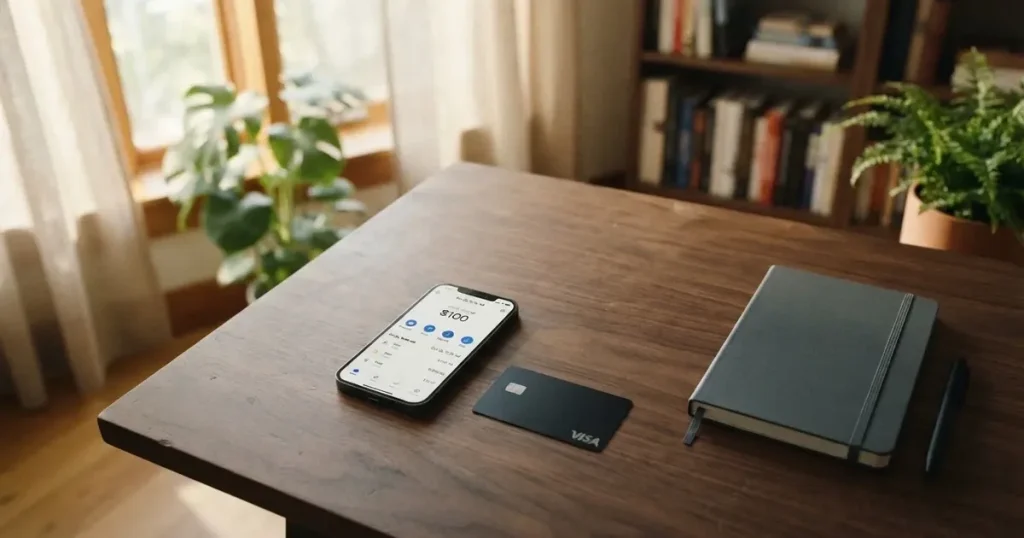
The SwissBorg Card is a Mastercard debit card that spends straight out of the crypto balances sitting in your SwissBorg app. There is no separate card wallet to top up and no fiat balance to load: you hold BTC, ETH, SOL, BORG, USDC, USDG, EUROP or TGBP in the app, and every purchase converts some of it at the moment you tap. It is virtual only for now, it is free to issue and free to keep, and the headline cost is a 0.99% conversion fee on every transaction plus whatever the crypto market does to your asset between one moment and the next. On paper that is one of the least expensive ways to spend crypto, and it works in an enormous part of Europe. What holds it back is not the pricing but the plumbing: no ATM, no fiat spending, a Lithuanian issuer that was fined in late 2025, and a steady stream of user reports about frozen accounts and slow support.
The conditions described here are current as of October 28, 2026.
The score: 6.2 out of 10, and who it actually fits
My score is 6.2 out of 10. The pricing earns almost full marks; almost everything else lands in the middle. For the specific person this card was built for — a resident of the EU, Switzerland or the UK who already holds crypto in the SwissBorg app and wants a free virtual card to spend it from — the value is real. If you are starting from nothing, if you need cash from a machine, or if you want to be able to explain where your money is to a bank, this is the wrong instrument.
| Criterion | Mark | Why |
|---|---|---|
| Who can get it | 5 / 10 | Residents of the EEA (30 countries), Switzerland and the United Kingdom; one large region |
| Cost | 9 / 10 | Issuance and servicing are free, crypto conversion 0.99% on each purchase, no separate FX fee; ATM unavailable |
| Top-up options | 6 / 10 | Spends directly from the app crypto balance: BTC, ETH, SOL, BORG, USDC, USDG, EUROP, TGBP; USDT and Tron are not named, fiat on the card does not work |
| Reliability and complaints | 5 / 10 | Issuer UAB Monavate is supervised by the Bank of Lithuania but was fined €270,000 on 2025-11-25; Trustpilot 3.1, complaints about account freezes and slow support replies |
| Everyday use | 5 / 10 | Virtual card instantly, Apple Pay and Google Pay available; plastic only planned, ATM unavailable |
| Total | 6.2 / 10 | Strong cost, average everywhere else |
Read that table honestly rather than averaging it in your head. The Cost row is the reason the total is not lower, and it deserves the emphasis: there is genuinely nothing to pay to hold this card. What drags the rest down is availability of cash, the single-asset spending design, and the complaint pattern. Neither of those is a scandal, but both are things you will meet in week one if you use the card for daily life rather than novelty spending.
Who they will give the card to
The gate is residence, and it is a wide but bounded one. The card is available to residents of the EEA — 30 countries: Austria, Belgium, Croatia, Cyprus, Czechia, Denmark, Estonia, Finland, France, Germany, Greece, Iceland, Ireland, Italy, Latvia, Liechtenstein, Lithuania, Luxembourg, Malta, Netherlands, Norway, Poland, Portugal, Romania, Slovakia, Slovenia, Spain, Sweden — plus Switzerland and the United Kingdom. The card states the requirement plainly as residence: “Reside in one of the following countries.” Citizenship is not the test as the card words it, though in practice a residence permit in one of these countries is not something you obtain instantly.
One restriction to internalise before anything else: the card cannot be used in Russia or Belarus. Both sit on the restricted countries list, which reads in part “Afghanistan, Belarus, … Russia, …”. That list is about where the card works, not merely who can hold it, so if you are a resident of one of the thirty countries who travels or has family in Russia or Belarus, that is a gap in your coverage rather than a formality.
What this means for you in practice: if you can show a verified address in the EEA, Switzerland or the UK, you are inside the intended audience. If you live anywhere else, no amount of good intentions gets you past this, and you should not waste an evening trying. Note also that the United Kingdom was added comparatively late — 2026-08-27 in the card’s own timeline — so if you have been reading older comparisons, the country list in them is out of date.
How to get it
The path is short, and the card is virtual only. You need KYC Level 2, which means a verified photo ID and a verified proof of address, and you need to be at least 18. The steps: download the SwissBorg app, open a personal account and complete KYC Level 2, tap Card on the Portfolio screen and accept the terms, then choose a primary cryptocurrency. The virtual card is ready instantly.
Two things about that sequence deserve your attention. First, choosing a primary cryptocurrency is not a cosmetic setting. The card spends from that asset by default, and you can add optional backup currencies, but the system picks a backup dynamically when the primary balance is short — which means the asset that gets sold is decided by a rule, not by you at the till. Second, what you receive is a Mastercard debit card, virtual, in the app. The card base currency is EUR, CHF or GBP depending on your country of residence, and that choice cannot be changed after issuance. So a UK resident who later moves to Spain still holds a GBP card.
The platform has account levels beyond the card’s own requirement, and they are worth knowing because your card spending draws on the same account limits. Level 1 is a EUR 5,000 cumulative deposit/withdrawal limit; Level 2 is EUR 50,000 deposit in and EUR 1,000,000 withdrawal out; Level 3 is unlimited. The card specifically requires Level 2. Processing time and stated rejection reasons are not stated publicly, which means you are relying on the app’s own flow and on support if something stalls.
On the physical card: it is planned for a later phase. The card’s own wording is that “Depending on community demand, physical cards may become available with an additional issuance and shipping fee.” Delivery time, cost and replacement cost for physical cards are not stated. So if you are looking for a plastic card in a postbox, that is not this product yet, and no one can tell you what it would cost.
| Thing | What the card says |
|---|---|
| Card type | Mastercard debit, virtual |
| Physical card | Planned for a later phase; issuance and shipping fee may apply |
| Base currency | EUR, CHF or GBP by country of residence; cannot be changed after issuance |
| Minimum age | 18 |
| KYC needed | Level 2 — verified photo ID and verified address |
| App platforms | iOS and Android |
| Apple Pay | Supported; initially Switzerland and France, latest app version and Level 2 required |
| Google Pay | Supported |
| Curve | Supported |
Fees: what it really costs to use this card
Issuance and servicing are free, and there is no annual fee. The only standing cost of this card is the conversion fee, charged per purchase. A 0.99% exchange fee applies on each card transaction, with real-time conversion through the SwissBorg Meta-Exchange, and an additional real-time market-liquidity adjustment may be applied. There is no additional FX fee from SwissBorg; transactions in a currency other than your card’s base currency use the Mastercard exchange rate.
| Fee or limit | Value |
|---|---|
| Issuance fee | None |
| Monthly / annual fee | None |
| Crypto-to-fiat conversion | 0.99% on each card transaction |
| Market-liquidity adjustment | May be applied, real-time |
| FX fee from SwissBorg | None; Mastercard exchange rate applies on non-base-currency transactions |
| ATM cash withdrawal | Not available at launch; “This feature might be considered in a future iteration” |
| ATM balance check | Not currently available |
| Spending limits | Daily, monthly and annual limits exist; exact figures not stated |
Let me take three ordinary payments and show you what lands, using only the card’s stated rates and nothing invented.
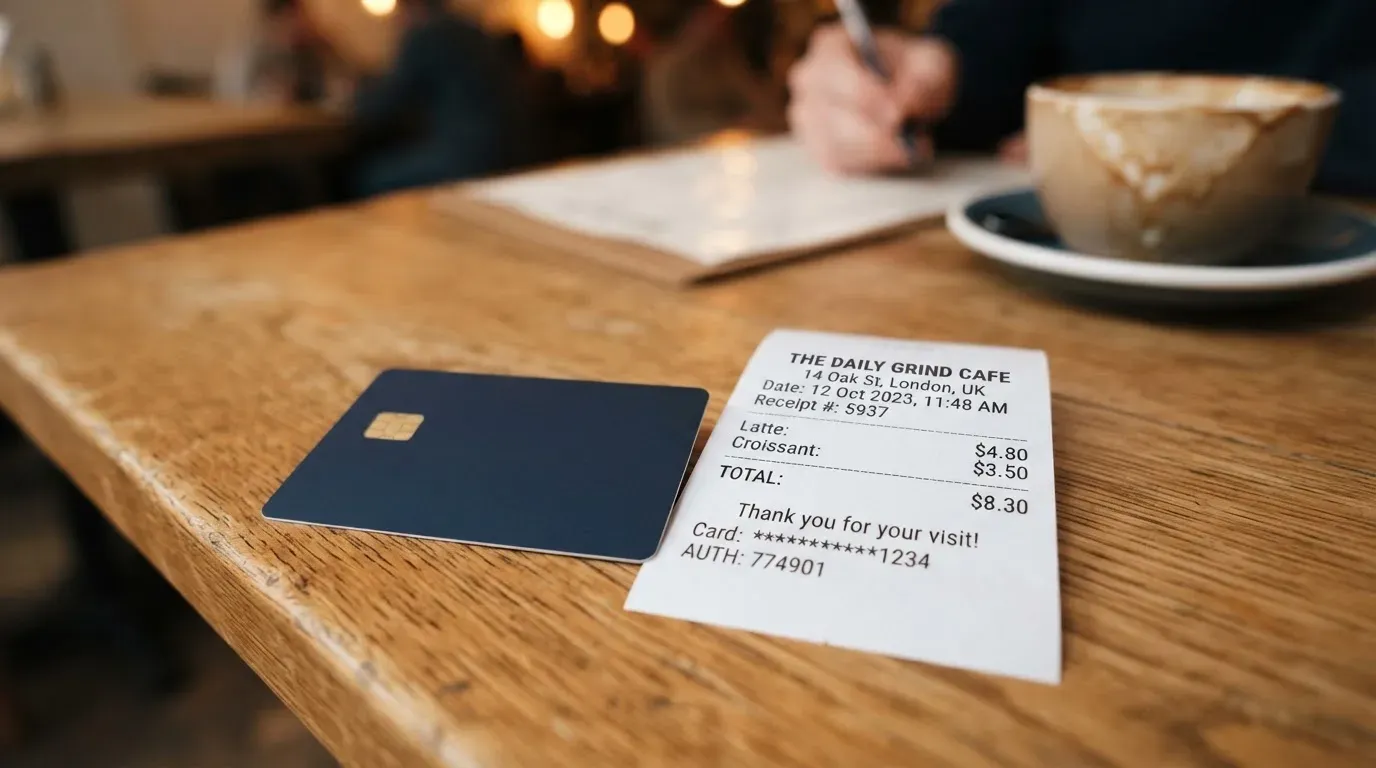
A €20 lunch, base currency EUR, paid from a USDC balance. The 0.99% conversion fee is the only SwissBorg charge on that transaction: €0.198. No separate FX fee, because the purchase is in your base currency. This is the cheapest way to use the card.
The same €20 lunch paid while you are travelling, in a currency that is not your base. The 0.99% still applies to the conversion of your crypto, and the foreign-currency leg is handled at the Mastercard exchange rate with no SwissBorg FX fee on top. You are exposed to that exchange rate rather than to a second SwissBorg charge, which is the friendlier of the two arrangements — but the Mastercard rate is not a promise, and a real-time adjustment may also apply.
A €40 supermarket shop that turns out to be declined. A declined authorisation can leave a hold on your funds that can remain for several days, typically up to 7. On a card where the money is already spent from a crypto balance, that hold eats into what you thought was available. Declines are not free in convenience, and the reason for a decline is often not visible to you.
Then there is the cost that is not a fee at all: the conversion happens at a live price, so if the asset you are spending appreciates in the seconds between authorising and settling, the good news is theoretical. The liquidity adjustment exists precisely because the price you get is not always the price on the screen.
Top up: there is no card top-up, by design
The card spends directly from crypto balances in the SwissBorg app — no separate top-up needed. This is the single structural fact that makes the SwissBorg Card different from most cards in this category, and it is worth sitting with. Supported cryptocurrencies are BTC, ETH, SOL, BORG, USDC, USDG, EUROP and TGBP. You pick one primary currency and optional backups, and the system dynamically selects a backup if the primary balance is insufficient. Fiat balances cannot be used with the card at all.
So the question “how do I top up the card” has an answer that surprises people: you don’t. You buy or hold crypto in the app, and that crypto is the balance.
| Funding route | Cost |
|---|---|
| Crypto deposit to the wallet | Free; you pay the sending platform/network gas fees |
| Bank transfer deposit | Free; the sending bank may charge you |
| Card / Apple Pay / Google Pay deposit, Standard countries (most EU) | 2.25%–1.5% by rank; minimum deposit €10; minimum fee €5 (Standard, Bronze) or €3 (Silver–Elite) |
| Card / Apple Pay / Google Pay deposit, International (e.g. UK, Switzerland) | 4.5%–3.75% by rank; same minimums |
| Fiat top-up to the SwissBorg app by bank transfer | Free |
The third row is the one to look at twice. If you were planning to buy crypto with a debit card, you pay 2.25% at Standard rank in most of the EU, rising to 4.5% at Standard rank in the UK and Switzerland, and the rank discounts run to 1.5% and 3.75% respectively at the top. That is the price of getting crypto into the app at all, and it is separate from the 0.99% you pay when you spend it. Two fees, two directions, and the inbound one is the larger at the ranks most people will actually be on.
Getting money back out is cheaper and has its own shape. Refunds from purchases are credited to your fiat account in the card’s base currency — EUR, CHF or GBP. Fiat withdrawal from the app carries a 0.10% execution fee with a minimum and maximum per currency (EUR min 1.50, max 100; CHF min 5, max 110; GBP min 1.50, max 85). Crypto withdrawal is a 0.10% execution fee with per-asset and per-network minimums and maximums, plus real-time network gas fees. On account closure, funds held on the card are redeemable for up to 6 years; after 12 months from the end of the agreement a monthly maintenance fee is deducted, and if the agreement is ended within 6 months a closure fee may apply.
One trap worth naming plainly: because the card draws on crypto, spending it is not the same as spending a bank balance. If you want to move money out of the platform rather than spend it, you are making a withdrawal with its own fees, not a card purchase.
Paying with it every day
The card is virtual, it lands in your app instantly, and it works with the mobile wallets you already use. Apple Pay and Google Pay are both supported, and Curve is supported too. Apple Pay was initially available in Switzerland and France and requires the latest app version plus KYC Level 2.
Prohibited merchant categories are worth reading before you assume a decline was bad luck. The card blocks gambling and betting, adult content and services, cryptocurrency purchases, financial services like money transfers, illegal goods such as drugs and weapons, cash advances, and certain government services. The gambling block is common across this category and usually reflects issuer policy rather than law, but in practice it means no casinos and no betting shops, full stop.
The card also has daily, monthly and annual spending limits, limits on single transactions and on the number of transactions per day and month. The exact figures are not stated publicly — the card says they are “subject to regulatory requirements and risk assessments and may be adjusted at any time”. Your card spend also counts toward the SwissBorg total account withdrawal limits tied to your KYC level. That is the sentence to keep in mind if you are a heavy spender: the limits are not only the card’s, they are shared with the platform’s.
Rewards exist and are structured unusually. Cashback is paid in BORG tokens, calculated as a percentage of the exchange fee on each card purchase, and the rate depends on your Loyalty Rank: Standard 5%, Bronze 15%, Silver 30%, Gold 50%, Platinum 65%, Diamond 80%, Elite 90%. The seven ranks are based on BORG locked: Standard at 0 BORG, Bronze 1,000, Silver 3,000, Gold 10,000, Platinum 30,000, Diamond 60,000, Elite 100,000. Higher ranks also unlock a yield boost multiplier (1x→2x), priority access to Alpha Deals, governance voting power at 10 BORG per vote, ecosystem reward multipliers and a referral boost.
Two warnings on the rewards. They are not guaranteed: SwissBorg reserves the right to modify, suspend or discontinue cashback at any time, so do not treat the 50% figure at Gold as a yield you have been owed. And BORG rewards are locked for a period under the “Paid to Trade” program, so the cashback is not immediately spendable money. The discount is also small in absolute terms — 5% of a 0.99% fee is a rounding error on a normal purchase.
App ratings are respectable rather than glowing: Google Play (en_GB) 4.6 across roughly 15.2K reviews, read 2026-10-21, and the App Store (Ireland) 4.4 across 88 ratings, read the same day. The official SwissBorg website footer shows Google Play 4.2 and App Store 4.6, so the numbers move between storefronts and over time.
One category fact worth knowing when a shop declines you: a merchant category code (MCC) is a four-digit number classifying a business by goods or services, and merchants can also look up the issuing institution and country from the card’s identification number. A card issued in one country can therefore look foreign to a shop in another, and some merchants decline prepaid or foreign-issued cards for that reason. If SwissBorg declines feel random to you, this is one of the mechanical reasons behind them, and it is not something you can argue with at the till.
When something goes wrong with a payment
The card sets a clock on you. For any dispute, you must contact SwissBorg via the app (Profile > Support) or at [email protected] within 8 weeks of the transaction date. SwissBorg will assist with resolving it or forward it to the card network. Where a refund applies — the merchant did not specify the exact amount and the amount exceeded reasonable expectations — it comes within 10 business days of receiving the claim or further information.
Unauthorised transactions carry a stated limit of liability: EUR 50 if the card is lost, stolen or misappropriated, except in cases of fraud or gross negligence. You must report without undue delay and no later than 13 months. Reversals and refunds are credited to your fiat account in the card’s base currency, and the original crypto-to-fiat conversion fee is not refunded. That last clause is the one people notice: if a purchase is reversed, you keep the goods-money but you do not get the 0.99% back.
What can go wrong
The most-reported problems are not about the card; they are about the account underneath it. The clearest hard fact is regulatory. The card issuer is UAB Monavate, incorporated in Lithuania, authorised by the Bank of Lithuania (authorisation code LB002139901097) to issue electronic money and provide payment services. On 2025-11-25 the Bank of Lithuania fined Monavate €270,000 with a warning for breaches related to AML, management and reporting obligations. A supervised issuer is supervised; a supervised issuer can still be fined, and this one was, recently, for exactly the compliance area that governs whether your account gets frozen.
The soft facts are user reports, and I am labelling them as such. Trustpilot shows a TrustScore of 3.1 out of 5 across approximately 1,900 reviews (NeoBase aggregation, read 2026-09-15). Recurring themes, in user accounts throughout 2025–2026 across Trustpilot, Reddit and Google Play reviews:
- Account freezes and restrictions without clear explanation or warning, sometimes after deposits, sometimes taking weeks to resolve.
- Slow or unresponsive support — tickets unanswered for days or weeks, with what users describe as silence after an initial response.
- Card, Apple Pay and Google Pay deposit cooldown periods, where funds are held during mandatory security periods and users cannot access or withdraw them.
None of that is a confirmed pattern established by a regulator; it is a consistent set of complaints from people who used the service. What it does tell you is where the friction concentrates — at the deposit-and-account stage, not the tap stage.
Ownership and structure are clearer than the complaints. The SwissBorg app is owned by SBorg SA, Rue du Grand-Chêne 8, 1003 Lausanne, Switzerland. BlockNodes SAS (29 rue Blanche, 75009 Paris, France) holds MiCA authorisation number A2026-011 from France’s AMF. Card issuance sits with Monavate. So a crypto platform, an EU-authorised crypto entity and a Lithuanian e-money issuer are three separate parties in the chain. You are dealing with all three.
The custody question is the one enthusiasts always ask, and here the answer is custodial. Funds are held in the SwissBorg wallet, which means you are trusting the provider with the credentials. The category background explains why that matters: control of crypto belongs to whoever holds the private key or seed phrase, transfers are typically irreversible, and a stolen key has no built-in recovery because the network cannot freeze or return funds. Custodial platforms have a documented history — Mt. Gox (about US$350 million reported stolen 2011–2014), Coincheck (about US$400 million, 2018), Ronin Network (US$625 million, 2022). Holding with a custodian carries counterparty and hack risk, and a self-custody-linked card avoids it by keeping your funds in your own wallet until the moment of payment, at the price of sole responsibility for key loss and phishing.
There are real protections on the card side. 3D Secure is used for online transactions with in-app biometric approval. You can freeze and unfreeze the card instantly in the app, and a stolen virtual card can be reported that way or to [email protected]. Spending limits are adjustable in the same place. But funds on the card are not protected by the Financial Services Compensation Scheme, and Monavate follows Electronic Money Regulations 2011 for safeguarding. That is e-money protection, not bank-deposit protection: safeguarded, not deposit-guaranteed.
Support reach: in-app chat, email at [email protected], and a help centre. The issuer Monavate is also reachable by phone (+37069870638) and email at [email protected]. Communication is in English — the card terms say in section 11.3: “We will communicate with you in English.”
One timing point that is easy to miss. The virtual card launched 2026-02-25 in a phased rollout to the EEA (29 countries) and Switzerland, on the back of an official Mastercard partnership announced 2026-02-18. The Card Rulebook v0.1 was only published 2026-07-22. A card that is still in its early stages, with a rulebook at version zero point one, is going to change. That is not a red flag; it is a fact about how new it is.
What to take instead
Three alternatives, all read from their own public pages, so treat them as snapshots rather than verdicts.
| Card | Score | Card type | Cost | Conversion / FX | Funding | Rewards |
|---|---|---|---|---|---|---|
| SwissBorg | 6.2 | Mastercard debit, virtual | Free | 0.99% per purchase; no extra FX fee | From crypto balance in app | Cashback in BORG, 5%→90% by rank |
| International Visa Card | 6.7 (unofficial estimate) | US-issued Platinum Visa, virtual; pays in USD | $5 issuance, no maintenance; plans Classic free, Pro $9.00/mo, Max $19.00/mo | USD free on all plans; abroad “Visa exchange rate + 2% FX fee” | USDC or USDT 1:1 into the USD account; also USD, EUR, SEPA, SWIFT, FedNow | Not stated |
| UNi Card | 6.1 | Mastercard, multicurrency, spends from UNi.Global balance | “No annual fee”; issuance not stated | “No annual fee or foreign transaction fee”; live OTC rates, “No hidden exchange fees” | Not stated | Up to 3% |
| Whop Cards | 5.2 | Visa, works where Visa is accepted | “No extra fees”; no amounts listed | Not stated | Spends from a Whop balance; stablecoin-collateral backed | 5% cashback at select merchants, currently Uber |
Eligibility differs in ways that may decide it for you before price does. The International Visa Card is not available to residents or legal registrants of Belarus, mainland China, North Korea, Cuba, India, Iraq, Iran, Israel, Myanmar, Nepal, Nicaragua, Russia, Syria, Turkey, Ukraine, Venezuela or Vietnam; FATF grey-list countries are reviewed case by case with compliance approval; and purchases are blocked in North Korea, Cuba, Iran, Russia, Syria, Ukraine and Venezuela. Its rule is by residence or registration, with citizenship not mentioned. Whop Cards cover 31 US states for consumers (Alabama, Alaska, Arkansas, California, Colorado, Connecticut, Florida, Hawaii, Illinois, Indiana, Iowa, Kansas, Kentucky, Maine, Massachusetts, Michigan, Minnesota, Montana, Nebraska, New Hampshire, New Jersey, New Mexico is not listed, New York, North Carolina, Oklahoma, Oregon is not listed, Pennsylvania, South Carolina, South Dakota is not listed, Tennessee is not listed, Texas, Utah, Vermont is not listed, Virginia, Washington, West Virginia, Wisconsin is not listed, Wyoming) and 41 states for businesses, with a similar unsupported-country list for consumers including Belarus, mainland China, Cuba, Hong Kong, India, Iran, Iraq, Israel, Myanmar, Nepal, Nicaragua, North Korea, Russia, Syria, Turkey, Ukraine, Venezuela and Vietnam; whether the test is citizenship or residence is not stated. UNi Card’s availability is not stated at all.
Where the SwissBorg Card wins is narrow and clear: it is the only one of the four that combines free issuance, no annual fee and no separate FX fee, and the only one that spends a genuinely broad crypto balance including BTC, ETH and SOL rather than only stablecoins. If you want a card you can keep for years without a subscription, and you already hold those assets, nothing else here matches it.
Where it loses is equally clear. No ATM, no fiat spending, no physical card, and an issuer with a recent fine. The International Visa Card costs $5 to open and 2% abroad, but has none of those gaps and pays in USD from a stablecoin balance. UNi Card claims no FX fee at all with live OTC rates, which on paper beats 0.99% if you are converting anyway — though you would be relying on a claim rather than a rate. Whop Cards are a niche: US-state coverage and a balance model aimed at sellers.
Who I would recommend it to
I would recommend this card to a resident of the EU, Switzerland or the UK who already keeps crypto in the SwissBorg app, spends most of their money in their card’s base currency, and has accepted that there is no cash machine and no plastic yet. Under those conditions it is very hard to argue with: no issuance fee, no annual fee, no FX fee of its own, and 0.99% per tap is a genuinely low cost for turning volatile assets into everyday purchases. Apple Pay and Google Pay make it usable in the situations where a virtual card number is awkward. If you are new to crypto, do not start here — this card spends what you hold, and the temptation to spend coins you meant to keep is real.
I would not recommend it if any of the following is true. You need cash from an ATM. You need a card that works from a fiat balance or that a bank can see as ordinary spending. You live outside the EEA, Switzerland or the UK, or you need the card to work in Russia or Belarus. You are the kind of person for whom an account freeze without explanation would be intolerable, because the complaint pattern points at exactly that risk and you would be relying on support responsiveness that users describe as slow. Or you intend to spend heavily and want to know your limits in advance, because the limits are not published.
The honest summary is that this is a very cheap crypto-spending tool attached to a young platform with a young rulebook and a real, documented complaint history. It is not a replacement for a normal bank card, and it was never meant to be. Used for what it is actually good at — turning crypto into a small number of everyday purchases at a low flat fee — it works. Anything more ambitious and you are borrowing risk from a provider you cannot inspect.
Frequently asked questions
What is the SwissBorg Card?
The SwissBorg Card is a Mastercard debit card, virtual at launch, that spends directly from crypto balances held in the SwissBorg app. You do not load a card balance; the crypto is the balance. It converts at the moment of payment for a 0.99% fee, supports Apple Pay and Google Pay, and comes with no issuance or annual charge. A physical card is planned for a later phase.
Is SwissBorg a bank?
No — SwissBorg is a crypto platform, not a bank. The app is owned by SBorg SA in Lausanne, Switzerland. The card itself is issued by UAB Monavate, a Lithuanian electronic money institution authorised by the Bank of Lithuania. Funds on the card are e-money safeguarded under Electronic Money Regulations 2011, not bank deposits, so deposit-guarantee schemes do not apply.
Who can get the SwissBorg Card?
Residents of the EEA — 30 countries including Austria, Belgium, Croatia, Cyprus, Czechia, Denmark, Estonia, Finland, France, Germany, Greece, Iceland, Ireland, Italy, Latvia, Liechtenstein, Lithuania, Luxembourg, Malta, Netherlands, Norway, Poland, Portugal, Romania, Slovakia, Slovenia, Spain and Sweden — plus Switzerland and the United Kingdom, added 2026-08-27. The card cannot be used in Russia or Belarus, which are on the restricted countries list. You must be 18 or older and pass KYC Level 2.
How much does the SwissBorg Card cost?
Issuance is free and there is no service or annual fee for the virtual card. Each purchase carries a 0.99% crypto-to-fiat exchange fee, and a real-time market-liquidity adjustment may also apply. SwissBorg adds no separate FX fee; non-base-currency transactions use the Mastercard exchange rate. Cash withdrawals at ATMs are not currently available.
How do I top up the SwissBorg Card?
You do not top it up — the card spends straight from crypto held in the app. Supported assets are BTC, ETH, SOL, BORG, USDC, USDG, EUROP and TGBP, with one primary currency and optional backups. Getting that crypto in costs nothing for a crypto transfer or bank transfer, but card, Apple Pay and Google Pay deposits cost 2.25%–1.5% by rank in most EU countries and 4.5%–3.75% in the UK and Switzerland.
Does the SwissBorg Card require KYC?
Yes, KYC Level 2: a verified photo ID and a verified proof of address, plus being at least 18. Download the app, open a personal account, complete Level 2, tap Card on the Portfolio screen, accept the terms, then choose a primary cryptocurrency. Apple Pay also requires Level 2 and the latest app version. (Note: The following platform limits are unofficial estimates: Level 1 carries a EUR 5,000 cumulative limit, Level 2 EUR 50,000 in and EUR 1,000,000 out, Level 3 unlimited.)
Is the SwissBorg Card safe?
Safety here has two halves. The card itself uses 3D Secure with in-app biometric approval, and you can freeze it instantly in the app. But the funds are custodial — held by the provider — and funds on the card are not covered by the Financial Services Compensation Scheme. Separately, the issuer UAB Monavate was fined €270,000 with a warning by the Bank of Lithuania on 2025-11-25, so weigh the supervision alongside the record.
Can I add the SwissBorg Card to Apple Wallet?
Yes, Apple Pay is supported. It was initially available in Switzerland and France, and it requires the latest version of the app plus KYC Level 2. Google Pay is supported as well, and Curve is supported too. Adding the card to a wallet replaces the number with a device-specific token in the Secure Element, so the raw card number is not stored on Apple’s servers.
What are the limits on the SwissBorg Card?
The card has daily, monthly and annual spending limits, plus caps on single transactions and on the number of transactions per day and month — but the exact figures are not stated publicly. The card says they are subject to regulatory requirements and risk assessments and may be adjusted at any time. Card spending also counts toward the SwissBorg account withdrawal limits tied to your KYC level.
How do I withdraw money from SwissBorg?
Fiat withdrawal from the app costs a 0.10% execution fee with per-currency minimums and maximums, for example EUR min 1.50 and max 100, CHF min 5 and max 110, GBP min 1.50 and max 85. Crypto withdrawal is also 0.10% plus real-time network gas fees, with per-asset and per-network minimums and maximums. Refunds from card purchases are credited to your fiat account in the card’s base currency, and the original conversion fee is not refunded.
App and neobank card reviews – cryptocardcheck
Content created by the «cryptocardcheck» team