
A crypto card that spends from your own wallet, priced on an NFT, and light on published detail
 Available in US
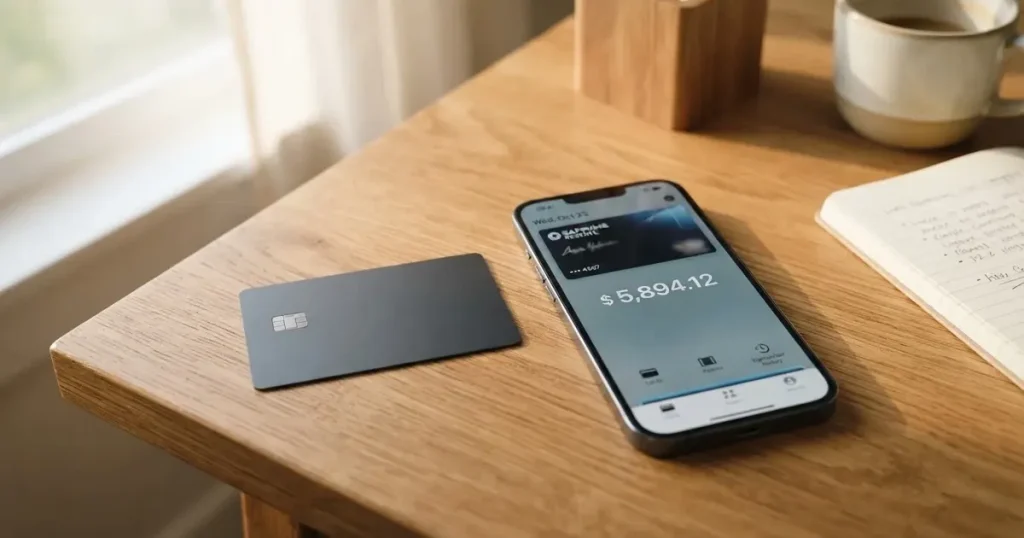
The TokenPocket card is a Visa or Mastercard debit card that spends a balance you load from a crypto wallet. The card runs on Arbitrum, holds its balance in EUR24 and USD24, and is unlocked by minting an account NFT — the NFT creation fee is partly covered by TokenPocket and you pay a small portion. On paper it is a sensible fit for someone already holding stablecoins who wants to spend them without going through an exchange every time. The gap between the paper version and the published version is where the problems are. The card’s own FAQ does not name its issuer, does not publish a fee table beyond a 1% deposit charge, does not say whether a physical card exists, and does not list which coins and networks you can actually deposit. Support emails point to Fiat24, and Fiat24’s Trustpilot record is 2.2 out of 5 from 8 reviews, every one of them 1-star.
My score is 5.8 out of 10. That is not a dismissal — it is a card with genuinely good eligibility coverage and a low headline cost, sitting on top of a stack of unpublished detail and a weak complaint record. Whether that lands acceptably depends entirely on what you are trying to solve.
The conditions described here are current as of October 28, 2026.
Verdict
5.8 out of 10. Who this card suits: someone who already lives on Arbitrum, already holds a stablecoin, is resident in one of the listed European countries or one of the listed Asia-Pacific countries, and wants a card that spends that balance with a single 1% charge on the way in and nothing obviously stacked on top. Someone who wants a physical card in the post, wants to see a named issuer and a published fee table, or lives in the Americas and wants the thing working today — this is not the card.
Here is the breakdown.
| Criterion | Mark | Why |
|---|---|---|
| Who can get it | 7 / 10 | Visa debit for a list of European countries and territories — Germany, France, Spain, Switzerland among them; Mastercard debit for Australia, Canada, Hong Kong, Japan, Taiwan, New Zealand, Singapore, South Korea, the UK; the Americas were “planned for Q2 2025” |
| Cost | 7 / 10 | NFT creation is partly covered by TokenPocket and the user pays a “small portion”; 1% on depositing crypto; beyond that the card charges no additional fees |
| Top-up options | 4 / 10 | Crypto deposits from a TokenPocket wallet on Arbitrum; the FAQ names no specific coins or networks; balances in EUR24 and USD24 |
| Reliability and complaints | 4 / 10 | Issuer not named in the FAQ; support sits with Fiat24, whose Trustpilot score is 2.2 out of 5 from 8 reviews, all 1-star, with complaints about silent support and delayed funds |
| Everyday use | 6 / 10 | Apple Pay, Google Pay, Samsung Pay, Alipay and WeChat Pay; cards are virtual, and whether plastic exists is not revealed |
| Total | 5.8 / 10 | Good reach, fair price, thin disclosure |
The audience this really speaks to is TokenPocket users spending crypto in Europe and Asia-Pacific. If that is you, keep reading — there are genuine strengths here, particularly around who gets in. If you are anywhere else, or you are choosing a card for the first time and want a published fee table, read the alternatives section instead.
One thing to be clear about before the detail: the 5.8 is not a sum of my own numbers. It is the card’s score as assessed, criterion by criterion, and I have reproduced it as given.
Will they give you the card
Eligibility is broad but it is a list, not a principle, and it is not the same list everywhere. Visa debit is offered for a list of European countries and territories — Germany, France, Spain and Switzerland are named as examples. Mastercard debit covers Australia, Canada, Hong Kong, Japan, Taiwan, New Zealand, Singapore, South Korea and the UK, among others. The Americas were described in the card’s FAQ as “planned for Q2 2025”.
That last phrase deserves a moment of your attention. It is a plan stated in an FAQ, not a launch. If you are in North or South America, the honest reading is that this card is not yet something you can count on, and that any marketing you see describing it as available there is running ahead of the card’s own material.
What about citizenship rather than residence? The card’s public pages do not say how citizenship is treated. That matters more than it sounds: nationality is recorded and screened separately from residence, because sanctions screening and issuer risk policy are frequently applied to citizenship and country of birth as well as to country of address. So a European resident holding a passport from a restricted jurisdiction can meet the country list and still fail verification. You cannot resolve this from published material — you would have to ask.
Two more things the card does not say. Verification is described as being via your on-chain wallet, and the separate document list is not stated — so you should not assume there is no document check, because an EU-regulated issuer has one whether or not a crypto brand advertises it. And the verification level is not stated either.
How to get it
The route is five steps, and the third one is the unusual one. You download TokenPocket, you create or import an Arbitrum wallet, you mint an account NFT, you complete registration, and the card is issued to you.
The NFT is the gate. It is a one-account-NFT-per-wallet mechanism, so a single wallet gets you a single card entitlement — not a family, not a second card on a second wallet under the same identity. Before you mint anything, understand that what you are minting is not decoration; it is the object the card’s system recognises as your account.
What you get at the end is a “Mastercard/Visa debit card”, depending on your location. It runs on Arbitrum. It is a virtual card, and no physical card is currently offered. You should plan for a card you add to a mobile wallet rather than one you carry.
Verification is via your on-chain wallet. That is a fast, low-friction check, and it is also the entire security model in one line — more on that in the risks section.
Fees: what it really costs
The headline cost is unusually low and the disclosure around it is unusually thin. NFT creation is partly covered by TokenPocket and you pay a “small portion” — the amount is not stated, and that is a real number you will not be able to calculate before you start. On the running side, the card charges 1% when you deposit cryptocurrency into it. Beyond those two, the card’s own words are: “Apart from these, TP Card does not charge any additional fees.”
That sentence is good news and it is narrower than it looks. A 1% charge on the way in, refunded later through rewards or reduced transaction fees, is a different shape of cost from a 1% charge you keep — and the refund is described as something that happens later, not something guaranteed on a schedule.
The table below is what is published and what is not. I have left “not stated” as “not stated” rather than filling it in, because a gap in a fee table is itself information you are entitled to.
| Fee or limit | What the card says |
|---|---|
| Issuance (NFT creation) | Partly covered by TokenPocket; user pays a “small portion”, amount not stated |
| Monthly fee | Not stated |
| Deposit fee | 1% when depositing cryptocurrency into the card |
| Conversion fee | Not stated; “no additional fees” beyond issuance and deposit |
| Foreign exchange fee | Not stated; extra fees can arise from inter-institution settlement |
| ATM / cash withdrawal | Not stated |
| Daily and monthly limits | Not stated |
| Tiers | Not stated |
| Balances | Held in EUR24 and USD24 |
Three everyday payments
Watching this card on an ordinary week is the only way to see what it actually costs, because so much of the schedule is unpublished.
Coffee, about 4 euros, paid by tapping the phone. The path is: you already hold a stablecoin, you deposit it, the 1% comes off at deposit. At the shop, the card is virtual and inside Apple Pay or Google Pay, so the payment itself carries no entry fee the card describes. What you do not know is the FX fee, and whether it exists. If the balance is already in the currency the terminal wants, the answer may be zero. If it is not, the conversion cost is exactly the number the card does not publish.
A subscription, say 12 euros a month, charged from the same balance. Here the shape of the card’s economics starts to bite. The card’s base balance runs on the deposit model — you load value and it is then spent — so a recurring payment needs a standing balance to sit there. Every deposit carries 1%. If your standing balance runs down and you reload it, you are paying 1% again. Over a year of reloading for one subscription, that is a cost that adds up quietly, and it is the single most under-explained number in this whole fee picture.
Paying a supplier or receiving money back. Withdrawals by wire are generally credited within 1 to 2 business days; the fee for them is not stated. And refunds, if you ever need one, are credited 15 to 30 business days after the merchant completes its refund process. That is a slow refund path on purpose — the merchant has to finish first — and chargeback rules are not stated.
How to Top up the card
Top-up is crypto-only, one wallet, one network, and the specific coins are not named. You deposit from your TokenPocket wallet; the wallet in question is the Arbitrum one. The card’s FAQ does not list which coins or networks are accepted, which is the single most practical gap in the whole product — you will find out what is supported by trying, or by asking, rather than by reading a page.
The 1% deposit fee applies here and nowhere else. Minimums are not stated, the question of who pays the blockchain network fee is not stated, and there are no fiat top-up routes given at all. If you were hoping to load this card from a bank account, that is not a documented feature.
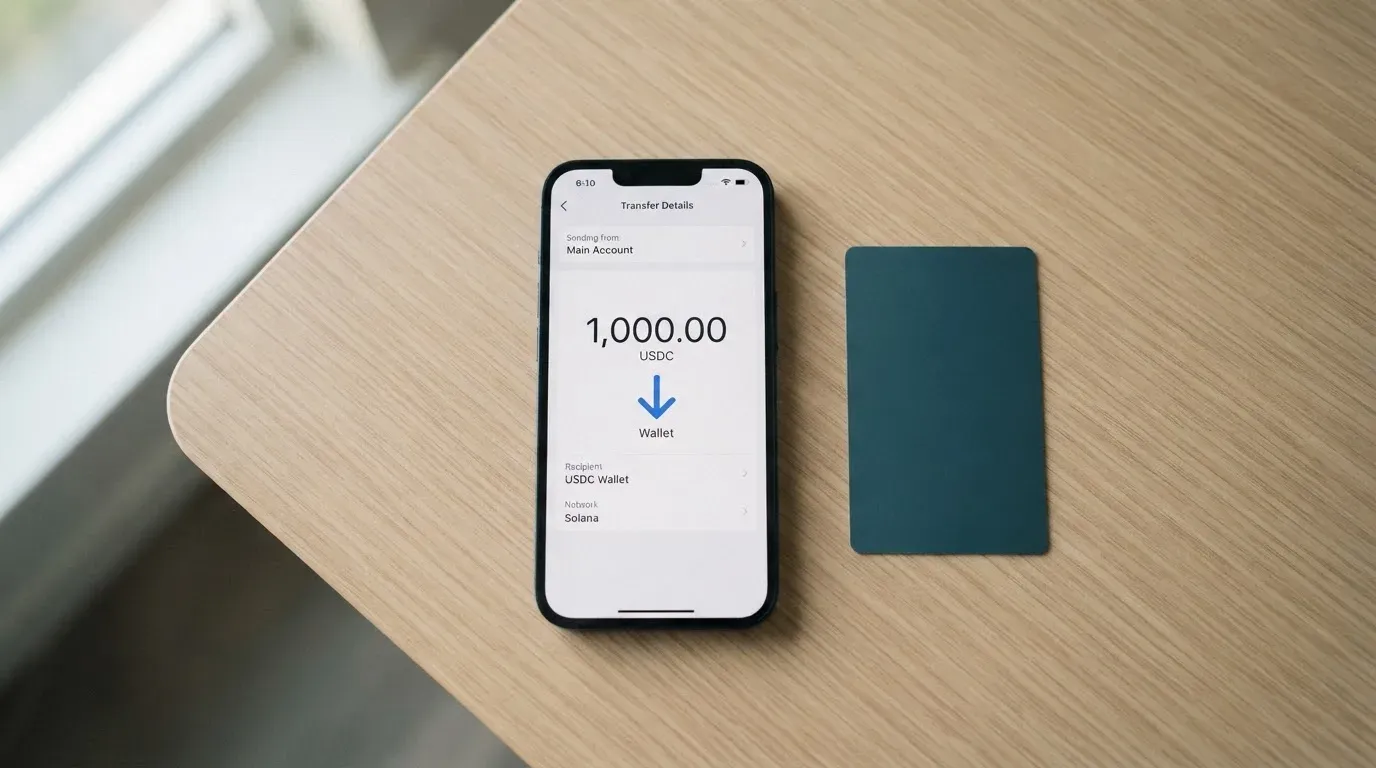
Two further mechanics. On-chain network fees are charged by the blockchain itself, not by the card, so every reload has a gas cost sitting on top of the 1%. And blockchain transfers are irreversible: a deposit sent on a network the provider does not support, or to an address belonging to a different network, can be lost or need manual recovery with no guarantee of success. This is the classic self-custody foot-gun and it applies to reloads more than to payments, because a reload is where you are the one sending.
Getting money back out is by wire, generally 1 to 2 business days, fees not stated. EUR24 and USD24 balances can also be transferred to another registered account-NFT holder — which is a transfer to another person on the same system, not a withdrawal to your own bank.
Paying with it every day
Everyday use is genuinely good on the wallet side and genuinely incomplete on the card side. For spending, the card supports Apple Pay, Google Pay, Samsung Pay, Alipay and WeChat Pay — that is a wide set of taps, and it includes the two Chinese wallets that matter if you are anywhere near that market. The card is managed inside the TokenPocket app. I did not check store ratings, so I will not characterise how the app feels day to day.
Two things follow from “virtual”. The first is the mobile wallet story above. The second is merchant behaviour: because merchants can look up the issuing institution and country behind a card number and apply extra scrutiny when that country differs from the billing address, a virtual card issued in one country can look foreign to a shop in another. Some merchants decline prepaid or foreign-issued card numbers outright. This is a general property of how card numbers work, not a flaw in this card — but with a crypto card you are more likely to sit at the edge of it.
On the money side: no cashback is stated. The 1% deposit fee “will later be refunded to users through rewards, reduced transaction fees, etc.” — “etc.” is doing a lot of work in that sentence, and “later” has no date attached.
Blocked spending categories are not stated. If gambling or similar categories matter to you, ask rather than assume the default.
What can go wrong
I found no official incident involving this card, and I found a very thin record around the service behind it. Those two sentences belong together, because the absence of a problem is not the same as the presence of protection.
The service is Fiat24. TokenPocket describes the arrangement as being with “a compliant financial institution” — a Swiss-compliant bank — and the card’s own support addresses point to Fiat24 for frozen accounts, refunds and lost or stolen keys. But the FAQ does not name Fiat24 as the issuer, and licences are not named. So when you are deciding whether this is a regulated arrangement, the position is: a crypto wallet brand in front, an unnamed bank behind it, and an e-money or financial service company answering the support inbox. Under EU rules, an electronic money institution may issue e-money and payment cards but cannot lend, and customer funds must be safeguarded in dedicated accounts or insured — which is not the same as a bank deposit and may not sit under a deposit guarantee scheme.
Here is the complaint picture, and it is not flattering.
| What the reports describe | Period |
|---|---|
| Unresponsive support | December 2024 – May 2026 |
| Funds held or delayed | April 2024 – May 2026 |
| Failed payments or transfers | November 2024, February 2026 |
Against that: Trustpilot for Fiat24, the issuer-side service, stands at 2.2 out of 5 from 8 reviews as I read them, every review 1-star. I did not find a Trustpilot page for the card itself. Eight reviews is a very small sample and I weight it accordingly — but a 2.2 with zero star ratings above it is a consistent signal, not a noisy one, and “unresponsive support” is the specific failure that hurts most when you are trying to unfreeze an account.
The key problem nobody can fix for you
Your security here is a wallet, not a password. TokenPocket uses Web3 wallet credentials instead of an account and password, so control of the balance sits with whoever holds the key. A seed phrase is typically 12 to 24 words and unencrypted; anyone who gets it can restore the wallet and spend the money. Crypto transfers are irreversible, and a stolen key has no built-in recovery — the network cannot freeze or return funds.
There is a recovery path, and it is worth knowing exactly how it works. If you lose the key, Fiat24 verifies your identity, locks the account and resets it by moving the NFT and the funds to a new Arbitrum wallet, with a small fee that may apply. If the key is stolen, you lock the card and move the funds if you are still logged in, and contact Fiat24. The custody model and whether two-factor authentication exists are not stated.
Two broader reminders that are not specific to this card. Custodial platforms have a genuine failure history — Mt. Gox at roughly US$350 million reported stolen between 2011 and 2014, Coincheck at about US$400 million in 2018, Ronin Network at US$625 million in 2022 — so holding funds with a custodian carries counterparty and hack risk. And stablecoins are not censorship-proof: Tether says it disables tokens in wallets on the OFAC sanctions list and has frozen funds tied to illicit activity. The assets can be frozen at the token level regardless of who holds the key.
If you lose money here, the recovery path runs through a support inbox with a 2.2 Trustpilot record. That is the sentence I would want a reader to carry out of this section.
What to take instead
If any of the above makes you uneasy, you are not out of options. Three cards come to mind, and the honest comparison is that all three score higher — 7.1, 6.1 and 6.1 against TokenPocket’s 5.8 — mainly because they publish more.
| Card | Score | Cost structure | Top-up | Rewards |
|---|---|---|---|---|
| TokenPocket | 5.8 / 10 | NFT creation partly covered, user pays a “small portion”; 1% on deposit; no additional fees | Crypto from a TokenPocket Arbitrum wallet; coins and networks not listed | None stated; the 1% refunded later via rewards |
| MetaMask | 7.1 / 10 | Virtual free, no annual or maintenance fee; Metal $199/year | Spends directly from the connected wallet on Linea, Base, Monad, Solana | Cashback in mUSD: Virtual 1%; Metal headline 3%, limited to the first $10,000 spent then 1% |
| KAST | 6.1 / 10 | Standard 0 USD; Premium 1,000 USD/year; Private 10,000 USD/year | Stablecoins USDT, USDC, PYUSD, RLUSD on Ethereum, Solana, Polygon, Arbitrum, TRON | USD cashback: 1.5% to first 2,000/month (Standard), 2% to 10,000 (Premium), 3% to 40,000 (Private) |
| Zeal | 6.1 / 10 | No fee schedule published; conversion at Visa wholesale rate | Balances in the card Safe (EUR/USD/GBP stablecoin accounts, Gnosis Chain and Celo per docs) | Up to 4% cashback in GNO on Gnosis Chain; up to 5% variable APY advertised on EUR/USD balances |
MetaMask is the strongest of the four on both disclosure and reach. Sign-up is open in 45 listed countries and territories — Andorra, Argentina, Brazil, Canada, Mexico, Germany, France, Spain, Uruguay among them — with other regions on a waitlist; proof of residency is required; US and UK sign-ups were temporarily closed at the time the pages were read. The citizenship rule is not stated, and “ineligible regions limit sign-ups, not spending” is a genuinely useful line for a reader who moves. It is a Mastercard from Monovate with Crypto Life as card provider; the virtual card is instant, metal can be pre-ordered in-app after approval, and it is one card per user. Spends directly from the connected wallet. The catch is that “minimal fee for each transaction” is not quantified on the pages I read, and the 3% Metal cashback headline drops to 1% above $10,000.
KAST is the most transparent about money and the most expensive to enter. Residence-based eligibility is shown at KYC, the country list is not published, and there is an explicit rule that living in a supported country while holding ID from a restricted region may still make you ineligible — plus dual citizens with a supported-country ID may pass, only the account holder’s own ID is accepted, and a VPN does not bypass it. An account can be created in an unsupported country but the KYC stays locked. Fees are the clearest in this comparison: 0% stablecoin top-up, 0% spend in USD, 0% Apple/Google Pay, 0.5%–1.75% non-USD FX, 0.10 USD on non-USD transactions under 25 USD, 0.50 USD for a declined transaction, and a 1 USD/month inactivity fee after 12 months. The costs are membership: 0, 1,000 or 10,000 USD a year, billed annually upfront. Up to 10 cards. One conflict to flag — the terms say acceptable tokens are “currently USDT and USDC” while the app also lists PYUSD and RLUSD.
Zeal is the one to look at if you want spending reach above all. Spend in 150+ countries, with the card programme live in the EU, UK, Brazil, Colombia, Mexico, Japan, Singapore, the Philippines, Indonesia and Thailand per the Gnosis Pay documentation, and update notes also mentioning Mexico, Colombia and Bolivia. It charges no additional FX fee and converts at Visa’s wholesale rate, though Gnosis Pay fees such as ATM may still apply. Virtual card for online use, addable to Apple Pay, accounts in EUR, USD and GBP. Two gaps: no fee schedule is published on its site or App Store listing, and a physical card is not stated.
The structural point behind all four: a payment card number starts with a 6 or 8 digit issuer identification number, and the rest is an account identifier plus a check digit. Merchants can look up that issuer and country. That is why a card issued in one country can read as foreign in another, and it is a fact of card infrastructure, not a judgement about any of these brands.
Who I would recommend it to
I would recommend this card to one person, roughly described: you are resident in a listed European or Asia-Pacific country, you already run an Arbitrum wallet, your balance is already in a stablecoin, and what you want is a simple tap-to-spend front end without an exchange account in the middle. You are comfortable that support is an inbox rather than a phone line, and you would rather accept a 1% charge on the way in than pay 1,000 or 10,000 USD a year for the privilege. For that person it is a reasonable, cheap way to turn crypto into everyday spending.
I would not recommend it if any of these are true:
- You live in the Americas and need it working now. The card’s own FAQ says “planned for Q2 2025”.
- You need a physical card. None is described.
- You want to know who your issuer is before you put money in. The FAQ does not say.
- You need a published fee table, published limits, or published ATM terms. All three are not stated.
- You have a citizenship from a restricted jurisdiction. The screening rules apply to nationality as well as residence, and the card says nothing about how it handles that.
- Money getting stuck is the failure mode you can least tolerate. That is precisely what the complaints describe.
The honest summary is that TokenPocket has done the unglamorous work of broad eligibility and a genuinely low cost, and has left the unglamorous work of disclosure undone. For a reader who can live with that trade, fine. For a reader who cannot, one of the three cards above publishes enough for you to actually plan.
Frequently asked questions
What is the TokenPocket card?
It is a Visa or Mastercard debit card that spends a balance loaded from your crypto wallet. The card runs on Arbitrum and holds your balance in EUR24 and USD24. You unlock it by minting an account NFT inside the TokenPocket app rather than by completing a conventional application. Because it behaves like a pre-loaded card, it spends only what you have loaded, so it cannot overdraw.
How does the TokenPocket card work?
You create or import an Arbitrum wallet in TokenPocket, mint an account NFT, complete registration, and receive the card. Top-ups are crypto deposits from your TokenPocket wallet, and the card is charged 1% on deposit. Spending works through a virtual card in Apple Pay, Google Pay, Samsung Pay, Alipay or WeChat Pay. The card itself is managed inside the TokenPocket app.
Is TokenPocket a bank?
No, not on the published material. TokenPocket describes working jointly with “a compliant financial institution”, described as a Swiss-compliant bank, and its support addresses point to Fiat24. However, the card’s FAQ does not name Fiat24 as the issuer, and no licences are named. Treat the crypto brand as the front end, not as the institution holding your money.
Who owns TokenPocket?
That question has a layered answer, and only the outer layer is public. TokenPocket is a crypto wallet brand and the programme front end. The card is described as a Mastercard/Visa debit product issued through a compliant financial institution, with Fiat24 handling customer service. The card networks themselves do not issue crypto cards to consumers — they license issuers and can suspend a programme — so Visa or Mastercard appearing on your card tells you little about who you deal with.
Which countries can I get the TokenPocket card in?
Visa debit covers a list of European countries and territories, with Germany, France, Spain and Switzerland named as examples. Mastercard debit covers Australia, Canada, Hong Kong, Japan, Taiwan, New Zealand, Singapore, South Korea and the UK, among others. The Americas were described in the FAQ as “planned for Q2 2025”. Citizenship rules are not stated, and nationality is screened separately from residence.
Does getting the TokenPocket card require KYC?
Yes, in substance, though the card describes verification as happening via your on-chain wallet rather than as a document check, and the separate document list is not stated. An EU-regulated issuer must perform customer due diligence — name, address, date of birth, nationality, identity documentation, sanctions screening and a politically exposed person check — regardless of what a crypto brand advertises. If due diligence cannot be completed, the institution must decline the relationship.
How do I top up the TokenPocket card?
You deposit cryptocurrency from your TokenPocket wallet, which is an Arbitrum wallet. That deposit is charged 1%. The card’s FAQ does not list which specific coins or networks are accepted, and minimums are not stated. Remember that on-chain network fees are charged by the blockchain rather than the card, and that sending to an address on an unsupported network can be lost, because blockchain transfers cannot be reversed.
Where can I use the TokenPocket card?
Anywhere the card networks go, in practice — the card is virtual, not tied to one merchant type. Apple Pay, Google Pay, Samsung Pay, Alipay and WeChat Pay are all supported for offline spending, so most of your contact with it will be through a phone wallet. Two practical cautions: blocked spending categories are not stated, and some merchants decline prepaid or foreign-issued card numbers because the issuer country is visible in the card number itself.
Is the TokenPocket card safe?
That depends on which risks you mean. For counterparty risk, the picture is thin: the issuer is not named in the FAQ, no licences are named, and Fiat24 — the service handling support — shows 2.2 out of 5 on Trustpilot from 8 reviews, all 1-star, with complaints about unresponsive support and delayed funds between 2024 and 2026. For key risk, your wallet is the account: losing the seed phrase means anyone who has it can spend the funds, with no reversal available.
Can I withdraw money from the TokenPocket card?
Yes, by wire transfer, generally credited within 1 to 2 business days, though the fee for that is not stated. EUR24 and USD24 balances can also be transferred to another registered account-NFT holder, which is a transfer within the TokenPocket system rather than a withdrawal to your own bank account. Refunds from merchants are slower: credited 15 to 30 business days after the merchant completes its refund process, and chargeback rules are not stated.
Wallet card reviews – cryptocardcheck
Content created by the «cryptocardcheck» team