
Toku card review
 Available in US

The Toku card is a Visa debit card that spends from a stablecoin balance rather than from a bank account, and it is built around a very specific audience: contractors and employees who are paid in stablecoins by companies already using Toku for payroll. That focus is what makes it interesting and what makes it narrow, and it is the first thing to understand before you read the rest of this review. If you are not on a Toku payroll, the card’s everyday usefulness drops sharply because, unlike most crypto cards, you cannot simply top it up from your own wallet.
Conditions are current as of October 28, 2026.
This is a review, not a how-to, and the goal here is to walk through what Toku publishes, what it does not, and what that means in practice. The conditions described are current as of 2026-10-20, and I have kept every figure, fee and date to what Toku or its partner Rain has stated, marking anything unconfirmed as unofficial where the public pages do not say.
Verdict
Toku earns 5.2 out of 10, and the score reflects a card that does one thing cleanly and leaves almost everything else unanswered. The strong half of that score comes from the payroll pipeline: stablecoins land in a connected Rain wallet, the card draws on the settled balance, and the programme sits under a Visa licence so the card is a real Visa and should be accepted wherever Visa is taken. The weaker half comes from everything Toku does not publish, from the cost of getting the card to the cost of using it, from top-up limits to ATM fees to rewards. A card that hides its price list is hard to recommend on cost grounds, no matter how solid the rail underneath looks.
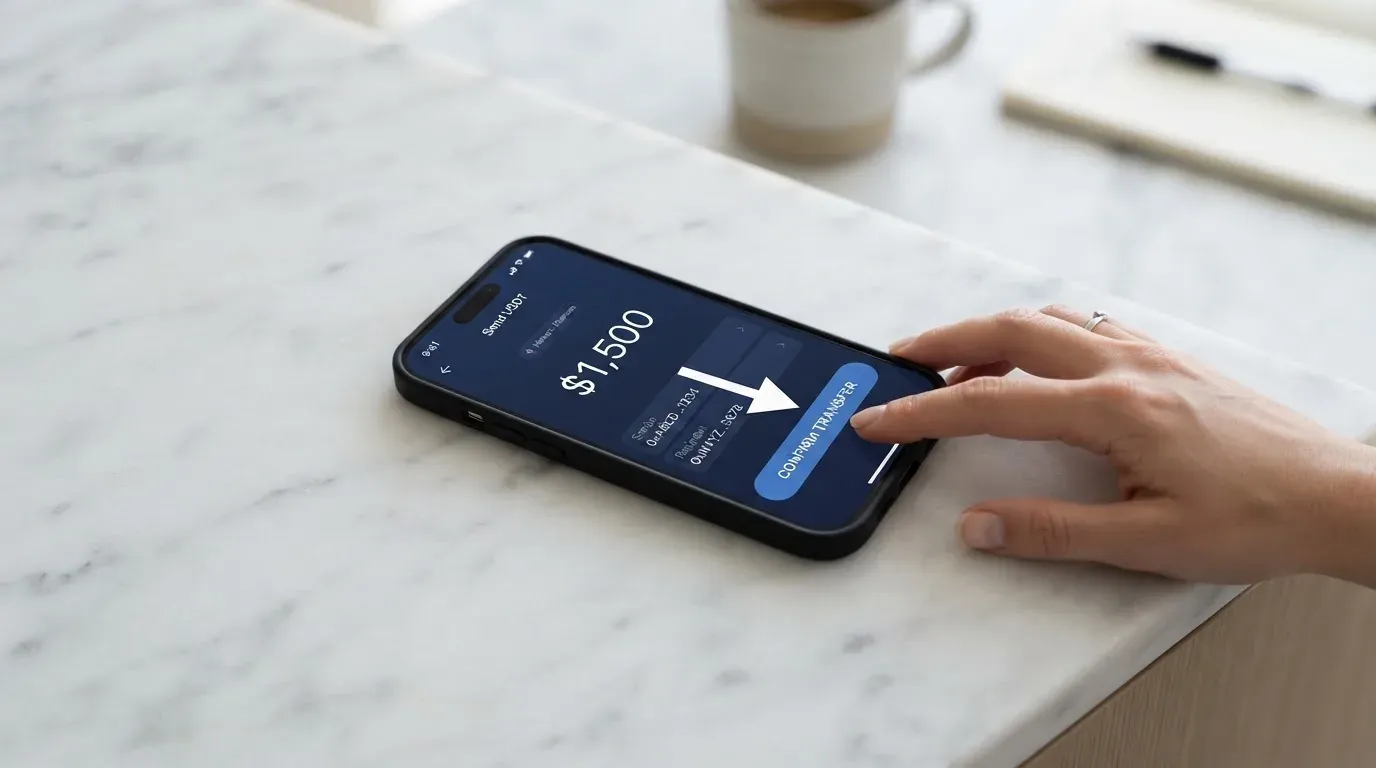
You should look seriously at Toku if you are a contractor or employee paid by a company that already runs payroll through Toku, particularly in the United States, Mexico, Colombia or Brazil, and you are happy to receive USDC, USDG or RLUSD into a connected Rain wallet before the card balance settles. You should not pick Toku if you want a general-purpose crypto card you fund yourself, if you live outside the regions where Toku is currently issuing, or if you need to know the fees, limits and supported wallets before you commit. In those cases the alternatives further down this page are a better fit.
Score breakdown
| Criterion | Mark | Reason |
|---|---|---|
| Who can get it | 5 / 10 | Issuance open in the US and parts of Latin America, with APAC listed for Q2 2026; large parts of the world have no path yet. |
| Cost | 5 / 10 | Issuance fee, conversion, FX, ATM and limits are all unstated. |
| Top-up options | 4 / 10 | No user top-up; payroll is the only funding path, through a connected Rain wallet. |
| Reliability and complaints | 6 / 10 | Visa licence via a partner; the partner bank for the Toku card specifically is not stated. One Trustpilot review, no themes. |
| Everyday use | 6 / 10 | Virtual card is instant, physical where applicable, but Apple Pay, Google Pay and ATM behaviour are not confirmed. |
| Total | 5.2 / 10 | A clean payroll use case undercut by missing detail and a narrow geography. |
Will they give you the card
Toku states that card issuance is available now for recipients in the United States and Latin America, naming Mexico, Colombia and Brazil as the Latin American countries. The Asia-Pacific region is listed with a target of Q2 2026, which means a launch window rather than a confirmed open date, and Toku does not give a list of excluded countries beyond that. For most of Europe, Africa, the Middle East and the rest of Asia the card is not on offer at the time of writing.
Eligibility is not purely about where you live. The card is for payroll recipients of Toku customers, which is the company-specific point that shapes the whole product: Toku’s pitch is to employers who want to pay people in stablecoins, and the card is the spending side of that. In practice this means you generally cannot apply for the card on your own; you get it because your employer or your client has signed up to pay through Toku. Toku does not publish the country-of-citizenship rules it applies on top of the residency list, and it does not say what happens for dual citizens or for people who live in a supported country but hold an ID from somewhere else. The standard anti-money-laundering checks that any regulated card issuer runs will still apply, and the card’s general page refers to a “standard KYC process at issuance”, but the exact documents, the proof-of-address requirement and the minimum age are not stated on the public pages.
Two further gaps are worth flagging up front. Toku does not say whether a recipient can hold more than one card, and it does not say what happens if you change employer. The Trustpilot landscape is too thin to draw themes from, with a 3.2 score from a single review, and an unofficial January 2026 user report that a business applicant was told it was “not the right fit” after a KYB inquiry. That is one data point, not a pattern, and I am including it only because it shows that the onboarding step is selective.
How to get it
You do not sign up to Toku the way you sign up to a consumer crypto card brand. The flow is the other way around: your employer or client is the Toku customer, they pay you in stablecoins, and the card is the way you spend what arrives. Once the payroll link is in place, Toku says recipients go through a standard KYC process at issuance. What that process asks for, how long it takes, and whether the same identity is verified once for all Toku employers or per employer, is not stated.
There is no published sign-up form for a casual applicant, and there is no published waiting list. If you are reading this as a freelancer wondering whether you can just open a Toku card and fund it yourself, the short answer is no: the card is not designed for that, and the funding model reflects it.
The card itself is a Toku-branded Visa. Toku states Visa only, with no mention of Mastercard. A virtual card is available immediately on approval, and a physical card is shipped “where applicable” in supported regions; the delivery time, the cost and the countries that qualify for plastic are not stated. The card’s base currency is not stated either, so it is not clear whether the card settles in USD, in a local currency, or in stablecoin-denominated units that convert at the point of sale. The practical effect of that ambiguity is that you cannot tell, before you apply, what FX exposure your everyday spending will carry.
What it really costs
The cost section is the thinnest part of Toku’s public material, and it is the part that has to be read carefully. Issuance fee, monthly fee, conversion fee, foreign-transaction fee, ATM fee, daily limit and monthly limit are all not stated on the public pages read for this review. There is no fee table linked from the card’s product page, no schedule of charges, and no programme tiers such as Standard, Premium or Metal with different price points. For a card that is positioned as payroll infrastructure, that absence is a deliberate choice: Toku’s customers are the employers, and the recipient side of the product has not been written up the way a consumer card would be.
The practical reading is that the recipient does not pay to receive the card, that there is no monthly fee, and that the cost of spending depends on how the stablecoin-to-fiat conversion is handled inside the Rain pipeline. Toku does not publish the spread, the percentage fee, or the network cost passed through. Until Toku publishes numbers, you have to assume that somewhere in the chain a fee is being charged, that the card’s cost in use is not zero, and that the only way to know what you will pay is to test it on a small amount and read the statement once the card is live.
Fees at a glance
| Item | What Toku says |
|---|---|
| Issuance fee | not stated |
| Monthly / annual fee | not stated |
| Stablecoin conversion | not stated |
| Foreign-transaction (FX) fee | not stated |
| ATM withdrawal fee | not stated |
| Daily limit | not stated |
| Monthly limit | not stated |
| Card tiers | none published |
To make that concrete, it helps to walk through a few everyday payments and see which fees would apply if any were charged.

A coffee bought in your home city in a local currency is the simplest case. The card is a Visa, the merchant accepts it, and the issuer converts whatever the underlying stablecoin balance is into the local currency at the merchant’s exchange rate. If Toku charges a conversion spread, it is taken at that point. Because neither the spread nor the FX fee is published, the only number you can rely on is the merchant’s price plus whatever the network itself charges, which is usually close to zero on a domestic transaction.
A subscription in a foreign currency is a better test, because it is where FX fees hide. Most consumer crypto cards state a foreign-transaction fee of 0% to 2% on top of the network’s exchange rate. Toku does not state a percentage, so you have to assume a non-zero fee until told otherwise, and you have to budget for it as a category of cost that is not visible on the product page.
An ATM withdrawal is the most expensive scenario on most cards, because it stacks an ATM-owner fee, an issuer fee, and a conversion fee. Toku does not state any of those, and Toku does not even state whether ATM withdrawal is supported. Until Toku publishes numbers, treat ATM use as an unknown rather than as a free service.
How to top it up
Top-up is the part of Toku that is most different from the consumer crypto cards you may have used before. You do not top up the card. The card spends from a settled balance in a Rain wallet that is connected to your payroll, and the balance is funded by your employer paying you in stablecoins.
Toku names the three stablecoins that the Rain pipeline supports: USDG, USDC and RLUSD. These are the rails your employer can use to pay you, and they are the assets the card balance is denominated in once the payroll settles. There is no published list of the networks on which those stablecoins are accepted for Toku payroll, and there is no “deposit crypto to my card” button. The user-funded top-up model that defines cards like MetaMask Card or KAST simply does not exist here.
Two practical consequences follow. First, the only way to add money to the card is to have a Toku customer pay you through Toku, which means the card is not a tool for moving your own crypto into everyday spending. Second, you cannot choose a network to optimise for cheaper gas, because the payroll flow is set up at the employer side and the recipient sees a settled balance, not a pending transaction. If a particular network is congested or expensive, that cost is absorbed somewhere in the chain rather than itemised to you.
A related point: Toku does not state what happens if the settled balance is in a stablecoin that is not the same as the merchant’s settlement currency, who sets the conversion rate at the point of sale, or whether you can hold a balance in more than one stablecoin at the same time. Until those details are published, the card behaves as a single-currency payroll product with the conversion risk sitting in the middle.
Paying with it every day
Once the card is in your hand, the everyday experience is meant to be familiar. A virtual card is available immediately on approval, which means you can load it into a mobile wallet or use the number for online purchases the same day, and a physical card follows where Toku ships plastic. The card is a Visa, so it is accepted at any merchant that takes Visa, both online and in person, and it carries the usual protections that come with being on a licensed card network.
What Toku does not confirm is just as important. There is no published line saying whether the card works with Apple Pay or Google Pay, although most modern Visa programmes support both and the absence of a statement is not the same as a confirmed no. There is no published line on ATM access, contactless limits, or online 3-D Secure behaviour, and there is no dedicated card app with a rating in the stores to look at for evidence of feature breadth. You can also expect the usual friction that comes with prepaid and foreign-BIN cards: some merchants decline prepaid cards or cards whose issuer country differs from the billing country, and an authorisation hold can sit on your balance for several days even if the transaction is later cancelled.
For a payroll recipient, the everyday question is simpler: will my salary land, and will the card spend it? On the first half, the Rain and Toku partnership was announced in June 2025, with USDC, RLUSD and USDG as the supported assets and payroll coverage described as spanning more than a hundred jurisdictions. On the second half, the card is a real Visa, and once it is in your wallet it should behave like one.
What can go wrong
The risk list for Toku is unusual because most of it is about what is not said, rather than what has gone wrong. There are no publicised programme suspensions, no reported security incidents, and no flood of user complaints, which is partly because the product is payroll-focused and partly because the recipient base is still small.
The first risk to understand is the missing detail. Toku does not publish its fees, limits, supported wallets, rewards, or dispute process, and a cardholder who runs into a problem therefore has no published route to escalate. Rain publishes a general footer saying its Visa debit cards are issued by Cross River Bank, Member FDIC, and that Rain Products, Inc. is a programme manager rather than a bank, but whether that structure applies to the Toku card is not stated. The difference matters in a wind-down: if a programme manager is also the bank, you have deposit-insurance protections; if the programme manager is a separate company, you have a card programme that can be closed, and your recourse is the programme manager, not the bank.
The second risk is the custodial layer. Toku describes the spending layer as sitting on a connected Rain wallet, and Rain says explicitly that it is not a bank, an exchange or an asset custodian. The stablecoin balance that funds the card is held inside Rain, so the recipient is exposed to Rain’s operational and solvency risk in the same way a customer of any custodial wallet is. Rain also points out that the funds are not deposit-insured. Until Toku publishes a clearer breakdown of who holds what, a recipient has to treat the card balance as a custodial claim on a third party, not as a bank deposit.
The third risk is sanctions and screening. Stablecoins are not anonymous, and stablecoin issuers have a track record of freezing addresses tied to sanctioned activity. If your employer’s payroll hits a sanctions screen, the recipient side of the chain can be slowed or blocked, and the recipient is the one without a published dispute channel.
The fourth risk is the company behind the card. Toku (WorkCo Inc in the data) is the payroll and compliance infrastructure provider, and the card sits on a Visa-licensed partner. Visa’s history includes winding down the FTX US debit card programme in November 2022 and the WaveCrest suspension in Europe in 2018, both of which left cardholders in the awkward position of having a working card number one day and a closed programme the next. There is no reason to think Toku is heading that way, but a card on a partner-issued programme is always one step removed from the brand on the front.
A fifth, more prosaic risk is the use of the card abroad. Foreign-BIN cards are sometimes declined by merchants that screen for issuer country, and address-verification systems are mostly limited to the US, Canada and the UK, which can cause online declines on cards issued elsewhere.
What to take instead
Because Toku is a payroll card rather than a general-purpose crypto card, the alternatives you compare it to depend on what you are actually trying to do. If you are on a Toku payroll, the card is part of the package and the alternatives are mostly about what you do with the stablecoins once they land. If you are not on a Toku payroll, the alternatives are about getting a card you can fund yourself.
TokenPocket, scored 5.8 out of 10, is a wallet-branded card on Arbitrum that targets a list of European and Asia-Pacific countries, with a Virtual card in EUR24 or USD24, a small NFT creation fee partly covered by TokenPocket, and a 1% crypto deposit fee that the brand says is later refunded through rewards. The fit is for users who already hold assets in the TokenPocket wallet and want a simple spend layer, with the caveat that physical cards and the Americas are not yet covered.
MetaMask Card, scored 7.1 out of 10, is a Mastercard on Linea, Base, Monad and Solana that spends directly from the user’s own wallet, with a free Virtual tier and a $199-a-year Metal tier, mUSD cashback, and sign-up open in 45 listed countries including Brazil, Mexico, Canada, Germany, France and Spain. The trade-off is that US and UK sign-ups have been temporarily closed, and the rewards are tiered in a way that drops after a spending cap. For a self-custody user who wants to spend from their own wallet without first loading a fiat balance, it is the most direct alternative to Toku’s connected-wallet model.
KAST, scored 6.1 out of 10, is a stable-funded Visa programme with up to ten cards per user, three membership tiers, and 0% spend and top-up fees on stablecoins. Standard membership is free, Premium is $1,000 a year and Private is $10,000 a year, with 1.5% to 3% USD cashback on the first $2,000 to $40,000 of monthly spend. The fit is for users who want a stablecoin-funded card with a published fee schedule, and the trade-off is the annual cost of the higher tiers and the country-list opacity of its KYC.
| Card | Audience | Funding | Cost picture | Geography |
|---|---|---|---|---|
| Toku | Payroll recipients of Toku customers | Employer stablecoins via connected Rain wallet | All fees unstated | US, Mexico, Colombia, Brazil; APAC Q2 2026 |
| TokenPocket | TokenPocket wallet users | Crypto deposit, 1% fee (refunded later) | NFT fee partly covered, otherwise no stated fees | Europe and Asia-Pacific, Americas planned |
| MetaMask Card | Self-custody wallet users | Direct spend from connected wallet | Virtual free, Metal $199/year | ~45 countries; US/UK sign-ups temporarily closed |
| KAST | Stablecoin-funded spenders | Stablecoin deposits, 0% top-up | Tiered annual fee up to $10,000 | List at KYC, not published |
Who I would recommend it to
Toku is a payroll card and the recommendation has to be read in that light. If you are a contractor or an employee whose company is already paying you through Toku, the card is the path of least resistance: the stablecoins land in a connected Rain wallet, the card balance settles, and the card is a real Visa that should be accepted wherever you shop. The downsides are that almost every cost and limit is unstated, that the dispute and support channels are thin, and that the only way to add money is through that payroll link.
If you are not on a Toku payroll, the card is not a sensible choice. There is no user top-up, no published fee schedule, and no published country list beyond the US, Mexico, Colombia and Brazil for now. The right move in that case is to look at the alternatives above, particularly MetaMask Card if you want a self-custody card and KAST if you want a published stablecoin-funded fee schedule. If you are an employer looking at Toku as a payroll provider, the card side is one piece of a compliance and payout stack, and the recipient experience is part of that, not the whole of it.
The honest summary is that Toku is a real card on a real network, doing a real job for a narrow audience, and the five-point-two score reflects both the cleanness of that job and the absence of the cost and feature detail a reviewer would normally lean on. Once Toku publishes a fee schedule, a country list, an ATM policy and a rewards line, the score has room to move. Until then, treat it as payroll infrastructure, not as a consumer card.
Frequently asked questions
What is the Toku card?
The Toku card is a Visa debit card that spends from a stablecoin balance held in a connected Rain wallet, and it is issued to recipients of Toku payroll customers rather than to the general public. The product is positioned as the spending side of Toku’s stablecoin payroll service.
How does the Toku card work?
Your employer or client pays you in USDC, USDG or RLUSD through Toku, the funds settle in a connected Rain wallet, and the card draws on the settled balance at the point of sale. You do not top up the card yourself, and the underlying balance is held by Rain rather than by a bank.
Is Toku a bank?
No. Toku provides payroll and compliance infrastructure, and the card is issued by a partner under a Visa licence. Rain, which holds the connected wallet, says it is not a bank, an exchange or an asset custodian, and the published footer for Rain’s general card programme names Cross River Bank as the issuer.
Who owns Toku?
Toku operates as WorkCo Inc according to the data behind the product, and the card programme sits on a Visa-licensed partner issuer. Toku is the brand and the payroll provider; the issuer behind the card is not named specifically for the Toku programme.
Is the Toku card available in my country?
Issuance is open in the United States, Mexico, Colombia and Brazil, with Asia-Pacific listed for Q2 2026. For other regions the card is not on offer, and there is no waiting list published for the rest of the world.
How do I get the Toku card?
You get it because your employer or client is a Toku customer and has set you up to be paid through Toku. There is no consumer sign-up form, and the standard KYC process is run at issuance. Documents, time and age limits are not stated on the public pages.
Does the Toku card require KYC?
Yes. Toku says recipients go through a standard KYC process at issuance, which usually means identity verification against regulator requirements. The exact documents, the proof-of-address step, and the minimum age are not stated, and there is no published tiered KYC structure.
How do I add the Toku card to Apple Wallet or Google Pay?
Toku does not publish a line on Apple Pay or Google Pay support, although the card is a modern Visa programme and most such programmes support both. The safe approach is to try adding the virtual card to your wallet as soon as it is issued, and to treat the absence of a published confirmation as a known unknown rather than a confirmed no.
How do I top up the Toku card?
You do not. The card is funded by employer payroll in stablecoins through a connected Rain wallet, and there is no user deposit flow. If your salary does not come through Toku, this card offers no way to spend your own crypto.
Is the Toku card safe?
The card sits on a Visa-licensed partner issuer, and the stablecoin balance is held by Rain, which is not a bank. There is no published 2FA, freeze or dispute flow, and the cost and limit structure is not public, so the practical answer is that it relies on the brand and the partner rather than on a published safety framework.
Wallet card reviews – cryptocardcheck
Content created by the «cryptocardcheck» team