
A no-frills virtual USD card from a small crypto brand, judged on the numbers
 Available in US
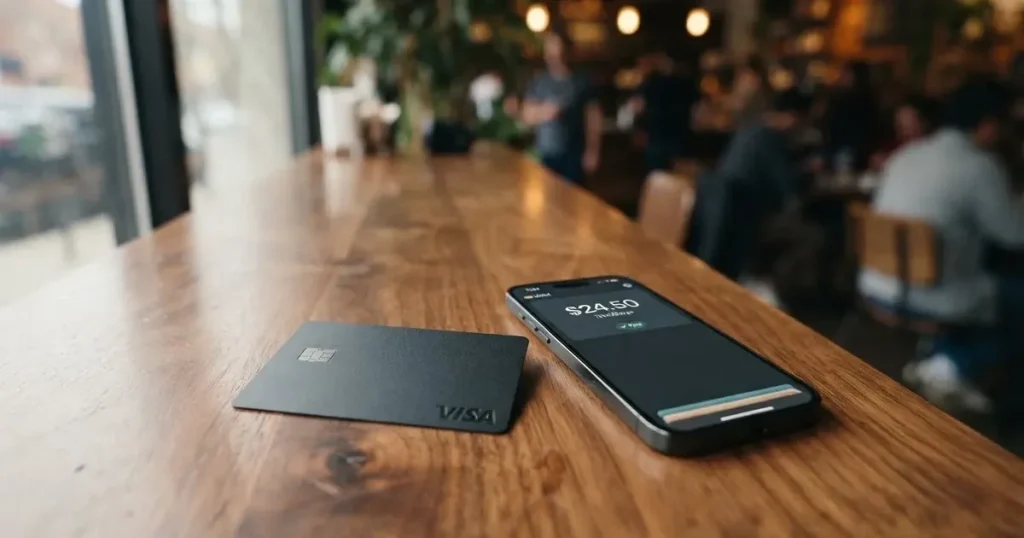
The Trustee card is one of those products that asks a small question and answers it modestly: if you keep a stablecoin balance in the Trustee Plus wallet, can you turn that into a normal card payment? The answer, after spending time with the official pages and reading the unofficial record, is “yes, mostly, with caveats” — and that is exactly the shape of this card. It is a virtual-only product right now, denominated in dollars, funded from a separate Trustee Plus balance, and priced in a way that is honest about some fees while keeping quiet about others. The score below reflects that mixture.
Conditions on this page are current as of October 28, 2026.
Verdict
The Trustee card lands at 5.1 out of 10 in my scoring, and the way that number breaks down tells you most of what you need to know. The strongest column is cost, where the headline proposition — “0% fees on transactions” — is attractive on paper. The weakest is reliability and complaints, where user reports of frozen funds and slow AML reviews are difficult to ignore. In between sit the usual crypto-card worries: who actually gets approved, what you can top up with, and whether the card works the moment you tap it.
| Criterion | Mark | Why it lands there |
|---|---|---|
| Who can get it | 5 / 10 | The official page says “Issued in Great Britain” and “Worldwide Crypto Card” without listing countries; third-party guides name EEA plus Ukraine and Moldova, but the data is from the 2023–2025 era and may be stale. |
| Cost | 7 / 10 | Virtual card is listed at 10.00 $; the site advertises “0% fees on transactions”. The conversion markup is not disclosed. Unofficial sources mention a 0.5% crypto-to-euro fee, with some user reports of up to 2% per transaction. |
| Top-up options | 5 / 10 | USDC or USDT, first to the Trustee Plus wallet, then to the card balance. Networks are not named. Unofficial sources mention 30+ assets in the wallet, but the card itself is narrower. |
| Reliability and complaints | 3 / 10 | Issued by Wirex Limited. Trustpilot sits at 2.2 out of 5 from 236 reviews, 56% of them one star, with reports of funds frozen for AML review (one case for 21,360 USDT, 53 days). |
| Everyday use | 5 / 10 | Virtual is available; physical is temporarily unavailable; ATM withdrawals are not available at present. Apple Pay and Google Pay are supported. |
If you are an EU-based user who mainly wants a virtual USD card funded from a stablecoin balance, the value proposition is clear enough to look at. If you need a physical card, an ATM, or a long track record of complaints being resolved to a real outcome, this is not the place.
Who will they give you the card
The honest answer is: the official page does not say. The Trustee marketing copy calls it a “Worldwide Crypto Card” and notes it is “Issued in Great Britain”, but the list of supported countries is not published on the card page itself. That is the first thing to know, because it means the only way to find out whether you qualify is to download the app and start the sign-up flow.
Unofficial sources, including third-party industry guides written during the 2023–2025 era, describe the card as available to EEA residents plus Ukraine and Moldova, and usable wherever Mastercard is accepted. I want to be careful with that, because it is not the card’s own statement, the data may be outdated, and the situation can change without notice. Treat it as a reasonable guess, not a promise.
The issuer is stated on the page as Wirex Limited, a UK-based e-money institution. That matters because Wirex is the regulated entity that actually holds the card programme; the Trustee brand sits on top of it as a programme manager. If something goes wrong with the card, your contractual counterparty is the issuer, not the brand on the front.
How to get it
The sign-up path is built around the Trustee Plus app, and the card is the last step of a four-part flow: download Trustee Plus, complete KYC, order the card, then top up the balance in USDC or USDT. KYC is required before the card is issued; the page does not say which documents you will need to provide up front, but unofficial guides and user reports describe the standard mix: an ID card (national passport) or international passport, a selfie, your address, and a short statement of the account’s purpose and your source of income. Proof of address and other documents can be requested later.
In the app, the KYC step itself runs through a single flow: open Profile, choose Identity, pick your country, then the “Other method” path, state the account purpose and source of income, enter your address, scan an ID card or international passport, and take a selfie. Processing time is described as “usually takes little time” without a specific number; the reason codes for a rejection, the verification levels and any tier system, are not stated.
Once KYC clears, you order a virtual card. Virtual cards are issued “in a few minutes”, per the official text. Physical cards are listed but marked “Temporarily unavailable” — there is a waitlist, but no public timeline for when orders will reopen, and no published delivery countries, time, cost or replacement policy. Card currency is USD; the network and brand are not stated on the page, which is unusual but consistent with the rest of the page’s quietness on specifics.
A note on the order: the four steps are not optional. The card will not be issued until KYC has passed, and the card will not work until the balance has been topped up. If any one of these stalls, the rest does too.
Fees: what it really costs
The cost picture splits into three parts: what you pay once to get the card, what you pay as you use it, and what stays unsaid.

The virtual card is listed at 10.00 $. The page does not label this as an “issuance fee” outright, but the price is on the order page and that is effectively what it is. There is no monthly fee stated. Unofficial sources mention a virtual card at EUR 10 and a physical card at EUR 25, with a EUR 0 monthly maintenance; one industry note records a promotion that waived the virtual issuance charge, but that is a third-party claim and the official page is the 10.00 $ figure.
For spending, the headline number is “0% fees on transactions”. The card’s currency is USD, and payments in EUR, PLN, GBP and similar non-USD currencies are converted automatically at the moment of payment. The FX markup on that conversion is not stated on the official page. Unofficial sources put crypto-to-euro conversion at 0.5% (the most consistent figure across 2023–2025 guides), while Trustpilot reviews describe conversion fees of up to 2% per transaction. If you pay in your card’s base currency, the conversion layer is skipped; if you pay abroad, the markup is the unknown number in the equation.
ATM withdrawals are listed as unavailable at present — “At the moment, cash withdrawals from the card in Trustee Plus at ATMs are not available.” The physical card’s feature list still mentions cash withdrawals, but because the physical card is itself unavailable, the discrepancy is academic for now. Unofficial older guides describe NFC-enabled ATM use with PIN, a EUR 2,000 daily and EUR 10,000 monthly limit at 1.5% + EUR 1, which directly contradicts the current “not available” line and should be ignored until the official position changes.
For limits, the monthly transaction cap is 30,000 USDC; the daily limit is not stated.
The costs, in one place
| Fee or limit | Value |
|---|---|
| Virtual card price | 10.00 $ |
| Physical card price | Temporarily unavailable; unofficial sources: EUR 25 |
| Monthly fee | Not stated; unofficial: EUR 0 |
| Card payment commission | 0% (advertised) |
| Crypto-to-fiat conversion | Not stated; unofficial: 0.5%; user reports up to 2% |
| Non-USD FX markup | Not stated |
| ATM withdrawal | Not available at present |
| Monthly transaction limit | 30,000 USDC |
| Daily transaction limit | Not stated |
Three everyday payments, and which fees apply
- A 100 $ online subscription paid in USD. You have already topped up the card balance in USDC and converted or held it in USD. The advertised commission is 0%, so the all-in cost is the 100 $ plus whatever your top-up route cost you in network fees (paid to the blockchain, not to Trustee) and any wallet-side conversion.
- A 45 € dinner in Berlin, paid via Apple Pay. The card converts USD to EUR at payment time. The published commission is 0%; the conversion markup is the unknown. If the unofficial 0.5% holds, the real cost is around 0.225 €; if the 2% user-reported number holds, it is closer to 0.90 €. The difference is meaningful on small tickets.
- A 1,500 $ monthly spend run mostly in USD, with one 200 £ payment in London. Same pattern: USD payments ride the 0% line; the £ payment picks up the undisclosed FX markup. Watch the monthly 30,000 USDC cap to make sure your run-rate stays under it.
Top up: how to fund the card
Top-up is a two-step dance, not a single action. The card itself is funded from a separate “card balance” inside the Trustee Plus wallet, and that balance is itself fed by a stablecoin top-up. USDC or USDT, into the Trustee Plus wallet, then moved to the card balance. The two balances are distinct on purpose: the wallet holds your crypto, the card balance holds what the card can spend.
The card balance is usually credited within up to 5 minutes, per the official wording. The fee, minimum top-up amount, and the supported networks for the deposit are not stated. The Trustee wiki links to a “How to add funds to the EUR balance” article and a separate “Trustee Plus fees” article, but those pages were not retrievable when I checked, so the precise network list and fee schedule for deposits are not in front of me.
Unofficial sources describe a broader asset list in the Trustee Plus wallet — around 30+ assets including BTC, ETH, TRX, USDT, USDC and SOL — but the card itself is narrower than the wallet. One industry note limits card spending to BTC, ETH and USDT, with USDC accepted only as a wallet top-up route. That contradicts the official USDC/USDT line, and the safe read is to assume the card funds only from USDC and USDT unless you can confirm otherwise in the app at the moment of deposit.
A small word of caution that is true for any stablecoin top-up. Blockchain transfers are irreversible, networks are not interchangeable, and a deposit sent on a chain the provider does not support — or to an address belonging to a different network — can be lost or stuck in manual recovery. USDC over TRC-20, for example, is not a native option, because Circle stopped supporting USDC on Tron in February 2024. If the app shows you an address, check twice that the network you are about to send on is the network the app expects.
Paying with it every day
On a phone, the card supports Apple Pay and Google Pay, which is the everyday payment path most people will use. The list of blocked merchant categories is not stated, so it is worth testing the merchant types that matter to you early — gambling merchants in particular are commonly restricted on crypto cards, and the policy here is not in the public documentation. There is no cashback programme stated; unofficial sources disagree (one comparison mentions hotel discounts and a referral programme, another says cashback is “in development”, a sponsored MEXC piece claims up to 8% without a clear tie to this card). I would not plan around any of it.
The Trustee Plus app on iPhone requires iOS 17.0 or later and is at version 2.1.6, with the developer listed as MIKEPAY INC. The App Store rating is not currently shown because there are not enough ratings; the Google Play rating was not read. The app supports English, Bulgarian, Lithuanian, Polish, Portuguese, Russian and Ukrainian. There is no public description of a dispute or chargeback process for the card; that is a real gap, because a card without a clear dispute path is harder to use confidently on unfamiliar merchants.
Because the card is prepaid in shape — you load a balance, you spend it — it cannot overdraw, and you do not need a bank account to fund it. The flip side is that the card is only as good as the balance you have loaded at the moment of tap.
What can go wrong
The reliability story is the weakest part of this review, and it is worth being specific about it.
The Trustee Plus Trustpilot page sits at 2.2 out of 5 from 236 reviews, with 56% one-star and 37% five-star. The company replies to 98% of negative reviews, but the replies are mostly templated “your funds are safe” messages rather than case-by-case outcomes. The themes that come up repeatedly:
- Funds frozen under AML review with no published timeline. Reviews from April to October 2026 describe holds of 30+ days; one report cites 21,360 USDT held for 53 days, another a hold starting 1 October 2026.
- “Return to source” refunds requested by the platform not completed (March to October 2026).
- Copy-paste support replies that do not engage with the specifics of a case (June to October 2026).
- Lost access or revoked verification (July and October 2026).
- Card blocked after a chargeback request (July 2026); a separate reviewer reports an account closed after a chargeback on 22 September 2026, with five documents requested on 12 October 2026.
A separate Trustpilot page for the brand (2.5/5 from 5 reviews, all one-star) is small but uniformly negative, and the company profile is unclaimed. That is small-sample, but it is the same direction.
A note on the wider environment. The card is issued by Wirex Limited; Wirex is a UK e-money institution, and the underlying protection for your funds is the safeguarding regime that applies to e-money, not a bank deposit guarantee. The card’s security page talks about passkeys, biometrics (Face ID), sign-in with Apple or Google, multi-level two-factor authentication, vulnerability testing by Hacken, a HackenProof bug bounty and 24/7 reserve monitoring. Insurance is not mentioned. The page also says, in a phrase worth quoting, “We safeguard, but we do not control” — which is honest about the custody model, and a useful reminder that holding funds on a custodial platform always carries some counterparty risk.
In terms of news, the two material items at the time of writing are that the physical card is temporarily unavailable and that ATM withdrawals are not available; the company is reportedly working on the latter. Trustpilot reviews from January 2026 describe cards moving to a merged platform or new provider, and a July 2026 review reports a card block that the company’s reply, dated 30 July 2026, attributes to the card issuer. I did not find any licence action or fine against the brand.
What to take instead
If Trustee is not the right fit, three alternatives in the same general category —crypto-funded cards that spend from a wallet or balance — are worth a look. The numbers below come from each card’s own materials and reviews.
TokenPocket (TP Card)
- Score: 5.8 / 10. Visa debit for a list of European countries and territories (Germany, France, Spain, Switzerland among them); Mastercard debit for Australia, Canada, Hong Kong, Japan, Taiwan, New Zealand, Singapore, South Korea, the UK, and others. Americas “planned for Q2 2025”.
- The card runs on Arbitrum and is virtual-only (no physical card mentioned). Balances in EUR24 and USD24.
- A 1% fee is charged when depositing cryptocurrency into the TP Card, with the promise that it will be refunded later via rewards or reduced transaction fees. The FX fee is not stated; “Apart from these, TP Card does not charge any additional fees” appears on the page.
- Crypto deposits come from the TokenPocket wallet; the specific coins and networks are not listed in the FAQ. No cashback programme is stated.
MetaMask Card
- Score: 7.1 / 10. Sign-up is open in 45 listed countries and territories (examples: Andorra, Argentina, Brazil, Canada, Mexico, Germany, France, Spain, Uruguay); other regions join a waitlist. US and UK sign-ups are temporarily closed per the FAQ.
- Mastercard. Virtual card is issued first, instantly; Metal can be pre-ordered in the app after Virtual approval. One card per user. Issuer Monovate, card provider Crypto Life.
- Virtual is free with no annual or maintenance fee; Metal is $199 a year. The pages describe a “minimal fee for each transaction” without a specific number, and say “no additional MetaMask fees” and no foreign transaction fee (the Mastercard rate is used).
- The card spends directly from the connected wallet, on networks including Linea, Base, Monad and Solana. Tokens named: mUSD, wETH, EURe, GBPe, USDC, USDT (the page says nine). Solana-only wallets cannot withdraw credit.
- Cashback is paid in mUSD into the Money Account: 1% on Virtual; headline 3% on Metal, with a footnote that limits 3% to the first $10,000 spent and 1% thereafter. There is also a $FLY bonus of 5X (Virtual) or 7X (Metal) via the Blackbird dining app.
KAST
- Score: 6.1 / 10. Residence-based eligibility is checked at KYC; the country list is not published, and the Restricted Locations list is referenced without naming countries. Citizenship and ID also matter: a residence in a supported country with an ID from a restricted region can still fail KYC. Only the account holder’s own ID is accepted, and VPN does not bypass.
- Virtual and physical cards, up to 10 per user. Tiers: Visa Platinum (Standard), Visa Infinite metal (Premium), Visa Infinite gold plated (Private), with other designs (Pengu, Solana, Bitcoin). The account balance is in USD, with stablecoin deposits converted 1:1 at 0% spread.
- Annual membership: Standard 0 USD; Premium 1,000 USD/year; Private 10,000 USD/year, billed annually upfront, no monthly option. Extra virtual card 2 USD (in some regions, 2 USD also on included Standard virtual cards). Standard physical card 0 USD card fee plus 40 USD delivery; Premium and Private physical cards are included. Inactivity fee 1 USD/month after 12 months. Renewal and reactivation fees exist, amounts not stated.
- Stablecoin top-up 0%; card spend in USD 0%; transaction fee 0%; Apple/Google Pay 0%. Non-USD FX 0.5%–1.75% depending on residence country, transaction country and card programme. Non-USD transactions under 25 USD cost 0.10 USD; a declined transaction for insufficient balance costs 0.50 USD. Non-stablecoin tokens may be auto-converted at a fee shown in the app.
- Stablecoin funding: USDT, USDC, PYUSD, RLUSD; USDT and USDC on Ethereum, Solana, Polygon, Arbitrum and TRON (the app lists the current networks). No bank account needed. The Terms say acceptable tokens are “currently USDT and USDC”, which conflicts with the broader PYUSD/RLUSD list.
- USD cashback: Standard 1.5% on the first 2,000 USD/month; Premium 2% on the first 10,000 USD/month; Private 3% on the first 40,000 USD/month. KAST Points: Standard none, Premium +1%, Private +2% of eligible spend. Cashback is paid in USD when the transaction is authorised.
If your priority is the lowest cost, KAST’s 0% on USD spending and stablecoin top-up is hard to beat. If you want the strongest rewards and self-custody at the point of spend, MetaMask Card is the better-known product. If you are testing the waters and care more about a virtual-only European footprint than about fees, TokenPocket sits in the middle.
Who I would recommend this to
The honest recommendation is narrow. The Trustee card fits a specific profile: you mainly want a virtual USD card, you are happy to keep a USDC or USDT balance inside Trustee Plus to feed it, you are not planning to take cash out at an ATM, and you are not depending on this card for mission-critical spending where a multi-week AML hold would be a problem. If that is you, the cost structure — 10.00 $ for the virtual card, 0% advertised on transactions — is reasonable for the use case.
If any of the following is true, look elsewhere. You need a physical card. You need ATM access. You are making large or one-off payments where a frozen-balance review would be a real problem. You want cashback, lounge access, or a published dispute process. You want a published list of supported countries before you install the app. Or you are simply not comfortable with a 2.2/5 Trustpilot score on the related product page, with 56% of reviews at one star and a high volume of “funds frozen” reports.
For most other readers, the alternatives above are likely to be a better fit. Trustee is a working virtual card, not a problematic one — but the reliability column weighs heavily in the score, and it should weigh heavily in your decision too.
Frequently asked questions
What is the Trustee card?
The Trustee card is a virtual payment card denominated in USD, issued under the Trustee brand and run on top of a UK e-money institution (Wirex Limited). It is spent from a card balance inside the Trustee Plus wallet, which is itself funded with USDC or USDT stablecoins, and it works wherever the underlying network is accepted. A physical card is listed but is currently unavailable.
How does the Trustee card work?
You install the Trustee Plus app, complete KYC, order the virtual card, top up your wallet with USDC or USDT, and move the funds from the wallet balance to the card balance. The card then spends that balance at payment, converting to a non-USD currency automatically if needed. The whole flow is inside one app, with the wallet and the card kept as separate balances.
Is Trustee a bank?
No. Trustee is not a bank, and the card is not a bank-issued debit card. The issuer on the page is Wirex Limited, a UK e-money institution, and the underlying protection for your funds is e-money safeguarding rather than a bank deposit guarantee. The Trustee brand itself is a programme manager that sits on top of the issuer.
Who owns Trustee?
The card’s page states that the card is “Issued in Great Britain” and names Wirex Limited as the issuer. It does not name the entity behind the Trustee brand on the card page. Trustee Plus, the app, is published under the developer name MIKEPAY INC. on the iOS App Store. The wider ownership structure is not in the card’s public materials.
Is the Trustee card available in my country?
The card page does not list supported countries; it calls the product a “Worldwide Crypto Card” and says it is issued in Great Britain. Unofficial sources (industry guides) describe EEA plus Ukraine and Moldova, with a “wherever Mastercard is accepted” usability note, but those pages are from 2023–2025 and may be out of date. The reliable test is to install the app and run through the KYC step, which is the first place the country list actually shows up.
How do I get a Trustee card?
Install the Trustee Plus app, complete the KYC flow (Profile, Identity, country, “Other method”, account purpose, source of income, address, ID document, selfie), order the virtual card from inside the app, and top up the card balance in USDC or USDT. Virtual cards are issued “in a few minutes” per the official wording. The physical card is currently unavailable.
Does the Trustee card require KYC?
Yes. KYC is required before the card is issued, and it runs as a single in-app step. The page does not list the documents you will be asked for up front, but the typical mix in user reports is an ID card or international passport, a selfie, your address, and a short statement of the account’s purpose and source of income. Additional documents, including proof of address, can be requested later.
How do I top up the Trustee card?
Top up the Trustee Plus wallet with USDC or USDT, then move the funds to the card balance. The card balance is usually credited within up to 5 minutes. The supported networks, the minimum top-up amount and the deposit fee are not stated on the card page, and the wiki pages that would normally spell those out were not retrievable when I checked, so confirm the network in the app before you send anything.
Is the Trustee card free?
No, not exactly. The virtual card is listed at 10.00 $; there is no monthly fee stated on the official page. Card payments advertise “0% fees on transactions”, but the FX markup for non-USD payments is not disclosed, and user reports put conversion fees as high as 2% per transaction. Unofficial sources also describe a 0.5% crypto-to-fiat conversion fee, which is the more consistent figure across 2023–2025 guides.
Is the Trustee card safe?
“Safe” is the wrong word for any custodial crypto product; the right framing is counterparty risk. The card is issued by a regulated UK e-money institution and the platform advertises passkeys, biometrics, multi-level 2FA, Hacken vulnerability testing and 24/7 reserve monitoring. Insurance is not mentioned. The Trustpilot record for the related product page is 2.2/5 from 236 reviews, with a high volume of reports of funds frozen under AML review for 30+ days, which is the practical risk to weigh alongside the technical safeguards.
Wallet card reviews – cryptocardcheck
Content created by the «cryptocardcheck» team