
A virtual crypto card with no fee schedule and one review
 Available in US
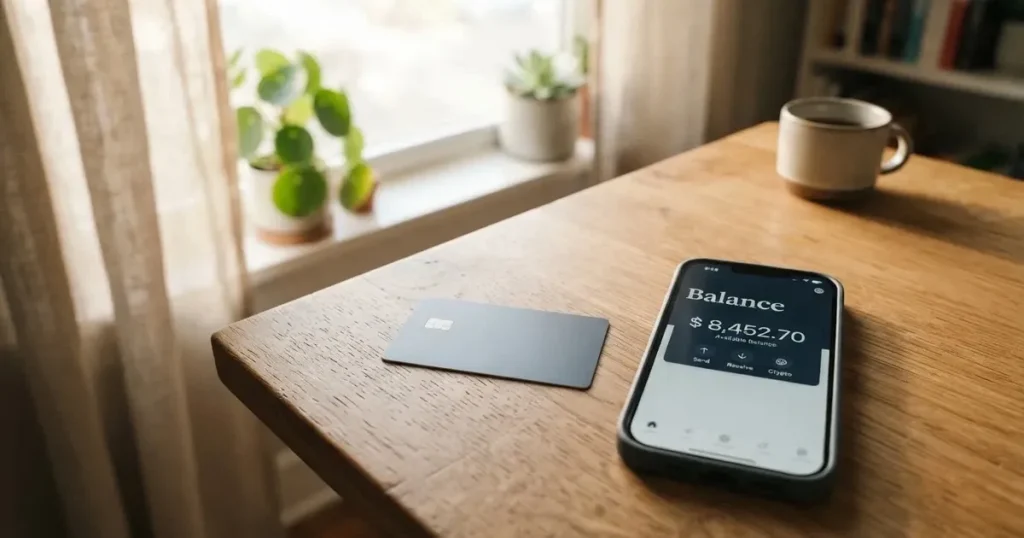
If you have tried to get an ordinary bank card and could not — no address a bank will accept, a country your employer pays you in, a banking system that closes accounts it does not like — then a virtual crypto card is one of the few doors left, and UnCard is one of the few names behind it. This is a review of what the card’s own pages say, what its documents say, and what the outside record is thin on. It is not an endorsement, and it is not a route around anything. Where the card does not say something, I say so rather than filling the gap.
The conditions described here are current as of October 28, 2026.
Verdict: 6.0 out of 10, and the number is mostly about what is missing
UnCard is not a bank, not an electronic money institution and not the entity that issues the card. Its own terms describe it as a fintech platform and programme manager: the card sits under a licence held by an unnamed “licensed financial institution or electronic money institution”. That structure is normal enough for this category — plenty of card programmes work exactly this way — but it means the entity you sign up with is not the entity that carries your balance when the payments network authorises a purchase, and the documents I could read do not name the issuer.
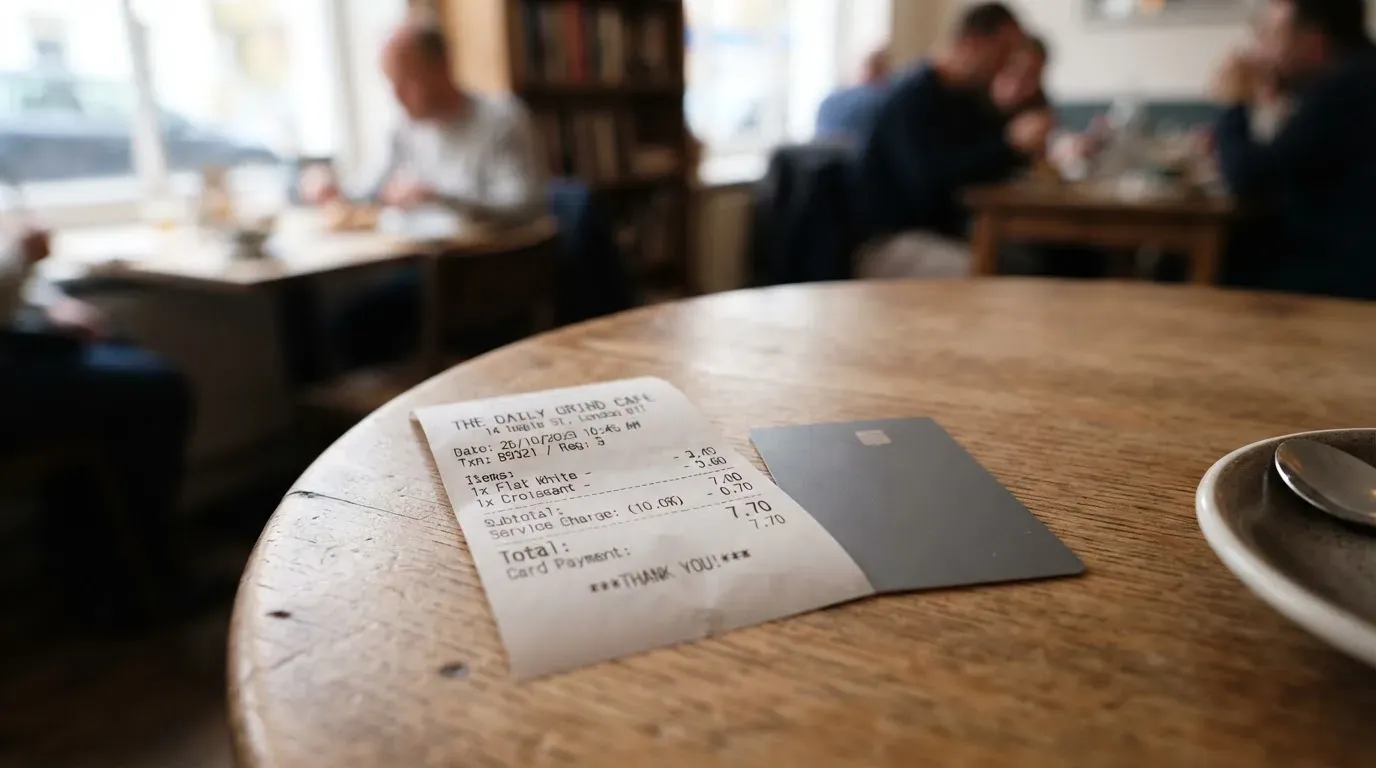
The product itself is two virtual cards and nothing else: an Online Card for web payments with 3-D Secure, and a Wallet Card you can add to Apple Pay and Google Pay. No physical card is described anywhere I looked. Signing up needs an email address, and the site says plainly that no bank account details are collected. Verification then depends on which plan you land on — some plans ask for no identity documents at all, others require full KYC before the card is issued or before it can be activated.
Here is the score, criterion by criterion.
| Criterion | Mark | Why |
|---|---|---|
| Who can get it | 7 / 10 | No country list at all; the terms only exclude residents of places where the service is “prohibited by law” and anyone under OFAC, UN or EU sanctions |
| Cost | 7 / 10 | A one-time application fee that depends on the plan, no monthly fee, but the top-up fee is not disclosed and a third-party page lists monthly, issuance, FX and top-up fees as “Free” while calling the fee structure opaque |
| Top-up options | 6 / 10 | BTC, ETH, USDT and XMR named, with more accepted, converted into a USD balance; the networks are not disclosed and the minimum top-up is 20 USD |
| Reliability and complaints | 4 / 10 | Not a bank, not an issuer, issuer unnamed; one five-star Trustpilot review; unofficially, DigitalOcean and Azure reportedly decline the cards |
| Everyday use | 5 / 10 | Both products are virtual, Wallet Card works with the two mobile wallets, but there is no plastic and no ATM |
Total: 6.0 / 10.
Who this suits: someone who needs a virtual card number for online payments this week, holds crypto, and is comfortable with an issuer they cannot name and a fee table they cannot read in advance. Who it does not suit: anyone who needs a physical card, anyone who needs to withdraw cash, anyone who needs a full published fee schedule, and anyone whose country’s rules make an offshore, unnamed-issuer card a legal or practical problem.
The reliability mark is the one that should give you pause before the others. One review is not a reputation, and there is no track record either way — but there is also nothing to reassure you with.
Will they give you the card
There is no country list. That is the plain fact, and it cuts both ways. On one hand, nobody is named as excluded by nationality. On the other, you get no way to check from the public pages whether your country is one where the service is “prohibited by law” — the single exclusion the terms do state.
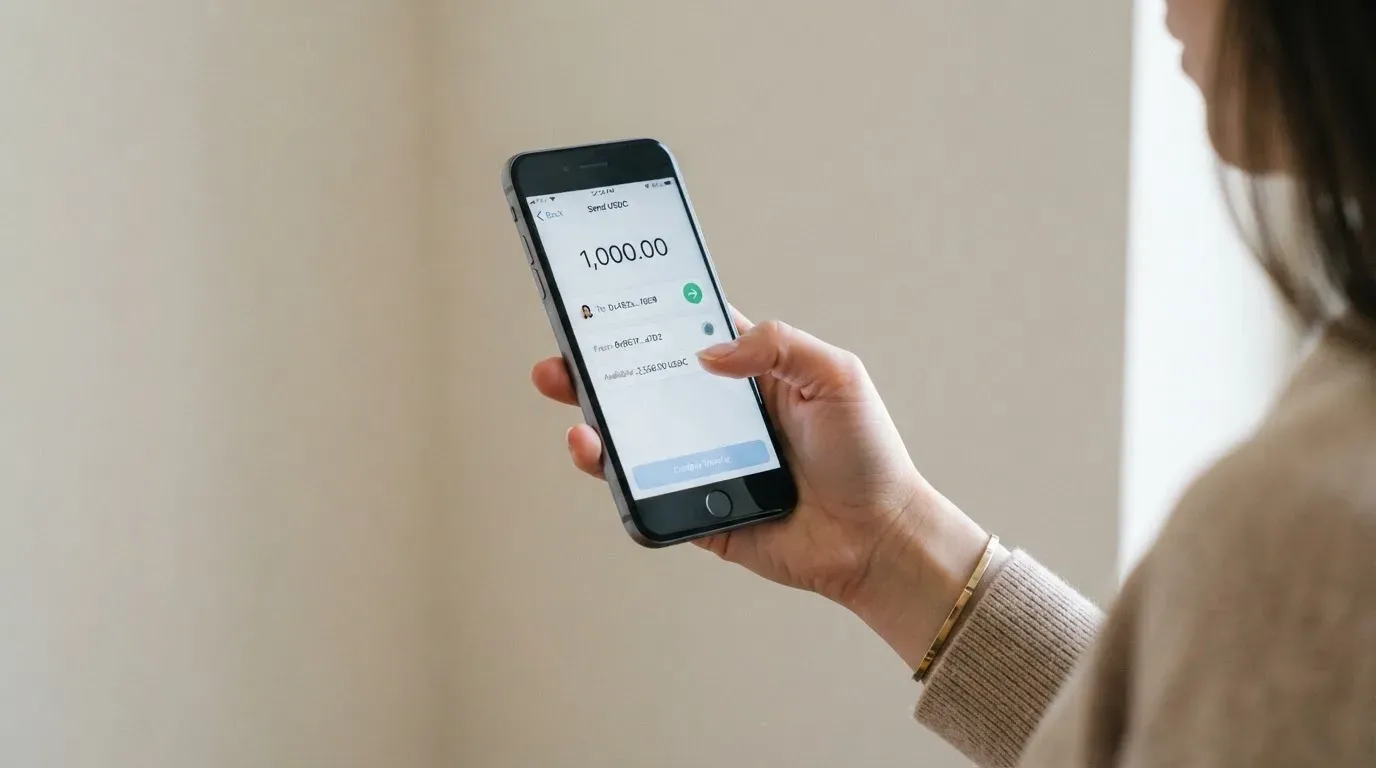
What the terms actually say is narrower than a country list: you must not reside where the service is prohibited by law, and you must not be subject to OFAC, UN or EU sanctions. Note that these are two different tests. Residence is about where you live. Sanctions are about who you are. In the background behind this category, that distinction matters more than it looks: screening is applied to citizenship and country of birth as well as to the address, because issuer risk policy is written that way even where the customer lives elsewhere.
So the honest answer to “can I get UnCard in my country?” is: probably yes, unless the law where you live prohibits it or a sanctions list catches you — and you cannot confirm either from the card’s own pages.
Two more things are simply not stated. Your age and the documents you would need are not stated. Processing time for a decision is not stated. The reasons an application could be refused are not stated. UnCard does say it may close a card where it suspects fraud, which is a normal right but a broad one.
My advice for anyone in an unusual situation: before you send anything, open the terms and read the prohibited-territories clause for yourself. That is the only place the answer exists.
How to get it
The signup itself is the easy part, and the card is candid about how easy. An email address, no bank account details. From there, what happens depends on the plan you are placed on.
There are plans that require no identity verification at all. There are plans that require full KYC before the card is issued. There are plans where the documents are needed only before the card is activated — that is, you get a number first and prove yourself later. Which plans do what is not itemised anywhere I could find. The differences between plans are stated only as: the application fee, the verification requirement, and the limits.
What you end up with is one of two things:
- Online Card — a virtual card for online payments, with 3-D Secure for verification. Visa Secure is Visa’s name for 3-D Secure, Identity Check is Mastercard’s, so if the card runs on Mastercard the step-up looks different in name only.
- Wallet Card — also virtual, and addable to Apple Pay and Google Pay.
Both are described as accepted wherever Visa is supported. The terms hedge this by saying the cards are issued under Visa or Mastercard rules, which is the point at which you realise you may not know which network you are on until you look at the card you were issued. Amounts are in USD.
There is no physical card. Delivery of anything physical is not stated, which follows from the fact that only two virtual products exist. There is no app; this is a web platform with API documentation.
Activation: the documents page does not walk through it separately. In practice the sequence is account, email verification, plan, verification if the plan requires it, then a card appears in your account. Wallet Card is added to Apple Pay or Google Pay from there.
The one thing worth doing before you start is writing down what you are actually trying to solve. If it is a merchant that wants a card number, the Online Card is the product. If it is a shop terminal or anything that taps, the Wallet Card is the one, and it only works in the two mobile wallets — a shop with a terminal but no phone of yours with the wallet set up will not take it.
What it really costs
Here is the uncomfortable part of the review, and I would rather state it plainly than soften it. UnCard publishes one fee — the one-time application fee, which depends on the plan, with 1 USD given as an example in the documentation. There is no monthly fee. Everything else is either undisclosed or described only as “may apply”.
A third-party review site (not UnCard, and I have not been able to confirm any of it against the card) lists the monthly fee, issuance, FX, top-up and decline fees as “Free” — and, on the same page, calls the fee structure opaque. Those two statements contradict each other. Treat the “Free” line as unverified marketing summary, not as a schedule.
| Fee or limit | What the card says |
|---|---|
| Issuance / application | One-time fee depending on plan; documentation gives 1 USD as an example |
| Monthly fee | None |
| Top-up / recharge fee | Applies; shown before you confirm; amount not stated |
| Handling fee | Possible for excessive declines, reversals or disputes; amount not stated |
| Conversion fee | Not stated |
| Foreign exchange fee | Not stated |
| ATM | Not stated; no ATM is described and there is no physical card |
| Monthly spending limit | Set per plan; may be changed by UnCard; not stated |
| Top-up limit | Varies by plan; documentation gives 10,000 USD as an example; not stated |
| Currency | USD |
Now the three everyday payments, because a fee list is only interesting when you know which line each purchase touches.
Paying an online subscription in dollars. Suppose your balance is already in USD and the merchant bills in USD. Then the cleanest path is: top up, pay, and the fees in play are whatever the recharge fee is (shown at confirmation) plus, possibly, a handling fee if the payment is declined or reversed more than the platform considers normal. No FX, because both sides are dollars.
Paying a European shop in euros. This is the payment where the unknown bites. Your balance is USD; the merchant wants EUR. Someone converts, and the rate plus any markup is buried in terms you cannot read. The FX fee is not stated anywhere. This is the payment to think hardest about before you rely on the card, because it is the one where the number you care about most is the one the card does not publish.
A declined payment. Declines are not free even when they cost you nothing in goods. A failed authorisation can leave a hold on funds that stays for several days — up to seven — and if it happens repeatedly, the handling fee for excessive declines may apply. If the decline was not your fault you have no automatic route to a refund; the operator is said to refund declined authorisations within five to seven days, but that is an unofficially reported statement, not something in the terms.
The line I would keep in mind: the plans differ in application fee, verification and limits, but the plan contents are not itemised. So the two numbers you know before signing up are the top-up fee, revealed only at the moment of confirmation, and your limits, revealed only when you have them.
How to top it up
Topping up is the part UnCard describes most concretely, and it is the part where the missing detail matters most.
The named currencies are BTC, ETH, USDT and XMR, with the site saying “6+ cryptocurrencies accepted”. The token is converted into a USD balance on the platform. That is the entire model: crypto goes in, a dollar balance sits there, and the card spends the balance. This is the prepaid pattern rather than the debit pattern — you load it first, it cannot overdraw, and if you do not load it, there is nothing to spend.
The problem is the one line you would want above all others: the networks are not stated. Which chain you must send on, for each of the four named currencies, is not published. And the background risk here is severe enough to state plainly: blockchain transfers are irreversible. Send on a network the provider does not support, or to an address belonging to a different network, and the money can be gone. There may be a support ticket and there is no guarantee. Before your first deposit, get the network from the platform’s own interface for that specific asset, every time, and check the address character by character — clipboard-hijacking malware that silently swaps a copied address for its own is a real and common attack.
The minimum is another point where the documents disagree. The terms state a minimum recharge of 20 USD; the documentation gives 5 USD as its example minimum. Take the higher number until the platform tells you otherwise.
Two things about the money that you should read before you deposit. Crypto deposits are described as final and non-refundable. And on cancellation, a balance of 10 USD or more goes back to the platform wallet while anything below 10 USD does not; redemption has a 10 USD minimum and a 48-hour gap between redemptions. That is the shape of a small-balance trap: a few dollars left when you close the account is money you lose.
One more network detail worth knowing, because it catches people out on the wrong asset. On Ethereum, sending a token costs gas paid only in ETH — a wallet holding USDT and no ETH cannot send it at all. Tron prices its fees through bandwidth and energy, often by burning TRX. And Circle stopped supporting USDC on Tron in February 2024, so “USDC over TRC20” is not a native option. These are network mechanics, not card policy, but they decide whether your transfer goes through.
Paying with it every day
Day to day, UnCard is two virtual cards and the two mobile wallets. That is the honest ceiling on it.
Wallet Card works with Apple Pay and Google Pay, which is what makes it usable in person at all. Apple Pay replaces the card number with a device-specific Device Account Number held in the Secure Element, never on Apple’s servers, and each payment uses a one-time dynamic security code. The issuer can still restrict the tokenised number — blocking it for magnetic stripe, for phone, or for website use is a switch the issuer holds. If a card suddenly stops working in one place and works in another, this is often why.
There are no cash withdrawals to think about, because there is no physical card and no ATM is described. If you need cash, this is the wrong product and no amount of setup will change that.
Blocked categories exist — the terms say restrictions set by issuing partners apply — but the list is not published. That is worth understanding as a category, not just for this card. A merchant category code is a four-digit number classifying a business under ISO 18245, assigned when the business starts accepting cards; gambling, for example, sits under a code many issuers block by policy rather than by law. You cannot know what UnCard’s issuer blocks until a payment fails.
Two everyday frictions deserve advance attention, because both hit virtual cards harder than plastic:
- Address verification. AVS compares the numeric parts of the billing address you type with the issuer’s records. It is mainly offered in the US, Canada and the UK, and is generally unavailable for foreign-issued cards — which is precisely this situation, and which causes declines.
- Foreign-looking cards in general. Merchants can look up the BIN to see which institution and which country issued the card, and apply extra scrutiny when the issuer country differs from the billing address. A virtual card issued through an offshore structure will read as foreign to a shop, and some merchants decline prepaid or foreign BINs precisely because that lookup tells them what they are dealing with.
Support is a Telegram channel and [email protected], with a “24/7 Support availability” claim and a status page; the languages are not stated. There is no app — it is a web platform with API docs.
Rewards: not stated. If a cashback or points scheme is what you are after, there is nothing here to find.
What can go wrong
This is the section where the card is thinnest, so I am going to be specific about each item rather than general about risk.
You do not know who issued the card. UnCard says it holds no client funds in its own accounts, and that the issuer is a “licensed financial institution or electronic money institution” — unnamed. That is a legitimate structure, but it means your contractual counterparty on the card and the entity that actually issued it are different, and only one of them is identified to you.
You cannot read the fee schedule. Set out above. Top-up fee undisclosed, handling fee possible, conversion and FX undisclosed.
Your crypto deposit is one-way. Deposits are final and non-refundable, blockchain transfers are irreversible, and the supported networks are not published.
Small balances are lost on exit. Below 10 USD, a balance is not returned.
Chargebacks can cost you the card. UnCard says chargebacks can lead to card closure. Disputes go to binding arbitration or the courts of Hong Kong, and refunds are made “at our sole discretion” in exceptional cases. That is a substantial shift of power towards the platform, and it is written in the terms rather than inferred. Whether your rights under the law of where you live override that is a question for a lawyer in your jurisdiction, not for me.
Compliance can stop you at any point. This is a legal point, not a consumer one. KYC rules require regulated businesses to verify customers and assess risk, including ongoing monitoring and reporting of suspicious activity; in the EU, due diligence covers identity documents, a sanctions check, the purpose of the relationship and whether you are a politically exposed person. If due diligence cannot be completed, rules require the institution to refrain from the transaction or relationship and, where necessary, end it. That is why accounts get closed or frozen pending documents — and UnCard reserves the right to close a card on suspected fraud.
Sanctions and country law apply to you, not just to the platform. The terms exclude residents of places where the service is prohibited by law and anyone under OFAC, UN or EU sanctions. In the US, FinCEN guidance treats administrators and exchangers of convertible virtual currency as money transmitters, while ordinary users buying goods are not — so the position of a user differs from the position of the operator.
Stablecoins are not what the name promises. The aim is a stable value, but stablecoins are not necessarily stable: TerraUSD collapsed in May 2022 and USDC temporarily lost its peg in March 2023 during the US banking crisis. Tether describes USDT as backed one-to-one; Circle says USDC is 100% backed by cash and cash equivalents with monthly reserve attestations. Tether also says it disables tokens on wallets appearing on the OFAC sanctions list and has frozen funds tied to illicit activity — so stablecoins are not censorship-proof.
Programme and merchant risk. Networks and issuers can end programmes: Visa terminated its global agreements with FTX on 13 November 2022, and WaveCrest’s Visa programmes were closed after a 2018 suspension in Europe. And the outside record for this card specifically is thin but not empty: forum users reportedly see DigitalOcean and Azure decline the cards, and an aggregator reported that the operator offered free cards in exchange for Trustpilot reviews. One five-star Trustpilot review dated 19 May 2026 praised fast issuance and BTC, XMR and USDT top-ups; the page shows 3.7 / 5 from a single review and notes the company has not invited reviews. I found no official incident reports.
Taxes. I am not going to advise you here. One factual note only: the IRS treats digital assets as property, so exchanging them for goods, services or dollars generally produces a taxable gain or loss measured in local currency at the value on the transaction date — which means each card payment funded from crypto may be a separate disposal. What that means for you depends on your circumstances and your country.
What to take instead
The alternatives below come from the same category and are the ones worth comparing against. None of them is a bank either. I am not going to declare a winner; the differences are in what is disclosed.
| UnCard | Cardex | CardFlow | HyperCard | |
|---|---|---|---|---|
| Score here | 6.0 / 10 | 5.6 / 10 | 4.9 / 10 | 4.7 / 10 |
| Who it targets | No country list; residents of prohibited places and sanctioned people excluded | “One crypto card, 200+ countries”; no list or exclusions; app listing is Naira-focused | Nigeria-focused, “Nigerians and global users” | No list on official pages; app says works in “more than 176 countries” (acceptance, not eligibility) |
| Card | Online Card and Wallet Card, both virtual; Wallet Card for Apple Pay and Google Pay | Debit crypto card on VERVE, VISA, Mastercard and UnionPay; virtual and physical per the app listing | Virtual USD Mastercard, created in about 3 minutes | Prepaid “HyperCard”; network not stated on the app page |
| Cost | One-time application fee by plan, no monthly fee | Not stated | Virtual card creation free (site FAQ); monthly fee not stated | Not stated; app page lists no fees |
| Conversion | Converted to USD balance; fee not stated | Real-time crypto-to-fiat conversion at payment, with an “AI-Powered Conversion Rate” claim; no percentage stated | Not stated | Crypto converted to USD or EUR on the card |
| Top-up | BTC, ETH, USDT, XMR named, “6+ cryptocurrencies accepted”; networks not stated | USDT, USDC and BTC wallets; networks not stated | Bitcoin, USDT, ETH or Naira bank transfer; networks not stated | Deposit crypto such as USDT, BTC, ETH in the app; networks not stated |
| Currency | USD | Naira per the app listing | USD | USD or EUR |
Read that table with the disclosure gaps in mind, because they are the real differentiator. UnCard at least tells you its currency and its two product types. Cardex tells you a great deal about networks — four of them, including a physical card — and less about who can sign up. CardFlow is the cheapest on paper for the one thing it sells: a virtual Mastercard in three minutes, free to create, aimed at Nigeria. HyperCard tells you almost nothing about fees on any page I could read.
Two honest caveats on this comparison. First, Cardex’s conversion claim is marketing copy I read on its site, and “AI-Powered Conversion Rate” is a phrase, not a rate. Second, the unofficially reported additions to UnCard’s coin list — SOL alongside the four named — come from a third-party site and are not confirmed by the card, so I have kept them out of the table.
If your problem is “I need a physical card”, Cardex is the only one of the four that describes one. If your problem is “I need a number for an online merchant today, free”, CardFlow is the most straightforward. If your problem is “I need USD or EUR without touching crypto at the payment moment”, HyperCard’s dual-currency balance is worth a look. And if your problem is “I hold Monero, which almost nobody supports”, UnCard’s naming XMR is unusual and may be the deciding fact — though again, the networks are not published, so check before you send.
Who I would recommend it to
I would recommend UnCard to someone in a specific position: you need a working card number for online payments soon, you already hold crypto, you are not in a jurisdiction where an offshore card is a legal problem, and you have decided that speed matters more to you than a published fee table and a named issuer.
I would not recommend it to you if any of these are true: you need cash, you need plastic, you need a fee schedule you can read before you commit, you need to know who stands behind the card in a dispute, or you intend to keep a large balance on it.
The honest summary is this. UnCard is a thin, quick product built on a real structure. The virtual cards work, the mobile wallet integration is the right call, signup friction is minimal, and there is no monthly fee. Against that: the issuer is unnamed, most fees are unpublished, support for several mainstream coins is named but technically unspecified, the outside reputation consists of one review plus reports of declines at two well-known merchants, and the terms put disputes in arbitration and refunds at the platform’s discretion.
That combination is why this lands at 6.0 / 10 rather than higher or lower. It is not a scam on the evidence available. It is a product where the things that would make you trust it with real money are exactly the things it has not published — and that is a decision you have to make with your own eyes open, in your own country, on advice appropriate to it.
Frequently asked questions
What is the UnCard card?
It is a virtual payment card sold by UnCard, a fintech platform that describes itself as a programme manager rather than a bank or issuer. You get a card number, top it up with crypto, and the crypto is converted into a USD balance that the card spends. Two products exist: an Online Card for websites with 3-D Secure, and a Wallet Card for Apple Pay and Google Pay. No physical card is described.
How does UnCard card work?
The model is preloaded balance, not debit. You send crypto to the platform, it is converted into dollars on your account, and the card draws down that balance, so it cannot go negative. The card is issued under an unnamed licensed financial institution’s or e-money institution’s permission, and the terms say the cards operate under Visa or Mastercard rules. Payments are accepted wherever Visa is supported.
Is UnCard a bank?
No. Its own terms describe it as a fintech platform and programme manager, state that it holds no client funds in its own accounts, and name the issuer only as a licensed financial institution or electronic money institution. That is a normal structure for this category — the crypto brand fronts the card, a licensed institution issues it — but it means the company you sign up with is not the institution that issues the card.
Who owns UnCard?
The public pages I could read do not name owners, founders or a parent company, and no official company news is published. What is stated is that it says it operates under US law while the terms are governed by Hong Kong law, and that disputes go to binding arbitration or the courts of Hong Kong. If ownership matters to your decision, that is something to raise with their support directly.
Can I use UnCard in my country?
There is no country list to check. The terms say only that you must not reside where the service is prohibited by law, and must not be subject to OFAC, UN or EU sanctions. Residence and identity are two different tests, and screening often reaches citizenship and country of birth too. Acceptance in a shop is a separate question from eligibility, and both differ from your bank’s rules.
Does UnCard require KYC?
It depends on the plan, and the plans are not itemised. Some require no identity verification at all; some require full KYC before the card is issued; some require documents only before activation. Signup itself needs just an email, and the site says no bank account details are collected. Age and required documents are not stated. UnCard also reserves the right to close a card where it suspects fraud.
What does it cost to use the card?
One-time application fee depending on plan, with 1 USD as an example in the documentation, and no monthly fee. Beyond that: a recharge fee applies and is shown before you confirm, but its amount is not stated; a handling fee may apply for excessive declines, reversals or disputes; conversion and foreign exchange fees are not stated. A third-party site lists several fees as “Free” while calling the fee structure opaque — unofficial, and not confirmed by the card.
How do I top up the card?
With crypto: BTC, ETH, USDT and XMR are named, and the site says “6+ cryptocurrencies accepted”, converted into a USD balance. The supported networks are not stated, which is the detail to get right — an unsupported network means an irreversible loss. The terms state a minimum recharge of 20 USD while the documentation’s example says 5 USD, so assume the higher figure. Deposits are final and non-refundable.
How do I withdraw money from UnCard?
The terms describe returning funds rather than cash withdrawal, and this is where the product is limited. On cancellation, a balance of 10 USD or more goes back to the platform wallet; below 10 USD it is not returned. Redemption has a 10 USD minimum and requires 48 hours between redemptions. There is no physical card and no ATM, so card cash withdrawal is not part of this product at all.
Is UnCard safe to use?
Safety here means several different things. The card does not hold client funds in its own accounts, uses 3-D Secure, and applies spending limits per card and account; two-factor authentication is not stated. Structural risks remain: the issuer is unnamed, most fees are unpublished, crypto deposits cannot be reversed, and disputes go to arbitration or Hong Kong courts with refunds at the platform’s discretion in exceptional cases. Outside the card’s own pages, the record is one five-star Trustpilot review and unconfirmed reports of merchant declines. Check the terms in your own jurisdiction before committing money.
Virtual card reviews – cryptocardcheck
Content created by the «cryptocardcheck» team