
A free virtual Visa you load with USDC, with caveats on both sides of the Atlantic
 Available in US
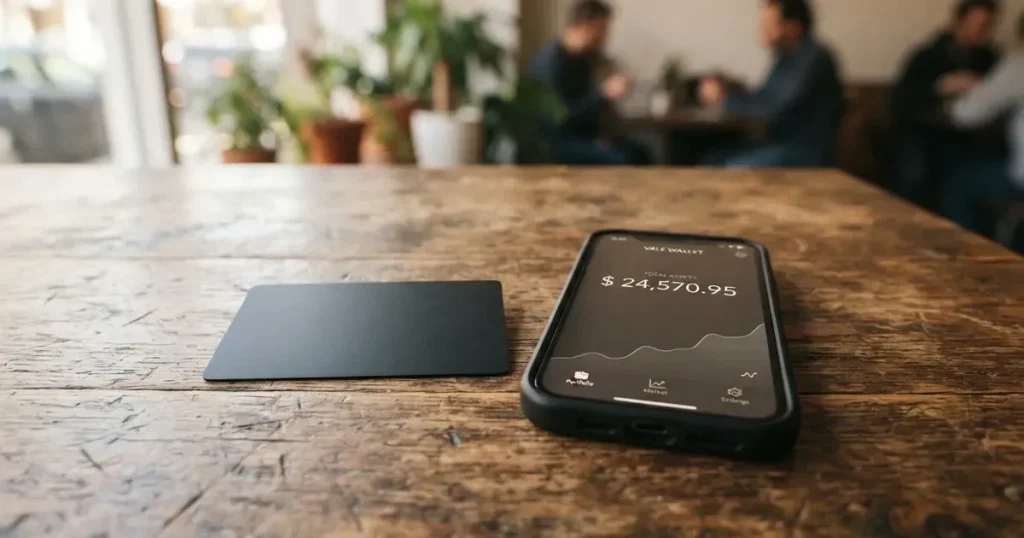
VaultLeap is a virtual Visa debit card that you load yourself with USDC, then spend like an ordinary card online or in a phone wallet. On paper it is unusually cheap: no monthly fee, no annual fee, no per-purchase fee, and a 0% international transaction fee. Underneath that, it is a fairly narrow product — one coin, one network path, no plastic, no cash machines — attached to a young operator with a thin public complaint record. My score for it is 6.0 out of 10.
The card is built for US and Latin America residents who already hold USDC and want to pay with it online. If you live in one of the markets where an ordinary bank card is refused, delayed or simply unobtainable, the appeal is obvious. If you already have a working debit card and a bank account, the honest comparison is against a free multi-currency card from a bank you can actually open an account with — and on that comparison, VaultLeap is thinner.
Here is what I checked, what I found, and where I think the risk sits.
*Conditions described are current as of October 28, 2026.*
Verdict: 6.0 out of 10
| Criterion | Mark | Why |
|---|---|---|
| Who can get it | 5 / 10 | Advertised for 27 countries, list not published; starts with the United States, Latin America and Ghana. The cardholder agreement says it is issued under U.S. law and “not directly marketed outside the U.S.” |
| Cost | 9 / 10 | $0 per month, $0 per year, $0 per purchase, free closure, 0% international fee, no FX markup. Conversion carries about 0.5% in partner fees. The issuance fee is not disclosed. |
| Top-up options | 5 / 10 | USDC only, moved by hand from your VaultLeap balance through the dashboard. Other coins and networks are not disclosed, and you pay the blockchain fee. |
| Reliability and complaints | 5 / 10 | Issuer Lead Bank, programme manager Bridge Ventures LLC. Trustpilot 3.4 out of 34 reviews, with reports of account blocks in 2026 and of funds not credited. |
| Everyday use | 5 / 10 | Virtual Visa in minutes, Apple Pay and Google Pay supported. No plastic card, no cash machines. |
| Total | 6.0 / 10 | Cheap and quick for one specific job; too narrow to be an all-purpose everyday card. |
Two things drive that number in opposite directions. The cost side is genuinely excellent for what it does — the only fee you are likely to meet is the conversion pass-through and the gas on your own transfer. The other side is concentration: everything depends on one coin, one dashboard button, one programme manager and one issuer, with no plastic fallback if your phone breaks.
For the reader this card is really for: someone in the United States or Latin America who holds USDC, pays online a lot, and wants to spend a crypto balance without touching an exchange. For the reader it is not for: anyone who needs cash, a card for a shop that insists on physical, more than one coin, or the reassurance of a deposit guarantee.
Will they give you the card?
Short answer: probably, if you are in the right country, over 18, and willing to complete identity verification. The card’s own pages advertise it for 27 countries, but the full list is not printed on the page, so I cannot tell you the whole set. What the card does state as a starting point is: the United States, Latin America, and Ghana. The Latin American markets named are Argentina, Colombia, Mexico, Brazil, Peru, Bolivia, Guatemala, Dominican Republic, Ecuador, Costa Rica, El Salvador, Honduras, Panama, Paraguay and Uruguay.
That last sentence is the part to sit with. The cardholder agreement says the card is issued under U.S. law and is “not directly marketed outside the U.S.” So the marketing footprint is wider than the issuing footprint. Practically: if you are in São Paulo or Lima and the onboarding flow refuses you, that is not a glitch you can argue past — the agreement is written on U.S. law and the card is not directly marketed outside the United States.
If you are deciding whether to bother, the fastest test is the country on your proof of address. Everything else about this card is downstream of that.
How to get it
The card is a virtual Visa debit, described in the legal text as a “Prepaid Debit Visa Card”, issued in minutes, denominated in USD. You ask for it from the dashboard “once your account is verified” — there is no separate paper application.
- Age: 18+, the age of majority.
- Identity verification: required, and the card is not requested until the account is verified.
- Documents and proof of address: not stated on the public pages.
- Physical card: none. The product is virtual only.
- Replacing a lost or damaged card: free — “There is no fee for replacing your Card.”
- Verification levels and what upgrades them: not stated.
So the sequence is account, verification, then card from the dashboard. What I cannot tell you from public pages is which documents the verification step will ask for, because the card does not say. Expect it to involve an identity document, and go looking for your proof of address anyway, since that is the standard request in this category.
One thing worth checking yourself: your country appears in the list of 27, and that the dashboard actually lets you complete verification. The advertised list and the list you can pass are not the same thing.
Fees: what VaultLeap really takes
This is where the card is strongest, so read the table before you read the caveats.
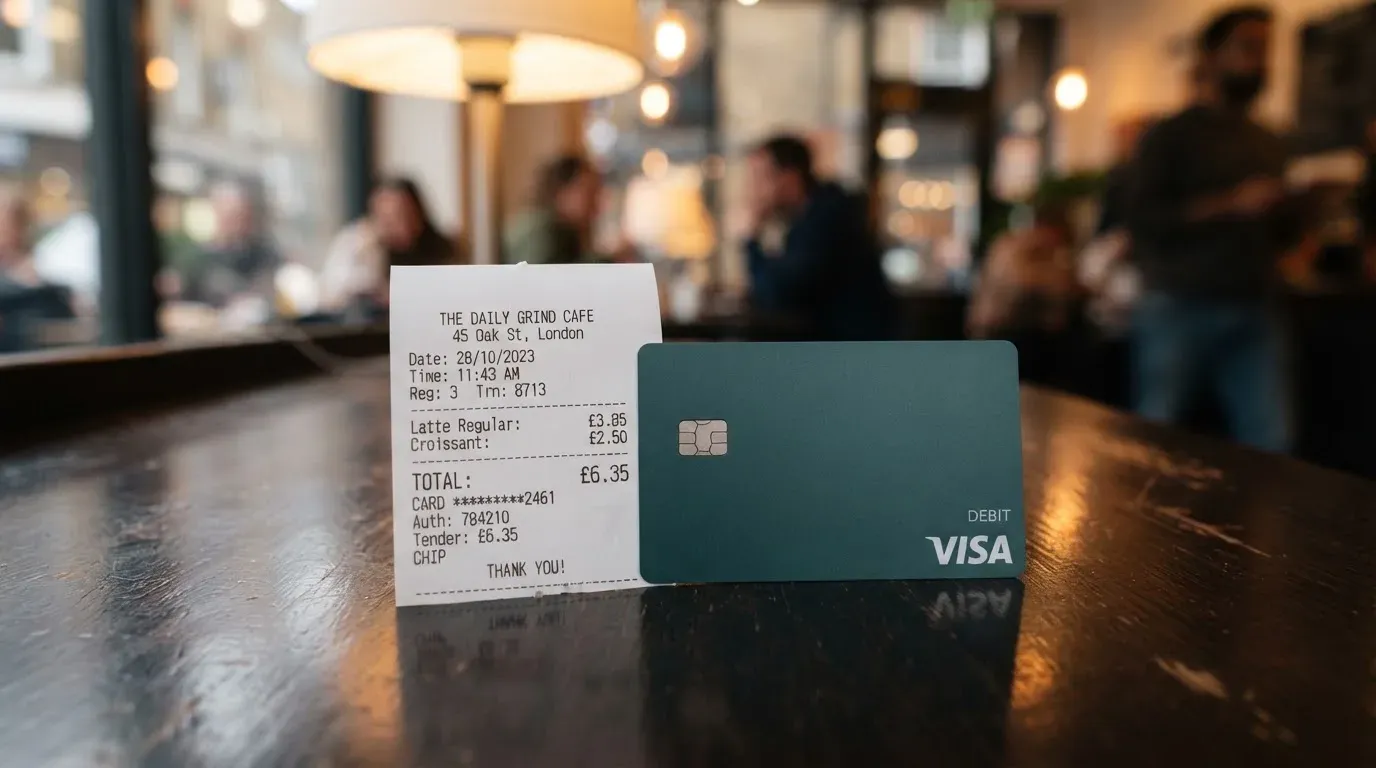
| Fee or limit | What the card states |
|---|---|
| Monthly fee | $0 |
| Annual fee | $0 |
| Per purchase | $0 |
| Closing the account | free |
| Issuance fee | not stated |
| International transaction fee | 0% |
| Currency markup | none — “No FX markup” |
| Conversion | carries about 0.5% in partner pass-through fees |
| ATM withdrawals and balance inquiries | unavailable (“n/a”) |
| Maximum per-transaction load | $2,000.00 |
| Other limits | may be set by the bank |
Three everyday payments, so you can see which lines actually bite:
- A $60 online subscription in USD, from a USDC balance. No per-purchase fee, no FX markup. What you meet is the conversion pass-through of roughly 0.5% and the gas for the USDC transfer you made to load. So the visible cost of the payment itself is about 0.5% of $60, and the one-off cost is whatever the network charged for your top-up.
- A $40 purchase in a store abroad, priced in euros. The 0% international transaction fee and the absent FX markup mean the Visa network rate applies, and no separate international fee is added. In practice you are accepting the rate at the moment the transaction converts.
- Taking $100 out at a cash machine. You cannot do this. ATM withdrawals and balance inquiries are listed as “n/a”. There is no cash option at all, and no fee for trying, because there is no feature to price.
Two limits are worth internalising. The $2,000.00 maximum per transaction applies to loading, and the bank may set others on top of it, so a large payment or a large top-up may not go through in one go.
Also note that the free tiers listed are account plans, not card tiers: Standard, Pro at $14.99/month or $144/year, and a Zero tier relating to transfer fees. The card itself is a single product, so you are not choosing between card levels. Account types exist in USD, EUR and MXN, and foreign purchases are made at the Visa network rate.
Top up: the one narrow door
There is exactly one documented way to fill this card, and it is the part I would think hardest about.
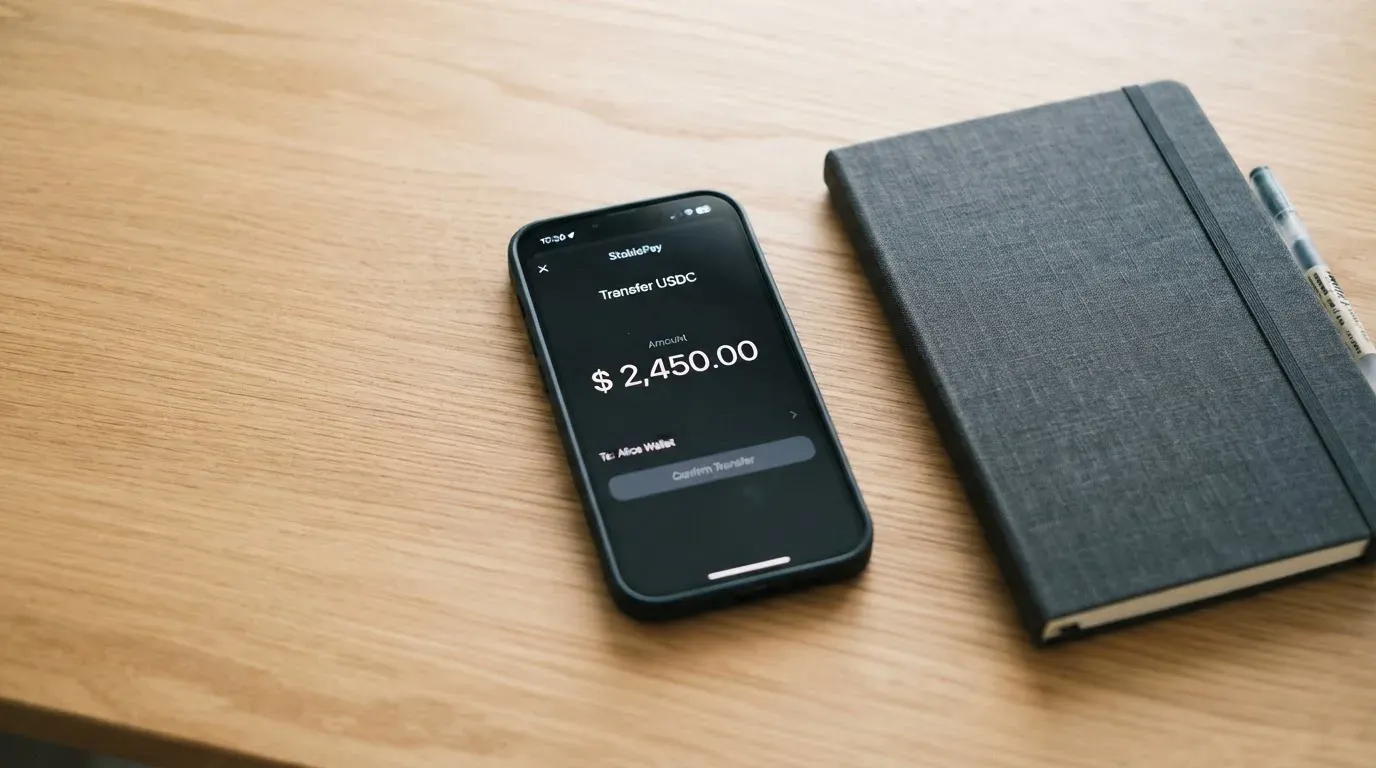
You move USDC manually from your VaultLeap balance through Dashboard → Card → Add Funds, and it lands in a card wallet powered by Bridge. The transfer is something you initiate. Other coins and networks are not stated — I cannot tell you from the public pages whether anything else works.
- Deposit fee and minimum top-up: not stated.
- Who pays the network fee: you do. The blockchain fee for your own deposit is charged by the network, not by the card provider.
- Withdrawing: on closure, any remaining fiat balance goes to the platform wallet as stablecoins. The bank may refuse balances under $1.00. Account withdrawals can go to any supported USD or EUR bank account.
So the cost of using this card includes a blockchain transfer you make yourself, in a coin you already hold. If you do not hold USDC, getting some is a separate transaction with its own counterparty and its own price risk — and if you buy it immediately before spending it, you have turned a 0% FX fee into a crypto-market position.
The practical rule I would apply: only keep what you intend to spend on this card. The card draws on a balance, not a bank account, and the balance you load is the balance at risk.
Paying with it every day
Within a narrow lane, it works normally. You get a virtual Visa number, you can push it into Apple Pay or Google Pay, and you pay at any online merchant that accepts Visa. Apps are on the App Store and Google Play, although I did not read the store ratings, so I cannot tell you what users say there.
- Blocked merchant categories: not stated. I would assume nothing is blocked and find out.
- Cashback or rewards: none stated. There is a “Points & Rewards” help category on the card’s site, whose contents I did not read.
If a payment goes wrong, the route is documented: Dashboard → Support → File a Ticket → Dispute a Charge. Report errors within 60 days. The bank decides within 10 business days, extending to 45 days — and to 90 days for new cards, point-of-sale purchases or foreign transactions. Unauthorized transactions must be reported within 2 business days, and your liability is capped at $50 after that, rising to $500 if you delay further. Those numbers come from the card’s own process and are worth reading as deadlines rather than trivia.
One category fact applies here and surprises people: a merchant category code is a four-digit number classifying the business, and many issuers block specific codes by policy rather than by law — the list differs from issuer to issuer. If something declines unexpectedly, that is one of the ordinary reasons.
What can go wrong
I found no official incident involving this card. What I did find is a pattern in user reports, which is weaker evidence and I am labelling it as such.
On Trustpilot the card sits at 3.4 out of 5 from 34 reviews, read on 2026-10-21. The themes reported by users: accounts suspended or blocked without a clear reason (January 2026, June to August 2026); funds not credited or not returned (October 2025, June 2026); and unclear support. A review dated 12 October 2026 acknowledges problems with card issuance. All of that is user report, not confirmed by the card.
Who is behind it matters when something goes wrong. Klydo Inc., a California S Corporation, operates the platform. The programme manager is Bridge Ventures LLC, a Delaware entity and a licensed money transmitter. The issuer is Lead Bank, a Missouri state-chartered bank.
On the money itself, the card’s terms state that VaultLeap “does not hold customer funds”, and the wallet is described as self-custodial. That is a real protection against the provider spending your balance — but it means the funds are not FDIC insured, and it means a freeze in the app (Dashboard → Card → Freeze) is the only immediate lever you have if a phone is lost.
The frozen-by-the-platform risk sits in the opposite direction from the self-custody benefit. The complaint themes above are all about accounts being suspended, and the agreement gives the issuing bank latitude over limits. Support is available by email in English and Spanish and through a Support tab with tickets. I did not find any official announcements about incidents — not stated on the public pages.
Two category risks deserve a mention because they apply whatever the card says. Stablecoins are not guaranteed to hold their value: Tether’s USDT and Circle’s USDC are dollar-pegged, but the BIS put about 90% of stablecoin market capitalisation in those two in July 2025, and USDC lost its peg temporarily in March 2023 during the US banking crisis. And blockchain transfers are irreversible — a deposit on a network the provider does not support can be lost, or need manual recovery with no guarantee. With a manual, single-coin top-up, that is the sharpest edge on the whole product.
What to take instead
If your reason for looking at VaultLeap is that an ordinary card is hard to get, these are the three comparisons I would actually make.
| VaultLeap | International Visa Card | UNi Card | Whop Cards | |
|---|---|---|---|---|
| Score | 6.0 / 10 | 6.7 / 10 | 6.1 / 10 | 5.2 / 10 |
| Card | Virtual Visa, USD | U.S.-issued Platinum Visa, virtual; physical “coming soon” | Multicurrency, Mastercard network | Visa; type and currency not stated |
| Who it is for | 27 countries advertised: US, Latin America, Ghana | Not available to residents or registrants of a long restricted-country list | Not stated | 31 US states for consumers, 41 for businesses |
| Card fees | $0 monthly, annual, per purchase; 0% international; no FX markup; ~0.5% conversion | $5 issuance, no maintenance; 2% FX fee; USD use free | No annual fee, no foreign transaction fee; live OTC rates, “no hidden exchange fees” | “No extra fees”; amounts not listed |
| Funding | USDC, manual, you pay gas | USDC or USDT into the USD account free at 1:1; also USD, EUR, SEPA, SWIFT, FedNow | Not stated | Whop balance backed by stablecoin collateral |
| Rewards | none stated | none stated | Spend-to-Earn up to 3% | 5% cashback at select merchants, currently Uber |
Where each one wins, plainly:
- VaultLeap wins on pure cost. Zero monthly, zero annual, zero per purchase, and a 0% international fee with no FX markup are not easy to find together anywhere.
- The International Visa Card wins on reach and clarity. Its restricted list is explicit — residents and legal registrants of Belarus, mainland China, North Korea, Cuba, India, Iraq, Iran, Israel, Myanmar, Nepal, Nicaragua, Russia, Syria, Turkey, Ukraine, Venezuela and Vietnam cannot have the account or card, and purchases are blocked in North Korea, Cuba, Iran, Russia, Syria, Ukraine and Venezuela. FATF grey-list countries are reviewed case by case. The rule is by residence or registration, not citizenship. Deposits are free, and you are not restricted to one coin — though the 2% FX fee is real money on foreign spend.
- UNi Card wins on multi-currency and rewards. No annual fee, no foreign transaction fee, live OTC conversion rates and up to 3% back. Its funding route is not stated, which is exactly what you would want to know first.
- Whop Cards wins on cashback and, for some, availability across 31 US states. They also carry 5% cashback at select merchants, currently Uber. Their consumer list of unsupported countries overlaps the list above, and their fee and conversion numbers are not stated at all.
Whop’s stablecoin backing comes from a linked wallet, and coins and networks are not stated — the same gap as VaultLeap’s.
Who I would recommend it to
I would recommend VaultLeap to one specific person: someone in the United States or Latin America who already holds USDC, spends online several times a week, and wants that balance usable without going back to an exchange for each purchase. For them, the combination of a $0 monthly fee, a 0% international transaction fee and a virtual card in minutes is hard to argue with, and Apple Pay makes it usable without writing card numbers anywhere.
I would not recommend it as your only card. No cash machine, no plastic, one coin, one manual top-up, a $2,000.00 per-transaction load ceiling, and a complaint record where suspended accounts and uncredited funds are the recurring themes. If you are moving money you cannot afford to have frozen for a month while support works through a ticket, that risk is the deciding factor, not the fees.
And if the reason you are reading this is that a bank will not give you a card, check the alternatives before you commit. The International Visa Card scores higher than VaultLeap on my reading and states its restricted countries plainly, which is worth more than a lower headline fee when you are deciding whether you qualify at all.
Frequently asked questions
What is VaultLeap?
VaultLeap is a virtual Visa debit card that you load with USDC rather than with a salary or a bank balance. The operator is Klydo Inc., a California S Corporation; the programme manager is Bridge Ventures LLC, a licensed money transmitter; and the issuing bank is Lead Bank, a Missouri state-chartered bank. It is prepaid in legal terms, so the card spends only what you have loaded.
Is VaultLeap a bank?
No. The card is issued by Lead Bank, but VaultLeap itself is not a bank — it is a card programme run by a company and a programme manager. The cardholder agreement says the card is issued under U.S. law. Deposits are not FDIC insured, so I would not treat a balance here as bank savings under any circumstances.
Which countries is the VaultLeap card available in?
The card is advertised for 27 countries but does not publish the full list. The stated starting markets are the United States, Latin America — including Argentina, Colombia, Mexico, Brazil, Peru, Bolivia, Guatemala, Dominican Republic, Ecuador, Costa Rica, El Salvador, Honduras, Panama, Paraguay and Uruguay — and Ghana. The agreement also says the card is not directly marketed outside the U.S.
Does getting the card require KYC?
Yes, identity verification is required, and the card is requested from the dashboard only once your account is verified. The age requirement is 18+. The public pages do not state which documents or proof of address you will need, so do not assume you can skip that step — and note that verification is where accounts get held up.
How much does the VaultLeap card cost?
Monthly fee $0, annual $0, $0 per purchase, closure free. International transaction fee is 0% and there is no FX markup. Conversion carries about 0.5% in partner pass-through fees. The issuance fee is not stated, so I cannot tell you whether the card itself is free to obtain — a gap worth confirming before you rely on that.
Can I use VaultLeap in Apple Pay?
Yes, Apple Pay is supported, as is Google Pay. Because there is no physical card, a mobile wallet is the normal way to pay in person — tap your phone. No cash-machine withdrawals or balance inquiries are available at all, and no merchant categories are stated as blocked.
How do I top up the VaultLeap card?
You move USDC by hand from your VaultLeap balance through Dashboard → Card → Add Funds into the Bridge-powered card wallet. You pay the blockchain fee yourself. No other coins or networks are stated, and the deposit fee and minimum are not stated, so the only route I can confirm is the manual USDC one.
Is the VaultLeap card safe?
The terms say VaultLeap does not hold customer funds, and the wallet is described as self-custodial, which removes the risk of the provider spending your balance. Against that, funds are not FDIC insured, you can freeze the card in the app, and user reports on Trustpilot — which sits at 3.4 from 34 reviews — include accounts suspended without clear reason in 2026 and funds not credited.
What happens if I want to close the account?
Closure is free. Any remaining fiat balance goes to the platform wallet as stablecoins, and the bank may refuse balances under $1.00, so small leftovers are worth spending rather than leaving. Account withdrawals can go to any supported USD or EUR bank account. Withdraw your balance before you close, not after.
Is a VaultLeap card worth it?
Worth it if you already hold USDC and pay online often: $0 monthly, $0 annual, $0 per purchase and a 0% international fee with no FX markup are unusually good. Not worth it if you need cash, a physical card, more than one coin, or a balance you are certain cannot be frozen mid-month. For people outside the US and listed Latin American markets, check the alternatives first.
App and neobank card reviews – cryptocardcheck
Content created by the «cryptocardcheck» team