
WaldenPay reviewed: cheap to hold, expensive to load, and still light on answers about the bank behind it
 Available in US
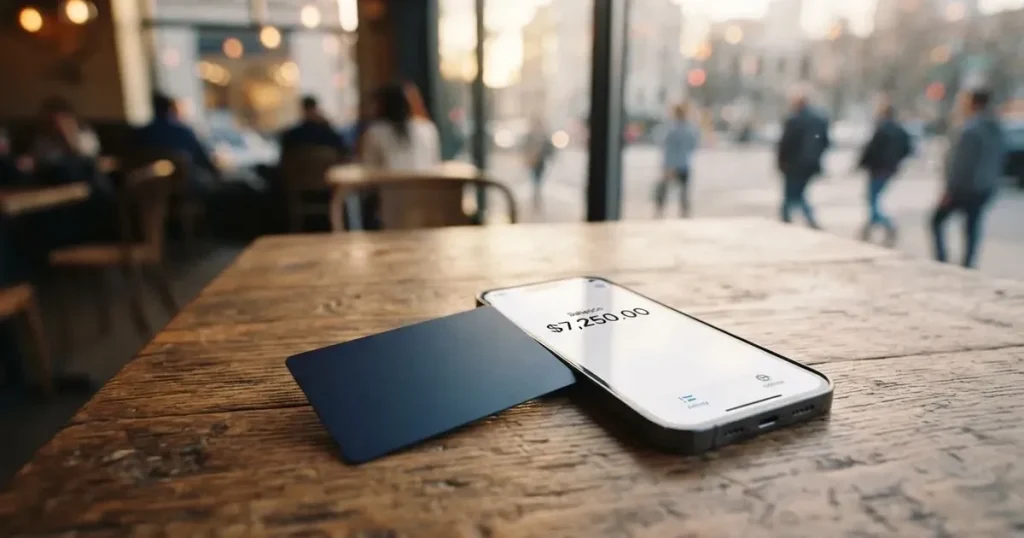
If you have trouble getting an ordinary bank card — because of where you live, what documents you hold, or a bank that simply will not open an account for you — a crypto card looks like a practical shortcut. WaldenPay is one of them. It gives you a virtual prepaid card on Visa or Mastercard rails, you load it from crypto, and ten minutes later you have something that behaves like a card number in a normal shop. On paper that solves a real problem. The questions that follow are what it costs, who stands behind it, and what happens when something goes wrong.
Conditions are current as of October 28, 2026.
My score is 6.3 out of 10. That is not a “stay away” and not an endorsement. It is a card that is genuinely good at one thing — turning any of 135+ cryptocurrencies into spendable balance across 35+ networks — and genuinely unfinished on the things that make a payment card trustworthy: no issuing bank named, no licence named, no physical card, no stated ATM access, and a flat 5% fee to load it that only falls if you spend large amounts. The conditions described here are current as of 2026-10-20.
The score, criterion by criterion
| Criterion | Mark | Why |
|---|---|---|
| Who can get it | 9 / 10 | Sign-up and loading are described as “supported globally” apart from a short list of restricted jurisdictions |
| Cost | 3 / 10 | $10 one-time issue fee, $0 monthly, but 5% base top-up fee and no card-side FX markup |
| Top-up options | 10 / 10 | “135+ cryptocurrencies” across “35+ networks”, $25 minimum, instant crediting |
| Reliability and complaints | 5 / 10 | Issuer is BlueHouse Software B.V. in Rotterdam; the site says it “is not a bank”, and no bank or licence is named |
| Everyday use | 5 / 10 | Virtual Visa/Mastercard in about 10 minutes, Apple Pay and Google Pay, but no plastic and ATM access not stated |
| Total | 6.3 / 10 |
The pattern in that table is the whole review in miniature. Where the card touches crypto, it scores well. Where it touches banking, it goes quiet.
Who this suits. Someone who already holds crypto across several networks, who has a phone with Apple Pay or Google Pay, who wants a virtual card number for subscriptions and online payments, and who is comfortable with a provider that names no bank. The 10/10 on top-up options is not marketing filler — 135+ coins over 35+ networks is genuinely the widest reach in its class, and if your funds sit on a chain nobody else supports, that is the reason to pick this card over anything else.
Who it does not suit. Anyone whose main worry is keeping their money safe over years; anyone who wants a physical card; anyone who needs to draw cash; anyone who needs to know exactly which institution regulates them and holds their balance; anyone who spends small amounts often, because the 5% loading fee is designed to be outgrown, not to be comfortable; and anyone for whom a card declined at a checkout is a serious problem. If your difficulty with banking is temporary, this is a workaround with a fee, not a solution.
Will they give you the card
Yes — this is the strongest thing about WaldenPay. Sign-up and card loading are described as “supported globally except in the restricted jurisdictions”. The excluded list is: North Korea, Iran, Syria, Cuba, Russia, Belarus, the Crimea/Donetsk/Luhansk regions, Afghanistan, Myanmar. Russia is excluded citing “EU restrictions on providing crypto-asset and payment services (Reg. 833/2014)”; Belarus is excluded citing “EU sectoral sanctions (Reg. 765/2006)”.
That tells you something about how the company reads its own obligations: the restrictions that shape the list are EU ones. It also means the list is a starting point, not a promise. The page is framed by jurisdiction — where you are, not who you are — and it does not say whether citizenship or residence decides eligibility. If you hold a passport from a restricted country but live in a permitted one, you have a genuine ambiguity and you should ask support directly before you fund anything. That is not a trick to get around anything; it is the question the page leaves open.
Two more things about who gets through the door. Registration is described as “instant” with “fast onboarding”, and card purchases are “Subject to AML and regulatory requirements”. Some card pages say “no identity documents needed to get started”. Those two statements sit next to each other and pull in opposite directions, and the resolution is that a card number may arrive before documents are asked for. Documents and age requirements are not stated on the pages I could read, and availability depends on “onboarding, eligibility checks” — which is the phrase that decides your case. Whether any KYC level exists at all is not stated. If you have never been asked for identity documents anywhere, expect to be asked here eventually: the category is bound by anti-money-laundering rules whether this provider likes that or not.
How to get it
The flow is short, and that is a genuine advantage over many banking applications. You sign up, you load the card from crypto, and you have a working card in ten minutes from sign-up. One card page puts it more sharply: the card is issued instantly after the first top-up. Either way, the load is the moment the card appears, not a separate application.
The card itself is a virtual prepaid card on Visa or Mastercard rails, and the balance is held in USD. There is no plastic. What that means day to day is that “having a WaldenPay card” means having a card number, card details and a mobile wallet entry — not a piece of plastic in your hand. If you are choosing this card because you want something to hand over in a shop, it will not do that.
You will manage it through a web dashboard at app.waldenpay.com and a Telegram bot. The dashboard is where cards, balances, deposits and notifications live; the Telegram bot carries the same functions. There is no App Store or Google Play listing that I could find, so there is no native mobile app to look for — the mobile experience is the bot plus Apple Pay or Google Pay.
Activation, in practical terms, is the first top-up. There is no separate shipping step because there is nothing to ship, and there is no physical-card activation to wait for. One thing worth asking support about: if you top up before your eligibility checks complete, what happens to that money. The pages do not say.
Fees and what a payment actually costs
Here is where the 3/10 comes from, and it is worth being precise about which costs belong to WaldenPay and which belong to the blockchain or the shop.
| Fee or limit | Value |
|---|---|
| Card issue fee | $10 one-time |
| Monthly fee | $0 (“No recurring charges, ever”) |
| Top-up fee | 5% base, reduced by 30-day card spend (see below) |
| Top-up fee at $2,000+ spend in 30 days | 4.75% |
| Top-up fee at $5,000+ | 4.5% |
| Top-up fee at $10,000+ | 4.25% |
| Top-up fee at $25,000+ | 4% |
| Top-up fee at $50,000+ | 3.5% |
| Top-up fee at $100,000+ | 3% |
| Top-up fee at $250,000+ | individual |
| Foreign exchange | “no foreign transaction markup” from WaldenPay; the network’s standard rate applies |
| ATM withdrawal fee | not stated |
| Card spending limits | not stated |
| Send to Friend | $1–$10,000 per transfer, $20,000 per rolling 24 hours |
| Collect Payments | $1–$10,000 |
The card balance is in USD, and crypto is converted to USD at loading. There are no feature tiers — the only tiers that exist are the volume bands on the top-up fee, which fall as your 30-day card spend rises. The $250,000+ band is negotiated individually rather than published.
Three everyday payments, walked through:
A $12 subscription. You load $12 of crypto-equivalent value to cover it. The top-up fee is 5% of the amount loaded, so the fee on that load is $0.60 — on top of the network fee for the transfer itself, which the blockchain charges and which for Tron is typically under $1. Total cost of being able to spend $12: about $1.60 before you buy anything. If the merchant is outside the US, WaldenPay adds no markup of its own, but the network’s standard rate applies, so a euro or naira purchase converts at whatever the network charges rather than at a rate WaldenPay promises to improve. This is the case where the card is at its weakest as a value proposition.
A $60 grocery shop. Same 5% on a $60 load: $3.00, plus the network fee. Here the base fee is bearable because the purchase is large enough that 5% is small next to the goods.
A $900 flight. At $900 you are still on the 5% base rate unless your 30-day card spend has pushed you into a band, so $45 in loading fees on one load. If that same card is used for more than $2,000 of purchases in a rolling 30 days, the next load drops to 4.75%. This is the mechanic that makes the card sensible: the fee falls as a reward for volume, which suits a person spending steadily and punishes a person spending occasionally.
The design is deliberate and it is not aimed at you. It is aimed at a high-volume user, and the only way to reach the 3% band is $100,000 of card spend in 30 days. If your card spend is smaller, the rate you pay is 5%, and the phrase “no foreign transaction markup” will not rescue you — that promise is about currency conversion, not about the cost of getting money onto the card in the first place.
How to top up
This is the part the card does best and the part I would build the decision around. WaldenPay describes loading from “135+ cryptocurrencies” across “35+ networks” — examples given include USDT, USDC, BTC, ETH, SOL, TRX and LTC. Whatever crypto you happen to hold, on whatever chain you happen to hold it, there is a fair chance you can send it and have it become spendable USD balance. That is a real capability and no conventional bank offers anything like it.
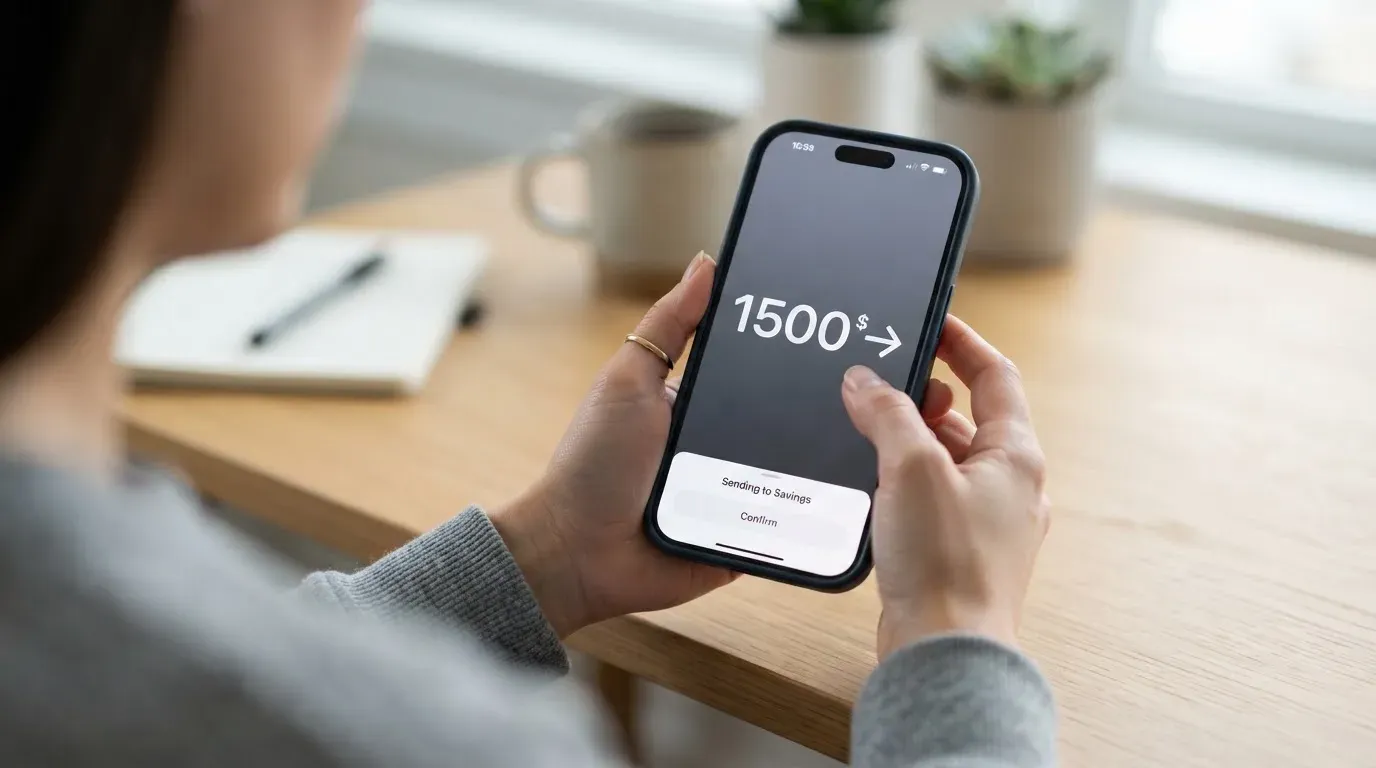
The practical mechanics:
- Minimum top-up is $25 USD equivalent. Below that you cannot load, so a $12 subscription has to be covered by loading at least $25.
- Top-up fee is the banded 5%-down-to-3% figure above.
- Network fees are paid to the network, not to WaldenPay. On Tron, typically under $1. On Ethereum or a costly chain, considerably more.
- Crediting is instant once the transfer confirms.
- Fiat top-up is not stated. There is no published route for adding money from a bank account, so this is in practice a crypto-only funding path — which is the point of the card and also its main limitation if you are trying to move away from crypto.
Two mistakes are worth taking seriously because transfers are irreversible. The first is sending on a network the provider does not support, or to an address belonging to a different network; the deposit can be lost or need manual support recovery with no guarantee. The second is a stablecoin-network mismatch that catches people out: USDC over TRC20 is not a native option, because Circle stopped supporting USDC on Tron in February 2024. If you send USDC expecting it to behave like USDT on Tron, you are sending to a path that does not natively exist. Check the network on both sides before you press send.
Withdrawal — getting money back off the card and out to a bank or exchange — is not stated. That is a significant silence for anyone who loads the card once and expects to retrieve the remainder, and it is a question to put to support in writing before your first load.
Paying with it every day
Apple Pay and Google Pay are supported, for contactless and online payments. That is the practical answer to “how do I use a card with no plastic”: you put the card in your phone’s wallet and tap. Apple Pay replaces the card number with a device-specific Device Account Number held in the Secure Element rather than on Apple’s servers, and each payment uses a one-time dynamic code, so this is a more ordinary arrangement than the card’s crypto side suggests.
Beyond that, the daily-use picture is thinner than the marketing would have you believe:
- No physical card. No plastic, no ATM companion card, nothing to hand over.
- ATM access is not stated. Cash withdrawal is the single most common reason people want a card, and this card’s pages do not address it.
- Blocked merchant categories are not stated. Many issuers block gambling and similar categories by policy rather than law, and the blocked list varies by issuer, so you cannot infer from this card that anything is permitted.
- Rewards are not stated — no cashback is mentioned anywhere I could read. There is nothing to earn back.
- Dispute handling for card payments is not stated. The only refund policy on record is that incomplete Collect Payments are refunded automatically. If a charge goes wrong on a card purchase, no process is described.
- 3-D Secure steps are not described for online payments either way.
Two behaviours of the wider card network explain most day-to-day friction you would meet. Declined authorisations can leave a hold on funds for up to about 7 days. And some merchants decline prepaid or foreign-issued card numbers because the issuing BIN identifies the card type and the issuing country — a card issued in one country can look foreign to a shop in another, and an address-verification check is generally unavailable for foreign-issued cards, which causes declines. This is a category-wide pattern, not a WaldenPay failing, but it is what “where can I use WaldenPay” actually looks like in practice: most places, with exceptions you cannot predict from the card’s own pages.
What can go wrong
This is the section where I would slow down, because the card’s public pages are quiet on exactly the things that matter when money is involved.
The bank behind it is not named. The issuer entity is BlueHouse Software B.V. (ID 000062404148), Bas Jungeriusstraat 200 A, 3081VP Rotterdam, Netherlands. The site states that WaldenPay “is not a bank” and that partners provide the accounts, the cards and the conversion. Which bank issues the card, and under which licence, is not stated. That is the central fact of this review: you are being asked to hold a prepaid card balance with an unnamed partner of an unnamed bank, regulated by a licence you cannot read. This is common in the category — many crypto card brands are programme managers rather than issuers — but common is not the same as safe.
There is no independent complaint record to read. Unofficial reporting via the aggregator cryptocards.so says Reddit sentiment is split: some people find it functional for low-value privacy use, others warn about non-KYC risk, and the same source flags both the flat 5% top-up fee and a risk of funds being frozen by a partner bank. I could not check those threads against the originals, so treat this as third-party reporting, not confirmed fact, and not something the card has confirmed. Separately, no Trustpilot page for WaldenPay was found. A brand with no public Trustpilot page has no public track record on the site people check first — that is an absence, not a complaint, but you should read it as an absence.
Freezing is a live possibility. The partner-bank freeze risk above is not hypothetical in this category. Card programmes get closed: WaveCrest, a Visa issuer that supplied several crypto card brands, was suspended by Visa in Europe in 2018, closing all WaveCrest-issued Visa programmes, and Visa terminated its global agreements with FTX on 13 November 2022, winding down the FTX US debit card. Programme closures typically run in a known order — a notice period, then loading and spending stop, then users are asked to withdraw remaining balances. One 2026 closure reported by a single secondary source had new loads ending 8 July 2026 and spending stopping 8 August 2026; that is unconfirmed and it is here only to show the shape of a closure, not as a claim about WaldenPay. No news about WaldenPay itself was found.
Legal protection is unclear. In the EU, an electronic money institution must safeguard customer funds by segregating them in dedicated accounts or insuring them — but those funds are not the same as bank deposits and may not be covered by a deposit guarantee scheme. Whether customer crypto is safeguarded in the same way, and how, is not stated. Custody and safeguarding arrangements, and the app’s freeze controls, are not stated. Nor is there a described dispute or chargeback process for card payments, which matters because reversal rights differ sharply by card type: US debit-card rights come from Regulation E and credit-card rights from Regulation Z, prepaid-card coverage varies, and it should not be assumed.
Taxes. Not a card risk, but a real one. The IRS treats digital assets as property, so exchanging them for goods, services or dollars generally produces a taxable gain or loss, measured in local currency at fair market value on the date of the transaction — meaning each card payment funded from crypto may be a separate disposal. That is a general point about digital assets, not advice about your situation; take your own jurisdiction properly.
What is protected, and what is not stated. The card states “256-bit AES encryption”, PCI DSS-compliant partners, that full card numbers are not stored, and 24/7 monitoring. Those are real safeguards and I would not dismiss them. But they protect the plumbing. They do not tell you who holds your balance, whether it is safeguarded, what the KYC threshold is, or what happens to a disputed payment. Support is free via a Contact Support page, email and Telegram @WaldenPay; hours and languages are not stated.
The honest summary: this card is not obviously unsafe. It is insufficiently disclosed for you to tell. That is a different problem, and for someone whose ordinary banking has already failed them it may still be the best available option — but it should be a decision made with open eyes.
What to take instead
If you are choosing on cost, scope of coins, or everyday usability, these are the other cards I compared, with my scores from the same exercise.
| Alternative | Score | Card | Cost stated | Top-up |
|---|---|---|---|---|
| Cardex | 5.6 / 10 | Debit crypto card on VERVE, VISA, Mastercard and UnionPay; virtual and physical | not stated | USDT, USDC, BTC wallets |
| CardFlow | 4.9 / 10 | Virtual USD Mastercard, created in about 3 minutes | “Creating a virtual card is completely free”; monthly fee not stated | Bitcoin, USDT, ETH or Naira bank transfer |
| HyperCard | 4.7 / 10 | Prepaid card, network not stated on the App Store page; balance in USD or EUR | not stated | Crypto such as USDT, BTC, ETH in the app |
Reading across the row, three contrasts stand out.
Cardex is the closest in spirit and the widest in rails: VERVE, Visa, Mastercard and UnionPay, with virtual *and* physical cards, described as “One crypto card, 200+ countries”. Its listing is Naira-focused, the card currency is Naira per the listing, and conversion happens at the moment of payment with an “AI-Powered Conversion Rate” that scans global exchange rates — but no fee percentage is published, and cost is not stated at all. Unstated costs are worse than expensive costs, because you cannot budget them.
CardFlow is aimed at Nigeria — “Nigeria’s smartest fintech card platform” — and serves “Nigerians and global users” with no stated country list or exclusions. Creating a virtual card is free, which beats WaldenPay’s $10, and it is created in three minutes. It also takes a Naira bank transfer, which WaldenPay does not publish. Against that, its score is lower, fees are not stated, and networks for the crypto options are not stated.
HyperCard claims the card works in “more than 176 countries” — but note that this is acceptance, not eligibility, and official pages state no country list. Balance in USD or EUR, crypto deposited in the app and converted to either. Fees are not stated on the pages I could read, and rewards are not stated for any of the three.
None of these publishes its top-up percentage either. That is the pattern of the category: the cards compete loudly on how many coins and chains they support, and compete quietly — or not at all — on what it costs to move value onto them. If your decision hinges on fees, WaldenPay’s published 5%-to-3% band is at least something you can calculate. I would not switch to an alternative purely on the strength of a free virtual card when the load cost is unpublished.
Who I would recommend it to
I would recommend WaldenPay to someone in this specific position: you already hold crypto, spread across more than one network, including coins or chains that no mainstream card will take; you need a virtual card number within minutes rather than a card in a week; you pay mostly online or by phone tap; and you have decided that the fee for loading is a price worth paying for access.
I would not recommend it to someone who needs cash, who wants a physical card, who is putting savings into it, who plans to hold large balances over long periods, or who needs a named regulator and a named bank behind their money today. I would also not recommend it to someone spending small amounts occasionally — at $25 minimum and 5%, the arithmetic is unfriendly.
The card scored 10 out of 10 on top-up options, and that is the fact I would end on. If the reason you are reading about crypto cards is that a coin you hold is not accepted anywhere else, WaldenPay is a genuinely strong answer to that specific problem. Everything else about it — the unnamed bank, the flat loading fee, the absent plastic — is the price of that strength, and you should pay it knowingly.
Frequently asked questions
What is the WaldenPay card?
It is a virtual prepaid payment card on Visa or Mastercard rails, with its balance held in US dollars. You load it from cryptocurrency rather than from a bank account, and it behaves like an ordinary card number in shops and online. There is no physical version — you hold the card in your phone’s wallet or in the web dashboard. The issuer entity is BlueHouse Software B.V. in Rotterdam.
Is WaldenPay a bank?
No, and the site says so directly: WaldenPay “is not a bank”, and partners provide the accounts, the cards and the conversion. Which partner bank issues the card, and under which licence, is not stated on the public pages. That disclosure gap is the single most important thing to understand before you load money. Treat the balance as held by an unnamed institution, not as a bank deposit.
How much does the WaldenPay card cost?
There is a $10 one-time card issue fee and a $0 monthly fee, described as “No recurring charges, ever”. The real cost is the top-up fee: 5% of the amount loaded, falling to 4.75%, 4.5%, 4.25%, 4%, 3.5% and 3% as your card spend in a rolling 30 days passes $2,000, $5,000, $10,000, $25,000, $50,000 and $100,000. The $250,000+ band is individual.
How do I top up the WaldenPay card?
You send cryptocurrency to the provider’s address and the amount is credited instantly once the transfer confirms, converted into USD card balance. The card describes “135+ cryptocurrencies” across “35+ networks”, with USDT, USDC, BTC, ETH, SOL, TRX and LTC given as examples. The minimum top-up is $25 USD equivalent. Network fees are paid to the blockchain, typically under $1 on Tron.
Does the WaldenPay card require KYC?
Unclear, and this is a question to put to support. Registration is described as “instant” and some card pages say no identity documents are needed “to get started”, while purchases are “Subject to AML and regulatory requirements”. Documents and age requirements are not stated, and no KYC levels are described. If no identity documents are asked for at any point, understand that you are in the highest-risk category when a provider decides it needs them.
Can I use the WaldenPay card in my country?
Sign-up and loading are described as supported globally except in North Korea, Iran, Syria, Cuba, Russia, Belarus, the Crimea/Donetsk/Luhansk regions, Afghanistan and Myanmar. The page is framed by jurisdiction rather than citizenship and does not say which decides eligibility. Use is a separate question from eligibility: acceptance is usually broad, but foreign-issued and prepaid card numbers can be declined by some merchants.
Is there a physical WaldenPay card, and can I use ATMs?
No physical card — the card is virtual only, delivered ten minutes after sign-up or immediately after the first top-up. ATM withdrawal is not stated on the public pages, so do not plan on drawing cash from this card. If cash is part of what you need from a card, choose a different product.
Is the WaldenPay card safe?
The card states 256-bit AES encryption, PCI DSS-compliant partners, that full card numbers are not stored, and 24/7 monitoring. Those are genuine safeguards. What is not stated: the issuing bank, the licence, how customer funds are safeguarded, the dispute process for card payments, and support hours. Unofficial third-party reporting also flags a partner-bank freeze risk. Judge it as undisclosed rather than proven unsafe.
How do I add the WaldenPay card to Apple Pay or Google Pay?
Both mobile wallets are supported for contactless and online payments, which is the normal way to use this card given there is no plastic. In the wallet app you add a card and enter the details from your WaldenPay dashboard at app.waldenpay.com. The card number is replaced by a device-specific number held in the Secure Element, with a one-time dynamic security code per payment.
How do I withdraw money from WaldenPay?
The public pages do not describe this, and that is a real limitation rather than an oversight in my reading. There is a Telegram bot and email support where you can ask, but no published route from card balance back to a bank account or exchange is given. Ask this in writing before your first top-up, particularly if you intend to load more than you plan to spend.
Virtual card reviews – cryptocardcheck
Content created by the «cryptocardcheck» team