
The WhiteBird card in plain language: a workable Belarusian route to spending crypto, if you can get past the paperwork
 Available in US
The WhiteBird card is a crypto payment card issued through a Belarusian bank, aimed at anyone who wants to spend a crypto balance through an ordinary card. My score for it is 4.4 out of 10. That is not a low score in the sense of “avoid at all costs” — it is a middle-of-the-road score that reflects a card with some clear strengths (no monthly servicing fee, a low purchase commission on the Crypto Status product, a real bank behind it) weighed against a persistent problem: almost none of the details a reader needs are published on the card’s own pages. The official site was unreachable for review. Much of what follows is therefore drawn from third-party reporting, and I will flag clearly where that is the case.
Who does this suit? In my view, a Russian or Belarusian resident who already has some crypto, wants to convert it to rouble or Belarusian-rouble value and spend it like an ordinary debit card, and who is comfortable with identification through a partner bank’s app. Who does it suit less? Anyone who needs a card with clearly published daily limits, confirmed cash withdrawals, or Apple Pay and Google Pay support — none of that is confirmed. If your priority is knowing exactly what you can spend today, this is the wrong card.
The conditions described here are current as of October 28, 2026.
What the score is made of
Here is the breakdown I worked through, criterion by criterion, with the reason behind each mark in my own words.
| Criterion | Mark | Why |
|---|---|---|
| Who can get it | 2 / 10 | The card’s own pages do not say. Unofficial sources describe it as open to Russian citizens on a passport and to non-residents of Belarus, and report that Visa support has been widened to cards from Belarus, Azerbaijan, Armenia, Kazakhstan, Moldova, Tajikistan, Turkmenistan, Uzbekistan and Georgia. Nothing of this is confirmed by the card. |
| Cost | 4 / 10 | Unofficial figures: a first virtual card for non-residents of Belarus at 200 BYN, an extra plastic card at 100 BYN, servicing 0. Selling crypto to the card is 1.5%, buying with it 2.5%. My starting figures put the non-resident Crypto card at 250 BYN, so even the unofficial numbers do not fully agree. |
| Top-up options | 4 / 10 | Unofficial: top up in roubles through SBP and SberPay, or sell crypto on the WhiteBird exchange onto the card; bank fees of 0.4–1.5%. The networks and coins accepted are not disclosed. |
| Reliability and complaints | 7 / 10 | The strongest mark. Unofficial but consistent reporting: a licence of the Republic of Belarus, a resident of the High-Tech Park, and StatusBank as issuer. I found no complaints. |
| Everyday use | 6 / 10 | A virtual digital card and plastic for 100 BYN. Apple Pay, Google Pay and ATM use are not disclosed, which is why this is not higher. |
| Total | 4.4 / 10 |
Will they give you the card?
The eligibility rules cannot be confirmed from the card itself. Official pages — info.whitebird.io and whitebird.io — were unreachable. The card’s public pages do not state who can get the card, and this review flags that lack of information clearly.
What third-party reporting says is this. Unofficial, from profinvestment.com (updated 6 October 2026): the card is available to citizens of the Russian Federation on a passport; it is the first virtual card for non-residents of Belarus, priced at 200 BYN; the issuer is the Belarusian StatusBank, with WhiteBird a resident of the High-Tech Park. My earlier starting data said residents of Belarus get it free, non-residents pay 250 BYN for the Crypto card, and that Crypto Status is delivered across Belarus and Russia. You will notice the two sources do not match on the non-resident price — 200 BYN in one, 250 BYN in the other. That inconsistency alone is worth knowing about before you commit to anything.
Unofficial reporting also says the Visa support has been extended to cards issued in Belarus, Azerbaijan, Armenia, Kazakhstan, Moldova, Tajikistan, Turkmenistan, Uzbekistan and Georgia. I have not confirmed that against the card, and the date of the change was not given in what I read.
One thing to keep in mind generally: nationality is recorded and screened separately from residence, because sanctions screening and issuer risk policy are often applied to citizenship and country of birth as well as to the country of address. So “I live here” and “I am a citizen of there” are two different questions, and a card that accepts one does not necessarily accept the other.
How to get it
The card’s own pages say nothing about how to apply. What I have is unofficial, from profinvestment.com (6 October 2026): identification is mandatory and is done through a partner bank’s app, and it can be arranged without leaving the country. That last point matters practically — it suggests the verification is remote, which is the difference between this card being usable and not.
On what you end up holding, unofficial again: the Crypto product is a digital Mastercard debit card tied to the WhiteBird exchange and to the non-custodial Bitcash wallet, while Crypto Status is a Visa card. There are two products, and what each one gives you beyond that is not officially stated. My starting data notes that Crypto Status carries lower exchange commissions — 1.3% sell and 2.3% buy, against 1.5% and 2.5% for the Crypto card.
Delivery: the physical card can reportedly be ordered with delivery to Belarus and Russia for 100 BYN (myfin.by, date not read). So the plastic is a paid extra, not part of the base offer.
The number of identification levels the card uses is not stated. That is a gap, not a reassurance.
Fees: what it really costs
Here is the honest state of the pricing picture. None of these figures come from the card’s official pages, because those pages did not load for me and the prices are not published there. Treat the table as a good guide to what has been reported, not as a contract.

| Fee or limit | What is reported | Source status |
|---|---|---|
| First virtual card, non-residents of Belarus | 200 BYN | Unofficial (profinvestment.com, 6 Oct 2026); earlier starting data said 250 BYN for the Crypto card |
| Extra plastic card | 100 BYN | Unofficial (profinvestment.com, 6 Oct 2026) |
| Monthly servicing | 0 | Unofficial (profinvestment.com, 6 Oct 2026) |
| Sell crypto to card | 1.5% | Unofficial (profinvestment.com). Crypto Status reported lower at 1.3%. Habr gives 2.5% sell / 3% buy for activity up to $10k a month — different figures |
| Buy crypto from card | 2.5% | Unofficial (profinvestment.com). Crypto Status reported lower at 2.3% |
| ATM withdrawal | Not stated | — |
| Daily limit | Not stated for the card | — |
| Monthly limit | Not stated for the card | An exchange operation of up to 39,950 BYN is reported (CoinSpot) — that is an exchange limit, not a card limit |
| Currency | Not stated | myfin.by lists a “Crypto Status BYN” product |
Now let me walk through three ordinary payments, so the fees stop being abstract.
A coffee in Belarus. You hold a crypto balance; to pay, you sell crypto to the card at 1.5% (or 1.3% on Crypto Status), then the amount is charged. That 1.5% is the cost of the coffee — a small purchase swallows a noticeable slice of it. If you instead buy with the card, the commission is 2.5% (2.3% on Status).
A subscription bought online in euros. On top of the 1.5% or 2.5% crypto commission, there is a currency conversion. The card’s own FX rate is not stated. This is the one that catches people out: even if the crypto commission is competitive, an unstated conversion margin can dominate the total. Ask for the FX rate before you rely on the card abroad.
A cash withdrawal from an ATM. Whether the card works in ATMs at all is not stated, so I cannot tell you this one. That absence is itself the answer: if cash is part of your plan, ask first.
How to top up
The model, as far as it is described, is that you do not load a balance in the usual way. Instead you sell crypto on the WhiteBird platform onto the card — the crypto is converted and the card spends the fiat value. So “topping up” here means “converting crypto into spendable value on the card”, not “transferring money in from a bank”.
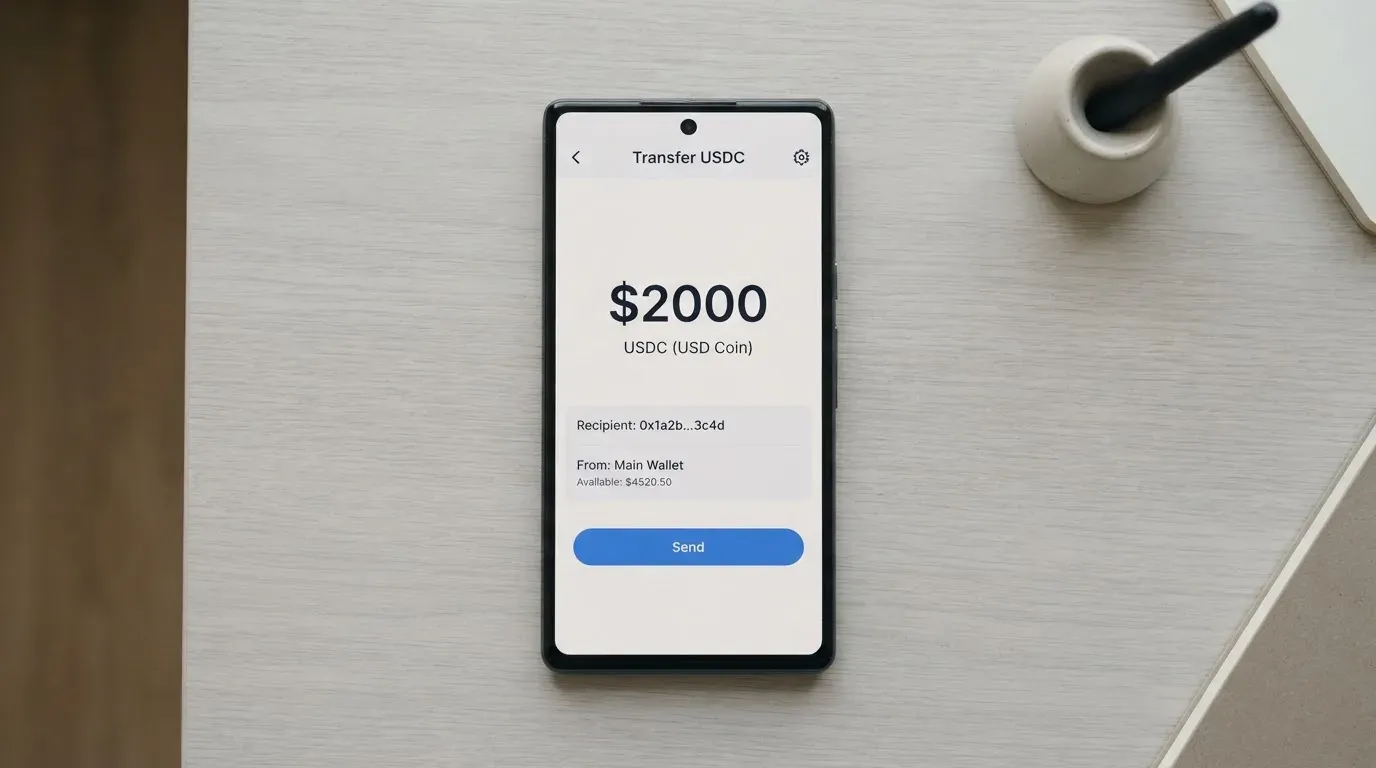
Unofficial reporting (profinvestment.com, 2026 and 6 October 2026) adds a second route: you can top up in roubles through SBP and SberPay, and rouble transfers may carry bank fees of 0.4–1.5% depending on the channel. So there are effectively two ways in — sell crypto, or send roubles through a Russian payment system.
What is not disclosed: the networks and coins accepted, and anything about withdrawal from the card back out. Whether you can withdraw money from WhiteBird, and on what terms, is not stated. For a card whose whole point is converting crypto into spending power, an undefined exit is something I would want answered before signing up.
One practical note about crypto deposits generally: blockchain transfers are irreversible, so a deposit sent on a network the provider does not support, or to an address belonging to another network, can be lost or need manual recovery with no guarantee.
Paying with it every day
Day-to-day, the picture is thin. The virtual digital card is the core product; plastic is a paid extra at 100 BYN. Apple Pay, Google Pay and ATM use are all undisclosed. If you pay by phone — tapping a terminal or adding the card to a wallet — you are relying on features the card does not confirm.
Wallets are not stated, and neither are rewards. There is no published cashback or points scheme for this card, and my starting data for other cards in this category shows how much a reward rate can matter, but here the number simply does not exist publicly. The app situation is also unclear: an Android listing called “WhiteBird” version 1.1.8 exists on trashbox.ru, but I did not read the ratings. Dispute handling is not stated, which matters if a transaction goes wrong.
Two general points about card payments that apply here regardless. A merchant can look up the card’s issuer identification number and see which institution and country issued it, and may apply extra scrutiny if the issuer country differs from the billing address — which is exactly the situation a Belarusian card faces in many shops. And a declined authorisation can leave a hold on your funds for several days, typically up to seven.
What can go wrong
The good news first: I found no complaints. A reviews search returned no reviews of Crypto Status, which for a product this new is neither a scandal nor a comfort — it may simply mean nobody has written about it yet.
The company behind it: not officially stated, though my starting data names it as White Bird CJSC. Unofficial reporting (ForkLog) says WhiteBird holds a licence of the Republic of Belarus and is a resident of the High-Tech Park; profinvestment.com (6 October 2026) names StatusBank as the Belarusian issuer. There is also unofficial news that WhiteBird raised its exchange limits and extended Visa card support to cards from a wide group of countries (date not read).
Self-custody is a genuine point in its favour, unofficial per myfin.by (2026): the Crypto card is tied to the non-custodial Bitcash wallet. In practice this means the crypto stays in a wallet you control until the moment of payment, rather than sitting with a custodian. That reduces counterparty risk — but it also means you carry the full responsibility for key loss, phishing, and malware that swaps a copied address. With a seed phrase of typically 12 to 24 words, anyone who obtains it can restore the wallet and spend the funds, and because crypto transfers are typically irreversible, a stolen key has no recovery path.
Customer support is not stated, and neither is the card’s security setup beyond the wallet link. Those are the two things I would want to see answered.
What to take instead
If the WhiteBird card’s appeal is spending crypto on an ordinary card, there are other routes, each with its own trade-offs. I have not tested these against WhiteBird directly — the comparison below is on published terms.
Bybit Card — score 6.0 / 10. The most fully documented of the three, though for a different readership. Its regions are Argentina, AIFC (Kazakhstan), Georgia, Kazakhstan, Australia, Mexico, Brazil, Peru and Asia Pacific; the application asks for your country of residence and, if unsupported, will “register your interest”. The page states plainly that the product is not meant for European Economic Area customers and that all EEA participation is prohibited. Its fiat restricted list — which covers deposits, withdrawals and One-Click Buy, not the card itself — includes Belarus, the Russian Federation, Serbia, China and the United States, and it says Russian users can only make RUB transactions in fiat. No card-specific rule on Russian or Belarusian citizens was found. Fees: crypto conversion 0.9% over the One-Click Sell rate in most regions, FX 2% on top of the network rate in several. Rewards: from 5 October 2026 only crypto-funded transactions earn cashback, on tiers from 2% (Base) to 10% (Infinite). For a Belarusian or Russian reader, the regional and currency restrictions likely rule this out — but if you are in one of its listed regions, it is the most transparent option here.
MSX — score 6.4 / 10. Its eligibility, card type, fees and funding are not stated on any official page I could read. Hard to recommend on paper; hard to rule out.
Young Card — score 5.7 / 10. Cost and fees are not officially stated, but the one clear feature is rewards: cashback paid in YNG tokens at a rate set by club tier — Essential 0.1%, Gold 1.8%, Platinum 3.6% (Bronze and Silver not stated). If a reward rate is what draws you to a crypto card, that is worth comparing against WhiteBird’s zero, though YNG tokens are not the same as cash.
The honest summary of this section: WhiteBird is not obviously beaten on price by any of these for its target user — its 0 servicing fee and 1.3% sell rate on Crypto Status are competitive. What it is beaten on is disclosure.
Who I would recommend it to
I would recommend WhiteBird to a Russian or Belarusian resident who already holds crypto, wants to convert it and spend it through a real bank-issued card, and is comfortable identifying through a partner bank’s app. To that person the card does a specific job at a reasonable price: no monthly fee, a low sell commission on the Status product, and a bank behind it rather than an anonymous operator.
I would not recommend it — or at least not yet — to someone who needs certainty. If you need to know your daily and monthly limits, whether Apple Pay and Google Pay work, whether ATMs work, whether you can withdraw, what the FX rate is, or what happens when a payment is disputed, this card cannot tell you. None of that is published, and the official pages were unreachable when I checked. You would be buying on the strength of other people’s reporting.
Two groups I would point elsewhere. If you are in one of Bybit’s supported regions and your priority is a documented cashback rate, Bybit Card publishes its tiers and caps in full. And if you are in the European Economic Area, Bybit explicitly excludes you — so use the exclusions as a reminder to check any card’s territory rules where they are stated, rather than assuming.
My honest advice: if WhiteBird appeals to you, ask the support team directly, in writing, for the current daily limit, monthly limit, ATM policy, wallet support, FX rate and withdrawal terms — and keep the answers. If they give them to you clearly, the card’s practical quality may well be higher than its 4.4 suggests. If they do not, that silence is itself the answer.
Frequently asked questions
What is the WhiteBird card?
It is a crypto payment card issued through the Belarusian StatusBank and marketed by WhiteBird, a company reported to hold a Belarusian licence and be a High-Tech Park resident. There are two products: Crypto, a digital Mastercard debit card tied to the WhiteBird exchange and the non-custodial Bitcash wallet, and Crypto Status, a Visa card. You spend by converting crypto into card value, in the manner of a prepaid card.
Is WhiteBird a bank?
No — WhiteBird itself is reported to be a High-Tech Park resident holding a licence of the Republic of Belarus, not a bank. The bank in the structure is the Belarusian StatusBank, named as the issuer. So the card is issued by a bank, while the crypto brand is the programme front-end. Which licence covers exactly which part is not stated on the card’s official pages, so check before you rely on any deposit-protection assumption.
Who can get the WhiteBird card?
The card’s own pages do not say. Unofficial reporting says citizens of Russia can get it on a passport, that it is the first virtual card for non-residents of Belarus, and that Visa support was extended to cards from Belarus, Azerbaijan, Armenia, Kazakhstan, Moldova, Tajikistan, Turkmenistan, Uzbekistan and Georgia. None of that is confirmed by the card.
How do I apply for a WhiteBird card?
Identification is mandatory and, unofficial reporting says, is done through a partner bank’s app — and can be arranged without leaving the country. Beyond that, the application steps are not published. My starting data says residents of Belarus get it free while non-residents pay, but two unofficial sources give different non-resident prices (200 BYN and 250 BYN), so confirm the current figure.
How do I top up the WhiteBird card?
The main route is selling crypto on the WhiteBird platform onto the card — the crypto is converted and the card spends the fiat value. Unofficial reporting adds a roubles route via SBP and SberPay, where transfers may carry bank fees of 0.4–1.5% depending on channel. The networks and coins accepted are not disclosed.
What does it cost to use the WhiteBird card?
Reported figures: monthly servicing 0; sell crypto to the card 1.5%, or 1.3% on Crypto Status; buy crypto with the card 2.5%, or 2.3% on Status; extra plastic card 100 BYN. ATM fees, FX rate, daily and monthly card limits are not stated. Third-party reports (Habr) also mention 2.5% sell and 3% buy for activity up to $10k a month, but these figures are unofficial and not confirmed by the card issuer.
Does the WhiteBird card need KYC?
Yes, identification is mandatory, reportedly through a partner bank’s app. That is not unusual — regulated businesses are required to verify customers under anti-money-laundering rules — but it does mean the card is not for anyone avoiding checks. The number of verification levels, and exactly which documents are accepted, is not stated.
Can I add the WhiteBird card to Apple Wallet?
I cannot tell you, because wallet support is not disclosed. Apple Pay and Google Pay are both unconfirmed for this card. The same goes for ATM withdrawals and for withdrawing money out of the card. If any of these matter to you, ask support in writing before you apply — they are the three gaps most likely to decide whether the card works for you.
Is the WhiteBird card safe?
It has real structural strengths: a bank issuer, a reported Belarusian licence, and a card tied to a non-custodial wallet, so your crypto is not held by a custodian until the moment of payment. The trade-off is responsibility — you bear the risk of key loss, phishing, and malware that swaps a copied address, and crypto transfers are typically irreversible with no recovery. I found no complaints, but I also found no reviews, so that is an absence of evidence rather than a track record.
Is the WhiteBird card worth it?
For a Russian or Belarusian resident already holding crypto who wants to spend it through a bank card, the economics are competitive: no servicing fee and a 1.3% sell rate on the Status product. What holds it back is disclosure. Because daily and monthly limits, ATM support, wallet support, the FX rate and withdrawal terms are all unstated, you cannot fully judge the card from public information — which is most of why I settled on 4.4 out of 10.
Exchange card reviews – cryptocardcheck
Content created by the «cryptocardcheck» team